Reviewed · BUDAPEST TOURS
Analog Photo Trip
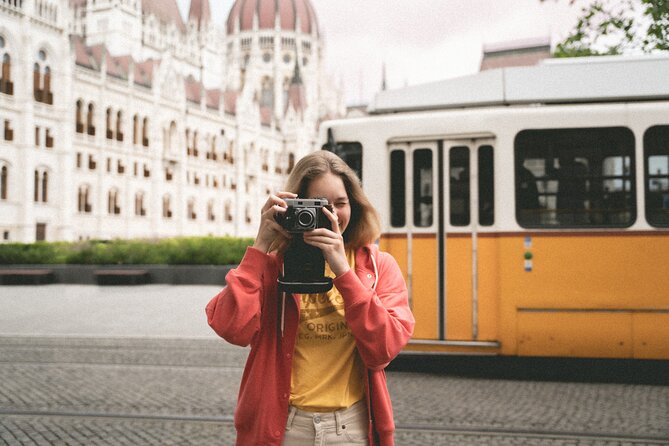
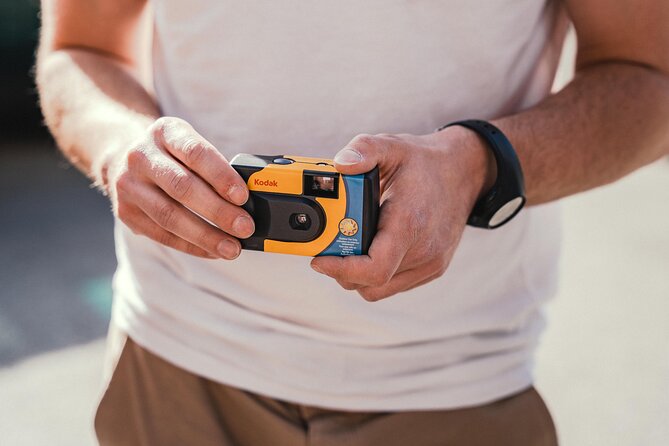
The most unusual part of this Budapest tour is simple: you explore the city with an analog camera in hand. Instead of snapping dozens of instant phone photos, you slow down, frame the scene, and make a small collection of physical souvenirs as you go.
I like the mix of major sights and less obvious photo spots, and I like that the route uses Tram 2 to connect central Budapest with the river views and Castle District. The main consideration is the price, $142.97 per person, which is a serious spend for three and a half hours, especially if you already know Budapest or prefer to take your own photos.
Emese Tárnok leads the experience in English, with a maximum of 12 people. She gives a short camera lesson, explains the city in clear terms, and is patient if you need extra time with the camera or the walking pace.
In This Review
- Key points at a glance
- Why an analog camera changes the Budapest walk
- Starting at Anker köz and St. Stephen’s Basilica
- Chain Bridge with Buda Castle behind it
- Tram 2 and the Parliament surroundings
- Margaret Bridge and the full route in view
- Matthias Church and the Castle District
- Finishing at Fisherman’s Bastion
- Is $142.97 a fair price?
- Who will get the most from this experience?
- Timing, weather, and cancellation details
- Should you book the Analog Photo Trip?
- FAQ
- How long does the Analog Photo Trip last?
- What time does the tour start?
- Where does the tour begin?
- Where does the tour end?
- Is the camera instruction suitable for beginners?
- What happens if bad weather cancels the tour?
Key points at a glance
- Analog cameras make the tour feel different: You learn the basics before taking photos and receive physical pictures as souvenirs.
- The route covers six major Budapest sights: St. Stephen’s Basilica, Chain Bridge, Parliament, Margaret Bridge, Matthias Church, and Fisherman’s Bastion.
- Tram 2 adds useful city travel: The ride helps connect the central stops with Budapest’s riverfront views.
- The 5:00 pm start suits changing light: You see the city toward evening, though the exact light depends on the season and weather.
- Emese Tárnok keeps the group small: A maximum of 12 people allows room for questions and camera help.
- Weather matters: The experience can be moved or refunded if poor weather causes cancellation.
Why an analog camera changes the Budapest walk
Most sightseeing tours ask you to look, listen, and move on. This one adds a small creative task. You need to decide what deserves one frame, how to hold the camera, and when to wait for a cleaner view.
That slower pace is the real point. An analog camera gives you a limited number of chances, so the photo stops being an afterthought. You pay closer attention to the shape of a church dome, the angle of a bridge, or the way the Danube opens behind the city.
You do not need previous camera experience. Emese provides a brief introduction before the route begins, and the experience is designed to be easy for beginners. If you have used only a phone camera, you may need a few minutes to get comfortable, but that is part of the fun rather than a problem.
The physical photos also give you a souvenir with more character than a folder of phone images. You leave with a record of the places you saw and the choices you made while photographing them.
Other Budapest days people book alongside this one:
- Budapest: Unlimited Prosecco, Beer and Aperol Spritz Cruise
★ 4.8 · 25,310 reviews - Budapest: Széchenyi Spa Day Ticket with Optional Upgrades
★ 4.3 · 23,911 reviews - Budapest: Nighttime or Daytime Sightseeing Cruise
★ 4.2 · 21,062 reviews
Starting at Anker köz and St. Stephen’s Basilica
The meeting point is CBI CompareBudapest at Anker köz 2-4, in central Budapest. The start time is 5:00 pm, so check your route before setting out and allow enough time to arrive without rushing.
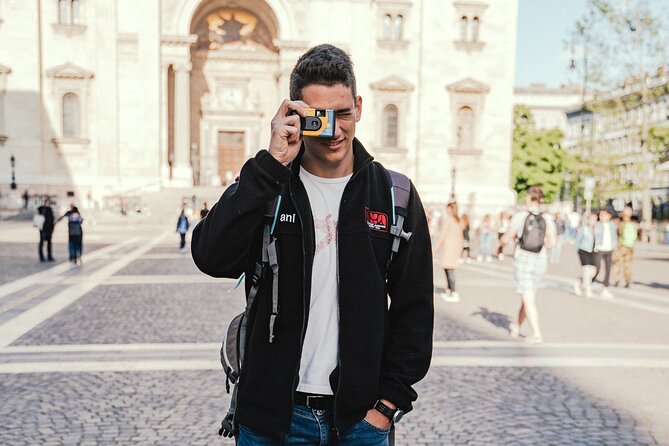
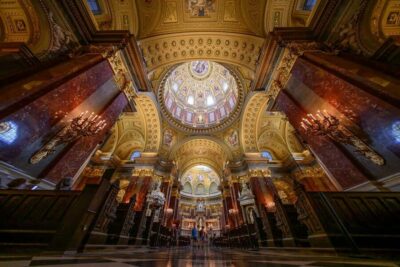
The first stop is St. Stephen’s Basilica, where you spend about 15 minutes looking around and hearing about Hungary’s important church. The building gives you an early chance to practice photographing vertical lines, large architectural forms, and decorative details.
The stop is short, so do not expect a full church visit with every corner explored. Instead, think of it as a focused introduction to the building and to the camera. Emese’s explanations add context, which helps you see more than just a grand facade.
This opening stop also lets you learn how the tour works. You can ask questions about the camera before the route moves on. If you are new to analog photography, that early guidance is valuable because mistakes become harder to fix once the group reaches the more open views.
Chain Bridge with Buda Castle behind it
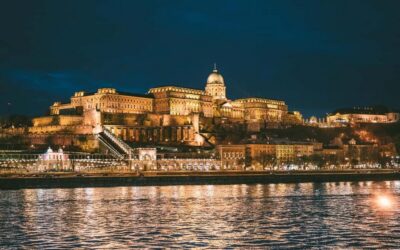
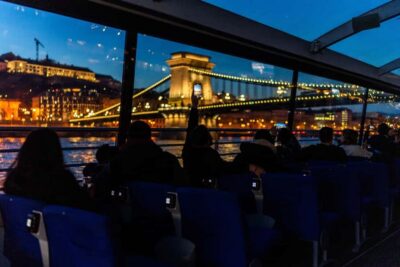
The route then reaches Széchenyi Lánchíd, better known as Chain Bridge. Before taking Tram 2, you stop for about 15 minutes to photograph the bridge with Buda Castle behind it.
This is one of the tour’s strongest photo settings because several Budapest symbols appear in one frame. The bridge provides a strong line across the river, while the Castle District gives the background a sense of height and depth.
You have enough time for a few careful attempts, but not an unlimited photo session. That is worth keeping in mind if you like to work slowly. One participant needed more time than planned, and Emese stayed patient, so the pace appears flexible, but the tour still has a route to cover.
The bridge stop is also where the tour feels most like a standard Budapest highlight walk, and that is not a bad thing. First-time visitors usually want the famous views. The analog format simply asks you to pay closer attention while you enjoy them.
Tram 2 and the Parliament surroundings
The experience uses Tram 2 as part of the route. That matters because you are not only walking between isolated monuments. You get a short slice of everyday city movement while shifting toward the Parliament area.
The next stop is Kossuth Lajos Square, beside the Hungarian Parliament Building. You spend about 15 minutes looking at the surroundings and learning about the place.
Parliament is an easy subject for analog photography because its shape is so recognizable. The surrounding square gives you other ways to frame it, rather than forcing you to take one straight-on picture. You might choose a wider view that includes the square, a tighter architectural detail, or a view that places the building within the riverfront setting.
The short time here works well for a guided introduction, though you should not expect to enter Parliament. The information provided describes an outdoor look at the square and its history, not an interior tour.
If you have already seen Parliament during daylight, the late afternoon start may give the area a different feel. Still, the amount of light depends on the date and weather. Since the tour requires good weather, a cloudy or wet day may affect both the schedule and your photographs.
Same riverbank, a completely different kind of day:
- Budapest: 1-Hour Evening Sightseeing Cruise with Drink
★ 4.5 · 8,330 reviews - Budapest Danube Cruise and Dinner Options, Live Music and Dance
★ 4.5 · 7,428 reviews - Budapest: Historic Cruise with Welcome Drink
★ 4.7 · 6,512 reviews - Budapest: St. Stephen’s Basilica Entry with Terrace Option
★ 4.5 · 6,399 reviews
Margaret Bridge and the full route in view
Margaret Bridge offers a different kind of photo stop. Rather than focusing on one landmark, you look back toward the places you have already visited and ahead toward the rest of the route.
You spend about 15 minutes here. The value is the broader view. Chain Bridge, Parliament, the river, and the Castle District can be understood as parts of one city rather than separate stops on a checklist.
This is also a useful point to think about your photographs as a set. The earlier images may focus on close architectural subjects. Here, you can try a wider composition that shows Budapest’s scale and the way the river connects the city.
The stop may appeal most to visitors who enjoy seeing how a city fits together. If you want nonstop action or a large number of monuments, the pause could feel brief. If you like a guide who explains location and history as you move, it gives the route a clearer shape.
Matthias Church and the Castle District
After the river views, the route moves toward Matthias Church. The listed stop is only about five minutes, making it the quickest photo pause of the day.
Matthias Church is known for its Gothic appearance, and the short stop is aimed at capturing its striking exterior. You will need to work efficiently here. Have your camera ready, listen for Emese’s suggestions, and choose your frame without spending too long searching for the perfect angle.
The five-minute limit is the clearest pacing issue in the itinerary. A camera beginner may still be learning the controls, and a church with detailed architecture can invite more time than that. The benefit is that the tour does not stall, but the drawback is that you may leave wanting another few minutes.
From there, you continue through the Castle District toward Fisherman’s Bastion. The change in setting is part of the appeal. The route moves from central streets and riverfront views to an area inspired by early medieval architectural styles.
Finishing at Fisherman’s Bastion
Fisherman’s Bastion is the final stop and the end point at Fisherman’s Bastion, Budapest 1014. You spend about 15 minutes looking around the terraces and photographing the Castle District setting.
This is a strong place to finish because it gives you a final group of images with a different character from the earlier stops. The architecture is full of towers, arches, and open viewpoints. It also lets you look back across the city after following the route from the central meeting point.
The ending location is practical if you plan to continue exploring Buda afterward. It is less convenient if your next activity is back in central Pest, so check your evening plans before booking. The tour ends in the Castle District rather than returning you to Anker köz.
The final stop also gives you a chance to review what you have made. You may have photographs of famous buildings, broad city views, and smaller details. That variety is one reason this works better than a basic photo walk that stays in one neighborhood.
Is $142.97 a fair price?
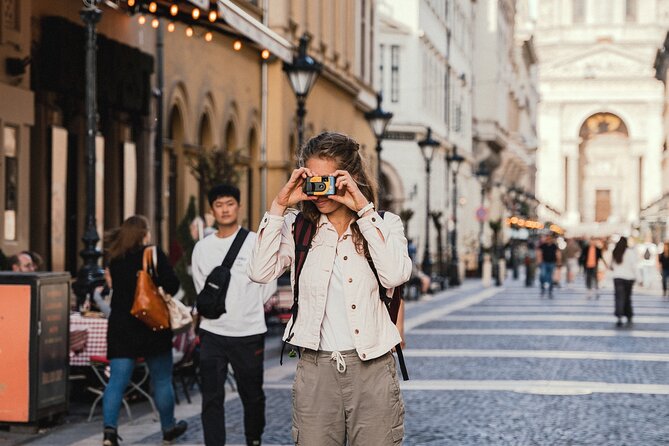
At $142.97 per person, this is not a cheap way to see Budapest. You are paying for more than a walking route, though. The price includes a guided city experience, instruction with an analog camera, transport by Tram 2 as part of the route, and physical photos that become souvenirs.
The value depends on how much you want that combination. If you are already comfortable with photography and only need directions to the sights, you could see these places on your own for far less. If you want help using an analog camera, enjoy a small group, and prefer a set route with historical context, the price makes more sense.
The maximum group size is 12, which is small enough for personal questions without promising a private tour. Emese’s patient approach is especially useful if you and your companion take photos slowly or need extra help with the controls.
I would compare the cost with other paid creative activities in Budapest, not just with a free city walk. This is part sightseeing tour, part photography lesson, and part souvenir-making session. Book it for the full package, not simply for access to the landmarks.
Who will get the most from this experience?
This tour suits a first visit to Budapest because it covers several of the city’s best-known sights in one afternoon. You get a quick sense of central Pest, the Danube crossings, the Parliament area, and the Castle District.
It also suits couples and small groups of friends. The camera task gives you something to do together, and the physical photos make the experience feel more personal than ordinary sightseeing. One couple on an interrail trip found the pace comfortable even though they moved slowly, thanks to Emese’s patience.
Beginners should feel comfortable booking. The basic instruction is part of the experience, and you are not expected to arrive with technical camera skills.
You may want to skip it if you dislike fixed routes, need a long time at each monument, or prefer digital images you can edit immediately. The Matthias Church stop is brief, and all six stops are timed. The tour gives you a sampler of Budapest rather than a deep visit to any one building.
Service animals are allowed, and the meeting point is near public transportation. Most people can participate, but the supplied details do not give a full mobility assessment for every part of the route. If you have specific access needs, ask before booking.
Timing, weather, and cancellation details
The tour lasts about three hours and 30 minutes, beginning at 5:00 pm. In practice, plan your afternoon around the full route and allow extra time afterward because the end point is in the Castle District.
Good weather is required. If poor weather cancels the experience, you can receive a different date or a full refund. You can also cancel for a full refund if you do so at least 24 hours before the 5:00 pm start time.
Changes or cancellations made less than 24 hours before the start are not accepted for a refund. The cut-off follows local Budapest time, so use that time zone when making plans.
The evening start is appealing for photography, but it creates a seasonal variable. In brighter months, you may have plenty of daylight across the route. At other times of year, the light may change quickly. The tour still works as a city walk, but your photo results will depend partly on the date.
Should you book the Analog Photo Trip?
Book it if you want a guided introduction to analog photography while seeing Budapest’s major sights. The strongest reasons are Emese Tárnok’s patient instruction, the small group limit, the Tram 2 connection, and the chance to take home physical photos.
Think twice if $142.97 feels high for a short tour or if you want long visits inside the churches and historic sites. This is an active, timed route with outdoor viewing, not an admission-based museum tour.
For a first-time visit, a couple’s outing, or a creative break from phone photography, I can see the appeal. You get the classic Budapest views, a few less expected angles, and a souvenir you helped create yourself.
FAQ
How long does the Analog Photo Trip last?
The experience lasts approximately three hours and 30 minutes.
What time does the tour start?
The tour starts at 5:00 pm local time.
Where does the tour begin?
The meeting point is CBI CompareBudapest, Anker köz 2-4, 1061 Hungary.
Where does the tour end?
The tour ends at Fisherman’s Bastion in Budapest, 1014 Hungary.
Is the camera instruction suitable for beginners?
Yes. The experience includes a brief introduction to using the analog cameras, and most people can participate.
What happens if bad weather cancels the tour?
You will be offered a different date or a full refund if poor weather causes the experience to be canceled.
Just added around Budapest
- From Budapest: Guided Tour of Eger with Wine Tasting★ 4.5 · 6 reviews
- Budapest: Private Walking Tour with a Local Guide★ 3.6 · 6 reviews
- Budapest: Danube River Views Bike Ride★ 4.8 · 23 reviews
- Trash Art Museum: Hungary’s First Scrap Metal Exhibition★ 4.3 · 72 reviews
- Walk to recent and aged spiritual sanctuaries near Budapest★ 5.0 · 5 reviews
- Budapest: 3-Hour Trabant Sightseeing Tour★ 4.7 · 28 reviews
- True Crime Walking Tour in the Buda Castle district★ 5.0 · 26 reviews
- Audio visual multi-sensory chefs journey dinner experience★ 5.0 · 3 reviews
Budapest Tours, compared.
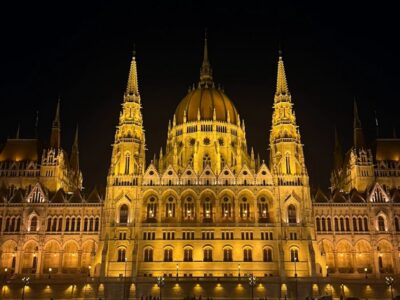
Unlimited Prosecco, Beer and Aperol Spritz Cruise
Read our review →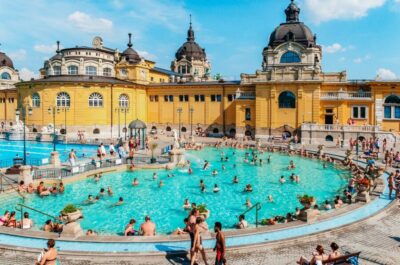
Széchenyi Spa Day Ticket with Optional Upgrades
Read our review →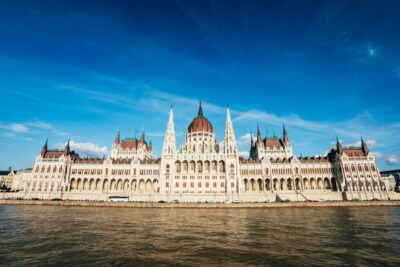

Budapest Danube Cruise and Dinner Options, Live Music and Dance
Read our review →
St. Stephen’s Basilica Entry with Terrace Option
Read our review →