
Reviewed · CYCLING TOURS
Budapest: Danube River Views Bike Ride
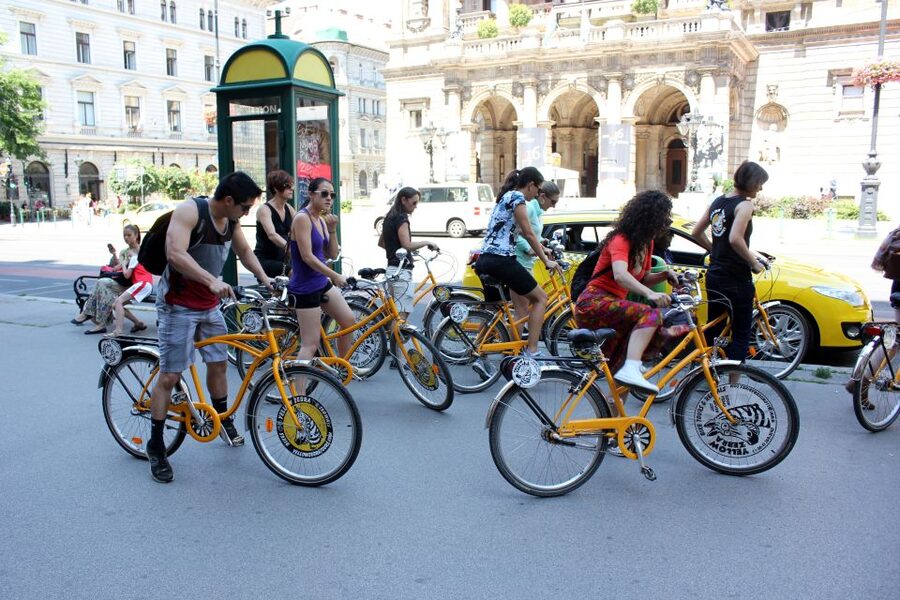
Budapest makes excellent sense from a bicycle seat. In 2.5 hours, you’ll connect the grand avenues of Pest with the riverfront and the hillier streets of Buda, crossing bridges that give you some of the city’s best views. Guides Beka and Becker are especially praised for clear stories, good humor, and a knack for making the past easy to follow.
I like the small group of no more than 10, which keeps the ride more personal and makes it easier to hear the guide in city traffic. I also like the route’s range: you’ll see Parliament, the Opera House, St. Stephen’s Basilica, the Great Synagogue, Chain Bridge, Gellért Hotel, and Rudas Thermal Baths without spending the day inside a museum.
The main consideration is the riding itself. This is light but mostly continuous cycling, with some uphill sections, and one booking was switched from a standard bike to an e-bike because of a scheduling problem. The tour is best for adults and children 12 or older who are comfortable riding in an urban setting.
In This Review
- Key points to know before you book
- Why a bicycle is a smart way to see Budapest
- Starting near Károly körút in central Pest
- Andrassy Avenue and Budapest’s grand Pest landmarks
- Parliament and Liberty Square beside the Danube
- Crossing Margit Bridge from Pest to Buda
- Chain Bridge, Elisabeth Bridge, and Buda’s riverfront
- Returning across Elisabeth Bridge to downtown Pest
- What the guide adds to the ride
- Fitness, hills, and the right kind of rider
- Is $41 a fair price?
- Who should book this Budapest bike tour?
- Should you book the Danube Views Bike Ride?
- FAQ
- How long does the Budapest bike tour last?
- What sights are included on the route?
- Does the tour visit both Buda and Pest?
- Is bike hire included?
- How large is the group?
- Is the tour suitable for children?
- What happens if the weather is bad?
- Where does the tour meet?
Key points to know before you book
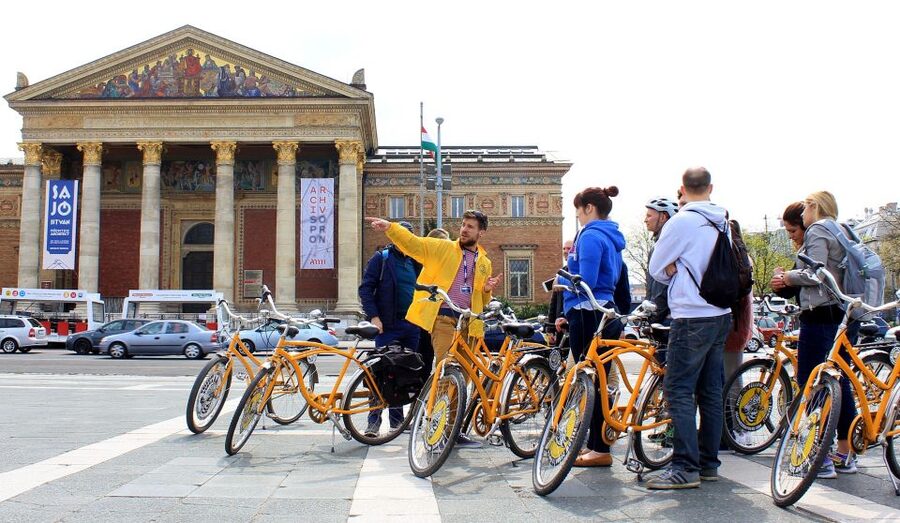
- Both Buda and Pest in one ride: Cross the Danube and see how the two historic halves of Budapest differ.
- A useful first-day orientation: The route links major sights so you can decide where to return later.
- Stories at every major stop: Expect explanation of Budapest’s politics, architecture, bridges, sieges, and changing culture.
- A small English-speaking group: With up to 10 participants, the guide can keep the pace manageable.
- Some hills and steady pedaling: The route is not a race, but it is not a stop-start sightseeing stroll either.
- Outdoor touring in all weather: Bring suitable clothing, since poor weather does not automatically bring a refund or replacement date.
Why a bicycle is a smart way to see Budapest
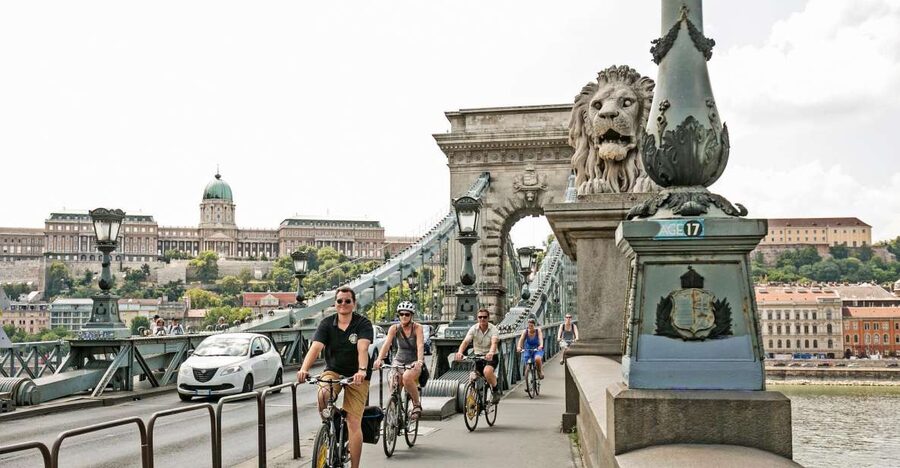
Budapest is spread along the Danube, and its famous sights are not all in one compact pocket. A bike lets you cover ground quickly while still seeing the city at street level. You can notice the long views across the river, the scale of the bridges, and the changing architecture more easily than from a vehicle.
This ride also gives you a useful mental map. Pest lies on the flatter east bank, while Buda rises on the west. The tour does not attempt to cover every corner of either side, but it ties together the major central sights in a logical loop.
The pace is described as leisurely, though you should read that in cycling terms. You’ll ride for much of the 2.5-hour period, with short breaks for explanations and photographs. If you want a tour with long café stops or extended visits inside buildings, this is not it. If you want an efficient introduction before exploring on your own, it fits well.
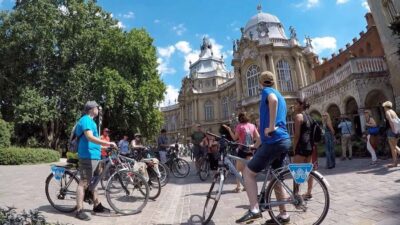
The group limit matters. A maximum of 10 people is small enough for a guide to answer questions and keep an eye on the group at junctions. It also avoids the slow, sprawling feel of a large bicycle convoy. English is the tour language.
A few more Budapest trips to weigh up
- Budapest: Grand Sightseeing Bike Tour
★ 4.8 · 984 reviews - Budapest Highlights Bike Tour
★ 5.0 · 770 reviews - Budapest: Guided City Discovery Bike Tour
★ 4.7 · 702 reviews
Starting near Károly körút in central Pest
The meeting point is Yellow Zebra Bikes & Segways at 1052 Budapest, Károly körút 16, in the courtyard. Use doorbell 6. This is a practical central starting point for a route that moves through downtown Pest before reaching the Danube.
Allow time to locate the courtyard and collect your bike. The supplied information does not specify a long check-in period, so arriving early is sensible, especially if you need help adjusting the bicycle or want to ask about a helmet. Bike hire is included, and a helmet is optional.
Wear comfortable shoes and clothing suited to the weather. You are outside for the full ride, and the operator runs the tour in all weather conditions. That policy is worth taking seriously in Budapest, where a pleasant morning can turn wet or chilly along the river.
Food, drinks, attraction admissions, and public transport to or from the meeting point are not included. In practice, the tour works best as a sightseeing ride rather than a meal outing. Eat beforehand and carry what you need for the duration.
Andrassy Avenue and Budapest’s grand Pest landmarks
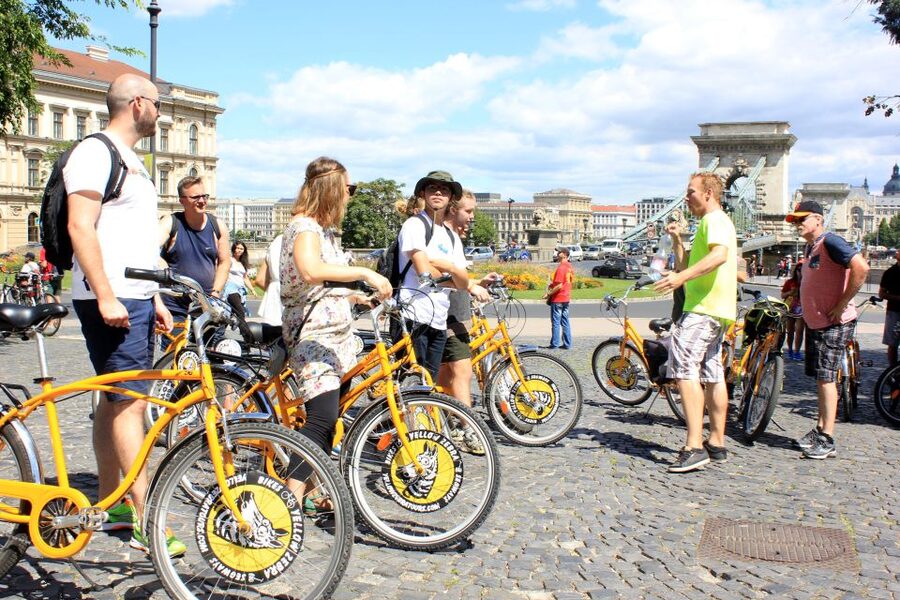
The route heads along Andrassy Avenue, one of Budapest’s most important ceremonial streets and a UNESCO World Heritage Site. It is a fitting place to begin because the avenue gives you a quick sense of the city’s late 19th-century ambition, with grand buildings leading toward the Hungarian State Opera House.
The Opera House is one of the tour’s closing sights, but Andrassy Avenue helps frame it before you reach the end. You’ll see how Budapest used broad urban planning and ornate architecture to present itself as a major European capital.
The ride also includes the Great Synagogue and St. Stephen’s Basilica. These are not simply photo stops. They show the range of Budapest’s religious and architectural heritage, from the large synagogue complex to the basilica’s monumental Christian design.
You should not expect interior visits. Entrance fees are not included, and the tour is built around exterior views and guide commentary. That is a limitation if you have come specifically to see the inside of the Opera House or basilica, but it keeps the group moving and allows the route to cover much more ground.
Parliament and Liberty Square beside the Danube
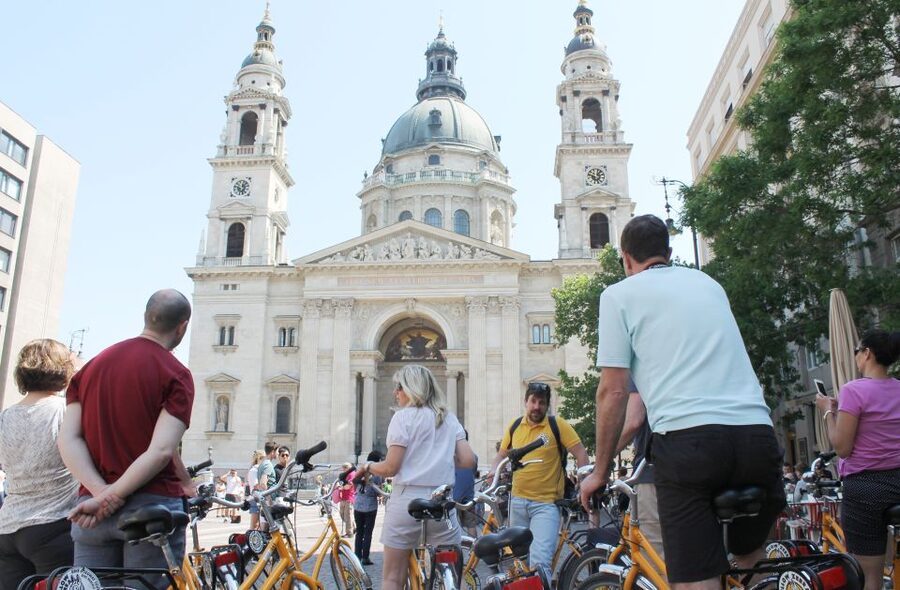
As you approach the riverfront, the ride reaches Liberty Square and the Parliament building. Parliament is one of Budapest’s defining sights, and seeing it from the city’s open spaces helps you understand its size and position beside the Danube.
This is one of the places where a guide adds real value. A photograph can show you the façade, but a good explanation gives the building a place in Hungary’s political story. The guides praised by name, including Beka and Becker, are noted for telling stories rather than simply naming buildings.
Liberty Square adds another layer. The square is tied to Hungary’s modern political past, so it helps balance the older imperial architecture along Andrassy Avenue. You get a quick tour through several eras without leaving central Budapest.
The riverfront itself is a major reason to choose this excursion. You can look across to Buda, watch the bridges line up along the water, and see how the city’s two sides relate to one another. The views are broad and memorable, but the ride still keeps you moving rather than lingering at one viewpoint for a long time.
Same riverbank, a completely different kind of day:
- Budapest: Unlimited Prosecco, Beer and Aperol Spritz Cruise
★ 4.8 · 25,310 reviews - Budapest: Széchenyi Spa Day Ticket with Optional Upgrades
★ 4.3 · 23,911 reviews - Budapest: Nighttime or Daytime Sightseeing Cruise
★ 4.2 · 21,062 reviews - Budapest: 1-Hour Evening Sightseeing Cruise with Drink
★ 4.5 · 8,330 reviews
Crossing Margit Bridge from Pest to Buda
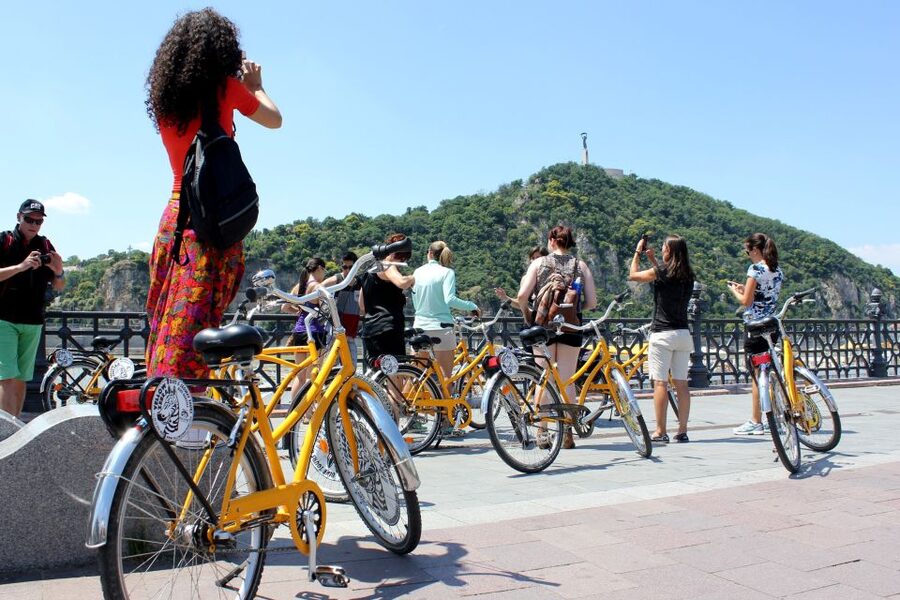
The crossing over Margit Bridge is a key transition. You leave the flatter Pest side and move toward Buda on the river’s western bank. From the bridge, the Danube opens up around you, giving you a strong sense of Budapest’s geography.
Crossing a bridge by bike is more than a practical transfer between sights. It lets you feel the city’s structure. The Danube is not a small stream cutting through town. It is the central divide around which Budapest’s major views, roads, and historic districts are arranged.
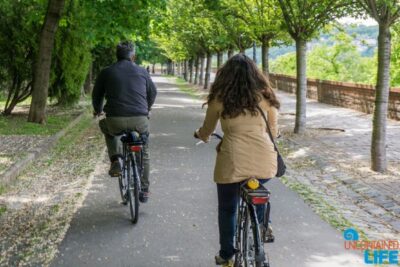
The route uses promenade bike lanes on both sides of the river where available. That makes the ride more pleasant than a tour confined to busy vehicle lanes, though you still need to pay attention. City cycling requires awareness at crossings, around pedestrians, and on uneven or changing surfaces.
The guide’s commentary about Buda covers its record of sieges and conquests, including the damage caused during Ottoman expansion. This is useful context because Buda’s history is not only about palaces and pretty views. Its position made it strategically important, and repeated conflict had severe effects on the population.
Chain Bridge, Elisabeth Bridge, and Buda’s riverfront
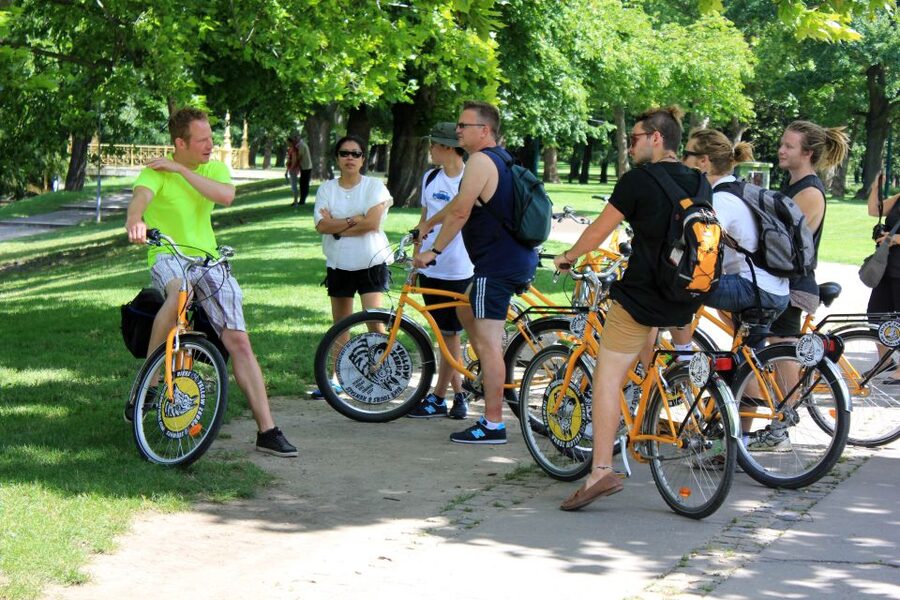
From Buda, the ride takes in the Széchenyi Chain Bridge and Elisabeth Bridge, each with its own place in Budapest’s story. These crossings are among the city’s most recognizable structures, but seeing them from a bicycle gives you several angles instead of one standard postcard view.
The Chain Bridge is especially important to Budapest’s identity. It links the two sides of the city and provides one of the classic views toward the Buda hills and the river. You may not stop for a full architectural lecture at each bridge, but the guide can give you enough background to make the structures more than scenery.
Clark Adam Square follows as another useful orientation point. It sits at the Buda end of Chain Bridge and connects the riverfront with the routes toward Castle Hill. The tour does not include admission to museums or historic interiors, so think of this as a city overview rather than a Castle District visit.
The route also passes the Hotel Gellért and Rudas Thermal Baths. These stops point to two important sides of Budapest: grand urban hotels and the city’s famous bathing culture. The ride gives you an exterior introduction, not a bathing session or hotel tour.
That distinction matters when you compare this with a dedicated thermal bath visit. If Rudas is high on your list, plan another visit and budget separately for admission. Here, it is one piece of a larger route.
Returning across Elisabeth Bridge to downtown Pest
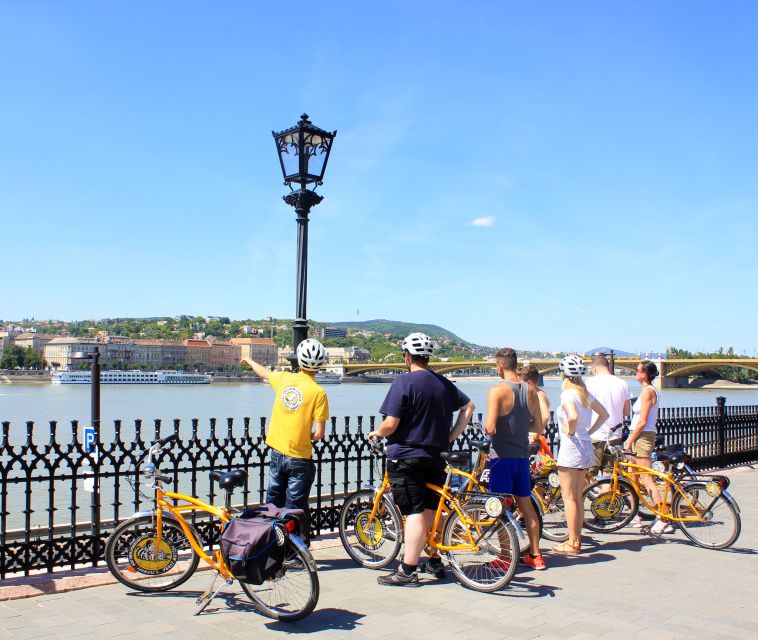
The ride crosses Elisabeth Bridge back to Pest, completing the broad loop between the two banks. This second crossing helps you compare the feel of the city from both directions, and it gives you another elevated view over the Danube.
The return through downtown Pest is useful because it shifts the focus back to everyday city streets and central landmarks. You are no longer looking only at distant hills or river panoramas. You are riding through the urban center that most visitors use as their base.
The tour ends back near Andrassy Avenue. That makes the final stop at the Hungarian State Opera House a natural finish. The building is a celebrated 19th-century example of European architecture, and its ornate exterior gives the ride a strong visual ending.
Again, admission is not included. If you want to see a performance or take an interior tour, arrange that separately. The bicycle excursion helps you decide if the Opera House deserves more of your time, which is one of the practical strengths of a first-day city tour.
What the guide adds to the ride
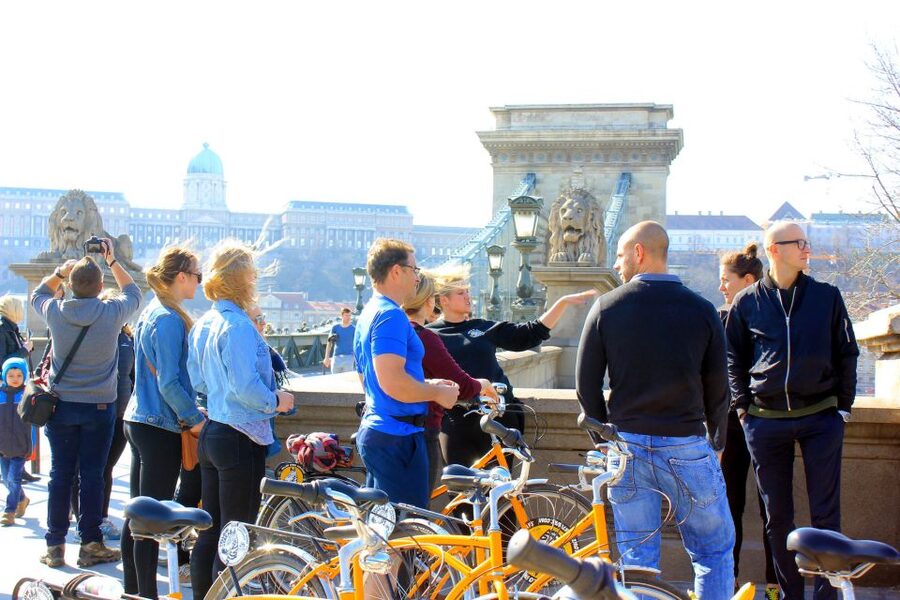
The route is good, but the guide can make or break a bicycle tour. A map can show you the bridges and buildings. It cannot easily explain why Buda was repeatedly fought over, how the two halves developed, or why a particular square matters.
Beka is praised for being personable, funny, and clear in the way the stories are told. Becker is also singled out for strong knowledge of the city and an engaging manner. The names appear in connection with different departures, so you should not assume which guide you will have.
The best part of this format is the combination of movement and short explanations. You get enough context to understand what you are seeing, then continue to the next part of the city before the information becomes heavy. That suits visitors who want history in usable portions.
One practical warning: the tour may not always operate exactly as expected. A scheduling mistake led one booking to receive an e-bike instead of a regular bicycle. That still allowed the ride to go ahead, but the change mattered to the person who had booked a conventional bike. If your equipment choice is important, confirm it at the start.
Fitness, hills, and the right kind of rider
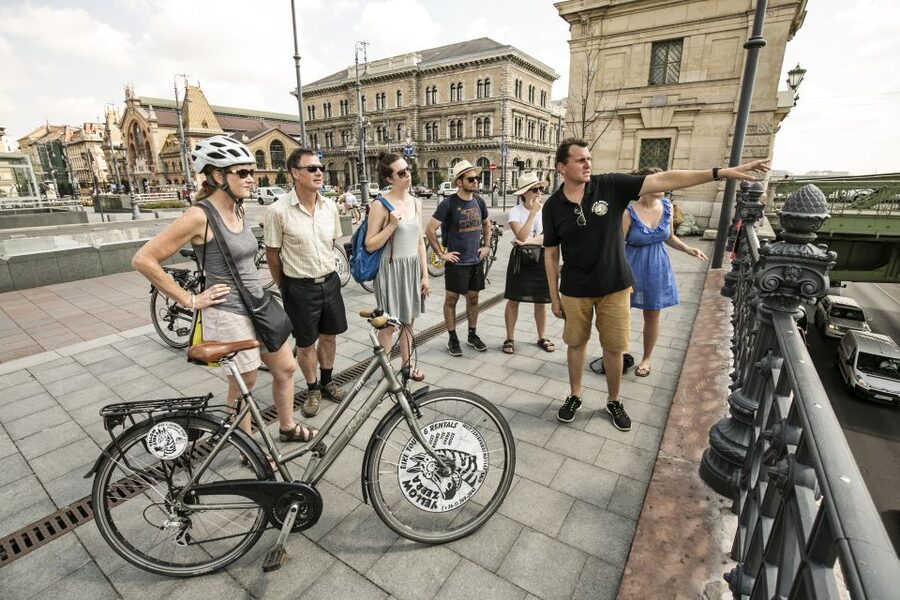
You should be fit enough for light but mostly continuous biking, with short breaks, for up to three hours. The route is not presented as strenuous, but Buda includes uphill sections. One rider specifically advised keeping those climbs in mind before booking.
You do not need to be a serious cyclist. You do need to feel steady on a bike and comfortable riding through an active capital city. If you rarely cycle, a short urban ride before your trip may help you judge your comfort level.
The tour is not suitable for children under 12. Anyone joining should wear comfortable shoes, dress for the forecast, and avoid intoxication. The operator is not responsible for unforeseen delays or accidents, so normal care and attention are part of the experience.
If you prefer a more demanding ride, arrangements may be possible for a more strenuous option. The supplied information does not specify exactly how that is arranged, so ask the operator before booking rather than assuming the standard route can be changed on the day.
Is $41 a fair price?
At $41 per person, the value comes from the combination of bike hire, a live English-speaking guide, and a route covering both sides of the Danube. You are paying for orientation, transport between sights, and local explanation in one package.
It is a fair price if you want to see many central landmarks in a short time. Reaching Parliament, several bridges, the Opera House, the basilica, the synagogue, Gellért, and Rudas by yourself would require careful planning and a mixture of walking and public transport. The bicycle turns that into one organized outing.
The price is less attractive if you plan to enter several sights during the ride. Admission fees are extra, as are food, drinks, and public transport. This is best viewed as a city sightseeing tour, not an all-inclusive Budapest pass.
The free cancellation window also reduces the risk of committing too early: you can cancel up to 24 hours before the activity for a full refund. The reserve-now, pay-later option is useful if your schedule is still shifting, though you should still check the available starting time before building the rest of your day around it.
Who should book this Budapest bike tour?
I would choose this ride for a first or second day in Budapest, especially if you want a clear overview before selecting the museums, baths, churches, or neighborhoods you will explore in depth.
It suits adults, couples, friends, and families with children 12 or older who can manage steady urban cycling. It is also a good match for visitors who enjoy history but do not want to spend several hours indoors.
You may want a different activity if you dislike cycling in traffic, struggle with hills, or want long visits inside the attractions. A walking tour may be easier for you, while a dedicated Parliament, Opera House, or thermal bath visit will offer more time at one place.
Weather is another deciding factor. The tour runs in all weather, with no refund or exchange for poor conditions. If rain or cold would ruin your afternoon, choose a day with a favorable forecast or make sure your clothing can handle the conditions.
Should you book the Danube Views Bike Ride?
Book it if you want a lively overview of Budapest with real city mileage, bridge crossings, river views, and stories that connect Buda and Pest. The small group and strong guides, especially Beka and Becker, add personal value, while the $41 price is reasonable for bike hire and 2.5 hours of guided sightseeing.
Skip it if you want a relaxed walking pace, interior admissions, or a completely flat route. The hills around Buda and the mostly continuous pedaling are the details that matter most.
For the right rider, this is an efficient way to get your bearings fast and decide where to return on foot. Bring comfortable shoes, dress for the weather, and treat the ride as an introduction to Budapest rather than the final word on any one attraction.
FAQ
How long does the Budapest bike tour last?
The activity lasts 2.5 hours. The route includes mostly continuous biking with short breaks and is described in some information as lasting up to three hours.
What sights are included on the route?
You can expect to see the Danube, Andrassy Avenue, the Opera House, the Great Synagogue, St. Stephen’s Basilica, Liberty Square, Parliament, Margit Bridge, Chain Bridge, Elisabeth Bridge, Clark Adam Square, Hotel Gellért, and Rudas Thermal Baths.
Does the tour visit both Buda and Pest?
Yes. You ride through Pest, cross Margit Bridge to Buda, visit Buda-side sights, and return to Pest across Elisabeth Bridge.
Is bike hire included?
Yes. Bike hire is included, and an optional helmet is available.
How large is the group?
The tour is limited to 10 participants and includes a live English-speaking guide.
Is the tour suitable for children?
The tour is not suitable for children under 12. Participants should be fit enough for light but mostly continuous biking, including some uphill sections.
What happens if the weather is bad?
The tour operates in all weather conditions. Refunds or exchanges are not provided because of adverse weather, so bring weather-appropriate clothing.
Where does the tour meet?
Meet at Yellow Zebra Bikes & Segways, 1052 Budapest, Károly körút 16, in the courtyard. Use doorbell 6.
Just added around Budapest
- From Budapest: Guided Tour of Eger with Wine Tasting★ 4.5 · 6 reviews
- Budapest: Private Walking Tour with a Local Guide★ 3.6 · 6 reviews
- Trash Art Museum: Hungary’s First Scrap Metal Exhibition★ 4.3 · 72 reviews
- Walk to recent and aged spiritual sanctuaries near Budapest★ 5.0 · 5 reviews
- Budapest: 3-Hour Trabant Sightseeing Tour★ 4.7 · 28 reviews
- True Crime Walking Tour in the Buda Castle district★ 5.0 · 26 reviews
- Audio visual multi-sensory chefs journey dinner experience★ 5.0 · 3 reviews
- Wine Tasting in the Countryside from Budapest★ 5.0 · 14 reviews
Cycling Tours, compared.
Browse the lists this tour appears in