
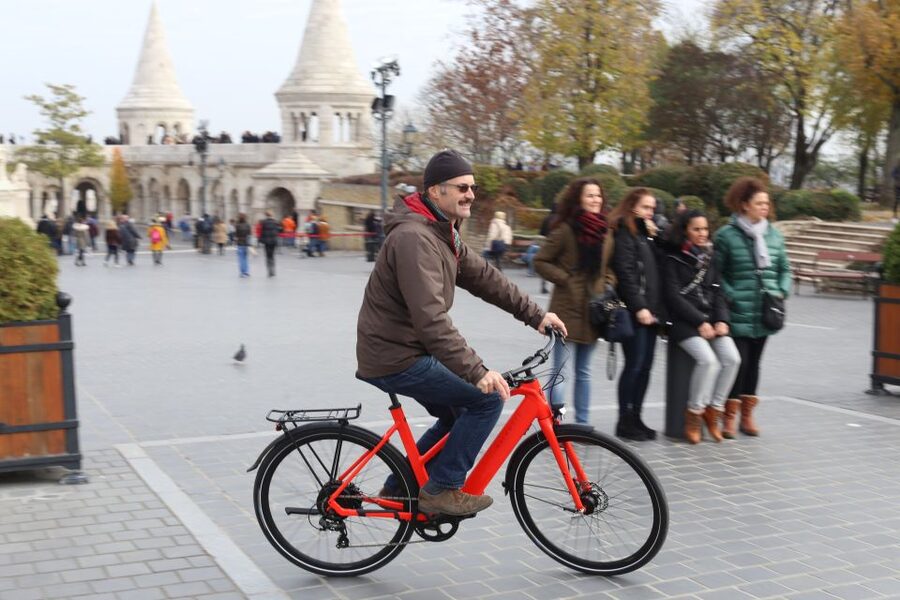
Reviewed · CYCLING TOURS
Budapest: Guided Downtown Electric Bike Tour
Budapest is spread across two distinct sides of the Danube, and this 3.5-hour e-bike tour gives you a useful, lively introduction to both. You pedal from Andrássy Avenue through the grand Pest sights, cross the Chain Bridge, climb Castle Hill, then return past the baths, market hall, museum, and Jewish Quarter.
I like two things here. First, the electric assist turns Budapest’s hills into a minor nuisance rather than a workout. Second, you cover an impressive amount of ground, including viewpoints and neighborhoods that are hard to fit into one walking tour. The main consideration is that you stop outside the sights, so this is an orientation tour, not an inside visit.
Guides including Ollie, Karol, Katalin, Thomas, Balint, and Katy have been praised for clear storytelling, humor, patience, and a good pace. At $63 per person, the tour offers solid value if you want to see the city’s main landmarks quickly and decide where to return later.
In This Review
- Key points at a glance
- Why an e-bike works so well in Budapest
- From Andrássy Avenue to Heroes’ Square
- City Park and the fake castle
- Basilica, Liberty Square, and Parliament
- The Danube and a memorable bridge crossing
- The Castle Hill test, made easy by electric power
- Rudas Bath, Gellért Hill, and Liberty Bridge
- Market Hall, National Museum, and the Jewish Quarter finish
- How the guiding affects the experience
- Timing, weather, and who should book
- Is $63 a fair price?
- Should you book the Budapest e-bike tour?
- FAQ
- How long is the Budapest guided e-bike tour?
- How much does the tour cost?
- Where does the tour begin and end?
- How do I find the Bike & Relax meeting point?
- What languages does the guide speak?
- How many people are in the group?
- Do I need to pedal an electric bicycle?
- Are helmets included?
- Do I enter the Parliament, baths, churches, museums, or synagogue?
- What should I bring?
Key points at a glance
- Castle Hill without the struggle: Electric support makes the uphill ride to Matthias Church and Fisherman’s Bastion manageable.
- A true city overview: The route links Andrássy Avenue, City Park, Parliament, the Danube, Buda, the baths, the market hall, and the Jewish Quarter.
- Small groups matter: With no more than 10 participants, the guide can usually keep the ride together and answer questions.
- Good for first days in Budapest: You get a mental map of the city and can mark places for a later visit.
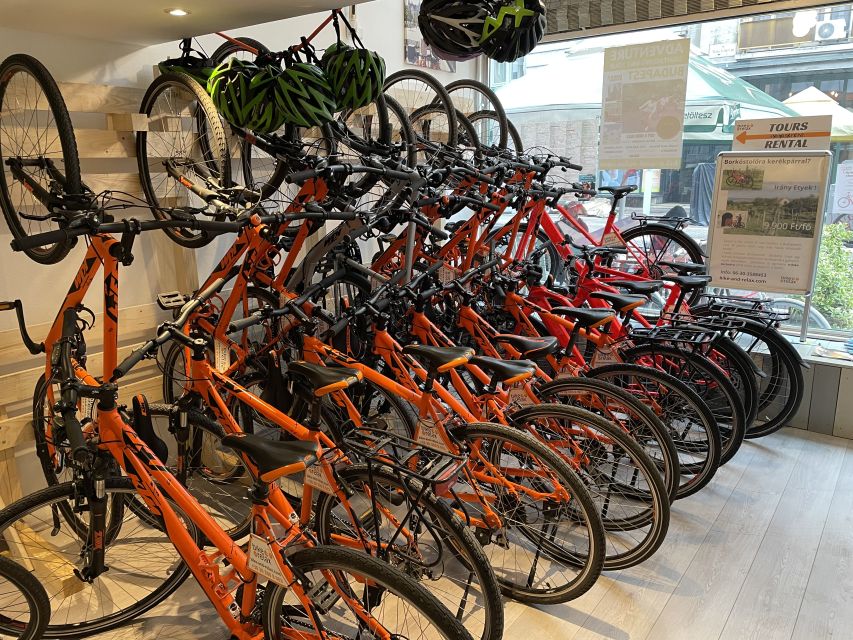
- Comfortable, practical bikes: You may ride a wooden-frame my-esel bike or a Kalkhoff Berleen e-bike, both with electric assistance.
- No museum entries included: Expect photo stops and outdoor explanations, then plan separate visits to the interiors you want to see.
Why an e-bike works so well in Budapest
Budapest is a fine city for cycling, but it is not flat. Pest spreads across broad avenues and smaller streets, while Buda rises sharply toward Castle Hill and Gellért Hill. A regular bicycle can handle the route if you are fit, but electric assistance changes the feel of the ride for everyone else.
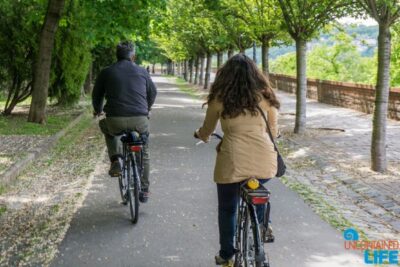
You still pedal. The motor does not turn the bike into a scooter, and you need basic cycling confidence. You can adjust the assistance to match your energy, which makes the ride friendly to mixed-ability groups. One rider described using only two of the bike’s five gears, while another appreciated being able to increase the support on hills.
The bikes are reported to be in very good condition and comfortable overall. One practical warning: the chains are open, so wear clothes that will not suffer from a little grease or keep loose fabric away from the mechanism. Comfortable shoes and easy-moving clothes are the right choice.
Helmets are available but optional. I would take one, especially if you are not used to city cycling, though the route uses bicycle lanes and smaller streets where possible. Large bags and luggage are not allowed, so bring only what you need for the ride.
A few more Budapest trips to weigh up
- Budapest: Grand Sightseeing Bike Tour
★ 4.8 · 984 reviews - Budapest Highlights Bike Tour
★ 5.0 · 770 reviews - Budapest: Guided City Discovery Bike Tour
★ 4.7 · 702 reviews
From Andrássy Avenue to Heroes’ Square
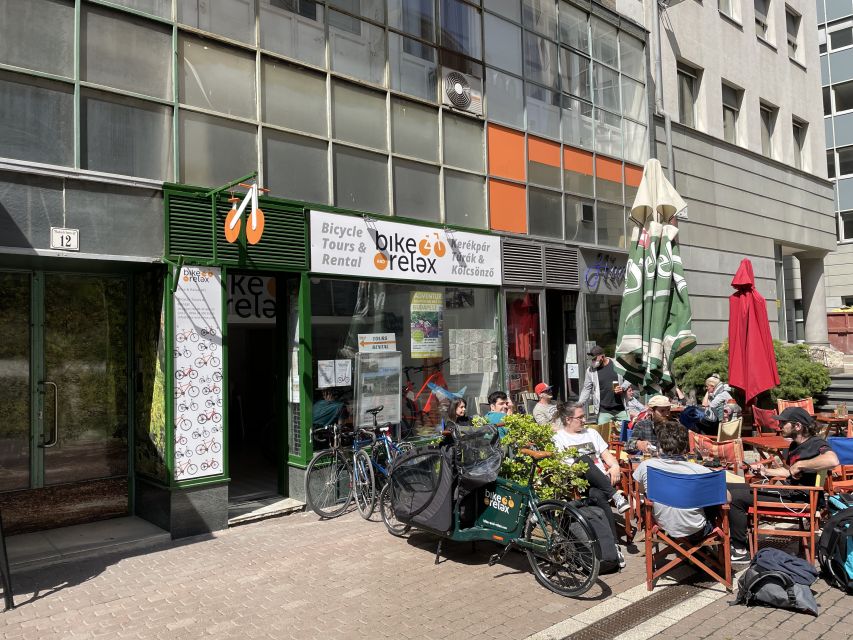
The meeting point is Bike & Relax in the center of the Jewish district, near Madách tér, Gozsdu udvar, and Deák tér. Cafe Hivatal is beside the shop, which helps you identify the spot. Deák tér is the city’s main transport hub, served by the M1, M2, and M3 metro lines, trams 47, 48, and 49, and the 100E airport bus.
Once the bikes are adjusted and the guide explains how the electric support works, the route heads along Andrássy Avenue. This is one of Budapest’s grandest streets, lined with historic buildings and cultural institutions.
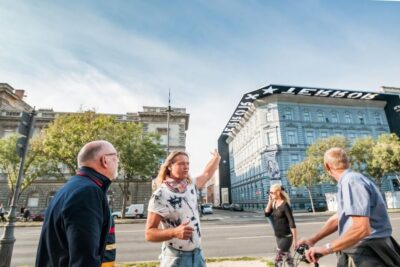
You pass the Hungarian State Opera House, one of the city’s best-known architectural landmarks, and the House of Terror. The latter deals with the Nazi and Communist periods in Hungary and gives the ride an early dose of difficult history. The guide’s comments help put the buildings and street into context rather than leaving you with a string of names.
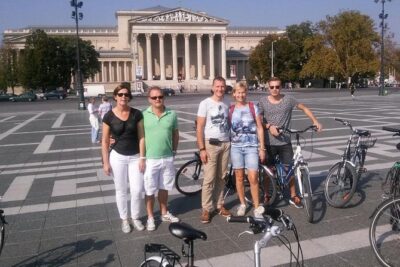
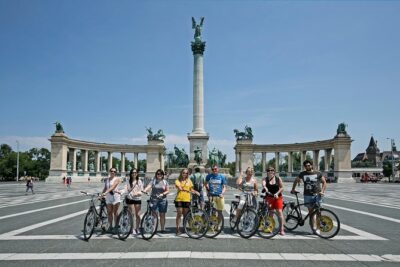
Andrássy Avenue leads to Heroes’ Square, a broad ceremonial space marked by statues of major figures from Hungarian history. It is one of the tour’s main photo stops, and the open plaza gives your group room to park the bikes and listen.
City Park and the fake castle
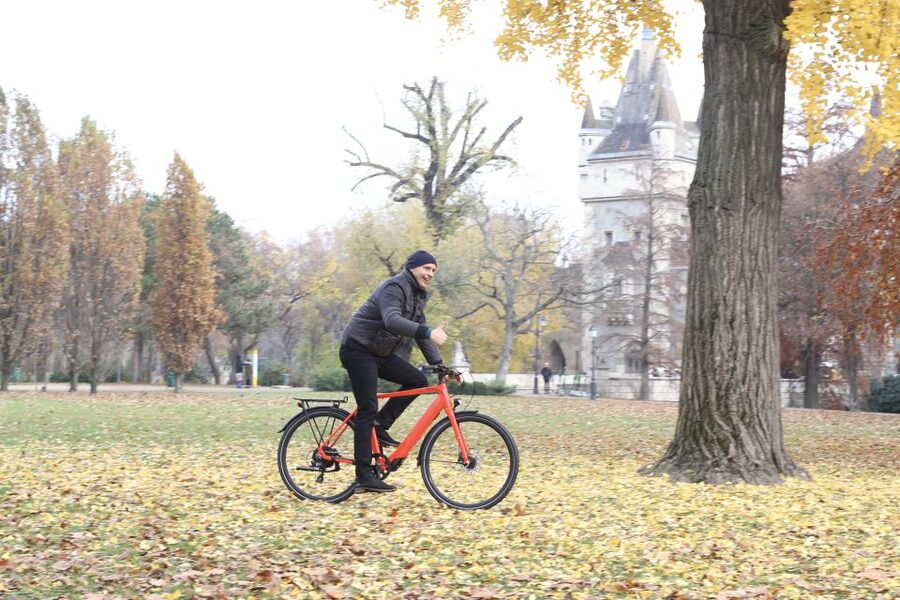
From Heroes’ Square, you ride into City Park. The park provides a welcome change from the formal avenue, and it contains two of Budapest’s most recognizable attractions.
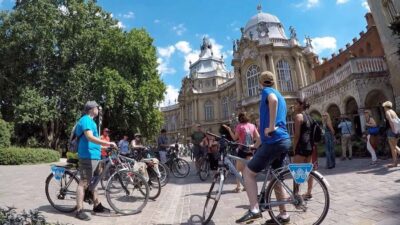
Vajdahunyad Castle looks medieval, but it was built as part of a historic exhibition and combines several Hungarian architectural styles. That is why the description of it as a fake castle is fair, though it remains a striking place to photograph.
You also pass Széchenyi Thermal Bath, Budapest’s largest and most popular bath complex. You will not go inside on this tour, but seeing the grand yellow building helps explain why thermal bathing is such a central part of the city’s culture. If a bath visit is on your list, note this location for another day.
The route also takes in the Liszt Ferenc Academy of Music before heading toward the central districts. These stops give the first part of the ride some variety: national monuments, a park, bathing culture, music, and city history all arrive within a manageable stretch.
Basilica, Liberty Square, and Parliament
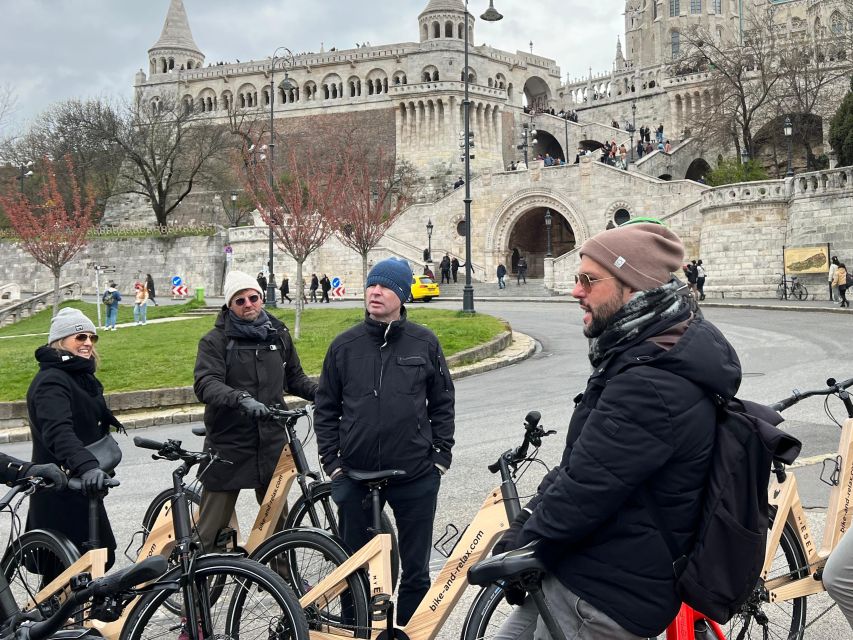
The ride continues through the downtown area and the Jewish Quarter, where the guide connects present-day streets with Budapest’s complicated past. The exact order of stops can shift with road conditions, but the route includes the Dohány Street Synagogue and returns to that area near the end.
St. Stephen’s Basilica is another major outdoor stop. It is the largest church in Budapest and dominates the surrounding square. The guide explains its place in the city, but remember that the tour does not include entry. You will need to return independently if you want to see the interior.
Liberty Square offers one of the more serious pauses. Its history includes violence and political conflict, and the square also contains a disputed Holocaust memorial. This is a good example of what a local guide adds: you see more than a handsome open space and hear why its monuments remain sensitive.
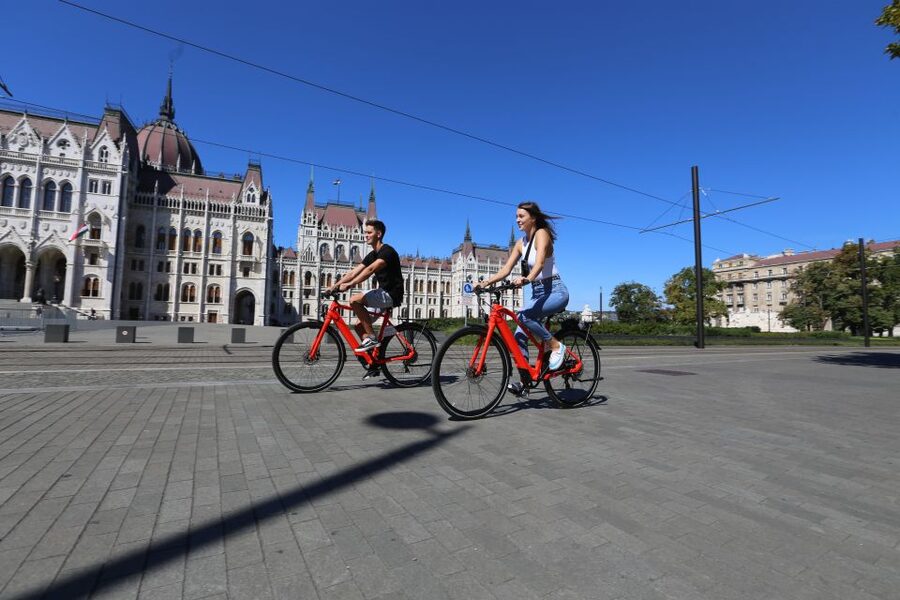
From Liberty Square, it is a short ride to the Hungarian Parliament Building. The riverside view is one of Budapest’s signature scenes, with the ornate parliament facade facing the Danube and Buda rising across the water.
Same riverbank, a completely different kind of day:
- Budapest: Unlimited Prosecco, Beer and Aperol Spritz Cruise
★ 4.8 · 25,310 reviews - Budapest: Széchenyi Spa Day Ticket with Optional Upgrades
★ 4.3 · 23,911 reviews - Budapest: Nighttime or Daytime Sightseeing Cruise
★ 4.2 · 21,062 reviews - Budapest: 1-Hour Evening Sightseeing Cruise with Drink
★ 4.5 · 8,330 reviews
The Danube and a memorable bridge crossing
At the river, you get a broad view of the Buda side and the hills beyond. The route passes the Monument of the Shoes, a memorial to Jewish people murdered along the Danube during World War II.
Direct access to the monument is not always possible. That detail matters because you should not expect to stop right beside the shoes every time. You can still learn about the site and see the river setting, but the guide must work around access and conditions.
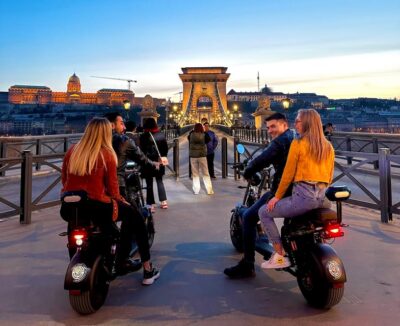
The tour then crosses the Chain Bridge, one of Budapest’s defining landmarks. It has been renovated and is closed to private cars, which makes the crossing more pleasant than a normal traffic-heavy bridge ride. You still need to follow the guide carefully and stay aware of other road users.
The bridge gives you a classic view back toward Pest and the Parliament. It also marks the change from the broad, flatter streets of Pest to the uphill approach on the Buda side.
The Castle Hill test, made easy by electric power
Castle Hill is where the e-bike earns its keep. The climb is the hardest physical section of the route, but the motor takes much of the strain. You still pedal, yet the ascent should feel far less intimidating than it would on a standard rental bike.
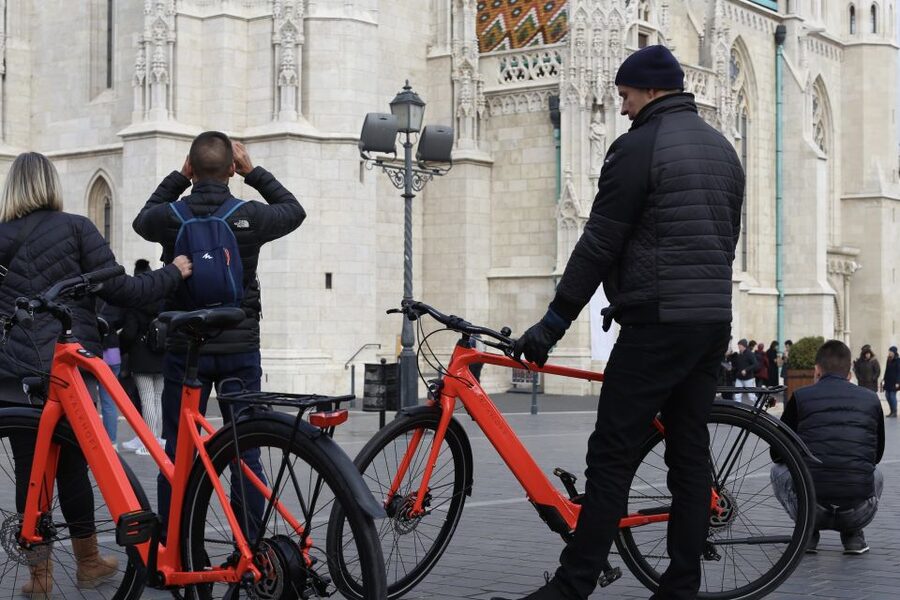
At the top, the tour stops at Matthias Church and Fisherman’s Bastion. Matthias Church is known for its patterned roof and ornate exterior, while Fisherman’s Bastion provides sweeping views across the Danube to Pest. This is one of the best places for photographs, and several guides have been praised for allowing enough time at viewpoints instead of hurrying the group along.
The hilltop section is also where the tour feels most useful as an overview. You see how the river divides the city, how Parliament sits on the Pest bank, and how the historic Buda district occupies high ground above the water.
There is a tradeoff. Castle Hill deserves more time than a short photo stop if you want to explore its lanes, church interior, museums, or palace area. The bike tour shows you the main points, but you may want to return on foot later.
Rudas Bath, Gellért Hill, and Liberty Bridge
The route returns toward the Danube and passes Rudas Thermal Bath, a historic bathing site at the foot of the Buda hills. As with Széchenyi Bath, the tour stays outside. Still, passing several bathhouses in one ride gives you a sense of how deeply the thermal tradition is woven into Budapest.
At Gellért Hill, you see Gellért Thermal Bath and the slopes above the river. This part of the route adds another change in scenery, from the castle district to the riverfront and spa architecture.
You then cross Liberty Bridge back to Pest. Its green steel structure is one of the city’s most recognizable bridges, and it connects the Buda side with the Central Market Hall area. The bridge crossing helps complete the two-sided picture of Budapest: grand Pest boulevards, high Buda viewpoints, and the Danube tying them together.
Market Hall, National Museum, and the Jewish Quarter finish
The Central Market Hall is a useful final cluster of sights. Its historic market building is a good place to return for paprika, produce, pastries, or a quick look at everyday Hungarian food culture, though food and drinks are not included in the tour.
The route also passes the Hungarian National Museum. You will see the building from outside and hear about its role in Hungarian culture and history. If you want galleries and exhibits, schedule a separate visit.
The final major stop is the Dohány Street Synagogue in the Jewish Quarter. The surrounding district is now one of the liveliest parts of central Budapest, but it also carries the weight of the city’s Jewish history and the Holocaust. Ending here gives the ride a thoughtful connection to the earlier stops at Liberty Square and the Danube memorial.
After that, you return to Bike & Relax. The full circuit covers a great deal, with one rider estimating about 15 miles. That distance explains the tour’s value, but it also means you should expect a full ride rather than a slow neighborhood stroll.
How the guiding affects the experience
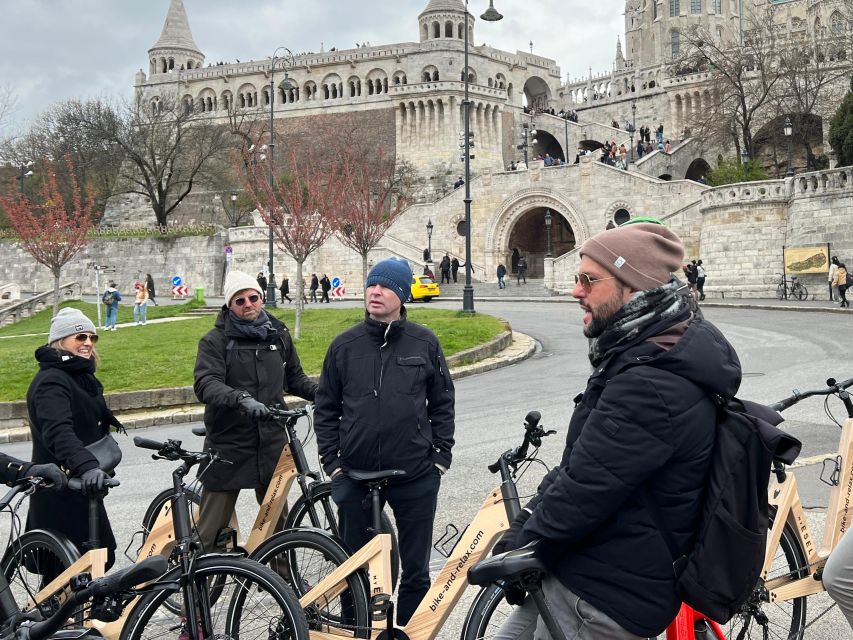
The quality of this tour depends heavily on the guide, and the guide names that come up most often include Ollie, Karol or Karoly, Thomas, Katalin, Balint, and Katy. Their strengths include clear English, personal stories, humor, calm pacing, and an ability to answer questions without turning every stop into a lecture.
Katalin is especially suited to history-minded visitors who like detailed explanations. Ollie has been praised for humor and a good grasp of Budapest’s past. Karol and Thomas are noted for considerate pacing, while Balint and Katy have been described as personal and generous with explanations.
That does not mean every tour will feel identical. A guide may shape the emphasis around the group’s interests and the day’s conditions. The strongest part of the format is that you are not just following a route on a map. You get a local explanation of why the city looks and feels the way it does.
The group limit of 10 is important. It is small enough for the guide to keep an eye on riders, stop for questions, and adjust the pace. It is not a private tour, so you will still share the ride with other people, but it should feel more manageable than a large bike convoy.
Timing, weather, and who should book
The advertised duration is about 3.5 hours, though the ride can take longer depending on conditions. Guides have adjusted stops for heat, and the operator has provided rain ponchos when needed. Still, Budapest weather can change your comfort quickly on an open bicycle, so check the forecast and dress in layers.
You need to be able to ride a bicycle and should have some city-cycling experience. The tour is not suitable for children under 13, pregnant women, people with mobility impairments, or anyone unable to ride. Height and weight limits also apply: riders must be at least 160 centimeters tall and no more than 110 kilograms. The supplied information also lists 155 centimeters as a lower limit, so if you are near the minimum, confirm the correct bike size before booking.
I would choose this for a first or second day in Budapest. It gives you a working map of the city, and you can return later to the Parliament area, Castle Hill, a bath, the market hall, or the Jewish Quarter with a better sense of where everything fits.
It suits active adults, couples, friends, and families with older teenagers who want more range than a walking tour. It is also useful during a short stay or layover, when seeing the headline sights in one outing matters.
Is $63 a fair price?
At $63, the tour is not the cheapest way to see Budapest. Public transport and walking cost much less, and you can rent a bicycle independently if you prefer setting your own route.
The value comes from combining a quality e-bike, a guide, a planned route, and access to both sides of the city in one half-day. The Castle Hill climb alone makes the electric support useful, while the guide saves you from spending time working out which streets and bridges connect the major sights.
You should think of the price as paying for orientation and efficiency. If you want long visits inside museums, baths, churches, or the synagogue, this is not the right single activity. If you want to see a lot, understand the city’s layout, and choose later stops with confidence, $63 is a reasonable spend.
Free cancellation up to 24 hours before the start and the option to reserve now and pay later add flexibility. The available languages are English, German, and French.
Should you book the Budapest e-bike tour?
I would book this tour if you want a broad first look at Budapest and are comfortable on a bicycle. The route covers an unusually large number of major sights, and the electric assist removes the biggest obstacle, the climb to Castle Hill.
Choose it early in your stay so you can return to the places that catch your interest. Skip it if you dislike cycling, need full interior visits, carry large luggage, or want a slow, detailed look at only one neighborhood.
For most visitors who can ride a bike, this is a fun and efficient way to understand Budapest before exploring it in more depth.
FAQ
How long is the Budapest guided e-bike tour?
The tour lasts approximately 3.5 hours, though the timing can vary depending on conditions on the day.
How much does the tour cost?
The listed price is $63 per person.
Where does the tour begin and end?
The tour begins and ends at Bike & Relax in central Budapest’s Jewish district, near Madách tér, Gozsdu udvar, and Deák tér.
How do I find the Bike & Relax meeting point?
Look for Cafe Hivatal beside the shop. The location is just around the corner from Gozsdu udvar Court and Deák tér.
What languages does the guide speak?
Guides are available in English, German, and French.
How many people are in the group?
The group is limited to 10 participants.
Do I need to pedal an electric bicycle?
Yes. The e-bike provides electric support, but you still need to pedal.
Are helmets included?
Helmets are available, but wearing one is optional.
Do I enter the Parliament, baths, churches, museums, or synagogue?
No. The tour includes outdoor stops and explanations, but entry into the listed landmarks is not included.
What should I bring?
Bring comfortable shoes and comfortable clothes. Large bags and luggage are not allowed.
Just added around Budapest
- From Budapest: Guided Tour of Eger with Wine Tasting★ 4.5 · 6 reviews
- Budapest: Private Walking Tour with a Local Guide★ 3.6 · 6 reviews
- Budapest: Danube River Views Bike Ride★ 4.8 · 23 reviews
- Trash Art Museum: Hungary’s First Scrap Metal Exhibition★ 4.3 · 72 reviews
- Walk to recent and aged spiritual sanctuaries near Budapest★ 5.0 · 5 reviews
- Budapest: 3-Hour Trabant Sightseeing Tour★ 4.7 · 28 reviews
- True Crime Walking Tour in the Buda Castle district★ 5.0 · 26 reviews
- Audio visual multi-sensory chefs journey dinner experience★ 5.0 · 3 reviews
Cycling Tours, compared.
Browse the lists this tour appears in