
Reviewed · FOOD & DRINK
Budapest: Downtown Food Tour
Budapest reveals itself especially well through food. This 3.5-hour walking tour links a café, street-food stand, classic restaurant, and local wine tasting, giving you a useful first taste of Hungarian cooking and the city streets where daily life happens.
I like the mix of proper sit-down food and casual bites, from homemade strudel to langos. I also like the small group limit of 10, since guides such as George and Zoltan can answer questions and adjust the conversation. The main trade-off is that some walking and sightseeing may replace an extra tasting stop.
In This Review
- Key points
- Why food is a smart way to see Budapest
- Meeting at the Opera subway station
- The café opening: strudel and espresso
- Langos at a Budapest street-food stand
- Goulash soup in a classic restaurant
- Wine, sausages, cheese, and pickles
- The secret dish keeps one thing unknown
- Walking, sightseeing, and the pace of the afternoon
- The guides make the biggest difference
- Who will get the most from this tour
- Practical value at $115 per person
- Should you book the Budapest Downtown Food Tour?
- FAQ
- How long is the Budapest Downtown Food Tour?
- What food is included?
- Are drinks included?
- Where does the tour meet?
- Where does the tour end?
- Is hotel pickup included?
- What language is the tour conducted in?
- How many people are in the group?
- Can I cancel the booking?
Key points
- Start with strudel and espresso: Begin at a local café house with a homemade Hungarian pastry and coffee.
- Taste Budapest street food: Try langos, a fried Hungarian specialty served at a street-food stand.
- Goulash is served traditionally: Sit down at a classic restaurant for goulash soup.
- Finish with wine and savory bites: Sample organic Hungarian wine with sausages, pickled vegetables, and local cheese.
- Small groups make conversation easier: No more than 10 participants join the English-language tour.
- Guides add history to the meal: George and Zoltan have both led tours praised for their food knowledge, Hungarian history, and personal insight.
Why food is a smart way to see Budapest
A food tour gives you more than a list of dishes. It helps you understand how Hungary’s cooking developed, with influences from France and Turkey, while also showing how Budapest eats today.
You move through the historic city centre rather than sitting in one restaurant for the whole afternoon. That matters because the walking connects each dish with Budapest’s streets, cafés, neighborhoods, and cultural sights. You get a meal and a gentle orientation to the city at the same time.
I would place this tour early in a Budapest visit. You can use the guide’s advice for later meals, markets, wine choices, and dishes to order on your own. It is also a good way to get your bearings without committing to a full sightseeing tour.
The experience costs $115 per person. That is not a cheap snack crawl, but the price includes all food and drinks, a local English-speaking guide, and several distinct stops over three and a half hours. If you paid separately for a café visit, street food, restaurant soup, wine, cheese, and sausages, the total would add up quickly.
The value depends on what you want. If you mainly want the largest possible amount of food, you might find a market visit or casual restaurant meal less expensive. If you want context, company, and a set route through central Budapest, the price is easier to justify.
A few more Budapest trips to weigh up
- Budapest: Unlimited Prosecco, Beer and Aperol Spritz Cruise
★ 4.8 · 25,310 reviews - Budapest: Unlimited Prosecco, Beer & Aperol Spritz Cruise
★ 4.5 · 3,371 reviews - Budapest: Wine, Cheese, and Charcuterie Tasting
★ 4.9 · 647 reviews
Meeting at the Opera subway station
The tour begins at the entrance to The Opera House Subway Station. Look for the guide holding an orange umbrella. This is a practical meeting point in central Budapest, and the activity finishes back there.
There is no hotel pickup or drop-off. You need to reach the meeting point yourself, then return there at the end. Since the tour includes walking between stops, wear comfortable shoes and avoid arriving hungry enough to feel faint, but leave room for several tastings.
The precise starting time depends on the date you choose, so check availability before booking. The advertised duration is 3.5 hours, although one participant described a day lasting closer to four hours. I would keep a little flexibility in your schedule rather than placing an important timed activity immediately afterward.
The café opening: strudel and espresso
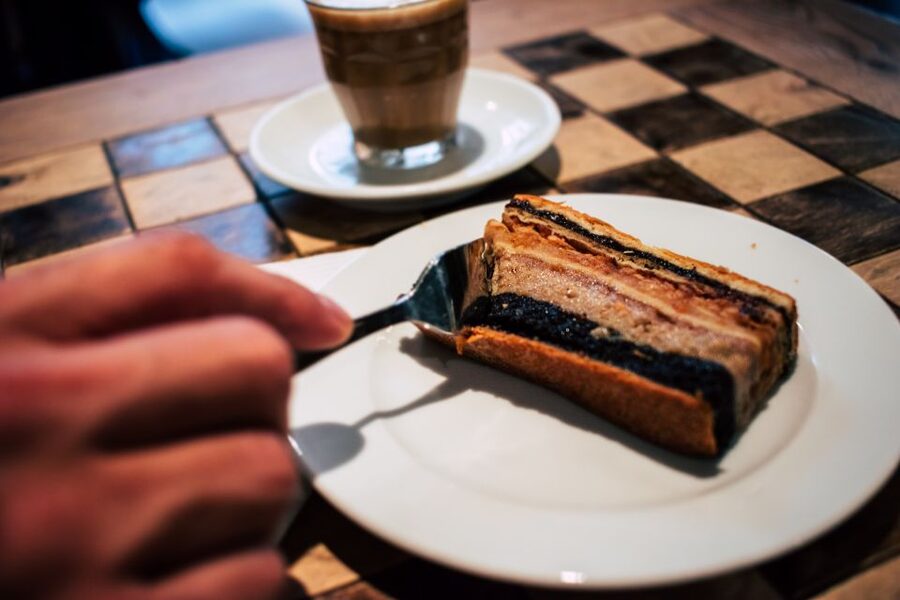
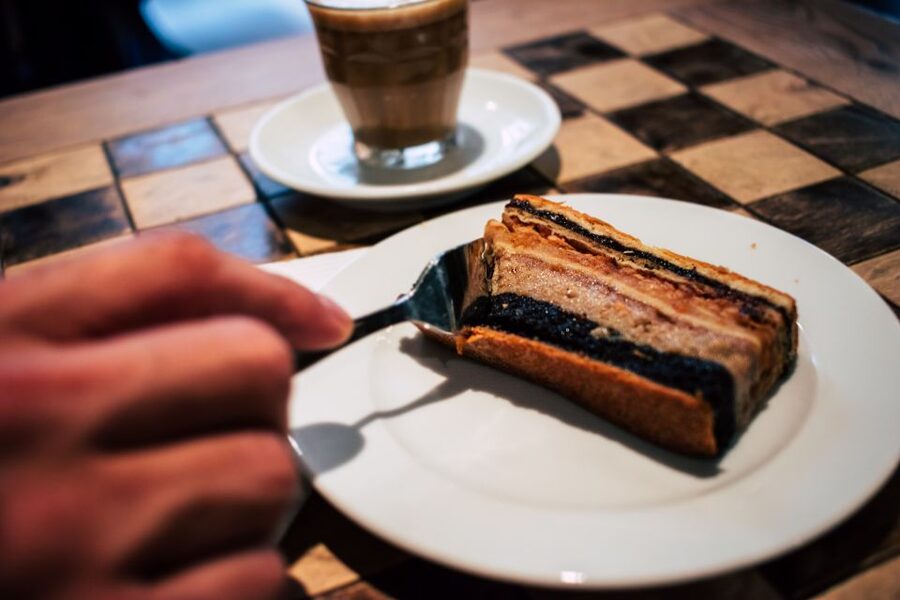
The first stop is a local café house, where you taste homemade Hungarian strudel with an espresso. This is a gentle beginning and a useful introduction to the café side of Budapest.
Strudel is often associated with Austria, but it has a place in the wider food culture of Central Europe, including Hungary. Starting with a pastry also gives your guide an easy way to explain how neighboring countries have influenced Hungarian cooking.
The coffee makes this more than a quick pastry sample. You settle in, meet the group, and begin hearing about Hungary’s food traditions before moving on. The café stop should suit you if you like to understand a dish as you eat it, not simply check it off a list.
A practical point: coffee and pastry are not a full breakfast. If you need a substantial meal first thing in the day, eat lightly before meeting the group. You will have several more stops, so a little restraint helps.
Langos at a Budapest street-food stand
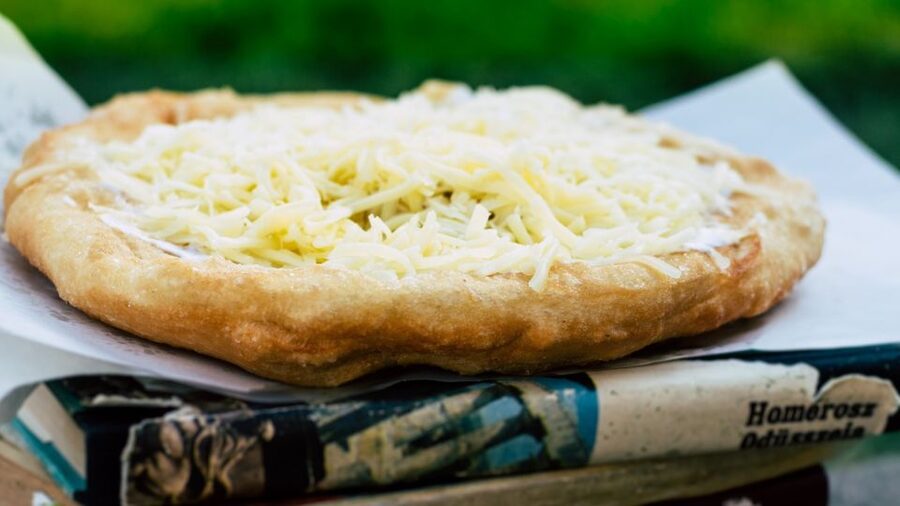
Next comes langos, one of Hungary’s best-known street foods. It is a fried specialty, and the street-food setting is part of its appeal. You are not only tasting a national favorite in a formal dining room, you are seeing the more casual side of Hungarian eating.
This stop adds contrast to the café opening. Strudel is delicate and sweet, while langos is hearty street food. The shift helps show the range of Budapest cooking in a short time.
The food is included, but the details of toppings and serving style are not specified in advance. If you have a strong preference or dietary restriction, ask the guide what is available at the stop. One participant with celiac disease said Zoltan took the condition seriously and arranged suitable care, but you should still communicate your needs clearly before and at the start of the tour.
Langos can be filling, so pace yourself. The tour still has a restaurant course and a final wine-and-snack stop ahead.
Same riverbank, a completely different kind of day:
- Budapest: Széchenyi Spa Day Ticket with Optional Upgrades
★ 4.3 · 23,911 reviews - Budapest: Nighttime or Daytime Sightseeing Cruise
★ 4.2 · 21,062 reviews - Budapest: 1-Hour Evening Sightseeing Cruise with Drink
★ 4.5 · 8,330 reviews - Budapest Danube Cruise and Dinner Options, Live Music and Dance
★ 4.5 · 7,428 reviews
Goulash soup in a classic restaurant
The goulash course takes place in a classic restaurant. This is where the tour shifts from quick tasting to a proper Hungarian dish, with time for your guide to explain what you are eating and how it fits Hungarian food culture.
Goulash can mean different things depending on the country and the restaurant. Here it is served as soup, giving you a warm, traditional course rather than the thicker stew-style dishes often found outside Hungary.
I like this stop because it puts a familiar name into a local setting. You can taste the dish while asking questions about Hungarian ingredients, cooking, and everyday life. Guides George and Zoltan have been praised for connecting food explanations with stories about Hungary’s past and present.
The restaurant portion may also slow the pace. That is good if you want to sit down and talk, but less ideal if your main goal is to visit as many food stands as possible. This is a food-and-culture walk, not a rapid-fire sampling contest.
Wine, sausages, cheese, and pickles
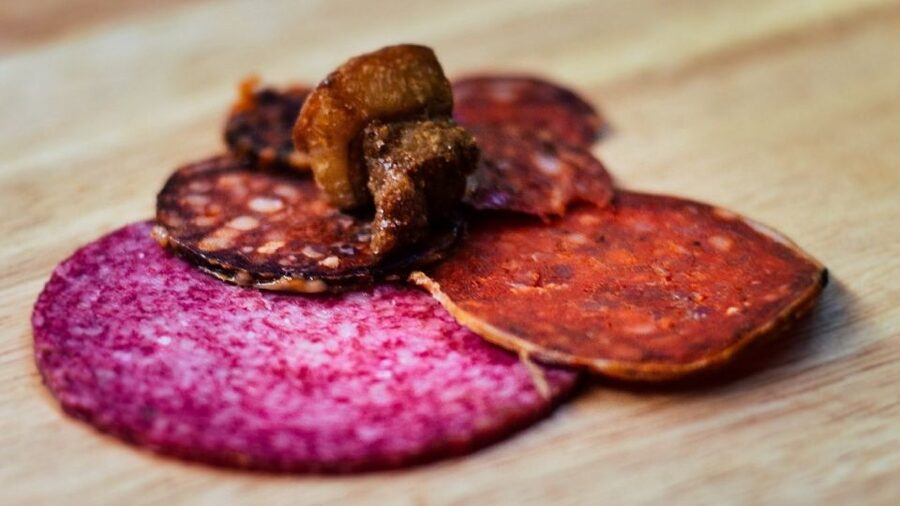
The final regular stop focuses on Hungarian wine paired with several savory foods. You taste organic Hungarian wine alongside sausages, pickled vegetables, and local cheese.
This pairing gives the tour a more complete ending. You have already tried pastry, coffee, fried street food, and soup. The wine stop brings together salty, sour, creamy, and savory flavors, with the pickled vegetables adding a sharp counterpoint to the sausages and cheese.
The phrase finest wine is promotional language, so I would not book this expecting a formal wine education or a high-end tasting room. What you can expect is a guided chance to try Hungarian wine with local foods and learn why the pairings work.
The wine element also makes this tour less suitable for anyone avoiding alcohol. Food and drinks are included, but the information does not specify nonalcoholic replacements. Ask before booking if that matters to you.
The secret dish keeps one thing unknown
As with the company’s other food tours, the experience includes a secret dish. Its identity is not given ahead of time, which adds a small surprise to the final meal.
That uncertainty is fun for adventurous eaters, but it may matter if you have allergies, follow a strict diet, or prefer to know every ingredient in advance. Ask the guide about the dish when you meet. The tour includes several types of food, so clear communication is important.
The secret dish is also a reason not to plan a large meal immediately afterward. The exact portion sizes are not provided, but the stops together are intended to form a substantial tasting experience.
Walking, sightseeing, and the pace of the afternoon
The route explores the historic city centre and several parts of Budapest. Walking between food stops gives you small bits of sightseeing and a chance to see the city beyond restaurant interiors.
Guides add short historical explanations along the way. George, in particular, has been praised for combining food descriptions with mini history lessons, while Zoltan has shared information about Hungarian life, recent history, and politics. The tone can be personal rather than strictly academic, which some people will enjoy more than a scripted lecture.
One point to consider is the balance between food and sightseeing. If you want only tastings, the walking sections may feel longer than expected. If you enjoy learning about a city while moving through it, those walks are part of the value.
The tour does not promise visits to every major landmark, and it is not a substitute for a dedicated Budapest sightseeing walk. Think of the sights as part of the route, not the main event.
The guides make the biggest difference
This experience depends heavily on the person leading it. The strongest feedback centers on George and Zoltan, both of whom have been described as friendly, engaging, and well informed about Hungarian food and history.
George is especially good for people who want lively conversation along with the tasting. His enthusiasm and historical explanations can turn a simple walk between restaurants into a better understanding of Hungary.
Zoltan appears to bring a more personal style. He has talked about Hungarian life and politics, shared strong opinions, and helped a guest with celiac disease. He also took one group to buy paprika at a local market, an extra touch that shows how the tour can sometimes extend beyond the listed food stops.
Your guide will determine the exact tone. You may get a more historical conversation, a more food-focused explanation, or plenty of discussion about modern Hungarian life. The small group size helps here, since a group of up to 10 allows more questions than a large bus tour.
Who will get the most from this tour
I would recommend this tour to first-time visitors who want an introduction to Hungarian food without researching every stop themselves. It also suits couples, solo visitors, and small groups who like meeting other people over a shared meal.
It is a good choice for you if:
- You want food, history, and walking in one afternoon.
- You enjoy trying familiar dishes in their local setting.
- You prefer a small group to a large organized tour.
- You want a guide’s advice about Hungarian cuisine and culture.
- You are happy to let the guide choose some of the food.
You may want another option if you need a very specific diet, dislike walking, avoid alcohol, or want a tour built around famous sights rather than food. The celiac accommodation described for Zoltan is encouraging, but dietary arrangements should not be assumed for every guide or every food stop.
Practical value at $115 per person
At $115, this is a premium food walk, not a budget lunch. Still, the cost covers all listed food and drinks, a guide, several settings, and 3.5 hours of attention in central Budapest.
You are paying for the structure as much as the food. A good guide helps you order with confidence later, explains what makes each dish Hungarian, and fills in the gaps between the stops. That can be especially useful on a short visit when you do not want to spend half a day choosing restaurants.
The small group limit of 10 is important to the value. You are less likely to feel like one face in a crowd, and you have a better chance to ask about ingredients, customs, and local life.
Free cancellation is available up to 24 hours before the start time, and you can reserve now and pay later. Those terms make it easier to place the tour early in your plans while keeping some flexibility.
Should you book the Budapest Downtown Food Tour?
Book it if you want a sociable introduction to Budapest through strudel, langos, goulash, wine, sausages, pickles, cheese, and a surprise dish. The best reason to choose it is the combination of several food settings and strong local guiding, especially if George or Zoltan is leading your departure.
Skip it if you want a low-cost meal, a tightly packed list of tastings, or a sightseeing tour with only brief food stops. For most first-time visitors who enjoy eating and asking questions, the tour offers a useful, flavorful start to Budapest.
FAQ
How long is the Budapest Downtown Food Tour?
The tour lasts 3.5 hours. Check availability for the starting times offered on your chosen date.
What food is included?
The experience includes homemade Hungarian strudel and espresso, langos from a street-food stand, goulash soup in a classic restaurant, Hungarian wine, sausages, pickled vegetables, local cheese, and a secret dish.
Are drinks included?
Yes. Food and drinks are included in the tour price, including espresso and Hungarian wine.
Where does the tour meet?
Meet at the entrance of The Opera House Subway Station. The guide will be waiting with an orange umbrella.
Where does the tour end?
The activity ends back at the original meeting point.
Is hotel pickup included?
No. Hotel pickup and drop-off are not included, so you need to make your own way to the Opera House Subway Station meeting point.
What language is the tour conducted in?
The live tour guide speaks English.
How many people are in the group?
The tour is limited to 10 participants, making it a small-group experience.
Can I cancel the booking?
You can cancel up to 24 hours in advance for a full refund. You can also reserve now and pay later.
Just added around Budapest
- From Budapest: Guided Tour of Eger with Wine Tasting★ 4.5 · 6 reviews
- Budapest: Private Walking Tour with a Local Guide★ 3.6 · 6 reviews
- Budapest: Danube River Views Bike Ride★ 4.8 · 23 reviews
- Trash Art Museum: Hungary’s First Scrap Metal Exhibition★ 4.3 · 72 reviews
- Walk to recent and aged spiritual sanctuaries near Budapest★ 5.0 · 5 reviews
- Budapest: 3-Hour Trabant Sightseeing Tour★ 4.7 · 28 reviews
- True Crime Walking Tour in the Buda Castle district★ 5.0 · 26 reviews
- Audio visual multi-sensory chefs journey dinner experience★ 5.0 · 3 reviews
Food & Drink, compared.

Unlimited Prosecco, Beer and Aperol Spritz Cruise
Read our review →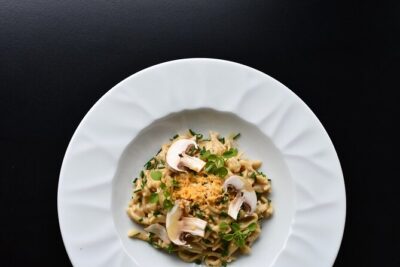
Unlimited Prosecco, Beer & Aperol Spritz Cruise
Read our review →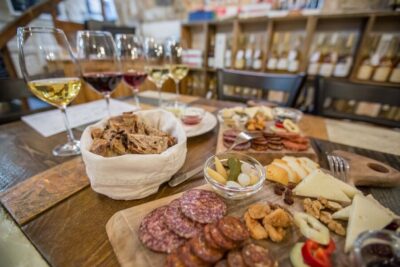
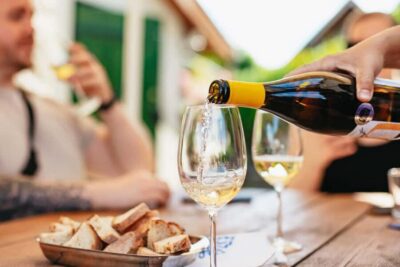
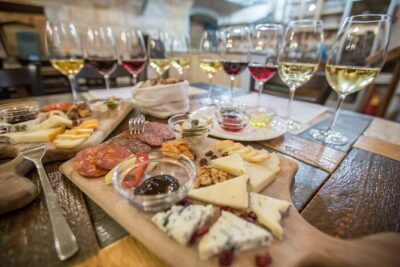
Hungarian Wine Tasting (with Cheese and Charcuterie) in Budapest
Read our review →
Guided Foodie Walking Tour with Food and Drinks
Read our review →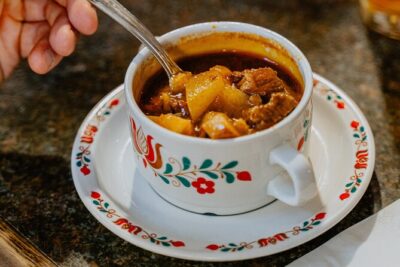
Budapest Food Tour: Market to Tavern with 14+ Tasters & Wines
Read our review →
Budapest BeerSpa with Unlimited Beer and Optional Széchenyi Bath
Read our review →Browse the lists this tour appears in