
Reviewed · HISTORICAL TOURS
Budapest Historical Sightseeing – Free Walking Tour
Budapest’s past is not tidy, and this walking tour does not pretend it is. Over about two and a half hours, you move from the National Museum and the old Jewish Quarter to Communist memorials, Parliament, the Chain Bridge, and the haunting Shoes on the Danube. I like that it connects Hungary’s painful political past with modern Budapest’s cafés, nightlife, customs, and daily life.
I also like the low upfront price and the useful orientation for a first day in town. Guides such as Victoria, Peter, George, and Sabi have been praised for clear English, humor, personal insight, and practical tips. The main catch is simple: you need to walk roughly three miles, often on cobblestones, and the group can reach 50 people, so hearing the guide may take effort.
In This Review
- Key points to know before you book
- Starting at Kálvin tér with the yellow-shirted guides
- The National Museum and the stories behind District VIII
- Unger’s House and Budapest’s mixed architectural language
- Elizabeth Square, Astoria, and the changing Jewish Quarter
- St. Stephen’s Basilica and the religious heart of Pest
- Liberty Square, Communism, and difficult public memory
- Reagan, Bush, and the approach to Parliament
- Looking across the river to Buda Castle and Fisherman’s Bastion
- The Chain Bridge and the final walk beside the Danube
- How the guides shape the experience
- Price, walking effort, and the real value
- Should you book the Budapest Historical Sightseeing Free Walking Tour?
- FAQ
- How long does the Budapest Historical Sightseeing Free Walking Tour last?
- Where does the tour begin?
- How do I find the guide at Kálvin tér?
- Where does the tour end?
- Is the tour really free?
- Is food or coffee included?
- Does the tour enter Parliament or St. Stephen’s Basilica?
- Does the tour visit Buda Castle and Fisherman’s Bastion?
- How much walking is involved?
- Can I cancel for a refund?
Key points to know before you book
- A Pest-side history lesson: The route stays on the Pest side of the Danube, with views across to Buda Castle, Fisherman’s Bastion, Matthias Church, Gellért Hill, and Margaret Island.
- A strong first-day choice: You get a useful map in your head, plus advice on food, public transport, customs, and places to visit later.
- Serious history with modern context: The tour covers the 1948 uprising, the Second World War Jewish ghetto, Communism, Holocaust remembrance, and present-day Budapest culture.
- Minimal fee, tips expected: The listed price is about $3.63 per person, but the guides depend on tips for their income.
- Bring the right gear: Wear comfortable shoes and carry water, sunscreen, and clothing suited to the weather.
- No interior sightseeing included: Most stops are outside, so you see the major buildings and monuments from the street rather than touring their rooms.
Starting at Kálvin tér with the yellow-shirted guides
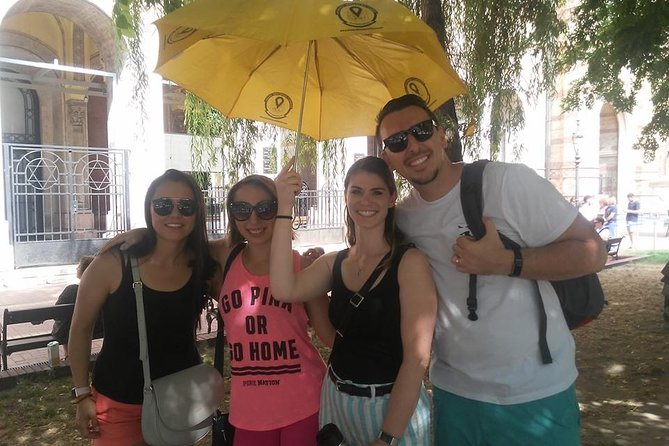
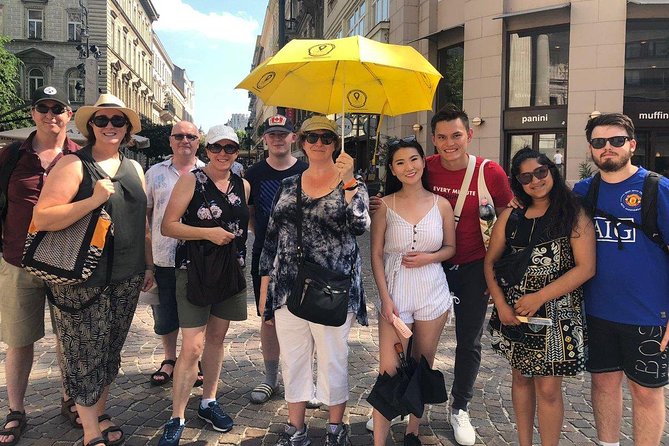
The meeting point is outside OTP Bank at Kálvin tér 12-13. Look for guides dressed in yellow. This is worth knowing because a busy city square is not the place to wander around wondering if you are in the right spot.
Kálvin tér is named for John Calvin, the French Protestant reformer. It also gives you a practical start: there are places to sit and some shelter if the weather turns unpleasant. The area is close to public transport, so reaching the start should be straightforward.
The tour lasts about 2 hours and 30 minutes. There is a short five-minute pause for buying a drink and using the toilet, but coffee or tea is not provided. Bring water before you arrive, especially in summer. A public toilet may cost between 100 and 500 Hungarian forints.
The format is a pay-what-you-wish style walk with a small booking fee. The $3.63 charge is excellent value if you want a broad introduction without paying for a traditional private tour. Still, do not treat the small price as the full cost. A tip is expected, and it is the guide’s main source of income.
A few more Budapest trips to weigh up
- Budapest: Historic Cruise with Welcome Drink
★ 4.7 · 6,512 reviews - Buda Castle District Dark History, Legends and Vampire Night Tour
★ 4.5 · 1,240 reviews - BloodThirsty Hungary: Walking tour & Dark Historical Stories
★ 4.9 · 633 reviews
The National Museum and the stories behind District VIII
The first substantial stop is in the gardens of the Hungarian National Museum. Here you see the mythical turul bird, a powerful symbol in Hungarian tradition, and hear about the museum’s founder and collections.
The guide also explains the 1948 uprising and introduces District VIII, or Józsefváros. This district was once known for grand palaces, though its reputation changed over time. That contrast helps you see Budapest as more than a collection of polished monuments. Behind the elegant façades are neighborhoods shaped by politics, class, war, and redevelopment.
The museum itself is not entered, so this is an exterior introduction rather than a museum visit. If you want to explore its collections, plan a separate visit. The short stop works best as a setting for the larger story.
Unger’s House and Budapest’s mixed architectural language
At Unger’s House, you enter a courtyard connected with Miklós Ybl, one of Hungary’s major architects. The building combines Byzantine, Gothic, Moorish, Renaissance, and Romantic details.
That list sounds like an architectural exam, but the point is easy to grasp once you are standing there. Budapest often mixes styles in a single building, reflecting different periods, fashions, and ambitions. The palace is fading, which gives the stop a slightly worn, authentic quality rather than the shine of a freshly restored landmark.
You spend only about five minutes here. That is enough for an explanation and a look around, but not enough for a detailed architectural study. I see it as a good short pause between the better-known sights.
Elizabeth Square, Astoria, and the changing Jewish Quarter
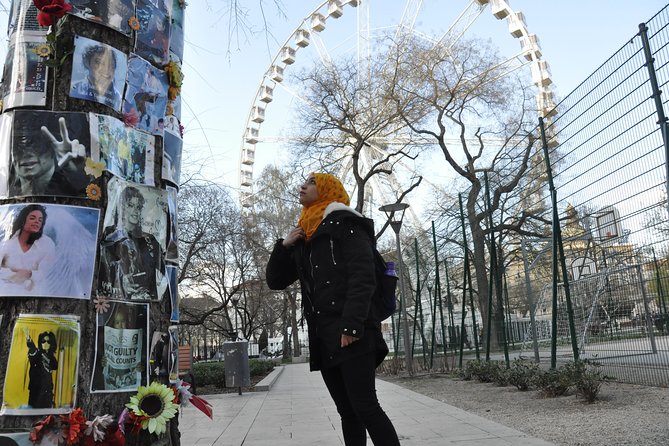
Elizabeth Square brings the tour into modern Budapest. You see the Budapest Eye and learn how the square connects with nightlife and some of the city’s popular bars.
This is a useful change of tone. After stories of uprisings, palaces, and political struggle, you see where present-day Budapest gathers after dark. The guide also gives context for the surrounding district, which is helpful if you plan to return later for food or drinks.
The walk then passes the Danubius Hotel Astoria, a grand French Empire-style building. Its history includes international visitors and film productions, including the Josephine Baker Story directed by Brian Gibson. You only pause for about two minutes, so think of this as a quick architectural and cultural note rather than a hotel tour.
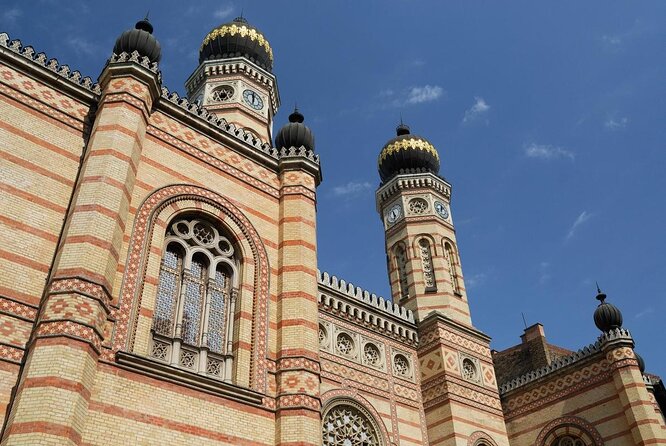
The Jewish Quarter is one of the most important parts of the route. You learn about the former Jewish community, the Second World War ghetto, and the district’s later transformation into an area linked with artists, students, independent shops, designers, and bars.
The value here is the time scale. You are not shown only the attractive cafés and nightlife. You are reminded that the same streets carried a large Jewish population through persecution and wartime confinement. The current atmosphere cannot be understood properly without that earlier chapter.
Same riverbank, a completely different kind of day:
- Budapest: Unlimited Prosecco, Beer and Aperol Spritz Cruise
★ 4.8 · 25,310 reviews - Budapest: Széchenyi Spa Day Ticket with Optional Upgrades
★ 4.3 · 23,911 reviews - Budapest: Nighttime or Daytime Sightseeing Cruise
★ 4.2 · 21,062 reviews - Budapest: 1-Hour Evening Sightseeing Cruise with Drink
★ 4.5 · 8,330 reviews
St. Stephen’s Basilica and the religious heart of Pest

Outside St. Stephen’s Basilica, the guide explains the building’s name and its link to Hungary’s first king, Stephen I.
The basilica is one of the major visual landmarks of central Budapest, but the tour does not include entry. You get the story and the exterior, then you can decide later if you want to pay for access. This arrangement keeps the walk inexpensive, though anyone hoping to see the interior should budget separate time and money.
The stop is about ten minutes. That gives the guide room to explain the historical figure behind the name rather than simply pointing at the dome and moving on.
Liberty Square, Communism, and difficult public memory
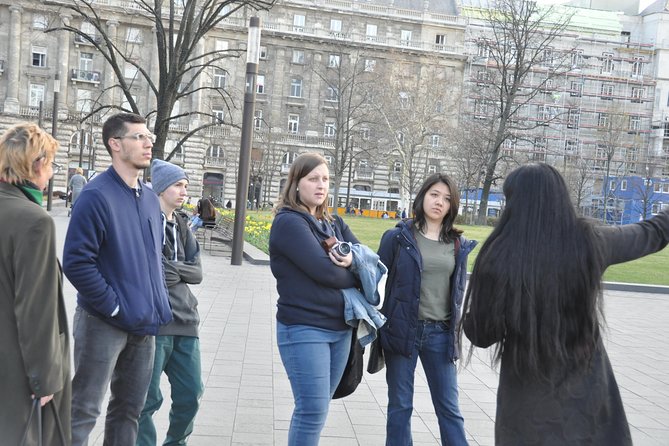
Szabadság tér, or Liberty Square, is one of the strongest stops for understanding Hungary’s modern political story. The tour includes the Communist memorial and discusses the forces that shaped the country in the twentieth century.
This is where the walk’s serious side comes fully into view. Hungary’s history includes long periods without its own form of government, foreign control, war, dictatorship, and political struggle. The guide presents that painful record directly, sometimes with a dark sense of humor.
That tone may not suit everyone. One person could find the direct style refreshing, while another might prefer a softer presentation. The guides are expected to keep the group moving and to manage side conversations, so listen carefully and ask questions when there is an opening.
Nearby, the Stock Exchange Palace provides another architectural stop. The historic building covers 50,000 square meters and is privately owned. You see it from outside, and admission is not part of the walk.
Reagan, Bush, and the approach to Parliament
The Ronald Reagan statue is a brief but memorable stop. Reagan is shown walking away from Parliament, while George H. W. Bush appears nearby. The guide explains the visual joke and the political meaning behind the arrangement.
It is a small detail, but this is exactly the sort of thing you might miss while walking alone. You get a quick explanation, a photograph, and a link between American politics and Hungary’s Communist-era history.
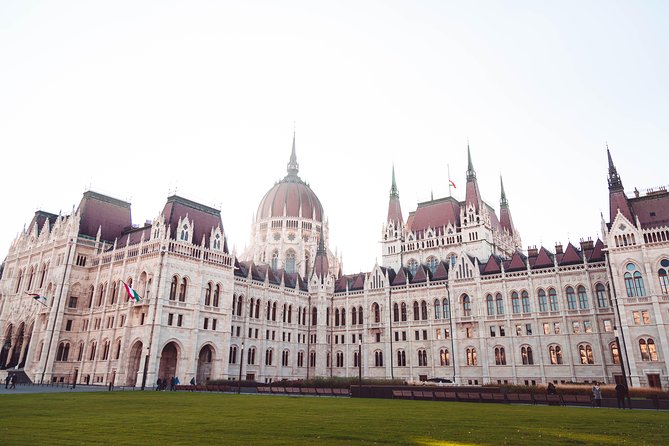
The tour then reaches the Hungarian Parliament Building. From the Pest side, you get a close exterior view of the Neo-Gothic and eclectic building, along with the Danube panorama.
This is one of the most rewarding points on the route, but remember that it is an outdoor visit. You do not tour the parliamentary interior. The guide also points out other notable buildings around the square, including the former Ministry of Justice, the agricultural museum, and the chocolate museum.
The square can be busy, and a large group may make it harder to hear. If you cannot catch the explanation, tell the guide promptly. The guides ask participants to speak up about hearing problems, and standing near the front can make a major difference.
Looking across the river to Buda Castle and Fisherman’s Bastion
At the Pest-side viewpoint, you look across the Danube toward Buda Castle and Fisherman’s Bastion. Matthias Church is recognizable by its colorful tiled roof, and the Hungarian National Palace appears farther away.
You also see Margaret Island and Gellért Hill from a distance. This is not a crossing into Buda, and you do not walk through the castle district. That limitation matters if your main goal is to explore the hilltop sights. The advantage is that you get an introduction to Buda without adding the steep streets and extra time to this route.
I like this design for a first orientation. You can mark the landmarks mentally, then return later by public transport or on foot with a better sense of what you are looking at.
The Chain Bridge and the final walk beside the Danube
The tour finishes around Széchenyi Chain Bridge, known locally as Széchenyi Lánchíd. The guide explains the bridge’s history and reconstruction before leading you toward the riverfront.
The end point is at Id. Antall József rkp. 1. From there, you can walk back toward the meeting area or continue into the city center. The route finishes in a useful location rather than at an isolated bus stop.
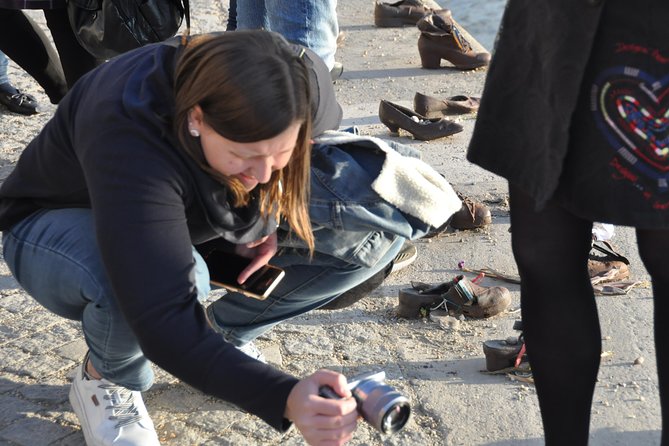
The final stop is the Shoes on the Danube Bank memorial. Sixty pairs of shoes recall Jewish people who were lined up and shot on the riverbank during the Holocaust. The monument is simple, quiet, and difficult to forget.
This is not a place for a hurried photo and a joke. The guide’s explanation gives the memorial its setting, but the shoes themselves do much of the work. It is an appropriately serious end to a tour that has dealt with war, political violence, and the survival of a city.
How the guides shape the experience
The guide matters more here than on a standard sightseeing bus. You spend 150 minutes listening while walking, often in busy streets, so a clear voice and a good sense of timing are essential.
Victoria has drawn especially strong praise for her English, humor, personal stories, and command of Hungarian history and present-day life. She has used photographs to clarify subjects and has offered practical advice on places to eat and what to do next. Peter has also been singled out for clear explanations and strong historical knowledge. Sabi has helped people understand Budapest’s transport system, including where to obtain a 72-hour pass.
George has been described as warm and well-informed, though a larger group and noisy conditions made it harder for some people to hear. That is a useful warning rather than a reason to reject the tour. Group size changes the experience, and this activity can accept up to 50 people.
The tone may also vary by guide. Most of the supplied feedback is highly positive, but one sharply negative account described a late start, a fast delivery, and a stern response to people talking. The provider’s response was equally direct, defending the guide’s approach and emphasizing that the history is painful and the tour depends on tips.
My advice is practical: listen at the start, avoid talking over the guide, stand close enough to hear, and ask questions clearly. If you prefer a quiet, private pace, a small paid tour will suit you better.
Price, walking effort, and the real value
At about $3.63, this is one of the cheapest ways to get a structured introduction to Budapest. You receive an in-person guide and a route linking major sights with less obvious places such as Unger’s House, Liberty Square, and the Jewish Quarter.
The real value is not the number of monuments. It is the connection between them. Parliament, the Communist memorial, the Jewish Quarter, and the Holocaust memorial become parts of one long story rather than unrelated photo stops.
You should still budget for a tip. The activity is advertised at a minimal fee and tips, and the guides rely on gratuities. You also pay for any coffee, food, or public toilet use. Interior admission is not included at St. Stephen’s Basilica or the Stock Exchange Palace, and the other major buildings are viewed from outside.
The walk is not recommended if you cannot comfortably cover three miles. Comfortable shoes are essential, especially on Budapest’s uneven streets and cobblestones. In hot weather, carry water and sunscreen. In cold weather, bring a proper jacket. The walk has taken place in very cold conditions, and a short outdoor stop can feel much longer at minus temperatures.
The activity is best suited to adults and children over 12, though younger children are welcome. Service animals are allowed, but ordinary dogs are not. No hearing induction loop is provided.
Should you book the Budapest Historical Sightseeing Free Walking Tour?
Book it if you want a strong Pest-side introduction at a very low starting price, especially early in your stay. The route gives you Parliament, the Jewish Quarter, Liberty Square, the Danube memorial, and views of Buda, while also supplying useful advice about transport, food, customs, and later sightseeing.
Skip it if you want to enter the major buildings, avoid walking three miles, or need a small and quiet group. You should also be comfortable with a direct treatment of war, dictatorship, Communism, and the Holocaust.
For most first-time visitors who can walk at a steady pace, I think it is a smart opening activity. Book ahead if possible, since it is often reserved about 20 days in advance, arrive ready for the weather, and bring cash for the guide’s tip.
FAQ
How long does the Budapest Historical Sightseeing Free Walking Tour last?
The tour lasts approximately 2 hours and 30 minutes.
Where does the tour begin?
It begins at OTP Bank, Budapest, Kálvin tér 12-13, 1085 Hungary.
How do I find the guide at Kálvin tér?
The guides are dressed in yellow.
Where does the tour end?
It ends at Id. Antall József rkp. 1, near Széchenyi Chain Bridge. From there, you can walk back toward the meeting point or continue to the city center.
Is the tour really free?
The experience uses a minimal fee and tips model. The listed price is about $3.63 per person, and tips for the guide are not included.
Is food or coffee included?
No. There is a short five-minute break to buy drinks and use the toilet, but no food or drink is served.
Does the tour enter Parliament or St. Stephen’s Basilica?
No. The route views the Hungarian Parliament Building and St. Stephen’s Basilica from outside. Admission is not included.
Does the tour visit Buda Castle and Fisherman’s Bastion?
The tour views Buda Castle, Fisherman’s Bastion, Matthias Church, and the Hungarian National Palace from the Pest side of the Danube. It does not cross to the Buda side as part of the route.
How much walking is involved?
You should be able to walk about three miles. Comfortable shoes are recommended because parts of Budapest have cobblestones.
Can I cancel for a refund?
You can cancel at least 24 hours before the start time for a full refund. Cancellations or changes made less than 24 hours beforehand are not refunded or accepted. If bad weather or an insufficient number of participants cancels the tour, you are offered another date or experience, or a full refund.
Just added around Budapest
- From Budapest: Guided Tour of Eger with Wine Tasting★ 4.5 · 6 reviews
- Budapest: Private Walking Tour with a Local Guide★ 3.6 · 6 reviews
- Budapest: Danube River Views Bike Ride★ 4.8 · 23 reviews
- Trash Art Museum: Hungary’s First Scrap Metal Exhibition★ 4.3 · 72 reviews
- Walk to recent and aged spiritual sanctuaries near Budapest★ 5.0 · 5 reviews
- Budapest: 3-Hour Trabant Sightseeing Tour★ 4.7 · 28 reviews
- True Crime Walking Tour in the Buda Castle district★ 5.0 · 26 reviews
- Audio visual multi-sensory chefs journey dinner experience★ 5.0 · 3 reviews
Historical Tours, compared.


Buda Castle District Dark History, Legends and Vampire Night Tour
Read our review →
BloodThirsty Hungary: Walking tour & Dark Historical Stories
Read our review →
Budapest Jewish Heritage Memorial Walking Tour & Synagogue Entry
Read our review →
Jewish Heritage Guided Tour with Synagogue Ticket
Read our review →
Budapest Historic Downtown Bicycle Tour in small groups
Read our review →
Historic Downtown ride on E-Bicycles Buda & Pest
Read our review →
Jewish History Guided Walking Tour with Historian
Read our review →Browse the lists this tour appears in