Reviewed · GUIDED
Budapest: Opera House Guided Tour
Budapest’s Opera House tour ends with the surprise many people remember most: a brief live opera performance. After walking through the ornate interior, you hear professional singers in the grand staircase area, a fine little taste of the real thing without buying a full evening ticket.
I like the tour’s clear focus on architecture and practical history, including the work of Miklós Ybl and the building’s 2022 restoration. I also like that you see interior spaces at a much lower price than a full performance ticket. The main drawback is its short length, and the auditorium can have reduced lighting or feel crowded on some departures.
In This Review
- Key points
- Entering Budapest’s Hungarian State Opera House
- The grand staircase and the first impression
- Frescoes, gold work, and the auditorium
- Stories behind the 1884 building
- The short concert at the end
- Is one hour enough?
- What the $33 price gets you
- Who will enjoy this tour most?
- Timing, cancellations, and practical planning
- How it compares with attending a full opera
- Should you book the Budapest Opera House tour?
- FAQ
- How long does the Budapest Opera House guided tour last?
- What is included in the ticket?
- Where does the tour meet?
- Which languages are available?
- Is the short opera performance included?
- Can wheelchair users join the tour?
Key points
- The 2022 restoration looks fresh: Gold details, frescoes, staircases, and painted decoration are easier to appreciate in the restored interior.
- The tour lasts 60 minutes: It gives you a brisk introduction rather than a long museum-style visit.
- A live opera taste closes the tour: The short performance is often the emotional high point.
- Guides speak five languages: Choose English, German, Spanish, Italian, or French when available.
- The auditorium may be dim: Reduced light is sometimes needed during rehearsals or operating conditions.
- Wheelchair users should choose another activity: This tour is not suitable for wheelchair access.
Entering Budapest’s Hungarian State Opera House
The tour begins inside the Opera House, in the hall. That detail matters because you do not meet outside and then follow a guide through the streets. Go into the building first, then find the tour meeting point in the interior hall.
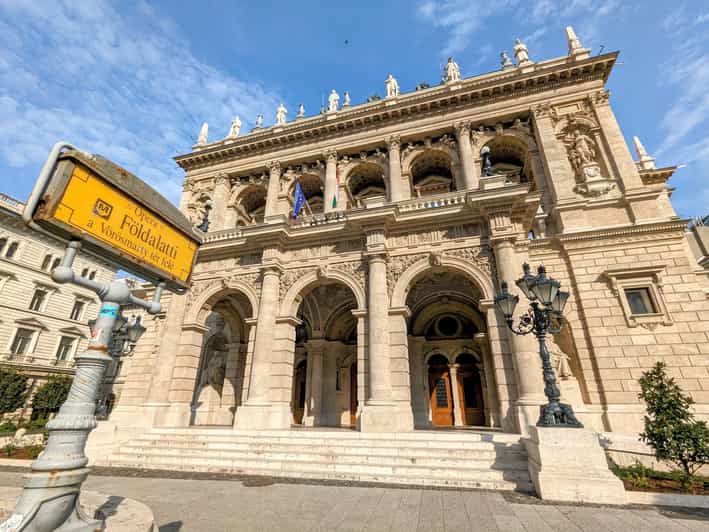
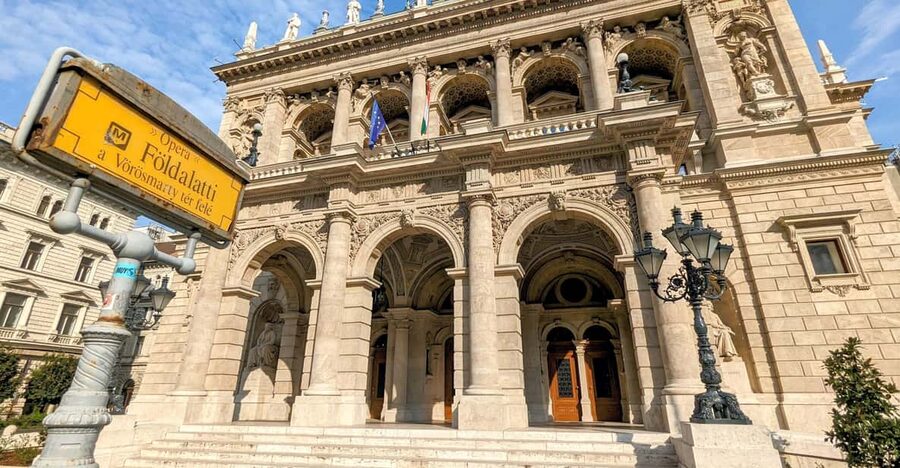
The Hungarian State Opera House was built in 1884 from plans by Miklós Ybl, one of Hungary’s best-known architects. The building has since been fully restored, with the latest major restoration completed in 2022. You are not simply looking at an old theater. You are seeing a working cultural building whose decoration has been brought back into sharp condition.
The exterior is impressive, but the interior is the real reason to book. The tour takes you into spaces where the gold ornament, painted scenes, carved details, and grand proportions do the talking before the guide adds the meaning behind them.
This is a good first stop for understanding Budapest’s taste for theatrical design. Even if you know little about opera, you can appreciate the building as architecture, decoration, and social history.
A few more Budapest trips to weigh up
- Budapest: Parliament Building Entry Ticket and Audio Guide
★ 4.5 · 3,844 reviews - Budapest Small-Group Guided Tour on MonsteRoller e-Scooter
★ 5.0 · 1,517 reviews - Budapest: Bar Crawl with a Local Guide
★ 4.9 · 1,112 reviews
The grand staircase and the first impression
The staircase is one of the tour’s strongest visual moments. Its design gives you the classic Opera House entrance experience: a formal route upward, framed by ornate decoration and built to make arrival feel important.
You have time to take photographs, but this is not a photo-only visit. The guide explains what you are seeing and points out details that can disappear when you look at the room as one large burst of gold and color.
The staircase also becomes the setting for the short musical performance at the end. That gives the room a second role. First, you see it as a piece of architecture. Later, you hear how music carries through the space.
Some departures can be busy. One useful feature is that larger groups may be divided into smaller units, making it easier to hear the guide and move through the rooms. Still, do not expect a private tour or a quiet building at every time of day.
Frescoes, gold work, and the auditorium
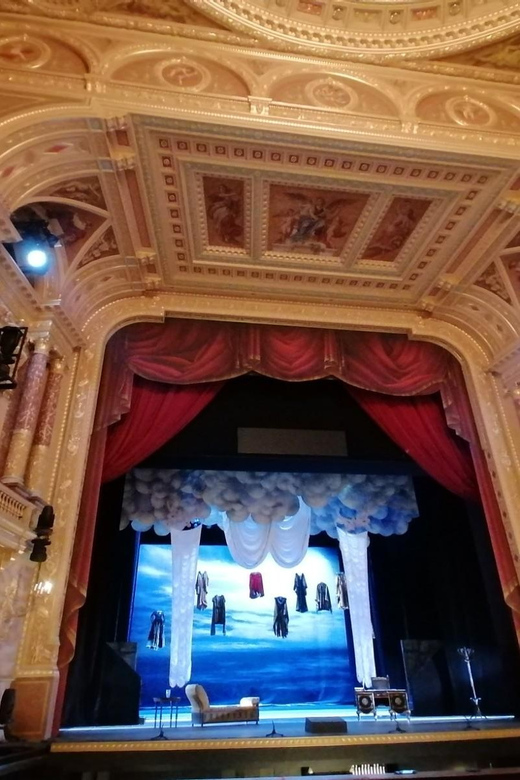
The auditorium is the visual centerpiece. Look up at the frescoes and painted ceiling before you focus on the stage. The decoration is meant to be seen from below, and the guide’s comments help explain how the room’s surfaces, colors, and symbolism fit together.
The tour also covers the design of the hall, including its acoustics, ventilation, and safety features. These practical subjects add value because they show how the Opera House works as a performance space, not only as a beautiful shell.
Lighting can be reduced in the auditorium during some visits. That is an important expectation to set. You may not see every painted detail as clearly as you would in bright daylight, and photography conditions may be less than ideal. The low light is not necessarily a fault with the tour. Rehearsals and theater operations can affect how the room is presented.
You should also listen carefully. A few guides speak quickly, especially when explaining a large amount of information in a short period. If you are in a group, choose a position where you can see the guide and hear clearly. The tour is live, not an audio guide, so your place in the group can affect how much you catch.
Stories behind the 1884 building
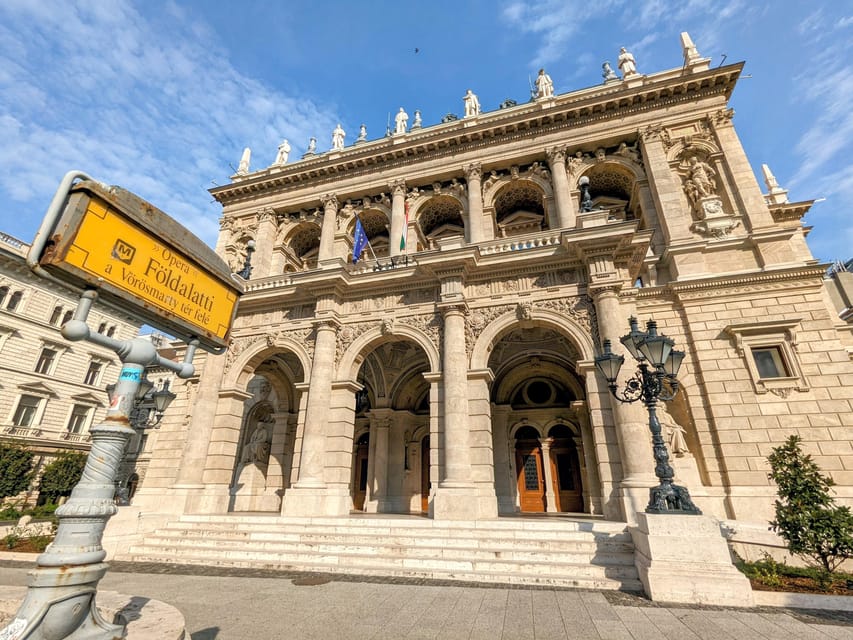
The guide gives you the basic story of the Opera House’s construction and the people connected with it. The most useful explanations go beyond dates and names, showing how architecture, politics, national identity, and opera culture came together in late 19th-century Hungary.
You may hear about the building’s design choices, the people who influenced its creation, and the way the house functions today. The tour also includes details about construction and the meaning behind parts of the decoration.
That mix works well. A purely architectural tour can become a list of measurements and materials. A purely historical tour can leave you staring at rooms without understanding their design. Here, the two sides support each other.
The quality of the guide matters a great deal. The best guides use humor, answer questions, and keep the pace moving. English, German, Spanish, Italian, and French tours are offered, though the exact language schedule depends on availability. If you care about the language, check the departure details before paying.
Same riverbank, a completely different kind of day:
- Budapest: Unlimited Prosecco, Beer and Aperol Spritz Cruise
★ 4.8 · 25,310 reviews - Budapest: Széchenyi Spa Day Ticket with Optional Upgrades
★ 4.3 · 23,911 reviews - Budapest: Nighttime or Daytime Sightseeing Cruise
★ 4.2 · 21,062 reviews - Budapest: 1-Hour Evening Sightseeing Cruise with Drink
★ 4.5 · 8,330 reviews
The short concert at the end
The included performance is the tour’s special extra. It is a brief opera presentation, usually described as lasting about 10 to 15 minutes, though the official description simply calls it a brief concert.
Do not book this expecting a full opera recital. Think of it as a compact introduction, with singers performing several selections in the grand staircase area or another designated interior space. The short length works well for first-time listeners and for families or teenagers who may not want to sit through a complete opera.
The setting adds a lot. You have just learned about the building’s acoustics and design, then you hear trained voices fill the space. That turns an architectural visit into a small performance experience.
For many people, this is the moment that makes the $33 price feel fair. A standard building visit would give you the rooms. This tour adds a live musical finish and a sense of what the Opera House is built to do.
The concert is also useful if regular performances are sold out or outside your budget. It cannot replace an evening at the Opera House, but it gives you a genuine sample of the atmosphere. If you already plan to attend a full performance, the tour still has value because you can learn about spaces and design that you might not notice while seated for a show.
Is one hour enough?
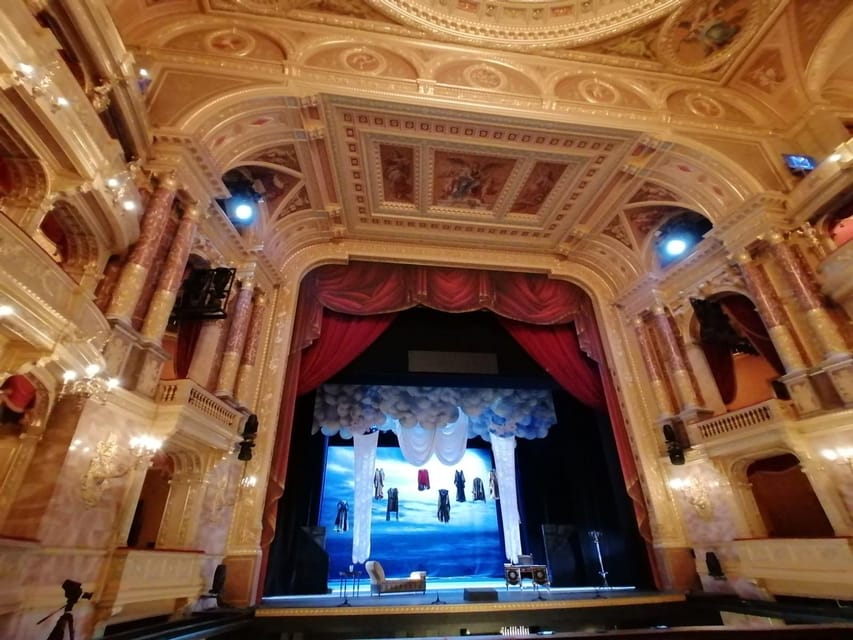
For a first look, yes. The 60-minute format is well suited to a busy Budapest sightseeing day. You see the main public interiors, hear the key stories, and finish with music without giving up half a day.
The tradeoff is depth. You will not have time to study every painting, ask a long series of questions, or linger in each room. The guide must keep the group moving, especially when several languages or multiple departures are operating.
I would treat this as an introduction, not a full architectural study. If you love theater design, you may leave wanting more. That is a good reason to return for a performance or seek a longer cultural visit, but it also means you should not expect every corner of the building to be covered.
The pace is generally brisk but manageable. There is time for photographs and for looking around, though the group schedule controls how long you can stay in each spot.
What the $33 price gets you
At $33 per person, this is not the cheapest one-hour activity in Budapest. The value depends on what you want from the visit.
You are paying for four useful elements:
- An interior visit to the Opera House
- A live guide
- A full 60-minute tour
- A brief concert
The strongest value comes from combining the guided visit with the live singing. If you only want to peek inside a grand building, the price may feel high for one hour. If you want context, access to the main interiors, and a short performance, it is easier to justify.
The tour can also save money compared with buying a full opera ticket, especially if you are curious about opera but do not want to commit to an entire production. You see the building in a more relaxed way and hear professional singers without planning your evening around a show.
Food and drinks are not included, but that is hardly a concern for a one-hour activity in central Budapest. Plan a café or meal before or after rather than expecting refreshments inside the tour.
Who will enjoy this tour most?
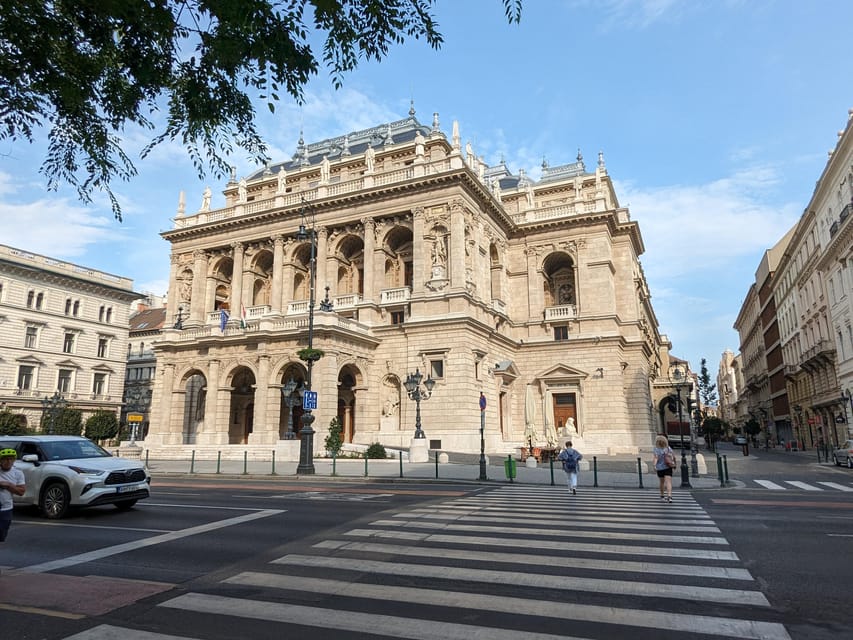
I would recommend it to first-time visitors who want one memorable cultural stop in central Budapest. It is also a smart choice for anyone interested in architecture, painted interiors, restoration, or the practical workings of a historic theater.
Opera newcomers are especially well served. The short performance gives you a taste without asking you to understand a full story or sit through several acts. Families can also find the one-hour length easier than a complete evening performance.
The tour suits photographers, with one caution: low light in the auditorium and group movement may limit the best shots. Bring your camera, but give yourself time to look up and listen rather than treating the visit as a quick picture stop.
You should reconsider if you need wheelchair access. The activity is not suitable for wheelchair users. You may also want to skip it if you dislike guided groups, though the live explanations are central to the experience and cannot be replaced by wandering independently.
Timing, cancellations, and practical planning
The meeting point is inside the Opera House hall, not outside on the pavement. Allow enough time to reach the building and locate the interior meeting area before the scheduled start.
Tours operate at set times, so check availability for your date. The reservation system permits you to reserve now and pay later, which helps if your Budapest plans are still shifting. You can also cancel up to 24 hours in advance for a full refund.
The Opera House may cancel a tour during rehearsals. If that happens, an alternative date is offered. This is worth keeping in mind if you are arranging a tightly packed schedule.
A departure can feel crowded, especially at popular times. The building is large enough to handle groups, and larger parties may be split, but your experience will be better if you arrive ready to stay with the guide and listen closely.
How it compares with attending a full opera
A guided visit and a full opera performance serve different purposes. The tour shows you the building at a relaxed pace and explains the architecture. A performance gives you the full atmosphere, music, and theater tradition, but it requires more time and a separate ticket.
If your trip schedule is short, the tour is the practical choice. You get the building’s grand staircase, auditorium, decoration, and a small live concert in one hour.
If you already have tickets for a performance, consider doing the tour earlier in the day or on another date. You will understand the auditorium better after hearing about its acoustics, ventilation, safety, and design.
The tour also helps you decide if a full performance is for you. The brief concert is long enough to make opera less mysterious, but short enough that you are not locked into an entire evening.
Should you book the Budapest Opera House tour?
Book it if you want to see one of Budapest’s most ornate interiors, hear useful stories about its design and restoration, and finish with a live opera sample. The 2022 restoration, grand staircase, frescoed auditorium, and short concert give this compact visit a strong mix of visual and musical appeal.
Skip it if you want a long, quiet examination of every room or if wheelchair access is essential. Also, keep expectations realistic: this is a one-hour introduction, not a full performance or an exhaustive architectural study.
For most visitors, the tour is a good use of one hour and a fair use of $33. The building supplies the spectacle, the guide supplies the context, and the singers provide the memorable final note.
FAQ
How long does the Budapest Opera House guided tour last?
The tour lasts 60 minutes, including the interior visit, live explanations, and brief concert.
What is included in the ticket?
The ticket includes an interior visit to the Opera House, a live guide, the 60-minute tour, and a brief concert. Food and drinks are not included.
Where does the tour meet?
The meeting point is in the hall inside the Opera House. You should enter the building before looking for the tour meeting point.
Which languages are available?
Live tours are available in English, German, Spanish, Italian, and French. Check the available language and departure time when booking.
Is the short opera performance included?
Yes. A brief concert is included at the end of the tour. The performance is a short taste of opera rather than a complete production.
Can wheelchair users join the tour?
No. The activity is not suitable for wheelchair users.
Just added around Budapest
- From Budapest: Guided Tour of Eger with Wine Tasting★ 4.5 · 6 reviews
- Budapest: Private Walking Tour with a Local Guide★ 3.6 · 6 reviews
- Budapest: Danube River Views Bike Ride★ 4.8 · 23 reviews
- Trash Art Museum: Hungary’s First Scrap Metal Exhibition★ 4.3 · 72 reviews
- Walk to recent and aged spiritual sanctuaries near Budapest★ 5.0 · 5 reviews
- Budapest: 3-Hour Trabant Sightseeing Tour★ 4.7 · 28 reviews
- True Crime Walking Tour in the Buda Castle district★ 5.0 · 26 reviews
- Audio visual multi-sensory chefs journey dinner experience★ 5.0 · 3 reviews
Guided, compared.
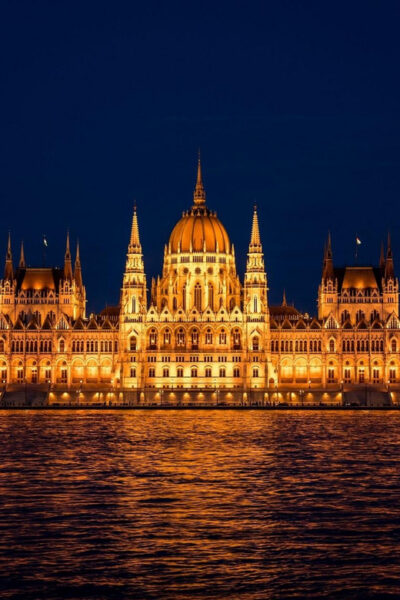
Parliament Building Entry Ticket and Audio Guide
Read our review →
Budapest Small-Group Guided Tour on MonsteRoller e-Scooter
Read our review →
Budapest Danube Cruise with Drink, Audio Guide, Margaret Island
Read our review →
Danube River Sightseeing Cruise with Audio Guide
Read our review →