
Reviewed · TUK-TUKS
Budapest Private Tuk Tuk Half-Day Tour
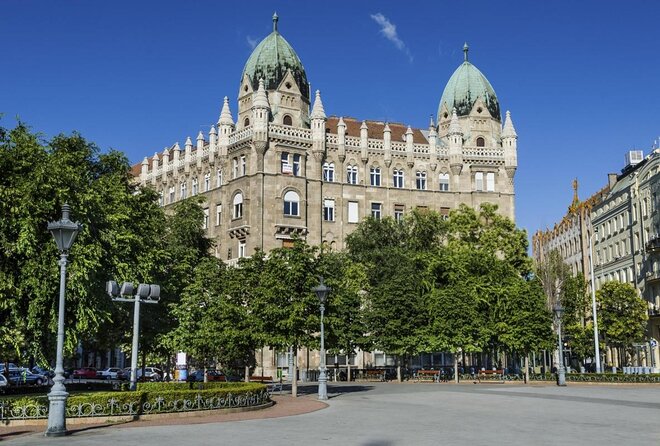
Budapest unfolds quickly from a tuk-tuk. In four hours, you cross between Buda and Pest, climb Gellért Hill, roll through the Jewish Quarter, and reach Castle Hill without spending the day on foot. The private format lets your guide adjust the route, answer questions, and stop for photos.
I like the easy orientation and the human touch. Guides such as Greg, Martin, Peter, Paul, Norbert, and Gabriella are praised for mixing solid background with humor and personal recommendations. I also like the practical pickup service and the blankets supplied on chilly days.
The main drawback is comfort. A tuk-tuk is open to the weather, and one passenger found the ride jarring and hard on the back. With three people, you may need two tuk-tuks, and the ride can be difficult if you have trouble hearing over traffic.
In This Review
- Key points before you book
- Why a tuk-tuk works so well in Budapest
- Pest begins with basilicas, opera, and grand boulevards
- Heroes’ Square and the City Park sights
- District VII, the Jewish Quarter, and Central Budapest
- Crossing the Danube by Liberty Bridge
- Gellért Hill gives you Budapest’s best broad views
- Buda’s Castle District and Fisherman’s Bastion
- Bridges, memorials, and Parliament
- Guides, pace, and the private difference
- Is $178.98 per person good value?
- Who should book this ride?
- Final verdict: a smart first-day overview
- FAQ
- How long is the Budapest private tuk-tuk tour?
- Is hotel pickup included?
- How many people fit in one tuk-tuk?
- Are attraction entry tickets included?
- Is the tour available in English?
- What happens if the weather is poor?
Key points before you book
- Four hours across both sides of the Danube: You cover far more ground than on a walking tour, from Andrássy Avenue and Heroes’ Square to Gellért Hill and Castle Hill.
- Private attention: Your guide can adjust the pace and route around your interests, including extra photo stops or a local food break.
- A strong first-day choice: The ride gives you a useful mental map for planning museums, baths, restaurants, and evening walks later.
- Open-air sightseeing: Blankets help in cool weather, but dress for wind, rain, and changing temperatures.
- Major sights are mainly viewed from outside: Entry to Parliament, Matthias Church, and Fisherman’s Bastion is not included.
- Plan the seating carefully: One tuk-tuk suits two or three people comfortably. An odd-numbered group may need another vehicle.
Why a tuk-tuk works so well in Budapest
Budapest is split by the Danube, with flat Pest on one side and hilly Buda on the other. That division makes a standard walking tour either tiring or narrow in scope. You might spend one morning seeing Pest and another day tackling Buda’s heights.
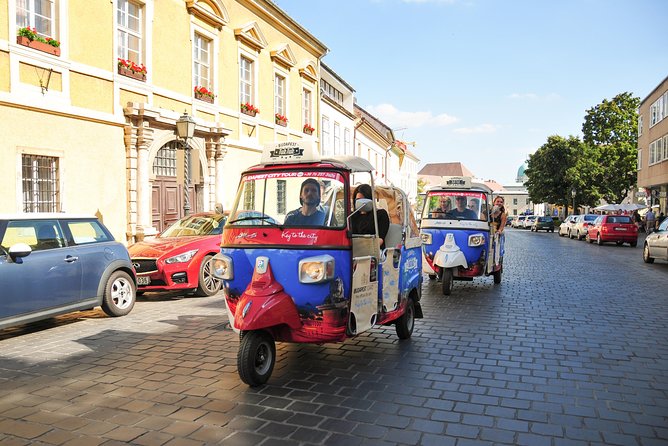
The tuk-tuk solves much of that problem. You ride between districts, then get out for short visits at the places that matter most. It is not simply a ride past buildings. The useful part is the combination of movement, explanation, and quick access to viewpoints.
I would book this for your first full day, not your last afternoon. The route gives you a working map of the city, and guides often point out places worth returning to. One guide, Zoltán, is praised for pairing building details with local stories and pop culture references. That sort of commentary can help a grand boulevard feel like a real part of Budapest rather than a string of names.
The private setup also matters. Your group is alone with the guide, so you can ask why a church looks the way it does, request a slower pace, or spend longer at a view. Gabriella and Martin are specifically noted for adapting the route to personal interests.
A few more Budapest trips to weigh up
- Private Budapest TukTuk Tour: Custom Route, Hotel Pickup
★ 5.0 · 1,307 reviews - Budapest: Sightseeing Tour by Electric Tuktuk
★ 5.0 · 146 reviews - Budapest: Scenic Tuk Tuk Tour
★ 4.9 · 143 reviews
Pest begins with basilicas, opera, and grand boulevards
The Pest portion usually brings you first through central landmarks such as St. Stephen’s Basilica. The church is named for Stephen, Hungary’s first king, and its great dome makes it one of the city’s key reference points. You can admire the exterior during the ride, but an interior visit is not part of the package.
Andrássy Avenue gives you a different kind of Budapest. The long boulevard links the city center with City Park and is lined with grand Neo-Renaissance buildings. It is a UNESCO World Heritage Site, and the tuk-tuk lets you take in the scale without walking its full length.
The Hungarian State Opera House is another highlight along the avenue. Its Neo-Renaissance design comes from architect Miklós Ybl, one of 19th-century Hungary’s leading names. The stop is best understood as an architectural introduction. If you want a performance or an interior tour, arrange that separately.
Heroes’ Square and the City Park sights
Heroes’ Square is one of the clearest history lessons on the route. Its monument honors the Seven Chieftains of the Magyars and other important Hungarian leaders. The Memorial Stone of Heroes is also here, though it is often mistakenly called the Tomb of the Unknown Soldier.
You get about 15 minutes at this stop, with no admission charge. That is enough for photos and a close look at the statues, but not enough for a long museum visit. The square sits at the end of Andrássy Avenue, making it a natural point where the city’s formal center gives way to City Park.
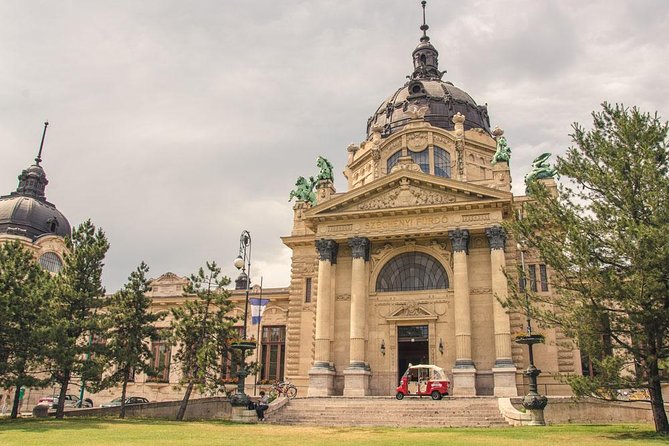
From here, you may see the Széchenyi Medicinal Bath, Europe’s largest medicinal bath complex. Its water comes from two thermal springs, reaching 74 and 77 degrees Celsius. You will not be bathing during this tour, but the sight gives useful context for Budapest’s famous thermal culture.
The route also includes the striking castle-like buildings near Heroes’ Square. One guide gave these extra attention, along with the Citadella lookout, and that is a good reminder to speak up if architecture interests you. Since this is a private ride, you have more room to ask for that kind of emphasis.
District VII, the Jewish Quarter, and Central Budapest
The tuk-tuk then moves through District VII, including the old Jewish Quarter. The streets closest to the center contain religious landmarks tied to Budapest’s Orthodox Jewish community, which has been based here since the 19th century.
The Dohány Street Synagogue is the major sight. It is Europe’s largest synagogue, with room for 3,000 people, and serves as a center of Neolog Judaism. The exterior alone is impressive, but an interior visit requires a separate ticket and more time than this short pass-by usually allows.
Nearby streets form part of Budapest’s well-known party quarter, with restaurants, bars, and unusual venues. In daylight, the district has a more layered feel than its nightlife reputation suggests. You see old religious buildings, worn facades, cafés, and narrow streets in the same compact area.
The central route can also include Károlyi Garden, one of the oldest surviving public gardens in downtown Budapest. The University Church, University Square, and Kálvin tér add a more everyday side of the city. Students, cafés, and public transit give these places a lived-in quality that large monuments cannot provide.
The Great Market Hall is another useful landmark. It is Budapest’s largest and oldest indoor market, and it can be a good place to return for food shopping or a quick look at local produce and specialty goods. Food and drinks are not included, though one guide did stop for a lángos lunch at a local market when the group requested it.
Same riverbank, a completely different kind of day:
- Budapest: Unlimited Prosecco, Beer and Aperol Spritz Cruise
★ 4.8 · 25,310 reviews - Budapest: Széchenyi Spa Day Ticket with Optional Upgrades
★ 4.3 · 23,911 reviews - Budapest: Nighttime or Daytime Sightseeing Cruise
★ 4.2 · 21,062 reviews - Budapest: 1-Hour Evening Sightseeing Cruise with Drink
★ 4.5 · 8,330 reviews
Crossing the Danube by Liberty Bridge
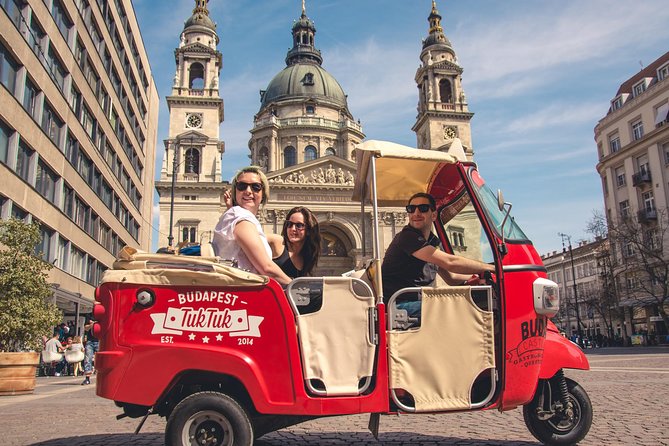
Liberty Bridge connects Pest with Buda near the southern end of the city center. It was originally called Franz Joseph Bridge, and its green structure makes it easy to recognize from the riverbanks.
From here, the route passes the Gellért Thermal Baths, part of the famous Hotel Gellért complex. Like Széchenyi Bath, this is a place you may want to revisit for a longer soak. The tuk-tuk tour gives you the setting and orientation, but not bath entry.
This crossing is one of the tour’s useful transitions. You leave the flatter central streets and begin moving toward Gellért Hill. The route feels more varied than a sightseeing bus because the vehicle is small, and the guide can explain what you are seeing as the city changes around you.
Gellért Hill gives you Budapest’s best broad views
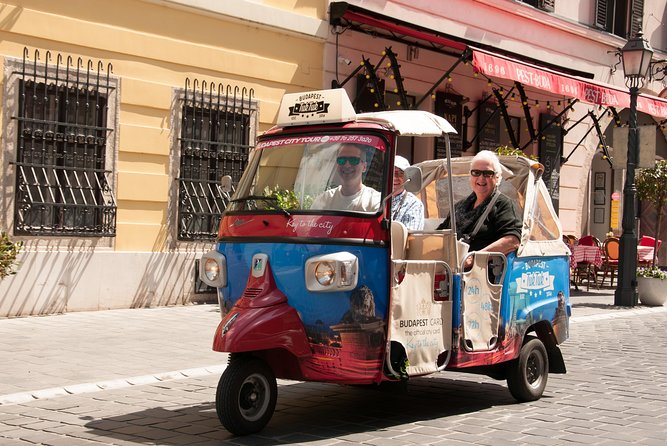
The climb to Gellért Hill is one of the tour’s strongest sections. At the top, the Citadella occupies a site that once had clear military importance. You get about 15 minutes here, with free admission, to take in the Danube, bridges, and both halves of the city.
The nearby Liberty Statue commemorates people who sacrificed their lives for Hungary’s independence, freedom, and prosperity. It is another 15-minute stop. Together, the monument and the hilltop view offer both national symbolism and a clear sense of Budapest’s shape.
The Garden of Philosophers is a quieter stop above the reservoir below Gellért Hill. You get only about five minutes, but the site has a distinctive sculpture group in which figures representing Jesus Christ and Buddha meet with other philosophers. The view is appealing, and the relative calm provides a break from the more famous lookout points.
Allow for weather here. Gellért Hill is exposed, and the open vehicle makes wind more noticeable. In cold conditions, the company supplies wool blankets, but you should still bring warm layers. One family found the ride comfortable even in strong wind because of the blankets, while another passenger found the motion uncomfortable, especially with a bad back.
Buda’s Castle District and Fisherman’s Bastion
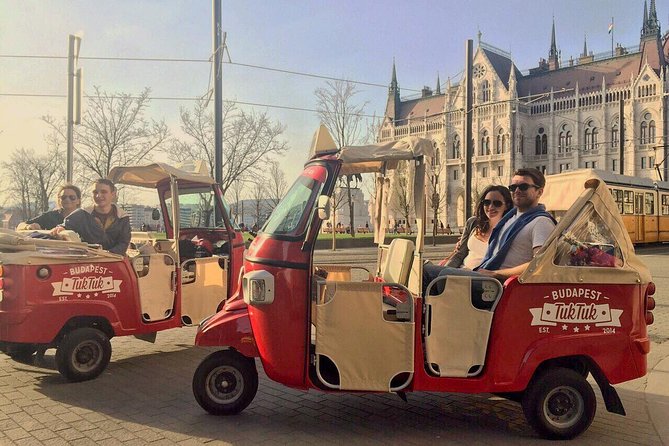
After Gellért Hill, the route continues through Buda toward Castle Hill. The Vermező public garden offers a small green pause in Krisztinaváros, while the Castle Garden brings together paths, architecture, art, and nature below the main plateau.
Castle Hill rises about 170 meters above the Danube and contains some of Budapest’s most important medieval buildings and museums. It is a UNESCO World Heritage Site, and the limestone plateau also contains a large cave network formed by thermal springs.
The tuk-tuk is especially useful here because the district is hilly and spread out. You can reach the main sights without using your limited energy on the climb, then walk short distances at the stops.
Fisherman’s Bastion gets about 10 minutes. Its Neo-Gothic and Neo-Romanesque terraces were designed around Matthias Church and built between 1895 and 1902. The arches frame superb views toward Pest, especially the Parliament across the water.
Admission to Fisherman’s Bastion is not included, and some sections may require a ticket. Your guide can explain the setting, but you should not expect time for a full exploration of every terrace.
Matthias Church is also allotted about 10 minutes, and entry is not included. The church stands at the heart of the Castle District, in front of Fisherman’s Bastion. Its long story includes an earlier Romanesque foundation traditionally dated to 1015, though no archaeological remains from that original building survive.
These stops work well as an introduction. If the church interior or the Castle District museums are high on your list, return later with more time. The tuk-tuk gives you the overview, while your independent visit can handle the details.
Bridges, memorials, and Parliament
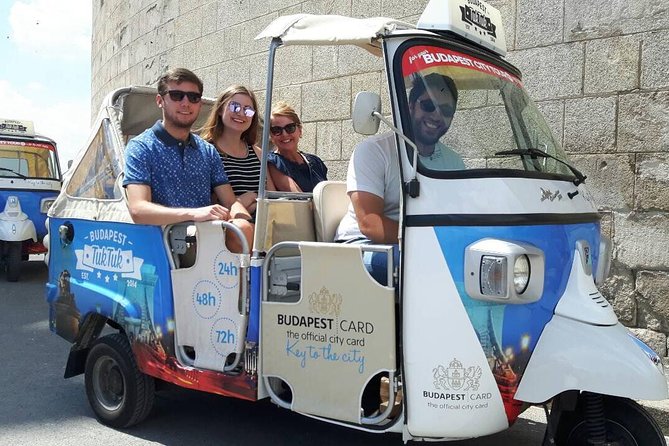
The return route crosses or passes Margaret Bridge, a three-way bridge connecting Buda and Pest while also linking to Margaret Island. It is the second-oldest public road bridge in Budapest and gives you another angle on the river system.
The Shoes on the Danube Bank memorial is one of the tour’s most important stops in tone. The iron shoes honor Jewish people murdered by Arrow Cross militiamen during World War II. The memorial is simple, quiet, and difficult to forget. Give it the attention it deserves rather than treating it as a quick photo point.
The Hungarian Parliament Building follows. This is the seat of Hungary’s National Assembly and one of the country’s best-known landmarks. You get about 10 minutes outside, but the tour does not include an internal visit or admission ticket.
That limitation is worth understanding before you book. You will see the building, learn about its place beside the Danube, and take photos. You will not see the crown jewels, grand interior halls, or parliamentary rooms on this outing. Arrange a separate timed visit if going inside matters to you.
The route may also pass a controversial memorial in a nearby green space. Its interpretation of Hungary’s Holocaust past has drawn strong criticism, and a counter-memorial in front explains the opposing view. This is a valuable example of how Budapest’s public spaces can carry active historical arguments, not just settled stories.
Guides, pace, and the private difference
The strongest part of this experience is the guide. Paul is praised for answering questions, adding current local information, taking photos, and helping with scheduling. Greg is often described as warm, funny, and good at mixing facts with lighter observations. Peter is known for a steady flow of information and humor.
You may be assigned someone else, including Martin, Norbert, Gabriella, Ben, Robi, David, Bart, Robert, or Zoltán. The common thread expected from the service is an English-speaking guide and a private route, but the personal style can vary.
The pace is usually active. The planned stops at Heroes’ Square and the hilltop viewpoints are short, while many other landmarks are viewed from the vehicle. Tell the guide early if you want longer photo stops, less walking, a slower pace, or a particular district included.
There has been at least one serious complaint about a guide rushing a four-hour booking into roughly two hours and skipping major sights. That is not the expected service, but it is a useful warning: check the timing during the ride. A four-hour private tour should not be cut short without a clear reason.
The overall rating is 4.9 from 606 ratings, with 98 percent recommending the experience. That points to a strong track record, but it does not erase the practical concerns about weather, vehicle comfort, and guide consistency.
Is $178.98 per person good value?
At $178.98 per person, this is not a budget sightseeing ride. For two people, the private experience costs about $358 before gratuity, food, optional cruise costs, and entry tickets.
I think the price makes sense for a first visit when you value time and personal attention. You cover both Buda and Pest, receive downtown pickup and drop-off, and avoid arranging separate transport between distant sights. The ability to ask for photos, local food advice, or a customized route adds value that a large group bus cannot match.
The price is harder to justify if you mainly want a cheap way to see buildings from the road. Several major sites are exterior visits, and the tour does not include entry fees. A public transit pass, self-guided walks, and separate museum tickets will cost less, though they will require more planning and walking.
A Danube sightseeing cruise can be added as an option. That is a worthwhile pairing because the city’s bridges, Parliament, Castle Hill, and riverfront buildings make better sense from the water. A nighttime cruise is particularly useful if your schedule allows it, but it is an extra choice rather than part of the basic ride.
Who should book this ride?
I would choose it for first-time visitors, couples, families, and small groups who want a fast city orientation without a crowded bus. It also suits anyone who tires easily on hills or wants to cover a wide area before choosing which places deserve a longer return visit.
It is less suitable for anyone with a bad back, strong sensitivity to bumps, or difficulty hearing conversation in traffic. The open vehicle is fun, but it is not as quiet or smooth as a sedan.
Book with the weather in mind. The experience runs only in suitable conditions, and poor weather can lead to a new date or a full refund. Dress for the forecast, not just the temperature at breakfast.
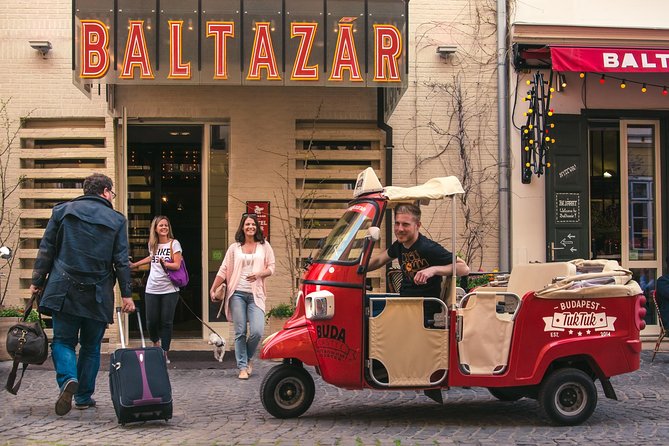
Free pickup and drop-off are offered in the wider downtown area. You need to give your preferred pickup time and location, and the advertised time can shift by up to 1.5 hours. Book at least six hours ahead so the service can confirm the arrangement.
Final verdict: a smart first-day overview
I would book this tour early in a Budapest stay if I wanted one energetic introduction to the whole city. The route covers the essential viewpoints, major monuments, both riverbanks, and several neighborhoods that are easy to miss when you rely only on walking.
The best reason to choose it is not the tuk-tuk novelty. It is the combination of private flexibility, local explanation, and efficient movement between distant sights. The main reasons to hesitate are the price, outdoor exposure, limited time inside monuments, and the possibility of an uneven guide experience.
Choose it if you want a broad first look and plan to return to your favorite sites. Skip it if your priority is entering museums and churches, moving in complete comfort, or keeping costs low. For most first-time visitors with four hours to spare, it is a lively and useful way to get your bearings fast.
FAQ
How long is the Budapest private tuk-tuk tour?
The tour lasts approximately four hours.
Is hotel pickup included?
Free pickup and drop-off are offered in the wider downtown area. You should provide your preferred pickup time and location when booking.
How many people fit in one tuk-tuk?
One tuk-tuk is comfortable for two to three people. If your group has an odd number, you should specify if one person should ride in another tuk-tuk.
Are attraction entry tickets included?
No. Entry tickets are not included. Fisherman’s Bastion and Matthias Church list admission separately, and the Parliament stop is outside only, with no internal visit included.
Is the tour available in English?
Yes. The tour is offered in English with an English-speaking private guide.
What happens if the weather is poor?
The experience requires suitable weather. If it is canceled because of poor conditions, you will be offered an alternative date or a full refund. Free cancellation is also available up to 24 hours before the start time.
Just added around Budapest
- From Budapest: Guided Tour of Eger with Wine Tasting★ 4.5 · 6 reviews
- Budapest: Private Walking Tour with a Local Guide★ 3.6 · 6 reviews
- Budapest: Danube River Views Bike Ride★ 4.8 · 23 reviews
- Trash Art Museum: Hungary’s First Scrap Metal Exhibition★ 4.3 · 72 reviews
- Walk to recent and aged spiritual sanctuaries near Budapest★ 5.0 · 5 reviews
- Budapest: 3-Hour Trabant Sightseeing Tour★ 4.7 · 28 reviews
- True Crime Walking Tour in the Buda Castle district★ 5.0 · 26 reviews
- Audio visual multi-sensory chefs journey dinner experience★ 5.0 · 3 reviews
Tuk-Tuks, compared.
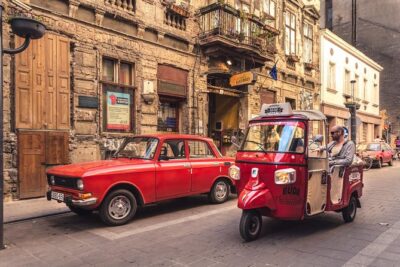
Private Budapest TukTuk Tour: Custom Route, Hotel Pickup
Read our review →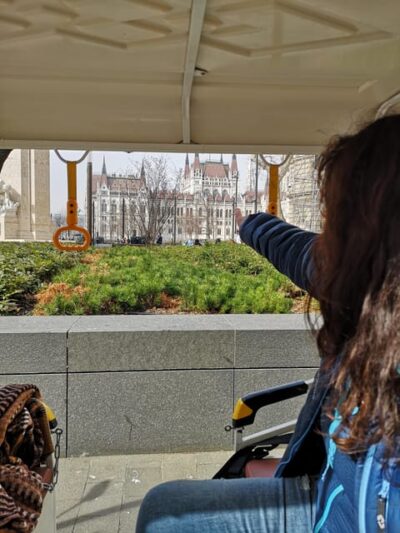
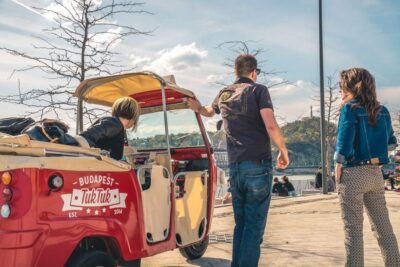

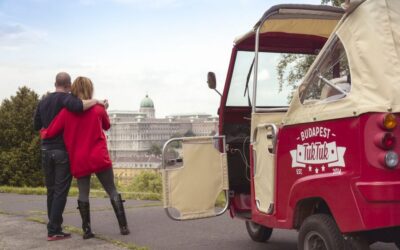
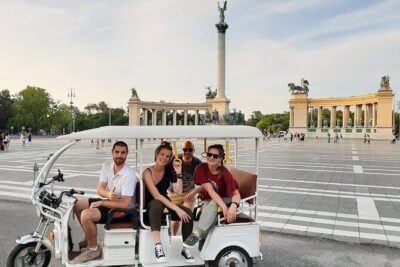
Private Sightseeing Tour using Electric Tuk Tuk Ride in Budapest
Read our review →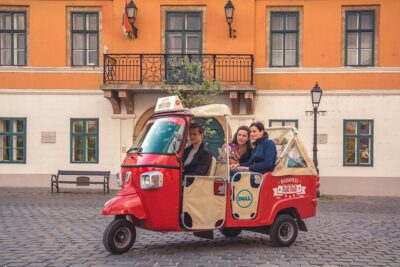
Budapest TukTuk Private Tour with Goulash Soup in the Downtown
Read our review →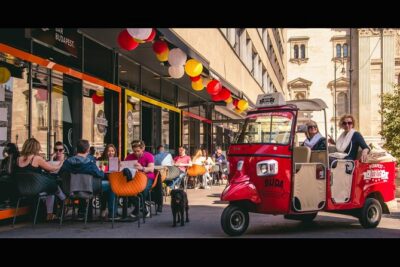
Budapest Private Tuk Tuk Tour with Wine Tasting and Cheese Platter
Read our review →Browse the lists this tour appears in