Reviewed · BUDAPEST TOURS
Hungary today: a no-taboo conversation
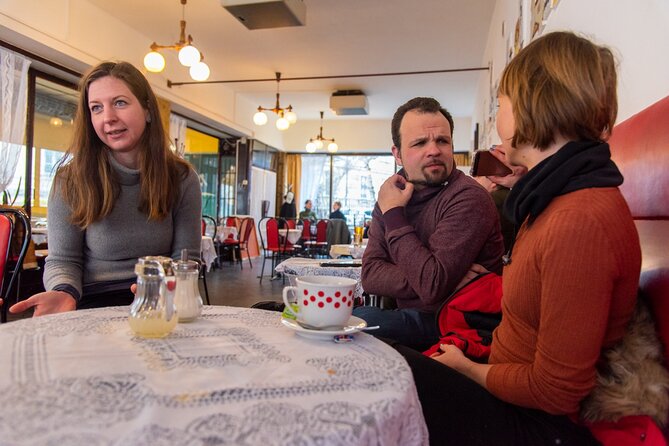
Hungary’s recent story is too complicated for a quick museum label. This 90-minute conversation at Bambi Café tackles the shift from Communism to democracy, Hungary’s present political system, economic questions, and ideas about the country’s future. You can bring your own questions, or let the host lead with an introduction.
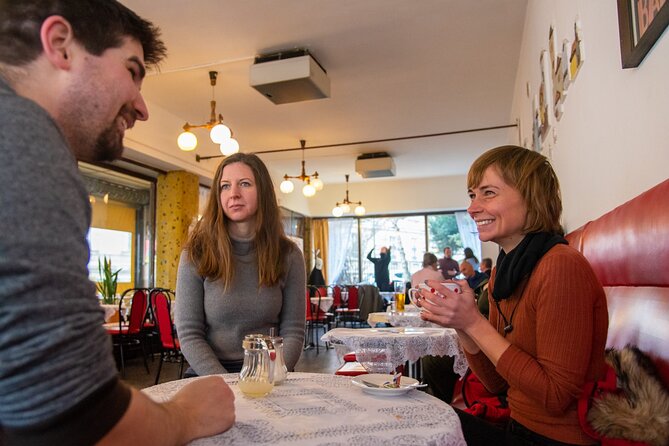
I like the small maximum of six people, which gives this experience a real chance to become a conversation rather than a speech. I also like the setting: Bambi Café has changed very little since the 1970s, so you discuss modern Hungary in a place tied to the country’s Communist-era past.
The main consideration is the price, $40.52 per person, for an hour and a half with no sightseeing stops or included food listed. This suits you best if thoughtful discussion matters more than collecting another set of city views.
In This Review
- Key points at a glance
- Why this is a different kind of Budapest experience
- Bambi Café and the setting at Frankel Leó út
- The opening: Communism, democracy, and the last 30 years
- The open conversation: ask what you really want to know
- What the small group changes
- What the experience can and cannot tell you
- Who will get the most from this conversation
- Timing, price, and booking value
- How to prepare for the best discussion
- Should you book Hungary today: a no-taboo conversation?
- FAQ
- Where does the experience take place?
- What time does it start?
- How long does it last?
- Where does the activity end?
- How many people can join?
- What subjects are discussed?
- Can I ask controversial questions?
- Is the activity accessible by public transportation?
- What is the cancellation policy?
Key points at a glance

- Bambi Café since the 1970s: Meet at a cult Budapest café that has kept much of its old character.
- A maximum of six people: The small group makes it easier to ask direct questions and keep the exchange personal.
- Hungary after Communism: The opening discussion focuses on the last 30 years, including the move from one-party rule to democracy.
- Politics without a fixed script: You can ask about controversial politics, economic issues, social change, and the country’s uncertain future.
- Daniel may lead the conversation: One host specifically praised in the experience details is Daniel, described as friendly, informative, and willing to continue well beyond the scheduled time.
- A focused 90 minutes: This is a compact discussion, not a full-day tour, and it ends at the same café where it begins.
Why this is a different kind of Budapest experience
Most Budapest activities show you buildings, monuments, food, or scenery. This one asks you to sit down and talk about how Hungary works today. That makes it especially useful if you have already seen the major sights and now want help making sense of the country behind them.
The subject is broad, but the stated focus is clear. The first part usually gives you an introduction to Hungary’s modern era, with attention to the last three decades. Historical, economic, and political themes form the base before the discussion opens up to your questions.
That structure matters. If you arrive with no plan, you are not left staring at an empty table. If you already know the basics, you can move quickly toward the subjects that interest you most.
The tone is intended to be direct. The hosts invite questions about controversial politics, the turbulent past, the uncertain future, economic concerns, personal opinions, and possible changes. You do not need to limit yourself to the standard tourist topics.
At the same time, you should understand what this is not. It is not presented as a neutral university lecture, a formal debate, or a guided walk through political landmarks. You are hearing an informed local perspective, including personal views. That can be the strength of the experience, but it also means you should listen critically and ask follow-up questions when you want more than one angle.
Other Budapest days people book alongside this one:
- Budapest: Unlimited Prosecco, Beer and Aperol Spritz Cruise
★ 4.8 · 25,310 reviews - Budapest: Széchenyi Spa Day Ticket with Optional Upgrades
★ 4.3 · 23,911 reviews - Budapest: Nighttime or Daytime Sightseeing Cruise
★ 4.2 · 21,062 reviews
Bambi Café and the setting at Frankel Leó út
You meet at Bambi Café, at Frankel Leó út 2-4 in Budapest’s 1027 district. The café is described as a cult place that has changed close to none since the 1970s. That detail gives the conversation a useful setting, since the café itself connects you to the period being discussed.
There is no admission charge listed for the café stop, and the café is the only stop. The experience lasts about one hour and thirty minutes, beginning at 2:00 pm and ending back at the meeting point.
The location also keeps the event simple. You do not spend time transferring between sights or waiting for a group to gather at several locations. The setting is fixed, and the focus stays on conversation.
You should think about the café environment before booking. A public café is not the same as a private meeting room. The exact noise level, seating arrangement, and atmosphere are not specified, so the quality of your discussion may depend partly on the conditions on the day. Still, the old café setting is more meaningful than a generic conference room would be for a talk about Hungary’s recent past.
The opening: Communism, democracy, and the last 30 years
The first part is built around an introduction to Hungary’s modern era. The central change is the move from Communism to democracy, a subject that can sound simple in a timeline but becomes much harder when you consider how political, economic, and social life changed together.
The experience also addresses the creation of what is described as illiberal democracy in recent years. That is a charged subject, and the value here is the chance to ask what such a political model means in everyday Hungarian life, how it developed, and why it remains important.
The provided information does not promise a set list of dates, buildings, or political figures. That is worth noting. You are paying for an explanation and an exchange of ideas, not a scripted history lesson with visual displays.
I would use the opening to establish the basic sequence of events, then ask the host to explain cause and effect. For example, you could ask how political change affected the economy, how ordinary life changed after Communism, or which parts of the old system remained. The activity specifically welcomes questions, so you do not need to wait for the host to cover every point on your own.
The open conversation: ask what you really want to know
After the introduction, the format becomes more flexible. This is where the experience earns its title. You can ask about subjects that are difficult to fit into a normal sightseeing tour, including controversial politics, Hungary’s past, its possible future, economic conditions, and ideas for change.
That freedom is useful because every person arrives with a different level of background. You may know little about modern Hungary and need basic context. Or you may have visited Budapest before, followed current events, and want to test your understanding against a local point of view.
Daniel is specifically identified as one of the hosts. The details about his conversations describe him as friendly and informative, with enough command of the subject to sustain a much longer discussion. That suggests a useful approach: arrive with two or three questions you genuinely care about, rather than a long checklist.
A conversation can also reveal more than a polished tour speech, but it requires participation. If you remain silent, you may receive the general introduction and little else. If you ask clear, respectful questions, the small group gives you room to follow an idea instead of moving on because the next scheduled stop is waiting.
The hosts say they will try to answer all questions and offer their opinions on Hungary, Budapest, and topics beyond the country. The wording is broad, so you can expect an informal exchange rather than a tightly limited theme. Still, no experience can cover every political, historical, and economic issue in 90 minutes. Choose your priorities.
Same riverbank, a completely different kind of day:
- Budapest: 1-Hour Evening Sightseeing Cruise with Drink
★ 4.5 · 8,330 reviews - Budapest Danube Cruise and Dinner Options, Live Music and Dance
★ 4.5 · 7,428 reviews - Budapest: Historic Cruise with Welcome Drink
★ 4.7 · 6,512 reviews - Budapest: St. Stephen’s Basilica Entry with Terrace Option
★ 4.5 · 6,399 reviews
What the small group changes
The maximum of six participants is one of the strongest practical features. A large group makes controversial questions awkward. People may hold back, the guide may rush, and one or two voices can dominate. With six or fewer, you have a better chance to be heard.
Small size does not guarantee agreement or perfect conversation. It does make the format more personal. You can ask a follow-up question, explain what you mean, or change direction when something catches your interest.
The group size also affects value. At $40.52 per person, you are not buying a long list of attractions. You are buying access to a focused exchange with a local host in a setting tied to Hungarian social history. That price may feel high if you want conventional sightseeing, but it is easier to justify if you value time, attention, and candid discussion.
I would not book this as your only Budapest activity. It cannot replace seeing the Parliament, walking the Danube, or exploring the city’s historic areas. I would place it alongside those activities, ideally after you have gained enough general context to know what you want to ask.
What the experience can and cannot tell you
The strongest promise here is perspective. A host can connect broad changes to personal opinions and explain how political language may look from inside Hungary. That can help you move past the simplified version of current events often found in short guidebook paragraphs.
The limitation is also perspective. One person, or a small team, cannot speak for every Hungarian. The experience openly includes personal opinion, which is honest, but you should not mistake one discussion for a complete account of the country.
That is not a flaw specific to this activity. It is simply the nature of a conversation. You can make the most of it by asking where the host is giving fact, interpretation, or personal judgment. Good questions might include: What evidence supports that view? How do different parts of Hungarian society see this issue? Has this changed over time? What would someone who disagrees say?
The setting may also shape the mood. Bambi Café carries an old-era connection, while the topic concerns the present and future. That contrast is part of the appeal, though the available details do not say how the café visit is presented beyond meeting there and holding the discussion.
Who will get the most from this conversation
I would recommend it most strongly to you if you fit one of these descriptions:
- You have already visited Budapest and want to understand present-day Hungary better.
- You have some knowledge of modern Hungarian history and want a local explanation of recent political change.
- You prefer discussion and questions to a standard sightseeing route.
- You want to ask about subjects that ordinary city tours tend to avoid.
- You enjoy hearing a personal point of view while keeping your own judgment.
It may be less suitable if you need a highly visual activity, a walk, a large number of landmarks, or a carefully neutral academic lecture. The experience is also not designed as a food tour. The café is the venue, but no meal or drink is included in the information provided.
The stated accessibility details are straightforward: service animals are allowed, the meeting point is near public transportation, and most people can participate. If you have a specific mobility or seating need, the available information does not give enough detail to confirm how the café setting will work for you, so ask before booking.
Timing, price, and booking value
The 2:00 pm start gives you a useful middle-of-the-day option. You can schedule sightseeing before it, then use the conversation as a break from monuments and photo stops. Since the activity returns to its starting point, you do not need to plan around a separate ending location.
The 90-minute length is both a benefit and a limit. It is short enough to fit into a busy Budapest schedule. It is long enough to move beyond small talk, especially with no more than six people. But if the group raises several major subjects, you will need to accept that some questions receive only a brief answer.
At $40.52 per person, I see the value in the access rather than the physical inclusions. There is no admission ticket to a major attraction, transport, meal, or extended tour route listed. The value depends on how much you want a direct exchange with a local host.
Free cancellation is available if you cancel at least 24 hours before the 2:00 pm start time. A cancellation made less than 24 hours ahead is not refunded, and late changes are not accepted. The cut-off uses Budapest local time, so check your schedule before the deadline.
How to prepare for the best discussion
You do not need special reading or a detailed history course. A little preparation will help, though. Write down the questions you have been too polite, uncertain, or rushed to ask elsewhere.
Keep the questions specific. Instead of asking only what Hungary is like today, ask how a particular change affected daily life, politics, the economy, or public debate. Then listen for distinctions and ask the host to clarify them.
You can also bring more than one kind of question. Combine a factual question with a personal one, such as what changed and how the host feels about that change. The experience is designed to include opinion, so you do not have to keep the discussion at the level of dates and institutions.
Because the format is small, basic courtesy matters. Allow other people time to speak, and remember that disagreement can be useful when it stays respectful. The most valuable conversation may not be the one that confirms what you already believe.
Should you book Hungary today: a no-taboo conversation?
Book it if you want modern Hungary explained through conversation, not another route past famous buildings. The small group, the old Bambi Café setting, and the open invitation to ask about politics and the future give this experience a clear purpose.
I would especially recommend it after you have spent time in Budapest or read a little about the country’s recent past. You will have more useful questions, and the discussion will help connect what you have seen with the political and economic changes behind it.
Skip it if your priority is sightseeing, food, or a full itinerary of attractions. At $40.52, the price makes sense only when you value personal attention and local interpretation. For the right audience, this can become the most thought-provoking hour and a half of a Budapest visit. For everyone else, it may feel like paying for a conversation when what you really wanted was a tour.
FAQ
Where does the experience take place?
It takes place at Bambi Café in Budapest, at Frankel Leó út 2-4, 1027 Hungary.
What time does it start?
The experience starts at 2:00 pm.
How long does it last?
It lasts approximately one hour and thirty minutes.
Where does the activity end?
It ends back at Bambi Café, the meeting point.
How many people can join?
The activity has a maximum of six participants.
What subjects are discussed?
The conversation can cover Hungary’s modern era, the change from Communism to democracy, illiberal democracy, history, economics, politics, Hungary’s future, personal opinions, and ideas for change.
Can I ask controversial questions?
Yes. The experience is designed as an open conversation, and you can ask about controversial politics, Hungary’s past, its future, the economy, or other subjects related to Hungary and beyond.
Is the activity accessible by public transportation?
The meeting point is near public transportation.
What is the cancellation policy?
You can cancel for a full refund up to 24 hours before the experience starts. Cancellations made less than 24 hours before the start time are not refunded, and changes made within that period are not accepted.
Just added around Budapest
- From Budapest: Guided Tour of Eger with Wine Tasting★ 4.5 · 6 reviews
- Budapest: Private Walking Tour with a Local Guide★ 3.6 · 6 reviews
- Budapest: Danube River Views Bike Ride★ 4.8 · 23 reviews
- Trash Art Museum: Hungary’s First Scrap Metal Exhibition★ 4.3 · 72 reviews
- Walk to recent and aged spiritual sanctuaries near Budapest★ 5.0 · 5 reviews
- Budapest: 3-Hour Trabant Sightseeing Tour★ 4.7 · 28 reviews
- True Crime Walking Tour in the Buda Castle district★ 5.0 · 26 reviews
- Audio visual multi-sensory chefs journey dinner experience★ 5.0 · 3 reviews
Budapest Tours, compared.

Unlimited Prosecco, Beer and Aperol Spritz Cruise
Read our review →
Széchenyi Spa Day Ticket with Optional Upgrades
Read our review →

Budapest Danube Cruise and Dinner Options, Live Music and Dance
Read our review →

St. Stephen’s Basilica Entry with Terrace Option
Read our review →