Reviewed · BUDAPEST TOURS
Pest side stories with a Historian
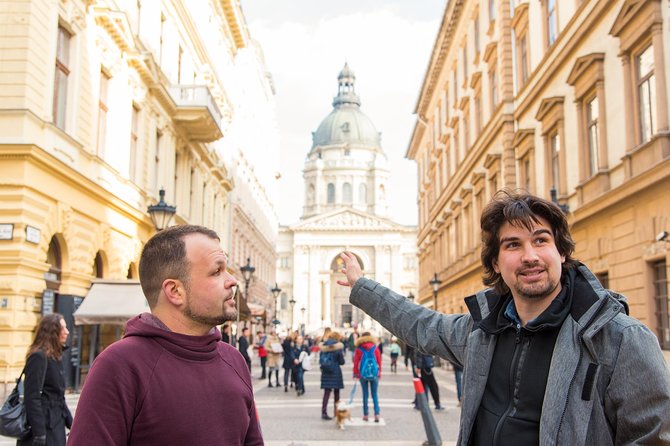
Pest’s best story is not told from a bus window. This three-hour walk links St. Stephen’s Basilica, Heroes’ Square, and Vajdahunyad Castle through the people, wars, and political changes that shaped Budapest. Guides such as Andrew, Greg, and Steven bring different voices to the route, with a focus on why the city looks as it does today.
I like the small maximum of 10 people, which gives the guide room to answer questions and adjust the pace. I also like that refreshments and metro tickets are included, since the route covers a lot of ground and uses the Millennium Underground. The main drawback is clear: this is a serious amount of walking, and a hot afternoon can make the three hours feel longer.
In This Review
- Key points to know before booking
- Why Pest makes a good half-day history walk
- Starting at Elizabeth Square at 2 p.m.
- St. Stephen’s Basilica and the center of Pest
- Heroes’ Square puts 1,100 years into view
- Vajdahunyad Castle, a medieval-looking building from 1896
- Andrassy Avenue and the pride of Budapest
- Vorosmarty Square and the commercial heart of Pest
- Riding the Millennium Underground
- What the historian guide adds
- Walking demands, weather, and practical comfort
- Is $58.94 a fair price?
- Who should book this Pest walk?
- Should you book Pest Side Stories with a Historian?
- FAQ
- How long does the Pest Side Stories tour last?
- What time and where does the tour begin?
- Where does the tour finish?
- How large is the group?
- Is the tour offered in English?
- Are metro tickets and refreshments included?
Key points to know before booking
- A history-led walk across Pest: You move from central squares and grand avenues to monumental public spaces and a castle built for the 1896 millennium celebrations.
- Small groups capped at 10: The format is more personal than a large coach tour and better suited to questions.
- A lot of ground in three hours: Expect substantial walking, with the metro helping connect the route.
- Several guides may lead the tour: Andrew, Greg, Steven, and other Budapest Explorers guides are named in the available tour information.
- Useful inclusions: Refreshments, a guide, and metro tickets are provided.
- Best for history-minded walkers: The tour suits people who want context, not just a checklist of monuments.
Why Pest makes a good half-day history walk
Budapest is split by the Danube, but this tour stays mainly on the Pest side. That matters because Pest tells a different story from the hillier Buda side. Here, the city’s grand avenues, government buildings, churches, shopping streets, public squares, and transport systems reveal how Hungary changed over more than a thousand years.
The route also avoids the usual sightseeing trap of treating every monument as an isolated photo stop. At Heroes’ Square, the guide can place Hungary’s past in a wider timeline. Around the basilica and central squares, the focus shifts to religion, commerce, politics, and city life. At Vajdahunyad Castle, you learn why a building that looks medieval was actually created in 1896.
I find that approach useful when you are new to Budapest. You see major sights, but you also learn how they fit together. The walk is not simply about taking pictures at famous places. It is about understanding why Pest developed around these streets and public spaces.
Other Budapest days people book alongside this one:
- Budapest: Unlimited Prosecco, Beer and Aperol Spritz Cruise
★ 4.8 · 25,310 reviews - Budapest: Széchenyi Spa Day Ticket with Optional Upgrades
★ 4.3 · 23,911 reviews - Budapest: Nighttime or Daytime Sightseeing Cruise
★ 4.2 · 21,062 reviews
Starting at Elizabeth Square at 2 p.m.
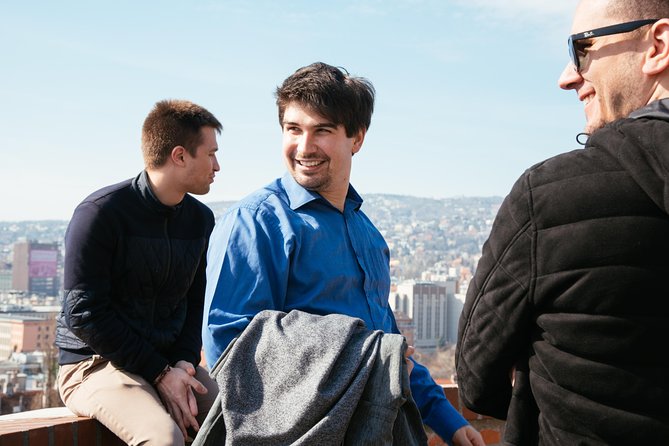
The tour begins at Kempinski Hotel Corvinus Budapest, at Erzsébet tér, at 2 p.m. Elizabeth Square is a smart starting point because it has passed through several very different chapters. It was once a market square, later became associated with the Stalin era and a bus station, and now functions as a young social and nightlife area.
You can expect about 20 minutes here. The guide uses the square and its statues to explain how public spaces change with political power and everyday life. That makes the opening stop more useful than a simple introduction to the route.
The timing is worth considering. A 2 p.m. start gives you the morning for another Budapest activity, but it also places much of the walk in the afternoon. On a hot day, bring water and wear shoes suited to pavement. Refreshments are included, but you should still plan sensibly for a long walk.
St. Stephen’s Basilica and the center of Pest
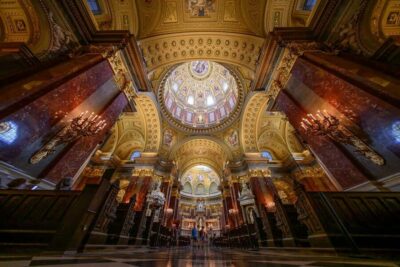
The next stop is St. Stephen’s Basilica, Budapest’s largest church. The planned time is about 20 minutes, and the group may enter if there is interest.
That last point gives the tour some flexibility, but it also means you should not treat interior access as a guaranteed full church visit. The focus is the guide’s explanation of the basilica and its place in central Pest. If the group wants to go inside, the guide can include it.
The basilica is also where the tour may end, according to the stated route. The actual finish can shift to another central point in Pest close to the starting area. This is convenient if you want to continue sightseeing or find dinner nearby, though you should avoid scheduling a time-sensitive activity immediately afterward.
Heroes’ Square puts 1,100 years into view
Heroes’ Square receives about 30 minutes, and it is one of the most important stops on the route. The square offers a visual introduction to more than 1,100 years of Hungarian history, making it a natural place for the guide to explain the country’s major eras and national figures.
This is where a historian guide adds real value. A row of statues can seem like a collection of stern stone faces if you do not know who they represent or why they were honored. With context, the square becomes a lesson in how Hungary presents its past, including its achievements, struggles, and changing political ideas.
The open setting also makes the square a good place to pause and take in the scale of Budapest’s grand civic planning. You are not only looking at a monument. You are seeing how national identity was placed in the middle of the city.
The drawback is distance. Heroes’ Square is not a quick hop from the central starting point, and the tour covers more territory after this stop. The pace is described as easy, but the walking is substantial.
Same riverbank, a completely different kind of day:
- Budapest: 1-Hour Evening Sightseeing Cruise with Drink
★ 4.5 · 8,330 reviews - Budapest Danube Cruise and Dinner Options, Live Music and Dance
★ 4.5 · 7,428 reviews - Budapest: Historic Cruise with Welcome Drink
★ 4.7 · 6,512 reviews - Budapest: St. Stephen’s Basilica Entry with Terrace Option
★ 4.5 · 6,399 reviews
Vajdahunyad Castle, a medieval-looking building from 1896
Vajdahunyad Castle is one of the route’s most interesting surprises. It looks like a medieval fortress, yet it was built in 1896. The guide explains why and how this happened, turning the stop into a lesson in national celebration and architectural storytelling.
The castle was created for Hungary’s millennium celebrations, which marked a major anniversary of the country’s arrival in the Carpathian Basin. Its medieval appearance was part of the point. The building allowed Hungary to display a long architectural past in one place, even though the structure itself belonged to the modern era.
You get around 30 minutes here. This is a strong stop for anyone who likes the gap between appearance and reality. Budapest has plenty of grand buildings, but Vajdahunyad Castle asks a more interesting question: what does a country choose to make its past look like?
It is also described as a less visited site, which can make it feel like a welcome change from the city’s most familiar landmarks. Still, do not expect a long independent castle visit. The tour’s purpose is to explain the site and its role in Budapest, not to provide a full museum program.
Andrassy Avenue and the pride of Budapest
The walk then takes in Andrassy Avenue, one of Budapest’s signature streets and a UNESCO World Heritage site since 2002. You spend roughly 30 minutes learning about the avenue and its place in the city.
Andrassy Avenue is important because it connects grand urban design with practical city life. It is not merely a pretty boulevard. It reflects the ambitions of Budapest as a modern European capital, with the scale and style to match that goal.
This part of the tour can help you read the city more clearly. Pay attention to how the avenue links major cultural and public spaces. The guide may also connect its buildings and institutions to the political pressures and outside powers that affected Hungary during the previous century.
The walking here is steady rather than difficult, but the route does not offer much downtime. If you prefer a tour with frequent café stops or long interior visits, this experience may feel active.
Vorosmarty Square and the commercial heart of Pest
Vorosmarty Square receives about 15 minutes. It is an iconic central square with a strong commercial character, including high-end products and shops in the heart of historic Pest.
This shorter stop gives the tour a different tone. After the national story of Heroes’ Square and the symbolic architecture of Vajdahunyad Castle, Vorosmarty Square shows Budapest as a place of trade, consumption, and urban social life.
The guide’s role here is to connect commerce with the city’s development. You can also use the stop to get your bearings in central Pest. Since the square is close to other central sights, it is a useful place to continue exploring after the tour.
Fifteen minutes is enough for an explanation and a look around, but not for serious shopping. If you want time to browse stores or stop for coffee, plan to return later.
Riding the Millennium Underground
The Millennium Underground is one of the route’s most distinctive features. It is described as the oldest underground railway on the European continent, and the tour allows about 30 minutes for this part of the experience.
The included metro tickets are especially useful here. You do not need to work out the ticket system during the walk, and the underground ride breaks up the longer stretches on foot. It also shows how Budapest embraced modern urban transport as the city expanded.
For me, this is the sort of inclusion that improves the whole tour. A metro ride is not just a way to save your legs. It gives you another piece of the city’s story, linking grand nineteenth-century ambitions with the practical problem of moving people through a growing capital.
The route information does not specify every detail of the ride, so you should think of it as part of the guided journey rather than a separate transit tour. The guide provides the ticket, and the group uses the system to connect parts of Pest.
What the historian guide adds
The central strength of this experience is the guide’s storytelling. The tour is built around Hungarian people and history across the centuries, including the effects of invading powers and the wars of the previous century.
The guides named in the available information include Andrew, Greg, and Steven, also called István. Their descriptions suggest a conversational style with room for detail. Andrew is associated with a large amount of historical explanation while keeping an easy pace. Greg led a walk around Pest that connected the basilica, financial buildings, and the former grain exchange. Steven’s route tied statues and architectural decoration to the beliefs, struggles, and determination of the Hungarian people.
You should not assume you will receive one particular guide unless the booking information confirms it. The useful point is that the experience is designed around a historian guide rather than a basic city escort. If you enjoy asking why a square was renamed, why a building looks older than it is, or how wars changed a city, this format should suit you.
The small group helps. With a maximum of 10 people, the guide can keep the pace manageable and respond to questions without addressing a crowd. It also feels less like a fixed speech and more like a walking conversation.
Walking demands, weather, and practical comfort
This is a three-hour tour, but the time does not tell the whole story. The route crosses a large section of Pest and includes long distances between major sights. The Millennium Underground helps, yet you should still expect plenty of walking.
Wear comfortable shoes and prepare for changing weather. One account of the tour describes a hot day with long distances, although the pace remained manageable. That is a fair picture of the experience: not a race, but not a gentle stroll around one compact square.
The tour is offered in English. A mobile ticket is provided, and confirmation is received at booking. The activity is near public transportation, and service animals are allowed. Most people can participate, but the amount of walking makes personal comfort and stamina more important than the formal three-hour length suggests.
The basilica may be visited inside if the group is interested. The route can end at the basilica or another central Pest location near the starting point, so keep your plans afterward flexible.
Is $58.94 a fair price?
At $58.94 per person, this is not the cheapest way to see Budapest’s major sights. The value depends on what you want from a city walk.
If you only want exterior photographs and a quick orientation, you can cover some of these places on your own for much less. Public transport in Budapest is easy to use, and several stops are public spaces with no separate admission charge.
The price makes more sense if you want historical interpretation, a small group, and a route that connects sights across a broad part of Pest. You are paying for the guide’s preparation and explanation, not for costly entrance tickets. Refreshments and metro tickets are included, which removes a few small expenses and practical hassles.
I would compare it with a large bus tour rather than with a self-guided walk. The smaller group and amount of historical detail offer a more personal alternative to seeing Pest from a coach. If you have only one afternoon in the city and want the major Pest landmarks placed in context, the cost can be reasonable.
The tour is also booked an average of 32 days ahead, so advance planning is sensible. Free cancellation is available until 24 hours before the start time. Changes or cancellations inside that window are not accepted for a refund.
Who should book this Pest walk?
I would recommend it to first-time Budapest visitors who want a strong introduction to Pest and enjoy history explained on location. It is also a good fit if you have already seen the Danube waterfront and want to understand the city’s streets, squares, churches, and public monuments.
You will get the most from it if you:
- Enjoy walking several miles over three hours.
- Prefer small groups to large coach tours.
- Want explanations of Hungarian history, politics, architecture, and national identity.
- Like seeing both famous places and a less visited site such as Vajdahunyad Castle.
- Appreciate having metro tickets and refreshments handled for you.
I would hesitate if you want a slow tour with plenty of free time, shopping, or long indoor visits. The basilica entry depends on group interest, and the itinerary covers a lot of ground. Families and older visitors may find the walk manageable, but everyone should consider the heat, distance, and pavement before booking.
Should you book Pest Side Stories with a Historian?
Book it if you want Budapest to make sense, not just look impressive. The strongest part is the connection between places: Elizabeth Square’s political changes, the basilica’s central role, Heroes’ Square’s national story, Vajdahunyad Castle’s carefully invented medieval image, Andrassy Avenue’s civic ambition, and the Millennium Underground’s modern urban purpose.
The tour’s one real cost is your energy. You cover a large section of Pest in three hours, and the afternoon timing can be hot. If you arrive with good shoes, water, and an interest in Hungarian history, the small group and historian-led explanations make this a solid use of an afternoon.
FAQ
How long does the Pest Side Stories tour last?
The tour lasts approximately three hours.
What time and where does the tour begin?
It begins at 2 p.m. at Kempinski Hotel Corvinus Budapest, Erzsébet tér 7-8, 1051 Hungary.
Where does the tour finish?
The planned end point is St. Stephen’s Basilica, though the tour may finish at another central Pest location close to the starting point.
How large is the group?
The tour has a maximum of 10 travelers.
Is the tour offered in English?
Yes. The tour is offered in English.
Are metro tickets and refreshments included?
Yes. A guide, refreshments, and metro tickets are included.
Just added around Budapest
- From Budapest: Guided Tour of Eger with Wine Tasting★ 4.5 · 6 reviews
- Budapest: Private Walking Tour with a Local Guide★ 3.6 · 6 reviews
- Budapest: Danube River Views Bike Ride★ 4.8 · 23 reviews
- Trash Art Museum: Hungary’s First Scrap Metal Exhibition★ 4.3 · 72 reviews
- Walk to recent and aged spiritual sanctuaries near Budapest★ 5.0 · 5 reviews
- Budapest: 3-Hour Trabant Sightseeing Tour★ 4.7 · 28 reviews
- True Crime Walking Tour in the Buda Castle district★ 5.0 · 26 reviews
- Audio visual multi-sensory chefs journey dinner experience★ 5.0 · 3 reviews
Budapest Tours, compared.

Unlimited Prosecco, Beer and Aperol Spritz Cruise
Read our review →
Széchenyi Spa Day Ticket with Optional Upgrades
Read our review →

Budapest Danube Cruise and Dinner Options, Live Music and Dance
Read our review →
St. Stephen’s Basilica Entry with Terrace Option
Read our review →