
Reviewed · AUDIO TOURS
Self Guided Tour In Budapest With 100 Captivating Audio Stories
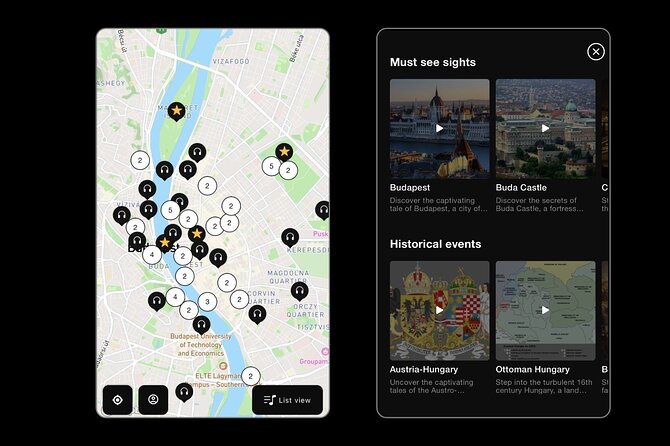
Budapest is a city made for wandering, and this self-guided audio tour gives you a large menu of stories to hear as you move through it. Instead of following a fixed route, you choose the places that interest you, start and stop whenever you like, and let your phone guide your sightseeing from Buda Castle to the Danube and beyond. The browser-based format is especially handy because you do not need to download an app.
I like the low $3.62 price, which makes this an easy add-on to a Budapest visit. I also like the choice of more than 100 location-based stories, including major sights and less obvious stops such as the National Archives, Nyugati Railway Station’s Royal Waiting Room, Gül Baba’s Tomb, and the Metropolitan Ervin Szabó Library. The main drawback is that you need your own smartphone, headphones, and internet access, and there is no offline access.
In This Review
- Key points to know before you book
- What this Budapest audio tour actually is
- Buda Castle, Fisherman’s Bastion, and the hilltop stories
- The Danube, Chain Bridge, and Parliament
- Margaret Island, bridges, and Gellért Hill
- Heroes’ Square and City Park
- Markets, libraries, music, and everyday Budapest
- Railway stations, shopping, and urban details
- Synagogue, memorials, and Budapest’s complicated past
- How the $3.62 price holds up
- Who will enjoy this format most
- How I would use it during a Budapest visit
- Should you book this Budapest audio tour?
- FAQ
- How much does the self-guided Budapest audio tour cost?
- How long does the experience last?
- What language is the audio guide offered in?
- Do I need to download an app?
- What equipment do I need?
- Is offline access available?
- Does the price include entry to Budapest attractions?
- Is there a physical guide or fixed meeting time?
- Is the experience suitable for everyone?
Key points to know before you book
- 100-plus Budapest stories: Choose from castles, bridges, memorials, railway stations, museums, libraries, squares, and neighbourhoods.
- Self-guided freedom: Start, pause, stop, or change direction whenever you wish. There is no fixed group schedule.
- English audio only: The experience is offered in English through a web app with a map and soundscapes.
- Very low cost: At $3.62 per person, it is inexpensive, though you are paying for audio content rather than entry to attractions.
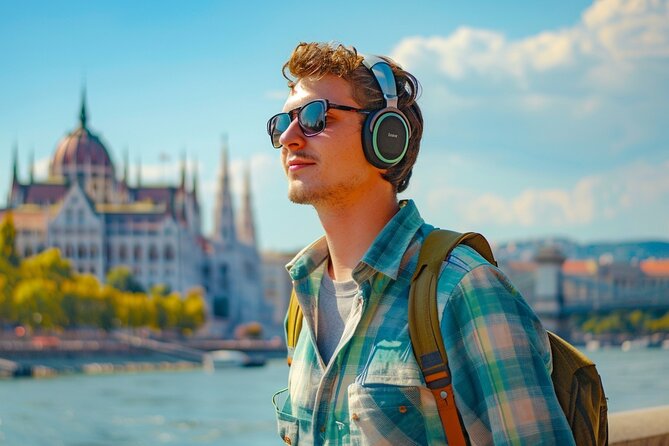
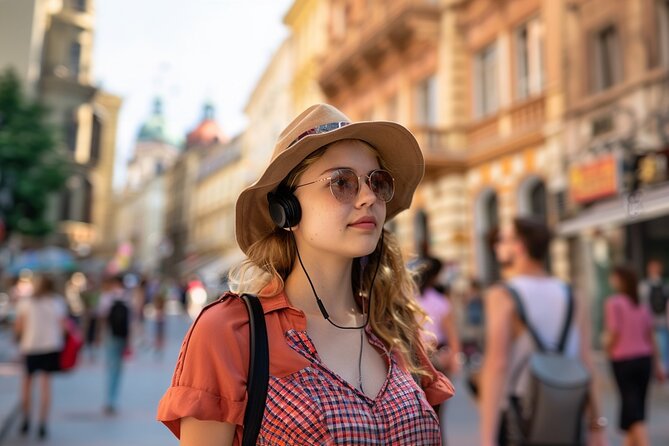
- Bring your own gear: You need a smartphone, headphones, and an internet connection. Offline use is not included.
- Not a ticket package: Admission is listed as free at the outdoor stops, but this does not include entry to churches, museums, towers, or other paid interiors.
What this Budapest audio tour actually is
Think of this as a collection of short audio postcards tied to places around Budapest. You are not joining a guide at a meeting point, and you are not being led through a set sequence. Instead, you open the web app, view the map, and select the stories that fit your day.
The activity is available in English and includes stories about important sights, historic events, famous people, and local settings. The listed stops generally allow about 10 minutes for each story, while Buda Castle and Margaret Island are shown with about 20 minutes. Those times appear to describe the audio stop, not the total time needed to walk around, take photographs, visit an interior, or travel between locations.
That distinction matters. The full experience is described as lasting from one to eight hours, but you can make it much shorter or use it across a longer day of sightseeing. If you listen to every listed story, you would need far more than eight hours once transport and walking are added. The attraction is the freedom to pick and choose.
The audio guide is accessed through a link, with one-step activation and no cumbersome download. That should appeal to anyone who wants to get started quickly. Still, you need a working internet connection while using it, and offline access is not included.
A few more Budapest trips to weigh up
- Budapest: Parliament Building Entry Ticket and Audio Guide
★ 4.5 · 3,844 reviews - Budapest Danube Cruise with Drink, Audio Guide, Margaret Island
★ 4.5 · 1,036 reviews - Budapest: Danube River Sightseeing Cruise with Audio Guide
★ 4.1 · 1,002 reviews
Buda Castle, Fisherman’s Bastion, and the hilltop stories
Start on the Buda side if you want a strong opening. Buda Castle provides stories of battles, rulers, and political change, while the National Széchényi Library adds a cultural angle inside the castle district. The nearby National Archives of Hungary offers another look at the documents and records behind the country’s past.
Fisherman’s Bastion is one of the best-known viewpoints in Budapest, and its audio story focuses on folklore and the fortress-like setting. You can pair it with the castle story for a compact hilltop visit. The route also includes the Semmelweis Museum of Medical History, where the story turns toward medical discoveries and the legacy of an institution founded in 1769.
This group of stops works well for a first morning because the subjects vary. You get royal power, military events, books and archives, architecture, and medicine without needing to commit to a formal tour.
The catch is that the audio does not replace admission tickets. The stops are described as outdoor points, and admission is listed as free, but some sights nearby have interiors or upper levels that require separate arrangements. Use the audio for context, then treat entry fees and opening hours as separate matters.
The Danube, Chain Bridge, and Parliament
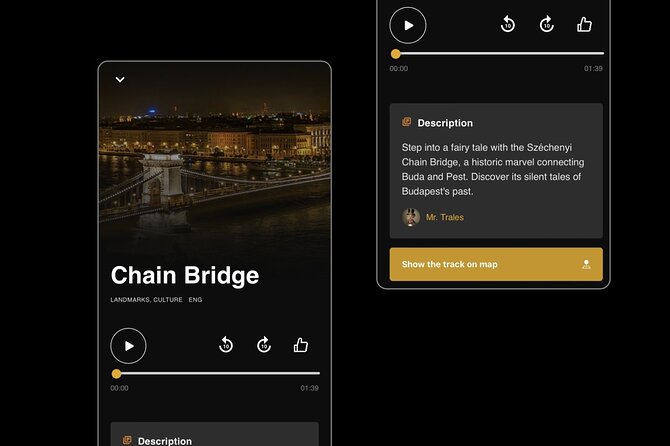
The Chain Bridge is one of the clearest examples of how this format can help. You can listen near the lion statues, then cross the bridge and hear another story connected with the structure itself. The two entries appear to cover related material, so you may not need both unless you enjoy comparing the separate location points.
The Danube story focuses on the riverside promenade and the grand buildings along the water. At Shoes on the Danube Bank, the subject becomes more solemn. This memorial, made of iron shoes along the riverfront, recalls people killed during the Second World War. Give this stop time and attention. It is not simply another photo point.
Parliament is also included as one of the 100-plus choices. Its story concerns the building as a symbol of Hungary’s past and present. Kossuth Lajos Square provides a nearby political setting, while the Hungarian Academy of Sciences and the Hungarian National Bank add stories about scholarship, public institutions, money, and national identity.
This is one of the best clusters for a walking day because the sites connect naturally along the river and central Pest. You can listen in short bursts, stop for a look, and continue without waiting for a group. Use headphones at the memorial, but keep the volume low enough to remain aware of traffic, cyclists, and other people along the promenade.
Margaret Island, bridges, and Gellért Hill
Margaret Island gives the tour a change of pace. The story presents the island as a place where nature and past events meet. You can use it for a quieter section of your day, though the audio time of about 20 minutes does not account for exploring the island itself.
Margaret Bridge is another good pairing. The story points to the bridge’s unusual 165-degree design and its role in joining Buda and Pest. From there, you can return to the Chain Bridge or continue toward the central riverfront.
Gellért Hill brings history, legends, and broad city views together. The Citadella and Liberty Statue are covered separately, so you can choose whether you want one story or a fuller hilltop visit. The Gellért Hill Cave adds a more mysterious subject, with legends connected to the underground site.
This area requires more physical effort than a flat central walk. The supplied information says most people can participate, but it does not give a detailed mobility assessment or describe the walking surfaces. If steep streets or hill paths are a concern, choose the riverfront stories, squares, stations, or markets instead.
Same riverbank, a completely different kind of day:
- Budapest: Unlimited Prosecco, Beer and Aperol Spritz Cruise
★ 4.8 · 25,310 reviews - Budapest: Széchenyi Spa Day Ticket with Optional Upgrades
★ 4.3 · 23,911 reviews - Budapest: Nighttime or Daytime Sightseeing Cruise
★ 4.2 · 21,062 reviews - Budapest: 1-Hour Evening Sightseeing Cruise with Drink
★ 4.5 · 8,330 reviews
Heroes’ Square and City Park
Heroes’ Square is one of the most useful history stops in the collection. The Millennium Monument commemorates 1,000 years since the Magyar conquest of the Carpathian Basin, and the square is framed by the Museum of Fine Arts and the Palace of Art.
Nearby City Park covers 302 acres and offers a broader setting for the audio. The City Park Ice Rink and Boating Lake has its own story, with attention to how the site changes between seasons. These stops fit together well, especially if you want to combine major monuments with open space.
The advantage here is scale. You can listen to a short story at Heroes’ Square, then keep walking through the park rather than packing the day with indoor visits. The limitation is that the audio guide gives you information about the places, not entrance to the museums or access to activities at the rink and lake.
Markets, libraries, music, and everyday Budapest
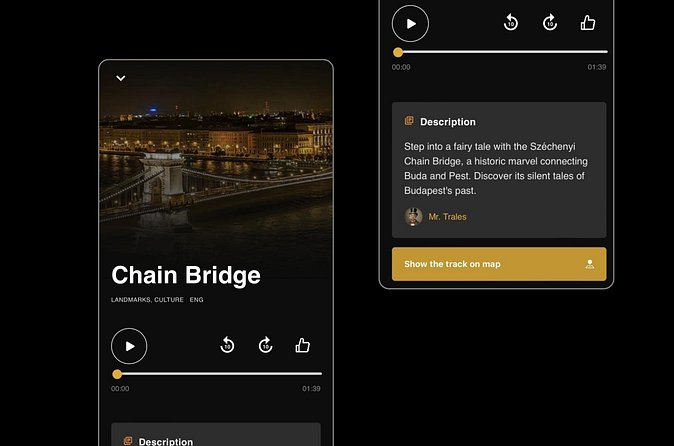
Central Market Hall is a useful stop for visitors who want more than monuments. The story focuses on the historic market as a product of city planning and public life. You can listen outside, then decide for yourself how long to spend looking at the stalls and food displays.
The Franz Liszt Academy of Music takes you into Budapest’s musical world. Its story concerns the institution, its artists, and its role in musical education. Since the stop is outside and admission is not included, check separately if you want to enter.
The Metropolitan Ervin Szabó Library is one of the more unusual choices. The audio describes a former palace turned into a place of learning. It gives you a reason to notice a building you could otherwise pass without a second glance.
Corvinus University offers another look at Budapest through education and public life. The story concerns the university’s past and academic community, although the supplied description is cut off at the end. I would treat this as a short point of interest rather than a full campus visit.
These stops show the strength of the 100-story approach. You are not limited to the postcard sights. You can build a day around food, music, books, education, and architecture.
Railway stations, shopping, and urban details
Budapest’s railway stations make excellent audio subjects. Nyugati Railway Station is linked with a Royal Waiting Room and with the designers associated with the Eiffel Tower. Keleti Station brings a grander architectural focus and a story about Hungary’s railway era.
Westend Shopping Center provides a different theme, examining the rise and fall of an important shopping site. It may appeal if you enjoy urban change and everyday city life more than royal monuments.
Vörösmarty Square, Deák Ferenc Square, Batthyány Square, and Újlipótváros broaden the view again. Vörösmarty Square has changed identity since 1812, Deák Ferenc Square is a major transport meeting point, Batthyány Square connects power and public life, and Újlipótváros brings attention to a neighbourhood where older and newer Budapest meet.
These stories are especially practical when you are already passing through town. You can select one near your hotel, a restaurant, or a transport connection and avoid crossing the city just to reach the next audio point.
Synagogue, memorials, and Budapest’s complicated past

The Great Synagogue on Dohány Street is included as a story about one of Europe’s largest synagogues. The audio can help you notice the scale and setting before deciding if you want to visit inside. Admission to the building is not part of this experience.
Liberty Square adds a political layer, with a story linked to the Hungarian National Bank and the echoes of the past around the square. The Hungarian National Bank Headquarters also has its own story, focusing on currency and Hungary’s economic changes.
Shoes on the Danube Bank is the most emotionally serious stop. I would not rush it or play the audio while taking a string of photographs. Pause, look closely, and allow the place to speak for itself.
The value of these stops is not simply factual information. They help you connect grand buildings and public squares with the people and events that shaped them. At the same time, short audio stories can only provide an introduction. If a subject matters to you, use the stop as a prompt for a longer museum visit or further reading.
How the $3.62 price holds up
At $3.62 per person, this is one of the cheapest ways to add structure to independent sightseeing in Budapest. The price is easy to justify if you use several stories, especially if you are travelling alone or with a small private group and do not want to pay for a live guide.
The value becomes weaker if you listen to only one or two stories. In that case, the cost is still small, but you are not making much use of the collection. I would save the access link and plan several nearby stops rather than treating this as a single attraction.
The product includes the web app, map, activation link, audio stories, and soundscapes. It does not include your phone, headphones, internet access, offline use, admission, or a physical guide. A separate booking note praises the convenience of using an online purchase to get ahead of a long line at St. Stephen’s Basilica, but you should not assume this audio experience itself provides church admission or tower access. The listed inclusions do not promise that.
The experience has a five-star rating based on only three ratings, so I would treat that score as encouraging but limited. The clearest practical praise concerns quick online access for St. Stephen’s, including the useful reminder that the tower requires its own ticket and extra time.
Who will enjoy this format most
I would choose this for independent visitors who like to set their own pace. It suits a first visit when you want broad coverage, and it also works for a return visit when you are looking for subjects beyond the standard castle and Parliament route.
It is a good fit for:
- Solo visitors who want company without joining a group
- Couples or families with different sightseeing interests
- People who prefer short stories rather than long guided talks
- Architecture fans interested in stations, bridges, libraries, and public buildings
- Visitors who want to combine the audio with their own food, museum, or shopping plans
It is less suitable if you want a live person answering questions, a carefully managed walking route, or detailed help inside attractions. It is also not recommended for people with hearing impairment, and the lack of offline access may be inconvenient if your phone connection is unreliable.
The activity is private in the sense that only your group uses it. That does not mean you receive a private human guide. You remain responsible for navigation, timing, safety, and deciding which places to enter.
How I would use it during a Budapest visit
I would not try to chase all 100 stories. Instead, I would select a few clusters.
For a Buda day, I would combine Buda Castle, the National Széchényi Library, the National Archives, Fisherman’s Bastion, and perhaps Gül Baba’s Tomb. For a riverfront day, I would choose the Chain Bridge, Parliament, Kossuth Square, the Danube Promenade, and Shoes on the Danube Bank.
A Pest itinerary could link Central Market Hall, Liberty Bridge, the Great Synagogue, Deák Ferenc Square, St. Stephen’s Basilica, and Vörösmarty Square. Another day could focus on Heroes’ Square, City Park, the Ice Rink and Boating Lake, and the Franz Liszt Academy.
Before leaving your accommodation, charge your phone, bring headphones, and confirm that you can open the activation link. Since there is no offline access, do not assume you can save everything for later. The web app and map are most useful when you have a clear idea of the part of Budapest you want to explore.
Should you book this Budapest audio tour?
Book it if you want cheap, flexible audio context while exploring Budapest independently. The large selection of location-based stories is the main reason to choose it, and the low price makes it a sensible companion to a self-planned city break.
Skip it if you want a live guide, offline listening, attraction tickets, or a fixed route that removes all planning. Also check the distinction between audio access and admission before relying on it for St. Stephen’s Basilica or any other interior.
For $3.62, the risk is small, but the best value comes from planning several nearby stops. Use it as a smart sightseeing layer, not as a complete Budapest tour package.
FAQ
How much does the self-guided Budapest audio tour cost?
The listed price is $3.62 per person.
How long does the experience last?
The approximate duration is one to eight hours. You can choose how many stories to hear and start or stop at any time.
What language is the audio guide offered in?
The audio guide is offered in English.
Do I need to download an app?
No. The guide works through a browser, and the access link is provided for one-step activation.
What equipment do I need?
You need your own smartphone, headphones, and internet access. These are not included.
Is offline access available?
No. Offline access is not included, so you need an internet connection while using the web app.
Does the price include entry to Budapest attractions?
No. The outdoor stops list admission as free, but the experience does not include entry to churches, museums, towers, or other interiors.
Is there a physical guide or fixed meeting time?
No physical guide is included. The tour begins in Budapest, but you control when and where you start, and the activity ends back at the meeting point.
Is the experience suitable for everyone?
Most people can participate, and service animals are allowed. It is not recommended for people with hearing impairment.
Just added around Budapest
- From Budapest: Guided Tour of Eger with Wine Tasting★ 4.5 · 6 reviews
- Budapest: Private Walking Tour with a Local Guide★ 3.6 · 6 reviews
- Budapest: Danube River Views Bike Ride★ 4.8 · 23 reviews
- Trash Art Museum: Hungary’s First Scrap Metal Exhibition★ 4.3 · 72 reviews
- Walk to recent and aged spiritual sanctuaries near Budapest★ 5.0 · 5 reviews
- Budapest: 3-Hour Trabant Sightseeing Tour★ 4.7 · 28 reviews
- True Crime Walking Tour in the Buda Castle district★ 5.0 · 26 reviews
- Audio visual multi-sensory chefs journey dinner experience★ 5.0 · 3 reviews
Audio Tours, compared.

Parliament Building Entry Ticket and Audio Guide
Read our review →
Budapest Danube Cruise with Drink, Audio Guide, Margaret Island
Read our review →
Danube River Sightseeing Cruise with Audio Guide
Read our review →

Budapest River Cruise with 1 Free Tokaj Frizzante and Audio Guide
Read our review →
Budapest Paddle Steamer Danube Cruise with Tokaj & Audio Guide
Read our review →
Budapest Audio Guide Cruise with Day, Sunset and Night Options
Read our review →
Sightseeing Cruise on the Danube with Audio Guide in Budapest
Read our review →Browse the lists this tour appears in