
Reviewed · BUDA CASTLE TOURS
Budapest: Buda Castle Walking Tour & Folk Music Performance
Buda Castle is more than a pretty viewpoint, and Kristóf Kovács makes that clear with stories about kings, residents, wars, architecture, and everyday Hungarian life. I especially like the personal folk performance at the end and the way the tour connects famous monuments with less obvious details, such as old building sections on Tárnok Street.
I also like that this is a small-group or private experience, so you can ask questions instead of simply trailing behind a flag. The main consideration is that the tour visits monuments from the outside, and the price does not include entry tickets. Expect steady walking, uneven historic streets, and a tour that can run close to two and a half hours.
In This Review
- Key points at a glance
- Why the folk music changes the feel of the tour
- Starting at Holy Trinity Square
- Matthias Church and the religious center of Castle Hill
- Fisherman’s Bastion and the best early views
- Tárnok Street and the layers of old Buda
- The Royal Buda Palace and King Matthias
- Tóth Árpád sétány and a quieter return
- A guide who treats history as a conversation
- What $58 buys you
- Who will enjoy this Castle Hill walk
- Practical ways to plan the experience
- Should you book it?
- FAQ
- How long does the Buda Castle walking tour last?
- Where does the tour meet?
- Which sights are included in the walking route?
- Are entrance tickets included?
- Is the folk music performance included?
- What should I bring?
Key points at a glance
- A folk performance by your guide: Kristóf sings traditional Hungarian songs and demonstrates folk dance steps instead of ending with a routine farewell.
- The core sights of Castle Hill: The route covers Matthias Church, Fisherman’s Bastion, Tárnok Street, the Royal Buda Palace, and Tóth Árpád sétány.
- History with a human voice: Expect stories about King Matthias, Queen Elisabeth, palace life, architecture, and the people who lived on the hill.
- Views across the Danube: Several points reveal Pest, the river, and the Budapest skyline, with a view toward the historic funicular.
- A flexible format: You can book a private tour or a small group, both conducted in English by a licensed Hungarian guide.
- A walking-first experience: Comfortable shoes, water, and clothing suited to the weather matter more here than fancy equipment.
Why the folk music changes the feel of the tour
Many castle walks finish when the guide has named the buildings and pointed out the best photo spots. This one adds a short cultural performance. At the end, Kristóf sings Hungarian folk songs from different parts of the country and shows traditional dance steps.
That is not a substitute for a full concert, and you should not book this expecting a staged evening show. Its appeal is more direct and personal. You are hearing the culture from the person who has been explaining it for the past two hours. The performance gives the earlier stories a human finish, especially when Kristóf talks about his own family and his grandmother.
I find this useful for visitors who want more than monument facts but do not have time for a separate folk program. It also gives children and teenagers something memorable to anticipate during the walk. The music is not an optional extra that gets lost in the background. It is one of the defining parts of the experience.
More buda castle tours in Budapest:
- Budapest: Buda Castle Cave Tour
★ 4.7 · 5,677 reviews - Budapest: Buda Castle District Vampires and Myths Night Tour
★ 4.6 · 3,830 reviews - Budapest: Buda Castle Walk with Saint Stephen’s Hall
★ 4.5 · 3,012 reviews
Starting at Holy Trinity Square
The meeting point is in front of the Holy Trinity Statue at Szentháromság tér. Look for the guide holding a board with the MAGGINO logo, a dark blue stork carrying an orange musical note.
This square places you right in the heart of the Buda Castle District. It is a practical starting point because Matthias Church and Fisherman’s Bastion are close by, so the tour begins with two of the area’s best-known sights rather than spending its first stretch on a long approach.
You should arrive ready to walk. The route is not a vehicle-based sightseeing trip, and the listed duration is two to two and a half hours. The tour runs in all weather, so a sunny morning and a chilly or wet afternoon require different clothing. Bring water, especially in warm weather.
Matthias Church and the religious center of Castle Hill
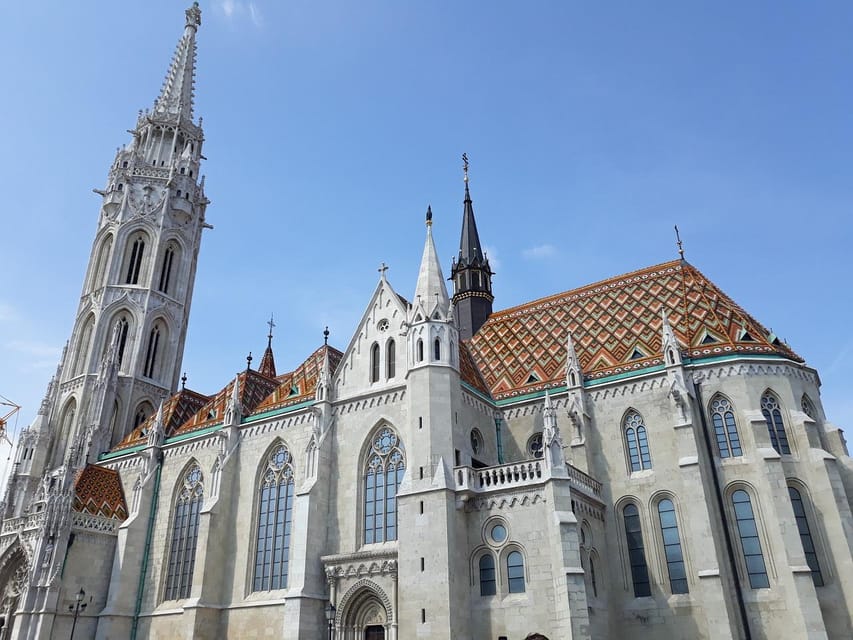
The first major stop is Matthias Church, officially associated with the Church of Our Lady of Buda Castle. The tour focuses on the exterior, since entry tickets are not included, but the building still makes a strong first impression from the square.
This is a good place for Kristóf to explain how the Castle District changed across the centuries. The church is not just an isolated monument. It helps you understand the religious and political importance of the hill, and it sets up the stories about Hungarian rulers that continue throughout the walk.
If you want to see the interior, you will need to buy your own ticket. One private experience included an additional church visit after the participants purchased admission themselves, but you should not assume that interior entry is part of the standard booking. Ask about it when arranging your tour if the inside matters to you.
The exterior visit suits a first overview of Budapest. If you have already set aside time for the church interior, the guided explanation can add useful context before or after your own visit.
Fisherman’s Bastion and the best early views
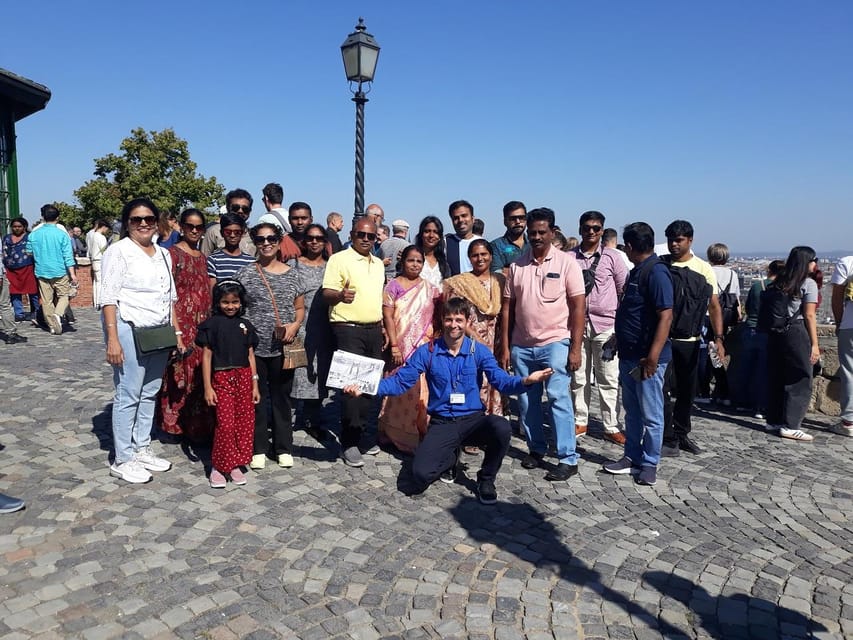
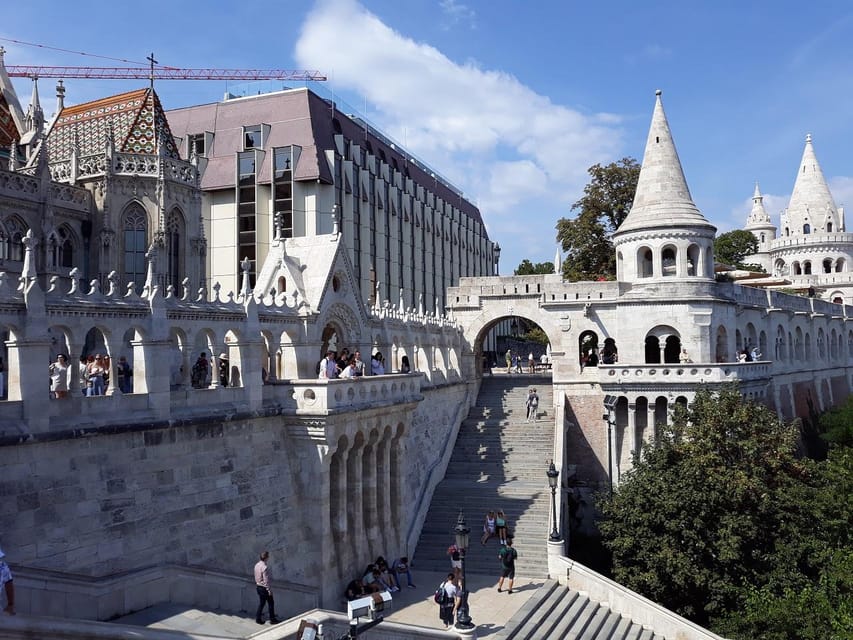
A short walk leads to Fisherman’s Bastion, one of Budapest’s most photographed places. Its terraces offer broad views toward Pest, the Danube, and the city’s central skyline.
The appeal here is obvious, but the guide adds value by explaining what you are looking at rather than leaving you to identify buildings on your own. The views also show how Buda’s hilltop position shaped the city. You can take in the river below and the flatter Pest side beyond it, a useful visual lesson in Budapest’s two-part geography.
This is one of the tour’s strongest photo stops, so give yourself a moment to look around. The route is guided, but it is not only a lecture. Kristóf is described as welcoming questions and using visual aids, including before-and-after views, to explain how the city changed over time.
Fisherman’s Bastion can be busy at popular times, though no exact crowd conditions are promised for your departure. A private or small-group format may make it easier to pause without losing contact with the guide, but the site itself remains a public attraction.
A few more Budapest trips to weigh up
- Big Bus Budapest Hop-On Hop-Off Bus and Walking Tour
★ 3.5 · 2,206 reviews - Budapest: Buda Castle District Walking Tour
★ 4.6 · 2,108 reviews - Budapest City Landmarks Walking Tour in 2 Hours
★ 5.0 · 2,048 reviews - 3-Hour Orientation Walking Tour of Buda and Pest
★ 4.8 · 1,834 reviews
Tárnok Street and the layers of old Buda
The walk continues along Tárnok Street, where the main attraction is architectural variety. You can find examples of different styles from historical Hungary through the end of the nineteenth century, along with building parts dating back nearly five hundred years.
This is the kind of stop I value because it prevents the Castle District from becoming a string of grand facades. You get a look at the street where people lived, worked, and rebuilt after periods of destruction. The details may be easy to miss if you explore alone, particularly when an older wall section sits beside a much later design.
The walk between stops also gives the tour a natural rhythm. You are not standing in one place for the whole explanation, but you are not rushing from monument to monument either. Allow time for questions, since the guide’s style appears to encourage conversation rather than delivering a fixed script without interruption.
Tárnok Street is also a reminder that Castle Hill is a neighborhood as well as a historic district. The tour discusses the inhabitants of the hill over the centuries and today, which gives the setting more depth than a simple list of royal buildings.
The Royal Buda Palace and King Matthias
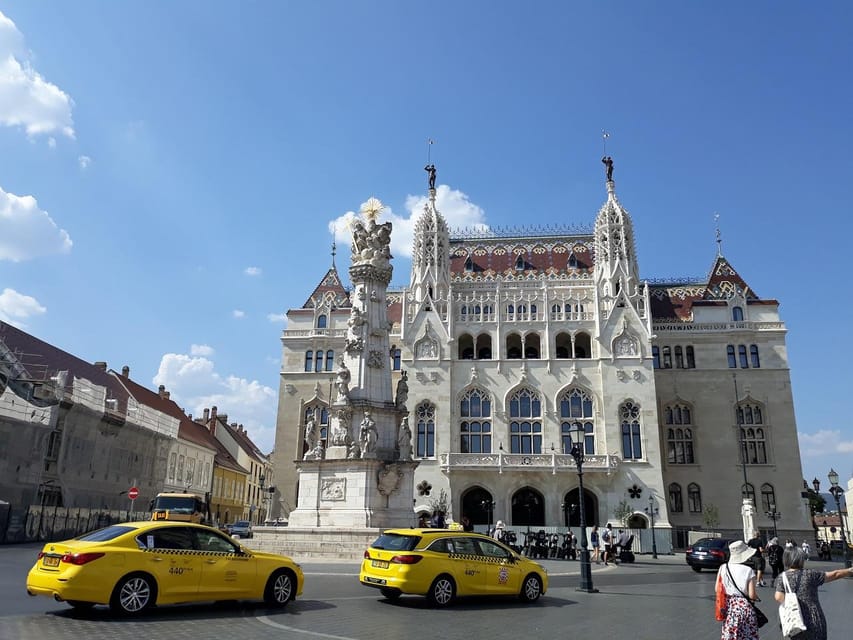
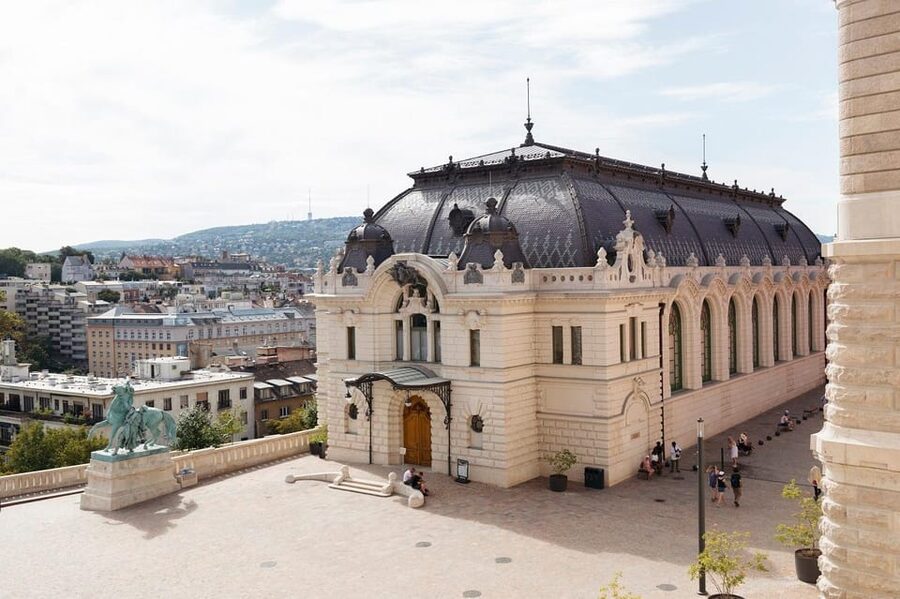
The route then heads toward the Royal Buda Palace, also called Buda Castle. This was the royal seat of Hungarian rulers for centuries, so it provides the broad historical center of the walk.
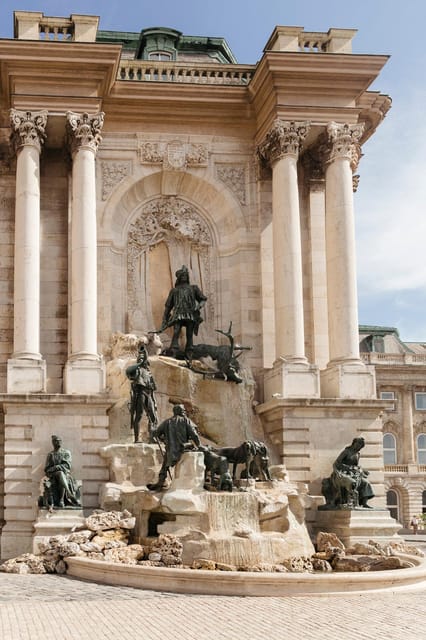
Kristóf’s stories about King Matthias are a major part of this section. Matthias made Buda Palace an important center of Renaissance culture in Europe, and the stories include the palace fountains that were said to bubble with wine. That detail is memorable because it turns a distant king into a figure associated with spectacle, ambition, and court life.
You will see the palace from the outside on the standard tour. Entry to visited monuments is not included, so plan separately if you want to spend time inside the palace museums or galleries. The walking tour is best for orientation and context, not for a full museum visit.
The palace also gives the guide room to discuss damage, rebuilding, and the way Budapest changed over time. The use of before-and-after images can help you picture the difference between earlier versions of the complex and what you see today. I would choose this tour early in a Budapest stay if you want a strong framework for later independent visits.
Tóth Árpád sétány and a quieter return
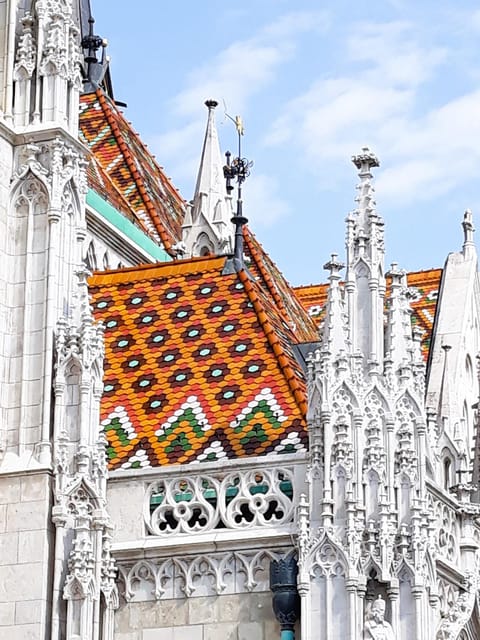
From the palace area, the route continues along Tóth Árpád sétány. This section includes scenic views and leads back toward Holy Trinity Square.
The promenade offers a change of pace after the main monuments. Instead of another major building, you get room to walk, look out over the city, and continue the conversation. The itinerary describes scenic views along the way, so this is a good stretch for taking in Buda’s position above Pest.
The return also helps keep the tour compact. You finish near the original meeting point rather than being dropped at an unrelated part of the city. That makes it easier to continue sightseeing in the Castle District, visit a museum on your own, or head back down from the hill.
The full route includes several walking sections, including one longer stretch of about 50 minutes around the palace portion. The exact pace will vary with group size, questions, and photo stops, but this is not a low-effort outing.
A guide who treats history as a conversation
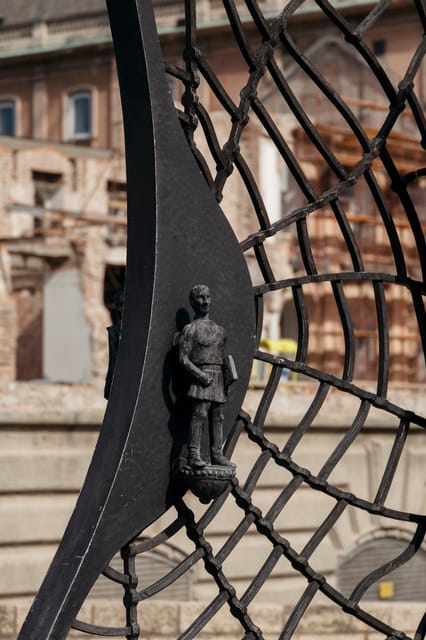
The strongest praise for this experience centers on Kristóf’s manner as much as his subject knowledge. He is described as warm, patient, enthusiastic, and willing to answer a steady stream of questions. That matters on a historical walk, where a dry presentation can make even beautiful buildings feel distant.
His personal stories, including those about his grandmother, bring Hungarian culture closer to daily life. You get a sense that the songs and dance are not decorative add-ons but part of his connection to the country. His approach should suit you if you prefer a guide who talks with the group rather than simply speaking at it.
He also uses visual aids to show before-and-after views of Budapest. That is particularly useful in a district shaped by changing rulers, rebuilding, and damage. A photograph or comparison can make a complicated timeline easier to follow while you are standing in front of the buildings.
The available feedback gives the tour a 4.9 rating from 13 reviews, with praise focused on the guide’s warmth, cultural passion, clear explanations, and performance. One private booking lasted about three and a half hours because it included an extra church visit, so the advertised two to two and a half hours should be treated as the normal length, not a firm limit for every customized outing.
What $58 buys you
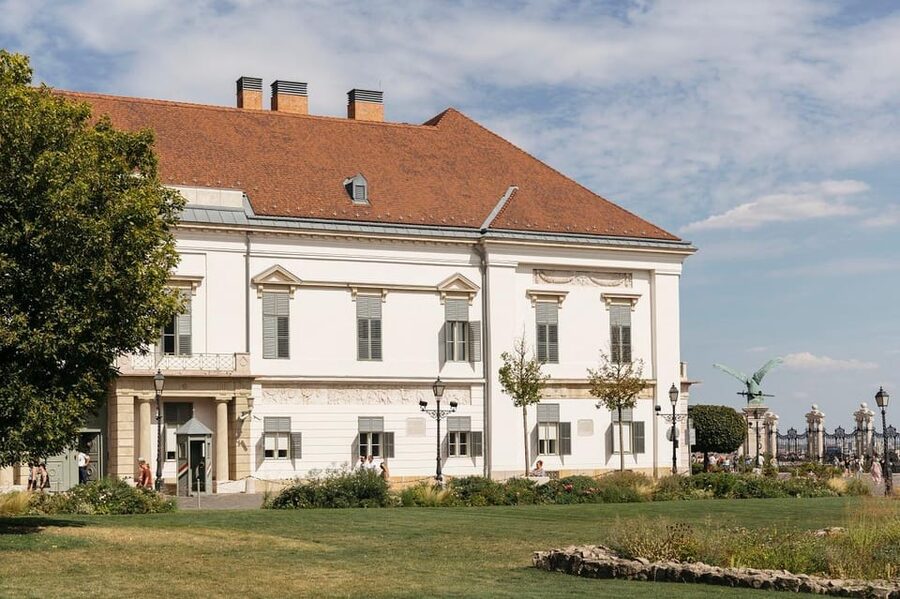
At $58 per person, this is not the cheapest way to see Buda Castle District. You are paying for a licensed English-speaking guide, a planned route, historical explanation, time for questions, and a live folk music and dance presentation.
The value depends on how you like to sightsee. If you only want exterior views and a few photographs, you can walk through the district independently for less. If you want the stories behind the monuments, help identifying what you see across the river, and a cultural performance without booking another event, the price is easier to justify.
The private or small-group options also matter. A private walk can be a good choice if you have specific questions, want a slower pace, or hope to add a church visit by purchasing your own ticket. A small group can keep the cost more manageable while still offering the chance to ask questions.
Remember to budget separately for monument admission. The standard experience includes exterior visits only, so the $58 does not cover entry to Matthias Church or other visited sites. That is not a flaw if you mainly want an introduction, but it is important when comparing the total cost with a tour that includes admissions.
Free cancellation up to 24 hours before the start and reserve-now, pay-later booking make the arrangement less rigid. Those policies are useful if your Budapest schedule is still shifting, though they do not change the walking demands or the extra cost of tickets.
Who will enjoy this Castle Hill walk
I would recommend this experience to first-time visitors who want to understand Buda Castle District before exploring it on their own. It is also a good fit for couples, families, and small groups who prefer a personal guide and a bit of local character.
You will likely get the most from it if you enjoy:
- Historic buildings explained through stories rather than dates alone
- Asking questions during a walk
- City views and exterior architecture
- Hungarian music and dance presented in a personal setting
- A flexible private or small-group format
You may want something else if your main goal is a long interior visit to the palace or Matthias Church. Since admissions are not included and the monuments are viewed from outside, you would need to add your own sightseeing time before or after the tour.
It may also be less suitable if you dislike walking on historic streets or are hoping for a short, mostly stationary introduction. Comfortable shoes are essential, and weather-appropriate clothing is not optional because the tour operates in all weather.
Practical ways to plan the experience
Meet at the Holy Trinity Statue in Holy Trinity Square and look for the MAGGINO sign. Confirm the start time when checking availability, since the exact departure times are not fixed in the information provided.
Wear shoes you can walk in for two to two and a half hours. Bring water, and check the forecast before leaving. A light rain layer, sun protection, or warmer clothing may make a real difference because much of the experience takes place outdoors.
If you want to enter Matthias Church, ask about timing and buy the ticket yourself. You should also leave extra room in your day if you are booking a private outing and hope to add a church visit or extend the conversation.
The activity is conducted in English. Alcohol, drugs, and explosive substances are not allowed, though those rules are unlikely to affect a normal sightseeing visit.
Should you book it?
Book this tour if you want Buda Castle District explained by a local guide who brings Hungarian culture into the experience through singing, dance, and family stories. Kristóf’s performance is the unusual feature, and his patience with questions makes the tour a strong choice for curious visitors.
Skip it if you only want independent sightseeing, guaranteed monument entry, or a very short walk. For everyone else, the $58 price is reasonable when you value interpretation and a personal cultural touch, especially in a private or small-group format. Plan for the ticket costs separately, wear good shoes, and let the folk performance be the deciding extra.
FAQ
How long does the Buda Castle walking tour last?
The tour lasts about two to two and a half hours. A private experience with an added church visit lasted longer, so extra arrangements may extend the outing.
Where does the tour meet?
The meeting point is in front of the Holy Trinity Statue at Holy Trinity Square, also called Szentháromság tér. The guide carries a MAGGINO logo board with a dark blue stork and orange musical note.
Which sights are included in the walking route?
The route includes Matthias Church, Fisherman’s Bastion, Tárnok Street, the Royal Buda Palace, and Tóth Árpád sétány. The tour returns to the Holy Trinity Statue.
Are entrance tickets included?
No. The standard activity includes exterior visits to the monuments, but entry tickets are not included. You must purchase your own tickets if you want to enter a monument.
Is the folk music performance included?
Yes. The guide performs Hungarian folk songs and demonstrates traditional folk dance steps at the end of the tour.
What should I bring?
Wear comfortable shoes and clothing suited to the weather. The tour operates in all weather, and bringing water is recommended.
Just added around Budapest
- From Budapest: Guided Tour of Eger with Wine Tasting★ 4.5 · 6 reviews
- Budapest: Private Walking Tour with a Local Guide★ 3.6 · 6 reviews
- Budapest: Danube River Views Bike Ride★ 4.8 · 23 reviews
- Trash Art Museum: Hungary’s First Scrap Metal Exhibition★ 4.3 · 72 reviews
- Walk to recent and aged spiritual sanctuaries near Budapest★ 5.0 · 5 reviews
- Budapest: 3-Hour Trabant Sightseeing Tour★ 4.7 · 28 reviews
- True Crime Walking Tour in the Buda Castle district★ 5.0 · 26 reviews
- Audio visual multi-sensory chefs journey dinner experience★ 5.0 · 3 reviews
Buda Castle Tours, compared.
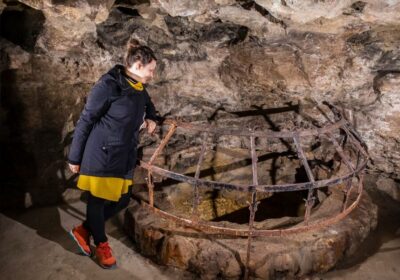

Buda Castle District Vampires and Myths Night Tour
Read our review →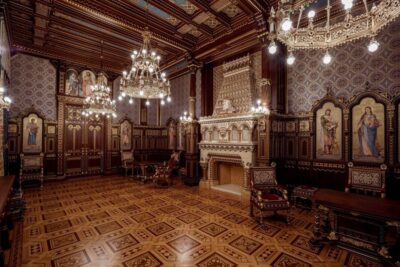
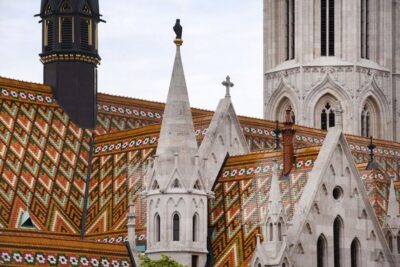


Buda Castle District Dark History, Legends and Vampire Night Tour
Read our review →
Buda Castle District Walking Tour with a Historian
Read our review →
Browse the lists this tour appears in