
Reviewed · CITY TOURS
Budapest City Landmarks Walking Tour in 2 Hours
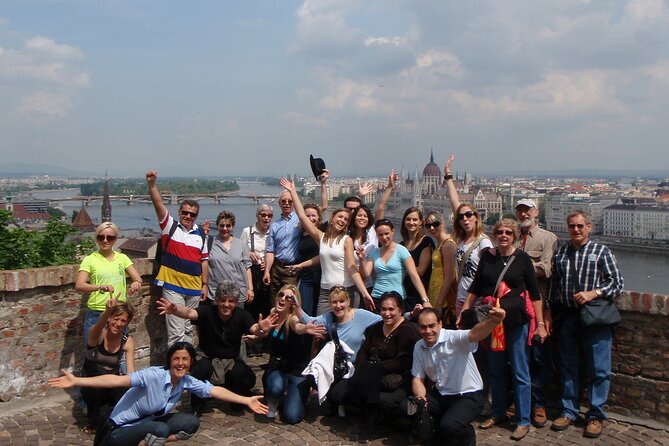
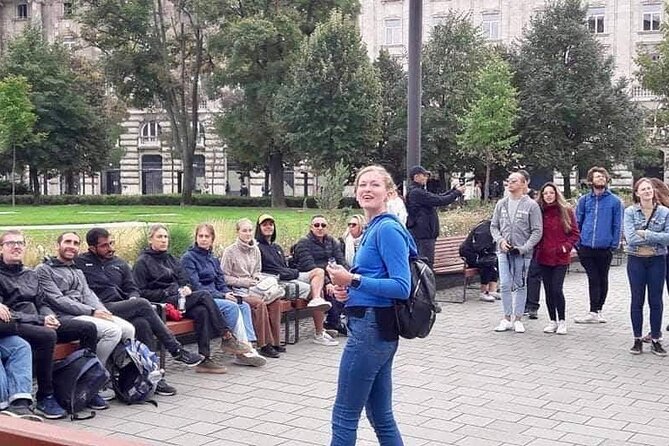
Budapest reveals itself quickly on this walk: grand churches, elegant squares, the Danube, the Chain Bridge, and Parliament all arrive in one tidy route. I like the low upfront price and the way the guide mixes major sights with practical advice about food, nightlife, Hungarian words, and local customs. You also get a useful first-day map of the city, not just a parade of façades.
The main thing to consider is the donation model. The $3.63 booking fee covers administration, but your guide depends on your tip, so budget for a donation at the end. The tour also covers a lot of ground in about two hours, possibly closer to two and a half, and the meeting point deserves careful attention.
In This Review
- Key points to know before you book
- A $3.63 introduction to Budapest’s Pest side
- Erzsébet Square sets the city in motion
- St. Stephen’s Basilica and the art of eating well
- József Nádor Square and the polished side of Pest
- Vörösmarty Square connects cafés, shopping, and holidays
- The Danube embankment delivers the big views
- The Little Princess and Vigadó Square add local character
- Chain Bridge explains Buda and Pest
- Gresham Palace shows Budapest at its most decorative
- Hungarian words, inventions, and the Academy of Sciences
- Shoes on the Danube brings a needed pause
- Parliament closes the walk with modern Hungary
- What the guide can add to your stay
- Timing, group size, and the donation model
- Who should book this Budapest walk?
- Should you book it?
- FAQ
- How much does the Budapest City Landmarks Walking Tour cost?
- How long does the walking tour last?
- Where does the tour begin?
- Where does the tour finish?
- Is the tour offered in English?
- Does the tour enter St. Stephen’s Basilica?
- Does the tour enter the Hungarian Parliament Building?
- How many people can join the tour?
- Can I cancel for a full refund?
Key points to know before you book

- Start at the Budapest Eye: Meet the guide 20 meters from the Ferris wheel on Erzsébet Square, with a guide carrying a small blue flag.
- See Pest’s essential sights: The route runs from St. Stephen’s Basilica through the Danube embankment, Chain Bridge, Gresham Palace, and Parliament.
- Expect an orientation, not interior visits: The tour explains the Basilica and Parliament from outside, but does not include entry to either building.
- Get local eating advice: Hungarian dishes, tourist traps, budget-friendly options, nightlife, and non-touristy restaurants are part of the conversation.
- Pause at serious history: The Shoes on the Danube Bank memorial brings World War II and the persecution of Hungarian Jews into the tour.
- Plan to tip: The advertised price is unusually low because guide earnings come entirely from donations.
A $3.63 introduction to Budapest’s Pest side
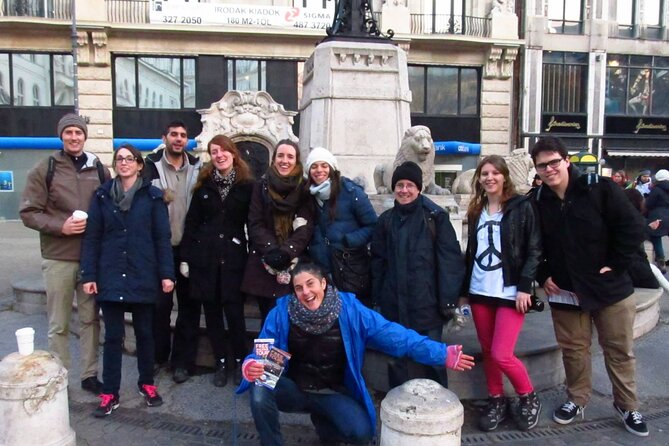
This is a smart choice if you have just arrived and want to understand how Budapest fits together. The walk begins in central Pest and finishes at the Hungarian Parliament Building, giving you a useful route between several places you may later revisit on your own.
At $3.63 per person, the value is hard to ignore. You are paying a small booking fee for a live, English-language introduction led by a licensed local guide. The fee does not go toward the guide’s earnings, though, so I would treat the donation at the end as part of the real cost.
The tour’s strongest feature is its range. In one outing, you cover architecture, public art, cooking, politics, religion, Jewish history, Hungarian inventions, and basic language. Guides including Gary, Dora, Esther, Rita, Judith, Andy, and Marton have been praised for clear explanations, humor, strong voices, and useful recommendations.
The trade-off is depth. Thirteen stops in roughly two hours means most places receive a short explanation. This is not a substitute for touring the Basilica, Parliament, or Buda Castle inside. Think of it as a city primer that helps you decide where to spend the rest of your stay.
A few more Budapest trips to weigh up
- Budapest: Buda Castle Walk with Saint Stephen’s Hall
★ 4.5 · 3,012 reviews - Big Bus Budapest Hop-On Hop-Off Bus and Walking Tour
★ 3.5 · 2,206 reviews - Budapest: Buda Castle District Walking Tour
★ 4.6 · 2,108 reviews
Erzsébet Square sets the city in motion
Your guide meets you near the Budapest Eye in Erzsébet Square. Look for the small blue flag and arrive with enough time to orient yourself, since one person reported missing the group after looking for the wrong identifying detail and reaching the meeting area too late.
The opening talk lays out the route on a map. You learn which famous landmarks are ahead, along with some less obvious streets and corners. This is useful because Budapest can feel divided between Buda and Pest, and the walk gives you a clear sense of where the central Pest sights sit in relation to the river.
The guide also introduces the themes of the walk: history, buildings, public art, society, food, everyday Hungarian life, and a few simple phrases. That broad approach helps you see the city as more than a collection of imperial buildings.
St. Stephen’s Basilica and the art of eating well
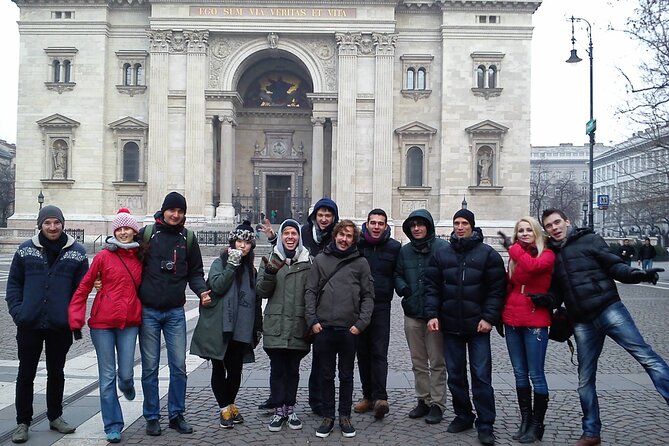
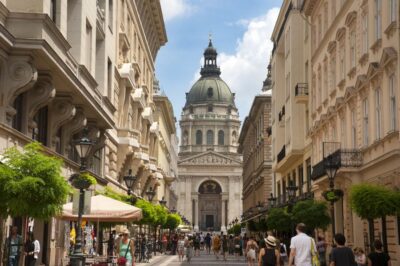
At St. Stephen’s Basilica, the guide explains Budapest’s largest church, which can seat about 8,500 people. You hear how its architecture reflects several periods of glory and change, while the surrounding pedestrianized space provides a close look at the elegant buildings around it.
You do not enter the Basilica on this tour. That is an important distinction if you want to see the interior, dome, or religious artwork. Instead, the stop gives you context and a reason to return during your free time.
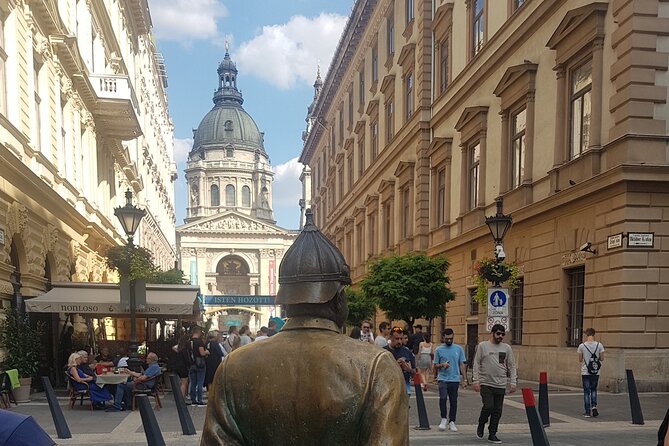
The next pause, St. Stephen’s Square, adds a lighter note. Public art depicting fat policemen with shiny bellies becomes a springboard for talking about Hungarian cooking and what to order in Budapest. The guide also explains how to avoid tourist traps, which may be more useful than another list of dates and architectural terms.
I especially like this part for a first visit. You can leave with ideas about local food and a better sense of how to judge a restaurant, while still having time to ask your guide about budget-friendly choices.
József Nádor Square and the polished side of Pest
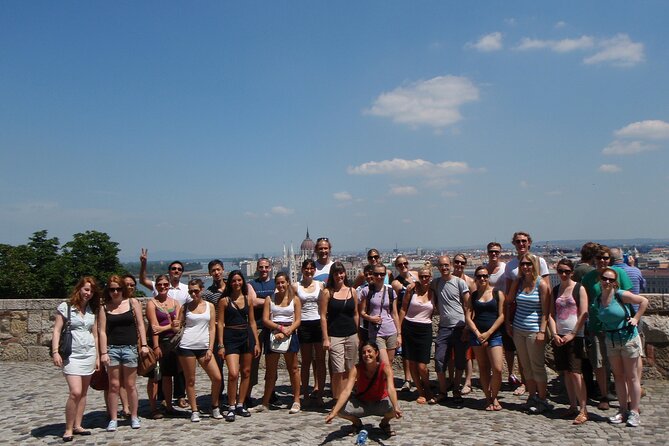
József Nádor Square introduces the Hungarian connection to the Habsburg world. The guide discusses the most Hungarian Habsburg and points out examples of Herendi porcelain, among the world’s most prestigious hand-painted porcelains.
You also learn about Zsolnay ceramics, known for colorful glazed pieces. These details add texture to the city’s grand façades. Instead of simply hearing that Budapest had a prosperous golden age, you see how craft, decoration, and royal taste shaped the public spaces.
This is a short stop, so do not expect a museum-style examination of each object. The value is in knowing what you are looking at when you encounter Herendi or Zsolnay elsewhere in Hungary.
Same riverbank, a completely different kind of day:
- Budapest: Unlimited Prosecco, Beer and Aperol Spritz Cruise
★ 4.8 · 25,310 reviews - Budapest: Széchenyi Spa Day Ticket with Optional Upgrades
★ 4.3 · 23,911 reviews - Budapest: Nighttime or Daytime Sightseeing Cruise
★ 4.2 · 21,062 reviews - Budapest: 1-Hour Evening Sightseeing Cruise with Drink
★ 4.5 · 8,330 reviews
Vörösmarty Square connects cafés, shopping, and holidays
Vörösmarty Square is a people-watching spot at the end of Váci utca, Budapest’s famous pedestrian shopping street. The guide points out the elegant Gerbeaud café and explains the area’s connection to the second-oldest underground railway in the world, whose line once had a terminal here.
This stop also covers Christmas markets and Budapest’s seasonal traditions. If you are visiting in winter, that information may help you understand how the square changes during the holiday period. At other times of year, the square is mainly useful as a central reference point.
The stop is brief, which keeps the route moving. You get a sense of the area, but you will need to return on your own if you want time for shopping, coffee, or a closer look at the surrounding buildings.
The Danube embankment delivers the big views
The walk becomes especially scenic along the Korzó, the Danube embankment. From here, the river opens a grand view toward Castle Hill, Matthias Church, Fisherman’s Bastion, Buda Castle, and Gellért Hill with its Citadel.
You also hear about the riverside buildings, the most panoramic tramline in Central Europe, and Budapest’s first non-Communist statue. Several of the sights across the river belong to the city’s UNESCO World Heritage area, giving this short walk a strong visual payoff.
Bring water. One four-star assessment specifically advised taking a drink, and the route spends substantial time outdoors. Comfortable shoes also make sense, even though the walking is described as easy. The group may include as many as 30 people, so staying close to the guide matters when the route passes through open public areas.
The Little Princess and Vigadó Square add local character
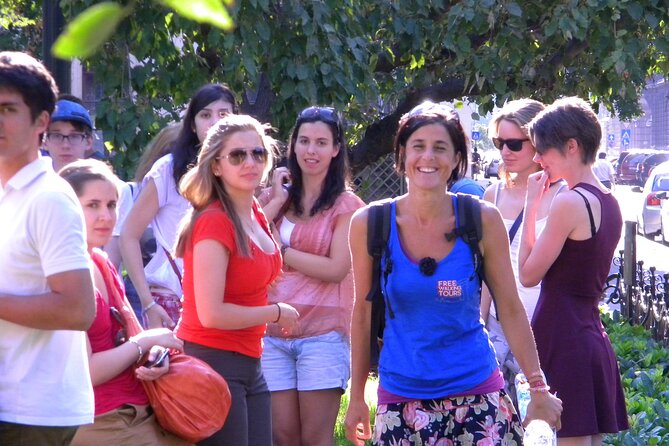
At the Little Princess Statue, you stop briefly to touch the statue’s shiny knees and make a secret wish. It is a small, playful custom, but it breaks up the heavier material and gives you an easy photo stop.
Vigadó Square brings the conversation back to Budapest’s cultural life. This is where the coronation banquet for Franz Joseph and Sissy took place in the 19th century, and where major Central European musicians including Franz Liszt, Debussy, and Brahms performed.
Neither stop takes long. That is a benefit if you want to keep moving, but it also means the guide can only sketch the stories. Use these pauses as introductions, then return later if a particular building or event catches your interest.
Chain Bridge explains Buda and Pest
The short stop at Széchenyi Chain Bridge is one of the most useful for understanding Budapest. The bridge was the first permanent crossing connecting Buda and Pest, and its story helps explain how the two sides of the city became one capital.
You can look across the Danube and connect the places already discussed with the hills beyond the river. The bridge also makes the city’s geography easier to read: flat Pest on one side, hillier Buda on the other.
The tour does not cross into a full Buda Castle visit. If you want Matthias Church, Fisherman’s Bastion, or Buda Castle in detail, plan a separate outing. One guide specifically recommended a Buda Castle tour for the following morning, which makes sense as a follow-up to this Pest-focused introduction.
Gresham Palace shows Budapest at its most decorative
At Gresham Palace, the guide explains the secessionist style, the local term often linked with Art Nouveau, and the building’s ornaments. Built during Budapest’s golden age at the turn of the 20th century, the palace is one of the route’s finest examples of decorative urban architecture.
This is a good place to slow down and look upward. Details that can blur together on a quick city walk become easier to spot once someone tells you what to seek in the façade and ornament.
Again, the emphasis is on the exterior. You do not receive a full interior tour, and the stop is short. Still, the explanation gives you a better visual vocabulary for the grand buildings you will see throughout central Budapest.
Hungarian words, inventions, and the Academy of Sciences
At the Hungarian Academy of Sciences, the tour shifts from buildings to people and ideas. You learn a few Hungarian words and phrases, hear why Hungary has a high number of Nobel Prize awards per capita, and get examples of famous people of Hungarian origin.
The guide also discusses Hungarian inventions that have become part of daily life. This is one of the more personal sections of the walk because it connects national identity with language, science, and practical objects.
The language lesson is light and intended to entertain as much as instruct. Still, learning even a few phrases can make your time in Budapest more engaging. Several guides are praised for teaching Hungarian along the route, so this is a good moment to ask questions and try the words aloud.
Shoes on the Danube brings a needed pause
The Shoes on the Danube Bank memorial is the most solemn stop. Sixty pairs of metal shoes mark the riverbank in memory of people killed during the Holocaust. The guide discusses World War II, deportations, and the lives of Hungarian Jews, including both religious Jews and assimilated members of society.
This part asks for attention and respect. The memorial’s power comes from its plain form and riverside setting, and the guide invites you to think about the individual people represented by the shoes, from grandparents and children to workers and business owners.
The stop is only about eight minutes, but the subject cannot be reduced to a quick photo. I would expect a change in tone here. If you prefer a tour focused only on architecture and light sightseeing, this serious historical section is something to keep in mind before booking.
Parliament closes the walk with modern Hungary
The final stop is the Hungarian Parliament Building on Kossuth Lajos Square. The guide explains its neo-Gothic architecture and discusses Hungary’s recent history and elections.
Ending here works well. Parliament is one of Budapest’s most recognizable buildings, and the route has gradually moved from central squares and cafés to the riverfront and national government. The guide provides final orientation and suggestions for restaurants, nightlife, and activities for the next few days.
You do not enter Parliament. If you want an interior visit, you will need to arrange that separately. The end point is still practical, since you can photograph the building, continue along the river, or use the guide’s recommendations to plan the next part of your day.
What the guide can add to your stay
The quality of this kind of walk depends heavily on the individual guide. The available guide names include Gary, Dora, Esther, Rita, Judith, Andy, Marton, Endre, Emmy, Sophie, Judit, and Mrs. Duran. Their styles vary, but the strongest pattern is clear: visitors value guides who speak loudly, tell stories plainly, answer questions, and give advice that works beyond the tour.
Gary is praised for packing the two-hour route with history, humor, traditions, and language tips. Dora is described as warm and clear, with a talent for adjusting the amount of detail when people ask questions. Esther receives credit for an engaging style and strong understanding of Budapest’s past.
Marton used a speaker so the group could hear him easily. That matters in a group of up to 30 people, especially near traffic or crowded squares. The guide assigned to your departure may differ, so book this experience for the route and format rather than expecting a specific person.
Timing, group size, and the donation model
The stated duration is about two hours, while the highlights describe the walk as around two and a half hours. Allow at least that much time, plus a little extra if the guide answers questions or the group moves slowly.
The pace is generally easy, but thirteen stops in central Pest means you are on your feet and outdoors for most of the experience. Wear shoes suited to city walking and carry water. The tour is offered in English, uses a mobile ticket, and is near public transportation.
The maximum group size is 30. That is not an intimate private walk, but a clear voice and a speaker can make a large group workable. Arrive early, stand where you can see the blue flag, and double-check the exact location before setting out.
The $3.63 charge is an administrative booking fee, not the guide’s pay. The guides depend entirely on donations, and the amount is your choice. The honest way to assess the price is to add a tip you feel reflects the time and usefulness of the walk. Even after doing so, it can remain a strong-value introduction to Budapest.
Free cancellation is available up to 24 hours before the start time for a full refund. Changes made inside that window are not accepted, and poor weather can lead to a new date or a full refund. Confirmation arrives when you book.
Who should book this Budapest walk?
I would choose this tour for a first visit, especially if you want a quick sense of direction before deciding how to spend your remaining days. It suits solo visitors, couples, and families who prefer a broad introduction with history, food advice, and photo stops.
It is also a good fit if you do not usually choose guided tours. The route is social and informal, and the guides use humor and personal perspectives alongside historical facts. You can ask about restaurants, nightlife, language, and follow-up visits instead of listening to a nonstop lecture.
I would look elsewhere if you want long interior visits, a small private group, or detailed art history. The Basilica and Parliament are viewed from outside, and the stops are short by design. The Shoes on the Danube memorial also gives the tour a serious emotional turn, so expect more than cheerful sightseeing.
Should you book it?
Book this walk if you want an inexpensive, practical first look at Budapest’s Pest side. You will see the major central landmarks, understand the Buda and Pest split, get strong Danube views, and finish beside Parliament with ideas for the rest of your stay.
Plan to tip the guide, arrive carefully at the Budapest Eye meeting point, carry water, and leave time to revisit the places that interest you. For a small booking fee and a broad route, this is one of the better ways to get your bearings before exploring Budapest on your own.
FAQ
How much does the Budapest City Landmarks Walking Tour cost?
The listed price is $3.63 per person. This is a booking and administration fee, and it does not contribute to the guide’s earnings. Guides depend entirely on donations at the end, with the amount left to your choice.
How long does the walking tour last?
The tour is listed as approximately two hours. The tour description also says to allow around two and a half hours, so you should keep a little extra time available.
Where does the tour begin?
The meeting point is at the Budapest Eye in Erzsébet tér. The guide meets you 20 meters from the Ferris wheel and carries a small blue flag.
Where does the tour finish?
The final stop is the Hungarian Parliament Building at Kossuth Lajos tér 1-3.
Is the tour offered in English?
Yes. English is the listed tour language.
Does the tour enter St. Stephen’s Basilica?
No. The guide explains the Basilica and its architecture from outside, but admission to the interior is not included.
Does the tour enter the Hungarian Parliament Building?
No. Parliament is the final exterior stop, where the guide discusses its architecture, Hungary’s recent history, and elections.
How many people can join the tour?
The tour can have a maximum of 30 participants.
Can I cancel for a full refund?
Yes, if you cancel at least 24 hours before the experience start time. Cancellations or changes made less than 24 hours in advance are not refunded or accepted. If poor weather causes the tour to be canceled, you will be offered another date or a full refund.
Just added around Budapest
- From Budapest: Guided Tour of Eger with Wine Tasting★ 4.5 · 6 reviews
- Budapest: Private Walking Tour with a Local Guide★ 3.6 · 6 reviews
- Budapest: Danube River Views Bike Ride★ 4.8 · 23 reviews
- Trash Art Museum: Hungary’s First Scrap Metal Exhibition★ 4.3 · 72 reviews
- Walk to recent and aged spiritual sanctuaries near Budapest★ 5.0 · 5 reviews
- Budapest: 3-Hour Trabant Sightseeing Tour★ 4.7 · 28 reviews
- True Crime Walking Tour in the Buda Castle district★ 5.0 · 26 reviews
- Audio visual multi-sensory chefs journey dinner experience★ 5.0 · 3 reviews
City Tours, compared.

City Sightseeing Hop-On Hop-Off Bus Tour & Extras
Read our review →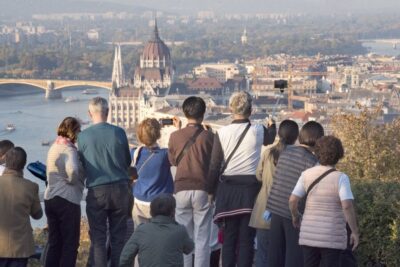

Hungarian Chimney Cake Workshop in the City Center
Read our review →


Private Budapest City tour with Classic Russian Jeep or G-Wagon!
Read our review →Browse the lists this tour appears in