

Reviewed · CITY TOURS
Budapest: City Sightseeing Hop-On Hop-Off Bus Tour & Extras
Budapest is made for seeing from a bus window, especially when the route rolls along the Danube with Parliament, Chain Bridge, and Buda Castle in view. This pass gives you a simple way to cover both Buda and Pest, then hop off when a building or neighborhood catches your eye.
I like the useful 48-hour option, which costs only a little more than the one-day pass in many booking periods, and I like the excellent walking tour that covers the streets buses cannot reach. The main catch is timing: buses generally run from 9am to 5pm, and some stops or routes may be closed or infrequent.
In This Review
- Key points before you board
- Why this bus works well in Budapest
- Riding the full 90-minute red route
- Stop 1 to Stop 4: Basilica, Chain Bridge, and the Jewish Quarter
- Stops 6 to 11: Andrassy Avenue, Heroes’ Square, and the railway district
- Stops 13 to 17: Gellért Hill and Buda Castle access
- Stops 18 to 20: Margaret Bridge, WestEnd, and Parliament
- The 11am walking tour fills the gaps
- The Danube boat option needs a date check
- Timing, comfort, and practical limits
- Who gets the most value from this pass
- Should you book the Budapest bus tour?
- FAQ
- How long can I use the hop-on hop-off pass?
- What time does the red route operate?
- Which languages are available for the audio guide?
- Is the walking tour included?
- What does the walking tour visit?
- Is the Danube boat cruise included?
- Are attraction entrance fees included?
- Can wheelchair users use the buses?
- Can I use a mobile voucher?
Key points before you board

- Choose 48 hours for the best balance: Use the first day for a full circuit, then spend the second day visiting the places you marked.
- Hear the city in 15 languages: The audio guide includes English, Spanish, French, German, Greek, Hungarian, Italian, Japanese, Chinese, Arabic, Polish, Portuguese, Russian, Finnish, Hebrew, and Turkish.
- Start the walking tour at 11am: Meet at Szent István tér 1 for an English-language walk covering St Stephen’s Basilica, Parliament, the Shoes on the Danube Bank, Váci Fashion Street, and the Danube Promenade.
- Expect the bus to miss some hilltop sights: Fisherman’s Bastion and much of Castle Hill are not directly covered by this red route.
- Check the boat terms carefully: Bookings made before December 10 include the boat tour. Later bookings receive a discounted HUF 3,500 boat ticket instead of the standard HUF 5,000 fare.
- Plan around the final departure: The first bus leaves Stop 1 at 9am, the last leaves at 5pm, and buses arrive about every 10 to 20 minutes.
Why this bus works well in Budapest
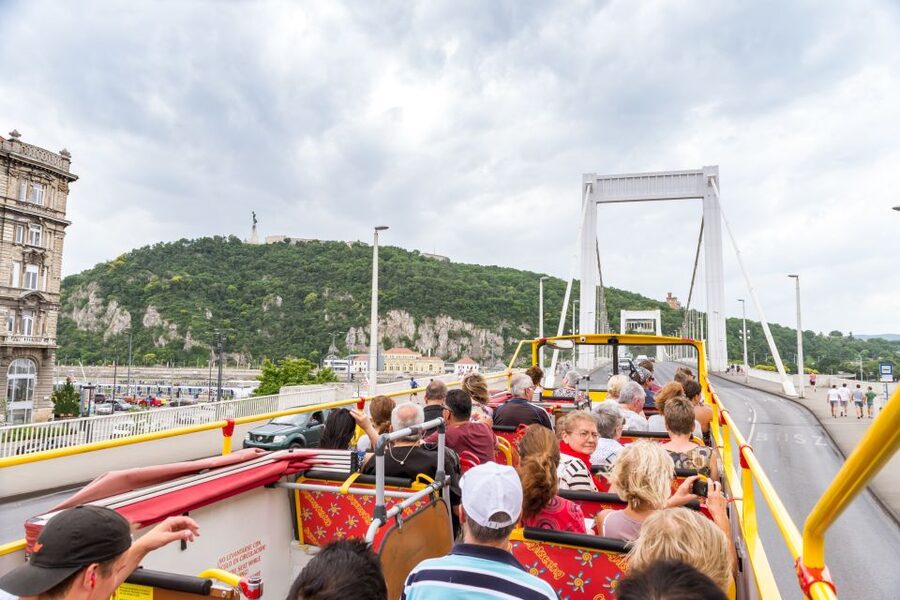
Budapest spreads across two sides of the Danube, with broad Pest on one bank and hilly Buda on the other. Walking between the main sights is possible, but it takes time, and some of the grandest views are best enjoyed while crossing the river or approaching a monument from a distance.
The red route gives you that big-picture introduction without the strain of finding every address. You can ride the full loop first, listen to the commentary, and note where you want to return. Then use the pass as transport between sightseeing stops, which is where the longer tickets become useful.
At $41 per person, the 24-hour pass is reasonable if you plan to ride the complete circuit and use the walking tour. The 48-hour or 72-hour versions offer better value if you want to visit several attractions, take breaks, or use the bus to move around during a second or third day.
The pass does not include entry to the Parliament, museums, the synagogue, St Stephen’s Basilica, or other paid sights. Think of it as a sightseeing and transport ticket, not an all-inclusive Budapest card.
A few more Budapest trips to weigh up
- Budapest City Landmarks Walking Tour in 2 Hours
★ 5.0 · 2,048 reviews - Budapest: Danube River City Lights Express Cruise
★ 4.1 · 1,608 reviews - Budapest: Grand City Tour with Parliament Visit
★ 4.4 · 1,598 reviews
Riding the full 90-minute red route
The complete red route takes about 90 minutes under normal conditions, though traffic can stretch the ride. I recommend doing one full circuit near the beginning of your pass. It helps you understand the shape of the city before you start hopping off.
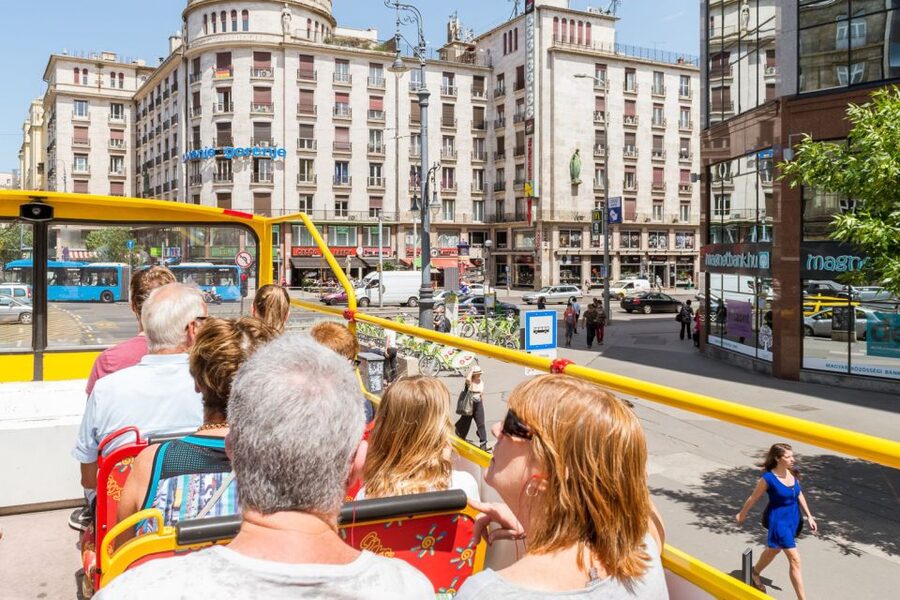
The open-top seating gives you the best views, but conditions vary. Some buses have roof coverings, and scratched or marked side panels can make sightseeing harder from certain seats. On warm days, buses without working air conditioning may feel hot, while a covered bus can be welcome in rain or cold weather.
The audio commentary is available in 15 languages and is one of the stronger parts of the experience. It gives you background as you ride, though the live announcements from some onboard staff can be hard to hear through the microphone system. Keep the headphones you receive when you first board, since you may need them later.
Buses usually arrive every 10 to 20 minutes on the red route. That frequency makes short stops practical, but you should still keep an eye on the clock, especially late in the afternoon.
Stop 1 to Stop 4: Basilica, Chain Bridge, and the Jewish Quarter
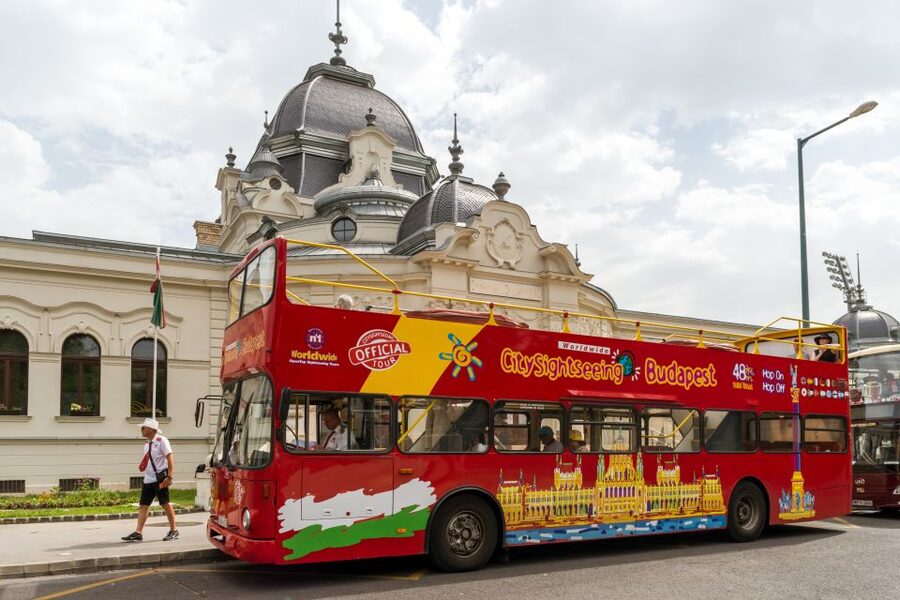
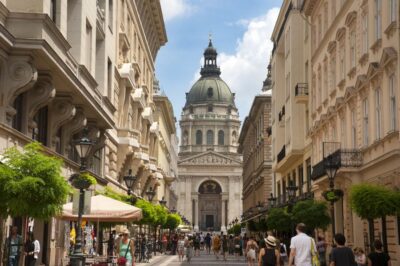
The route begins at St Stephen’s Basilica, one of central Budapest’s most recognizable buildings. This is a good starting point for your first orientation walk because cafés, squares, the Danube, and several major sights are close by.
Stop 2 is at the Pest end of Chain Bridge, Budapest’s famous river crossing. From here, you can see the Buda hills rising across the water and get one of the city’s classic views of the river corridor. The bridge itself connects the two sides, but the bus stop is on the Pest side.
Stop 3, Jozsef Attila Street, is useful for reaching central Pest and returning to the Basilica area. It is less of a major attraction than the river and monument stops, but it can work well as a drop-off point for nearby streets.
Stop 4 serves Dohány Street Synagogue, the largest synagogue complex in Hungary and one of the key Jewish sites in Budapest. The surrounding Jewish Quarter has plenty to explore, but remember that the synagogue, Jewish Museum, and related memorial areas require separate admission.
Astoria appears twice in the route list, at Stops 5 and 12, but it is currently marked temporarily closed. Do not build a tight plan around getting off there until you confirm that service has resumed.
Stops 6 to 11: Andrassy Avenue, Heroes’ Square, and the railway district
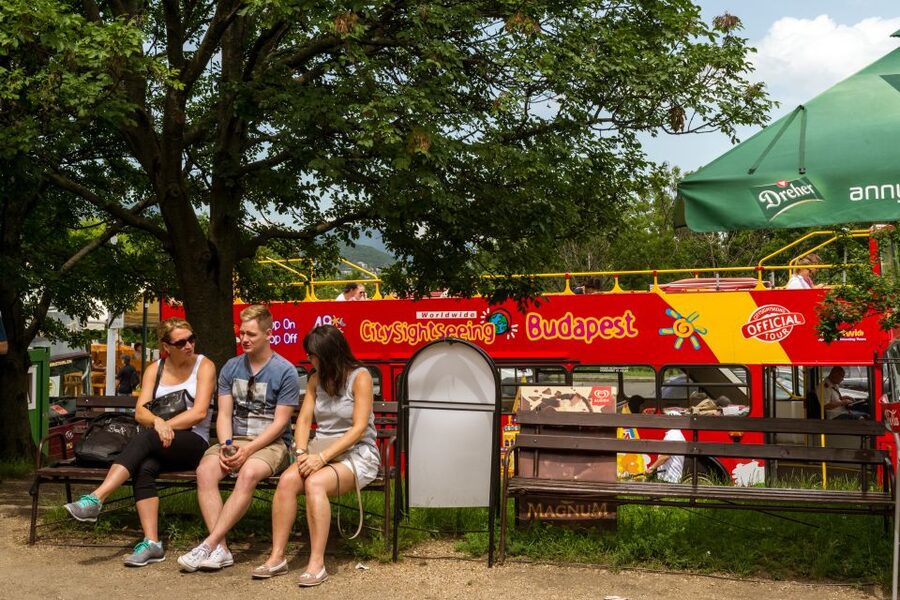
Andrassy Avenue gives you a look at Budapest’s grand urban planning and leads toward the city’s cultural district. Stop 7 is near the Hungarian State Opera House, a handsome 19th-century building that deserves a closer look even if you do not attend a performance.
Liszt Ferenc Square, Stop 8, is a handy place to leave the bus for restaurants and cafés. It is also a practical break between the central monuments and Heroes’ Square.
At Stop 9, Heroes’ Square opens into a large ceremonial space lined with statues of important Hungarian leaders. The nearby City Park gives you room to stretch your legs after the bus ride, though the route information does not include admission to attractions in the area.
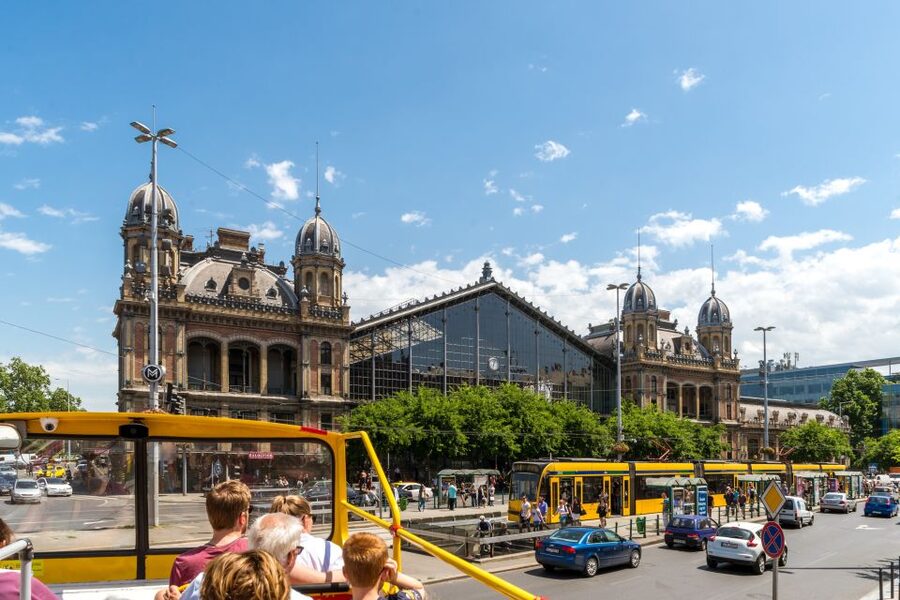
Keleti Railway Station is Stop 10. The station itself is an important transport landmark, but finding the bus stop can be confusing. If you are staying near Keleti, check the route map carefully or use the operator’s app to locate the exact boarding point.
Stop 11 is the New York Palace, known for its ornate café interior and elaborate historic design. The stop makes it easy to combine a bus ride with a coffee break, though the café is not part of the ticket.
Same riverbank, a completely different kind of day:
- Budapest: Unlimited Prosecco, Beer and Aperol Spritz Cruise
★ 4.8 · 25,310 reviews - Budapest: Széchenyi Spa Day Ticket with Optional Upgrades
★ 4.3 · 23,911 reviews - Budapest: Nighttime or Daytime Sightseeing Cruise
★ 4.2 · 21,062 reviews - Budapest: 1-Hour Evening Sightseeing Cruise with Drink
★ 4.5 · 8,330 reviews
Stops 13 to 17: Gellért Hill and Buda Castle access
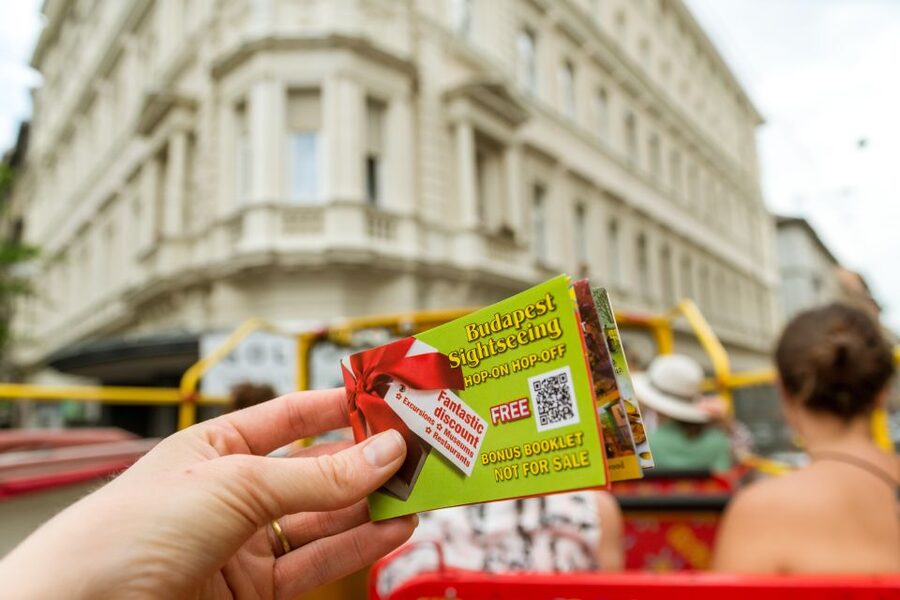
Stop 13, Parisi Passage Café, puts you near one of central Pest’s most decorative interiors. It is a worthwhile area for architecture and a convenient place to continue toward the river.
At Stop 14, Gellért Square, you are close to the Danube and the famous Gellért Baths area. The stop gives you a good transition from Pest to the Buda side, with bridges and riverside views nearby.
Stop 15 at Castle Garden is one of the better points for reaching the Buda Castle area. The castle district spreads across a hill, so do not expect to see it all in a quick hop-off. Allow extra time for uphill walking and for the separate attractions you may want to enter.
Stop 16 is the Funicular. The funicular is a well-known way up Castle Hill, but it is not included in the bus fare. The bus ticket also does not cover Castle Hill museums or buildings.
Stop 17 at Batthyány Square is on the Buda side and offers a fine view toward Parliament across the Danube. This is one of the best stops for photographing the Gothic Revival façade from the opposite bank.
The route does not directly serve Fisherman’s Bastion and does not cover every road on the Buda hills. If those sights are your priority, allow time for a separate walk or local transport. One useful tip is to consider the Castle Hill mini-bus or car service rather than relying only on the funicular, since the hilltop area is large.
Stops 18 to 20: Margaret Bridge, WestEnd, and Parliament
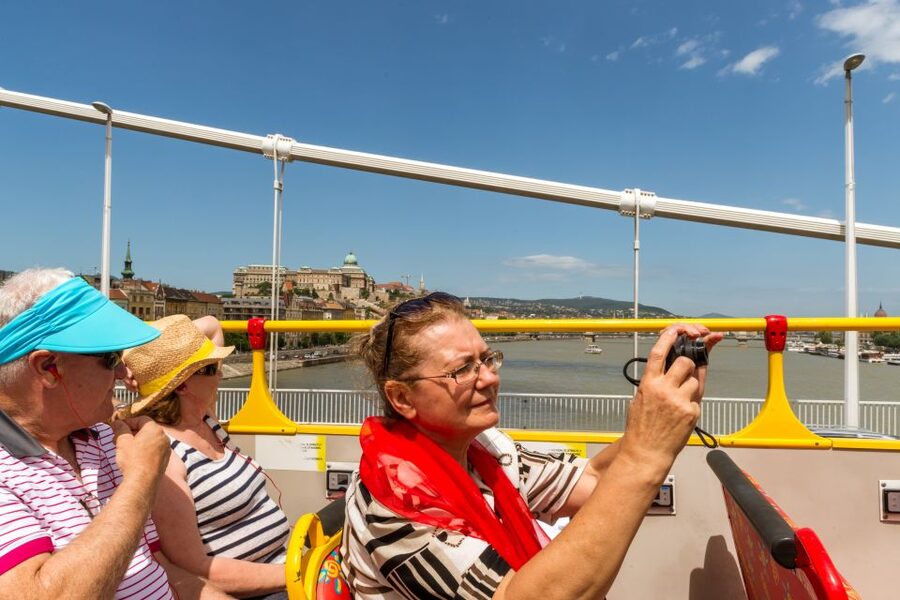
Stop 18 at Margaret Bridge on the Buda side gives you access to one of the city’s main river crossings. The stop is useful, though some people would prefer clearer access points around the bridge and more coverage on the Buda side.
Stop 19 is WestEnd Shopping Centre, a practical stop if you need shops, food, or a break indoors. It is not a major historic sight, but it can be convenient in poor weather.
The final listed stop is Parliament, and this is one of the most important places to leave the bus. The building’s Gothic Revival exterior is best appreciated from several angles, especially across the river at Batthyány Square and from the Danube promenade.
Parliament visits require a separate ticket. The bus provides orientation and transport, but it does not replace an interior visit if you want to see the grand halls.
The 11am walking tour fills the gaps
The included walking tour starts every day at 11am from Szent István tér 1. It lasts one hour and is narrated in English only.
The route covers St Stephen’s Basilica, Parliament, the Shoes on the Danube Bank, Váci Fashion Street, and the Danube Promenade. This is valuable because a bus can show you the city, but it cannot explain the smaller details along a pavement or pause at a memorial.
Guides named Claudia, Joan, Rebecca, and Souvar have been especially praised for their energy, humor, clear pacing, and historical explanations. Claudia, in particular, is noted for making the hour both informative and entertaining.
Pay close attention to the meeting instructions. The walk begins at Szent István tér, not necessarily at the bus stop nearest your hotel, and unclear directions have caused people to miss it. The published description refers to areas the buses cannot cover, but the route listed here is mainly central Pest, around the Basilica, Parliament, Váci Street, and the riverfront.
The Danube boat option needs a date check
The boat trip can be a lovely addition because Budapest’s main monuments look different from the water. Parliament, the bridges, the Buda hills, and the riverside buildings form a strong sequence of views, particularly around sunset or after dark.
There is an important change to the ticket terms. For bookings made before December 10, the boat tour is honored as included. For bookings made from December 10 onward, the cruise is no longer included, but you can buy a ticket for HUF 3,500 instead of HUF 5,000 by showing your bus ticket at the boat departure point.
Several booking options and older experiences refer to a one-hour cruise, while the current terms focus on the discounted fare. Confirm the exact boat arrangement attached to your booking before counting it in the value.
If you can choose a departure time, an evening cruise gives you illuminated views of the city. Daytime is better for seeing architectural detail, while night offers the more dramatic view. Boat seating can be crowded, and upper-deck seating may not be especially comfortable. In poor weather, indoor seating may also fill quickly.
Timing, comfort, and practical limits
The pass begins when you first use it, not automatically at 9am on the first calendar day. That lets you board around midday and still use the ticket until the same time on the final day of a 72-hour period.
The 24-hour pass works for a compact visit. The 48-hour pass is my practical choice for most people because you can ride the loop on day one and use day two for selected stops. The 72-hour ticket suits a slower schedule, bad weather, or anyone who wants to combine sightseeing with ordinary transport.
The red route generally runs from 9am until 5pm, which limits its usefulness for dinners, evening events, or late returns. Some people find the green route too infrequent, with buses arriving about once an hour, so check the current schedule before relying on it.
Traffic jams are possible, especially in central Budapest. The delay is not entirely wasted because it gives you time to study the architecture, but you should not schedule a paid attraction immediately after a long bus ride.
The buses are wheelchair accessible. Pets are not allowed, except for service dogs, and smoking is prohibited. Mobile and printed vouchers are accepted, and vouchers can be used on any day within 12 months of the selected travel date.
Who gets the most value from this pass
I would recommend it to first-time visitors who want a clear overview before choosing which sights deserve more time. It is also useful for families, older visitors, and anyone who would rather not cross Budapest repeatedly on foot.
The pass suits a flexible schedule better than a tightly packed one. You gain the most when you ride a full circuit, hop off at two or three places, and use the remaining time to return to favorites.
It is less useful if you plan to spend most of your day inside museums or attractions. Since entry fees are separate, a person focused on the Parliament interior, synagogue, baths, and Castle museums may need to compare the total cost with another city pass.
Should you book the Budapest bus tour?
Book it if you want an easy first look at Budapest, need flexible transport between major sights, or can use a 48-hour pass. The multilingual audio, central stops, and strong walking tour make the package more than a ride around town.
I would choose the 24-hour option for a quick introduction, 48 hours for the best practical value, and 72 hours only if you plan to move at a relaxed pace. Check the boat terms for your booking date, confirm the walking-tour meeting point, and remember that Fisherman’s Bastion and the upper parts of Castle Hill need extra planning.
FAQ
How long can I use the hop-on hop-off pass?
You can choose a 24-hour, 48-hour, or 72-hour pass. The period starts when you first board, not automatically at the beginning of the first calendar day.
What time does the red route operate?
The first departure from Stop 1 is at 9am, and the last departure from Stop 1 is at 5pm. Buses generally arrive every 10 to 20 minutes, and the full circuit takes about 90 minutes.
Which languages are available for the audio guide?
The audio guide is available in Spanish, Turkish, Chinese, English, Finnish, French, German, Greek, Hebrew, Hungarian, Italian, Japanese, Arabic, Polish, Portuguese, and Russian.
Is the walking tour included?
Yes. The one-hour guided walking tour is included and starts daily at 11am from Szent István tér 1. It is narrated in English only.
What does the walking tour visit?
The walk covers St Stephen’s Basilica, Parliament, the Shoes on the Danube Bank, Váci Fashion Street, and the Danube Promenade.
Is the Danube boat cruise included?
Bookings made before December 10 are honored with the boat tour. For bookings made from December 10 onward, the boat tour is not included, but the bus ticket gives you access to a discounted HUF 3,500 fare instead of HUF 5,000.
Are attraction entrance fees included?
No. The pass does not include tickets to attractions, food, or drinks.
Can wheelchair users use the buses?
Yes. The buses are wheelchair accessible.
Can I use a mobile voucher?
Yes. Both mobile and printed paper vouchers are accepted and can be redeemed at any stop along the route.
Just added around Budapest
- From Budapest: Guided Tour of Eger with Wine Tasting★ 4.5 · 6 reviews
- Budapest: Private Walking Tour with a Local Guide★ 3.6 · 6 reviews
- Budapest: Danube River Views Bike Ride★ 4.8 · 23 reviews
- Trash Art Museum: Hungary’s First Scrap Metal Exhibition★ 4.3 · 72 reviews
- Walk to recent and aged spiritual sanctuaries near Budapest★ 5.0 · 5 reviews
- Budapest: 3-Hour Trabant Sightseeing Tour★ 4.7 · 28 reviews
- True Crime Walking Tour in the Buda Castle district★ 5.0 · 26 reviews
- Audio visual multi-sensory chefs journey dinner experience★ 5.0 · 3 reviews
City Tours, compared.
Budapest City Landmarks Walking Tour in 2 Hours
Read our review →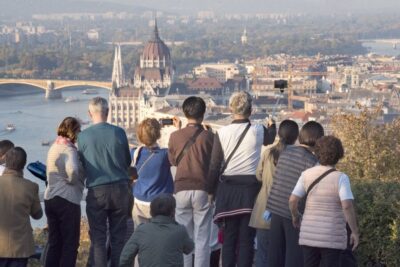


Hungarian Chimney Cake Workshop in the City Center
Read our review →


Private Budapest City tour with Classic Russian Jeep or G-Wagon!
Read our review →Browse the lists this tour appears in