
Reviewed · MUSEUMS
Budapest: Budapest Retro Interactive Museum Ticket
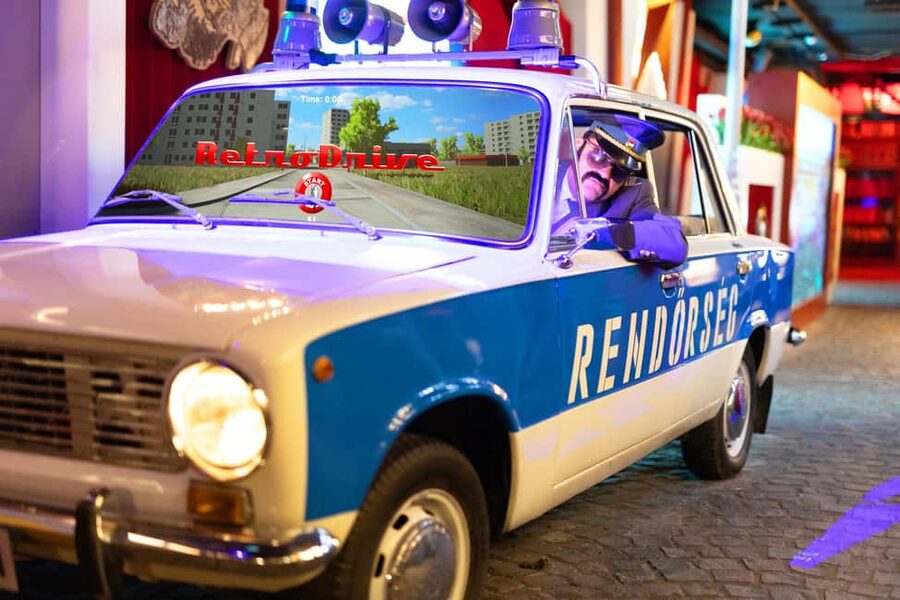
Budapest Retro Erlebnispark turns communist-era life into something you can touch, hear, and play with. You can sit in an eighties LADA police car, try your hand as a television newsreader, and inspect the odd food and personal items Hungarian astronaut Bertalan Farkas took into space. It is history with a jukebox in the corner.
I like the museum’s hands-on exhibits, which make the period easier to understand than a room full of labels. I also like the small details, from Bambi and Márka cherry drink to Turbo chewing gum and the too-sweet punch mignon at the bistro.
The main drawback is that some displays are not in English, so you may miss parts of the story unless you are comfortable working things out from the objects and interactive stations. The museum is also fairly compact, and many people will finish in less than two hours.
In This Review
- Key things to know before you go
- Budapest’s communist past, presented as play
- Three floors of objects, sounds, and buttons to press
- The LADA police car and the Híradó studio
- Phone booths, jokes, and a 1971 jukebox
- Bertalan Farkas and a taste of space-age Hungary
- Retro drinks and food at the museum bistro
- Turbo chewing gum, rooster lollipops, and homemade nostalgia
- How long to stay and how to plan the visit
- Is $15 a fair price?
- Who will enjoy Budapest Retro Erlebnispark?
- Should you book this Budapest museum ticket?
- FAQ
- How long does a visit to Budapest Retro Erlebnispark take?
- What does the admission ticket include?
- Are food and drinks included?
- What food and drinks can I buy there?
- Is the museum suitable for children?
- Is everything in English?
- When is the museum closed?
- Can I cancel the ticket?
Key things to know before you go
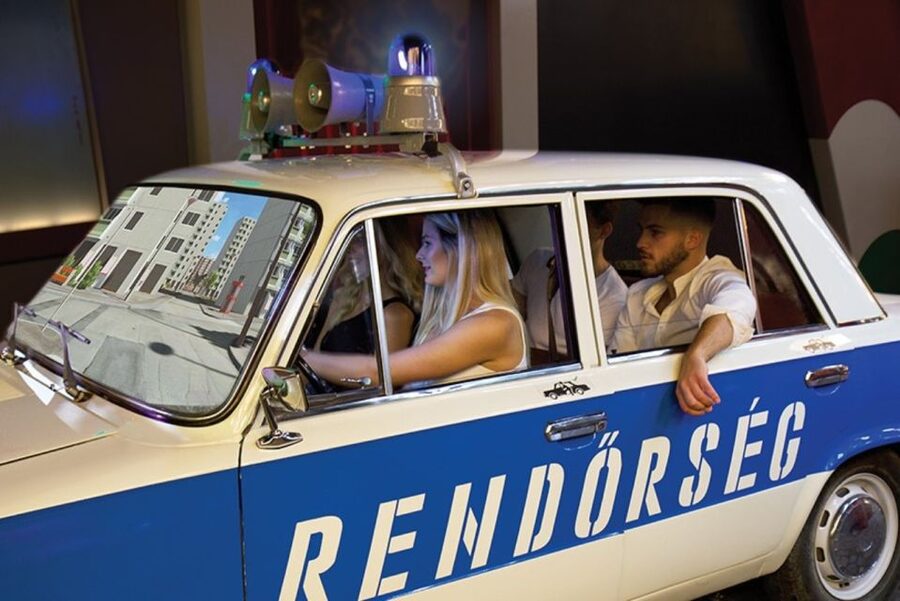
- Climb into a real LADA police car: The eighties patrol car is one of the museum’s most memorable displays, especially for children and anyone curious about everyday machinery from the period.
- Try a television news broadcast: Step into the contemporary Híradó studio and see what it felt like to present the news in communist Hungary.
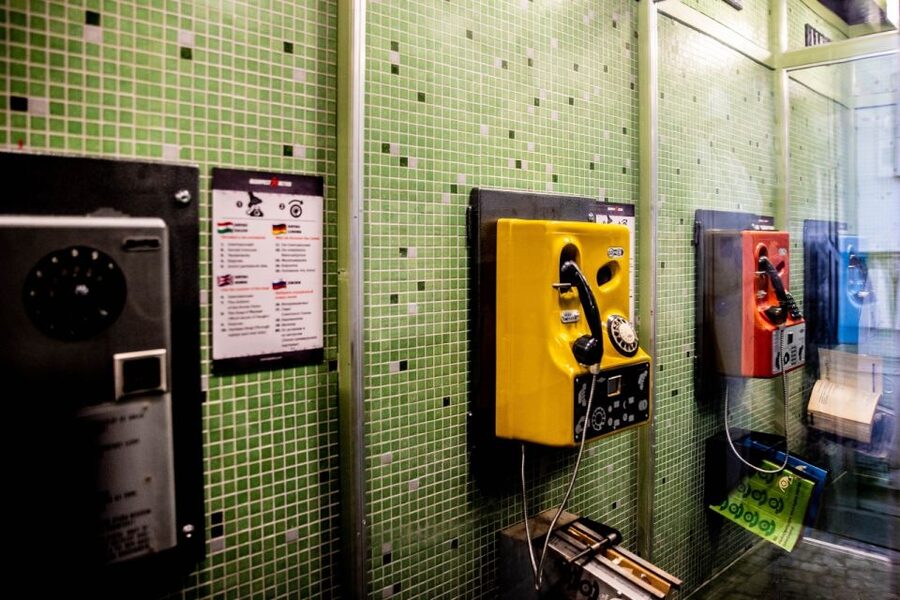
- Hear the past through old entertainment: Phone booths play period jokes and cabaret, while a 1971 jukebox supplies the soundtrack.
- Taste the era at the Retro bistro: Look for Debreceni sausage, punch mignon, Márka cherry drink, Kőbányai beer, and other period favorites.
- Allow one to two hours: The museum has three floors, but it is not a full-day attraction.
- Check the weekday price: Admission is listed at about $15 per person, but the cost can change depending on the day.
Budapest’s communist past, presented as play
This is not a solemn museum about political theory. It is a place where you learn about the communist period through household goods, popular entertainment, transport, food, television, and small personal habits.
That approach works well. You can read about an era, but you remember it better after sitting in a police car or hearing a joke through an old phone booth. The museum aims to show what ordinary life felt like before Hungary’s change of regime, rather than only explaining major political events.
I find that useful for a first visit to Budapest because the city’s communist past can otherwise be easy to overlook. You will see grand imperial buildings, elegant cafés, and medieval streets, but the decades behind the Iron Curtain shaped modern Hungary in ways that are less obvious. This museum gives that period a physical presence.
The tone is generally light and playful. That does not mean the subject is treated as a joke. Instead, humor, advertising, food, music, and consumer goods show how people got through daily life. The result is more approachable than a museum built entirely around dates and official speeches.
A few more Budapest trips to weigh up
- Budapest: Light Art Museum – Immersive New Media Experience
★ 3.9 · 1,269 reviews - Star Wars story Museum Ticket Pass
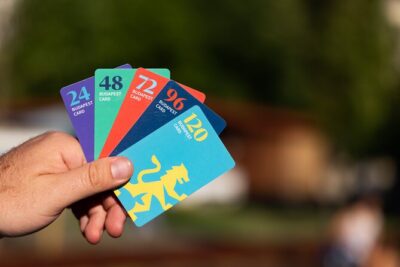
★ 5.0 · 249 reviews - Budapest Card: Free Public Transport, Spa & Museums with Delivery
★ 3.5 · 241 reviews
Three floors of objects, sounds, and buttons to press
The exhibition is spread across three floors. You do not need a guide to move through it, though a guide may be available at times, and one guided visit was especially praised for its patient and informed presentation. No guide names are provided, so I would not book this expecting a particular presenter.
The displays include objects from the decades before the change of regime. You may find yourself comparing the practical goods of the period with the bright packaging and catchy slogans that helped sell them. The museum also uses sound and video, so this is not simply a collection of items behind glass.
That makes the museum a good choice for families. Children may not care much about political history, but they can operate displays, look inside vehicles, listen to old audio, and play with media stations. You can use those activities as a starting point for explaining censorship, state television, limited consumer choice, or the differences between then and now.
The visual presentation is one of the stronger parts of the visit. Displays are arranged to be easy to approach, and the interactive elements give you something to do at each stage. On a busy day, you may need to wait briefly for a popular station, especially when several families are visiting together.
The LADA police car and the Híradó studio
The real LADA police car is a clear highlight. You can climb inside an eighties patrol vehicle and imagine the everyday presence of state authority on Hungarian roads. It is not just a car display. It connects the period to an object that people saw in public life and recognized immediately.
The Híradó studio offers a different kind of interaction. Híradó was the contemporary news program, and the museum lets you try presenting the news yourself. This gives you a sense of how television shaped public information before the internet, private media, and modern news access.
I like these two stops because they show both the official and ordinary sides of the period. The LADA represents public control and authority. The television studio represents the way information reached people at home. Together, they provide more context than a display of random old objects would.
If you are visiting with children, allow time for each person to try the stations. If you are alone or in a hurry, these are still worth stopping at, but you may not need to repeat every activity.
Phone booths, jokes, and a 1971 jukebox
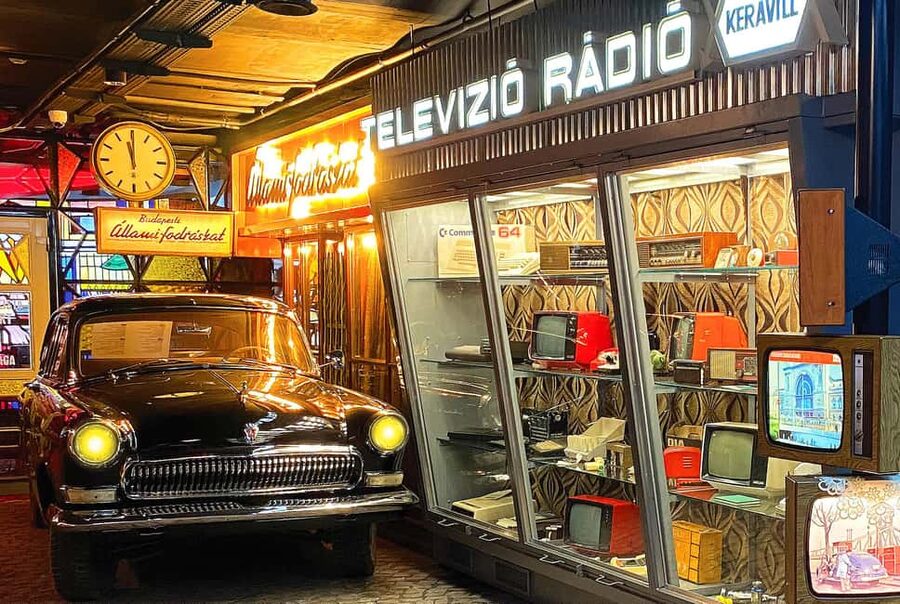
The old phone booths offer period jokes and cabaret. This is a small feature, but it helps explain how entertainment worked when people had fewer ways to choose what they watched or heard. Humor also mattered because it gave people a way to comment on daily life, even when direct criticism was risky.
The 1971 jukebox adds another layer. You can play music from the period and consider how Western-style entertainment, local music, and state-approved culture mixed together. It is an entertaining stop, but it also gives the exhibition a sound that printed information cannot provide.
These details are where the museum feels most personal. Cars and official studios tell you about institutions. Music, jokes, candy, and drinks tell you what people encountered in daily life.
Some of the audio and written material may not be in English. If you do not speak Hungarian, you can still enjoy the objects and activities, but you should expect to understand more from the visual presentation than from every label or recording.
Same riverbank, a completely different kind of day:
- Budapest: Unlimited Prosecco, Beer and Aperol Spritz Cruise
★ 4.8 · 25,310 reviews - Budapest: Széchenyi Spa Day Ticket with Optional Upgrades
★ 4.3 · 23,911 reviews - Budapest: Nighttime or Daytime Sightseeing Cruise
★ 4.2 · 21,062 reviews - Budapest: 1-Hour Evening Sightseeing Cruise with Drink
★ 4.5 · 8,330 reviews
Bertalan Farkas and a taste of space-age Hungary
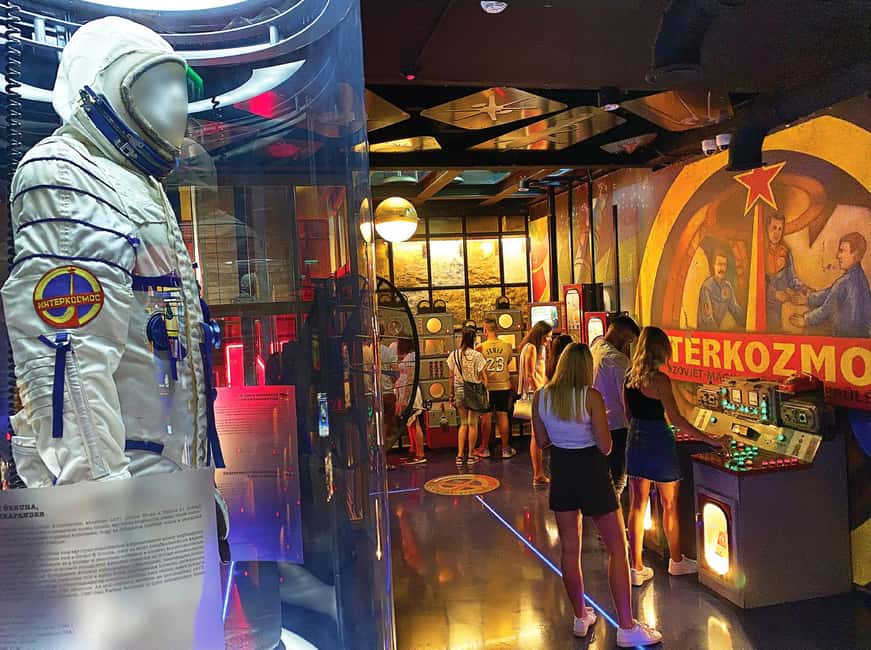
One display focuses on Bertalan Farkas, Hungary’s first astronaut. You can see what he took with him into space, including the unusual type of alcoholic jelly mentioned in the exhibition.
This is a wonderfully strange detail, and it gives the museum a memorable human story. Space travel was a major source of pride in the communist world, and personal items make that achievement easier to picture. Instead of treating the space program as a distant political symbol, the display asks a simple question: what did a Hungarian astronaut actually bring along?
The exhibit also reflects the period’s fascination with science, technology, and national achievement. It is a useful counterpoint to the more ordinary sections about sausage, chewing gum, and television. Communist-era life was not only about shortages or official control. It also included ambition, pride, curiosity, and a belief in modern technology.
Retro drinks and food at the museum bistro
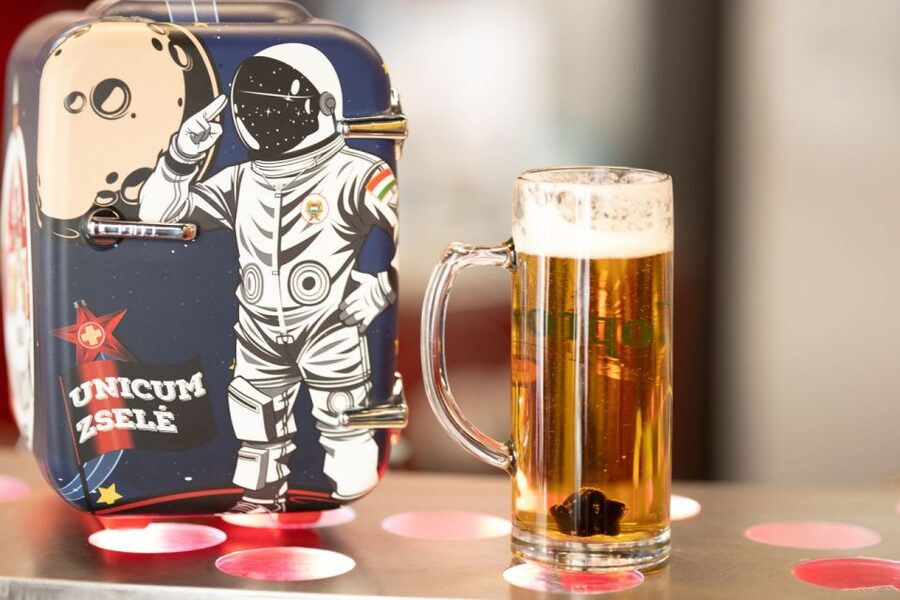
Food is available for an extra charge at the Retro bistro. The menu includes fried Debreceni sausage, punch mignon, Márka cherry drink, and Kőbányai beer.
The bistro is worth considering as part of the visit, especially if you want to connect the displays with actual flavors. Debreceni sausage gives you a savory snack, while the punch mignon is deliberately sweet. Márka cherry drink and Kőbányai beer add two familiar period beverages to the experience.
You can also find references to Bambi, a famous retro summer drink, and limo powder, which apparently was not always used as intended in water. The museum’s food and drink details are less about fine dining than memory. They show what people bought, shared, and associated with childhood or summer.
The admission ticket does not include food or drinks, so plan for a separate purchase. If you only want the exhibition, you can skip the bistro. If you enjoy food history, though, this is one of the best ways to make the visit feel less abstract.
The café was also praised for its welcoming staff and pleasant setting. Do not expect a long meal stop. Think of it as a short break with a few unusual items to try.
Turbo chewing gum, rooster lollipops, and homemade nostalgia
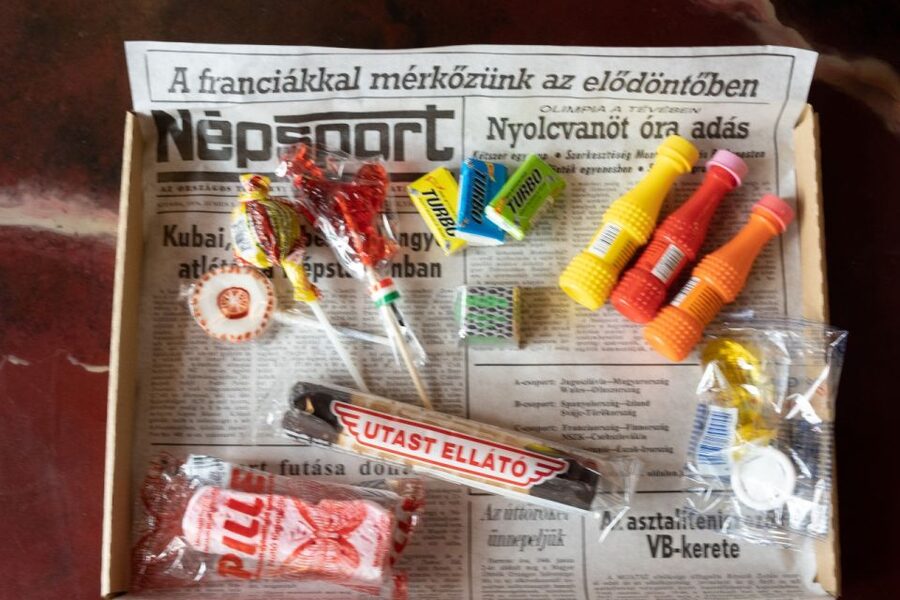
The museum closes the gap between history and memory with small sweets and products. Turbo chewing gum and the rooster lollipop may seem trivial, but that is exactly why they work.
A child growing up in the period would have known these objects in a direct, everyday way. A modern visitor can see how much meaning can gather around a piece of candy or a familiar wrapper. These are the things people remember long after official slogans have faded.
You can also make a retro card with your own photograph for an additional cost. This is optional, but it gives families and groups a small souvenir tied to the museum rather than to a generic Budapest gift shop.
The displays about old products are especially useful if you have a family connection to Hungary or Central Europe. You may recognize some items, hear a relative’s stories, or understand why an ordinary drink or sweet still carries emotional weight.
How long to stay and how to plan the visit
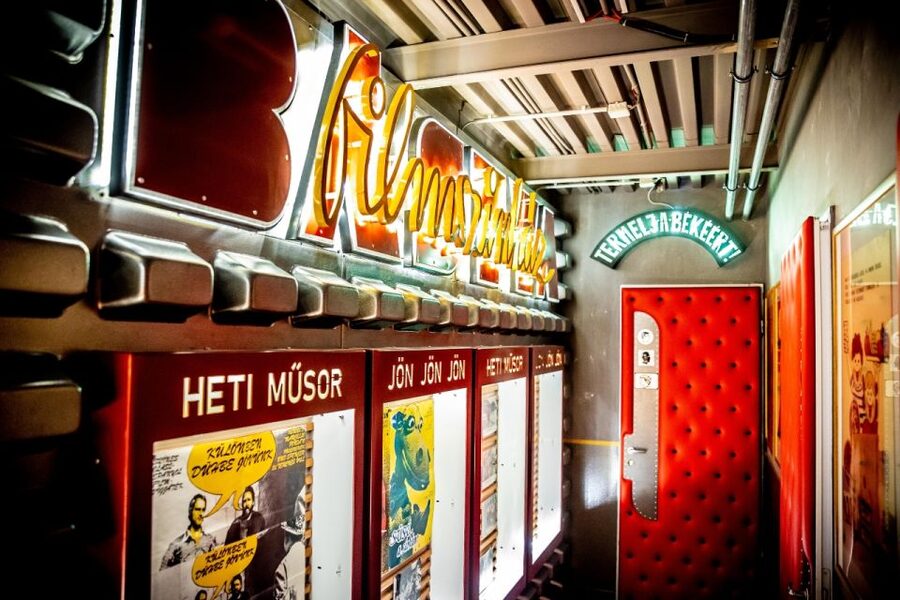
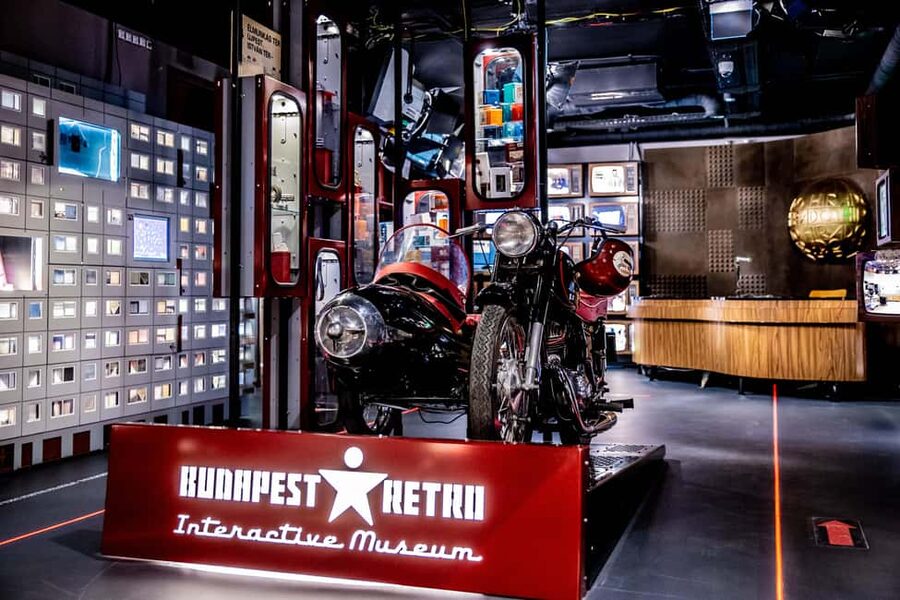
The suggested visit takes one to two hours. I would allow the full two hours if you want to try the interactive stations, listen to the audio features, inspect the cars and motorbikes, and stop at the bistro.
If you are mainly interested in the vehicles, you may finish faster. One practical assessment placed the visit at less than two hours because the museum is not very large. That is not necessarily a weakness. The compact size makes it easy to fit into a day of sightseeing, especially between larger attractions.
The ticket is valid for one day, and you present your voucher at the Budapest Retro Élményközpont ticket counter. Check the available starting times when you book, since the listing gives availability rather than one fixed daily schedule.
The museum is downtown Budapest, and it was described as easy to find. No transport is included, so you make your own way there. It closes on January 1 and December 24, 25, and 26.
On hot days, check your expectations. The air conditioning was not strong enough for everyone, so the museum may not provide the cool indoor break you want during a summer afternoon.
Is $15 a fair price?
At about $15 per person, admission is reasonable if you enjoy interactive museums, twentieth-century history, or unusual local culture. The ticket gives you access to the full three-story exhibition, including the vehicles, television studio, sound features, and period displays.
The value is strongest when you take your time and use the hands-on stations. If you simply walk through the rooms without trying much, the museum may feel short for the price. Food, drinks, and the custom retro card cost extra, so budget for those only if they appeal to you.
The weekday price may vary, and the listed rate is not guaranteed for every day. Check the exact total before booking. Free cancellation up to 24 hours before the activity and a reserve-now, pay-later option make it easier to fit into a changing Budapest schedule.
Senior visitors aged 65 and over receive a free coffee every Wednesday when purchasing a senior ticket. That is a small but useful perk if your plans line up with that day.
Who will enjoy Budapest Retro Erlebnispark?
I would recommend this museum to you if you want a break from Budapest’s grand architecture and would like to understand a more recent chapter of the country’s past.
It suits:
- Families who want history with things to touch and try
- Anyone interested in communist-era daily life
- Car fans drawn to the LADA police car, classic cars, and motorbikes
- Visitors who enjoy old food, drinks, music, and advertising
- People with Hungarian or Central European family connections
- Anyone looking for a one to two-hour indoor activity
You may want to skip it if you need every explanation in English, dislike interactive displays, or expect a large national museum with hours of material. The lack of English content in some areas is the most important practical limitation.
Should you book this Budapest museum ticket?
Book it if you want history served with a little humor, a jukebox, a police car, and a cherry drink. The museum is easy to fit into a central Budapest itinerary, and its best displays make communist-era life concrete rather than distant.
I especially like the mix of official subjects, such as television and space travel, with ordinary pleasures, such as sausage, candy, music, and cabaret. That balance gives you a more rounded sense of the period.
Skip it if you are only looking for major political history or a long museum visit. For most people, one to two hours is enough. For families, curious first-time visitors, and anyone who wants a lively introduction to Hungary before 1989, the $15 ticket offers good value.
FAQ
How long does a visit to Budapest Retro Erlebnispark take?
The suggested duration is one to two hours. Some visitors may need less than two hours because the museum is fairly compact.
What does the admission ticket include?
The ticket includes admission to Budapest Retro Erlebnispark, also called Budapest Retro Élményközpont.
Are food and drinks included?
No. Food and drinks are available to purchase separately at the museum’s Retro bistro.
What food and drinks can I buy there?
The bistro offers items such as fried Debreceni sausage, punch mignon, Márka cherry drink, and Kőbányai beer. The museum also highlights retro products including Bambi and limo powder.
Is the museum suitable for children?
Yes. The museum includes interactive exhibits, a police car, a news studio, audio features, and other activities that can appeal to children. The available information does not specify a minimum age.
Is everything in English?
No. Some of the museum content is not in English, so you may not understand every exhibition or recording.
When is the museum closed?
The museum is closed on January 1 and December 24, 25, and 26.
Can I cancel the ticket?
Yes. You can cancel up to 24 hours in advance for a full refund. A reserve-now, pay-later option is also available.
Just added around Budapest
- From Budapest: Guided Tour of Eger with Wine Tasting★ 4.5 · 6 reviews
- Budapest: Private Walking Tour with a Local Guide★ 3.6 · 6 reviews
- Budapest: Danube River Views Bike Ride★ 4.8 · 23 reviews
- Trash Art Museum: Hungary’s First Scrap Metal Exhibition★ 4.3 · 72 reviews
- Walk to recent and aged spiritual sanctuaries near Budapest★ 5.0 · 5 reviews
- Budapest: 3-Hour Trabant Sightseeing Tour★ 4.7 · 28 reviews
- True Crime Walking Tour in the Buda Castle district★ 5.0 · 26 reviews
- Audio visual multi-sensory chefs journey dinner experience★ 5.0 · 3 reviews
Museums, compared.
Budapest Card: Free Public Transport, Spa & Museums with Delivery
Read our review →
Budapest Dohany Synagogue & Hungarian Jewish Museum & free extras
Read our review →
Travelling Galaxy Star Wars Interactive Exhibition
Read our review →
Skip the Line: Budapest Pinball Museum Admission Ticket
Read our review →

Trash Art Museum: Hungary’s First Scrap Metal Exhibition
Read our review →Browse the lists this tour appears in