
Reviewed · MUSEUMS
Budapest: Light Art Museum – Immersive New Media Experience
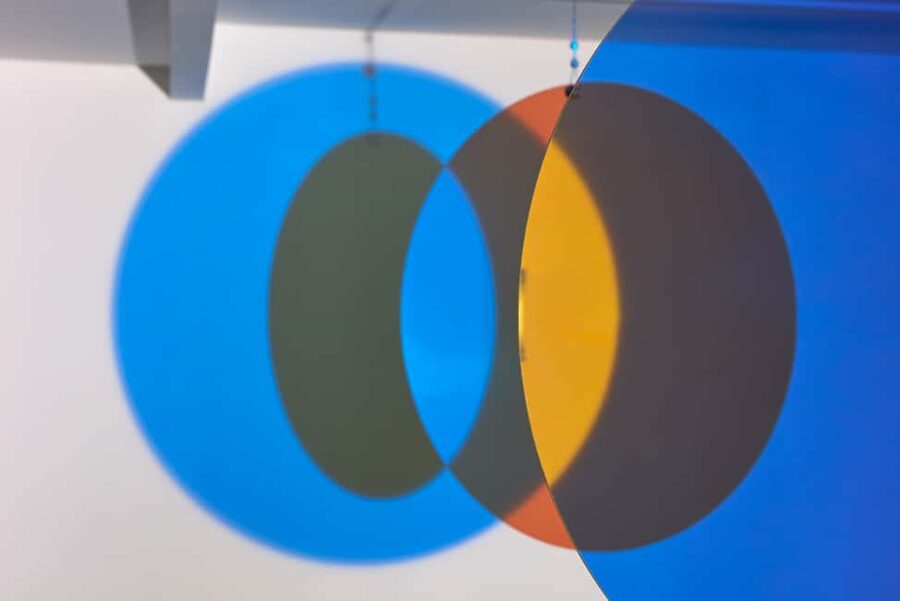
The Light Art Museum turns a former farmers’ market into a dark, colorful world of projections, optical tricks, sculpture, and new media. It is one of Budapest’s more unusual stops, especially if you want a break from grand churches and old stones. I like the way the museum gives you room to explore at your own pace, and I like the mix of local and international work, from historical light art to playful installations.
I also like the limited admissions, which can keep the rooms from feeling packed. The main caution is that the quality is uneven. Some pieces are striking and thoughtful, while others may seem vague or slight. A few installations can also be closed, so you should not expect every listed work to be operating on every visit.
In This Review
- Key Points to Know Before You Go
- Entering Budapest’s Former Farmers’ Market
- What the Two-Hour Visit Feels Like
- The Airlocked Dome, the Sphere, and the Blimp
- Light Art, Optical Art, and Famous Names
- How Interactive Is the Museum?
- The Good and the Less Successful Installations
- Timing Your Visit and Managing Crowds
- Is $18 a Fair Price?
- Who Will Enjoy the Light Art Museum Most?
- Practical Details for Your Visit
- Should You Book the Light Art Museum?
- FAQ
- Where is the Light Art Museum located?
- How long does the visit take?
- How much does admission cost?
- Is a guide included?
- Is skip-the-line entry available?
- Is the museum suitable for children?
- Can I read information in English?
- Can I cancel the booking?
Key Points to Know Before You Go
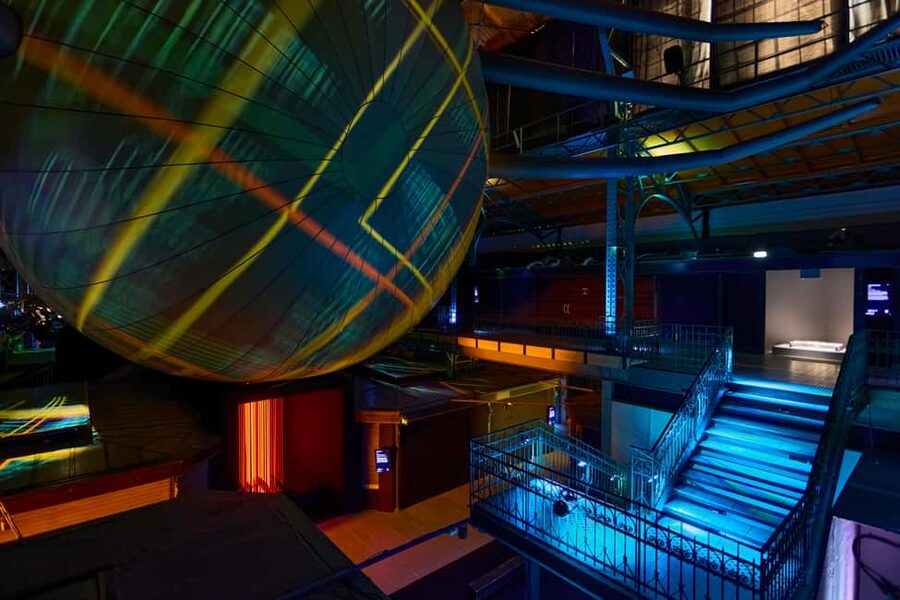
- A former farmers’ market now houses the museum: The old hall gives the displays a generous setting and adds character beyond the art itself.
- Plan on about two hours: That is enough time to read the English notes, try the interactive pieces, and revisit favorites without rushing.
- The airlocked dome is a major stop: Lie down inside it for the strongest effect, rather than simply walking through.
- You’ll find work tied to major artists: Look for pieces connected with László Moholy-Nagy and Victor Vasarely.
- It suits families, with one important limit: Much of the museum is suitable for children, but one section is specifically for people over 18.
- The $18 ticket is fairly priced for a slow visit: It is better value if you spend close to two hours inside, not if you hurry through in 20 minutes.
Entering Budapest’s Former Farmers’ Market
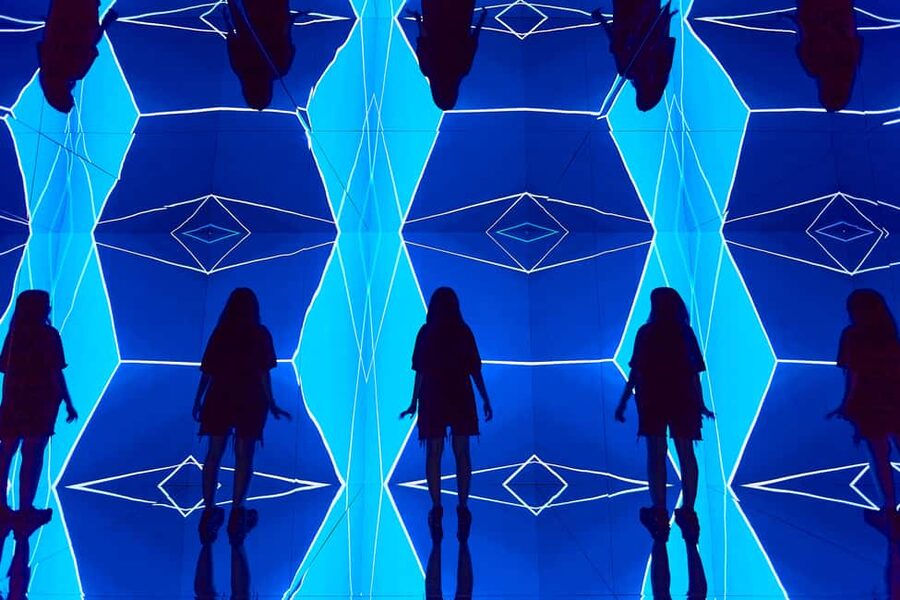
The setting helps make this museum memorable. Instead of placing light art in a standard white gallery, the Light Art Museum uses a historic market hall that once served local farmers and shoppers. The large interior gives projections and colored light room to breathe, while the old building keeps the visit from feeling like a collection of screens in a shopping center.
You enter with an admission ticket and can use the skip-the-line option by letting the hosts know. The hosts speak English and Hungarian, but this is not a guided tour. You explore independently, which is useful here because the pieces work at different speeds. Some need only a quick look. Others reward you with a few minutes of watching, reading, and trying the controls.
The museum is in central Budapest, so it fits neatly into a day of city sightseeing. No transport or guide is included, and the experience ends where it begins. I would treat it as a two-hour indoor stop rather than a quick photo call.
A few more Budapest trips to weigh up
- Budapest: Budapest Retro Interactive Museum Ticket
★ 4.4 · 373 reviews - Star Wars story Museum Ticket Pass
★ 5.0 · 249 reviews - Budapest Card: Free Public Transport, Spa & Museums with Delivery
★ 3.5 · 241 reviews
What the Two-Hour Visit Feels Like
The visit does not follow a formal tour route with a guide explaining every room. Instead, you move through a sequence of installations involving light, color, projection mapping, optical illusion, art, and science. That loose format lets you linger where something catches your eye and move on when a piece does not connect with you.
A good approach is to start slowly. Give your eyes time to adjust to the dark rooms, then read the English information screens before deciding how much time each work deserves. The museum’s appeal comes from contrast. One room may feel calm and abstract, while the next uses motion, color, or a strange visual trick.
You can expect pieces that ask you to look, and others that invite you to take part. The interactive works are especially useful if you are visiting with children, though not every installation will make its meaning clear. That is partly the point of contemporary art, but it can also leave you wondering if you missed an explanation.
The museum works best when you accept that not every piece needs a clear answer. You may find a clever experiment with light, then encounter a work that feels more like a loose idea than a finished experience. I would not judge the entire museum by one installation.
The Airlocked Dome, the Sphere, and the Blimp
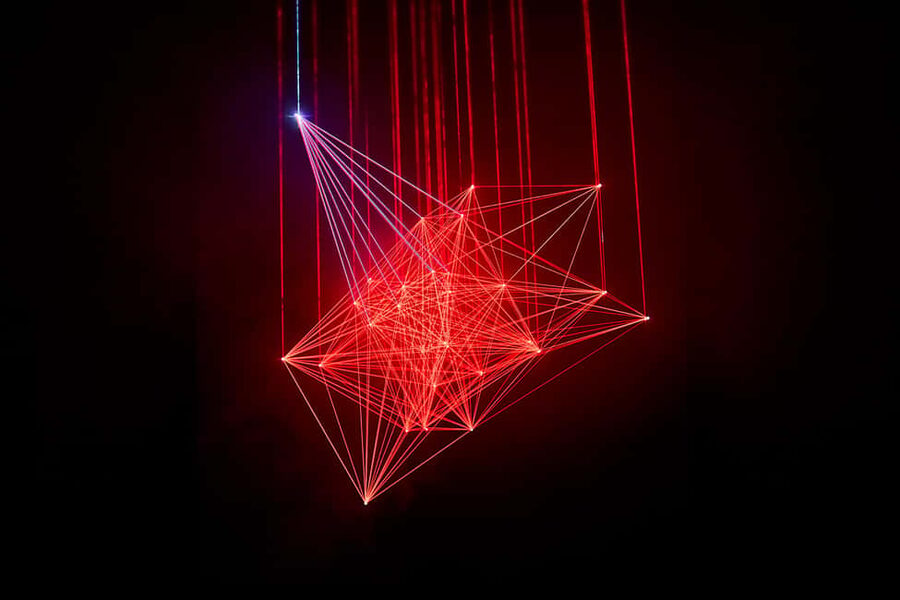
Several attractions have become the practical highlights of the visit. The airlocked dome is one of the most memorable. It creates a contained visual experience that can feel strange, calm, or slightly otherworldly, depending on how you respond to it.
For the best effect, lie down inside rather than viewing it upright. That small adjustment changes the experience, so do not rush through simply because the space looks simple at first. You may need to wait briefly for your turn, depending on how many people are inside.
The Sphere is another piece worth extra time. It has been described as an astonishing part of the visit, and it is easy to see why it can become a repeat stop. If a room draws you back, return to it. You are not being pushed along a fixed guided route.
The blimp is also a playful favorite. It has a strong visual presence and gives the museum a touch of humor among the more serious works. If you are taking photographs, these larger installations offer some of the clearest images, although the museum’s dark conditions can make phone photos less predictable.
Light Art, Optical Art, and Famous Names
The museum is not only a collection of flashing lights. It also places new media beside modern and historically important art. You can see work associated with László Moholy-Nagy, a pioneer in light-based art, along with pieces linked to Victor Vasarely, an important name in optical art.
That context matters. Without it, some displays might seem like attractive effects designed for quick photographs. With it, you can see how artists have used light, movement, geometry, and perception for decades, long before today’s projection rooms and digital installations.
Vasarely’s work is especially helpful for understanding how simple lines, repeated forms, and color can fool the eye. Moholy-Nagy’s connection gives the museum a link to early experiments in modern art and technology. The newer works then show how those ideas have been extended through projection, sensors, changing color, and room-sized environments.
You do not need an art background to enjoy the museum. Still, I would take a little time with the information panels. One visitor spent about two hours reading the English explanations as well as looking at the pieces, and that is a good model if you want more than a quick visual hit.
Same riverbank, a completely different kind of day:
- Budapest: Unlimited Prosecco, Beer and Aperol Spritz Cruise
★ 4.8 · 25,310 reviews - Budapest: Széchenyi Spa Day Ticket with Optional Upgrades
★ 4.3 · 23,911 reviews - Budapest: Nighttime or Daytime Sightseeing Cruise
★ 4.2 · 21,062 reviews - Budapest: 1-Hour Evening Sightseeing Cruise with Drink
★ 4.5 · 8,330 reviews
How Interactive Is the Museum?
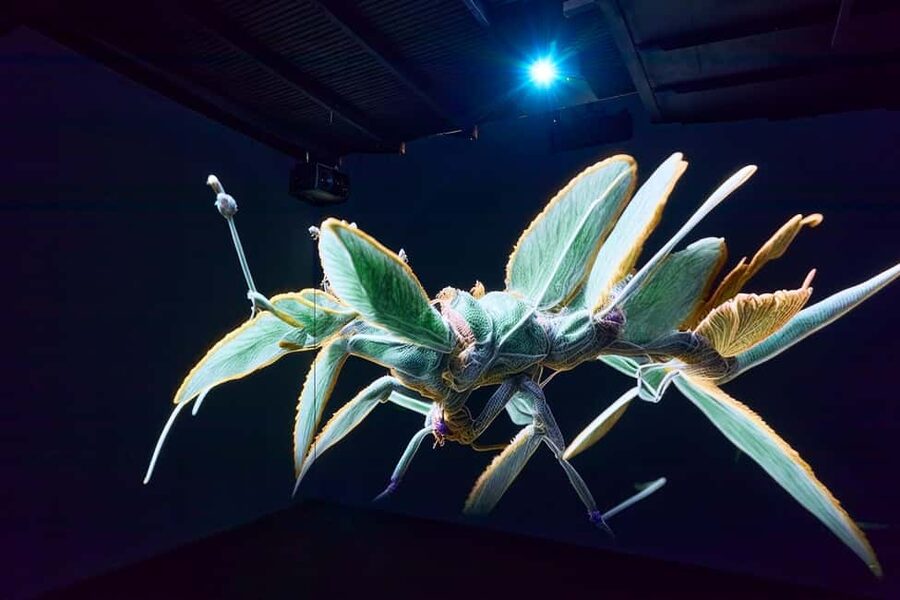
The word interactive covers a lot here. Some displays may respond to your movement or invite direct participation. Others create an effect that surrounds you but do not require you to touch or control anything. The balance can change from one exhibition area to another.
That means you should set your expectations correctly. This is not a hands-on science center where every room has a clear task. It is an art museum that uses technology and sensory effects, with some installations designed for participation.
For children, the changing colors and unusual rooms can be a strong draw. A two-year-old can find plenty to watch, and older children may enjoy trying to work out how the illusions function. At the same time, a few explanations may go over their heads, and one section is specifically for people over 18.
If you are visiting with young children, keep the age restriction in mind and expect the experience to be subjective. You may love a quiet abstract piece while your child prefers a moving projection or a strange room. The freedom to move at your own speed makes that easier.
The Good and the Less Successful Installations
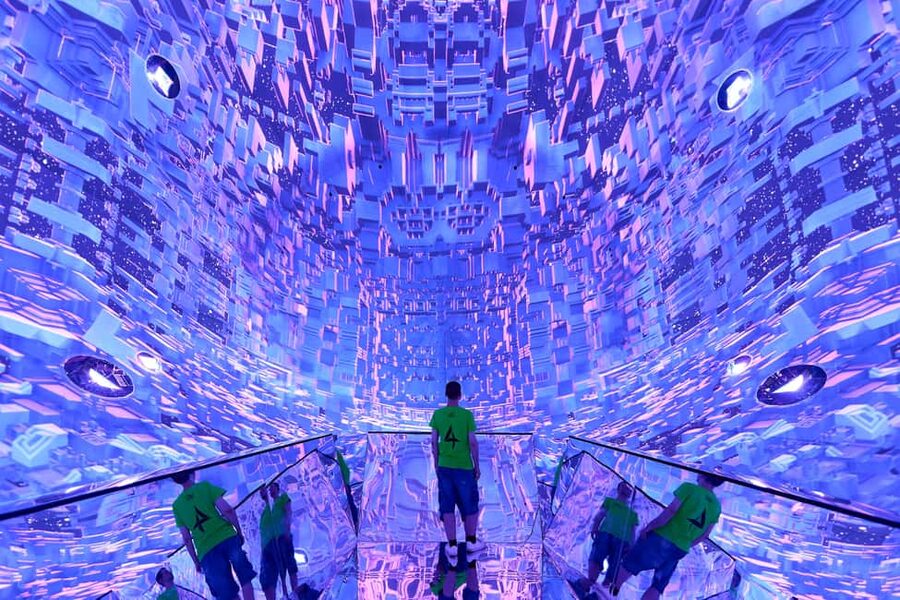
The strongest works are the ones that combine a clear visual idea with a physical experience. They make you stop, change position, look again, or enter a space in a different way. The airlocked dome, the Sphere, and the blimp provide that kind of variety.
Other works may be less convincing. You might find a few metal lines or colored forms presented as an idea about the universe, yet feel that the explanation is stronger than the object itself. That does not make the museum a poor choice, but it does mean you should not expect every room to deliver a major revelation.
The museum’s overall rating sits at 3.9 from 1,269 reviews, which fits this mixed picture. The experience has many genuine high points, but it is not a guaranteed hit for every taste. People who already enjoy contemporary art, optical art, and experimental installations will probably get more from it than someone looking only for polished photo settings.
I appreciate that the museum does not need every piece to be a crowd-pleaser. Still, the $18 admission feels most reasonable when enough installations are open and you spend time with them. If several works are unavailable, the visit can feel short. One account described a 20-minute walk-through because much of the display was closed, although the remaining pieces were still considered worthwhile.
Timing Your Visit and Managing Crowds
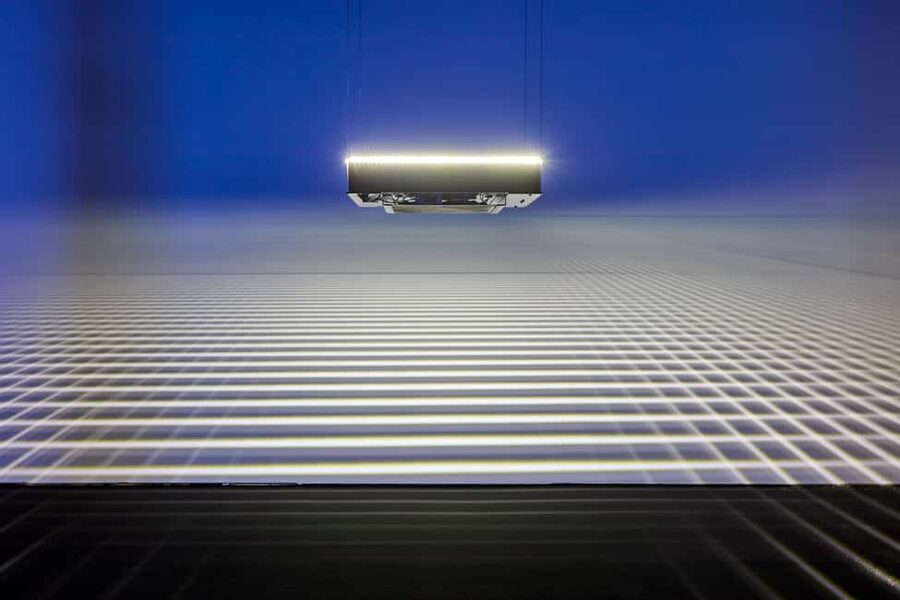
The ticket is valid for one day, with starting times based on availability. The exact entry time matters less than the crowd level inside, since this kind of museum is better when you can stand in front of a projection without blocking someone else’s view.
Going at the start of the day can help. A quieter morning gives you more freedom in the interactive rooms and makes it easier to read the information screens. Limited admission numbers can also keep the museum from becoming uncomfortably crowded.
The skip-the-line option is useful if there is a queue, but it does not turn the visit into a guided experience. Let the host know that you want to use it. Since the ticket covers admission and about two hours of exploration, you should not plan to arrive with only 30 minutes available.
The museum’s display can change, and individual artworks may occasionally be closed. That is worth remembering if you are booking specifically to see one particular installation. The general format remains the attraction, but no single work should be treated as guaranteed from the information provided.
Is $18 a Fair Price?
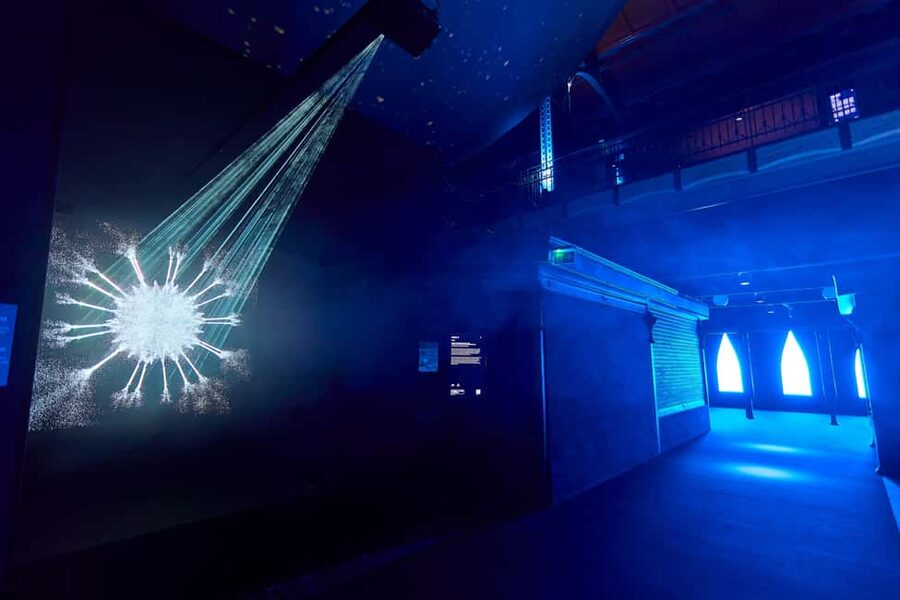
At $18 per person, the ticket is neither a bargain basement attraction nor an expensive special-event ticket. I consider it fair if you enjoy modern art and give yourself enough time to explore. Two hours inside works out well for the price, especially when you use the English notes and revisit the pieces that interest you.
The value drops if you treat it as a quick walk-through. Some people may see the whole open section in 20 minutes, particularly if they do not stop to read or participate. In that case, the ticket can feel high for the amount of time spent.
The price also includes a skip-the-line option, which has practical value at a popular central attraction. There is no guide, transport, or meal included, so you are paying for the museum itself. I like that arrangement because the displays are personal and self-paced, but anyone looking for a narrated tour should know what they are buying.
Free cancellation up to 24 hours before the visit and reserve-now, pay-later booking add flexibility. These policies are useful if your Budapest schedule is still shifting, but they do not change the core value question: book it for the art and the unusual setting, not simply for a short list of photo opportunities.
Who Will Enjoy the Light Art Museum Most?
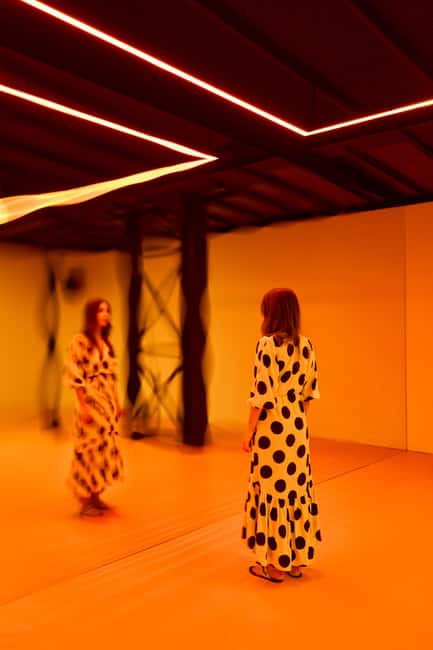
I would recommend this experience to people who enjoy contemporary art, optical illusions, digital projections, and installations that do not always explain themselves fully. It is also a good rainy-day or hot-weather choice because you can spend a couple of hours indoors at your own pace.
Families can have a good time here, especially with children who like color, motion, and unusual spaces. The over-18 section means the museum is not entirely child-focused, so check the signs and do not assume every room is suitable for a toddler.
It is less ideal if you want a traditional museum with a clear timeline, extensive labels, and a consistent standard across every room. Some of the art is abstract enough that you may simply not connect with it. That is a matter of taste, but it is the main reason I would not make this a top priority for every first-time visitor to Budapest.
Photography is part of the appeal, particularly around the larger installations. Still, do not let your phone become the whole visit. The strongest pieces are often better when you stand still and watch how the light changes.
Practical Details for Your Visit
The admission ticket covers one day at the Light Art Museum and allows about two hours of exploration. Hosts are available in English and Hungarian, but there is no tour guide.
English information is available, although the display screens may switch between languages. If a panel changes before you finish reading, wait for the English version to return or move on and come back later.
Ask about the skip-the-line option when you arrive. The activity starts and ends at the meeting point, and no transportation is provided.
The cancellation policy allows a full refund when you cancel at least 24 hours in advance. You can also reserve and pay later, which helps if you are building a flexible Budapest itinerary.
Should You Book the Light Art Museum?
Book it if you want something unlike Budapest’s usual churches, baths, monuments, and history museums. The former market hall, the airlocked dome, the Sphere, the playful blimp, and the links to Moholy-Nagy and Vasarely give the visit real variety.
I would set aside two hours, aim for a quieter entry time, and arrive ready to accept a few uneven pieces. At $18, it is a sensible choice for curious adults, art fans, families, and anyone who enjoys visual experiments. Skip it if you need every exhibit to have a clear meaning or if your schedule allows only a rushed 20-minute stop.
FAQ
Where is the Light Art Museum located?
It is in central Budapest, Hungary, in a historic marketplace that was formerly used as a farmers’ market.
How long does the visit take?
The included activity allows about two hours of exploration, although the time can be shorter if you move quickly or some artworks are closed.
How much does admission cost?
The ticket costs $18 per person.
Is a guide included?
No. The visit is self-guided, with hosts or greeters available in English and Hungarian.
Is skip-the-line entry available?
Yes. The admission ticket includes a skip-the-line option. Let the hosts know when you arrive if you want to use it.
Is the museum suitable for children?
Much of the museum is family-friendly, and young children can enjoy the colors, projections, and interactive displays. One section is specifically for people over 18.
Can I read information in English?
Yes. English information is available, though some display screens may switch between languages before you finish reading.
Can I cancel the booking?
Yes. You can cancel up to 24 hours in advance for a full refund. Reserve-now, pay-later booking is also available.
Just added around Budapest
- From Budapest: Guided Tour of Eger with Wine Tasting★ 4.5 · 6 reviews
- Budapest: Private Walking Tour with a Local Guide★ 3.6 · 6 reviews
- Budapest: Danube River Views Bike Ride★ 4.8 · 23 reviews
- Trash Art Museum: Hungary’s First Scrap Metal Exhibition★ 4.3 · 72 reviews
- Walk to recent and aged spiritual sanctuaries near Budapest★ 5.0 · 5 reviews
- Budapest: 3-Hour Trabant Sightseeing Tour★ 4.7 · 28 reviews
- True Crime Walking Tour in the Buda Castle district★ 5.0 · 26 reviews
- Audio visual multi-sensory chefs journey dinner experience★ 5.0 · 3 reviews
Museums, compared.


Budapest Card: Free Public Transport, Spa & Museums with Delivery
Read our review →

Budapest Dohany Synagogue & Hungarian Jewish Museum & free extras
Read our review →
Travelling Galaxy Star Wars Interactive Exhibition
Read our review →
Skip the Line: Budapest Pinball Museum Admission Ticket
Read our review →
Browse the lists this tour appears in