
Reviewed · JEWISH HERITAGE TOURS
Budapest Dohany, Heroes’, Rumbach synagogues & Jewish Ghetto Tour
Budapest’s Jewish Quarter is more than a cluster of beautiful synagogues. It is a place where Moorish design, Art Nouveau, and Neolog Jewish tradition meet the painful story of the Budapest ghetto and the Holocaust. This tour gives you that full picture, moving from the grand Dohány Street Synagogue to smaller streets, memorials, and the still-active Orthodox center.
I like two things especially. First, admission to the Dohány Synagogue, the Rumbach Street Synagogue, and the Holocaust Memorial Park is included. Second, the guides, including Milan, David, and Micky, bring strong historical detail and, at times, personal family stories. The main consideration is pace: two hours and 20 minutes is a lot of history in a short walk, and the stop at Kazinczy Street Synagogue may not include entry.
In This Review
- Key points to know before you book
- Start at the Great Synagogue on Dohány Street
- Remembering the dead at Raoul Wallenberg Memorial Park
- See Rumbach Street Synagogue after its restoration
- Walk the streets that formed Jewish Pest
- Meet the people remembered on the route
- Finish around Kazinczy Street’s Orthodox center
- What the pace and group size feel like
- Is $63.52 a fair price?
- Who will get the most from this tour?
- Should you book it?
- FAQ
- How long does the Budapest Jewish Quarter tour last?
- What is the price of the tour?
- Which synagogues are included?
- Does the tour visit Heroes’ Square?
- What should I wear to the synagogues?
- Can I cancel for a full refund?
Key points to know before you book
- Three synagogue traditions: See the grand Neolog Dohány Synagogue, restored Rumbach Synagogue, and Orthodox center around Kazinczy Street.
- A serious Holocaust history: Visit the former ghetto cemetery and Emmanuel Tree of Life Memorial in Raoul Wallenberg Holocaust Memorial Park.
- Strong guide-led storytelling: Milan, David, Micky, and other guides are praised for clear explanations, personal stories, and thoughtful answers.
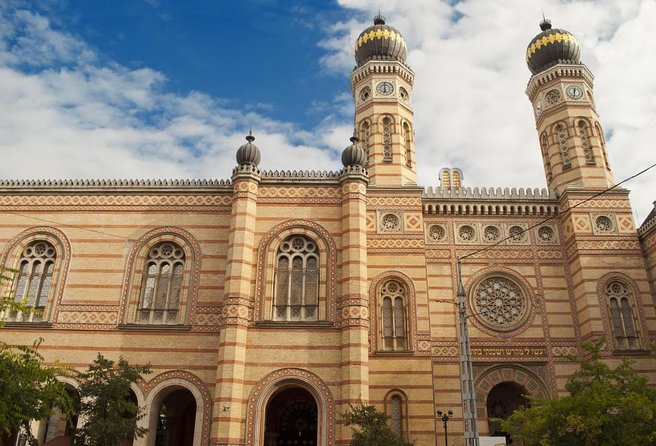
- Architecture matters here: Moorish, Viennese, and Budapest Secession styles help explain the different Jewish communities.
- A walk through present-day Pest: Király Street, Gozsdu Udvar, Dob Street, Spinoza Theater, and kosher food culture connect the past with life today.
- One title detail to note: The experience is advertised with Heroes’ Synagogue or Heroes’ references, but the supplied route does not include Heroes’ Square.
Start at the Great Synagogue on Dohány Street
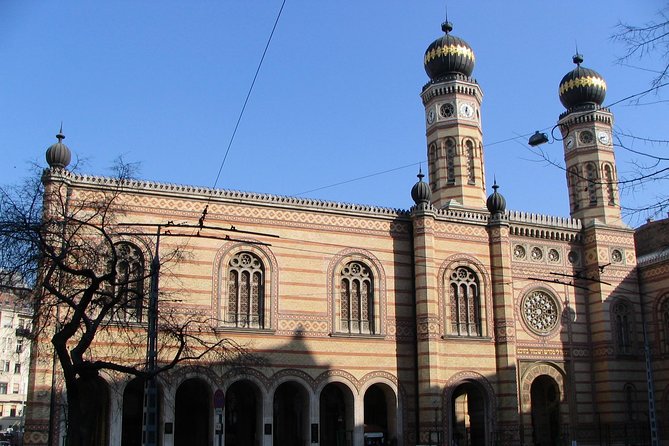
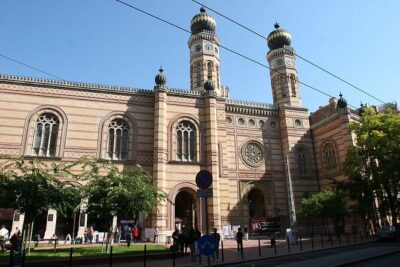
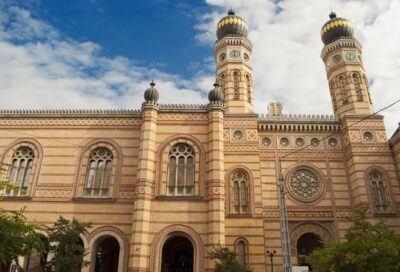
The tour begins at Budapest’s Dohány u. 2-4, home of the Great, or Central, Synagogue. This is the largest Jewish temple in Europe, and its scale can surprise you before the guide says much at all. The building dates from the 1850s and uses an ornate style that reflects the confidence and public presence of Budapest’s Neolog Jewish community.
Your first half hour is spent learning how Hungarian Jewish life developed, including the geographic, cultural, and religious differences within the community. That opening matters. Without it, the three synagogues can blur into a parade of impressive interiors. With it, you have a useful framework for understanding why each building looks and feels different.
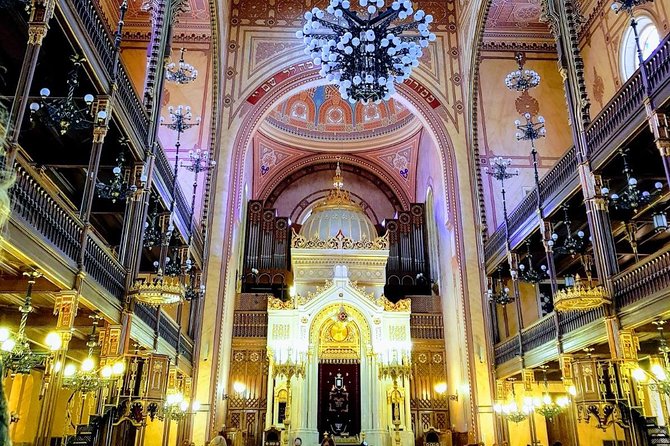
Look for the grand interior details and the organ associated with Franz Liszt. The Dohány Synagogue is not a quiet, small neighborhood prayer house. It is a monumental building designed to express a modern Jewish identity within 19th-century Budapest.
The tour’s strongest guides do more than recite dates. Milan is repeatedly praised for explaining Hungarian Jewry clearly and for adjusting his presentation to the group. David is also described as warm, funny, and able to connect larger events with personal stories. The guide makes a real difference here, since the building’s history is complex and the time is limited.
One practical point: the synagogue has a dress code. Regular clothing is fine, but your shoulders must be covered, and clothing should reach the knee or be covered before entering. A cover is available for purchase on site. Men can receive a head covering at the entrance.
More jewish heritage tours in Budapest:
- Budapest Jewish Heritage Memorial Walking Tour & Synagogue Entry
★ 5.0 · 568 reviews - Budapest: Jewish Heritage Guided Tour with Synagogue Ticket
★ 4.8 · 533 reviews - Jewish Quarter of Budapest Walking Tour
★ 4.7 · 369 reviews
Remembering the dead at Raoul Wallenberg Memorial Park
The next stop is the Raoul Wallenberg Holocaust Memorial Park, where the tour turns from architecture to the Hungarian Holocaust. You see the Emmanuel Tree of Life Memorial, a metal weeping willow with names connected to Jewish victims attached to its leaves.
You also visit the cemetery created on the grounds of the former Budapest ghetto. More than 2,000 victims are buried there. This is a compact stop, listed at about 20 minutes, but it carries the emotional weight of the tour.
The guide explains the role of the Righteous Gentiles, people who risked their own lives to save Hungarian Jews. Raoul Wallenberg is one of the best-known figures, but the tour also points to the wider network of people who acted under terrible conditions.
I appreciate that the route does not treat the Holocaust as a separate museum subject with no connection to the neighborhood. You are standing in the district itself, close to the streets where Jewish families lived, worked, and were confined. That physical setting can make the history easier to grasp, though it also means the subject is presented while you are walking through an active part of Budapest.
Some participants have found personal family stories from guides especially moving, including stories connected to Holocaust survivors. Those moments are not a substitute for careful historical context, but they can help put a human face on events that otherwise feel distant.
See Rumbach Street Synagogue after its restoration
Rumbach Street Synagogue is the architectural surprise of the tour. Designed by Viennese architect Otto Wagner and built in 1872, it is a Moorish-style building with an interior unlike the Dohány Synagogue.
The visit lasts about 45 minutes, making it the longest stop. That gives your guide time to explain the building’s design, its place within Budapest’s Jewish communities, and the long process that led to its reopening after years of renovation.
I like this stop because it offers a useful contrast. Dohány is grand and monumental. Rumbach feels more like a carefully framed architectural work, with details that reward a slower look. The contrast also helps you understand that Jewish Budapest was never one single community with one single religious style.
The synagogue is the listed end point of the program, though the walking route reaches several other streets and landmarks before the final visit. Check the day’s exact order with your guide, since synagogue access can change.
Temporary closures are possible without notice. If one synagogue closes, an alternate visiting time is offered, but no refund is provided for that single change because the tour is sold as a package. If all the synagogues close, you are offered another date or time, or a full refund.
Walk the streets that formed Jewish Pest
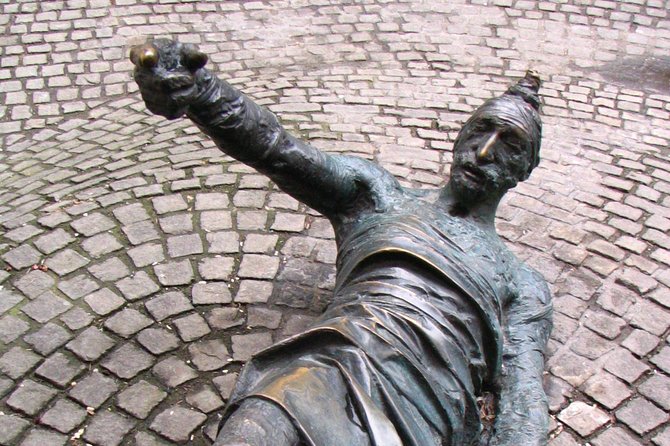
Between the synagogues and memorials, the walking portion gives you a look at the Jewish Quarter as a living district rather than a collection of monuments.
Király Street was a major commercial street in Pest during the 18th and early 19th centuries. It became an important center for Jewish trade and community life. Today, the street again carries shops, restaurants, and cultural activity, so you can see how the old commercial role has changed without disappearing.
Gozsdu Udvar adds a more social side of the neighborhood. The passage once held kosher salami shops, food stores, and apartments. Today, it is filled with places to eat, drink, and browse local craft and antique goods. The stop is brief, about 10 minutes, so think of it as an orientation rather than free time for shopping.
Dob Street runs parallel to Király Street and was central to the old Jewish district. It also passed through the Budapest ghetto. The tour connects the street’s wartime role with the revival of Jewish life in the area today.
This is one of the tour’s best features. You are not only hearing about the past inside formal buildings. You are moving through streets where history and ordinary city life sit side by side. A café, theater, food shop, and memorial can all appear within the same short walk.
Same riverbank, a completely different kind of day:
- Budapest: Unlimited Prosecco, Beer and Aperol Spritz Cruise
★ 4.8 · 25,310 reviews - Budapest: Széchenyi Spa Day Ticket with Optional Upgrades
★ 4.3 · 23,911 reviews - Budapest: Nighttime or Daytime Sightseeing Cruise
★ 4.2 · 21,062 reviews - Budapest: 1-Hour Evening Sightseeing Cruise with Drink
★ 4.5 · 8,330 reviews
Meet the people remembered on the route
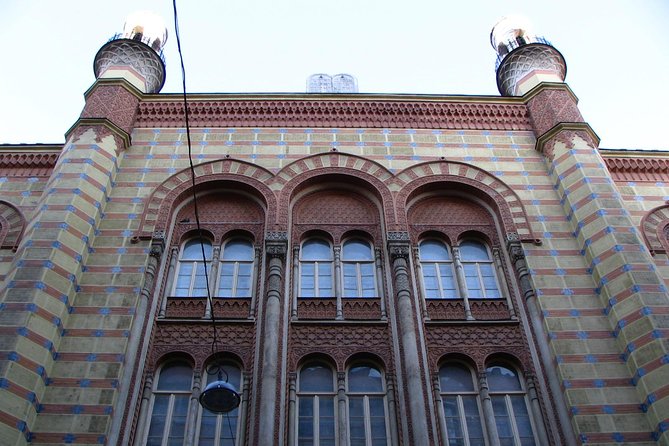
The Carl Lutz Memorial is a short stop, listed at about five minutes. Lutz was a Swiss diplomat who helped save thousands of Hungarian Jews during the Holocaust. The guide explains his actions within the wider story of the Righteous Gentiles.
The stop is brief, so do not expect a long lecture. Its value comes from placing one individual’s courage directly into the neighborhood. The memorial gives the guide a natural point for discussing how help was organized and how dangerous that work could be.
The Spinoza Theater is another quick landmark. It includes a restaurant, gallery, cultural stage, and theater named after Baruch Spinoza, the 17th-century Jewish Dutch philosopher of Portuguese Sephardi origin. The name reflects the cultural reach of Jewish life beyond Budapest itself.
There is also a chance to see one of the best-known places in the district for kosher flódni, a traditional Hungarian Jewish cake. The stop is mainly an orientation point, though one practical limitation is worth noting: the schedule does not leave much time to stop and buy Jewish specialties without missing part of the tour.
Finish around Kazinczy Street’s Orthodox center
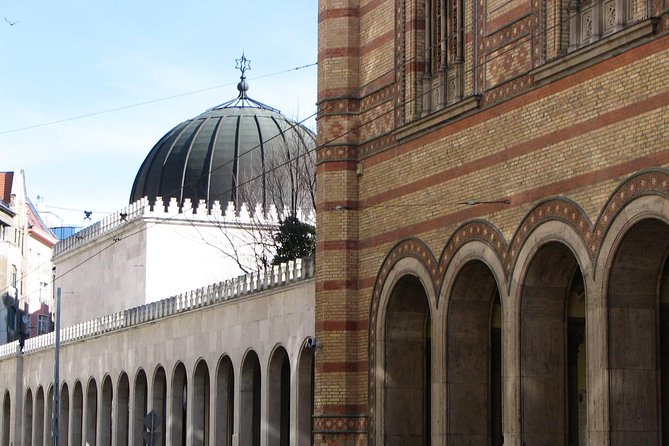
Kazinczy Street is called Budapest’s cultural street for good reason. It is known for ruin pubs and nightlife, but it is also the center of Hungarian Orthodox Jewish life, with a synagogue, mikveh, kosher restaurants and cafés, schools, a butcher, and kosher food shops.
The Kazinczy Street Synagogue provides another architectural contrast. Its early 20th-century style belongs to Budapest’s Secession movement, the local form of Art Nouveau. The synagogue serves the traditional Orthodox Jewish community.
Entry is not included at this stop, unlike the Dohány and Rumbach synagogues and the Memorial Park. The tour description lists about 15 minutes here, so you should treat it as a guided exterior and neighborhood visit unless your specific departure includes interior access.
This final area helps prevent the tour from becoming only a memorial walk. Jewish life in Budapest was devastated during the Holocaust, but it did not vanish. Around Kazinczy Street, you can see religious institutions, food traditions, cultural spaces, and modern nightlife occupying the same district.
What the pace and group size feel like
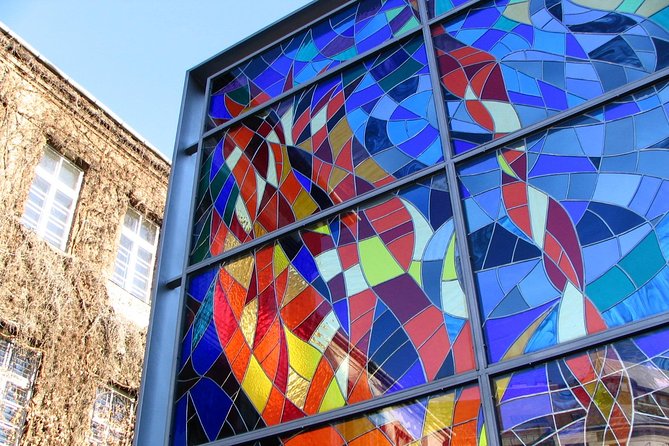
The full experience lasts about two hours and 20 minutes and is limited to a maximum of 35 people. That is a reasonable group size for city walking, though it is not a private tour. Staying close to the guide will matter inside the synagogues and on busy streets.
The route is described as a walking tour with stops ranging from five to 45 minutes. One participant with a recent hip surgery found the walking manageable, but that does not guarantee the same experience for everyone. You should expect time on your feet and uneven city movement between buildings.
The tour is offered in English. Guides are repeatedly praised for clear explanations and an easy manner, with Milan receiving especially strong comments for his detailed background, humor, and ability to answer questions. David and Micky are also praised for calm, engaging presentations.
A small but useful tip: bring an extra layer. One person found the tour quite chilly. Weather can also affect the experience, since poor conditions may lead to a new date or a full refund.
Is $63.52 a fair price?
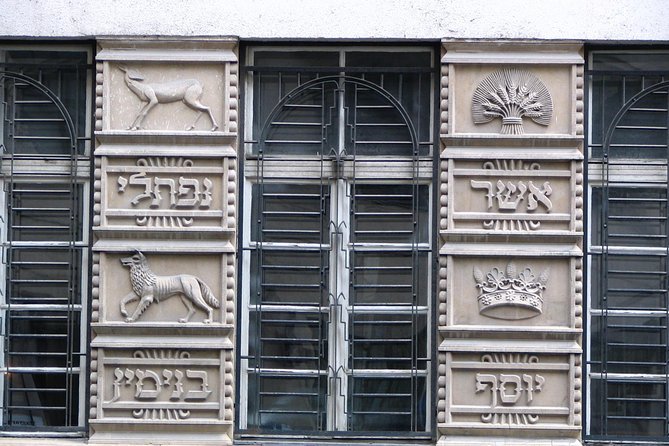
At $63.52 per person, the price is not the cheapest way to walk through the Jewish Quarter. You are paying for more than a neighborhood stroll, though. The fee includes taxes and admission to the main synagogue sites and Holocaust Memorial Park, plus a guide who explains the religious and architectural differences that are easy to miss on your own.
The value is strongest if you want context. You could pass the Dohány Synagogue, Rumbach Street, and Kazinczy Street independently, but you might not understand how Neolog and Orthodox communities differed, why the buildings use such different styles, or how the ghetto fit into the district’s street plan.
The value is weaker if you prefer to explore at your own speed or spend time inside the museum beneath the Dohány Synagogue. One participant specifically wished the guide had mentioned that museum more clearly. If that museum is important to you, ask about it at the start so you can plan separate time.
The tour also packs in a lot. That suits you if you like a clear overview in one booking. It may feel talk-heavy if you prefer long periods of quiet exploration. One critical assessment found little walking and a large amount of explanation, with the view that much of it could be done independently. That is a fair warning, especially for visitors who want a relaxed neighborhood wander.
Who will get the most from this tour?
I would choose this tour if you want a structured introduction to Hungarian Jewish history, synagogue architecture, and the Holocaust in Budapest. It is particularly useful for first-time visitors who want the major sites explained in relation to one another.
It also suits people who enjoy architecture. The tour moves from the 1850s Dohány building to Otto Wagner’s 1872 Rumbach Synagogue and then to the Secession style around Kazinczy Street. You get three distinct visual and religious settings in one compact district.
You should also book it if personal storytelling helps you connect with history. Several guides are described as sharing family experiences, and some are members of the local community. That can make the presentation feel more immediate, though the quality may vary with the guide assigned that day.
I would think twice if you want a visit to Heroes’ Square or Heroes’ Synagogue. Despite the experience title, the supplied route does not include Heroes’ Square, and one account specifically noted that it was not visited. If that landmark is a priority, you will need another plan.
Should you book it?
Book this tour if you want the Jewish Quarter explained rather than simply photographed. The included synagogue admissions, memorial visits, and strong guide focus make the $63.52 price reasonable for a compact historical introduction.
Choose it with clear expectations: the subject is serious, the route is fairly dense, Kazinczy Street entry is not included, and there may be little time for food shopping. Wear suitable clothing, bring a layer, and ask about the Dohány museum if you want to see it.
For a first visit to Budapest’s Jewish Quarter, I think this is a useful, thoughtful choice. For independent explorers who prefer silence, cafés, and long stops, a self-guided walk may suit you better.
FAQ
How long does the Budapest Jewish Quarter tour last?
The tour lasts approximately 2 hours and 20 minutes.
What is the price of the tour?
The listed price is $63.52 per person.
Which synagogues are included?
The route includes the Great or Central Synagogue on Dohány Street and the Rumbach Street Synagogue, with admission included. It also visits the Kazinczy Street Synagogue area, but entry there is not included.
Does the tour visit Heroes’ Square?
The supplied route does not include Heroes’ Square. It covers the Dohány, Rumbach, and Kazinczy synagogue areas, along with Jewish Quarter streets and Holocaust memorial sites.
What should I wear to the synagogues?
Regular clothing is acceptable, but shoulders must be covered and clothing must reach the knee or be covered before entry. A cover can be purchased on site, and head coverings for men are available upon entry.
Can I cancel for a full refund?
Yes. You can cancel at least 24 hours before the local start time for a full refund. Changes or cancellations made less than 24 hours before the start are not accepted for a refund.
Just added around Budapest
- From Budapest: Guided Tour of Eger with Wine Tasting★ 4.5 · 6 reviews
- Budapest: Private Walking Tour with a Local Guide★ 3.6 · 6 reviews
- Budapest: Danube River Views Bike Ride★ 4.8 · 23 reviews
- Trash Art Museum: Hungary’s First Scrap Metal Exhibition★ 4.3 · 72 reviews
- Walk to recent and aged spiritual sanctuaries near Budapest★ 5.0 · 5 reviews
- Budapest: 3-Hour Trabant Sightseeing Tour★ 4.7 · 28 reviews
- True Crime Walking Tour in the Buda Castle district★ 5.0 · 26 reviews
- Audio visual multi-sensory chefs journey dinner experience★ 5.0 · 3 reviews
Jewish Heritage Tours, compared.
Budapest Jewish Heritage Memorial Walking Tour & Synagogue Entry
Read our review →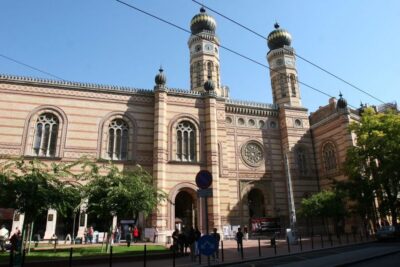
Jewish Heritage Guided Tour with Synagogue Ticket
Read our review →
Past and Present of Budapest Jewish District Tour
Read our review →
Budapest Dohany Synagogue & Hungarian Jewish Museum & free extras
Read our review →
Jewish History Guided Walking Tour with Historian
Read our review →Browse the lists this tour appears in