
Reviewed · JEWISH HERITAGE TOURS
Past and Present of Budapest Jewish District Tour
Budapest’s Jewish District is not just a collection of handsome synagogues. It is a place where medieval restrictions, the Belle Epoque, wartime persecution, survival, street art, markets, ruin bars, and present-day Jewish life all meet within a few blocks. This tour gives you that story on foot, ending at Szimpla Kert.
I like the clear past-to-present structure, which helps you understand how the district changed over time. I also like the local details, from Schutzpass documents that saved Jewish lives to the last visible piece of the ghetto wall. The main limitation is important: you do not enter any synagogue, so this is an orientation walk rather than a full architectural visit.
In This Review
- Key points to know before you go
- Starting at Erzsébet tér with Budapest’s Jewish story
- Deák Ferenc Square, medieval limits and Gaudiopolis
- The Great Synagogue and its memorial courtyard
- Rumbach Street Synagogue and the district’s changing face
- Gozsdu Udvar and the last piece of the ghetto wall
- Kazinczy Street, Orthodox life and kosher traditions
- Szimpla Kert and the walk’s final orientation
- What the 1 hour 45 minutes feels like
- What the tour does well, and where it falls short
- Who should book this Jewish District walk?
- Should you book it?
- FAQ
- Where does the tour start?
- Where does the tour end?
- How long does the tour last?
- Is the tour offered in English?
- Does the tour enter the synagogues?
- What does the tour cover?
- How large can the group be?
- Is cancellation free?
Key points to know before you go
- The route links three major synagogues: the Great Synagogue, Rumbach Street Synagogue, and Kazinczy Street Synagogue, all viewed from outside.
- The history is serious and sometimes painful, covering Hungarian Jewish life, Nazi persecution, the Holocaust, the ghetto, and survival.
- The tour finishes at Szimpla Kert, Budapest’s famous ruin bar, giving you an easy place to continue exploring District VII.
- Guides vary by departure, with praised guides including Gary, Eszter, Dora, Edith, Edi, Judith, Christine, Jude, and David.
- The $3.63 booking price is not the guide’s full payment: guides work for tips, and your donation at the end is optional.
- Allow about 1 hour 45 minutes, wear comfortable shoes, and expect to stand while listening at several stops.
Starting at Erzsébet tér with Budapest’s Jewish story
The meeting point is by the Budapest Ferris Wheel in Erzsébet tér, a central location near public transportation. It is a practical starting place because you can reach it easily from several parts of the city, and the guide uses the opening minutes to explain the route and set the historical frame.
The walk focuses on the period from the Belle Epoque, when Budapest’s Jewish community played a major role in the city’s commercial and cultural life, through the destruction of the Second World War and into the district’s present-day revival. That wide time span matters. You are not getting a Holocaust-only tour, nor a sightseeing walk that treats Jewish heritage as a footnote.
Guides such as Gary, Eszter, Dora, and Edith have received especially strong praise for explaining difficult material clearly and keeping the group involved. The guide assigned to your departure can vary, so do not book on the assumption that a particular person will lead it. The strongest comments consistently focus on clear explanations, warmth, passion, and willingness to answer questions.
More jewish heritage tours in Budapest:
- Budapest Jewish Heritage Memorial Walking Tour & Synagogue Entry
★ 5.0 · 568 reviews - Budapest: Jewish Heritage Guided Tour with Synagogue Ticket
★ 4.8 · 533 reviews - Jewish Quarter of Budapest Walking Tour
★ 4.7 · 369 reviews
Deák Ferenc Square, medieval limits and Gaudiopolis
At Deák Ferenc Square, the tour moves from broad city history to two striking subjects: the old restrictions placed on Jewish people and the later efforts to save children during the war.
You see remnants of the former medieval city wall and learn how the wall marked limits that affected Jewish trade within the city. This is a useful reminder that discrimination did not begin with the twentieth century. The district’s story includes long periods when Jewish residents could live, work, or trade only under changing rules and restrictions.
The guide also introduces Gaudiopolis, or City of Joy, a postwar children’s community associated with the rescue and care of Jewish children. You hear about Schutzpass documents, protective papers that helped save thousands of Jewish lives. These details give the period a human scale. Instead of hearing only about governments and military events, you learn about documents, children, and individual acts of protection.
This section is short, about 15 minutes, but it provides context for the stops that follow. You will be standing outdoors, listening rather than entering a building, so pay attention to the guide’s position and voice if the square is busy.
The Great Synagogue and its memorial courtyard
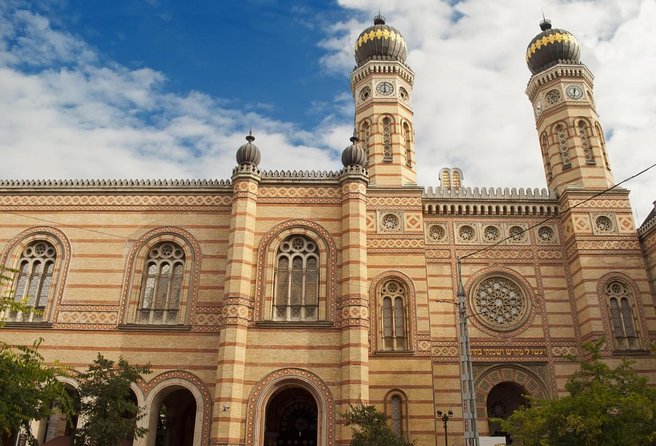
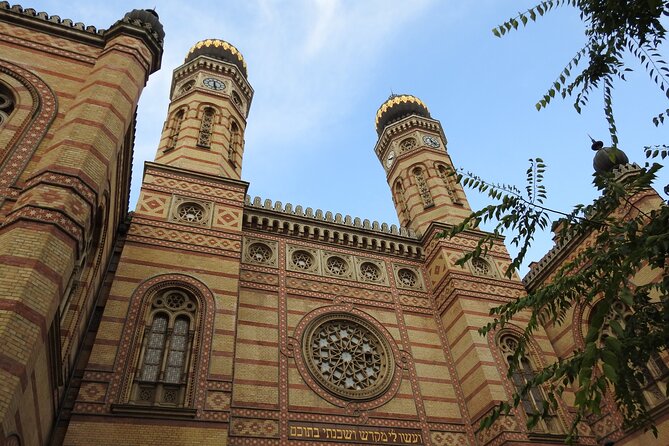
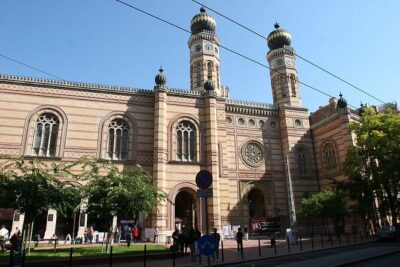
The Great, or Central, Synagogue on Dohány Street is the visual centerpiece of the route. It is described as the largest synagogue in Europe, and even an exterior visit gives you a sense of its scale and importance to Budapest’s Jewish community.
The tour does not include entry. Instead, the guide explains the building, the Neolog and Orthodox movements, and the growth of Zionism while showing you the memorial courtyard and cemetery from outside. This distinction is easy to miss when planning, so treat the stop as a guided introduction, not a synagogue admission ticket.
The memorial courtyard and cemetery carry much of the emotional weight of the stop. The guide connects the site to the wartime destruction of Hungarian Jewish life and explains why the synagogue complex became such an important place of memory.
The 20-minute stop is one of the longest on the route. It is also where the tour’s limits are most noticeable. If you want to study the synagogue interior, its design, or the museum collection, you will need to arrange a separate visit and pay the applicable admission fee. This walk helps you decide if that longer visit is worth your time.
Rumbach Street Synagogue and the district’s changing face
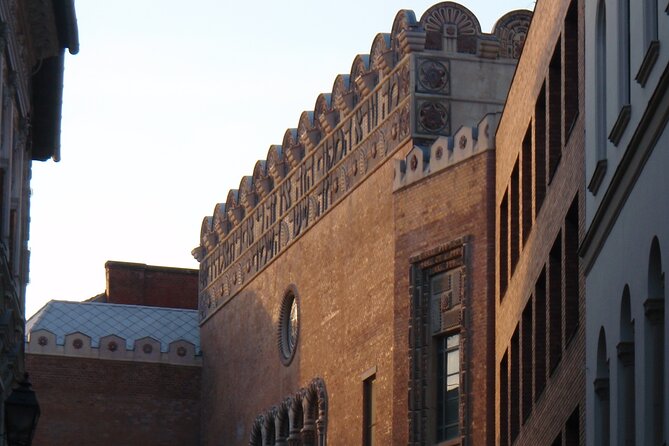
The next stop is Rumbach Street Synagogue, a restored building known for its decorative interior and murals. You do not go inside, but the guide explains the synagogue’s place within Budapest’s Jewish communities and points out the exterior details.
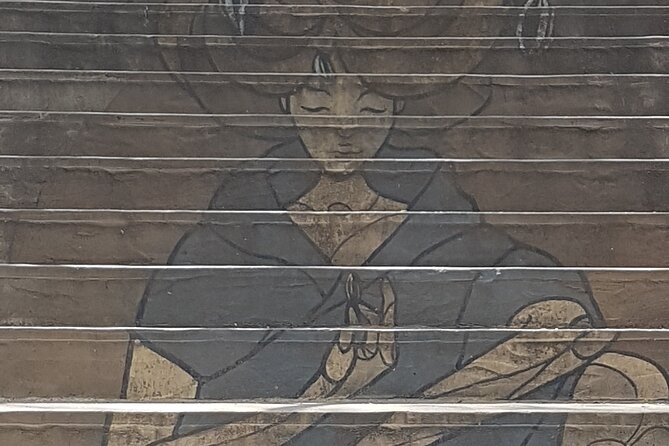
This is also where the tour begins to connect heritage with the district’s modern street life. Murals and urban art appear alongside old religious buildings, making the walk feel like more than a sequence of historical lectures. The contrast is useful: Budapest’s Jewish District is not preserved as a museum quarter. People live, work, eat, shop, pray, and go out here.
The 15-minute stop is compact. You will get the story and a chance to look at the building, but not a long architectural inspection. If you enjoy taking photographs, you may want to linger after the tour, provided you do not hold up the group.
Same riverbank, a completely different kind of day:
- Budapest: Unlimited Prosecco, Beer and Aperol Spritz Cruise
★ 4.8 · 25,310 reviews - Budapest: Széchenyi Spa Day Ticket with Optional Upgrades
★ 4.3 · 23,911 reviews - Budapest: Nighttime or Daytime Sightseeing Cruise
★ 4.2 · 21,062 reviews - Budapest: 1-Hour Evening Sightseeing Cruise with Drink
★ 4.5 · 8,330 reviews
Gozsdu Udvar and the last piece of the ghetto wall
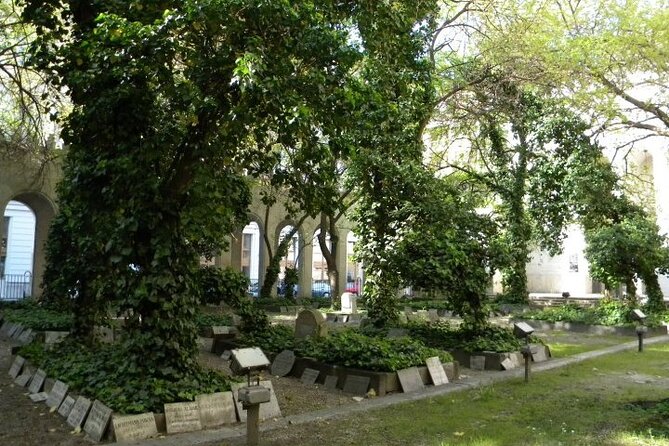
Gozsdu Udvar brings you into one of the district’s most active public passages. Its present-day mix includes food, entertainment, culture, markets, and nightlife. The passage can feel very different from the solemn material discussed at the synagogues, and that contrast is central to the tour’s purpose.
The guide explains the passage’s past and present, then points out the last piece of the ghetto wall. That small surviving section is easy to overlook if you walk through the district on your own. Its value comes from its location among restaurants, shops, and social spaces. The ordinary activity around it makes the reminder of confinement even sharper.
This part of the walk is a good example of the tour’s strongest habit: using a specific place to explain a larger story. You are not simply told that the ghetto existed. You are shown a remaining physical fragment while standing in a district that has changed dramatically.
Kazinczy Street, Orthodox life and kosher traditions
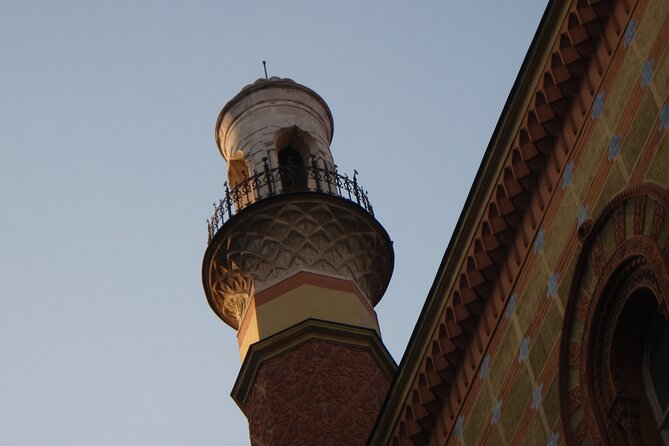
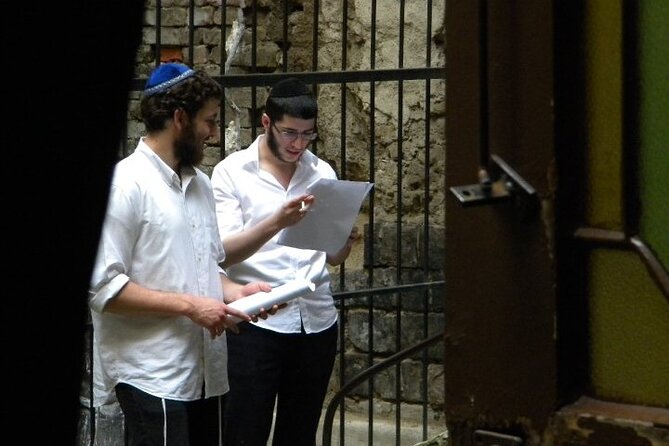
At Kazinczy Street Synagogue, the tour turns toward the Orthodox community. The congregation is described as serving about 50 to 60 families, and the guide explains Orthodox practice, kosher food, and the role of the mikveh, or Jewish ritual bath.
Again, the building is viewed from outside. That makes this stop less about examining the synagogue’s interior and more about understanding the community connected to it. The distinction between Neolog and Orthodox Jewish life can be confusing in a short city visit, so this explanation helps you place the different synagogues in a wider religious and social context.
For many people, the discussion of kosher food and ritual practice adds an important present-day element. It shifts the tour away from treating Jewish life as something that ended in 1944. You learn about a living community, even though the brief stop cannot offer a full account of contemporary Budapest Jewish life.
Szimpla Kert and the walk’s final orientation
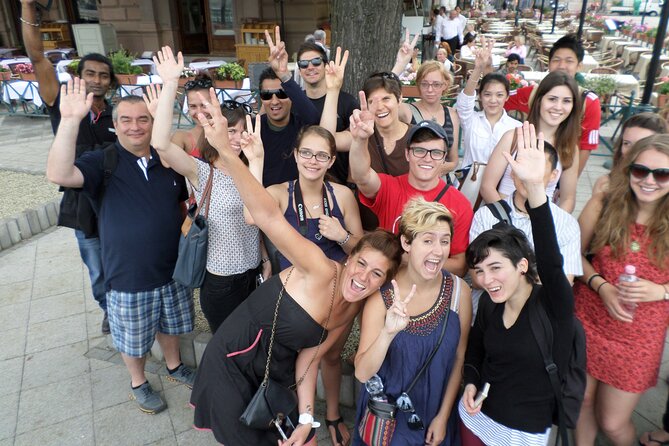
The tour ends at Szimpla Kert on Kazinczy Street. There is no entry fee, and the ruin bar is a convenient final point for continuing through District VII.
Before finishing, the guide points out more murals and street art and gives you a final orientation. Szimpla Kert may seem like an unlikely endpoint after a serious history tour, but it makes sense geographically and thematically. The district’s current identity includes nightlife, pop-up exhibitions, art, food, and changing urban spaces.
This ending also gives you practical ideas for what to do next. The tour can prompt a return visit to a synagogue, a search for Stolpersteine, or an independent walk to find miniature statues by Mihály Kolodko. Those follow-up ideas are useful because this experience covers a lot in less than two hours, and you will likely want to see certain places at your own pace afterward.
What the 1 hour 45 minutes feels like

The route contains seven stops, with roughly 15 to 20 minutes at the main locations. The walking itself is described as easy, but you should still wear walking shoes. At several points, you stand outdoors while the guide speaks, and one especially useful piece of practical feedback is that the tour may feel more comfortable if the guide keeps a measured pace.
Most departures allow up to 25 people. That is small enough for a guide to answer questions, but a group of 18 to 25 can still spread out at crossings or around busy passages. Stay close to the guide, especially when moving between stops.
The duration is listed as approximately 1 hour 45 minutes, while some descriptions of the experience refer to about 90 minutes or 1.5 hours. Allow the longer amount of time in your schedule. You will not want to rush off immediately after the final orientation.
The tour is offered in English. Several guides are praised for speaking clearly and handling questions well, though one account found a strong Hungarian accent difficult to follow. If English is not your first language, stand near the guide and ask for clarification when needed. This is a fact-heavy walk, so missing a few sentences can make the timeline harder to follow.
What the tour does well, and where it falls short
The strongest feature is the organization of the story. The route begins with the arrival and development of Jewish life in Hungary, moves through religious divisions and city restrictions, reaches the wartime catastrophe, and finishes with the district today. That structure helps you connect the buildings and streets instead of seeing them as unrelated sights.
The guides are another major strength. Gary is frequently described as friendly, passionate, and good at placing Jewish life within Budapest’s wider story. Eszter and Esther are praised for warmth, organization, and clear explanations. Edi is noted for a steady pace and a clear voice, useful qualities for older people or anyone who finds crowded walking tours tiring. Judith, Dora, Edith, Christine, Jude, and David also receive strong marks for bringing personality and care to the subject.
The main weakness is that the tour can feel general if you already know Jewish European history. One account specifically wanted more personal Budapest stories, family experiences, and visual material. That is a fair criticism. The tour gives you a solid framework, but a short outdoor walk cannot provide the depth of a museum visit, archival talk, or specialist study tour.
You should also be prepared for a serious tone. This is not a light sightseeing circuit, even though it ends at a popular ruin bar. The material about persecution, the Holocaust, and the destruction of the community is handled as a central part of the experience.
Finally, the donation model needs clear understanding. You pay about $3.63 per person as a booking fee, and that fee goes to administration rather than directly to the guide. Guides depend on donations, but the amount is your choice. The low upfront cost can be excellent value, especially if you want a short orientation, but budget an appropriate tip if the guide’s work is useful to you.
Who should book this Jewish District walk?
I would choose this tour early in a Budapest visit if you want a structured introduction to District VII before exploring it independently. It is especially useful if you want to understand why the Great Synagogue, Rumbach Street, Kazinczy Street, Gozsdu Udvar, and Szimpla Kert belong in the same story.
It suits people interested in Jewish culture, religious traditions, modern urban change, and difficult twentieth-century history. It also works well for first-time visitors because the route ends in an area where you can continue eating, walking, or visiting bars and galleries.
I would not choose it as your only Jewish heritage experience if synagogue interiors are a priority. Since all three synagogues are viewed from outside, you need a separate ticketed visit for the interiors. I would also look for a longer specialist tour if you want family stories, extensive Holocaust memorial detail, or a slow architectural study.
The experience is free in the traditional walking-tour sense, but not entirely costless. You pay the small booking fee, then decide what the guide’s work was worth. Free cancellation is available up to 24 hours before the start time, which gives you some flexibility, but changes or cancellations inside that window are not accepted for a refund.
Should you book it?
Book this tour if you want a thoughtful, efficient first look at Budapest’s Jewish District, and if you are comfortable learning outdoors rather than entering the synagogues. The route covers more than famous façades. It links religious life, old city restrictions, rescue documents, the ghetto wall, Orthodox practice, street art, and today’s nightlife.
Skip it if you mainly want synagogue interiors or a slow, highly personal account of Budapest Jewish families. For most people with limited time, though, this is a useful starting walk. Wear good shoes, stay near the guide, ask questions, and leave time afterward to revisit the places that catch your attention.
FAQ
Where does the tour start?
The tour starts at the Budapest Ferris Wheel in Erzsébet tér, Budapest 1051, Hungary.
Where does the tour end?
It ends at Szimpla Kert, Kazinczy u. 14, Budapest 1075. Szimpla Kert is a ruin bar, and there is no entry fee.
How long does the tour last?
The tour lasts approximately 1 hour 45 minutes.
Is the tour offered in English?
Yes. The tour is offered in English.
Does the tour enter the synagogues?
No. The Great Synagogue, Rumbach Street Synagogue, and Kazinczy Street Synagogue are viewed from outside. At the Great Synagogue, you see the memorial courtyard and cemetery from outside.
What does the tour cover?
It covers Jewish life in Hungary from the Belle Epoque through wartime destruction and into the present. Topics include the Neolog and Orthodox movements, Zionism, Gaudiopolis, Schutzpass documents, kosher food, the mikveh, the ghetto wall, street art, Gozsdu Udvar, and Szimpla Kert.
How large can the group be?
The group can include a maximum of 25 people.
Is cancellation free?
Yes. You can cancel at least 24 hours before the local start time for a full refund. Cancellations or changes made less than 24 hours before the start time are not accepted for a refund.
Just added around Budapest
- From Budapest: Guided Tour of Eger with Wine Tasting★ 4.5 · 6 reviews
- Budapest: Private Walking Tour with a Local Guide★ 3.6 · 6 reviews
- Budapest: Danube River Views Bike Ride★ 4.8 · 23 reviews
- Trash Art Museum: Hungary’s First Scrap Metal Exhibition★ 4.3 · 72 reviews
- Walk to recent and aged spiritual sanctuaries near Budapest★ 5.0 · 5 reviews
- Budapest: 3-Hour Trabant Sightseeing Tour★ 4.7 · 28 reviews
- True Crime Walking Tour in the Buda Castle district★ 5.0 · 26 reviews
- Audio visual multi-sensory chefs journey dinner experience★ 5.0 · 3 reviews
Jewish Heritage Tours, compared.
Budapest Jewish Heritage Memorial Walking Tour & Synagogue Entry
Read our review →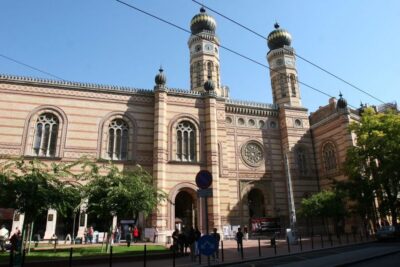
Jewish Heritage Guided Tour with Synagogue Ticket
Read our review →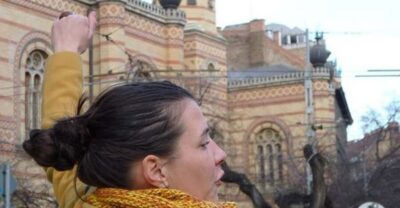
Budapest Dohany Synagogue & Hungarian Jewish Museum & free extras
Read our review →
Jewish History Guided Walking Tour with Historian
Read our review →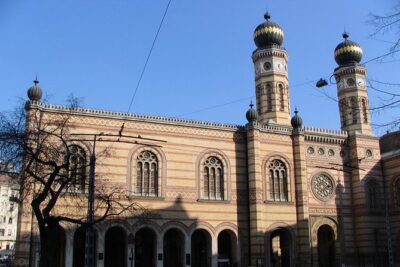
Budapest Dohany, Heroes’, Rumbach synagogues & Jewish Ghetto Tour
Read our review →Browse the lists this tour appears in