
Reviewed · FOOD & DRINK
Budapest Essential Walk&Food tasting
Budapest reveals itself best when you connect its grand monuments with the city’s public transport and street life. This private walk does exactly that, moving from Deák Square to the Opera House, Heroes’ Square, Parliament, the Shoes on the Danube, and Castle Hill. Along the way, you ride the historic Millennium underground and stop for strudel and coffee.
I like the wide sweep of the route, which gives you a useful first look at both Pest and Buda in one afternoon. I also like the personal format: guide Gabor can adjust the pace and spend more time on the subjects that interest you, from Hungarian kings to recent politics.
The main drawback is that this is a packed outing. You cover a lot of ground by foot and metro, with short stops at many places rather than long visits inside them. If you want museum interiors, bath time, or a slow meal, you will need a separate plan.
In This Review
- Key points at a glance
- A big Budapest picture in three to four hours
- Deák Square, the Opera House, and the first city lesson
- Heroes’ Square and Vajdahunyad Castle by Millennium underground
- Szechenyi Baths, with a look at Budapest’s spa culture
- St. Stephen’s Basilica and Hungary’s Catholic beginnings
- Strudel House and the political heart of Pest
- Parliament and the Shoes on the Danube
- Fisherman’s Bastion and the view from Castle Hill
- The Chain Bridge and the final walk through Buda
- What the private format is worth at $90.11
- Weather, walking, and practical planning
- Who should book this Budapest walk
- Should you book Budapest Essential Walk&Food tasting?
- FAQ
- Where does the tour start?
- Where does the tour finish?
- How long does the experience last?
- What time does the tour operate?
- Is this a private tour?
- Is food included?
- Does the tour enter the major buildings?
- Is public transportation part of the experience?
- What is the cancellation policy?
Key points at a glance

- A private Budapest overview: Your group travels alone with the guide, making it easier to ask questions and change the pace.
- Historic metro included: You ride the Millennium underground, described as Europe’s first underground railway, between central Budapest and City Park.
- One worthwhile food stop: The break at Strudel House includes coffee and strudel, with poppy seed strudel a noted choice.
- Major landmarks without admission fees: The walk focuses on outside views and guided explanations at the Opera House, Parliament, Vajdahunyad Castle, and other sights.
- Strong history and politics focus: Gabor covers royal Hungary, Catholic traditions, Soviet-era reminders, the American Embassy, and current political issues.
- Castle Hill finale: The route builds toward panoramic views at Fisherman’s Bastion before continuing through the Royal Palace area and toward the Chain Bridge.
A big Budapest picture in three to four hours
This experience is less a formal museum tour than a moving introduction to Budapest. You see the city’s grandest buildings, learn how Buda and Pest fit together, and use the metro as locals do. That combination gives you a better sense of the city than a string of disconnected photo stops.
The route begins at 3:00 PM according to the stated operating hours and lasts about three to four hours. One account describes a longer outing that continued close to 6:00 PM, so allow some flexibility. A private tour can run beyond the advertised time if the guide and group agree, but you should not assume that every departure will follow that longer pattern.
The meeting point is at the stairs of the Lutheran Church on Deák Ferenc Square, at Deák Ferenc tér 4. This is a central and practical starting place. The stated end point is the Széchenyi Chain Bridge, while the description also says the walk finishes at Holy Trinity Square near Matthias Church in the Castle District. Confirm the exact finish with Budapest Tour Guy before setting up your evening plans.
A few more Budapest trips to weigh up
- Budapest: Unlimited Prosecco, Beer and Aperol Spritz Cruise
★ 4.8 · 25,310 reviews - Budapest: Unlimited Prosecco, Beer & Aperol Spritz Cruise
★ 4.5 · 3,371 reviews - Budapest: Wine, Cheese, and Charcuterie Tasting
★ 4.9 · 647 reviews
Deák Square, the Opera House, and the first city lesson
Deák Ferenc Square is a sensible place to begin because it puts you in the middle of Budapest’s urban core. From the Lutheran church, you walk toward Elizabeth Square and then the Opera House, hearing about the city’s grand architecture from the outside.
This opening section takes about 20 minutes. That is enough time to get your bearings and understand the setting, but not enough for a full architectural study or an interior visit. If the Opera House matters greatly to you, ask Gabor how much time is available for its story and whether an inside visit belongs on another day.
I like beginning here because the tour does not start with a long transfer to a distant sight. You begin among central streets, then quickly move into Budapest’s history of wealth, culture, and public display. The outside-only approach also keeps the tour moving.
Heroes’ Square and Vajdahunyad Castle by Millennium underground
After the Opera area, you take the Millennium underground to Heroes’ Square and City Park. This short ride is more than transport. It introduces one of Budapest’s historic transit links and shows how the city connects its central districts with its large park.
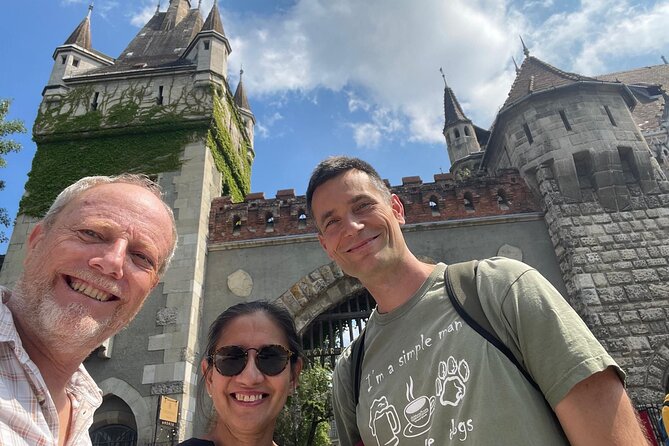
Heroes’ Square is one of Budapest’s grand civic spaces, built around monumental figures from Hungarian history. The stop then continues into City Park and Vajdahunyad Castle, where the guide explains the building’s architecture. The planned time is about 30 minutes.
Vajdahunyad Castle is especially interesting because its design draws on several Hungarian architectural traditions. The tour’s focus is on how the building looks and what its forms mean, rather than an extended indoor visit. That distinction matters. You get context and photographs, but this is not a castle admission tour.
The Millennium underground makes the transition enjoyable and practical. Still, public transport brings some uncertainty. Trains, stairs, crowds, and the pace of the group can affect timing, so wear shoes you can comfortably use for both walking and station transfers.
Szechenyi Baths, with a look at Budapest’s spa culture
The next stop is Szechenyi Baths and Pool, Budapest’s best-known thermal bathing complex. You learn about its development and place in the city’s bathing tradition. If conditions allow, the guide may enter through a side entrance for a glimpse of the outdoor pools.
The planned visit lasts about 20 minutes, and the admission is listed as free because you are not taking a full bathing visit. You should think of this as an introduction to the baths, not a substitute for booking time in the water.
That can be a good choice for a first afternoon. You learn why thermal baths matter to Budapest without giving up several hours of sightseeing. If soaking in the pools is high on your list, schedule Szechenyi separately and bring what you need for that visit.
From here, the group takes the underground back toward central Budapest and continues to St. Stephen’s Basilica. This repeated use of the metro helps you understand the city’s layout instead of keeping you inside a tour vehicle.
Same riverbank, a completely different kind of day:
- Budapest: Széchenyi Spa Day Ticket with Optional Upgrades
★ 4.3 · 23,911 reviews - Budapest: Nighttime or Daytime Sightseeing Cruise
★ 4.2 · 21,062 reviews - Budapest: 1-Hour Evening Sightseeing Cruise with Drink
★ 4.5 · 8,330 reviews - Budapest Danube Cruise and Dinner Options, Live Music and Dance
★ 4.5 · 7,428 reviews
St. Stephen’s Basilica and Hungary’s Catholic beginnings
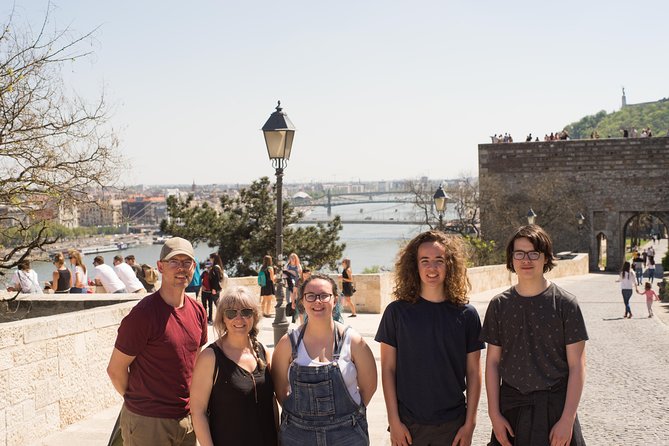
At St. Stephen’s Basilica, the guide introduces the birth of Catholic Hungary and King Stephen, the country’s state founder. You also hear about later Hungarian figures, including football legend Ferenc Puskás.
The scheduled stop is about 15 minutes. That is a short visit, so expect an explanation outside or a quick introduction rather than a full look at every part of the basilica. The value here is the connection between religion, state-building, national identity, and modern Hungarian fame.
I appreciate the inclusion of Puskás because it keeps the story from becoming a parade of medieval rulers. A good city tour should connect old monuments with people Hungarians still recognize today. Gabor is described as well versed in European history and able to discuss subjects beyond Europe, so this is a place where you can ask for more context if you want it.
Strudel House and the political heart of Pest
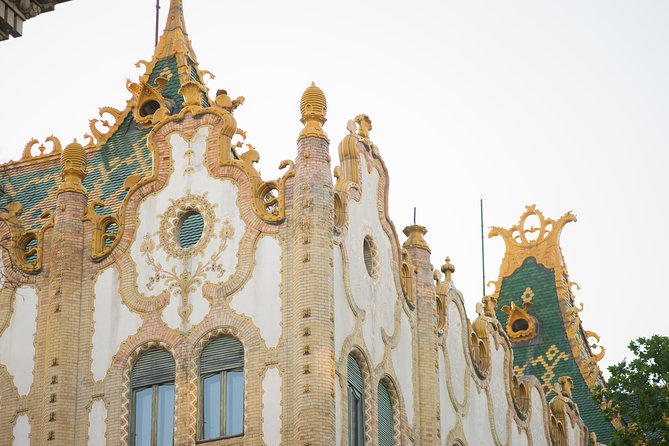
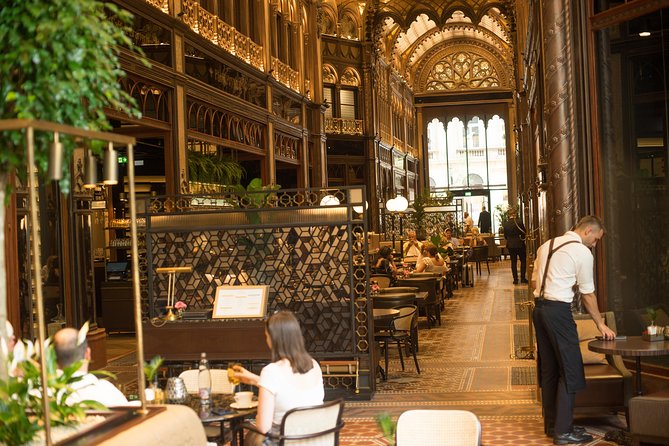
The food portion is modest but useful. You stop at Strudel House for coffee and strudel before walking toward the government district. The poppy seed strudel received particular praise, and it gives you a taste of a classic Central European pastry without turning the tour into a restaurant crawl.
Set your expectations correctly: the advertised food element is one coffee-and-strudel break. At $90.11 per person, the value comes mainly from private guiding and the breadth of sightseeing, not from the amount of food included.
After the break, you continue to Szabadság tér, or Liberty Square. This is one of the most revealing parts of the route because several layers of modern history meet here. You learn about the last remaining Soviet statue, the American Embassy, and the Memorial of the German Occupation.
These sights are politically charged, and that is precisely why the square matters. Budapest is not only grand churches and royal buildings. Its public spaces also reflect Soviet rule, wartime memory, diplomatic power, and continuing arguments about how history should be presented. Gabor’s ability to discuss both past and recent political issues is a major benefit here.
Parliament and the Shoes on the Danube
At Kossuth Square, you face the Hungarian Parliament Building, one of Budapest’s most powerful exterior views. The guide discusses its architecture, political role, and connections to both past and current events.
The stop lasts about 20 minutes. You do not enter Parliament, so this portion is about the building’s setting, design, and meaning. For many people, that is enough for a first visit, especially because the view from the square and the riverfront carries much of the impact.
Nearby, you visit the Shoes on the Danube Promenade. This memorial honors Jewish people who were killed along the river during the Second World War. The empty shoes make the site direct and difficult to forget. A guide can help place the memorial within Budapest’s wartime story, but give yourself a quiet moment there as well.
This is one of the strongest stops for understanding Budapest beyond its postcard beauty. The route makes room for difficult subjects instead of offering only light sightseeing. That balance adds real value to a short city overview.
Fisherman’s Bastion and the view from Castle Hill
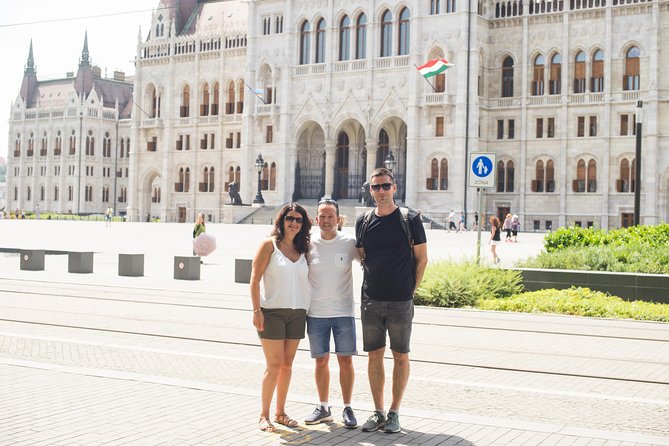
After Parliament, you take Metro 2, the red line, under the Danube toward Castle Hill. You begin the Buda section at Fisherman’s Bastion, where the lookout terraces offer broad views over the river and Pest.
The planned time is about 30 minutes. That is enough to enjoy the panorama, take photographs, and hear the first part of the Castle District story. It is not enough for a leisurely exploration of every terrace and nearby church, especially if the group pauses often for pictures.
From Fisherman’s Bastion, the walk continues toward the Royal Palace area. This change of setting is one of the tour’s best features. Within a few hours, you move from modern political Budapest to medieval and royal Buda, with the river separating the two sides below.
The hill section also brings the most demanding walking. The route includes Castle Hill and the descent toward the Chain Bridge, so comfortable footwear matters. Anyone with mobility concerns should ask in advance about the hills, stairs, and exact route.
The Chain Bridge and the final walk through Buda
The last section follows Castle Hill down along the Funicular and introduces the Széchenyi Chain Bridge. You hear stories about Budapest’s first permanent bridge across the Danube and the famous lions associated with it.
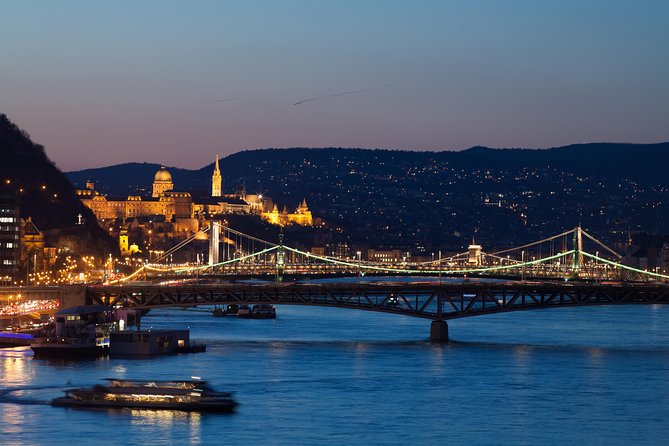
The bridge is an excellent finish because it brings the city’s two halves back together. After seeing Pest from the Buda side, you finish with the crossing that helped link Buda and Pest into one capital.
There is some uncertainty about the exact endpoint. The booking information gives the Széchenyi Chain Bridge, while the meeting notes also refer to Holy Trinity Square near Matthias Church as the final place. Ask the guide to confirm where the walk will actually end. That small check can save you from a rushed transfer to dinner or an evening reservation.
What the private format is worth at $90.11
At $90.11 per person, this is not the cheapest way to see Budapest’s landmarks. It can be good value if you are traveling as a small private group and want one guide to connect many sights, explain the metro, and adapt the conversation to your interests.
The private format matters most at the politically sensitive stops and during the food break. You can ask why a memorial is controversial, request more detail about Hungarian rulers, or spend less time at a place that does not interest you. A large group would make that harder.
The price is less attractive if you want admission to interiors. The Opera House, Szechenyi Baths, Parliament, and the Basilica are treated mainly through outside views or short introductions. You may still need separate tickets for the places you want to enter.
The food inclusion is also limited. Coffee and one serving of strudel are welcome, but this is not a full food tour. I would choose it for the guide and route, with the tasting as a pleasant pause.
Weather, walking, and practical planning
The experience requires good weather. If poor weather forces cancellation, you are offered another date or a full refund. That policy is useful, but Budapest weather can change quickly, so bring a light rain layer and plan footwear for wet pavement.
One couple completed the outing during heavy rain and strong wind, with Gabor continuing despite getting soaked. That shows commitment, but it does not mean you should count on an enjoyable walk in bad conditions. Castle Hill, open squares, and riverside areas are much more pleasant in dry weather.
The tour accepts mobile tickets and confirmation is provided at booking. Service animals are allowed, and the route is near public transportation. Most people can participate, but the combination of walking, metro stations, hills, and possible stairs makes it wise to ask about mobility needs before booking.
The scheduled operating window is Monday through Sunday, 3:00 PM to 9:00 PM, for the stated dates from November 29, 2023 through December 18, 2026. The experience requires a minimum number of participants, even though the activity itself is private once confirmed.
Who should book this Budapest walk
I would recommend this tour to a first-time visitor who wants a strong orientation in one afternoon. It suits couples, families, and small groups who prefer a private guide over a fixed large-group script.
It is also a good match for anyone curious about politics and modern history. The Soviet statue, American Embassy, German occupation memorial, Parliament, and Shoes on the Danube give the afternoon more substance than a simple monument checklist.
You may want something else if your priority is thermal bathing, interior architecture, or a serious food crawl. This tour gives you a taste of each subject, then moves on. That broad approach is useful for planning later days, but it will feel rushed if you want to linger.
Should you book Budapest Essential Walk&Food tasting?
Book it if you want one private afternoon that ties Budapest together. The route covers both Pest and Buda, includes a historic metro ride, adds coffee and poppy seed strudel, and gives you access to a guide who can discuss Hungarian history and current political subjects in depth.
Skip it if you need long visits inside Parliament, the Opera House, Szechenyi Baths, or the Basilica. At $90.11 per person, the strongest value is the private guiding and the smart cross-city route, not the food or admission package.
Before paying, confirm the exact start and finish points and ask how the guide handles bad weather. If the schedule works for you, this is a lively and thoughtful introduction to Budapest, with enough detail to help you choose what deserves a closer look later.
FAQ
Where does the tour start?
It starts at the stairs of the Lutheran Church on Deák Ferenc Square, at Deák Ferenc tér 4, 1052 Budapest, Hungary.
Where does the tour finish?
The stated end point is Széchenyi Chain Bridge. The tour information also says the walk ends at Holy Trinity Square near Matthias Church in the Castle District, so confirm the exact finishing point with the provider.
How long does the experience last?
The expected duration is approximately three to four hours. One described outing lasted close to 6:00 PM, so allow some flexibility.
What time does the tour operate?
The stated operating hours are Monday through Sunday from 3:00 PM to 9:00 PM for the listed operating period.
Is this a private tour?
Yes. Only your group participates in the private activity.
Is food included?
The experience includes a stop at Strudel House for coffee and strudel. Poppy seed strudel is one available choice mentioned in the tour details.
Does the tour enter the major buildings?
The stops focus mainly on outside views and explanations. At Szechenyi Baths, the guide may enter a side entrance for a glimpse of the outdoor pools if possible.
Is public transportation part of the experience?
Yes. You ride the Millennium underground to Heroes’ Square and City Park, then take the underground back toward central Budapest. You also use Metro 2 under the Danube to reach Castle Hill.
What is the cancellation policy?
You can cancel at least 24 hours before the start time for a full refund. Changes or cancellations made less than 24 hours before the start are not accepted for a refund. If poor weather or an insufficient minimum number of participants cancels the experience, you are offered another date or a full refund.
More Walking Tours in Budapest
- Budapest: Buda Castle Walk with Saint Stephen’s Hall
★ 4.5 · 3,012 reviews - Big Bus Budapest Hop-On Hop-Off Bus and Walking Tour
★ 3.5 · 2,206 reviews - Budapest: Buda Castle District Walking Tour
★ 4.6 · 2,108 reviews - Budapest City Landmarks Walking Tour in 2 Hours
★ 5.0 · 2,048 reviews
Just added around Budapest
- From Budapest: Guided Tour of Eger with Wine Tasting★ 4.5 · 6 reviews
- Budapest: Private Walking Tour with a Local Guide★ 3.6 · 6 reviews
- Budapest: Danube River Views Bike Ride★ 4.8 · 23 reviews
- Trash Art Museum: Hungary’s First Scrap Metal Exhibition★ 4.3 · 72 reviews
- Walk to recent and aged spiritual sanctuaries near Budapest★ 5.0 · 5 reviews
- Budapest: 3-Hour Trabant Sightseeing Tour★ 4.7 · 28 reviews
- True Crime Walking Tour in the Buda Castle district★ 5.0 · 26 reviews
- Audio visual multi-sensory chefs journey dinner experience★ 5.0 · 3 reviews
Food & Drink, compared.

Unlimited Prosecco, Beer and Aperol Spritz Cruise
Read our review →
Unlimited Prosecco, Beer & Aperol Spritz Cruise
Read our review →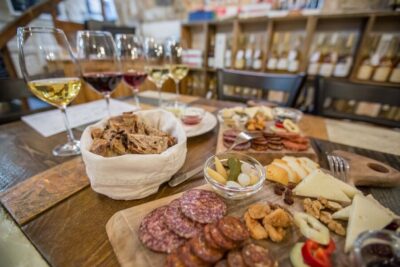

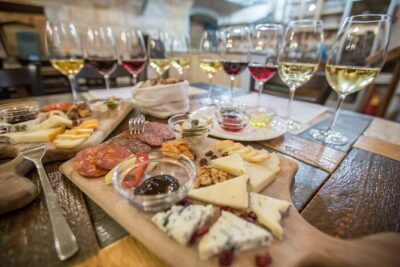
Hungarian Wine Tasting (with Cheese and Charcuterie) in Budapest
Read our review →
Guided Foodie Walking Tour with Food and Drinks
Read our review →
Budapest Food Tour: Market to Tavern with 14+ Tasters & Wines
Read our review →
Budapest BeerSpa with Unlimited Beer and Optional Széchenyi Bath
Read our review →Browse the lists this tour appears in