
Reviewed · HISTORICAL TOURS
Classic Walk in Budapest Historical Center
Budapest’s central Pest district is easiest to understand on foot, and this tour gives you a useful thread through it. You begin on Váci Street, cross grand squares and memorials, then finish at Parliament with the Danube and Buda Castle often in view. It is a history walk, but it also helps you get your bearings fast.
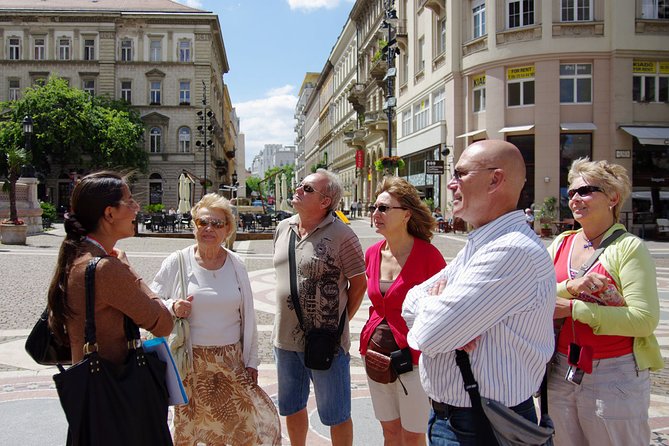
I like the low price, about $3.60 per person, and the way the route links famous sights with less obvious political monuments. I also like the chance to ask for practical advice as you walk. Oliver, one of the guides, is described as friendly and flexible, taking time to learn what interests you and offering tips on places to eat and drink.
The main caution is pace. Two hours covers a lot, and one assessment found that long stops left too little time for walking. If you prefer a brisk route with short explanations, tell your guide early. If you want a classroom-style talk at each stop, the slower pace may suit you better.
In This Review
- Key points to know before you book
- Why this short Pest walk works
- Starting on Váci Street and reaching the Danube
- Pesti Vigadó and the café-lined end of Váci Street
- Elizabeth Square, where city life meets monuments
- St. Stephen’s Basilica and the value of an exterior visit
- Szabadság tér and Budapest’s difficult twentieth century
- Kossuth Lajos Square and the 1956 revolution
- Finishing at the Hungarian Parliament Building
- Guide style, group size, and walking pace
- What the $3.60 price really buys you
- Who should book this Budapest walk
- Should you book the Classic Walk in Budapest Historical Center?
- FAQ
- How long does the Classic Walk in Budapest Historical Center last?
- What language is the tour offered in?
- Where does the tour start and finish?
- Is admission to St. Stephen’s Basilica or Parliament included?
- How many people can join the tour?
- Can I cancel for a full refund?
Key points to know before you book
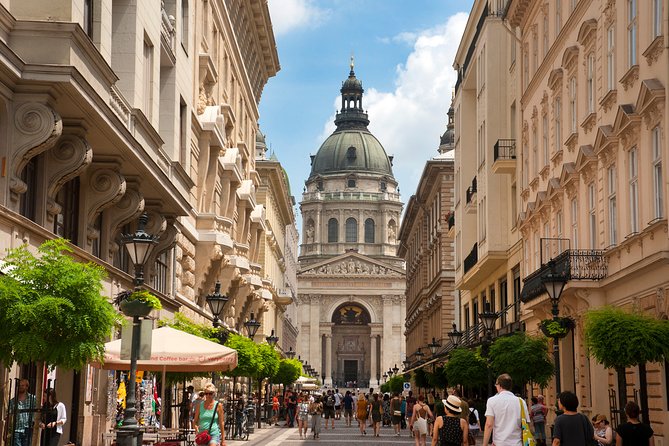
- A clear Pest district route: Walk from Váci Street through Elizabeth Square, St. Stephen’s Basilica, Szabadság tér, and Kossuth Lajos Square to Parliament.
- A strong introduction to Hungarian history: The guide places the city’s sights in the context of major Hungarian events, including Nazi and Soviet occupation and the 1956 uprising.
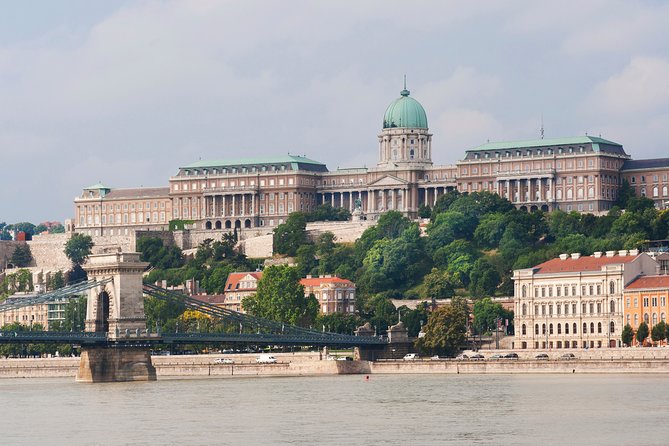
- The Danube and Buda Castle views: The walk includes one of Budapest’s best urban viewpoints, with historic bridges and Castle Hill across the river.
- A very low-cost way to get oriented: At roughly $3.60, the tour can be worthwhile even if you later visit the major buildings independently.
- Up to 30 people: The group limit is not tiny, although one booking had a very small group and a particularly considerate guide.
- No interior admissions: Church and museum entry costs extra, so plan this as an outdoor orientation walk rather than a full sightseeing pass.
Why this short Pest walk works
Budapest can feel confusing at first. The Danube divides the city, Buda rises on one bank, and Pest spreads widely on the other. This route gives you a simple mental map: shopping street, riverfront, civic squares, religious landmark, political memorials, and Parliament.
That order also tells a useful story. You begin with everyday Budapest on Váci Street, move toward grand nineteenth-century architecture, then face the difficult twentieth century at Szabadság tér and Kossuth Lajos Square. The final stop, Parliament, brings you back to the city’s grand public image.
The tour lasts about two hours. That is enough time for a broad introduction, but not enough for detailed interior visits or lengthy exploration. Think of it as a guided first look, not a replacement for visiting the basilica, Parliament, or any museum on your own.
The guide speaks English, and live guiding is included. You are encouraged to ask questions, which matters here. Budapest’s buildings often look impressive before you know what happened around them. A good explanation can turn a square from a photo stop into a place you remember.
A few more Budapest trips to weigh up
- Budapest: Historic Cruise with Welcome Drink
★ 4.7 · 6,512 reviews - Budapest Historical Sightseeing – Free Walking Tour
★ 5.0 · 1,302 reviews - Buda Castle District Dark History, Legends and Vampire Night Tour
★ 4.5 · 1,240 reviews
Starting on Váci Street and reaching the Danube
The meeting point is Molnár’s kürtőskalács at Váci u 31. This puts you on one of Budapest’s best-known pedestrian shopping streets, lined with cafés, shops, and plenty of foot traffic.
The opening stop is brief, about five minutes, so do not expect a full shopping tour. Instead, you get a quick sense of Pest’s central commercial side. The location is practical for a first meeting because it is near public transportation and easy to recognize as part of the pedestrian center.
From here, the route heads toward the Danube. The river views are a major reward early in the walk. Across the water, you can see Buda Castle, historic bridges, and the rising Buda side of the city. This contrast between flat Pest and hillier Buda explains much about Budapest’s shape.
The river is also a good place to ask your first questions. You can clarify which bridges, churches, or museums you want to return to later. Since the tour is designed as an introduction, the guide’s recommendations may be as useful as the formal commentary.
Pesti Vigadó and the café-lined end of Váci Street
Pesti Vigadó is your first substantial architectural stop. This elegant dance palace was built in the 1860s in the Hungarian Romantic style and once served Budapest’s aristocratic social world.
You see the building from outside, and entry is not included. The stop lasts about ten minutes, enough to discuss its purpose, design, and place in the city without turning the tour into an indoor visit.
The building works well in this route because it marks a change from modern shopping to ceremonial Budapest. You can look for decorative details and imagine the social life that once filled its halls. If architecture is your main interest, this is a place where you may want to pause longer after the tour.
The walk then reaches the end of the pedestrian street, near a square surrounded by pastry shops and café terraces. This is a useful practical moment. Budapest is famous for café culture and sweets, and the guide can point you toward options for a later break.
I would not count on having time to sit down and eat during the tour. The stop is part of the route, not a scheduled café visit. Still, it gives you an easy idea for what to do after the walk.
Elizabeth Square, where city life meets monuments
Elizabeth Square gives the tour a more open, modern pause. You cross the park and see the Danube Fountain monument and the giant Ferris wheel.
The scheduled stop is about fifteen minutes. That makes it one of the longer early pauses, and it balances the formal architecture with a public space used for leisure. You get a sense of how Budapest mixes old buildings, green pockets, and modern attractions within a compact center.
The Ferris wheel is easy to spot and helps you place the square geographically. The Danube Fountain adds a more symbolic feature, though the guide’s explanation will determine how much meaning you take from it.
This stop may appeal to families and first-time visitors who want more than a string of façades. It is also a natural place to ask about nearby cafés, restaurants, and evening areas. Keep in mind that the tour remains on foot, so comfortable shoes are sensible even though the route is in the central city.
Same riverbank, a completely different kind of day:
- Budapest: Unlimited Prosecco, Beer and Aperol Spritz Cruise
★ 4.8 · 25,310 reviews - Budapest: Széchenyi Spa Day Ticket with Optional Upgrades
★ 4.3 · 23,911 reviews - Budapest: Nighttime or Daytime Sightseeing Cruise
★ 4.2 · 21,062 reviews - Budapest: 1-Hour Evening Sightseeing Cruise with Drink
★ 4.5 · 8,330 reviews
St. Stephen’s Basilica and the value of an exterior visit
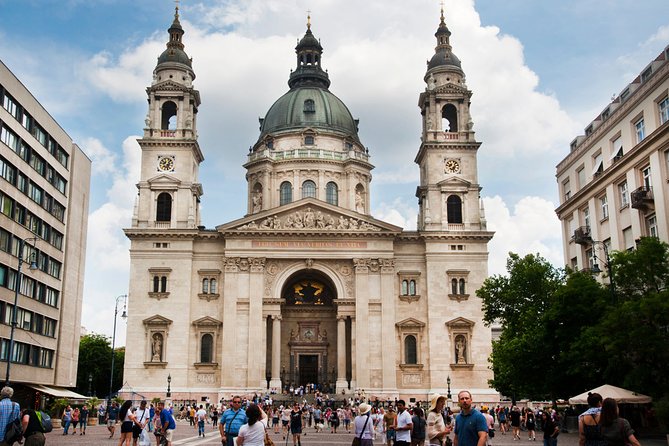
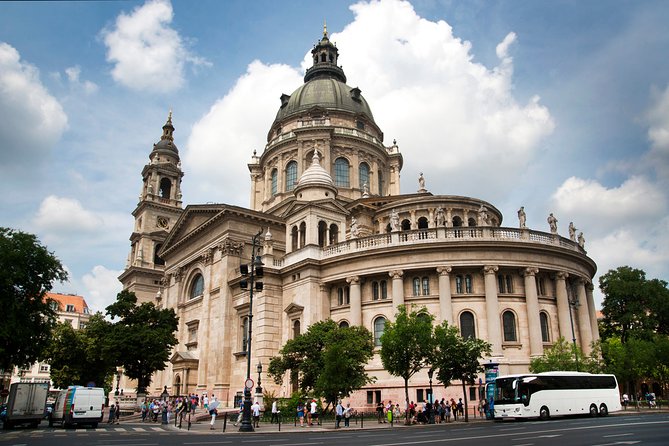
St. Stephen’s Basilica is one of the route’s major landmarks. You spend about twenty minutes hearing how the basilica was built and what its symbolism means.
The scale matters. From outside, the church gives you a strong sense of Budapest’s nineteenth-century ambition. A guided explanation helps you notice more than the dome and broad façade, especially if religious buildings are not normally your main interest.
Entry is not included. That keeps the tour price low, but it also means you need a separate plan if you want to see the interior. The walk only provides the outside introduction, so do not expect time to climb the dome or visit the church during the scheduled route.
I see this as a sensible arrangement for a short orientation. Some people want to enter every major church, while others only need the story and a good exterior view. You can decide later if the basilica deserves a return visit.
Szabadság tér and Budapest’s difficult twentieth century
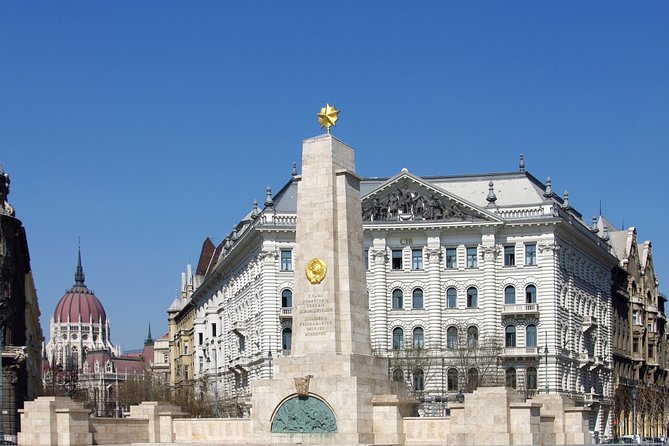
Szabadság tér is where the tour shifts from grand city design to political memory. You see monuments connected with Nazi and Soviet occupation, along with reminders of the dictatorships that shaped Hungary.
The stop lasts about twenty-five minutes, the longest listed pause. That is understandable. These monuments need context, and the meaning is not always obvious from a quick glance.
This part may be the most valuable section for anyone who wants to understand modern Budapest. The city’s ornate buildings can make its past look distant, but the memorials show that occupation, dictatorship, and political violence are not abstract topics here.
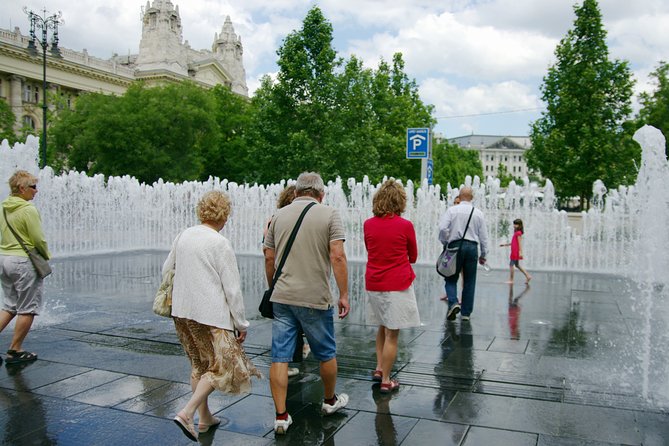
During the warm season, you may also see the miraculous fountain. The fountain adds a lighter visual moment to a square otherwise marked by painful memories. Do not expect every feature to operate in the same way outside the warm months, since the description specifically ties the fountain to that season.
The long stop here also explains the main criticism of the tour. If your guide gives a detailed account at each monument, walking time can feel compressed. You can make the experience work better by saying you want a quicker overview if you would rather cover more ground.
Kossuth Lajos Square and the 1956 revolution
Kossuth Lajos Square continues the political story. Here, the focus turns to Hungarian freedom heroes and the 1956 revolution against Communist dictatorship.
The square is an important approach to Parliament, and the fifteen-minute stop gives you a chance to understand why this open civic space matters. The guide connects the square with national memory rather than treating it as a simple place for photographs.
This is another stop where questions help. You might ask how the 1956 events fit into the wider Hungarian story, or how the square’s monuments relate to present-day public life. The tour promises a summary of major Hungarian events, so this is one of the places where that promise becomes most useful.
The route’s political focus is a real strength, but it may not suit someone seeking only pretty architecture. You will see impressive buildings, but the guide also asks you to think about occupation, resistance, and dictatorship. That gives the walk more weight than a basic city-center stroll.
Finishing at the Hungarian Parliament Building
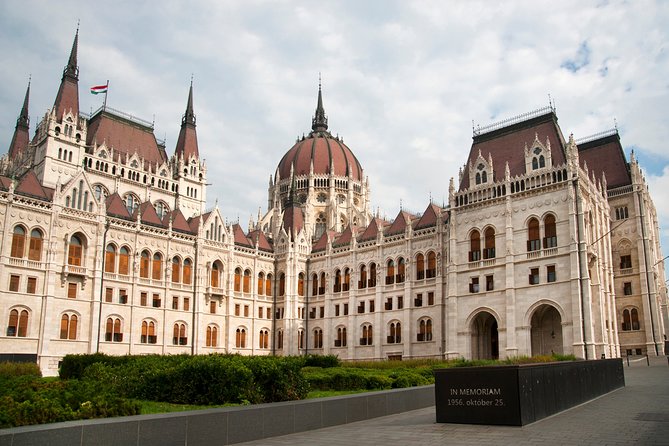
The tour ends at the Hungarian Parliament Building at Kossuth Lajos tér 1-3. The final stop is about ten minutes, focused on the building’s striking design and its history.
Parliament is an ideal finish. It is one of Budapest’s most recognizable sights, and its position beside the Danube makes the ending feel grand without requiring an interior visit. From here, you can also connect the building with the civic and political sites you have just seen.
Entry is not included. If you plan to tour Parliament inside, arrange that separately rather than expecting the walking tour to cover it. This experience gives you the outside setting and background, then leaves you free to continue at your own pace.
The end point is also practical. You are no longer at the original Váci Street meeting point, so remember that this is a point-to-point walk. The guide will not return you to the start. Public transportation is nearby, and the central location makes it simple to continue sightseeing.
Guide style, group size, and walking pace
The maximum group size is 30. That is large enough for the feel of a standard group tour, especially in a busy city center. At the same time, one booking had a very small group, so actual numbers can vary.
A small group can make a noticeable difference. One guide took care to keep people in the shade and adjusted the walking pace to suit everyone. That sort of attention is particularly helpful in warm weather, when standing on open squares can become tiring.
Oliver is specifically praised for being friendly and well informed, and for asking about personal interests before shaping the walk. He also gives food and drink advice. Another guide may lead your departure, so do not book solely on the expectation that Oliver will be present.
The mixed feedback on pacing is worth taking seriously. One person wanted less explanation and more walking, while another felt the group covered a great deal in two hours. Your experience may depend on the guide, group size, weather, and how many questions the group asks.
What the $3.60 price really buys you
At roughly $3.60 per person, this is unusually inexpensive for a live, two-hour guided walk. The value is strongest if you are new to Budapest and want a quick framework before exploring alone.
You are paying for orientation, commentary, and access to a local person who can answer questions. You are not paying for admission to St. Stephen’s Basilica, Parliament, or museums. Since the route is outdoors, the cost stays low, but you should budget separately for any interiors you want to visit.
The price also makes the tour easy to pair with independent sightseeing. Use the walk to learn what interests you, then return to the basilica, Parliament, a museum, or a café later. That is often better value than trying to force every activity into one paid tour.
Group discounts may be available, which can improve the price for a larger booking. Confirmation is provided when you book, and free cancellation is available up to 24 hours before the start time. Changes or cancellations inside that window are not accepted for a refund.
Who should book this Budapest walk
I would choose this tour for a first visit, especially if you want both a city-center orientation and a basic account of Hungarian history. It also suits anyone who likes to ask questions, compare neighborhoods, and gather food or sightseeing suggestions from a local guide.
It works well for mixed-interest groups. One person can focus on architecture, another on political history, and another on cafés and city life. The route includes enough variety that you are unlikely to see only one side of Budapest.
You should think twice if you want extensive interior sightseeing, a very small private group, or a fast march between photo stops. The group can reach 30 people, admissions cost extra, and the guide may spend a good part of the two hours explaining the more serious sites.
Most people can take part, service animals are allowed, and the route is near public transportation. Even so, you should be ready to walk and stand outdoors for about two hours. Tell the guide at the start if shade and pace matter to you.
Should you book the Classic Walk in Budapest Historical Center?
Book it if you want a cheap, clear introduction to central Pest with a useful mix of river views, architecture, cafés, and difficult twentieth-century history. The route from Váci Street to Parliament is well chosen, and the chance to ask questions adds value that a self-guided walk cannot always provide.
Skip it if you already know central Budapest well or want to spend the entire time inside major buildings. The best way to use this experience is as an opening lesson: learn the city’s shape, note the places you want to revisit, and then explore those sites at your own pace.
FAQ
How long does the Classic Walk in Budapest Historical Center last?
The walking tour lasts approximately two hours.
What language is the tour offered in?
The tour is offered in English with live guiding.
Where does the tour start and finish?
It starts at Molnár’s kürtőskalács, Váci u 31, 1052 Budapest, and ends at the Hungarian Parliament Building, Kossuth Lajos tér 1-3, 1055 Budapest.
Is admission to St. Stephen’s Basilica or Parliament included?
No. Entry to the church and museums is not included. The tour provides exterior sightseeing and guided explanations.
How many people can join the tour?
The maximum group size is 30 people. Actual group numbers can be smaller.
Can I cancel for a full refund?
Yes. You can cancel at least 24 hours before the experience start time for a full refund. Cancellations or changes made less than 24 hours before the start time are not accepted for a refund.
Just added around Budapest
- From Budapest: Guided Tour of Eger with Wine Tasting★ 4.5 · 6 reviews
- Budapest: Private Walking Tour with a Local Guide★ 3.6 · 6 reviews
- Budapest: Danube River Views Bike Ride★ 4.8 · 23 reviews
- Trash Art Museum: Hungary’s First Scrap Metal Exhibition★ 4.3 · 72 reviews
- Walk to recent and aged spiritual sanctuaries near Budapest★ 5.0 · 5 reviews
- Budapest: 3-Hour Trabant Sightseeing Tour★ 4.7 · 28 reviews
- True Crime Walking Tour in the Buda Castle district★ 5.0 · 26 reviews
- Audio visual multi-sensory chefs journey dinner experience★ 5.0 · 3 reviews
Historical Tours, compared.


Budapest Historical Sightseeing – Free Walking Tour
Read our review →
Buda Castle District Dark History, Legends and Vampire Night Tour
Read our review →
BloodThirsty Hungary: Walking tour & Dark Historical Stories
Read our review →
Budapest Jewish Heritage Memorial Walking Tour & Synagogue Entry
Read our review →
Jewish Heritage Guided Tour with Synagogue Ticket
Read our review →
Budapest Historic Downtown Bicycle Tour in small groups
Read our review →
Historic Downtown ride on E-Bicycles Buda & Pest
Read our review →Browse the lists this tour appears in