
Reviewed · BUDA CASTLE TOURS
Gems of the Budapest Castle District Walking Tour
Budapest’s Castle District is far more than Matthias Church and a postcard view from Fisherman’s Bastion. This walking tour links royal courtyards, medieval ruins, wartime scars, national symbols, statues, caves, and the Castle Garden Bazaar into one long story about Hungary.
I like the wide range of stops and the chance to hear about details you could easily miss, such as the meaning of the Turul bird, the legends tied to King Matthias’s fountain, and the connection between the Hungarian double cross and Fisherman’s Bastion. I also like the planned photo pauses, especially at the panoramic viewpoints.
The main consideration is the pace. You cover 20 stops in about 2 hours and 10 minutes, with a group of up to 45 people. That is excellent for orientation, but you will not have much time to enter or study each site in depth. The tour also requires good weather and includes plenty of walking on Castle Hill.
In This Review
- Key points to know before booking
- Starting beside the Holy Trinity Statue
- Fisherman’s Bastion and the best Pest views
- Statues, old streets, and the National Archives
- The siege of Budapest from Árpád Tóth Promenade
- The Labyrinth and the story of Dracula
- Independence, Houdini, and Szent György Street
- The Funicular, Zero Kilometer Stone, and Turul bird
- King Matthias’s fountain and the royal courtyards
- Mary, Castle Garden, and the walk downhill
- What the price and pace really mean
- Who will get the most from this walk
- Should you book the Budapest Castle District walk?
- FAQ
- Where does the tour start?
- What time does the tour begin?
- Where does the tour end?
- How long is the walking tour?
- Is the tour offered in English?
- What happens if the weather is poor?
Key points to know before booking
- Twenty stops in just over two hours: The route covers the major sights and several less obvious statues, ruins, and viewpoints.
- Antel leads the English tour: The guide is described as articulate, friendly, humorous, and easy to understand.
- Strong value at $3.61 per person: You receive a live guide and a broad introduction to the district for a very small outlay.
- Photo time is built in: You get short breaks at scenic spots rather than walking past every viewpoint.
- The route ends downhill near the Danube: Castle Garden Bazaar is at the foot of Castle Hill, beside the Várkert Bazár.
- Expect an outdoor history lesson: The tour is weather dependent, and admission to the listed stops is free.
Starting beside the Holy Trinity Statue
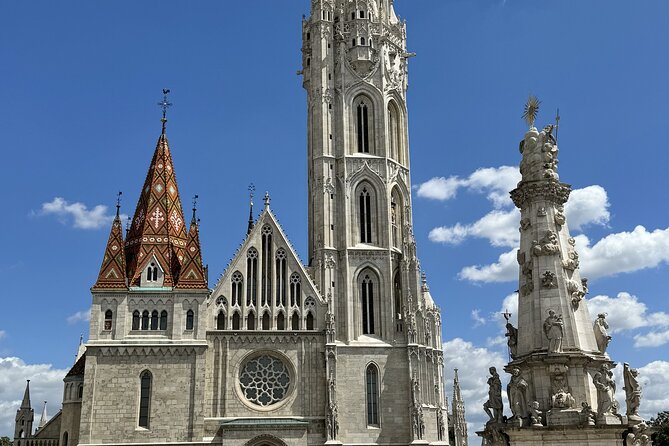
The tour begins at 3:00 pm beside the Holy Trinity Statue on Szentháromság Street. This puts you in the heart of the Castle District, close to Matthias Church and Fisherman’s Bastion.
The first five minutes explain why the Holy Trinity column was built and what the figures represent. It is a quick introduction, but a useful one. Instead of treating the statue as another decorative object in a pretty square, you get a reason to look at its structure and religious symbols.
From here, the group moves to Matthias Church. The guide covers the church’s foundation and points out architectural details. The scheduled stop is short, so think of this as an exterior introduction rather than a full church visit.
That distinction matters. If you want time inside Matthias Church, with a careful look at its interior decoration and exhibits, you will need to arrange that separately. This tour focuses on the district as a whole, not on one building.
More buda castle tours in Budapest:
- Budapest: Buda Castle Cave Tour
★ 4.7 · 5,677 reviews - Budapest: Buda Castle District Vampires and Myths Night Tour
★ 4.6 · 3,830 reviews - Budapest: Buda Castle Walk with Saint Stephen’s Hall
★ 4.5 · 3,012 reviews
Fisherman’s Bastion and the best Pest views
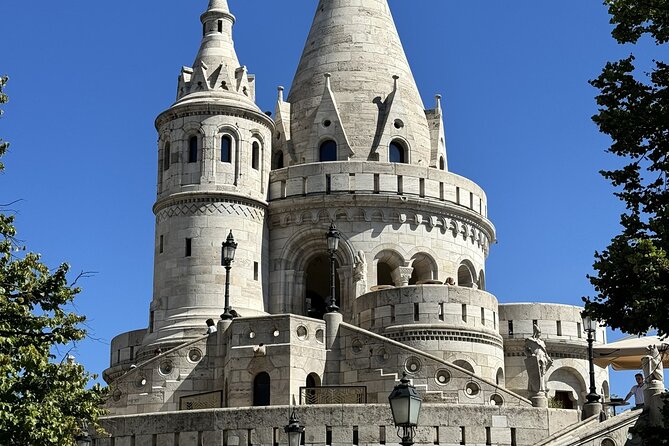
Fisherman’s Bastion receives the longest stop, about 20 minutes, and that is sensible. Its terraces offer some of the most memorable views across the Danube toward Pest.
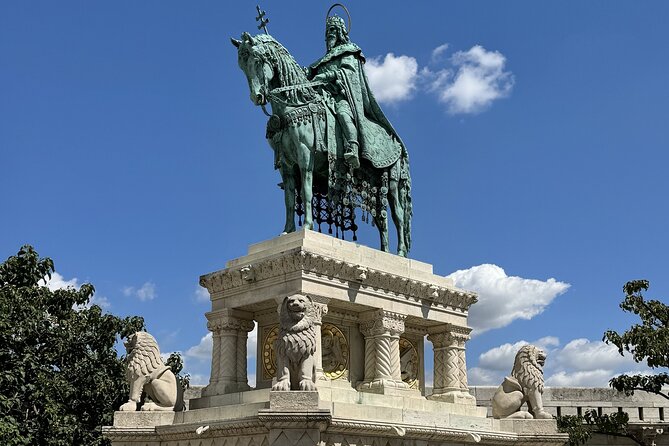
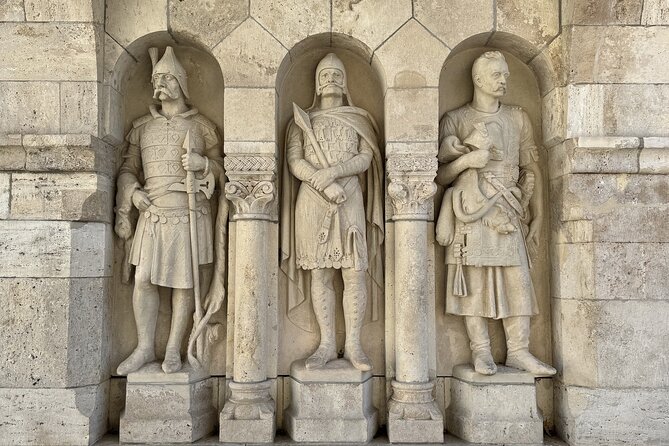
Antel’s presentation here includes the site’s statues, the meaning of the double cross, local legends, and the relationship between Hungarian identity and the monument. You also get time to take photographs and explore parts of the bastion rather than simply stopping for a single group picture.
I especially like this part of the route because the guide’s role is useful at a place that can otherwise feel like a collection of arches and turrets. With the right context, the statues and symbols become easier to read. The view gives you a chance to match the historical story to the modern city below.
The stop is still brief. If you want quiet photographs from every terrace or a long look at the river, the Parliament building, and the Pest side, you may want to return later. The tour gives you a good first pass, not unlimited sightseeing time.
Statues, old streets, and the National Archives
The next section moves through a string of monuments and historic corners. At the statue of Pope Innocent XI, the guide also brings in Pope Sylvester II, the coronation statue of King Matthias, and a claim connected with Hungary’s oldest building.
The value here is the changing scale. One moment you are looking at a famous public monument, and the next you are hearing about a building or street with a much older story. The guide can help connect these separate points so the district does not feel like a series of unrelated photo stops.
At the National Archives of Hungary, the focus shifts to architecture, Vienna Gate, the golden signatures along Uri Street, and nearby statues. This should appeal to you if you enjoy small details on facades and public spaces. The five-minute timing means the explanation will be selective, but it gives you clues for a later solo walk.
The Church of Saint Mary Magdalene adds another layer. You hear about the monument to the coronation mantle of the Hungarian kings and the damage left by World War II. The ruins are a reminder that Castle Hill has not been preserved in an untouched state. It has been built, damaged, rebuilt, and reinterpreted many times.
The siege of Budapest from Árpád Tóth Promenade
At Árpád Tóth Promenade, the tour pauses for around 10 minutes. The stop includes the first flag raised after World War II, a row of cannons, views toward the Buda hills, and the statue of a Székely knight.
This is one of the more useful historical pauses because it brings the Second World War and the siege of Budapest into the walking route. The Castle District is beautiful, but its ruins and rebuilt structures make more sense once you understand the destruction that took place here.
The promenade also offers a change of rhythm. After several short statue and building stops, you get an open view and a little room for photographs. The guide’s brief history of the siege should help you read the surviving fragments around the hill with more care.
The route continues to the mounted statue of András Hadik, described as Hungary’s most famous knight. The stop also includes local customs and the city’s oldest Hungarian confectionery. These are the kinds of side details that give the walk some personality, even though the tour does not provide a long food stop.
A few more Budapest trips to weigh up
- Big Bus Budapest Hop-On Hop-Off Bus and Walking Tour
★ 3.5 · 2,206 reviews - Budapest: Buda Castle District Walking Tour
★ 4.6 · 2,108 reviews - Budapest City Landmarks Walking Tour in 2 Hours
★ 5.0 · 2,048 reviews - 3-Hour Orientation Walking Tour of Buda and Pest
★ 4.8 · 1,834 reviews
The Labyrinth and the story of Dracula
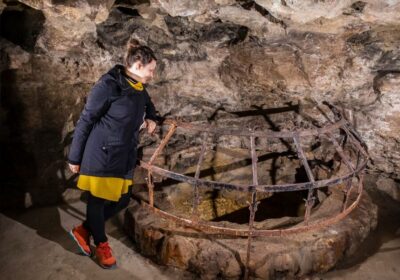
The Labyrinth is one of the most unusual stops. It occupies a natural cave system that was used as a dungeon, and the guide tells the story connecting it with Dracula, or Vlad the Impaler.
The scheduled visit is about 10 minutes. That is enough for an introduction and a short look, but not a slow exploration of every passage. If enclosed spaces are uncomfortable for you, keep the cave setting in mind before booking.
The Dracula connection adds a memorable hook, though the greater value is the physical setting. A cave below the Castle District feels very different from the grand viewpoints and royal courtyards above. It gives the tour a darker, more atmospheric moment without requiring a separate trip outside central Budapest.
Independence, Houdini, and Szent György Street
The statue of the Independence War brings the Hungarian Revolution of 1848 into the story. The guide explains the symbolism of the monument and links those figures to the conflict itself.
The nearby House of Houdini adds a lighter, more unexpected note. Including it helps break up the military and political history with a connection to one of the city’s better-known names.
On Szent György Street, you pass the offices of the president and prime minister, medieval castle ruins, and sites tied to local secret stories. The route does not simply stay among tourist viewpoints. It moves through an area that still has a government and civic role, while keeping the remains of earlier royal buildings in view.
This is another short stop, so you should expect storytelling rather than access to government buildings. The benefit is seeing how old and current Budapest occupy the same hill.
The Funicular, Zero Kilometer Stone, and Turul bird
The tour then reaches the Buda Hill Funicular, described as the second-oldest funicular. Nearby points include the Zero Kilometer Stone and the oldest bridge of Hungary.
These stops help explain Budapest’s connections between hilltop Buda and the riverfront below. Even if you do not ride the funicular during the tour, the guide gives you a useful sense of its place in the city’s transport story.
The Turul bird statue is one of the more important national symbols on the route. The guide explains the bird’s role in Hungarian identity and the story behind the naming of the Hungarians.
For you, this is a good example of why a guide can add value in a district filled with monuments. A large statue may be easy to photograph, but its meaning is not always obvious. The short explanation gives the symbol a place within Hungary’s national story.
King Matthias’s fountain and the royal courtyards
The Fountain of King Matthias is presented as one of Budapest’s prettiest fountains, with a romantic tragedy attached to it. The combination of sculpture and story makes this a natural pause for photographs.
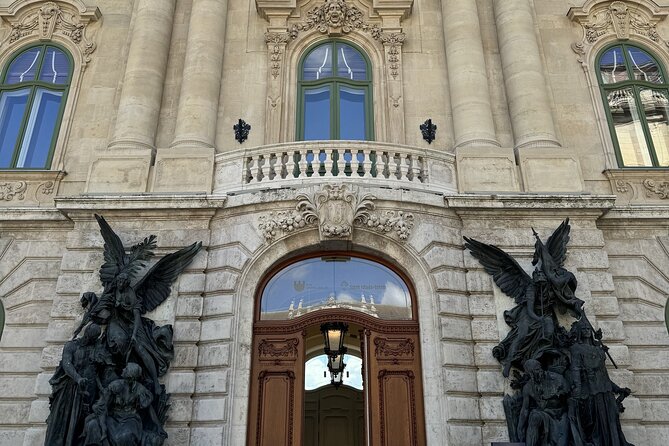
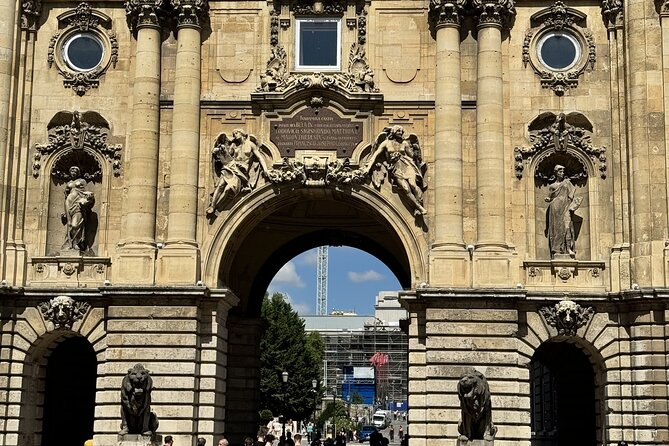
The tour then moves through the Lions Court of Buda Castle. Here you hear about the courtyard, mythical statues, and the figures represented on the facade. The five-minute stop is short, but it gives you a framework for noticing the sculpture instead of treating the castle as one enormous block of stone.
The Royal Riding Hall follows, with a quick look at the former royal Hungarian stable. At two minutes, this is more of a passing explanation than a full visit. Still, it helps show the range of the castle complex, from churches and government buildings to spaces built for court life.
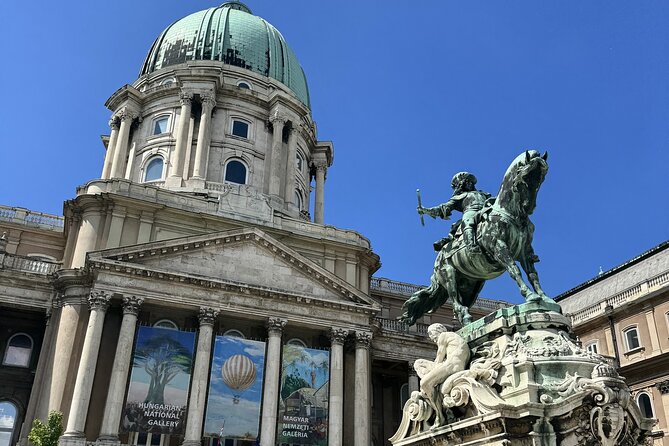
The mounted statue of Prince Eugene of Savoy receives more attention. It is described as the largest statue in the Castle District, and the guide explains Prince Eugene’s role in freeing Hungary from Ottoman rule, along with several related facts.
This section is strong for visitors who want royal and military history without spending the whole day in a museum. It is also where the tight schedule becomes most obvious. You will hear many names and events in quick succession, so take a note or photograph the statue if you want to remember the details later.
Mary, Castle Garden, and the walk downhill
The statue of S. Maria Mater Dei shows the Virgin Mary with the baby Jesus. The guide also connects Budapest’s bridges with Hungarian monarchs, adding a citywide angle to the Castle District route.
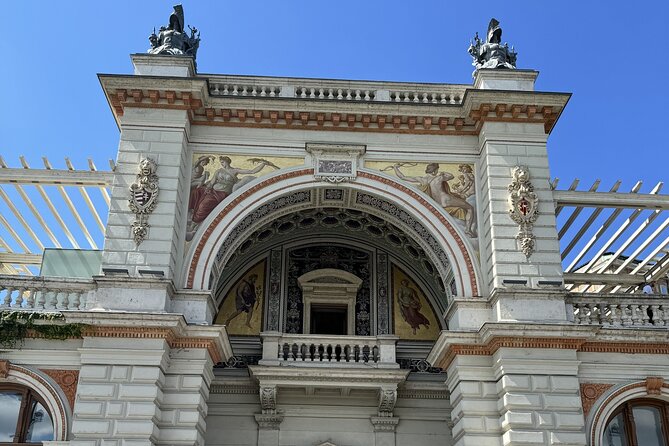
The final part moves through Castle Garden. You see the garden, a spiral staircase tower, and the Triton fountain before reaching Castle Garden Bazaar, also known as Várkert Bazár.
The architecture of the bazaar and the statues along its facade finish the walk on a different note. You leave the medieval and royal atmosphere of the hill and arrive at a grand 19th-century complex near the river.
The end point is practical. Castle Garden Bazaar is at Ybl Miklós tér 2 to 6, beside the castle garden and at the foot of Castle Hill. From here, you can continue around the riverfront or make your own way to other parts of Budapest.
What the price and pace really mean
At $3.61 per person, this is unusually inexpensive for a two-hour guided walk. The cost covers a live guide, while the listed stops carry no admission charge. That makes the tour a strong orientation option, especially if you are visiting Budapest for the first time and want a clear route through the Castle District.
The low price should not lead you to expect a private tour. The group can include up to 45 people, so some explanations may be harder to hear if the group spreads out. Stay close to the guide, particularly in busy public spaces and around the viewpoints.
The tour is booked on average about 31 days ahead, which suggests you should not leave it until the final afternoon if the timing matters to you. Confirmation arrives at booking, and the activity is offered in English with a mobile ticket.
You should also plan for a full walking session. Most stops last only five minutes, but there are 20 of them, and the Castle District includes slopes, streets, courtyards, and the cave stop. Wear shoes you can walk in comfortably and bring water, especially in warm weather.
Cancellation is free if you cancel at least 24 hours before the 3:00 pm start. Changes or cancellations inside that window are not accepted for a refund. Since the tour requires good weather, poor conditions may lead to a different date or a full refund.
Who will get the most from this walk
I would choose this tour for a first visit to Budapest, particularly if you want history, symbols, viewpoints, and orientation in one compact outing. It suits visitors who prefer a guide’s explanation to reading plaques and searching for background on their phone.
It is also a good fit if you want to see more than the standard highlights. The Labyrinth, the World War II ruins, the National Archives area, the Turul bird, the siege story, and the smaller statues give the route more variety than a simple church-and-viewpoint walk.
You may want a different plan if your main goal is extended interior sightseeing. The stops at Matthias Church, the Labyrinth, Buda Castle, and the other buildings are short. This is a guided overview, not a series of long admissions.
The English presentation is an important strength. Antel is singled out for clear English, humor, grace, and precise delivery. That matters on a tour with many names, symbols, and historical periods. You need to understand the story quickly because the schedule keeps moving.
Should you book the Budapest Castle District walk?
Book it if you want a broad, low-cost introduction to Buda Castle Hill, with a fluent English guide and enough photo time to enjoy the main views. The tour packs an impressive amount into 2 hours and 10 minutes, and the route reaches places you might skip when exploring alone.
Do not book it expecting a relaxed museum visit or a private, slow-paced walk. The group may reach 45 people, the schedule is tight, and the experience depends on good weather.
For most first-time visitors, I would use this as a practical first look. Afterward, return to Matthias Church, Fisherman’s Bastion, the Labyrinth, or the castle grounds that caught your attention. At $3.61, it is a small investment for a useful map of one of Budapest’s most layered districts.
FAQ
Where does the tour start?
It starts at the Holy Trinity Statue on Szentháromság Street in Budapest’s Castle District.
What time does the tour begin?
The start time is 3:00 pm.
Where does the tour end?
It ends at Castle Garden Bazaar, at Ybl Miklós tér 2 to 6, beside the castle garden at the foot of Castle Hill.
How long is the walking tour?
The tour lasts approximately 2 hours and 10 minutes.
Is the tour offered in English?
Yes. It is offered in English and includes a live guide.
What happens if the weather is poor?
The experience requires good weather. If it is canceled because of poor weather, you will be offered another date or a full refund.
Just added around Budapest
- From Budapest: Guided Tour of Eger with Wine Tasting★ 4.5 · 6 reviews
- Budapest: Private Walking Tour with a Local Guide★ 3.6 · 6 reviews
- Budapest: Danube River Views Bike Ride★ 4.8 · 23 reviews
- Trash Art Museum: Hungary’s First Scrap Metal Exhibition★ 4.3 · 72 reviews
- Walk to recent and aged spiritual sanctuaries near Budapest★ 5.0 · 5 reviews
- Budapest: 3-Hour Trabant Sightseeing Tour★ 4.7 · 28 reviews
- True Crime Walking Tour in the Buda Castle district★ 5.0 · 26 reviews
- Audio visual multi-sensory chefs journey dinner experience★ 5.0 · 3 reviews
Buda Castle Tours, compared.

Buda Castle District Vampires and Myths Night Tour
Read our review →



Buda Castle District Dark History, Legends and Vampire Night Tour
Read our review →
Buda Castle District Walking Tour with a Historian
Read our review →
Browse the lists this tour appears in