
Reviewed · HISTORICAL TOURS
Historical and Cultural Walking Tour in Budapest
Budapest reveals its best stories when you connect the grand sights with everyday life. This private tour links Heroes’ Square, Parliament, and Buda Castle with tales about Hungarian kings, communist rule, democracy, bath culture, and local food. Guide György Rashad Salamon, also known as George, leads the experience.
I like the private format, which lets you ask questions and shape the four-hour route. I also like the broad sweep from City Park to Buda, including the chance to see the Széchenyi baths, the Opera House, St. Stephen’s Basilica, Liberty Square, and the Chain Bridge in one morning.
The main consideration is pace. This is a lot of Budapest in four hours, and parts of the route may use public transport, with tickets not included. The details also list a private group of up to 15 in one place and a maximum of 10 elsewhere, so confirm the actual group limit before booking.
In This Review
- Key points to know before booking
- Why this tour works as a first look at Budapest
- Heroes’ Square and Hungary’s earliest story
- Vajdahunyad Castle inside City Park
- Széchenyi baths and the meaning of bath culture
- Andrássy Avenue from grand homes to the Opera House
- St. Stephen’s Basilica and the Holy Right Hand
- Liberty Square and Parliament’s political story
- Crossing the Chain Bridge to Buda Castle
- What the private format adds
- What George and György bring to the morning
- Who should book this experience
- Should you book the Budapest history walk?
- FAQ
- How long does the tour last?
- Where does the tour start?
- Where does the tour end?
- Is the tour private?
- Are food, drinks, and transport tickets included?
- What places are included?
- Can I cancel for a full refund?
Key points to know before booking
- A private Budapest overview: You cover major sights on both sides of the Danube rather than staying in one district.
- A guide who explains the past: Expect stories about Hungary’s origins, royal rule, dictatorship, communism, democracy, customs, and daily life.
- City Park adds breathing room: Heroes’ Square, Vajdahunyad Castle, and Széchenyi baths give the morning more variety than a street-only walk.
- Hotel pickup is available: The price includes on-foot pickup, though the stated meeting point is Deák Ferenc tér.
- Transport may be part of the experience: Public transport was used on one reported tour, but tickets are not included.
- Good value for a private group: At $277.64 for the group, the cost makes more sense when shared by several people.
Why this tour works as a first look at Budapest
Budapest is split by the Danube, with hilly Buda on one side and flatter Pest on the other. A short walk in either half can leave you with only part of the picture. This tour tries to solve that problem by covering both, starting in the north-central part of Pest and ending at Buda Castle.
I like this approach for a first or second day in the city. You get the major names on your Budapest checklist, but the guide also supplies the links between them. Heroes’ Square introduces Hungarian national history. The thermal baths explain a living part of local culture. Parliament and Liberty Square open the door to modern political history. Buda Castle then brings you back to medieval royal Budapest.
The tour is described as a walking experience, but one particularly useful account says George used the subway, bus, and tram to reach more of the city. That matters. Budapest’s sights cover a wide area, and public transport can save your legs while giving you a more local sense of how the city works.
The tradeoff is that a four-hour route can only give you a first layer at each stop. You will see many places from the outside or spend a short time inside. If your main goal is a long Parliament interior visit, a bath session, or a detailed museum tour, you will need separate time.
A few more Budapest trips to weigh up
- Budapest: Historic Cruise with Welcome Drink
★ 4.7 · 6,512 reviews - Budapest Historical Sightseeing – Free Walking Tour
★ 5.0 · 1,302 reviews - Buda Castle District Dark History, Legends and Vampire Night Tour
★ 4.5 · 1,240 reviews
Heroes’ Square and Hungary’s earliest story
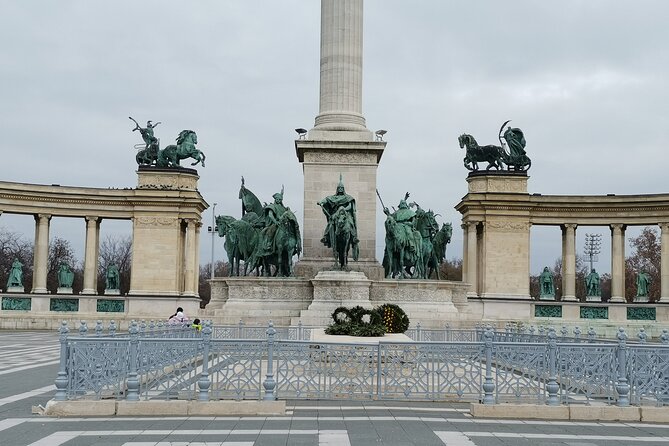
The morning begins at Heroes’ Square, one of Budapest’s most recognizable public spaces. Its statues honor important figures from Hungarian history, making it a natural place to begin a historical tour.
The value here is the explanation. The figures and monuments can look impressive but confusing if you do not know who they are or why they matter. Your guide uses the square to discuss the roots of the Hungarian people and the country’s early story.
You have about 20 minutes at the square. That is enough for an orientation and photographs, but not for a long, detailed study of every statue. Arriving with a little background curiosity will help you get more from the stop. Ask which figures mattered most to the formation of Hungary and how later governments used national symbols.
Heroes’ Square also sets the tone for the rest of the morning. Budapest is not just a collection of elegant buildings. Its monuments reflect changes in kingship, nationalism, dictatorship, and democracy. A good guide can help you read those changes in the stone and bronze around you.
Vajdahunyad Castle inside City Park
From Heroes’ Square, you walk through City Park to Vajdahunyad Castle. The park was created for public relaxation and gives the tour a welcome change of pace after the formal monumentality of Heroes’ Square.
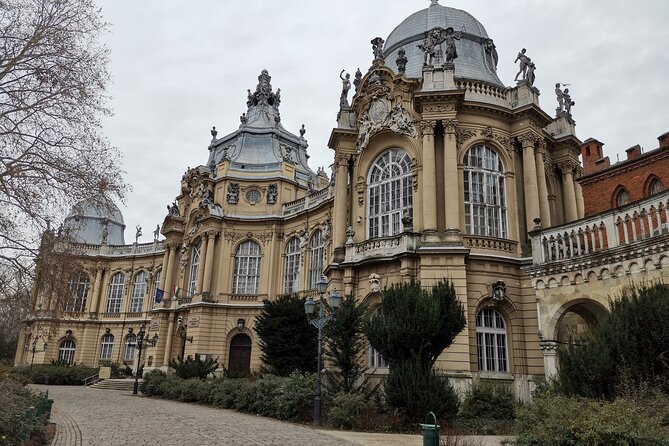
Vajdahunyad Castle is especially interesting because its design brings together examples of Hungarian architecture from roughly 1,000 years. Rather than presenting one clean architectural style, it gives you a visual tour through different periods. You can look for the shifts in shape, decoration, and mood as your guide explains what you are seeing.
The planned stop lasts about 45 minutes and includes a look inside. That is a useful amount of time for a guided visit, though you should not expect the kind of slow examination you would get on a dedicated castle tour. The attraction works best here as part of a larger story about Hungarian architecture and identity.
City Park gives you room to pause, but the walk still requires a moderate level of fitness. Wear shoes you can use comfortably for several hours. The route is not presented as a strenuous hike, yet the combination of pavement, sightseeing, and Buda later in the morning can add up.
Széchenyi baths and the meaning of bath culture
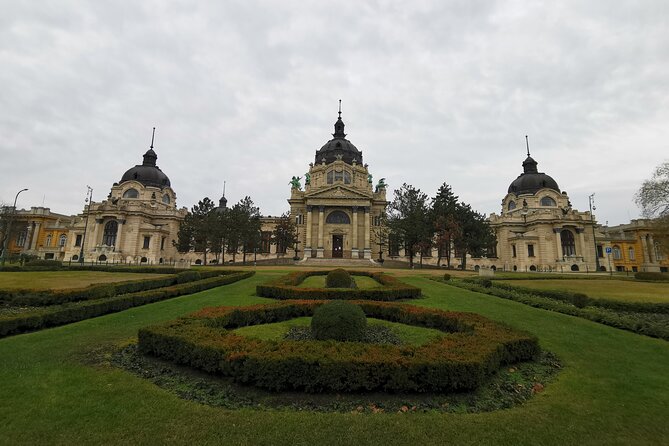
During the City Park walk, you pass the famous Széchenyi baths. The tour does not include a bathing session, but your guide discusses Hungary’s thermal-water culture.
That short conversation can add real value. For many visitors, the baths are simply beautiful yellow buildings with pools. The guide’s explanation helps you see them as part of Hungarian daily life and a long tradition tied to the country’s abundant thermal water.
Do not book this experience expecting time to change, swim, or soak. The baths are a sight and a topic on this route, not an included spa visit. If bathing is high on your list, set aside a separate half-day or evening and check the baths’ own admission arrangements.
I like this stop because it broadens the tour beyond monuments. You are not only hearing about rulers and battles. You are also learning about a habit that remains part of city life.
Same riverbank, a completely different kind of day:
- Budapest: Unlimited Prosecco, Beer and Aperol Spritz Cruise
★ 4.8 · 25,310 reviews - Budapest: Széchenyi Spa Day Ticket with Optional Upgrades
★ 4.3 · 23,911 reviews - Budapest: Nighttime or Daytime Sightseeing Cruise
★ 4.2 · 21,062 reviews - Budapest: 1-Hour Evening Sightseeing Cruise with Drink
★ 4.5 · 8,330 reviews
Andrássy Avenue from grand homes to the Opera House
The route continues along Andrássy Avenue, often compared with the Champs-Élysées. The avenue is lined with Neo-Renaissance mansions and townhouses, upscale shops, restaurants, and cafés.
This is a good place to let your guide point out how Budapest presented itself as a major European capital. The buildings are not isolated curiosities. Together, they show the ambitions of the city and the wealthy society that shaped this part of Pest.
You spend about 30 minutes along the avenue. That makes it a guided stroll rather than a full architectural survey. Keep your eyes above the shopfronts, where the façades and details tell more of the story than the modern businesses at street level.
The Hungarian State Opera House receives its own 25-minute visit. It is described as the most beautiful building on Andrássy Avenue, and the guide shares its story. The stop should suit you if you want cultural context without committing to an evening performance.
The short time also sets a limit. You may see the building and hear its background, but a 25-minute visit is not the same as attending an opera or taking a long specialist tour. If music and theater are central interests, ask how much of the Opera House visit is inside and whether any access restrictions apply on your date.
St. Stephen’s Basilica and the Holy Right Hand
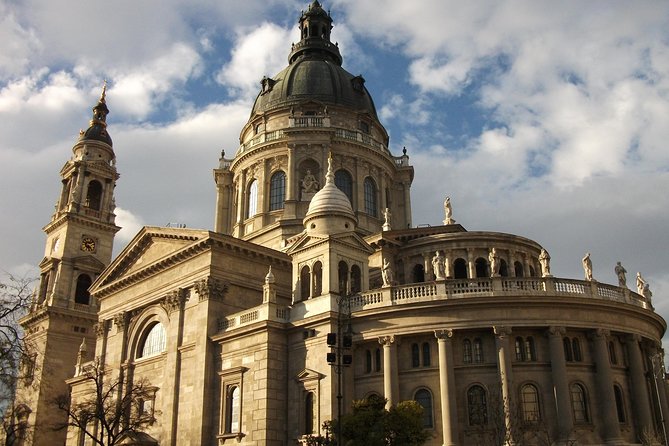
St. Stephen’s Basilica is the largest church in Budapest and is dedicated to Hungary’s first king, St. Stephen. Inside, it holds the Holy Right Hand, the mummified hand associated with the king.
The relic gives the visit a particularly Hungarian focus. You are not simply entering a large church with a grand interior. You are encountering an object tied to the country’s royal and religious story.
The planned visit is about 15 minutes, so this is a compact stop. I would treat it as an introduction, not a full church visit. Look around, listen to the explanation, and note the setting. If you want time for the dome, interior details, or quiet reflection, return later on your own.
This brief stop also shows the tour’s priorities. It favors connections between places over long periods inside each one. You see how St. Stephen’s memory continues from the basilica to the wider story of the Hungarian state.
Liberty Square and Parliament’s political story
After the basilica, the route crosses Liberty Square on the way to Parliament. The square has notable monuments, and the guide uses them to discuss Hungary’s political life across several periods.
This can be one of the most useful parts of the tour because Budapest’s recent past is not always easy to read at street level. The route covers dictatorship, communism, and democracy, helping you place the monuments and public spaces in a modern political context.
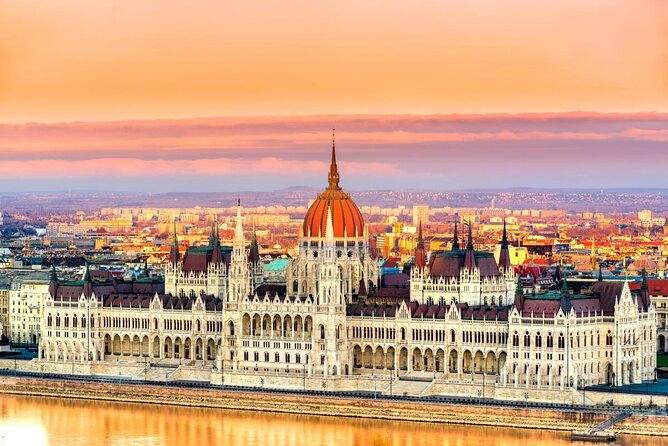
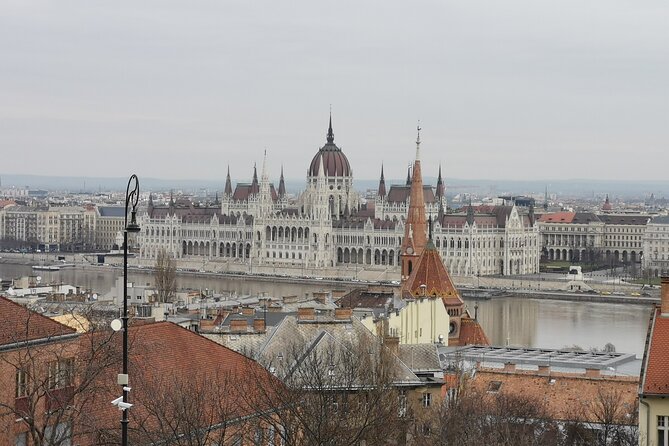
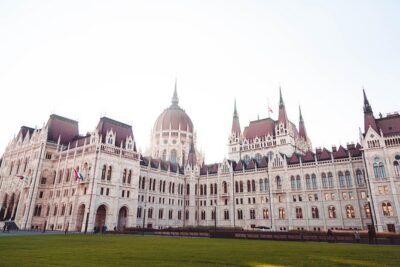
The Hungarian Parliament building is the visual prize at the end of this Pest section. The tour describes it as one of the world’s most beautiful parliament buildings, and its riverside position makes it hard to miss. You will hear about the country’s political changes while viewing the building from the route.
Do not confuse this visit with a full guided interior tour of Parliament. The provided details do not promise entry, an interior ticket, or a dedicated Parliament tour. If going inside is important to you, arrange that separately and do not assume this four-hour experience includes it.
Crossing the Chain Bridge to Buda Castle
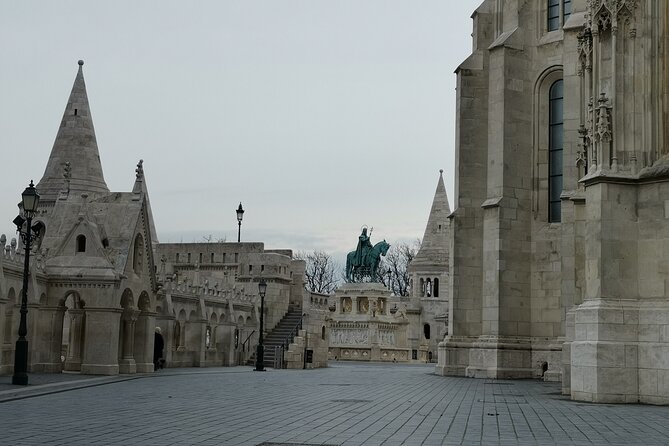
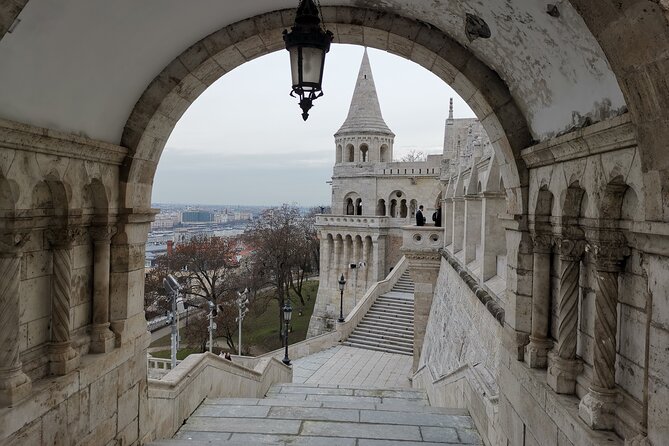
The tour crosses the historic Chain Bridge before reaching Buda Castle. The bridge is more than a convenient link between the two halves of the city. It helps you feel the basic geography of Budapest, with the broad river separating Pest’s flatter streets from Buda’s higher ground.
At Buda Castle, the focus shifts to medieval royal Budapest. The castle served as the residence of Hungarian kings from the 14th century, and the planned visit lasts about one hour.
This is the longest stop, which makes sense. Buda Castle is a district and a historical setting, not a single quick photo point. You have more time to hear about the royal past, look across the city, and understand why Buda developed differently from Pest.
The castle area may be the most physically demanding portion of the morning. The tour requires moderate physical fitness, and reaching the Buda side after several hours of walking can be tiring. Ask about the exact route if you have concerns about hills or extended walking.
I like ending here because the tour finishes with a strong sense of place. You have moved from Hungary’s national origins to its royal seat, while also seeing the political and cultural forces that shaped the modern capital.
What the private format adds
The price is $277.64 per group, rather than per person, with the stated group size listed as up to 15 in the pricing information. Another detail gives a maximum of 10 people, so I would confirm the limit before paying.
For a couple, the total is a fairly serious expense. For a family or small group, the cost can be reasonable because one professional guide serves everyone. At six people, the listed price works out to about $46 per person. At 10 people, it is about $28 per person, before any transport tickets or food.
The private format matters most if you want to ask questions or adjust the balance of the morning. You can express more interest in architecture, royal history, communism, bath culture, cuisine, or local life than a fixed group tour usually allows.
Hotel pickup is offered on foot, while the stated meeting point is Deák Ferenc tér. Since one account describes George collecting the group at a hotel, confirm your pickup arrangement and time in advance. The experience ends back at the meeting point, and the start time is 9:00 a.m.
The price includes a professional guide and hotel pickup. It does not include food, drinks, or transport tickets. Bring a way to pay for public transit if the guide uses the subway, bus, or tram. The mobile ticket is convenient, and confirmation is provided when you book.
What George and György bring to the morning
The guide is identified as György Rashad Salamon, with George used in one account. The available comments give him strong credit for prompt hotel pickup, thorough explanations, historical facts, and stories that kept the route interesting.
One especially useful detail is the reported use of subway, bus, and tram. That suggests the experience may not be a nonstop pavement march. It also means the guide can help you see more in the same time, though you should budget for tickets and allow for the ordinary uncertainty of public transport.
The guide’s role is central here. Without a strong storyteller, the route could become a fast parade of famous buildings. The tour promises discussion of customs, daily life, cuisine, and political history, so ask questions rather than simply following along. The more specific your interests, the more useful the private format can be.
The group limit deserves a direct question before booking. The price describes a group of up to 15, while the additional information says a maximum of 10. That difference may reflect a change in operating policy, but the supplied details do not explain it.
Who should book this experience
I would choose this tour if you have limited time in Budapest and want a guided framework for the city. It suits first-time visitors who want to see both Buda and Pest without planning every connection themselves.
It is also a good match for families and small groups who want one guide and a flexible conversation. The historical range is wide, and the private setting can help you decide which places deserve a return visit.
You should think twice if you want a slow museum-style experience. The route covers many stops, with only one hour at Buda Castle and shorter visits elsewhere. You may spend much of your free time taking photographs and moving between locations.
It may also be less suitable if you want a dedicated bath day, a full Opera House visit, or an interior Parliament tour. Those are separate interests, and this experience only introduces some of them.
Should you book the Budapest history walk?
Book it if you want a high-value city orientation with a personal guide, especially when sharing the group price with family or friends. The range is impressive: Heroes’ Square, City Park, Vajdahunyad Castle, Széchenyi baths, Andrássy Avenue, the Opera House, St. Stephen’s Basilica, Liberty Square, Parliament, the Chain Bridge, and Buda Castle.
The best reason to choose it is the mix of famous sights and useful context. George or György can connect Hungary’s early story with royal rule, thermal bathing, communist-era politics, and modern democracy. Just confirm the group size, pickup details, transport plan, and whether any interiors are included.
If you value depth at fewer sites, book separate visits instead. If you want to get your bearings fast and understand what you are seeing, this private four-hour route is a practical choice.
FAQ
How long does the tour last?
The tour lasts approximately four hours and starts at 9:00 a.m.
Where does the tour start?
The stated meeting point is Deák Ferenc tér in Budapest. On-foot hotel pickup is also offered, so confirm the pickup arrangement when booking.
Where does the tour end?
The activity ends back at the meeting point.
Is the tour private?
The price is listed per group, with a group size of up to 15 in the pricing information. The additional details state a maximum of 10 people, so confirm the current limit before booking.
Are food, drinks, and transport tickets included?
No. Food, drinks, and transportation tickets are not included. The tour may use public transport, so you should plan to pay for any required tickets.
What places are included?
The route includes Heroes’ Square, Vajdahunyad Castle, City Park, Széchenyi baths from the outside, Andrássy Avenue, the Hungarian State Opera House, St. Stephen’s Basilica, Liberty Square, the Hungarian Parliament area, the Chain Bridge, and Buda Castle.
Can I cancel for a full refund?
Yes. You can cancel at least 24 hours before the local start time for a full refund. Cancellations or changes made less than 24 hours before the start time are not accepted for a refund.
Just added around Budapest
- From Budapest: Guided Tour of Eger with Wine Tasting★ 4.5 · 6 reviews
- Budapest: Private Walking Tour with a Local Guide★ 3.6 · 6 reviews
- Budapest: Danube River Views Bike Ride★ 4.8 · 23 reviews
- Trash Art Museum: Hungary’s First Scrap Metal Exhibition★ 4.3 · 72 reviews
- Walk to recent and aged spiritual sanctuaries near Budapest★ 5.0 · 5 reviews
- Budapest: 3-Hour Trabant Sightseeing Tour★ 4.7 · 28 reviews
- True Crime Walking Tour in the Buda Castle district★ 5.0 · 26 reviews
- Audio visual multi-sensory chefs journey dinner experience★ 5.0 · 3 reviews
Historical Tours, compared.

Budapest Historical Sightseeing – Free Walking Tour
Read our review →
Buda Castle District Dark History, Legends and Vampire Night Tour
Read our review →
BloodThirsty Hungary: Walking tour & Dark Historical Stories
Read our review →
Budapest Jewish Heritage Memorial Walking Tour & Synagogue Entry
Read our review →
Jewish Heritage Guided Tour with Synagogue Ticket
Read our review →
Budapest Historic Downtown Bicycle Tour in small groups
Read our review →
Historic Downtown ride on E-Bicycles Buda & Pest
Read our review →Browse the lists this tour appears in