
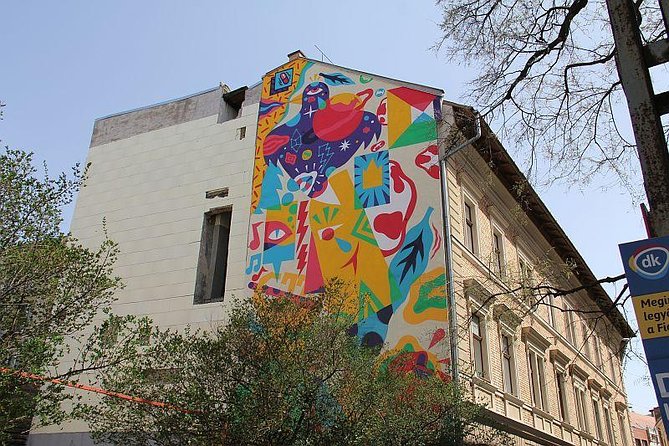
Reviewed · STREET ART
Street Art Tour Budapest
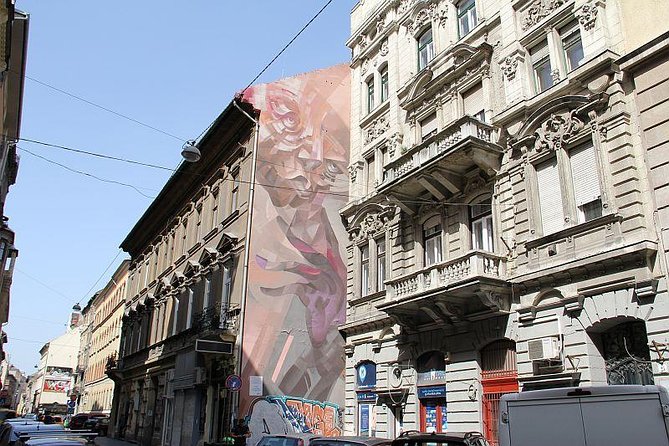
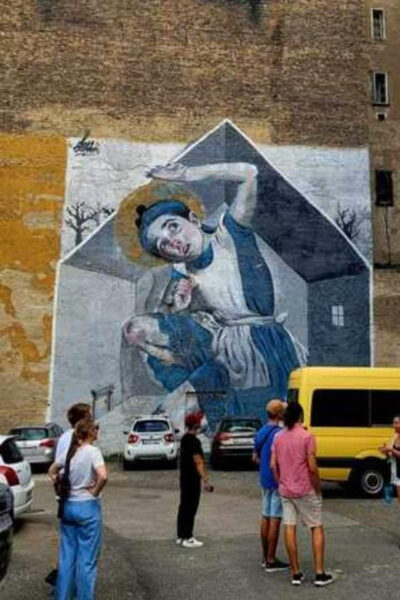
Budapest’s Jewish Quarter is a street-level history book, and its murals, stencils, and pasted works give the pages a modern voice. This three-hour walk links the art to Hungarian history, culture, and current politics, with local guide Attila known for explaining both the artists and the ideas behind their work.
I like the small eight-person limit, which makes it easier to ask questions and keep a personal pace. I also like the coffee stop at Kisüzem and the fact that the tour does not treat street art as decoration alone. The main thing to consider is that this is an outdoor walking tour, so poor weather can cancel it and a comfortable pair of shoes matters.
In This Review
- Key points at a glance
- Why Budapest street art tells more than a pretty story
- Meeting at My Little Melbourne Coffee at 11:00
- Reading the Jewish Quarter through its walls
- The Kisüzem coffee pause
- A personal pace, with room for questions
- How the $53.92 price works for you
- Weather, timing, and what to bring
- Who will get the most from this walk
- Booking, cancellation, and practical details
- Should you book the Budapest street art tour?
- FAQ
- Where does the Budapest street art tour start?
- Where does the tour end?
- How long does the tour last?
- What language is the tour offered in?
- How many people can join the tour?
- Is coffee included?
- What happens if the weather is poor?
Key points at a glance
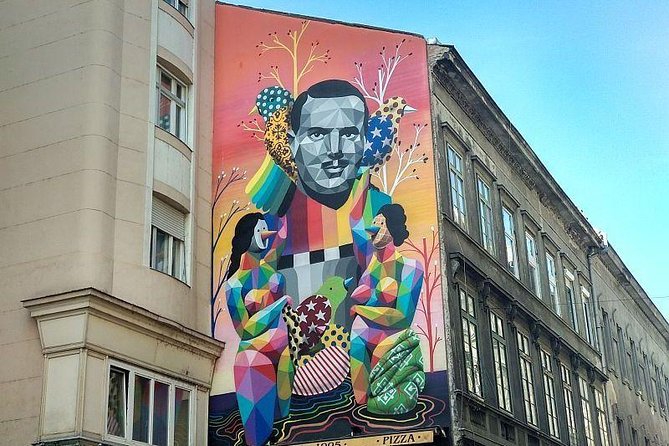
- Jewish Quarter focus: Explore one of Budapest’s most layered neighborhoods through its public art.
- Art with context: Learn about the artists, political statements, Hungarian culture, and the history behind the walls.
- Small group size: The tour accepts no more than eight people, allowing for a more personal outing.
- Coffee included: Stop at Kisüzem for coffee or tea during the walk.
- English-language outing: Meet at 11:00 a.m. at My Little Melbourne Coffee on Madách Imre Street.
- Simple end point: The walk finishes at Kertész u. 27, a useful location for continuing your day in the district.
Why Budapest street art tells more than a pretty story
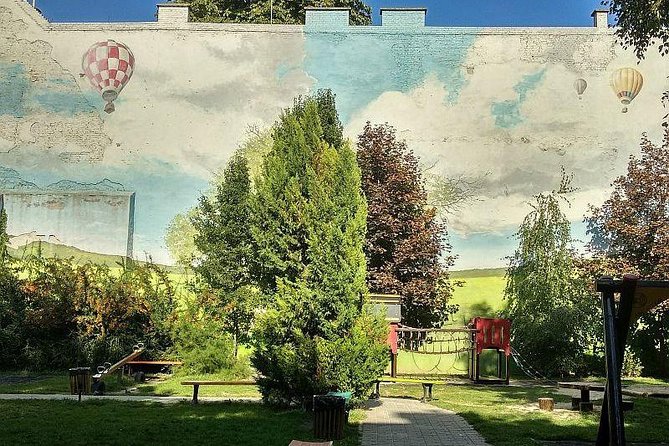
Street art works especially well in Budapest because the city’s past and present often sit side by side. A painted wall may carry a political point, a cultural reference, or a comment on public life. The art gives you something to look at, but the guide’s explanation helps you understand why it is there and what it may be saying.
That distinction matters. You can walk through the Jewish Quarter on your own and spot colorful walls, large murals, and smaller pieces tucked into side streets. But without context, it is easy to see only the surface. This tour is built around the ideas behind the artwork, so you spend time discussing meaning rather than simply stopping for photographs.
The Jewish Quarter also rewards a slower pace. Its streets connect difficult history, changing city life, and a strong creative scene. The tour’s emphasis on local history keeps the art tied to place. You are not just studying imported styles or posing beside a mural. You are considering how artists respond to Budapest itself.
A few more Budapest trips to weigh up
- Budapest: Street Art and Underground Movements Walking Tour
★ 5.0 · 238 reviews - Alternative Street Art Free Walking Tour of Budapest
★ 4.5 · 53 reviews - Street Art and Alternative Tour in Budapest
★ 5.0 · 52 reviews
Meeting at My Little Melbourne Coffee at 11:00
The tour begins at My Little Melbourne Coffee, Madách Imre út 3, in the heart of the Jewish Quarter. The start time is 11:00 a.m., which gives you a practical morning plan without requiring an early alarm.
I would arrive a few minutes ahead of time. The meeting point is near public transportation, and starting at a café gives you a clear landmark in a busy central neighborhood. Bring your booking details on your phone, since the experience uses a mobile ticket.
The tour is offered in English. Guide Attila has been especially praised for his clear English, friendly manner, and ability to explain the political meaning behind the art while also covering the city’s past. That combination is useful here. Street art can quickly become a lecture on politics, or it can remain a string of disconnected visual stops. A good guide has to connect the two, and Attila’s approach appears to do that with a steady pace.
The small group limit is one of the strongest practical features. With no more than eight people, you should have a better chance to hear the guide in a noisy street, ask about a particular work, or pause when something catches your eye. It also avoids the feeling of trailing behind a large flag-waving group.
Reading the Jewish Quarter through its walls
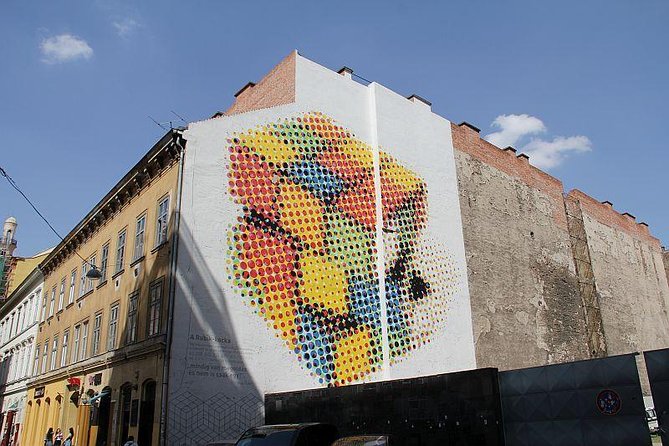
The heart of the experience is the walk through the Jewish Quarter and the discussion of its street art. The supplied details do not name each artwork or give a fixed list of streets, so you should not expect a self-guided checklist of famous murals. The value comes from how the guide interprets what you see on the day.
That flexibility can be a strength. Street art changes. Pieces are painted over, damaged, removed, or replaced. A tour that responds to the neighborhood as it exists that day can feel more current than a rigid route built around a permanent museum collection.
You can expect the guide to discuss the artists and the messages in their work, with special attention to political statements. This is where the tour moves beyond a simple art walk. You gain a way to think about Hungary’s public conversation, local culture, and the forces that have shaped the city.
The historical side is just as important. The guide shares the history of Budapest as you walk, rather than separating history into a formal talk and art into a photo stop. That makes the neighborhood easier to read. A wall, building, or street can become a prompt for a wider explanation of the district and the city.
I would not book this expecting a technical art class. The information provided points to an accessible discussion of meaning, politics, culture, and history. If you want detailed instruction in painting technique or a catalog of every artist’s career, this may feel less specialized. If you want to understand why public art matters in Budapest, it is a better match.
The Kisüzem coffee pause
About 15 minutes of the outing is set aside for a coffee break at Kisüzem, described as a cozy bar. Coffee or tea is included, which gives the walk a welcome pause and offers a chance to ask the guide something you did not want to interrupt during the street stops.
This is a modest inclusion, but a useful one. Three hours on foot is long enough for a drink break to improve the rhythm of the morning. You can reset, listen to more conversation, and get out of the weather for a moment if conditions allow.
Do keep the limits in mind. Lunch is not included, and the coffee stop is not a meal. If you tend to eat early, have breakfast before meeting the group or plan lunch for after the tour. Since the walk ends at Kertész u. 27, you can arrange your next meal after the experience rather than trying to fit it into the tour.
The stop also helps the outing feel less like a march from wall to wall. Street art tours can become tiring when every few minutes brings another explanation. A short café break gives the morning a more natural shape.
Same riverbank, a completely different kind of day:
- Budapest: Unlimited Prosecco, Beer and Aperol Spritz Cruise
★ 4.8 · 25,310 reviews - Budapest: Széchenyi Spa Day Ticket with Optional Upgrades
★ 4.3 · 23,911 reviews - Budapest: Nighttime or Daytime Sightseeing Cruise
★ 4.2 · 21,062 reviews - Budapest: 1-Hour Evening Sightseeing Cruise with Drink
★ 4.5 · 8,330 reviews
A personal pace, with room for questions
The tour lasts about three hours. That is enough time to cover a useful part of the Jewish Quarter without committing your entire day. You still have the afternoon for another Budapest sight, a meal, or further wandering through the district.
The pace has received strong praise. Attila has been described as well paced, friendly, and able to make the subject fun without rushing through the history. That is important for this kind of tour, since you need time to look at the art and time to listen. A guide who moves too quickly turns public art into a blur.
The group size also helps solo visitors. With a maximum of eight people, the format is less awkward than joining a large group, and the experience may still run with only one participant when circumstances permit. One solo visitor reported that Attila went ahead with the tour even though that person was the only client, and also adapted well to a hearing disability.
That is a useful sign of personal attention, though you should not assume every departure will be private. The stated maximum is eight, not a guaranteed group size. The experience allows service animals, and most people can participate, but the supplied information does not give a detailed mobility assessment. Since the tour takes place outdoors and involves walking, ask the provider if you need specific access arrangements.
How the $53.92 price works for you
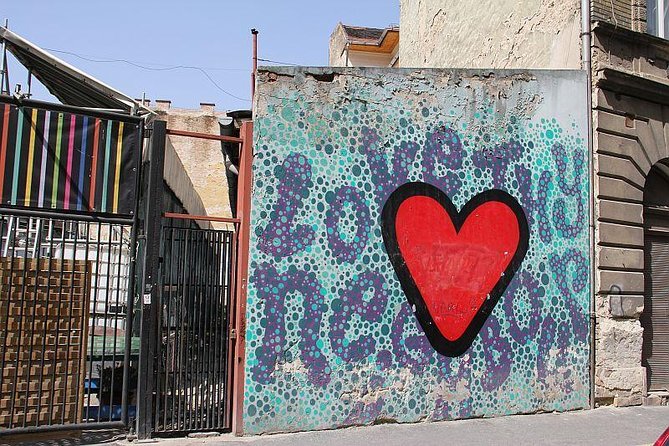
At $53.92 per person, this is not the cheapest way to see Budapest’s street art. You are paying for a three-hour English-language experience, a local guide, a small group capped at eight, and coffee or tea at Kisüzem.
The value depends on what you want from the neighborhood. If you only need a list of murals and can explore comfortably on your own, the price may seem high. Budapest is easy to walk, and the public art itself does not require an admission ticket.
I see the price differently if you care about context. The guide’s role is to connect art with local history, Hungarian culture, and current politics. That interpretation is the part you cannot get from a quick photograph or a map pin. The small group also gives you a better chance to ask questions than a large, cheaper walk.
The booking pattern is another practical clue. This experience is booked an average of 26 days ahead, so it is sensible to reserve early if the Jewish Quarter is a priority during a short Budapest visit. Do not wait until the last day and assume a small group will have space.
Weather, timing, and what to bring
The experience requires good weather. If bad weather forces cancellation, you will be offered another date or a full refund. That policy makes sense for a street-focused outing, but it also means you should keep some flexibility in your schedule.
Wear comfortable shoes and dress for time outdoors. The exact route and art stops are not specified, so I would avoid planning a tight appointment immediately after the stated 3-hour duration. The tour starts at 11:00 a.m. and ends at Kertész u. 27, but walking tours can run slightly differently depending on questions, street conditions, and the group’s pace.
Bring water, even though coffee or tea is included. A phone is useful for the mobile ticket and for taking photographs, but try not to let the camera replace the conversation. The political and historical explanations are central to the experience.
If you have hearing needs, contact Budapestflow.com before booking and explain what support you require. The experience has accommodated a hearing disability in the past, but individual arrangements should be confirmed rather than assumed.
Who will get the most from this walk
I would choose this tour if you want Budapest explained through everyday public spaces rather than only through major monuments. It suits you if you enjoy art with a message, want local views on Hungarian culture and politics, and prefer a guide who can connect small details to wider history.
It is also a good choice for a first or second day in Budapest. The walk gives you an introduction to the Jewish Quarter and may help you return later with more confidence. Since it ends in the district, you can continue exploring on your own afterward.
Solo visitors should find the small format comfortable. Couples and friends may like the balance of guided discussion and free time. The tour can also suit visitors who are not art specialists, since the emphasis is on meaning and place rather than technical vocabulary.
I would hesitate if you dislike outdoor walking, need a guaranteed indoor activity, or want a fixed list of famous works. The route can change with the weather and the street scene. This is also not a food tour, and the coffee break does not replace lunch.
Booking, cancellation, and practical details
Budapestflow.com operates the experience. Confirmation is normally issued when you book, though bookings made within one day of travel are confirmed as soon as possible and depend on availability.
You can cancel for a full refund up to 24 hours before the 11:00 a.m. start time, using the local time in Budapest. Cancellations or changes made within 24 hours are not refunded or accepted. If the minimum number of participants is not met, you will be offered another date or experience, or a full refund.
The tour is recommended by 100 percent of the provided ratings, with a five-star average from 40 reviews. The most consistent praise centers on the guide’s clear explanations, friendly approach, strong English, well-managed pace, and ability to connect street art with Hungarian history and politics. Those are exactly the areas that determine whether this type of tour feels worthwhile.
Should you book the Budapest street art tour?
Book it if you want more than colorful walls. The strongest reason to go is the guide’s interpretation of the Jewish Quarter, especially the links among public art, history, culture, and politics. The eight-person limit, included coffee, and three-hour length add comfort without taking over your day.
At $53.92, the tour makes the most sense for you if context matters and you prefer a local conversation to an independent photo walk. Plan around the weather, eat before or after, and leave a little space after the finish at Kertész u. 27. For an accessible, thoughtful introduction to Budapest’s street art scene, this is a solid choice.
FAQ
Where does the Budapest street art tour start?
The tour starts at My Little Melbourne Coffee, Madách Imre út 3, 1075 Budapest, at 11:00 a.m.
Where does the tour end?
The experience ends at Budapest, Kertész u. 27, 1073 Hungary.
How long does the tour last?
The tour lasts approximately three hours.
What language is the tour offered in?
The tour is offered in English.
How many people can join the tour?
The group has a maximum of eight participants.
Is coffee included?
Yes. Coffee or tea is included during a 15-minute break at Kisüzem. Lunch is not included.
What happens if the weather is poor?
If the experience is canceled because of bad weather, you will be offered a different date or a full refund.
Just added around Budapest
- From Budapest: Guided Tour of Eger with Wine Tasting★ 4.5 · 6 reviews
- Budapest: Private Walking Tour with a Local Guide★ 3.6 · 6 reviews
- Budapest: Danube River Views Bike Ride★ 4.8 · 23 reviews
- Trash Art Museum: Hungary’s First Scrap Metal Exhibition★ 4.3 · 72 reviews
- Walk to recent and aged spiritual sanctuaries near Budapest★ 5.0 · 5 reviews
- Budapest: 3-Hour Trabant Sightseeing Tour★ 4.7 · 28 reviews
- True Crime Walking Tour in the Buda Castle district★ 5.0 · 26 reviews
- Audio visual multi-sensory chefs journey dinner experience★ 5.0 · 3 reviews
Street Art, compared.
Street Art and Underground Movements Walking Tour
Read our review →
Alternative Street Art Free Walking Tour of Budapest
Read our review →
Budapest Vibe: Ruin Bars, Street Art and Culture Tour
Read our review →
Original Budapest Alternative Street Art & Jewish Tour
Read our review →
Budapest Urban Art – Private Street Art Tour with a Drink in a Ruin Bar
Read our review →Browse the lists this tour appears in