
Reviewed · JEWISH HERITAGE TOURS
A Journey through Jewish Budapest – Walking Tour
Budapest’s Jewish story is not confined to one memorial or synagogue. This three-hour walk links Dohány Synagogue, ghetto remains, and the Danube memorial into a clear account of how Jewish life shaped the city before the Second World War, and how quickly that life was destroyed. I especially like the use of a historian or Jewish Studies scholar as guide, along with the final pause at the Shoes on the Danube Bank memorial.
I also like the range of Jewish traditions covered here. You see the grand Dohány complex, the Orthodox synagogue facade on Kazinczy Street, and the Status Quo Ante tradition at Rumbach Street. The main consideration is price: at $123 per person, you still pay 14,500 Ft for an individual Dohány Synagogue ticket, so this is a serious choice for a three-hour walking tour.
In This Review
- Key points
- Starting near Theodor Herzl’s birthplace
- Entering the Dohány Street Synagogue complex
- Comparing Kazinczy Street and Rumbach Street
- From community life to the Shoes on the Danube
- What the historians add to the experience
- Is $123 a fair price?
- Who should book this walking tour?
- Should you book A Journey through Jewish Budapest?
- FAQ
- How long is the Jewish Budapest walking tour?
- Where does the tour meet?
- What language is the tour offered in?
- Is the Dohány Synagogue entrance ticket included?
- What should I wear to the Dohány Synagogue?
- Which places does the tour visit?
- Can I book a private or small-group tour?
Key points
- The tour connects several Jewish traditions: Dohány represents Neolog Judaism, Kazinczy Street reflects Orthodox Budapest, and Rumbach Street introduces the Status Quo Ante stream.
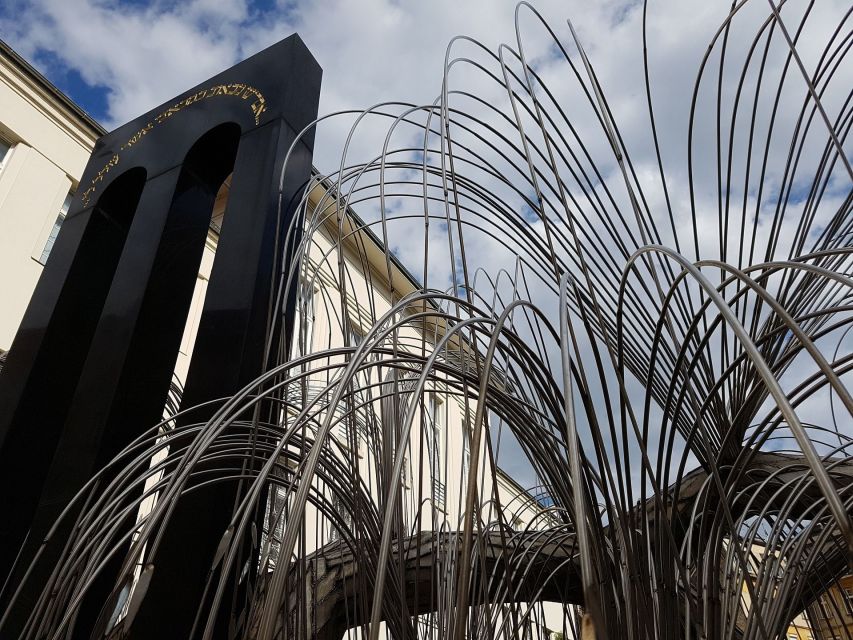
- Dohány Synagogue is the visual centerpiece: The complex includes the synagogue, Temple of Heroes, Jewish Museum, and Memorial Park.
- The route moves from cultural life to persecution: You begin near Theodor Herzl’s birthplace and finish at Shoes on the Danube.
- The guides bring strong academic and personal attention: Guides may be professors, doctoral students, historians, journalists, art critics, or authors. Orsolya and Endres are named examples.
- The format can feel highly personal: Private and small-group options are available, and one booking became a tour for only one couple.
- Plan for modest dress and an added entrance fee: Shoulders and knees should be covered at Dohány, and the synagogue ticket is not included.
Starting near Theodor Herzl’s birthplace
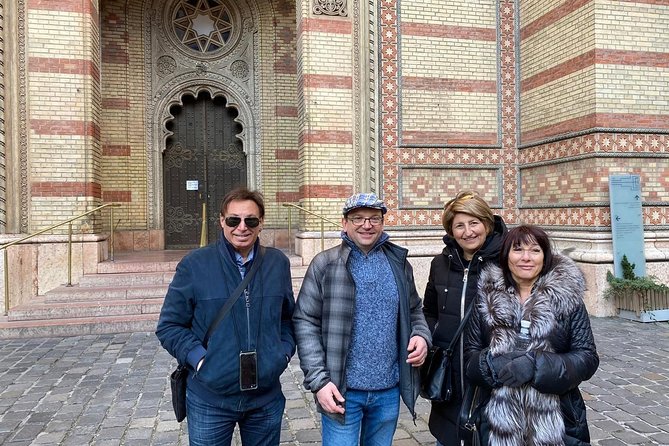
Meet at Kamara Café at Dohány utca 1/A, with the exact starting point depending on the option you select. The walk begins around Madách Imre Way, close to the Jewish Quarter and the Dohány complex.
The opening stop is tied to Theodor Herzl, the father of modern Zionism. The point is not just to attach a famous name to a Budapest address. It gives you an immediate sense of how Jewish identity in the city reached far beyond religious buildings. Budapest was home to a large Jewish population before the war, and Jewish residents took part in its business, arts, journalism, politics, and daily urban life.
That context matters. If you visit only the Holocaust memorials, you can come away with a picture of Jewish Budapest defined entirely by destruction. This walk begins by showing you a community with institutions, differing religious customs, and a strong role in the city.
The pace is guided walking rather than a bus tour. You should expect streets, courtyards, facades, and short stops for explanation. Since the tour lasts three hours and includes several sites, comfortable shoes will make the experience easier.
More jewish heritage tours in Budapest:
- Budapest Jewish Heritage Memorial Walking Tour & Synagogue Entry
★ 5.0 · 568 reviews - Budapest: Jewish Heritage Guided Tour with Synagogue Ticket
★ 4.8 · 533 reviews - Jewish Quarter of Budapest Walking Tour
★ 4.7 · 369 reviews
Entering the Dohány Street Synagogue complex
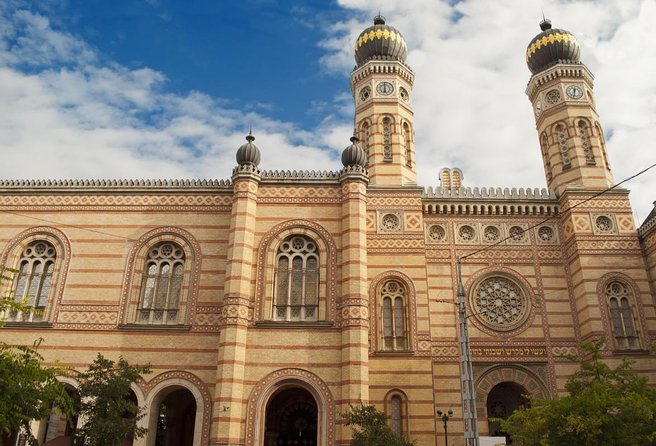
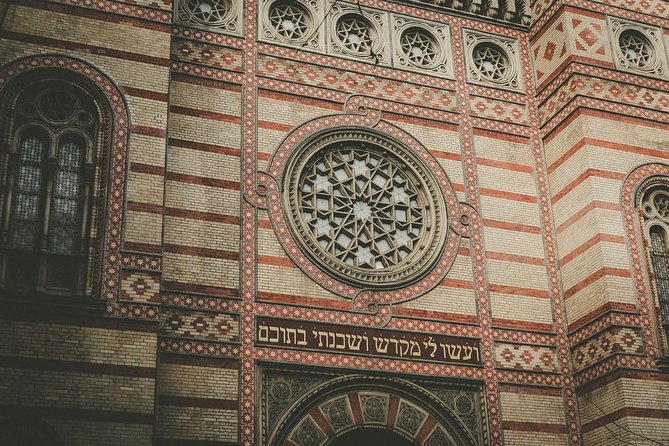
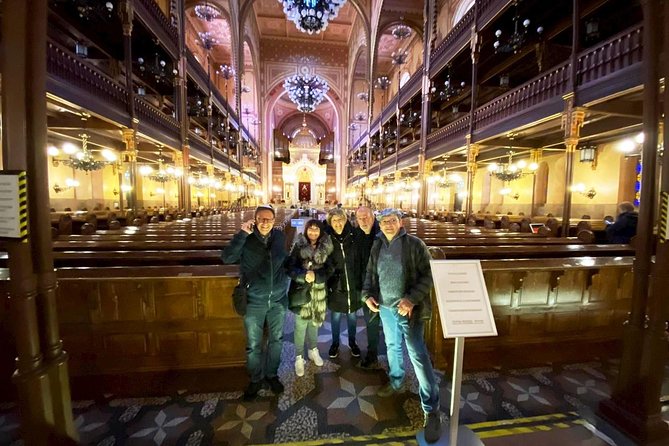
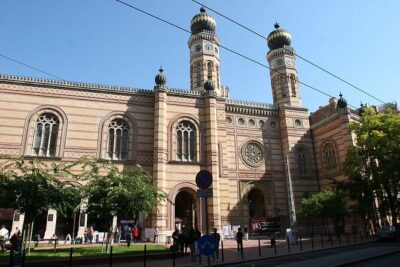
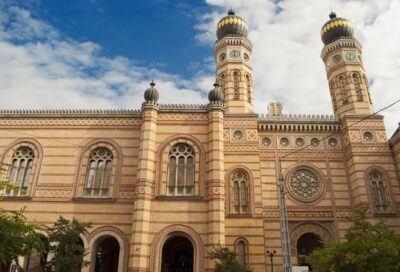
Dohány Street Synagogue is the main attraction and the place where the tour’s scale becomes clear. It is described as the largest Jewish house of worship in Europe, and its Moorish Revival design is far more ornate than many people expect from a synagogue.
The outside gives you the first lesson in Budapest’s Jewish diversity. The building does not look like a plain neighborhood prayer hall. Its grand form reflects the standing and ambitions of the Jewish community that built it, as well as the distinct Jewish religious culture that developed in Budapest.
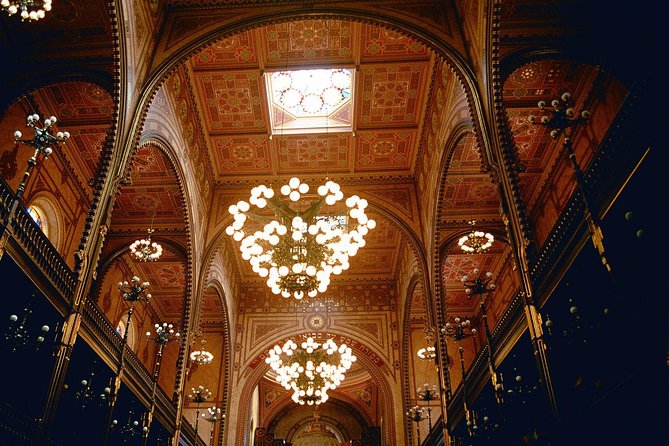
Inside the complex, the guided visit includes more than the main sanctuary. You also see the Temple of Heroes, the Jewish Museum, and a Memorial Park. That combination is useful because it places worship, community life, memory, and loss in one setting.
The Jewish Museum adds material context to the building. Rather than treating the synagogue as a single photo stop, your guide can explain how religious objects and community institutions fit together. The Memorial Park then shifts the mood toward remembrance.
An entrance ticket is not included in the $123 tour price. The listed individual charge is 14,500 Ft. Check the current amount when booking, but budget for it from the start. The extra cost is important when comparing this walk with a general city tour that may include admissions.
Dress also matters. The synagogue asks you to cover your shoulders and knees. This is an easy detail to miss when packing for a warm Budapest day, so bring suitable clothing or plan around the visit.
The guide’s role here makes a major difference. The tour is led in English by a historian, with guides described as professors, doctoral students, historians, journalists, art critics, and published authors. Orsolya is one named guide praised for her thoughtful, careful explanations, while Endres is noted for giving a detailed account of the Great Synagogue and the surrounding Jewish community.
Comparing Kazinczy Street and Rumbach Street
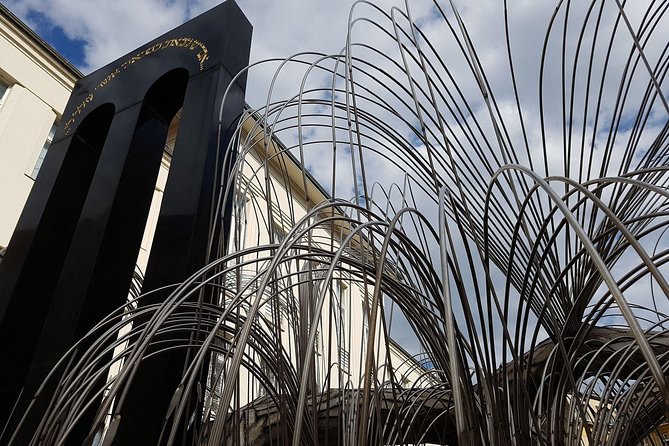
After Dohány, the walk takes you to the neighboring ghetto wall memorial, erected in 2014. The physical remains and later memorial help connect the present street layout with the period when Jewish life was restricted and confined.
This is one of the strongest parts of the route because it prevents the history from feeling sealed inside a museum. You are walking through streets that now serve ordinary city life, while the guide explains the events that changed their meaning.
The route also passes a luxurious mikve, or Jewish ritual bath. The stop introduces an aspect of Jewish practice that is often left out of broad city tours. It helps you see that Jewish community life depended on more than synagogues. Religious customs required spaces for study, worship, family life, and ritual.
At Kazinczy Street, you see the exterior of the Art Nouveau Orthodox synagogue. The tour does not present Budapest’s Jewish population as one single group. Instead, it points to different streams of Judaism and the different buildings they used.
That distinction is valuable for anyone who wants more than a basic Holocaust tour. Dohány, Kazinczy, and Rumbach are not interchangeable sights. Their styles and traditions reflect different choices within the Jewish community.
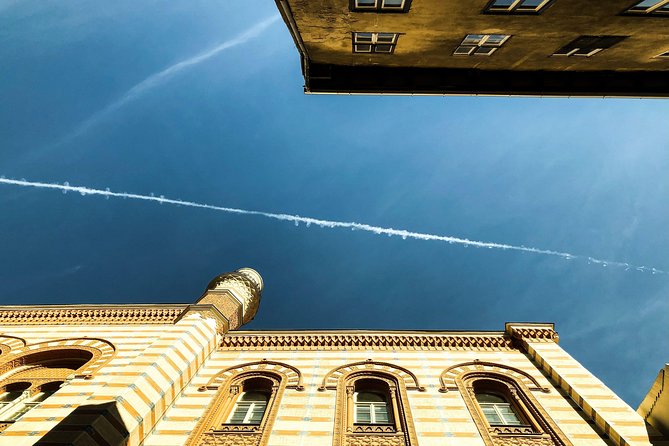
Rumbach Street Synagogue introduces the Status Quo Ante stream of Judaism. You mainly observe its impressive facade on this route, so do not expect the same interior visit as at Dohány. Still, the exterior works well as a comparison point. It shows another architectural expression and gives your guide a chance to explain a Jewish tradition that many people have never encountered.
The route’s variety is one of its main strengths. In a short time, you move from a grand synagogue to a memorial wall, a mikve, an Orthodox facade, and a Status Quo Ante synagogue. Each stop adds a different piece rather than repeating the same story.
From community life to the Shoes on the Danube
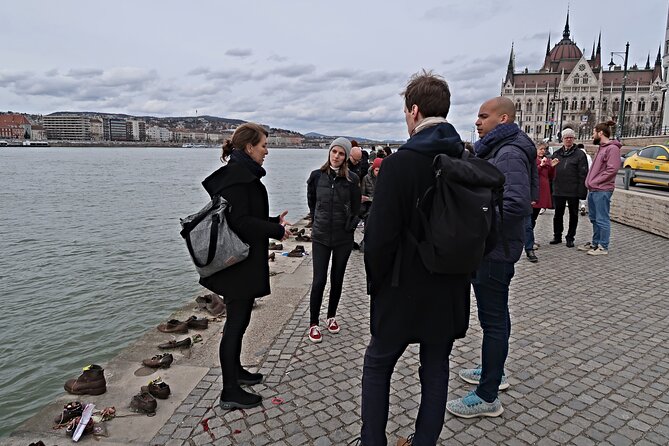
The tour concludes at the Shoes on the Danube Bank memorial. Small metal shoes line the riverbank, recalling Jewish people who were killed there during the war. The site is simple, exposed, and difficult to treat as just another sightseeing stop.
Your guide uses this final pause to reflect on the lives lost and on the renewal of Budapest’s Jewish community today. Ending at the Danube gives the walk a clear emotional shape. You first see the community’s public life, then its varied institutions, then the marks left by persecution, and finally a memorial beside the river.
I would not rush this last stop. The memorial is most effective when you have time to look closely and listen. Since the tour ends here, you can also decide how to continue your day without needing to retrace the entire route.
The walk may also suit people who want to connect their own family research or memorial visit with local history. One group arranged to clean several stumbling stones honoring Holocaust victims, and Endres supplied materials and joined them. That was a special request rather than a standard advertised part of every tour, but it shows the level of personal attention that may be possible when you explain your interests in advance.
A few more Budapest trips to weigh up
- Budapest: Buda Castle Walk with Saint Stephen’s Hall
★ 4.5 · 3,012 reviews - Big Bus Budapest Hop-On Hop-Off Bus and Walking Tour
★ 3.5 · 2,206 reviews - Budapest: Buda Castle District Walking Tour
★ 4.6 · 2,108 reviews - Budapest City Landmarks Walking Tour in 2 Hours
★ 5.0 · 2,048 reviews
What the historians add to the experience
The biggest difference between this walk and a self-guided route is the guide’s ability to connect buildings with social change. The subject covers roughly the last two hundred years of Jewish Budapest, with earlier periods included for context. That is a lot to cover in three hours, so the quality of explanation matters more than the number of stops.
A guide such as Orsolya may check with your group before moving on, allowing the pace to fit your questions and attention span. Endres has been particularly attentive to detailed historical questions and memorial acts. Guides can also adjust the emphasis for a private or small group, though the exact guide depends on availability.
The format is a good match for you if you prefer discussion to a scripted audio guide. It is less suited to someone who wants a fast list of landmarks with little historical explanation. The tour asks you to listen, compare religious traditions, and think about the human cost of the events being discussed.
The subject is serious, but the route is not only about tragedy. The opening focus on Herzl, the synagogue architecture, and the different religious streams give you a fuller picture of Jewish Budapest before the war. That balance is essential. It lets you understand what was lost instead of presenting loss without the life that came before it.
Is $123 a fair price?
At $123 per person, this is not a budget walk. The Dohány ticket adds another 14,500 Ft for an individual, making the total noticeably higher than the headline price.
The value depends on what you want from the visit. If you only need directions and a quick look at the major buildings, the cost will feel high. If you want a private or small-group conversation with a specialist who can explain Jewish history, architecture, religious differences, and the Holocaust in one connected route, the price becomes easier to justify.
The tour includes three hours with a historian guide, but not the synagogue entrance. That distinction should guide your comparison. A less expensive city walk may cover the neighborhood from the outside, while this experience is built around serious interpretation and a visit to the Dohány complex.
A small group can also improve the value. One booking became a private-feeling tour for just one couple because no other participants joined. That cannot be guaranteed, but private and small-group options are available. If personal attention matters to you, choose the option that clearly identifies the group format.
The strong rating of 4.9 from 26 reviews fits the tour’s main strength: careful, personal guiding. Still, a high rating does not remove the cost or the emotional weight of the subject. You should book it because the topic matters to you, not simply because the score is high.
Who should book this walking tour?
I would choose this tour if you want Jewish Budapest explained through both buildings and human stories. It suits first-time visitors who want a structured introduction, as well as people with a particular interest in Jewish history, architecture, Zionism, or Holocaust remembrance.
It is also a good choice for a family or small group that wants to ask questions. The guides can come from academic and cultural fields, and the personal format may allow the route to respond to your interests.
You should think twice if you dislike walking, have limited time, or want a light sightseeing outing. The route covers several stops over three hours, and the final memorial requires quiet attention. The separate Dohány admission also makes it less attractive for anyone watching every expense.
For the best experience, dress for synagogue entry, wear comfortable shoes, and tell the guide ahead of time if you have family connections, research questions, or a memorial request. Those details can turn a standard route into a more meaningful one.
Should you book A Journey through Jewish Budapest?
Book it if you want a serious, well-connected look at Jewish life in Budapest before the war and the destruction that followed. The combination of Dohány Synagogue, Kazinczy Street, Rumbach Street, the ghetto wall, and Shoes on the Danube gives you far more context than a single memorial visit.
The price is high, especially with the separate 14,500 Ft synagogue ticket. But for a private or small-group tour led by a historian, the fee can be worthwhile. I would make this a priority for anyone who values careful interpretation, direct conversation, and an honest account of both Jewish community life and persecution.
FAQ
How long is the Jewish Budapest walking tour?
The tour lasts three hours.
Where does the tour meet?
The listed meeting point is Kamara Café at Dohany utca 1/A. The starting location can depend on the option selected.
What language is the tour offered in?
The live tour guide speaks English.
Is the Dohány Synagogue entrance ticket included?
No. The individual Dohány Synagogue ticket is listed separately at 14,500 Ft.
What should I wear to the Dohány Synagogue?
You should cover your shoulders and knees when visiting the synagogue.
Which places does the tour visit?
The route includes the area around Madách Imre Way, Dohány Street Synagogue, Kazinczy Street Synagogue, the Ghetto Memorial Wall, Rumbach Street Synagogue, and the Shoes on the Danube Bank memorial.
Can I book a private or small-group tour?
Yes. Private and small-group options are available.
Just added around Budapest
- From Budapest: Guided Tour of Eger with Wine Tasting★ 4.5 · 6 reviews
- Budapest: Private Walking Tour with a Local Guide★ 3.6 · 6 reviews
- Budapest: Danube River Views Bike Ride★ 4.8 · 23 reviews
- Trash Art Museum: Hungary’s First Scrap Metal Exhibition★ 4.3 · 72 reviews
- Walk to recent and aged spiritual sanctuaries near Budapest★ 5.0 · 5 reviews
- Budapest: 3-Hour Trabant Sightseeing Tour★ 4.7 · 28 reviews
- True Crime Walking Tour in the Buda Castle district★ 5.0 · 26 reviews
- Audio visual multi-sensory chefs journey dinner experience★ 5.0 · 3 reviews
Jewish Heritage Tours, compared.
Budapest Jewish Heritage Memorial Walking Tour & Synagogue Entry
Read our review →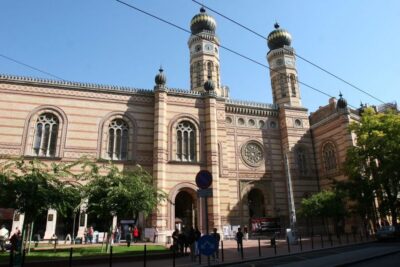
Jewish Heritage Guided Tour with Synagogue Ticket
Read our review →
Past and Present of Budapest Jewish District Tour
Read our review →
Budapest Dohany Synagogue & Hungarian Jewish Museum & free extras
Read our review →
Jewish History Guided Walking Tour with Historian
Read our review →Browse the lists this tour appears in