
Reviewed · WALKING TOURS
Budapest 3-Hour Walking Tour in Italian
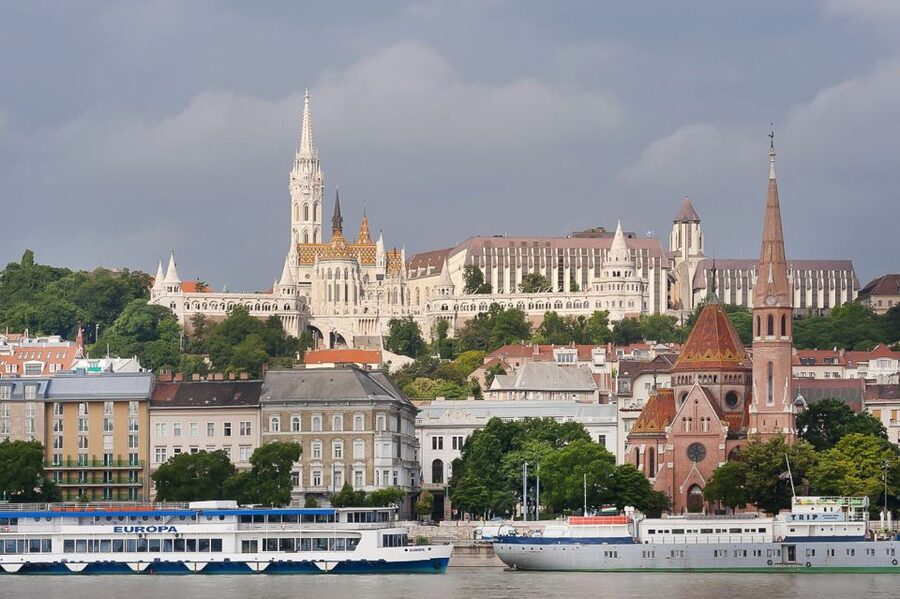
Budapest’s best introduction comes from seeing both halves of the city in one go. This three-hour Italian walking tour links central Pest with the Buda Castle area, so you get grand churches, royal buildings, Gothic stonework, and Danube views without spending your first day figuring out the city alone. I especially like the mix of famous sights and the strong historical thread, from Hungary’s medieval beginnings to its modern democratic changes.
I also like that the guide speaks Italian throughout and that private or small-group options are available. Guides such as Caterina, Katalin, and Elisabetta have been praised for detailed explanations and a warm, personal manner. The main tradeoff is pace: three hours covers a lot, and you will use public transport between Pest and Buda, with four tickets costing an additional 1,400 HUF per person.
In This Review
- Key points at a glance
- Starting beside St. Stephen’s Basilica
- Reading Budapest through Pest
- Crossing the Danube into Buda
- Entering the Buda Castle area
- Matthias Church and Gothic Budapest
- Fishermen’s Bastion and the city views
- How the history is handled in three hours
- Is $41 a fair price?
- Who will enjoy this walk most?
- Practical advice before you go
- Should you book the Budapest Italian walking tour?
- FAQ
- How long does the Budapest Italian walking tour last?
- What language is the tour conducted in?
- Where is the meeting point?
- Which parts of Budapest does the tour visit?
- Which landmarks are included?
- Does the tour cross the Danube?
- Are public transport tickets included?
- Is this a private tour?
- What should I bring?
- Can I cancel the booking?
Key points at a glance
- Two sides of Budapest in one walk: Begin near St. Stephen’s Basilica in Pest, then cross the Danube to Buda Castle.
- Italian explanations throughout: The tour is designed for Italian-speaking visitors and includes a live Italian-speaking guide.
- Major landmarks, not filler stops: Expect the Royal Palace, President’s Palace, Matthias Church, Castle Quarter, and Fishermen’s Bastion.
- Strong history focus: The route follows roughly 1,100 years of Hungarian history, including conquest, monarchy, conflict, and democratic change.
- Good for a short stay: It gives you a useful first look at Budapest in three hours, though it is not designed for long visits inside every monument.
- Bring sensible clothing: Comfortable shoes are important, and shorts and sleeveless shirts are not allowed.
Starting beside St. Stephen’s Basilica
The meeting point is beside St. Stephen’s Basilica, in front of the California Coffee Company coffee shop. That is a handy place to begin because the basilica is one of Budapest’s most recognizable buildings, and the surrounding central Pest streets give you an immediate sense of the city’s scale and style.
St. Stephen’s Basilica is an impressive first stop. Its size and decoration introduce you to Budapest’s grand architectural taste before the tour moves into the political and royal story of the country. Your guide will explain the sights in Italian, giving you a chance to ask questions as you go instead of trying to piece together the city from plaques and guidebook captions.
The start also works well for a short visit. You do not spend the opening hour on a long transfer to an outlying district. You meet in the center, begin with a major landmark, and then move through the city in a clear east-to-west progression.
Do not treat this opening section as a museum visit. The experience is mainly a guided outdoor walk, and the supplied details do not promise entry into St. Stephen’s Basilica. If you want a close look at the interior, ask the guide how much time is available, but expect the main value here to be the explanation and the city walk.
A few more Budapest trips to weigh up
- Budapest: Buda Castle Walk with Saint Stephen’s Hall
★ 4.5 · 3,012 reviews - Big Bus Budapest Hop-On Hop-Off Bus and Walking Tour
★ 3.5 · 2,206 reviews - Budapest: Buda Castle District Walking Tour
★ 4.6 · 2,108 reviews
Reading Budapest through Pest
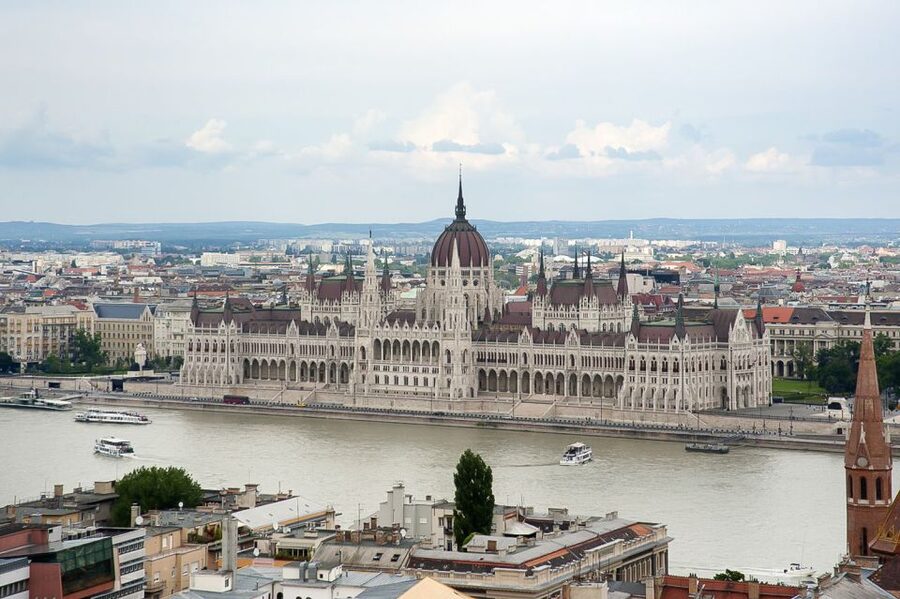
The Pest portion gives you the modern capital’s central face before the route turns toward the older Buda side. This matters because Budapest is not one compact historic center. It is a city formed from two distinct areas divided by the Danube, and the tour helps you understand that relationship early.
Your guide places the buildings in the story of Hungary rather than presenting them as isolated photo stops. The aim is to connect the country’s conquest, royal periods, upheavals, and recent democratic changes to the streets in front of you. That approach is particularly useful if you know the monuments but not the political story behind them.
The information is delivered in Italian, which can make a major difference with names, dates, and complicated changes of government. You can ask for clarification in your own language and get a local perspective rather than relying on a translated audio guide.
The Pest section is also a good test of the tour’s pace. You will be walking, listening, and taking photographs at the same time. If you prefer a slow architectural study with long pauses at each building, a private tour should give you more control. If you want an efficient orientation, the moving format makes sense.
Crossing the Danube into Buda
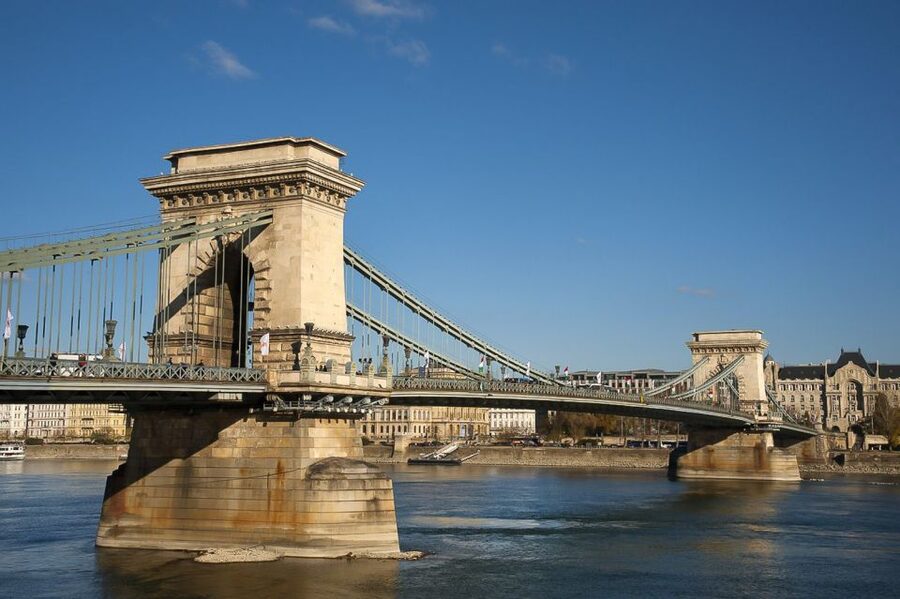
The route crosses the Danube using public transport. Four public transport tickets are required per person, costing 1,400 HUF in total, and those tickets are not included in the tour price. This is a small but important cost to plan for, especially if you are comparing the advertised $41 price with an all-inclusive excursion.
Using public transport is practical. It avoids turning the walk into a long uphill trek from Pest and shows you how the two sides of Budapest connect in ordinary daily life. You should still expect some walking once you reach Buda, particularly around the Castle Quarter.
This is one of the tour’s more useful choices. A private vehicle might be more comfortable, but it would remove part of the city experience and give you less sense of how Budapest functions. Public transport also keeps the tour focused on landmarks rather than time spent in traffic.
Keep your tickets ready and wear shoes that can handle several hours on foot. The tour is described as suitable for all ages and types of visitors, but that does not mean it is a seated sightseeing ride. The route includes historic areas and a fortified castle district, so practical footwear is the right choice.
Entering the Buda Castle area
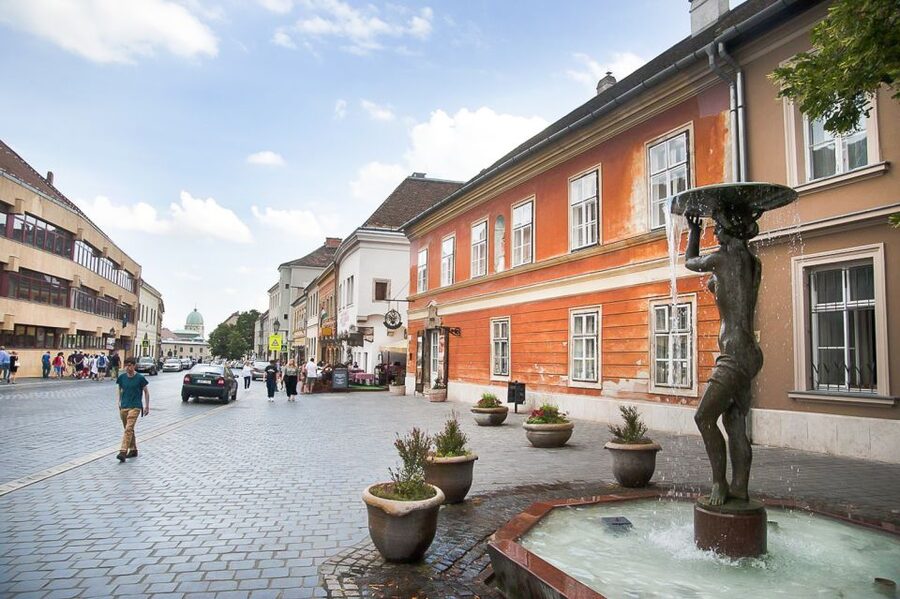
Buda Castle gives the second half of the tour a different mood. The fortified district is tied to Hungary’s medieval and royal past, and the route includes the Royal Palace, the President’s Palace, and the Castle Quarter.
The Royal Palace is the major historical anchor. Its name points to the centuries when Buda served as a seat of power, while its current presence helps explain the importance of the hill above the river. Your guide can connect the palace area to the wider story of the Hungarian kingdom, including the difficult changes that shaped the country over more than a thousand years.
The President’s Palace adds a modern political layer. Seeing it alongside the royal buildings lets you compare older forms of power with the institutions of present-day Hungary. That movement from monarchy to modern government is one of the strongest parts of the tour’s stated theme.
The Castle Quarter is best appreciated as a whole district rather than as one single building. You get fortified walls, historic streets, major churches, and lookout points in a compact area. At the same time, the tour does not promise admission to every site, so check your expectations. This is a guided introduction to the quarter, not a full palace and church interior tour.
Same riverbank, a completely different kind of day:
- Budapest: Unlimited Prosecco, Beer and Aperol Spritz Cruise
★ 4.8 · 25,310 reviews - Budapest: Széchenyi Spa Day Ticket with Optional Upgrades
★ 4.3 · 23,911 reviews - Budapest: Nighttime or Daytime Sightseeing Cruise
★ 4.2 · 21,062 reviews - Budapest: 1-Hour Evening Sightseeing Cruise with Drink
★ 4.5 · 8,330 reviews
Matthias Church and Gothic Budapest
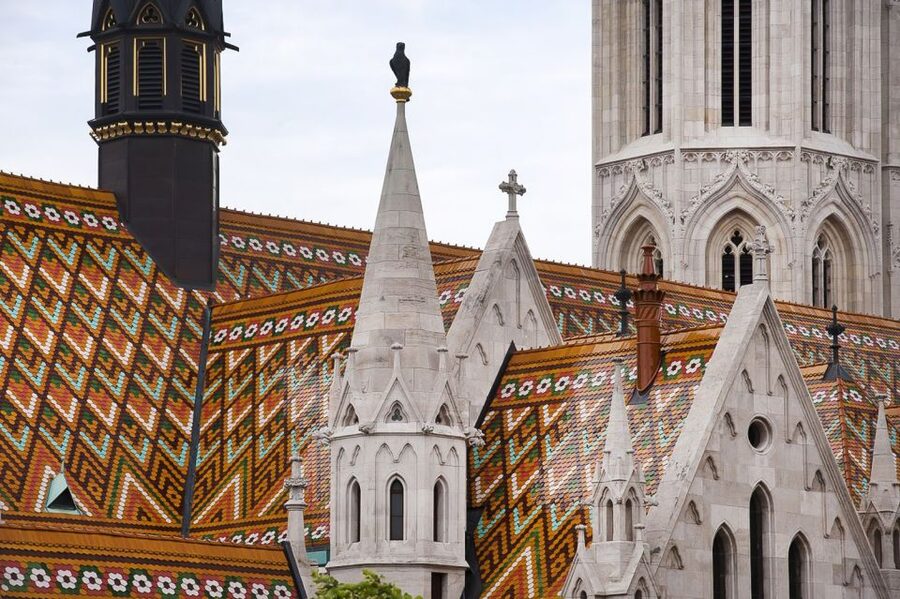
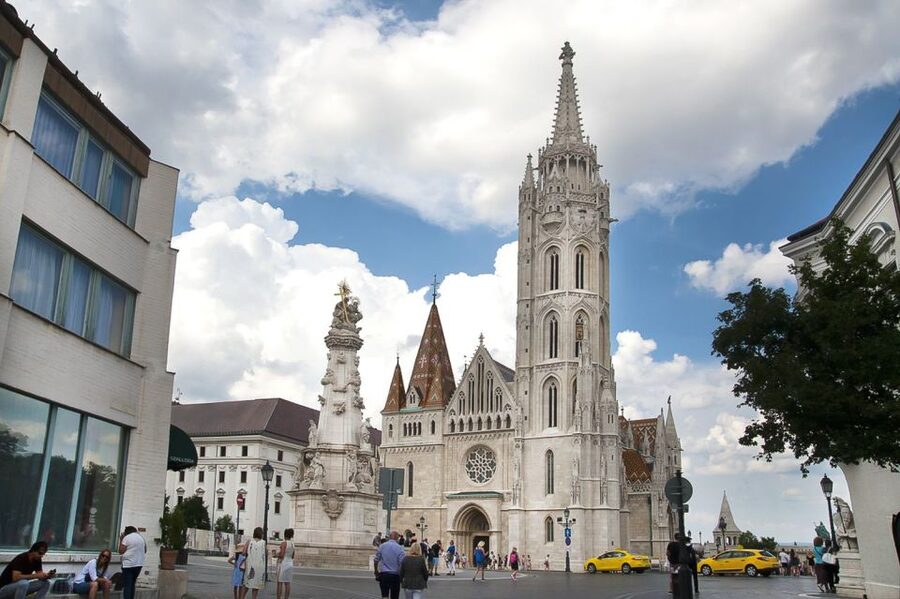
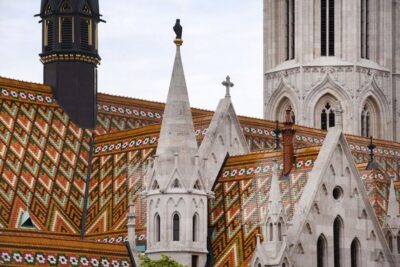
Matthias Church is the architectural highlight of the Buda section. Its Gothic character gives you a sharp contrast with the grand basilica in Pest. The tour uses this contrast well: you see two major religious buildings, each tied to a different part of the city and a different stage in Hungarian history.
Your guide explains the church as part of the castle district rather than leaving it as a quick photo stop. That context is valuable because medieval churches can look beautiful while their meaning remains unclear. With an Italian-speaking guide, you can ask about the building’s place in the story of the kingdom and understand why it matters beyond its facade.
The supplied information does not state that entrance to Matthias Church is included. Plan on viewing it as part of the walking route unless the guide confirms otherwise. If you want extended time inside, a private or small-group option may be the better fit, since it gives you more chance to request extra explanation or a slower stop.
This is also a place where comfortable clothing helps. You are asked not to wear shorts or sleeveless shirts, so pack accordingly. The rule is easy to overlook during warm weather, but it applies to the experience and may also suit visits to religious buildings.
Fishermen’s Bastion and the city views
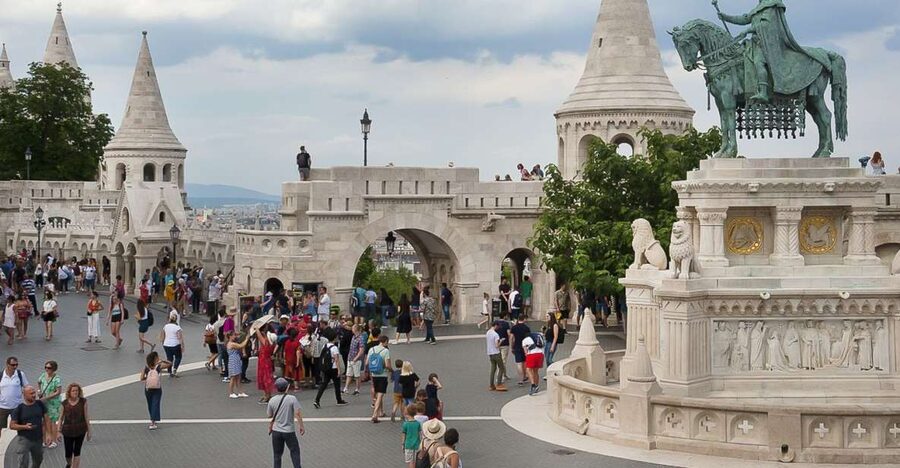
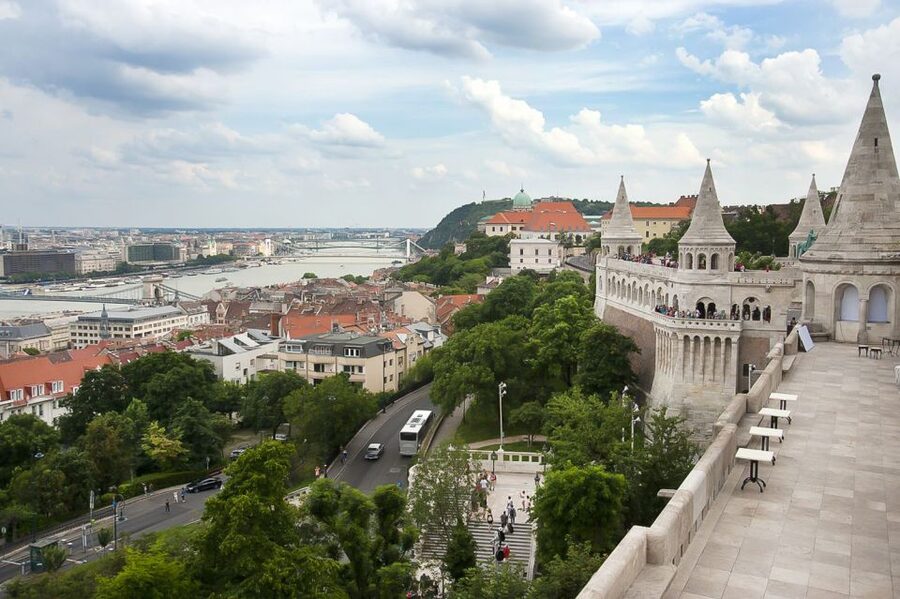
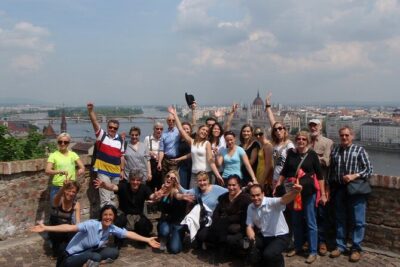
Fishermen’s Bastion provides the tour’s clearest viewpoint over Budapest. From the Buda side, you can take in the broad city setting and the Danube relationship that the tour has been building toward since the opening in Pest.
The viewpoint is not just a reward at the end. It helps you see why Budapest developed around the river and why Buda and Pest feel different even though they now form one capital. After hearing about churches, palaces, fortifications, and government buildings, you get the visual proof of how they fit together.
Bring a camera, but do not let the view make you lose track of the guide. This is one of the places where a short stop can turn into a rush if the group has to keep moving. A small group or private booking is worth considering if you care more about questions and photographs than keeping to a tight schedule.
The tour description calls the city views among the most beautiful in Budapest. That is a fair reason to include the Buda Castle area, but the exact amount of time at Fishermen’s Bastion is not specified. You should think of it as part of the route, not as a dedicated viewpoint session.
How the history is handled in three hours
The tour covers about 1,100 years of Hungarian history, from the conquest of the country to recent democratic changes. That is a lot of ground for one afternoon, so the value depends on your expectations.
You will not receive a university course in three hours. You will get a framework that helps the monuments make sense. The guide can show how Hungary’s royal past, religious buildings, fortifications, political changes, and modern institutions connect. That framework is useful for the rest of your stay because later visits to museums and historic sites will have a clearer place in the story.
The Italian language is a central part of the experience, not a minor convenience. Historical names and political changes can be hard to follow in a second language, especially when the city has several versions of names and a complicated past. An Italian-speaking guide gives you the chance to focus on the meaning of what you are seeing.
The strongest feedback about the guides has focused on detailed explanations, perfect Italian, kindness, and a friendly style. Caterina is described as especially available and clear. Katalin is praised for being prepared, welcoming, and able to explain both Buda and Pest. Elisabetta is noted for offering many details in polished Italian. These comments suggest that the guide’s delivery is a major part of the tour’s value.
Is $41 a fair price?
At $41 per person, the tour sits in a reasonable range for a three-hour guided city introduction, especially if you value Italian instruction and local questions over a simple self-guided route. You are paying for a live guide, route planning, historical interpretation, and the convenience of seeing Pest and Buda in one outing.
The price does not include four public transport tickets, which cost 1,400 HUF per person. Add that amount when comparing options. The supplied information also does not include admission to St. Stephen’s Basilica, Matthias Church, or other paid interiors, so you should not assume that entry fees are covered.
The private or small-group choices may offer better value for couples, families, or friends who want to set the pace. The private version has been specifically recommended for a short stay when you want to get as much as possible from the explanations. A larger group can cost less per person, but it may leave less time for individual questions.
I would choose this tour if I had only a few days in Budapest and wanted a strong orientation in Italian. I would not choose it as my only sightseeing activity if I wanted long interior visits, museum time, or a slow photographic walk.
Who will enjoy this walk most?
This experience suits first-time visitors who want a clear introduction to Budapest’s main historic areas. It is especially useful if you prefer learning through a conversation rather than reading a guidebook while walking.
It also fits visitors with a short stay. In three hours, you see major landmarks on both sides of the Danube and hear the basic story needed to make sense of them. You can then return to the sites that interest you most.
Families and mixed-age groups can also use it as a first-day plan, since the activity is described as suitable for all ages. Still, the walk is not a passive ride. Anyone with mobility concerns should consider the amount of walking in the Castle Quarter, though the supplied information does not give a detailed accessibility description.
Italian-speaking couples and small groups may get the most from the private option. The warm guide style noted for Caterina, Katalin, and Elisabetta sounds particularly well suited to people who want to ask questions without feeling lost in a crowd.
Practical advice before you go
Meet beside St. Stephen’s Basilica, in front of the California Coffee Company coffee shop. Arrive with comfortable shoes, four public transport tickets per person or the funds to buy them, and clothing that follows the stated dress rules.
Shorts and sleeveless shirts are not allowed. This is especially important in warm weather, when a walking tour can make light clothing tempting. Choose something comfortable but suitable for visits around churches and historic buildings.
The tour lasts three hours, and starting times vary, so check availability when booking. Free cancellation is available up to 24 hours in advance for a full refund, and you can reserve now and pay later. Those terms are useful if your Budapest schedule is still changing.
The tour has a 4.6 rating from 217 reviews, with repeated praise for the guides’ kindness, preparation, and detailed explanations. I would treat that as evidence that guide quality is central here, while still remembering that the experience can vary with group size and the exact guide assigned.
Should you book the Budapest Italian walking tour?
Book it if you want to see the essential historic sides of Budapest in one well-organized outing and you prefer a live explanation in Italian. The combination of St. Stephen’s Basilica, Buda Castle, Matthias Church, and Fishermen’s Bastion gives you a strong first look at the city, while the historical thread keeps the walk from becoming a string of unrelated photo stops.
Choose the private or small-group version if you have limited time, care about detailed explanations, or want more freedom for questions and photographs. Skip it if you want extensive monument interiors or a slow, unhurried walk, since three hours must cover both Pest and Buda.
For most Italian-speaking first-time visitors, I would book it early in the stay. It gives you the city’s basic shape, its major symbols, and enough history to make the rest of Budapest easier to read.
FAQ
How long does the Budapest Italian walking tour last?
The tour lasts three hours.
What language is the tour conducted in?
The tour is conducted in Italian with a live Italian-speaking guide.
Where is the meeting point?
Meet next to St. Stephen’s Basilica, in front of the California Coffee Company coffee shop.
Which parts of Budapest does the tour visit?
The route covers central Pest and the Buda Castle area.
Which landmarks are included?
The tour includes St. Stephen’s Basilica, the Royal Palace, the President’s Palace, the Castle Quarter, Matthias Church, and Fishermen’s Bastion.
Does the tour cross the Danube?
Yes. You cross from Pest to Buda using public transport.
Are public transport tickets included?
No. Four public transport tickets are required per person, costing 1,400 HUF in total.
Is this a private tour?
Private and small-group options are available.
What should I bring?
Bring comfortable shoes. You should also plan for the public transport ticket cost.
Can I cancel the booking?
Yes. You can cancel up to 24 hours in advance for a full refund. You can also reserve now and pay later.
Just added around Budapest
- From Budapest: Guided Tour of Eger with Wine Tasting★ 4.5 · 6 reviews
- Budapest: Private Walking Tour with a Local Guide★ 3.6 · 6 reviews
- Budapest: Danube River Views Bike Ride★ 4.8 · 23 reviews
- Trash Art Museum: Hungary’s First Scrap Metal Exhibition★ 4.3 · 72 reviews
- Walk to recent and aged spiritual sanctuaries near Budapest★ 5.0 · 5 reviews
- Budapest: 3-Hour Trabant Sightseeing Tour★ 4.7 · 28 reviews
- True Crime Walking Tour in the Buda Castle district★ 5.0 · 26 reviews
- Audio visual multi-sensory chefs journey dinner experience★ 5.0 · 3 reviews
Walking Tours, compared.
Budapest City Landmarks Walking Tour in 2 Hours
Read our review →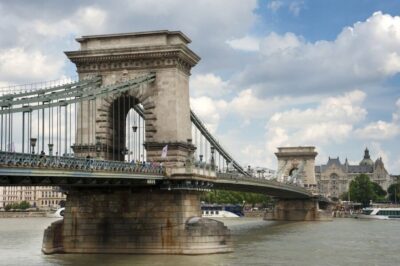
3-Hour Orientation Walking Tour of Buda and Pest
Read our review →

Budapest Historical Sightseeing – Free Walking Tour
Read our review →
Budapest All in One Small Group Walking Tour with Strudel Stop
Read our review →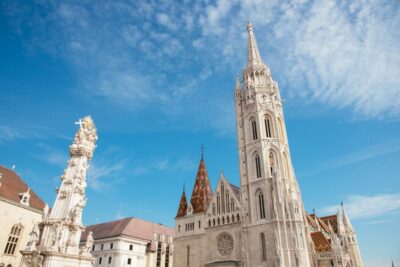
Buda Castle District Walking Tour with a Historian
Read our review →Browse the lists this tour appears in