
Reviewed · WALKING TOURS
Budapest: 3-Hour Walking Tour of Pest with a Historian
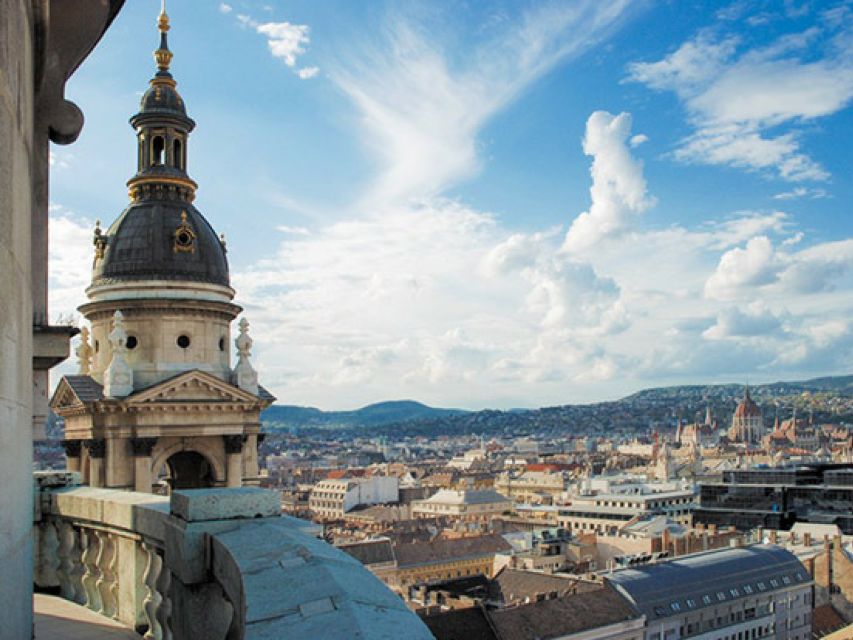
Budapest’s Pest side makes the most sense when you connect its grand buildings with the difficult, fascinating story behind them. This three-hour walk does that well, moving from the Danube Promenade and Gresham Palace to St. Stephen’s Basilica, Andrássy Avenue, Heroes’ Square, and the Millennium Underground.
I like two things here. The small group, limited to 10, gives you room to ask direct questions, and the tour includes entry to St. Stephen’s Basilica rather than leaving you to admire its exterior. I also like the mix of landmark sightseeing and everyday Budapest: guides such as Judit, Greg, Barbara, and Monica have explained not only Hungary’s past, but what it is like to live there now.
The main consideration is pace. You cover a lot of central Pest in three hours, including a subway ride, so this is an orientation walk rather than a slow study of every building. Wear comfortable shoes, and remember that much of the experience is outdoors.
In This Review
- Key points at a glance
- Starting at Erzsébet Square in central Pest
- The Danube Promenade and Gresham Palace
- Zrínyi Street and St. Stephen’s Basilica
- Andrássy Avenue and the Opera House
- Riding the Millennium Underground
- Heroes’ Square and 1,000 years of Hungary
- History that connects with modern Budapest
- Is $57 a fair price?
- Who will enjoy this Pest walk?
- Practical details before you book
- FAQ
- How long is the Budapest Pest walking tour?
- What language is the tour conducted in?
- How many people can join the group?
- Is entry to St. Stephen’s Basilica included?
- Does the tour include public transportation?
- Where does the tour meet?
- Can I cancel the tour for a refund?
- Should you book this tour?
Key points at a glance
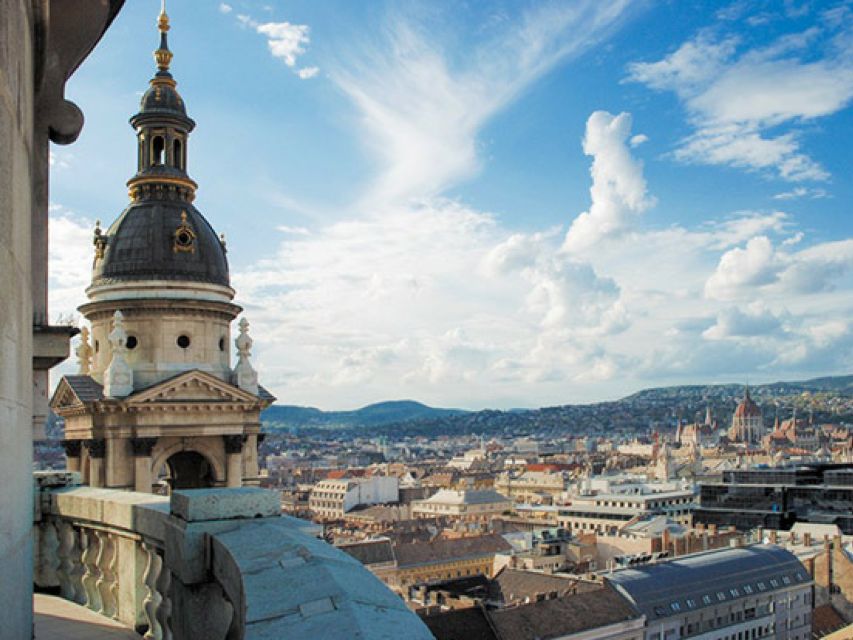
- A history walk with a present-day angle: Expect discussion of Hungary’s past, politics, culture, and the different outlooks often associated with Pest and Buda.
- St. Stephen’s Basilica inside: Your admission ticket is included, giving you time to see Budapest’s largest church beyond its impressive facade.
- A ride on Europe’s oldest continental underground: The Millennium Underground adds a short but memorable transport experience to the walking route.
- Andrássy Avenue and Heroes’ Square: You see two of Pest’s grandest civic spaces and learn about the people and events shaping roughly 1,000 years of Hungarian history.
- A genuinely small group: With up to 10 participants, questions and route adjustments are easier than on a large coach tour.
- A useful first-day tour: The combination of major sights, local explanations, and practical food and sightseeing suggestions can help you plan the rest of your Budapest stay.
Starting at Erzsébet Square in central Pest
The meeting point is in front of the Kempinski Hotel Corvinus Budapest, at Erzsébet tér 7, facing the Ferris wheel. This is a handy place to begin because Deák Ferenc tér is served by the M1, M2, and M3 subway lines, along with several buses and trams.
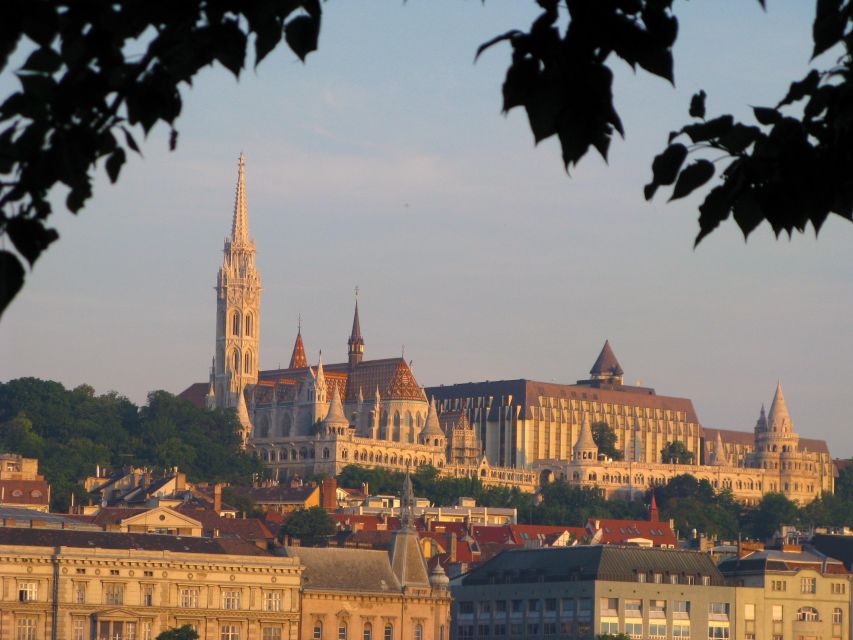
Your guide meets you in the heart of Pest, the flatter and younger eastern side of Budapest. That distinction matters. Budapest was formed from Buda, Pest, and Óbuda, but the two sides still feel different. Buda is associated with hills, the Castle District, and a more residential character. Pest is where you find broad avenues, major government and cultural buildings, shopping streets, cafes, and much of the city’s day-to-day movement.
The guide sets the tone early. Gergely Molnár, also called Greg, has opened the tour with a short account of Hungarian history before moving into the sights. That approach is useful because Hungary’s story can otherwise feel like a pile of names, invasions, rulers, and political changes. A basic timeline helps you understand why the buildings around you look the way they do.
The guides vary by departure. Judit, Barbara, Monica, Andrea, Raymond, Greg, Gergely, Noemi, and others have led this experience. The strongest pattern is a guide who explains clearly, welcomes questions, and adds personal memories. Monica, for example, has brought stories from growing up in Hungary, while Judit has discussed modern Hungarian life and politics along with earlier periods.
A few more Budapest trips to weigh up
- Budapest: Buda Castle Walk with Saint Stephen’s Hall
★ 4.5 · 3,012 reviews - Big Bus Budapest Hop-On Hop-Off Bus and Walking Tour
★ 3.5 · 2,206 reviews - Budapest: Buda Castle District Walking Tour
★ 4.6 · 2,108 reviews
The Danube Promenade and Gresham Palace
The route takes in the Danube Promenade, one of Pest’s best places to understand Budapest’s setting. Across the river, Buda rises toward the Castle District, while Pest spreads out behind you in a broad grid of streets and monumental buildings.
This part of the walk is less about ticking off a single attraction and more about learning how the city works. Your guide can point out how the river divides the city visually while the bridges connect its history and daily life. You also get a clear sense of why Budapest has long been admired for its architecture and urban setting.
Gresham Palace brings a different style. Its Art Nouveau decoration gives the walk an immediate visual lift, even if you only see the building from outside. The historic Academy of Sciences adds another important facade and helps place Budapest’s cultural and intellectual life in the wider story of the city.
The useful thing about a historian-led walk is the chance to ask what you are looking at instead of simply taking a photograph and moving on. You can ask about a building’s purpose, the period in which it was built, or how it fits into Hungary’s changing political story. The experience is designed for that kind of conversation.
Zrínyi Street and St. Stephen’s Basilica
Zrínyi Street leads you through a more intimate section of central Pest. Its cobblestones contrast with the grand open spaces nearby, and the route shows how quickly Budapest can shift from formal architecture to smaller streets and close-up city details.
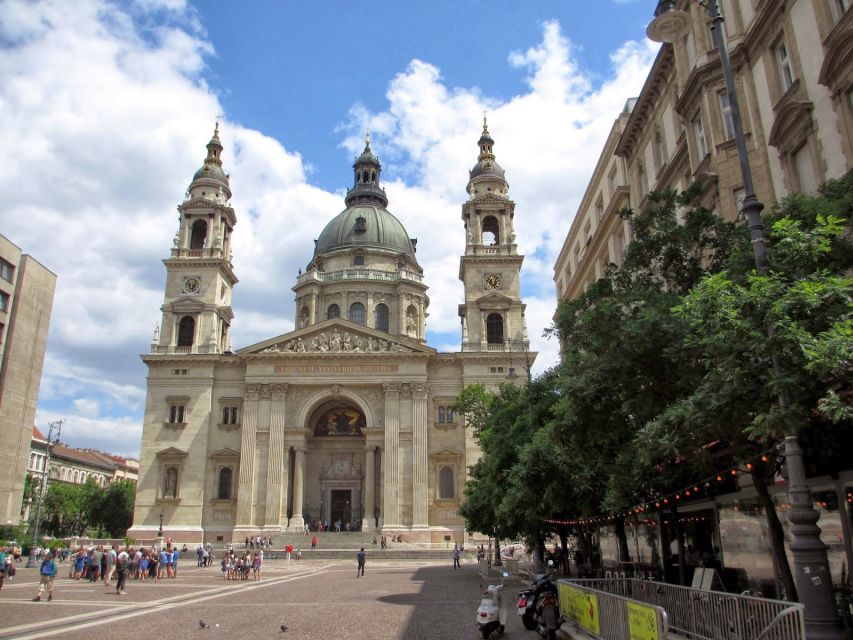
The major stop is St. Stephen’s Basilica. The name refers to Stephen I, Hungary’s first king, and the church is the largest in Budapest. The included entrance ticket is an important part of the tour’s value because you are not limited to a quick exterior explanation.
Inside, your guide gives the building a place in the story of Hungarian identity and religion. The visit also provides a break from continuous walking and a chance to see the scale and decoration of the interior. Since the ticket is included, you do not need to decide during the tour if the stop is worth an extra admission charge.
Allow for the fact that this remains a group visit, not an extended architectural lecture. The basilica is one stop among many, and the tour has to keep moving. If you want to study every chapel, artwork, or detail at length, plan to return on your own.
Andrássy Avenue and the Opera House
From the basilica area, the route continues toward Andrássy Avenue, one of Budapest’s defining streets and a UNESCO World Heritage site. The avenue gives you a different view of Pest, with long perspectives and grand buildings replacing the tighter streets of the inner center.
The Hungarian State Opera is one of the key sights along the way. Even without a performance, its exterior helps explain the ambition of Budapest during the period when the city was developing into a major European capital. Your guide can place the avenue, the Opera House, and the surrounding architecture within the broader story of Hungary and the Austro-Hungarian period.
I find this section especially helpful for first-time visitors because it gives the city structure. Instead of seeing the Opera House as an isolated photo stop, you understand how it relates to the avenue, the central districts, and Budapest’s cultural life.
The route is not presented as a museum visit at every stop. You should expect exterior viewing at places such as the Opera House, the Academy of Sciences, Gresham Palace, and the Danube buildings. The included interior visit is St. Stephen’s Basilica.
Same riverbank, a completely different kind of day:
- Budapest: Unlimited Prosecco, Beer and Aperol Spritz Cruise
★ 4.8 · 25,310 reviews - Budapest: Széchenyi Spa Day Ticket with Optional Upgrades
★ 4.3 · 23,911 reviews - Budapest: Nighttime or Daytime Sightseeing Cruise
★ 4.2 · 21,062 reviews - Budapest: 1-Hour Evening Sightseeing Cruise with Drink
★ 4.5 · 8,330 reviews
Riding the Millennium Underground
A short ride on the Millennium Underground adds welcome variety. This is the oldest underground railway on the European continent, and it remains part of Budapest’s working public transport system.
The ride is not a long excursion, but it is more than a practical transfer. It shows how Budapest embraced modern urban transport and gives you a feel for a historic system that is still used today. Your subway ticket or tickets are included, so you do not need to sort that out separately during the tour.
For you, the main benefit is rhythm. Three hours of walking can become tiring, particularly in poor weather, and the underground segment breaks up the route. At the same time, it does not turn the experience into a vehicle tour. Most of the sightseeing and discussion still happens on foot.
Exact departure times should be checked when you book, and the walk may feel different in rain or cold. One participant enjoyed the tour despite poor weather, but conditions can affect how long you want to linger outdoors. A light rain jacket and supportive shoes are sensible choices.
Heroes’ Square and 1,000 years of Hungary
The Millennium Underground carries you toward Heroes’ Square, the grand ceremonial space at the end of Andrássy Avenue. The square’s statues represent major figures from Hungarian history, giving your guide a natural place to explain the country’s long and often complicated past.
You will not receive a full university course in 10 minutes, but a good guide can give you a usable framework. The tour covers major eras including the Austro-Hungarian Empire, the Second World War, and the Communist period. Andrea, for example, has been praised for balancing famous landmarks with less obvious details, while another guide began with a short historical outline that helped make the later stops easier to follow.
Heroes’ Square is best understood through context. Without an explanation, it can look like a large plaza with statues. With the right background, it becomes a statement about national memory, political power, and the people Hungary chose to honor.
This is also one of the tour’s more open spaces, so it can feel less personal than the narrow streets of central Pest. The payoff is scale. You see how the avenue ends in a place built for national symbolism rather than everyday shopping or dining.
History that connects with modern Budapest
The tour’s strongest feature is not any single monument. It is the link between the sights and the present. Guides are encouraged to answer questions about Hungary today, not just repeat dates from the past.
That can make the experience especially useful if you want more than a basic sightseeing circuit. You can ask about how history is remembered, how Pest and Buda differ in spirit, or what daily life is like in Budapest. Judit has also offered suggestions about what to see and where to eat, which can be valuable on a first visit.
The personal touch varies with the guide and the group. On one departure, a solo participant had the benefit of an almost private conversation. Another guide even added two popular Hungarian sweets, turning part of the walk into a small food introduction. These extras are not guaranteed, but they show how the small format can allow the experience to respond to the people attending.
Do not expect every guide to follow the exact same script. That is a benefit if you enjoy conversation, but a minor drawback if you want a tightly standardized presentation. The central route and main sights are clear, while the depth and style can depend on your guide.
Is $57 a fair price?
At $57 per person, the tour is not Budapest’s cheapest way to see the outside of major landmarks. You are paying for a live historian guide, a three-hour route, admission to St. Stephen’s Basilica, and subway tickets.
The value improves if you want context. You could walk past the Danube, Gresham Palace, the Academy of Sciences, Zrínyi Street, the basilica, Andrássy Avenue, the Opera House, and Heroes’ Square on your own. You would not automatically understand how they connect, and you would miss the chance to ask a local guide about Hungary’s past and present.
The group cap of 10 also matters. Small groups make it easier to hear on city streets and easier to stop for a question without holding up dozens of people. If the tour runs with fewer participants, it can feel close to a private walk, though you should not count on having the guide to yourself.
I would see this as good value for a first day in Budapest, especially if you are interested in history and want practical suggestions for the rest of your stay. It is less useful for someone who already knows central Pest well or prefers exploring without a schedule.
Who will enjoy this Pest walk?
I would recommend it to first-time visitors who want to get their bearings quickly. The route covers the city center, major architecture, a UNESCO-listed avenue, a historic subway, and Heroes’ Square without requiring separate planning.
It also suits people who like asking questions. The guide is explicitly open to topics about Budapest and Hungary, and the small group supports conversation. If you want a fixed stream of facts with no discussion, a self-guided route may suit you better.
History-minded visitors should get the most from it, particularly those curious about the Austro-Hungarian Empire, World War II, Communism, and modern Hungarian life. The tour also works for a short Budapest stay because it brings many central sights together in three hours.
Families and older visitors should consider the walking requirement and weather. The duration is manageable, but you move between several areas and spend much of the time outside. There is no promise of a slow pace or frequent seated breaks, so ask about the route if mobility is a concern.
Book it early in your stay if you can. The information about restaurants, neighborhoods, and further sights can help shape your next few days. If your schedule is tight, the walk is also an efficient way to cover a large portion of Pest.
Practical details before you book
The tour lasts three hours and is conducted in English. The guide is a historian, and the group is limited to 10 participants.
The meeting point is easy to reach at the Kempinski Hotel Corvinus Budapest, facing the Ferris wheel on Erzsébet Square. Deák Ferenc tér is the nearest useful transport hub, served by the M1, M2, and M3 subway lines, plus buses and trams.
The price includes the walking tour, the guide, entry to St. Stephen’s Basilica, and subway ticket or tickets. You should still budget for food, drinks, and any extra attractions you visit later.
You can cancel up to 24 hours before the tour for a full refund. The reserve-now, pay-later option also keeps your plans flexible. Check the available starting times before committing, since the schedule varies.
FAQ
How long is the Budapest Pest walking tour?
The tour lasts three hours.
What language is the tour conducted in?
The live tour guide speaks English.
How many people can join the group?
The group is limited to 10 participants.
Is entry to St. Stephen’s Basilica included?
Yes. The entrance ticket to St. Stephen’s Basilica is included in the tour price.
Does the tour include public transportation?
Yes. Subway ticket or tickets are included, and the route includes a ride on the Millennium Underground.
Where does the tour meet?
The meeting point is in front of the Kempinski Hotel Corvinus Budapest at Erzsébet tér 7, 1051 Budapest, facing the Ferris wheel.
Can I cancel the tour for a refund?
Yes. You can cancel up to 24 hours in advance for a full refund.
Should you book this tour?
Book it if you want Pest explained rather than simply photographed. The combination of St. Stephen’s Basilica, Andrássy Avenue, Heroes’ Square, the Millennium Underground, and a guide willing to discuss modern Hungary gives you a strong three-hour introduction.
I especially recommend it early in your visit, when the route can help you understand Budapest’s layout and plan later sightseeing. The main tradeoff is that the schedule is full and the experience is mostly outdoors. If you want a slow, highly specialized architectural tour, choose something narrower. If you want history, landmarks, local perspective, and a small group for $57, this is a sensible way to begin.
Just added around Budapest
- From Budapest: Guided Tour of Eger with Wine Tasting★ 4.5 · 6 reviews
- Budapest: Private Walking Tour with a Local Guide★ 3.6 · 6 reviews
- Budapest: Danube River Views Bike Ride★ 4.8 · 23 reviews
- Trash Art Museum: Hungary’s First Scrap Metal Exhibition★ 4.3 · 72 reviews
- Walk to recent and aged spiritual sanctuaries near Budapest★ 5.0 · 5 reviews
- Budapest: 3-Hour Trabant Sightseeing Tour★ 4.7 · 28 reviews
- True Crime Walking Tour in the Buda Castle district★ 5.0 · 26 reviews
- Audio visual multi-sensory chefs journey dinner experience★ 5.0 · 3 reviews
Walking Tours, compared.
Budapest City Landmarks Walking Tour in 2 Hours
Read our review →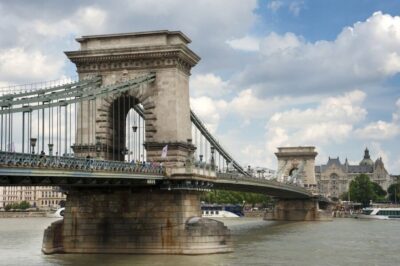
3-Hour Orientation Walking Tour of Buda and Pest
Read our review →

Budapest Historical Sightseeing – Free Walking Tour
Read our review →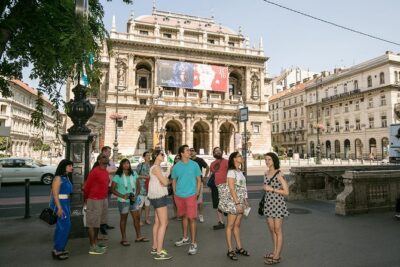
Budapest All in One Small Group Walking Tour with Strudel Stop
Read our review →
Buda Castle District Walking Tour with a Historian
Read our review →Browse the lists this tour appears in