
Reviewed · COOKING CLASSES
Budapest: Hungarian Cooking Class and Market Walk
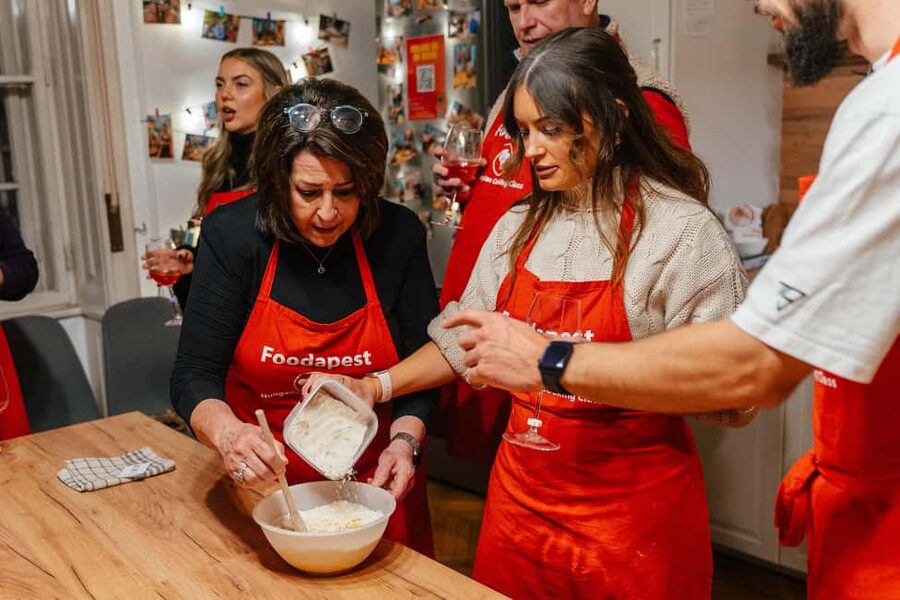
The best part of this four-hour experience is the change of setting: you begin among the stalls of Budapest’s Central Market Hall, tasting local foods and learning how they fit into Hungarian cooking, then move to a nearby apartment to prepare a family-style meal. It feels less like a formal demonstration and more like being welcomed into someone’s kitchen.
I like the market-to-table setup, and I like that you do real work rather than simply watch a chef. The generous food and drink selection also matters: cold cuts, cheeses, sausages, dips, wine, and pálinka are included. The main consideration is that the class is communal, so you should be comfortable sharing tasks, conversation, and a meal with other people.
In This Review
- Key points to know
- Start at Budapest’s Central Market Hall
- From market stalls to a nearby apartment
- Choose a Hungarian main dish
- Chicken paprikash
- Beef goulash stew
- Mushroom paprikas or lecsó
- Stuffed cabbage rolls
- Learn by doing, not just watching
- Eat the meal you helped prepare
- What $98 gets you
- Timing, meeting point, and cancellation
- Who will enjoy this cooking class?
- My booking advice
- FAQ
- Where does the Budapest cooking class begin?
- How do I identify the guide?
- How long does the experience last?
- Where does the cooking take place?
- What language is the class conducted in?
- Which dishes can I prepare?
- Are vegetarian and vegan options available?
- Can halal ingredients be provided?
- Are food and drinks included?
- What else is included besides the cooking lesson?
- How much does the experience cost?
- Can I cancel for a refund?
Key points to know
- Central Market Hall comes first: Meet outside the main entrance by the yellow tram stop, then explore Hungary’s largest indoor market with tastings.
- Family recipes shape the class: Chicken paprikash and goulash are central choices, with vegetarian options and stuffed cabbage rolls mentioned as an available preference.
- The meal is hands-on: You help prepare the food instead of sitting through a passive cooking demonstration.
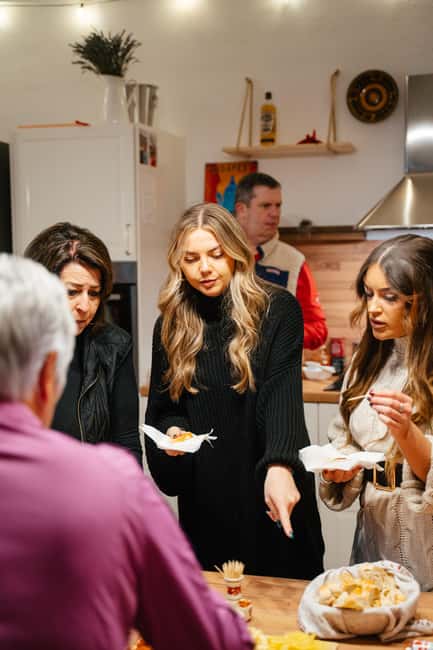
- Drinks and snacks are included: Expect Hungarian cold cuts, cheeses, meats, wine, and spirits before and during the cooking session.
- The tone is social: Guides such as George, Marcell, Emese, and Kinga are praised for making conversation easy and managing the group well.
- The practical value is strong: At $98 per person, you receive a market visit, tastings, instruction, a full meal, drinks, recipes, local tips, and a small souvenir.
Start at Budapest’s Central Market Hall
Your meeting point is outside the main entrance of Central Market Hall, beside the yellow tram stop. Look for the guide carrying a brown market basket. That detail is useful in a busy area, and the meeting place is easy to identify if you arrive by tram or on foot.
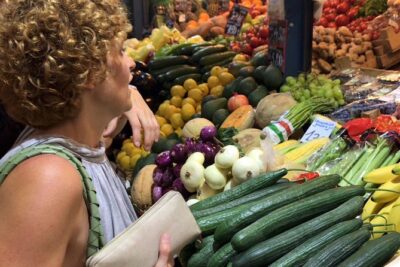
The market is not treated as a quick backdrop for photographs. You walk through it with a local guide, stopping to taste Hungarian specialties and discuss food, history, and customs. This gives you a better sense of what makes Hungarian cooking different from the generic Central European menu you may find elsewhere.
Paprika gets particular attention. You can learn about its smoky, sweet, and spicy forms, rather than treating paprika as one flat flavor. That small lesson helps explain why Hungarian dishes can taste warm and full without always being hot.
The tastings are a useful part of the morning or afternoon because they give you a reference point for the meal ahead. You might sample sausages, salamis, pickled foods, cheeses, or other local treats, depending on what is being shown that day. The tour also includes pálinka, Hungary’s traditional fruit spirit, so pace yourself if you are not used to strong liquor.
Central Market Hall is a large public market, and it can be busy. The cooking class makes the visit more manageable because you have a clear purpose and a guide who can point out what is worth noticing. Still, this is not a quiet food museum. Expect movement, other shoppers, and a lively market atmosphere.
A few more Budapest trips to weigh up
- Budapest Cooking Class & Market Tour with Local Guide & Wines
★ 5.0 · 553 reviews - Premium Hungarian Home Cooking Experience with Chef Marti
★ 5.0 · 169 reviews - Hungarian Cooking and optional Local Market Tour
★ 4.5 · 98 reviews
From market stalls to a nearby apartment
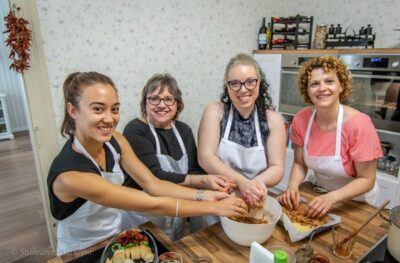
After the market walk, you head to a nearby apartment for the cooking session. That change is important. Instead of remaining in a commercial kitchen or restaurant classroom, you cook in a home-style setting with the feel of a shared meal.
The apartment has been described as charming and welcoming, and the format is deliberately communal. You sit down together for snacks, talk with the other participants, and work through the recipes as a group. This suits people who want conversation as much as instruction.
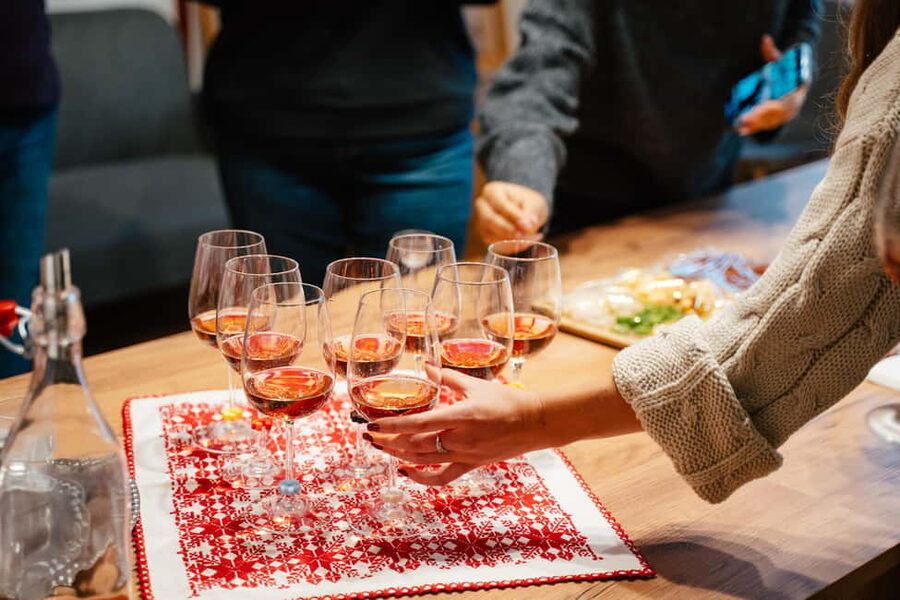
Before cooking begins, expect Hungarian cold cuts, cheeses, meats, sausages, dips, and other snacks. Local wine and Hungarian spirits are included. These appetizers are not just filler while the main dish cooks. They help you understand the everyday foods that accompany Hungarian meals and give the class a relaxed start.
The social side is one of the experience’s strongest features. You may meet people from several countries, and solo visitors can join without feeling stranded at a table. Families have also found the format suitable for older children, with one account specifically describing a good experience for daughters aged 12 and 13.
The tradeoff is that a communal class cannot move at exactly your preferred pace. If you want a private lesson focused only on knife skills or advanced technique, this may feel informal. If you want to share wine, stories, and a meal while learning a few practical dishes, the arrangement makes sense.
Choose a Hungarian main dish
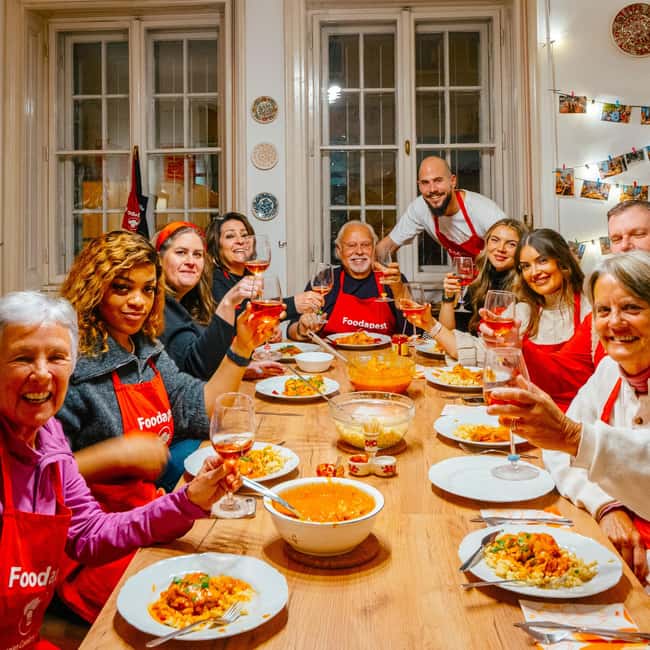
The class centers on a main dish selected by your party. The choices presented include chicken paprikash, beef goulash stew, mushroom paprikas, and lecsó. Stuffed cabbage rolls are also mentioned as a possible meal preference, so confirm the current choice when booking or by contacting the provider in advance.
Chicken paprikash
Chicken paprikash is the clearest introduction to Hungarian home cooking. It is approachable, strongly associated with Hungary, and built around paprika, onions, chicken, and a savory sauce. You learn how the seasoning is handled and how the dish comes together without turning the lesson into a complicated chef’s course.
This is a good pick if you want one recipe that you can reasonably make again at home. Several participants specifically returned to chicken paprikash as a dish they planned to add to their regular cooking.
Same riverbank, a completely different kind of day:
- Budapest: Unlimited Prosecco, Beer and Aperol Spritz Cruise
★ 4.8 · 25,310 reviews - Budapest: Széchenyi Spa Day Ticket with Optional Upgrades
★ 4.3 · 23,911 reviews - Budapest: Nighttime or Daytime Sightseeing Cruise
★ 4.2 · 21,062 reviews - Budapest: 1-Hour Evening Sightseeing Cruise with Drink
★ 4.5 · 8,330 reviews
Beef goulash stew
The goulash option is a traditional beef stew based on a family recipe. It is hearty and slower in character than a quick skillet meal, making it a good match for anyone who wants to understand Hungary’s famous comfort food.
The name can cause confusion. In Hungary, goulash is traditionally a soup or stew, not the thick restaurant-style dish that is sometimes served under the same name elsewhere. The class description calls this version a beef goulash stew, so you should expect a warm, substantial dish rather than a delicate tasting portion.
Mushroom paprikas or lecsó
Vegetarians and vegans have a clear path into the class through mushroom paprikas or lecsó. That is a major advantage for mixed groups. One person can enjoy a meat dish while another has a proper Hungarian meal rather than a plate of side dishes.
You should still provide dietary information ahead of time. Vegetarian arrangements have been handled successfully, but the kitchen needs notice to prepare the right ingredients.
Stuffed cabbage rolls
Stuffed cabbage rolls are included in the additional meal information as one possible preference. Since the main dish list is presented in more than one way, I would not assume this choice is available at every session. Ask before you arrive if cabbage rolls are the reason you are booking.
Halal ingredients can be provided on request. Dietary restrictions should also be shared in advance, since the class includes meat, dairy, alcohol, and shared appetizers.
Learn by doing, not just watching
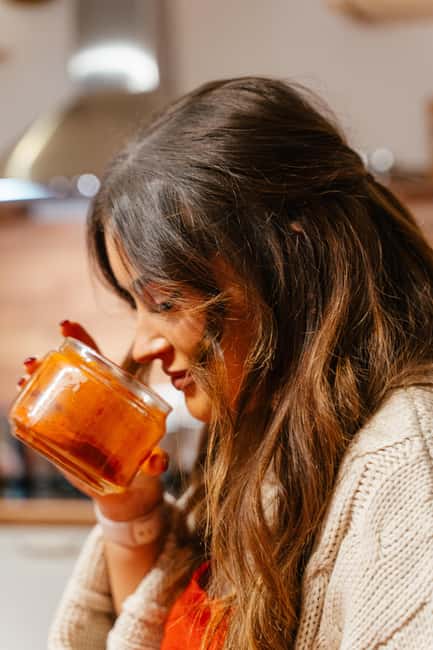
The class uses a communal style inspired by family tradition. That means you are likely to take part in ordinary kitchen tasks, follow the guide’s instructions, and help bring the meal to the table.
This is not marketed as professional culinary training, and that is part of its appeal. You learn the sort of cooking logic passed through family kitchens: how flavors are balanced, how ingredients are combined, and how food becomes an occasion for sitting down together.
George is especially well regarded as a host and instructor, with Marcell, Emese, and Kinga also leading sessions. The strongest pattern is not a single technical lesson but the quality of the hosting. George is described as patient, generous, and good at explaining Hungarian culture as well as cooking. Marcell is praised for guiding the market visit and keeping the afternoon relaxed. Kinga is noted for managing group dynamics well.
You should expect the guide to talk while the cooking happens. Discussions may range from Hungarian education and culture to food traditions and everyday life. That makes the experience useful for anyone who wants context, not just a recipe card.
The atmosphere also allows room for mistakes and questions. You are not expected to arrive with cooking experience. The dishes are chosen because they are traditional and practical, not because they require specialist equipment or advanced training.
Eat the meal you helped prepare
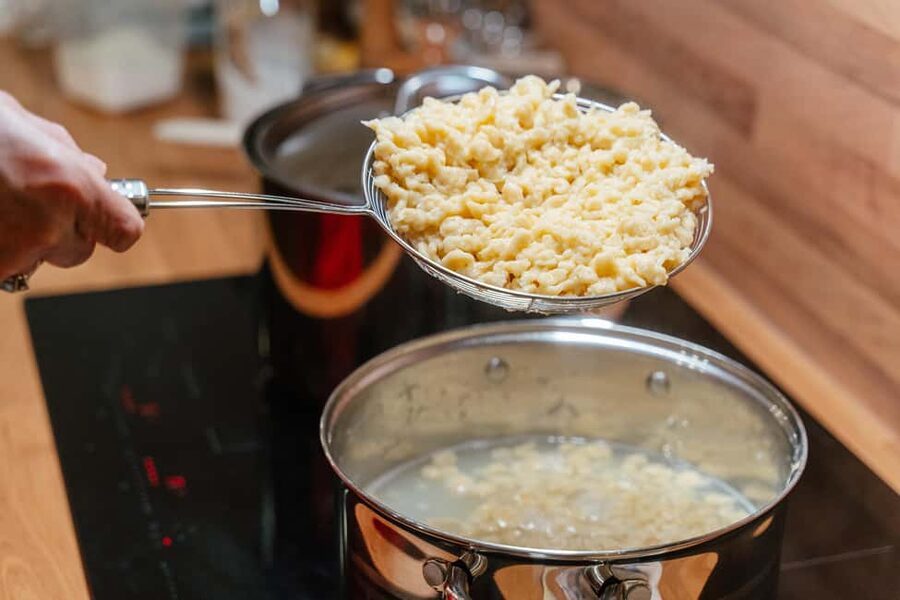
The final meal is the payoff. After working with the ingredients, you sit down together and eat the dishes you prepared. This makes the food feel more personal than a standard restaurant lunch, even though the recipe is the main attraction.
The meal is served with wine, and pálinka is included as well. If you do not drink alcohol, tell the provider ahead of time so your needs are clear. The class description specifically includes local wine and Hungarian spirits, so alcohol is part of the normal rhythm.
The food can also become the most memorable meal of your Budapest visit, simply because you understand what went into it. You have tasted ingredients at the market, learned the role of paprika, helped prepare the dish, and then eaten it in a home setting.
A collection of Hungarian recipes is included, along with a surprise souvenir. The recipes add real value because they let you continue the experience after returning home. The souvenir is a small extra, not a reason by itself to book, but it is a pleasant reminder of the afternoon.
What $98 gets you
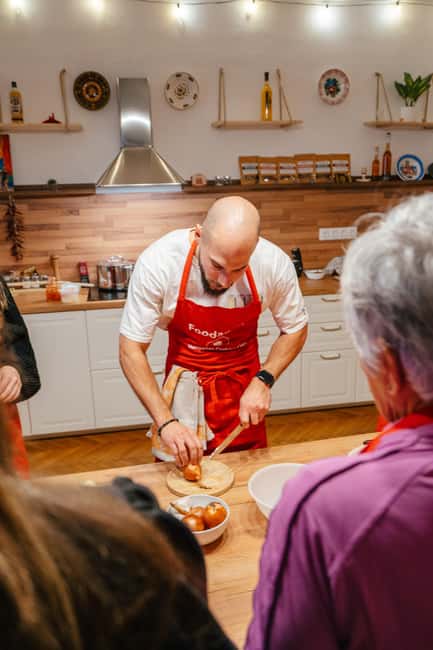
At $98 per person, this is not the cheapest way to eat in Budapest. You can find a good restaurant meal for less, and a short market stroll costs nothing beyond what you choose to buy.
The comparison changes when you count what is included:
- A guided visit to Central Market Hall
- Market tastings
- Cold cuts, cheeses, meats, and other appetizers
- A hands-on cooking class
- A full meal
- Local wine and Hungarian spirits
- Advice for the rest of your Budapest stay
- A collection of Hungarian recipes
- A small souvenir
I consider the price fair if you value the full four-hour experience rather than only the food. You are paying for instruction, hosting, cultural explanation, drinks, ingredients, and a social setting. The strongest value comes from the personal attention and the chance to cook recipes connected to the guides’ mothers and grandmothers.
It is less attractive if your only goal is to taste Hungarian food. In that case, a market visit followed by a restaurant meal will cost less and give you more freedom. Book this class because you want to participate, not simply because you want lunch.
Timing, meeting point, and cancellation
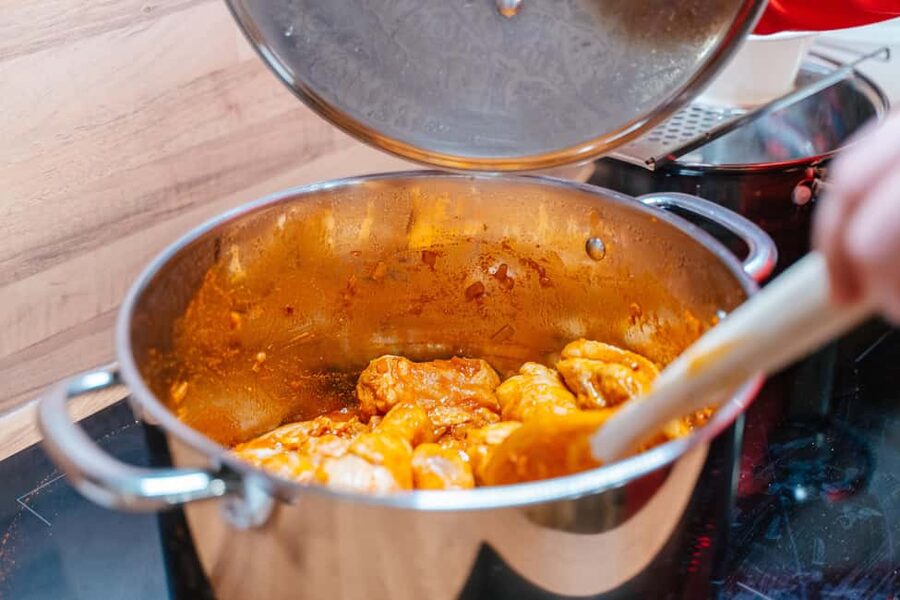
The experience lasts four hours, with starting times that vary by date. Check availability before planning the rest of your day. Since the class includes a market walk, cooking, eating, and conversation, leave some breathing room afterward rather than scheduling a museum across town immediately at the end.
The activity begins and ends at the Central Market Hall meeting point. You meet outside the main entrance near the yellow tram stop, and the guide carries a brown market basket. The cooking location is a nearby apartment, so the group walks there after the market.
English is the listed language. The activity also offers a separate entrance to skip the line, which can make the market start easier on busy days.
You can cancel up to 24 hours in advance for a full refund. The reserve-now, pay-later option lets you hold a place without paying immediately, useful when your Budapest schedule is still changing.
Who will enjoy this cooking class?
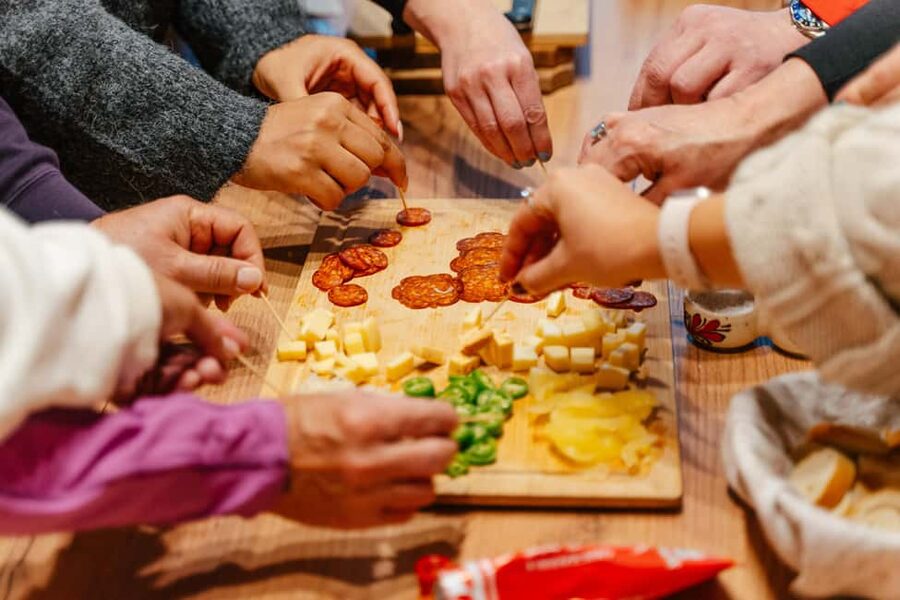
I would recommend it most strongly to food-focused visitors who want a personal introduction to Hungarian cuisine. It also fits solo visitors, couples, families with older children, and small groups of friends.
It is a particularly good choice for:
- First-time visitors who want local food context
- People who enjoy meeting others during a trip
- Home cooks looking for recipes they can repeat
- Families with children old enough to take part in kitchen tasks
- Mixed-diet groups choosing meat and vegetarian dishes
- Visitors who prefer a relaxed afternoon to another formal sightseeing tour
It may not suit you if you dislike communal meals, drinking-centered social settings, or cooking with people you have just met. The experience also involves walking through a market and then moving to an apartment, so it is not a simple sit-down tasting.
My booking advice
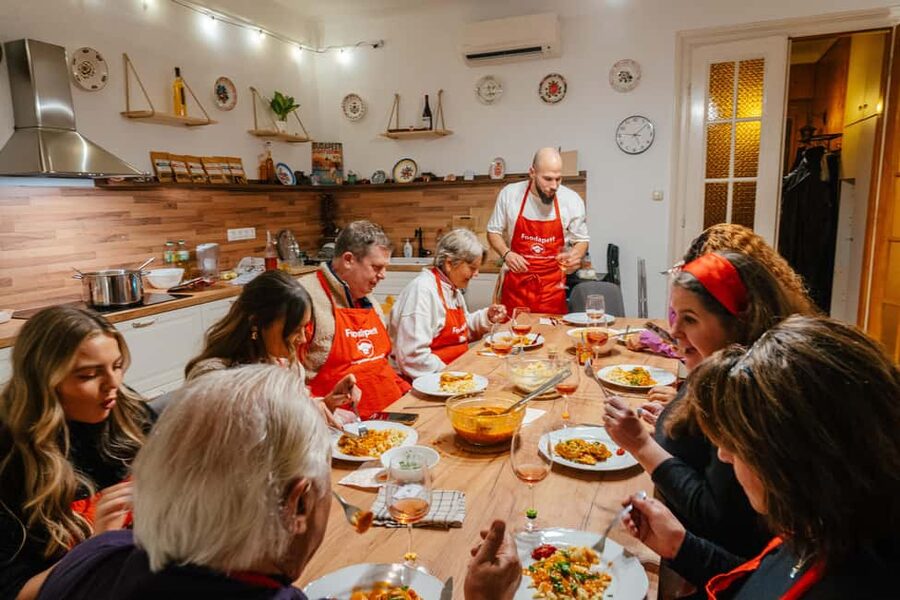
Book this Foodapest experience if you want Budapest to feel personal and edible. The combination of Central Market Hall, local tastings, family recipes, and a shared meal gives you more than a standard cooking lesson.
I especially like it as an early trip activity. The guide’s food tips and Budapest recommendations can help shape the rest of your visit, and the market tour gives you a useful introduction to ingredients you may see in restaurants and shops.
Before booking, settle three details: your dietary restrictions, your preferred dish, and whether the available menu matches your expectations. If those line up, $98 buys a substantial four hours with food, drinks, instruction, recipes, and conversation. For a relaxed, social introduction to Hungarian cooking, I would make room for it.
FAQ
Where does the Budapest cooking class begin?
It begins outside the main entrance of Budapest’s Central Market Hall, beside the yellow tram stop.
How do I identify the guide?
The guide carries a brown market basket, making the meeting point easier to recognize.
How long does the experience last?
The experience lasts four hours. Starting times vary, so check availability for your chosen date.
Where does the cooking take place?
After the market visit, you walk to a nearby apartment for the cooking session and meal.
What language is the class conducted in?
The listed language is English.
Which dishes can I prepare?
The choices presented include chicken paprikash, beef goulash stew, mushroom paprikas, and lecsó. Stuffed cabbage rolls are also listed as a possible meal preference, so confirm the current choices before booking.
Are vegetarian and vegan options available?
Yes. Mushroom paprikas or lecsó are described as suitable for vegetarians and vegans.
Can halal ingredients be provided?
Yes. Halal ingredients can be provided if requested in advance.
Are food and drinks included?
Yes. The experience includes Hungarian cold cuts, cheese, meats, and appetizers, along with local wine and Hungarian spirits.
What else is included besides the cooking lesson?
You receive a guided market tour with tastings, Budapest tips and recommendations, a collection of Hungarian recipes, and a surprise souvenir.
How much does the experience cost?
The listed price is $98 per person.
Can I cancel for a refund?
Yes. You can cancel up to 24 hours in advance for a full refund. A reserve-now, pay-later option is also available.
More Workshops in Budapest
- Budapest: Hungarian Chimney Cake Workshop in the City Center
★ 4.8 · 885 reviews - Chimney Cake Workshop Budapest Downtown – Kürtőskalács Class
★ 5.0 · 220 reviews - Budapest: Essentials of Hungarian Wine Tasting Class
★ 4.9 · 174 reviews - Hungarian Strudel Making Class: Stretch & Fill Two Ways
★ 5.0 · 76 reviews
More Shopping Tours in Budapest
- Budapest Food Tour: Market to Tavern with 14+ Tasters & Wines
★ 5.0 · 434 reviews - Budapest: Hungarian Cuisine in the Market Hall (german)
★ 4.8 · 146 reviews - Easy Cooking Class Budapest – with Market Walk (local wine & pálinka included)
★ 5.0 · 62 reviews - Budapest Great Market Hall Chef‑Led Private Tasting Tour
★ 5.0 · 61 reviews
Just added around Budapest
- From Budapest: Guided Tour of Eger with Wine Tasting★ 4.5 · 6 reviews
- Budapest: Private Walking Tour with a Local Guide★ 3.6 · 6 reviews
- Budapest: Danube River Views Bike Ride★ 4.8 · 23 reviews
- Trash Art Museum: Hungary’s First Scrap Metal Exhibition★ 4.3 · 72 reviews
- Walk to recent and aged spiritual sanctuaries near Budapest★ 5.0 · 5 reviews
- Budapest: 3-Hour Trabant Sightseeing Tour★ 4.7 · 28 reviews
- True Crime Walking Tour in the Buda Castle district★ 5.0 · 26 reviews
- Audio visual multi-sensory chefs journey dinner experience★ 5.0 · 3 reviews
Cooking Classes, compared.
Budapest Cooking Class & Market Tour with Local Guide & Wines
Read our review →
Premium Hungarian Home Cooking Experience with Chef Marti
Read our review →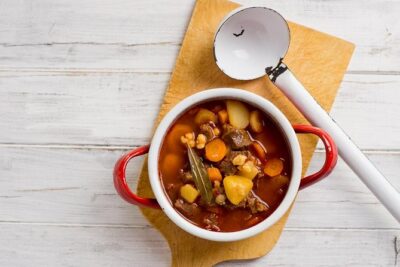
Hungarian Cooking and optional Local Market Tour
Read our review →
Easy Cooking Class Budapest – with Market Walk (local wine & pálinka included)
Read our review →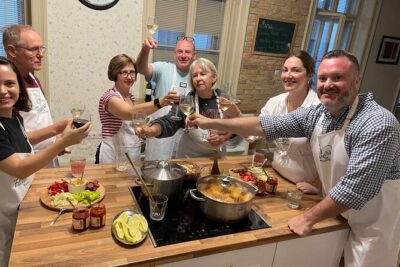
Budapest Market Tour & Home Cooking Class with local Chef & Guide
Read our review →
Hungarian Premium Cooking Class with 4-course meal
Read our review →Browse the lists this tour appears in