
Reviewed · JEWISH HERITAGE TOURS
Budapest Jewish Cuisine & Culture Walk
Budapest’s old Jewish quarter is best understood with both feet on its pavements and something tasty in your hand. This four-hour walk links the Dohány Street Synagogue, wartime memorials, street art, cafés, ruin pubs, and traditional Jewish-Hungarian food in one thoughtful route.
I especially like the small-group format, which can mean a relaxed walk and plenty of time for questions. I also like the food progression, from pastries and goose crackling to a sit-down lunch with solet and wine. The main consideration is the Dohány Synagogue entrance: the tour visits its exterior, but admission to the grand synagogue itself is not included.
In This Review
- Key things to know before you book
- Why the Seventh District makes such a good food walk
- Meeting the synagogues and wartime memorials
- Sampling flodni, túrós táska, and savory bites
- Lunch with goose soup, solet, and wine
- Coffee and kosher pálinka in a ruin pub
- The value of a $155 four-hour experience
- Which guide style suits this experience
- Timing, pace, and practical planning
- Who should choose this walk
- Should you book the Budapest Jewish Cuisine and Culture Walk?
- FAQ
- Where does the Budapest Jewish Cuisine and Culture Walk begin?
- How long does the tour last?
- Is admission to the Dohány Street Synagogue included?
- What food might be included?
- How many people can join the tour?
- What happens if the minimum number of participants is not reached?
Key things to know before you book
- The tour begins at 11 a.m. in Madách Imre tér and returns to the same central meeting point.
- Food is served throughout the walk, not just at one final restaurant, so eat only a light breakfast.
- The Seventh District’s past and present are treated together, from medieval Jewish life and the WWII ghetto to cafés, design shops, and ruin pubs.
- Possible tastings include flodni, túrós táska, sausage, goose crackling, and other local specialties.
- Lunch may include goose soup, solet, wine, coffee, and kosher pálinka, with the exact choices changing by day.
- The advertised small group is limited to six, while the additional tour information lists a maximum of eight, so check the final booking details if group size matters.
Why the Seventh District makes such a good food walk
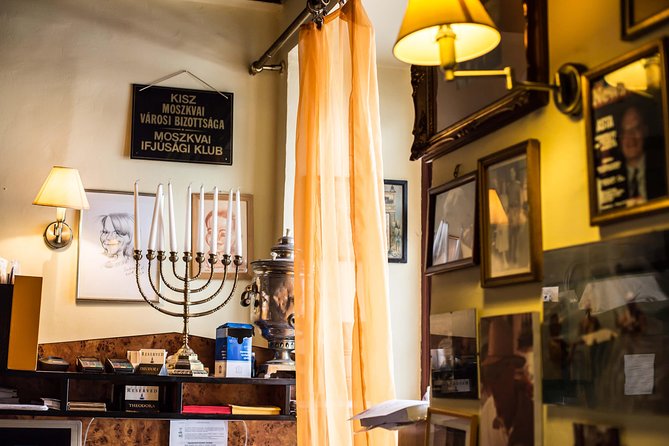
The Seventh District is not a preserved museum quarter. It is a working part of Budapest that has been reshaped many times. Your guide begins with its medieval roots and the Jewish community that grew here, then explains how the area became the Jewish ghetto during World War II.
That difficult past is not treated as a short prelude before the eating begins. It gives the food and streets their proper setting. You will pass old houses, synagogues, memorials, and signs of present-day Jewish life while hearing how survivors helped rebuild the community after the war.
Today, the same district is packed with restaurants, bars, street art, and stylish shops. That contrast is one of the walk’s strengths. You see a neighborhood where memory and nightlife sit close together. A guide can point out details you might otherwise miss, especially when you are moving between large sights and small food stops.
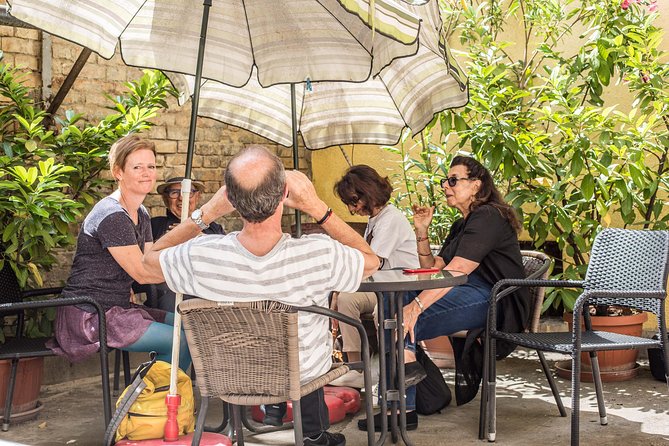
The tour is offered in English and begins in central Budapest at Madách Imre tér. Since the route is on foot, wear comfortable shoes and expect a steady four-hour outing with several stops to eat and drink.
More jewish heritage tours in Budapest:
- Budapest Jewish Heritage Memorial Walking Tour & Synagogue Entry
★ 5.0 · 568 reviews - Budapest: Jewish Heritage Guided Tour with Synagogue Ticket
★ 4.8 · 533 reviews - Jewish Quarter of Budapest Walking Tour
★ 4.7 · 369 reviews
Meeting the synagogues and wartime memorials
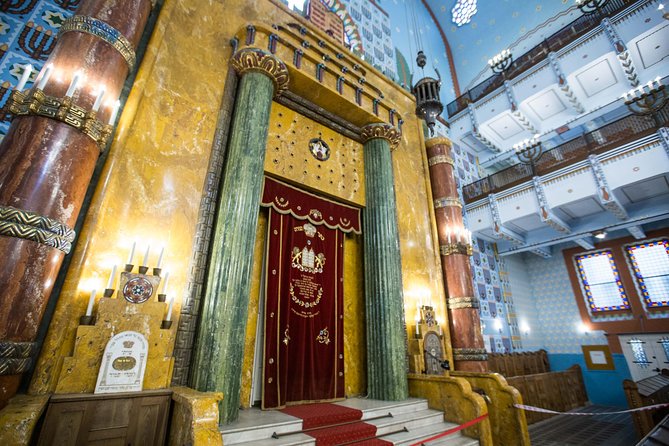
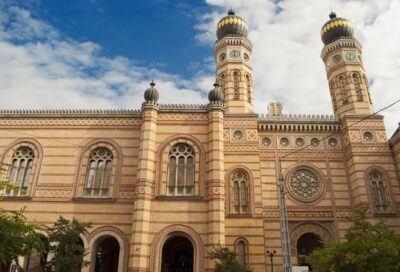
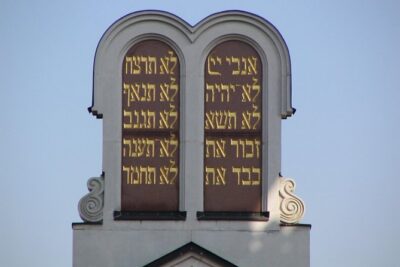
The exterior of the Dohány Street Synagogue is one of the walk’s major visual moments. Its Moorish-style design makes it unlike most European synagogues, and it is described as Europe’s largest synagogue.
You will pause outside to discuss its place in Budapest’s Jewish community. The stop also helps explain the scale of the former ghetto and the persecution of Jewish residents during the war.
The route includes other Jewish sites and memorials to those killed during World War II. These pauses are important because they keep the tour from becoming a simple restaurant crawl. You get a clearer sense of what the district meant before the war, what happened to it during the ghetto period, and how later generations have marked that loss.
One practical point matters here: the grand Dohány Synagogue interior is not part of the tour price. The information lists a synagogue entrance fee among the inclusions, but specifically excludes admission to the Dohány Grand Synagogue. In practical terms, plan on seeing its exterior during this walk and visiting inside separately if you want the full synagogue and museum experience.
One person who took the walk on a Saturday found the main synagogue and museum closed because of the Sabbath. That was not a problem for the outdoor route, but it is a useful planning detail. If the interior is important to you, arrange a separate visit on a day when it is open.
Sampling flodni, túrós táska, and savory bites
The food portion begins during the walk, with stops at different eateries rather than one fixed tasting counter. The exact menu changes with availability, so you should not book this expecting a rigid list of dishes.
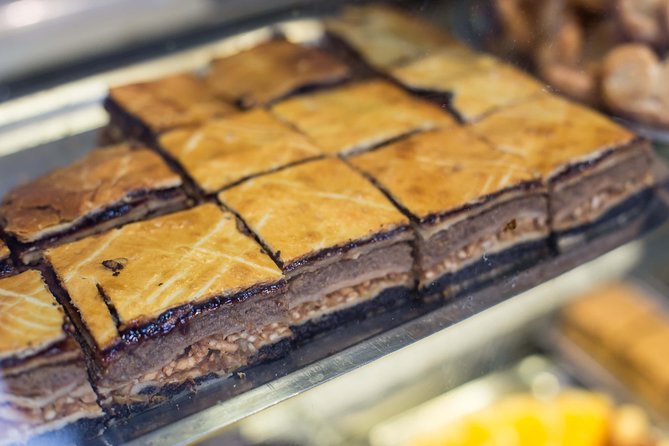
Possible sweet samples include flodni, a layered pastry associated with Jewish-Hungarian baking, and túrós táska, a curd-cheese pastry. The savory side may include sausage and goose crackling. These are small but useful introductions to the flavors you will encounter later at lunch.
This variety is one of the best reasons to choose the tour over a standard neighborhood walk. You are not only told about local food. You get to try several items and hear how Jewish traditions and Hungarian cooking have influenced one another.
The amount of food can be substantial. One guide-led outing included coffee, sweets, beers, lunch, wine, and several traditional dishes, and lasted closer to five or six hours than four. Another person found the food plentiful enough to skip dinner, while someone else wished the tour had made the light-breakfast advice clearer.
My practical advice is simple: do not arrive after a full Hungarian breakfast. You want room for the small tastings, lunch, coffee, and spirits. At the same time, dietary needs should be given when booking, since the tasting menu varies and the tour includes several meat-based dishes.
A fair warning: the food will not please every palate, and one person found the lunch selection less appealing than expected. Another felt that some snacks were not especially Jewish or tasty. The changing menu is part of the experience, but it also means the food element is less predictable than a tour with a fixed restaurant menu.
Lunch with goose soup, solet, and wine
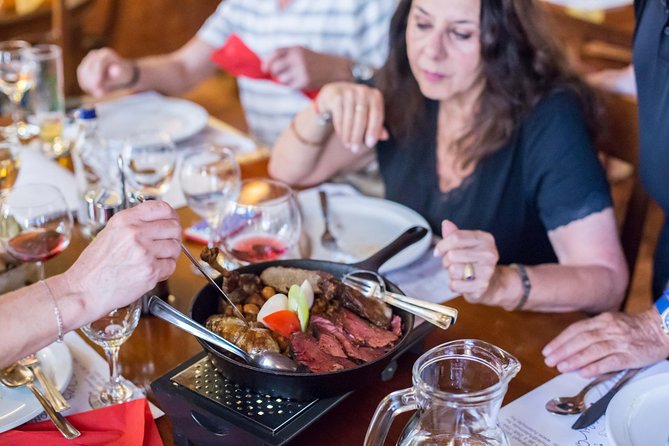
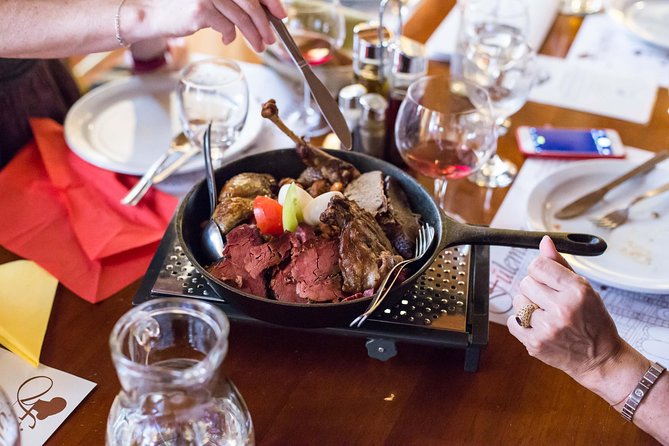
The walk eventually settles into a proper meal at a restaurant. The planned specialties include goose soup and solet, a Hungarian Jewish-style bean stew, served with wine. Depending on the day and restaurant, you might also find matzo ball soup, cholent, brisket, or other comforting dishes. The exact meal is not guaranteed, but the format is clear: this is more than a quick snack stop.
Lunch gives the tour a welcome pause. After walking through the district and trying food in small portions, you can sit down, talk with your guide, and ask about Budapest, Jewish customs, and Hungarian cooking.
The meal also explains why the tour takes about four hours rather than two. You are not rushing from landmark to landmark. The time allows the food to become part of the conversation, and several guides have been praised for adjusting the pace and adding extra context when the group is small.
Fülemüle Étterem has been a favorite restaurant stop on one outing, though the supplied information does not promise that every group will eat there. You might visit a different restaurant depending on the day. Think of the lunch as a chance to try traditional, filling food rather than as a guaranteed reservation at one named establishment.
If you prefer a light tasting tour, this may feel like too much. If you enjoy lunch as a central part of a cultural experience, it is a strong feature and adds real value to the price.
A few more Budapest trips to weigh up
- Budapest: Buda Castle Walk with Saint Stephen’s Hall
★ 4.5 · 3,012 reviews - Big Bus Budapest Hop-On Hop-Off Bus and Walking Tour
★ 3.5 · 2,206 reviews - Budapest: Buda Castle District Walking Tour
★ 4.6 · 2,108 reviews - Budapest City Landmarks Walking Tour in 2 Hours
★ 5.0 · 2,048 reviews
Coffee and kosher pálinka in a ruin pub
After lunch, the route continues to a coffee bar. This is a small but sensible part of the schedule. A coffee gives you time to reset before the final drink and keeps the walk from feeling like one long meal.
The last tasting is kosher pálinka at a hip ruin pub or local wine bar. Pálinka is a Hungarian fruit spirit, and the setting creates a sharp contrast with the solemn memorials earlier in the day. You move from synagogue architecture and wartime remembrance to the contemporary social life of the Seventh District.
That contrast is not a flaw. It shows how the neighborhood functions now. The ruin-pub stop also gives your guide a chance to recommend places for the rest of your stay. Several guides have offered suggestions for food, books, and additional sights, which can be especially useful if you schedule this walk early in your Budapest visit.
The pálinka is not optional in spirit, since it is listed as part of the drink tastings. If you do not drink alcohol, mention your needs when booking and ask what alternatives may be available. The information confirms that dietary requirements should be provided in advance, but it does not specify nonalcoholic substitutions.
The value of a $155 four-hour experience
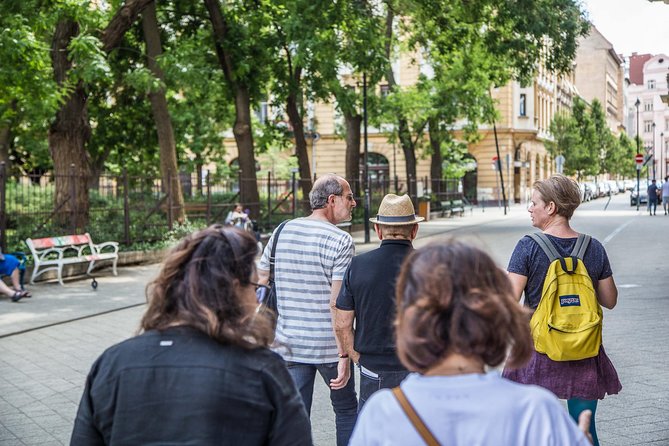
At $155 per person, this is not a budget walking tour. You are paying for a guide, several food tastings, lunch with wine, drinks including pálinka, and a small group rather than a large procession.
The value is strongest if you would otherwise pay separately for a food tour, a neighborhood guide, and several meals. You also gain local recommendations and the ability to ask questions throughout the walk. When only two or three people book, the experience can become close to private, with the guide adapting the route to your interests.
The value is weaker if you mainly want to enter the Dohány Synagogue, since that admission is separate. It is also less compelling for picky eaters who want a guaranteed menu. The tour’s food changes according to availability, and the lunch may not suit every preference.
The booking pattern suggests that people often reserve well ahead, with an average of 59 days in advance. That does not guarantee that every date sells out, but it is a reason to reserve early if your Budapest schedule is fixed. Group discounts may be available, which could improve the price for larger bookings, though the experience is intended to remain fairly small.
The provider requires at least two participants. If that minimum is not met, the tour can be canceled after confirmation, with another option or a full refund offered. The experience itself is nonrefundable if you cancel or request a change, so choose your date carefully.
Which guide style suits this experience
The guide is central to the walk. The strongest outings have been led by people such as Anna, Orsi, Eszter, Andrew, Daniel, Dora, Elza, and Ana. Anna is repeatedly described as warm, well organized, easygoing, and strong on both Hungarian Jewish culture and cuisine. Orsi has been praised for adding depth to a visitor’s understanding of Budapest, while one young Budapest-born Jewish guide brought a personal connection to the subject.
You should expect more than a list of dates and buildings. The guide discusses Budapest and Hungary as a whole, not only the Jewish quarter. Several outings have included explanations of present-day life, food origins, local habits, and the way the neighborhood has changed.
The small format matters here. With just two people, one guide extended the walk to five or six hours, despite rain, and tailored the route to the couple’s interests. That kind of flexibility cannot be promised on every departure, but a group capped at six, or possibly eight under the additional capacity information, gives you a better chance to speak directly with the guide.
The tone is also worth noting. This is serious material, but the walk includes café conversation, food, and an irreverent look at modern Budapest. The balance works best for you if you want honest historical context without spending four hours in a formal lecture.
Timing, pace, and practical planning
The meeting time is 11 a.m. at Madách Imre tér, and the activity ends back at that meeting point. The location is near public transportation, making it practical to reach from other parts of Budapest.
Plan for four hours, but leave some flexibility. One outing ran substantially longer, and a guide may spend extra time answering questions or adapting the route. Do not schedule a tight museum booking immediately afterward.
The walk includes outdoor sightseeing, restaurant stops, and time standing or sitting. Most people can take part, but comfortable footwear remains sensible. The tour is offered in English only, based on the supplied information.
Book this early if you are visiting during a busy period. Also tell the operator about dietary requirements at the time of booking. Since the menu changes, the more clearly you explain your needs, the better the guide can prepare.
Who should choose this walk
I would choose this experience if you want Budapest’s Jewish quarter explained through daily life, food, architecture, memory, and modern culture all at once. It suits first-time visitors who want context quickly, as well as returning visitors who have seen the major sights but want a more personal look at the Seventh District.
It is especially useful on your first day or two in Budapest. The guide’s suggestions can shape the rest of your stay, and the route helps you understand where to return for food, coffee, bars, and further Jewish sites.
You may want another option if you want a strict religious heritage tour, a guaranteed kosher meal, or a full interior visit to the Dohány Synagogue included in the price. You should also think twice if you dislike rich, filling meals or spirits.
Should you book the Budapest Jewish Cuisine and Culture Walk?
Yes, if food and history are equally important to you. The best part is the connection between the district’s painful past and its lively present, helped along by a guide who can explain both the broad story of Budapest and the details of Jewish-Hungarian cooking.
The $155 price is high, but lunch, wine, tastings, coffee, pálinka, and a small group make it a reasonable choice for a four-hour experience. Book it early, eat lightly beforehand, and arrange a separate Dohány Synagogue interior visit if that matters to you.
FAQ
Where does the Budapest Jewish Cuisine and Culture Walk begin?
It begins at Madách Imre tér in central Budapest at 11 a.m. The tour ends back at the same meeting point.
How long does the tour last?
The advertised duration is approximately four hours. Some outings have lasted five or six hours when the group was very small and the guide added extra time.
Is admission to the Dohány Street Synagogue included?
Admission to the Dohány Grand Synagogue is not included. The walk includes viewing its Moorish-style exterior, and you can arrange an interior visit separately.
What food might be included?
Possible tastings include flodni, túrós táska, sausage, and goose crackling. Lunch may include goose soup, solet, matzo ball soup, cholent, brisket, wine, coffee, and kosher pálinka. The exact menu varies by day and availability.
How many people can join the tour?
The experience is promoted as a small-group tour limited to six people. The additional tour information lists a maximum of eight travelers, so check the capacity shown for your selected booking.
What happens if the minimum number of participants is not reached?
A minimum of two participants is required. If the tour is canceled because that minimum is not met, you will be offered another date or experience, or a full refund.
Just added around Budapest
- From Budapest: Guided Tour of Eger with Wine Tasting★ 4.5 · 6 reviews
- Budapest: Private Walking Tour with a Local Guide★ 3.6 · 6 reviews
- Budapest: Danube River Views Bike Ride★ 4.8 · 23 reviews
- Trash Art Museum: Hungary’s First Scrap Metal Exhibition★ 4.3 · 72 reviews
- Walk to recent and aged spiritual sanctuaries near Budapest★ 5.0 · 5 reviews
- Budapest: 3-Hour Trabant Sightseeing Tour★ 4.7 · 28 reviews
- True Crime Walking Tour in the Buda Castle district★ 5.0 · 26 reviews
- Audio visual multi-sensory chefs journey dinner experience★ 5.0 · 3 reviews
Jewish Heritage Tours, compared.
Budapest Jewish Heritage Memorial Walking Tour & Synagogue Entry
Read our review →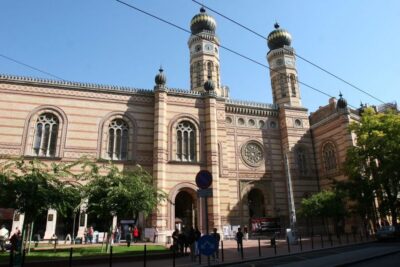
Jewish Heritage Guided Tour with Synagogue Ticket
Read our review →
Past and Present of Budapest Jewish District Tour
Read our review →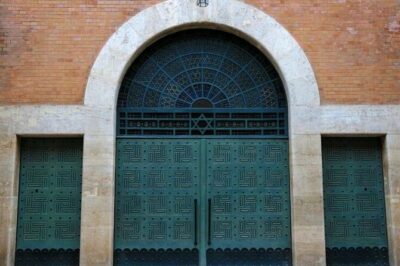
Budapest Dohany Synagogue & Hungarian Jewish Museum & free extras
Read our review →
Jewish History Guided Walking Tour with Historian
Read our review →Browse the lists this tour appears in