
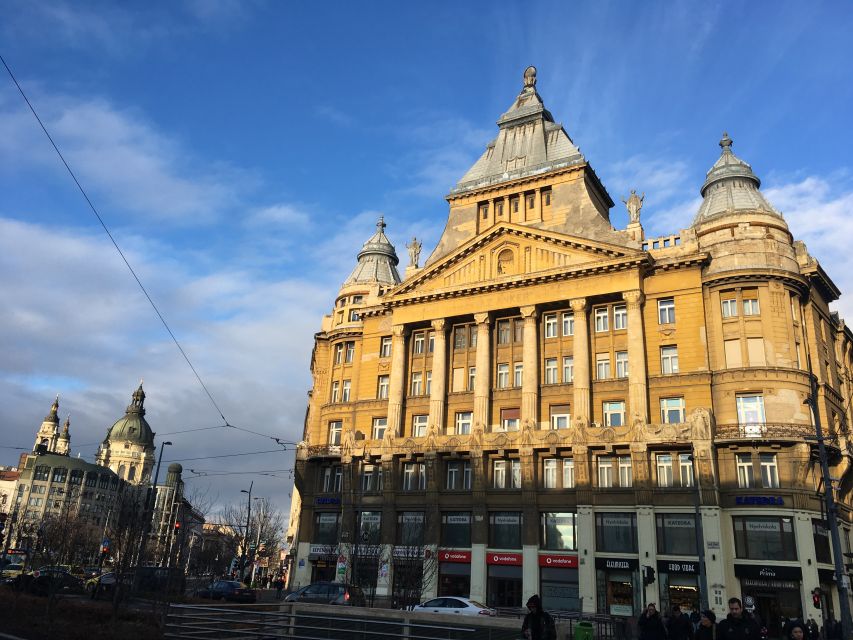
Reviewed · JEWISH HERITAGE TOURS
Budapest: Jewish District Private Walking Tour
Budapest’s Jewish Quarter is more than a collection of synagogues. In three hours, this private walk connects Jewish heritage with memorial gardens, street art, food stalls, and ruin bars, showing you how the district has changed while keeping its older identity. Guides such as Eszter, Emi, Andras, and Gary have led this route with a personal, flexible approach.
I like the mix of serious history and everyday Budapest life. You can see the Grand Synagogue and Tree of Life memorial, then turn a corner into Gozsdu Court or Szimpla Kert. I also like that the guide meets you at your hotel or another requested location. The main catch is cost: at $229 for a group of up to 20, it is good value for a full private group, but less attractive for one or two people. Synagogue entrance fees are extra.
In This Review
- Key points at a glance
- Why this Budapest walk works
- Rumbach Street Synagogue and a careful beginning
- Dohány Street Synagogue and the Jewish Museum
- The Tree of Life and Raoul Wallenberg Memorial Garden
- Gozsdu Court and the food side of the district
- Kazinczy Street Orthodox Synagogue
- Szimpla Kert and the ruin-bar story
- Murals, street art, and the changing neighborhood
- What $229 means for value
- Who should book this walk
- Practical tips before you go
- My recommendation
- FAQ
- How long does the Budapest Jewish District Private Walking Tour last?
- How much does the private tour cost?
- Is hotel pickup included?
- Which language is the tour offered in?
- Are synagogue entrance tickets included?
- Which synagogues are included in the route?
- Can I visit the synagogue interiors?
- Are food and drinks included?
- Are luggage and sleeveless shirts allowed?
Key points at a glance
- Three major synagogues: Visit Rumbach Street, Dohány Street, and Kazinczy Street, with interior access optional.
- The Dohány Street centerpiece: See Europe’s largest synagogue and learn how it shaped Jewish life in Budapest.
- A solemn memorial stop: Walk through the Raoul Wallenberg Memorial Garden and see its Tree of Life monument.
- Budapest after dark, in daylight: Explore Gozsdu Court and the original ruin-bar scene at Szimpla Kert.
- Art on ordinary walls: Follow murals and street art through the Jewish Quarter.
- Private and adaptable: Your guide can meet you at your hotel, and the group can ask questions throughout the walk.
Why this Budapest walk works
This tour gives you a useful way to read the Jewish Quarter. You are not simply moving from one old building to another. The route shows how the area carries memories of Jewish life, wartime loss, religious practice, renewal, nightlife, food, and modern city culture all at once.
That mix matters. A synagogue visit alone can feel detached from the surrounding streets. A bar-and-mural walk alone can miss the district’s painful past. Here, the two sides sit next to each other, and a private guide can explain the connection.
The three-hour length is also sensible. It gives you time for several important stops without turning the day into a full history lecture. I would still expect a fair amount of walking and standing, especially around the synagogues and busy central streets. Wear comfortable shoes and keep your schedule afterward reasonably open.
The private format is the biggest practical advantage. You can ask why a building matters, pause over a difficult subject, or spend less time on a stop that does not interest you. For a family, school group, or larger party, the $229 group price becomes easier to justify. For a couple, compare it with a shared walking tour before booking.
More jewish heritage tours in Budapest:
- Budapest Jewish Heritage Memorial Walking Tour & Synagogue Entry
★ 5.0 · 568 reviews - Budapest: Jewish Heritage Guided Tour with Synagogue Ticket
★ 4.8 · 533 reviews - Jewish Quarter of Budapest Walking Tour
★ 4.7 · 369 reviews
Rumbach Street Synagogue and a careful beginning
The first synagogue on the route is on Rumbach Street. The building has recently been restored, so you can expect a strong visual opening, with architectural details that are easier to appreciate when your guide points them out.
This is a good place to begin because it introduces the Jewish Quarter through a real place of worship rather than through a general city overview. Your guide can set out the story of Jewish life in Budapest and explain how the district’s religious buildings relate to one another.
Interior visits are optional, and the entrance fee is not part of the tour price. That gives you some control, but it also means you need to budget separately if you want to go inside. Ask your guide before the walk how much time and money the synagogue interiors will require.
The synagogues close on Friday afternoons, Saturdays, and Jewish high holidays. This is the most important scheduling point on the tour. If seeing the interiors is central to your plans, confirm the date before booking rather than assuming every stop will be open.
Dohány Street Synagogue and the Jewish Museum
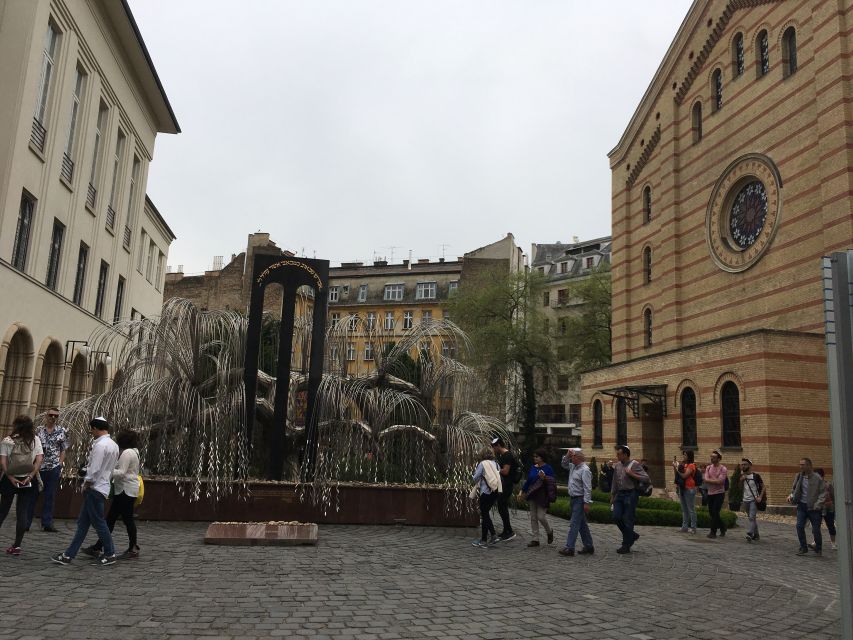
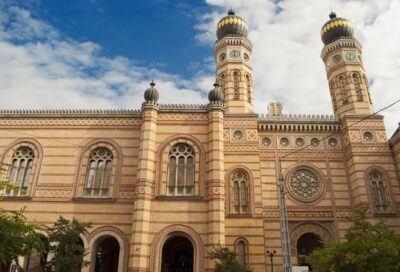
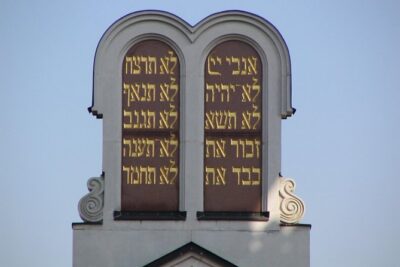
The walk then continues to Dohány Street Synagogue, described as the biggest synagogue in Europe. It is the main architectural and historical anchor of the tour, and it deserves the extra attention it receives.
Your guide will explain the synagogue’s place in Budapest’s Jewish community and connect the building to the wider story of Hungarian Jews. The value here is not just the size of the building. It is the chance to understand how a religious center can also serve as a marker of identity, memory, and continuity.
The Hungarian Jewish Museum follows. This adds objects and historical detail to the buildings you have already seen. A guide makes the museum easier to handle because you can ask questions instead of trying to absorb every display at once.
Again, tickets are not included. The tour description says the guide can help you skip the ticket line, but admission still costs extra. Treat the advertised tour price as payment for the private guide and walking experience, not as an all-inclusive entry package.
If you have only a short time in Budapest, this section may be the most useful part of the outing. It gives you a clear introduction to the Jewish Quarter before the route shifts toward memorials, food, bars, and street art.
The Tree of Life and Raoul Wallenberg Memorial Garden
The Raoul Wallenberg Memorial Garden provides the tour’s most solemn pause. Its famous Tree of Life monument is associated with the memory of Jewish victims of the Holocaust, and the setting asks for a quieter pace than the surrounding streets.
I appreciate that the memorial is not treated as a quick photo stop. It gives your guide a chance to explain the human cost behind the district’s buildings and the importance of remembrance in Budapest. You should expect this part of the tour to be emotionally heavier than the food and nightlife sections.
This is also where a sensitive guide matters. The feedback about Eszter, Emi, Andras, and Gary points to guides who explain the subject clearly while staying personable and attentive to questions. That balance is especially useful when a group includes people with different levels of background knowledge.
The garden also helps connect past and present. After hearing about persecution and loss, you continue through streets that now contain cafés, bars, shops, murals, and ordinary homes. The contrast can feel sharp, but it is part of what makes the neighborhood worth seeing with context.
A few more Budapest trips to weigh up
- Budapest: Buda Castle Walk with Saint Stephen’s Hall
★ 4.5 · 3,012 reviews - Big Bus Budapest Hop-On Hop-Off Bus and Walking Tour
★ 3.5 · 2,206 reviews - Budapest: Buda Castle District Walking Tour
★ 4.6 · 2,108 reviews - Budapest City Landmarks Walking Tour in 2 Hours
★ 5.0 · 2,048 reviews
Gozsdu Court and the food side of the district
After the memorial sites, the route moves to Gozsdu Court, one of the Jewish Quarter’s main food and beverage areas. This section changes the mood without abandoning the district’s character.
You can expect a more social setting, with places to eat and drink close together. Food and drinks are not included, so bring money if you want to sample something. The tour gives you the setting and local guidance, but it is not a meal tour with tastings built into the price.
Gozsdu Court is useful for understanding present-day Budapest. The Jewish Quarter is not preserved as a museum district. It is a working part of the city, and its restaurants and nightlife draw a different crowd from the synagogue courtyards and memorial garden.
The tradeoff is noise and activity. Depending on the time, the area may feel crowded. A private guide can help you move through it efficiently, but you should not expect the quiet atmosphere of the synagogue interiors.
Kazinczy Street Orthodox Synagogue
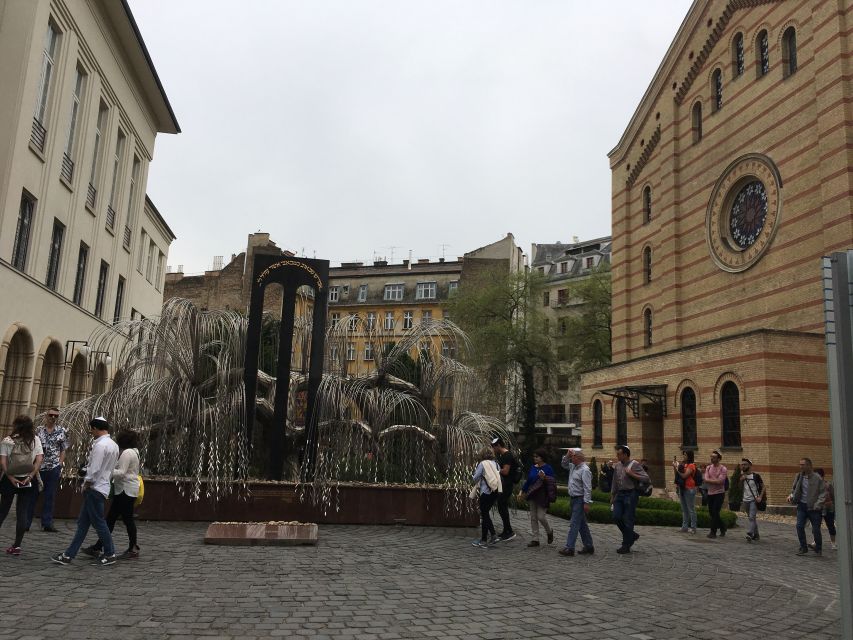
The final synagogue stop is on Kazinczy Street. It offers a different architectural and religious perspective, with notable Art Nouveau design.
This stop broadens the tour beyond the Grand Synagogue. You see that Budapest’s Jewish community has included different traditions and institutions, not one single style of worship. If the building is open and you choose to pay the entrance fee, you can explore the interior as well.
The Art Nouveau details are the main visual draw here. Your guide can help you notice how the design differs from the earlier synagogues and place the Orthodox congregation within the wider story of the neighborhood.
The same restrictions apply: synagogue interiors are optional, admission is extra, and Friday afternoons, Saturdays, and Jewish high holidays can affect access. If you are mainly interested in architecture, ask in advance which interiors will be available on your date.
Szimpla Kert and the ruin-bar story
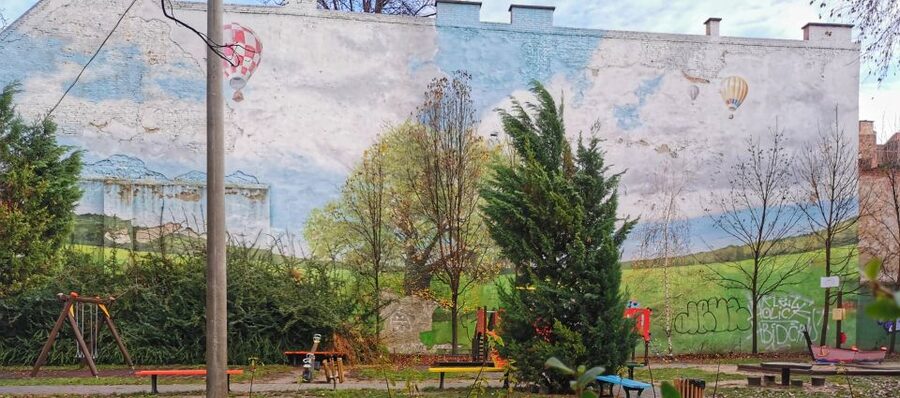
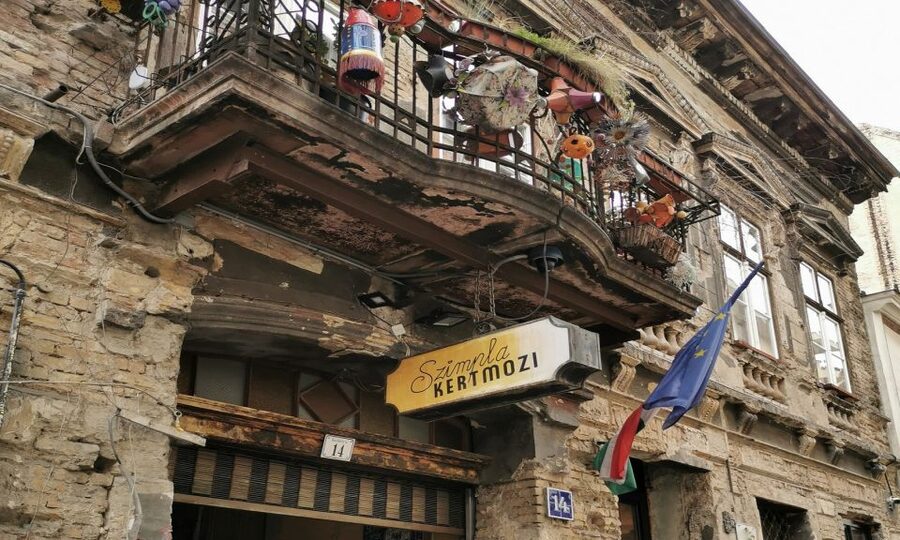
The route finishes with the bohemian side of the quarter at Szimpla Kert. This is one of Budapest’s original ruin bars, and it shows how abandoned or worn urban spaces were turned into informal nightlife venues.
You can try drinks here, but they are not included. The point is less about a complimentary tasting and more about seeing a place that helped define the district’s modern image. Szimpla Kert gives you a lively final contrast after the synagogues and memorial garden.
I like this ending because it prevents the tour from presenting the Jewish Quarter as only a place of tragedy. At the same time, the bar should not be mistaken for a direct expression of Jewish heritage. It belongs to the district’s newer cultural layer, and the guide’s role is to help you understand that difference.
If you prefer quiet sightseeing, this stop may be your least comfortable one. The atmosphere is bohemian and social rather than formal. For many people, though, it is exactly the kind of distinctive Budapest experience that is hard to understand from a guidebook photograph.
Murals, street art, and the changing neighborhood
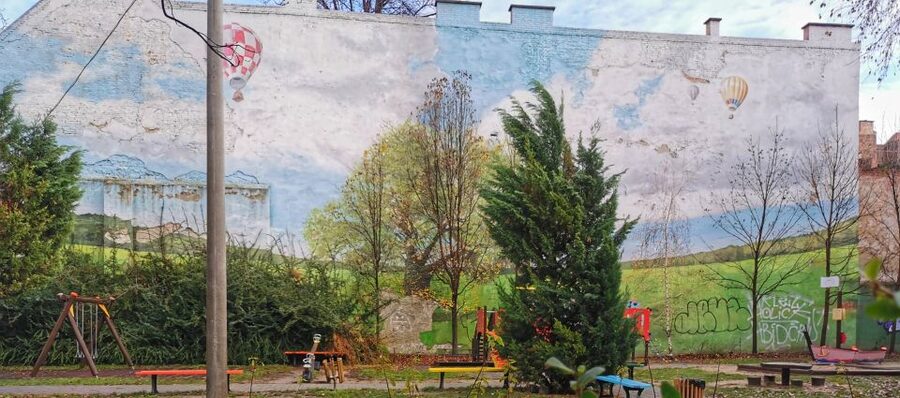
Street art appears throughout the walk rather than in one isolated stop. Your guide will point out famous murals and less obvious works in the Jewish Quarter, adding color and present-day commentary to the older sites.
These walls help you see how the neighborhood communicates today. Some art is decorative, some has a social or historical edge, and some simply makes an otherwise plain street more memorable. Since the route includes several districts within the quarter, you get repeated chances to notice this layer.
The art also keeps the walk moving. After a serious explanation at a synagogue or memorial, a mural gives you something visual and immediate to discuss. I would not book this as a dedicated street-art tour, since the main focus remains Jewish history and the synagogues. But the murals are a welcome part of the route.
What $229 means for value
The listed price is $229 per private group of up to 20 people. That is a strong arrangement for a school class, extended family, or group of friends. Split among 10 people, it works out to about $23 per person before entry fees. Split among 20, it becomes even better value.
For two people, the calculation changes. You are paying for privacy, hotel pickup, a live English-speaking guide, and the ability to shape the conversation. That can be worthwhile if you care about Jewish history and want time for questions, but it is not the cheapest way to see the quarter.
Remember to add synagogue and museum tickets, plus any food or drinks at Gozsdu Court and Szimpla Kert. The price also does not cover a meal. Ask about current admission costs when you book, since those are separate from the guiding fee.
The private setup has real value for groups with different interests. One person can ask about architecture, another about wartime history, and another about ruin bars without holding up a large public tour. The guides have also shown flexibility, with Andras adapting the walk for a small private booking and Gary continuing beyond the planned duration to show additional historic places.
That extra flexibility cannot be guaranteed, so do not book on the assumption that the tour will always run long. Still, it suggests why a private format can be more useful than a fixed group route.
Who should book this walk
I would recommend this tour if you want one organized introduction to several sides of Budapest’s Jewish Quarter. It suits you especially well if you:
- Want Jewish history explained in clear chronological order
- Prefer a private guide who can answer follow-up questions
- Are traveling with a class, family, or larger group
- Want synagogues, memorials, street art, and nightlife in one outing
- Need hotel pickup rather than a fixed meeting point
- Appreciate a sensitive guide for difficult historical subjects
It may be less suitable if you want a food tour with included tastings, a dedicated street-art walk, or a low-cost shared tour. It also requires extra planning if synagogue interiors are important to you, since admission costs more and opening restrictions apply.
The English-only format is another consideration. The tour is listed with an English-speaking live guide, so choose it only if that works for your group.
Practical tips before you go
Wear comfortable shoes and dress respectfully. Sleeveless shirts are not allowed, and large bags or luggage are not permitted. Since the route includes religious buildings, memorial spaces, and busy public areas, modest clothing and a small day bag are the sensible choice.
Contact the provider in advance if you need wheelchair assistance. The information supplied does not promise that every part of the route is fully accessible, so it is better to discuss your needs before the day of the walk.
Confirm the start time and the synagogue schedule. The tour lasts three hours, but the exact starting times depend on availability. Avoid Friday afternoon, Saturday, and Jewish high holidays if you want the best chance of entering the synagogues.
You can cancel up to 24 hours in advance for a full refund, and you can reserve now and pay later. That is useful if your Budapest schedule is still shifting.
My recommendation
Book this Jewish District Private Walking Tour if you want a serious introduction to Budapest’s Jewish Quarter with room for conversation. Its best feature is the range: Rumbach Street, Dohány Street, the Jewish Museum, the Tree of Life, Kazinczy Street, Gozsdu Court, Szimpla Kert, and the murals each show a different part of the neighborhood.
The value is strongest for a group. Couples should compare the private price with shared tours and decide how much personal attention matters. Either way, budget for tickets and refreshments, check synagogue opening days, and dress appropriately.
For a class or family that wants history without spending the whole day indoors, this is a well-balanced choice. The tour does not flatten the quarter into either a memorial site or a nightlife district. It lets you see both, and understand why both belong in the same walk.
FAQ
How long does the Budapest Jewish District Private Walking Tour last?
The tour lasts three hours.
How much does the private tour cost?
The price is $229 per private group of up to 20 people.
Is hotel pickup included?
Yes. The guide meets you in your hotel lobby or at another location you request in advance.
Which language is the tour offered in?
The live guided tour is offered in English.
Are synagogue entrance tickets included?
No. Entrance tickets are not included, and interior visits to the synagogues are optional.
Which synagogues are included in the route?
The route includes Rumbach Street Synagogue, Dohány Street Synagogue, and Kazinczy Street Orthodox Synagogue.
Can I visit the synagogue interiors?
Interior visits are optional. The synagogues are closed on Friday afternoons, Saturdays, and Jewish high holidays.
Are food and drinks included?
No. Food and drinks at Gozsdu Court or Szimpla Kert cost extra.
Are luggage and sleeveless shirts allowed?
Large bags and luggage are not allowed, and sleeveless shirts are prohibited. Contact the provider in advance if you need wheelchair assistance.
Just added around Budapest
- From Budapest: Guided Tour of Eger with Wine Tasting★ 4.5 · 6 reviews
- Budapest: Private Walking Tour with a Local Guide★ 3.6 · 6 reviews
- Budapest: Danube River Views Bike Ride★ 4.8 · 23 reviews
- Trash Art Museum: Hungary’s First Scrap Metal Exhibition★ 4.3 · 72 reviews
- Walk to recent and aged spiritual sanctuaries near Budapest★ 5.0 · 5 reviews
- Budapest: 3-Hour Trabant Sightseeing Tour★ 4.7 · 28 reviews
- True Crime Walking Tour in the Buda Castle district★ 5.0 · 26 reviews
- Audio visual multi-sensory chefs journey dinner experience★ 5.0 · 3 reviews
Jewish Heritage Tours, compared.
Budapest Jewish Heritage Memorial Walking Tour & Synagogue Entry
Read our review →
Jewish Heritage Guided Tour with Synagogue Ticket
Read our review →
Past and Present of Budapest Jewish District Tour
Read our review →
Budapest Dohany Synagogue & Hungarian Jewish Museum & free extras
Read our review →
Jewish History Guided Walking Tour with Historian
Read our review →Browse the lists this tour appears in