
Reviewed · JEWISH HERITAGE TOURS
Budapest Jewish Heritage: Synagogues, Shoes, Secrets & Flódni
Budapest’s Jewish heritage is best understood on foot, where grand synagogues, wartime memorials, surviving traces of the ghetto, and ordinary residential streets sit close together. This private walk connects those places with the story of Hungarian Jewry, from community life before World War II to persecution and loss.
I like the three very different synagogues, each tied to a separate branch of Jewish life and architecture. I also like the personal format. Guides such as Gabriella, Miklos, Edith, Peter, and Kata have been praised for turning a list of monuments into a thoughtful conversation, often shaped around your own interests.
The main drawback is cost. At $102.95 per person, before synagogue admission, this is not a cheap orientation walk. It also covers painful history in less than three hours, so anyone hoping for a long, detailed Holocaust-focused tour may want more time.
In This Review
- Key points at a glance
- A private walk through Budapest’s Jewish past
- The Great Synagogue and the story of Hungarian Jewry
- Rumbach Street Synagogue and a different Jewish identity
- Carl Lutz and the people who tried to help
- Kazinczy Street and Orthodox Budapest
- The Shoes on the Danube, a memorial that needs no grand speech
- The former ghetto and the surviving wall
- Finishing with flódni
- What the $102.95 price really buys
- Timing, walking, and practical details
- Who should book this Jewish heritage tour?
- Should you book it?
- FAQ
- How long does the Budapest Jewish heritage tour last?
- Where does the tour begin?
- Where does the tour end?
- Is the tour private?
- Is hotel pickup available?
- Is the tour conducted in English?
- Are synagogue admission tickets included?
- Is public transportation included?
- What food is included?
- Can I cancel for a full refund?
Key points at a glance
- Three synagogues, three traditions: See the Great Synagogue, Rumbach Street Synagogue, and Orthodox Kazinczy Street Synagogue.
- A private guide makes the difference: Your group alone takes part, so you can ask questions and adjust the conversation.
- World War II sites carry the emotional weight: Visit the Shoes on the Danube, Carl Lutz Memorial, former ghetto area, and surviving ghetto wall.
- Jewish life goes beyond wartime history: The walk also looks at families, culture, architecture, and famous Hungarian Jews.
- Flódni gives the tour a human finish: End with a traditional Jewish-Hungarian pastry rather than another monument.
- Budget for entry fees: Admission to the synagogues is not included in the tour price.
A private walk through Budapest’s Jewish past
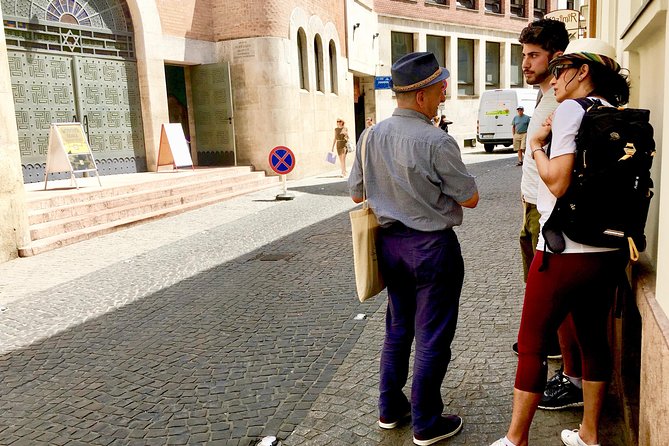
This experience begins at Herzl Square, beside the Great Synagogue on Dohány Street, and lasts about 2 hours 45 minutes. It is offered in English, with hotel pickup available, although the stated meeting point is Dohány u. 1.
The route is compact but serious. You move through the old Jewish Quarter, once home to a large and influential Jewish population, then confront the much darker story of the 1944 Budapest ghetto and the persecution of Hungarian Jews.
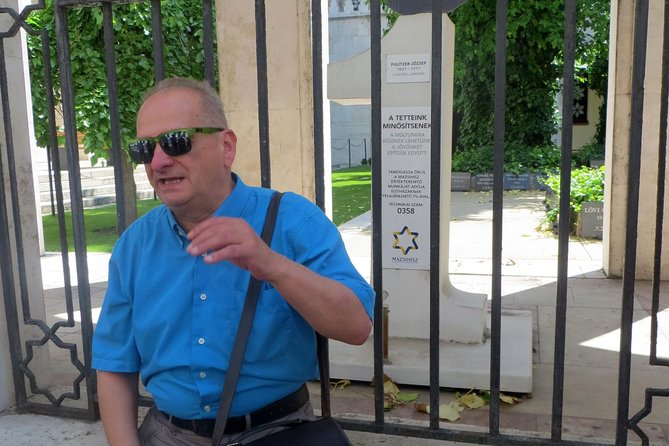
I would think of this as a guided historical conversation rather than a simple synagogue sightseeing tour. The best guides ask why you chose the subject and shape the walk around your questions. One guide, Miklos, was especially praised for placing Hungarian Jewish life in its own setting rather than treating it as a footnote to Jewish history elsewhere.
The private setup matters. You do not have to wait for a large group to catch up, and you can pause when a subject needs more explanation. If your group includes someone with a family connection to Hungary, Judaism, or the Holocaust, the format gives the guide room to handle that personal interest with care.
More jewish heritage tours in Budapest:
- Budapest Jewish Heritage Memorial Walking Tour & Synagogue Entry
★ 5.0 · 568 reviews - Budapest: Jewish Heritage Guided Tour with Synagogue Ticket
★ 4.8 · 533 reviews - Jewish Quarter of Budapest Walking Tour
★ 4.7 · 369 reviews
The Great Synagogue and the story of Hungarian Jewry
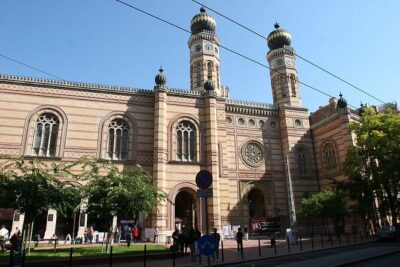
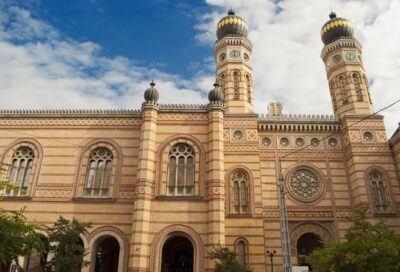
The first major stop is the Dohány Street Synagogue, commonly called the Great or Central Synagogue. It is the largest synagogue in Europe, with seating for about 3,000 people, and it serves the Neolog movement, a Hungarian form of Judaism that developed its own customs and institutions.
The building is important for more than its size. Its design reflects the confidence and public role of Budapest’s Jewish community during the nineteenth century. Your guide explains what makes the synagogue architecturally unusual, while also placing it within the growth of Jewish life in Budapest.
The history turns sharply when the tour reaches World War II. Hungarian Jews had been part of the country’s civic, cultural, and economic life, and many regarded themselves as loyal Hungarian citizens. The later betrayal by the Hungarian state made the persecution especially devastating.
You will spend about 20 minutes here. Admission is not included, so check the total cost before booking. Since the tour’s main price does not cover synagogue tickets, your final bill will be higher than the advertised per-person rate.
The stop also opens the door to stories about famous Hungarian Jews. Names connected with science, art, cinema, and business help show that Jewish Budapest was not an isolated subculture. It was part of the city’s development.
Rumbach Street Synagogue and a different Jewish identity
A short walk brings you to the Rumbach Sebestyén Street Synagogue. Built in 1872 by Austrian architect Otto Wagner, it was created for the moderate Conservative community.
Its Moorish design gives it a very different feel from the Great Synagogue. The interior, restored after years of decline, is one of the most striking visual parts of the route. I like that the guide does not treat the synagogues as interchangeable religious buildings. Each one reflects a different group, period, and view of Jewish practice.
You spend about 15 minutes here, and entry is extra. This is a good place to ask your guide about the divisions within Budapest’s Jewish community. Those differences were not just matters of architecture. They reflected debates about tradition, modern life, language, and the place of Jews in Hungarian society.
The stop is brief, so do not expect an extended architectural lecture. Its value comes from comparison. After seeing the Great Synagogue, Rumbach helps you understand that Budapest’s Jewish life had several distinct voices.
Carl Lutz and the people who tried to help
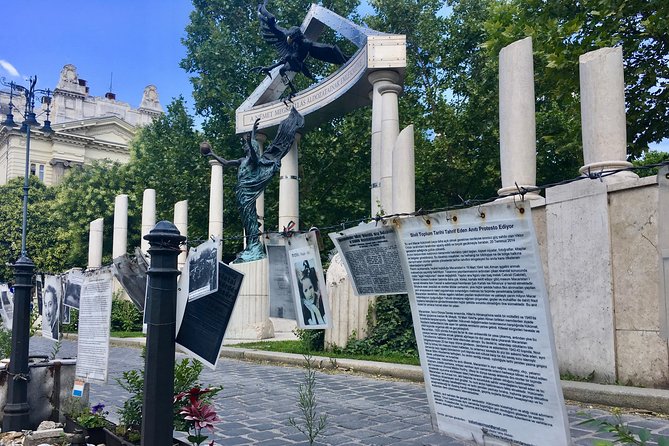
The Carl Lutz Memorial offers a quieter pause. Lutz was a Swiss diplomat who helped save tens of thousands of Jews in Budapest from persecution and deportation during the war.
The memorial sits in the area of the former ghetto. Your guide can connect the actions of Lutz with the wider network of diplomats and rescuers who used official papers, protective letters, and safe houses to help people escape immediate danger.
This stop takes about 10 minutes and has no admission fee. It is not as visually grand as the synagogues, but it gives the walk a needed human focus. You are not only looking at what happened to a community. You are also considering the choices made by individuals during a time of state violence.
The tour also includes the Raoul Wallenberg Holocaust Memorial Park and its Tree of Life, according to the route described by past participants. The metal leaves record names connected with Jews killed during the Holocaust. That addition helps link the memorial sites with the people behind the numbers.
A few more Budapest trips to weigh up
- Budapest: Historic Cruise with Welcome Drink
★ 4.7 · 6,512 reviews - Budapest Historical Sightseeing – Free Walking Tour
★ 5.0 · 1,302 reviews - Buda Castle District Dark History, Legends and Vampire Night Tour
★ 4.5 · 1,240 reviews - BloodThirsty Hungary: Walking tour & Dark Historical Stories
★ 4.9 · 633 reviews
Kazinczy Street and Orthodox Budapest
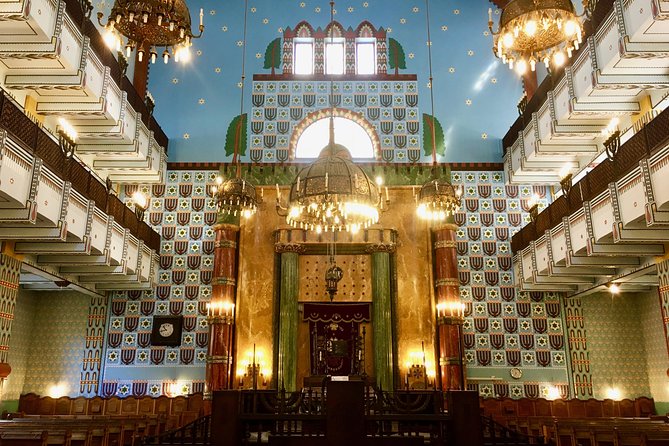
Kazinczy Street Synagogue is the third major synagogue on the walk. Built in 1913, it served Budapest’s Orthodox community and has a bright, late Art Nouveau design.
The stained-glass ceiling windows were created by Miksa Róth, one of Hungary’s best-known decorative artists. Compared with the grand scale of Dohány Street, Kazinczy feels more focused on the details of worship and community life.
This contrast is one of the strongest reasons to take the full synagogue route. You see a large Neolog institution, a Moorish Conservative building, and an Orthodox synagogue with its own visual language. The guide explains how these communities differed, giving you a clearer picture of Jewish Budapest before the war.
The stop lasts about 10 minutes, and admission is not included. The timing is enough for an introduction and comparison, but not for a leisurely visit. If synagogue interiors are your main reason for booking, ask in advance how much time your guide expects to spend inside each building.
The Shoes on the Danube, a memorial that needs no grand speech
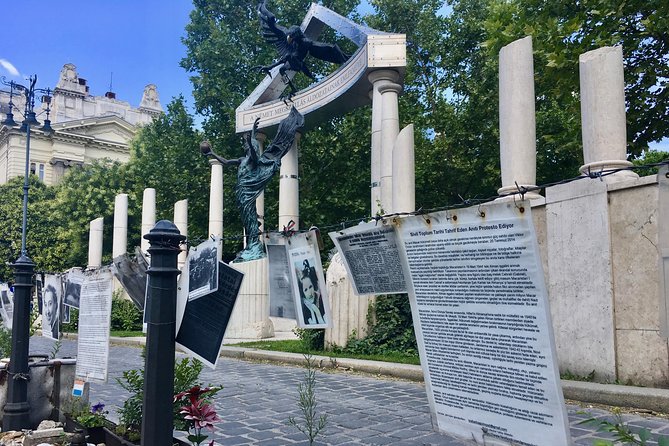
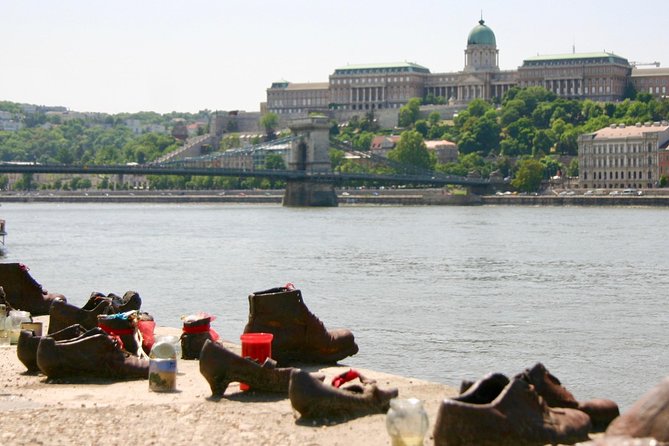
The tour leaves the Jewish Quarter for the Shoes on the Danube Bank memorial. The sculpture shows iron shoes lined along the river, recalling Jewish men, women, and children who were ordered to remove their shoes before being shot by members of the Arrow Cross in 1944 and 1945.
The bodies were carried away by the Danube. The empty shoes make the crime immediate without showing violence. I find this kind of memorial powerful because it asks you to picture the people who were there, not just read a date on a plaque.
You have about 10 minutes at the site. That may feel short, especially if you want quiet time, photographs, or a fuller discussion. Still, the guide’s presence helps place the memorial within the larger story of the ghetto, deportations, and local collaboration.
This is one of the points where a private tour can be more considerate than a large group walk. Your guide can allow silence, answer questions, and avoid rushing the explanation into a rehearsed speech.
The former ghetto and the surviving wall
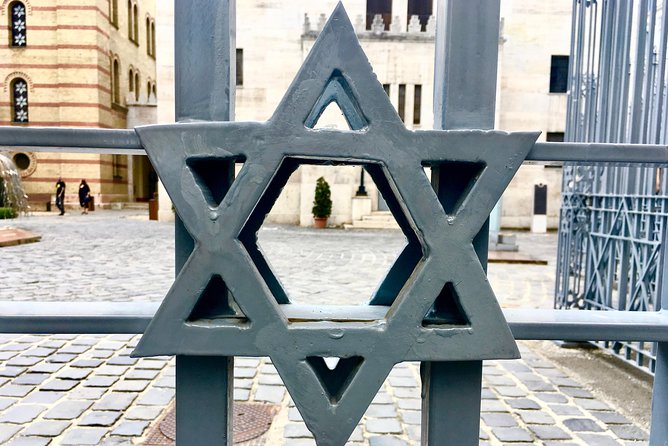
Back in the Jewish Quarter, the route explores the area that became Budapest’s World War II ghetto. A small section of the ghetto wall remains among later buildings.
Do not expect a preserved historic district that looks exactly as it did in 1944. Much of the original setting has changed, and the surviving fragment is easy to miss without help. The guide’s stories do much of the work, helping you picture crowded housing, restricted movement, fear, shortages, and the uncertain fate of the people confined there.
This section lasts about 15 minutes. It is particularly useful if you want to understand how the quarter functioned as a living neighborhood before it became a place of confinement. One guide, Kata, has shared her own family connection to Hungarian Jewish life, the Holocaust, and the Soviet occupation. Personal accounts like that can give the history a direct, present-day connection, though the exact guide you receive will depend on availability.
The experience is not exclusively about wartime suffering. Several guides have also focused on how families lived between World War I and World War II. That domestic view is valuable. It shifts the story from monuments and dates to homes, work, religious practice, and the everyday choices of people who could not imagine how completely their country would turn against them.
Finishing with flódni
The final stop is on Dohány Street, where the tour ends with flódni, a traditional Jewish-Hungarian pastry. It is usually made with layers associated with apple, walnut, poppy seed, and plum jam, although the supplied tour details do not promise a particular recipe or venue.
This snack is more than a sweet bonus. Food gives the walk a warm ending after several difficult memorials. It also points toward continuity. Jewish Budapest is not only a story of buildings lost and lives destroyed. It is also a living culture with recipes, family traditions, and people maintaining Jewish life today.
Some past participants described sharing a snack in a small house synagogue or discussing the tour over coffee and pastry. The exact setting may vary, so I would treat the flódni as included while viewing any extra drink or café stop as something to confirm with the guide.
What the $102.95 price really buys
At $102.95 per person, this tour makes the most sense for a small group that values a private guide. You are paying for the guide’s time, local interpretation, hotel pickup if arranged, and the chance to ask questions without competing with a busload of people.
The value is strongest when you want context. You could walk past the Great Synagogue, Rumbach Street, the Shoes on the Danube, and the old ghetto area on your own. You would not easily understand how the synagogues represented different communities, how Jewish life shaped Budapest, or how the wartime sites fit together.
The price is harder to justify if you only want exterior photographs or a quick list of landmarks. Admission fees are extra, and public transportation is not included. Group discounts may help, but the tour remains a premium choice compared with a standard shared walk.
The experience receives a 4.9 out of 5 rating from 47 reviews, with 96 percent recommending it. The strongest praise centers on the guides’ warmth, historical command, and personal approach. Gabriella is repeatedly singled out, as are Edith, Miklos, Peter, and Kata. Since guide quality is central here, I would ask whether a particular guide is available if you have a strong preference.
Timing, walking, and practical details
The tour is about 2 hours 45 minutes. That is enough for a structured introduction, but the schedule is full. The listed stops include 20 minutes at the Great Synagogue, 15 minutes at Rumbach, 10 minutes at the Carl Lutz Memorial, 10 minutes at Kazinczy, 10 minutes at the Shoes on the Danube, 15 minutes in the former ghetto area, and 20 minutes for flódni.
The route begins and ends at the meeting point at Dohány u. 1. Hotel pickup is offered, but public transportation tickets are not included. The activity is private, and only your group takes part.
Most people can participate, and service animals are allowed. The route is near public transportation, but the experience is a walking tour, so wear comfortable shoes and allow time for a serious, emotionally demanding subject.
Free cancellation is available if you cancel at least 24 hours before the start time. Changes or cancellations inside that window are not accepted for a refund.
Who should book this Jewish heritage tour?
I would recommend it to you if you want to understand Budapest’s Jewish Quarter rather than simply photograph its synagogues. It suits people interested in architecture, religious communities, family history, World War II, Hungarian culture, and the continuing life of Jewish Budapest.
It is also a good choice for non-Jewish visitors. One guide began by asking a non-Jewish couple why they wanted to take the tour, then explained Hungarian Jewish history in a way that welcomed questions rather than assuming prior knowledge.
If you have only one morning in Budapest, the private format can be useful. One participant had a tight schedule before returning to a ship and valued the guide’s ability to keep the tour focused. Still, you should not expect to cover every story in the city in under three hours.
I would hesitate if you want a strictly Holocaust-centered experience. The tour addresses persecution, the ghetto, the Shoes on the Danube, rescuers, and the fate of Hungarian Jews, but it also spends real time on synagogue architecture, community divisions, culture, and life before the war. One less positive experience wanted more detailed stories of resistance and individual wartime incidents. That is a fair point to consider before booking.
Should you book it?
Book this tour if you want a personal, thoughtful introduction to Budapest’s Jewish heritage and are willing to pay extra for a private historian guide and synagogue admissions. The best part is the connection between places: three synagogues show the community’s internal variety, while the memorials show what happened when that community was attacked.
Choose another experience if you want a longer museum visit, a lower price, or a tour focused almost entirely on Holocaust events. For everyone else, this is a strong way to meet Budapest’s Jewish Quarter with both sorrow and perspective, ending with a small but fitting taste of Jewish life in Hungary.
FAQ
How long does the Budapest Jewish heritage tour last?
The tour lasts approximately 2 hours 45 minutes.
Where does the tour begin?
It begins at Budapest, Dohány u. 1, 1074 Hungary, near Herzl Square and the Great Synagogue.
Where does the tour end?
The activity ends back at the meeting point.
Is the tour private?
Yes. Only your group participates in the activity.
Is hotel pickup available?
Yes, hotel pickup is offered.
Is the tour conducted in English?
Yes, the tour is offered in English.
Are synagogue admission tickets included?
No. Entrance tickets are not included in the tour price.
Is public transportation included?
No. A public transportation ticket is not included.
What food is included?
The tour includes an authentic Jewish dessert, flódni, at the end of the walk.
Can I cancel for a full refund?
Yes, if you cancel at least 24 hours before the experience start time. Cancellations made less than 24 hours before the start are not refunded.
Just added around Budapest
- From Budapest: Guided Tour of Eger with Wine Tasting★ 4.5 · 6 reviews
- Budapest: Private Walking Tour with a Local Guide★ 3.6 · 6 reviews
- Budapest: Danube River Views Bike Ride★ 4.8 · 23 reviews
- Trash Art Museum: Hungary’s First Scrap Metal Exhibition★ 4.3 · 72 reviews
- Walk to recent and aged spiritual sanctuaries near Budapest★ 5.0 · 5 reviews
- Budapest: 3-Hour Trabant Sightseeing Tour★ 4.7 · 28 reviews
- True Crime Walking Tour in the Buda Castle district★ 5.0 · 26 reviews
- Audio visual multi-sensory chefs journey dinner experience★ 5.0 · 3 reviews
Jewish Heritage Tours, compared.
Budapest Jewish Heritage Memorial Walking Tour & Synagogue Entry
Read our review →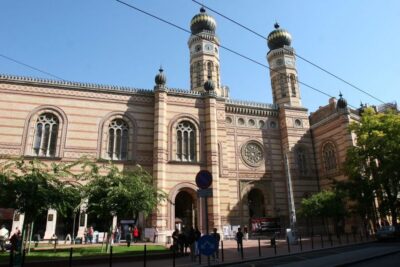
Jewish Heritage Guided Tour with Synagogue Ticket
Read our review →
Past and Present of Budapest Jewish District Tour
Read our review →
Budapest Dohany Synagogue & Hungarian Jewish Museum & free extras
Read our review →
Jewish History Guided Walking Tour with Historian
Read our review →Browse the lists this tour appears in