
Reviewed · WALKING TOURS
Budapest Walking Tour with a Professional Local Guide
Budapest’s story is best understood by seeing both halves of the city, and this tour does that in a tidy three-hour sweep. You begin at St. Stephen’s Basilica, pass through central Pest, view the Parliament, then use public transport to reach Buda Castle and Matthias Church.
I like the short walking route, about 1.5 kilometers, and the way the guide connects grand buildings with personal stories about dictatorship and daily life under Communism. I also like the small-group option and the guides’ clear, lively style, with Alexandra, Dominik, Dalia, Oliver, and others praised for answering questions and keeping a steady pace. The catch is that the 41 dollar price does not include four public transport tickets, costing 1,400 HUF per person.
In This Review
- Key points to know before booking
- Why this compact Budapest tour works
- Starting beside St. Stephen’s Basilica
- Central Pest and the architecture of a growing capital
- The Hungarian Parliament from the outside
- Crossing the Danube by public transport
- Buda Castle and the medieval royal story
- Matthias Church and Budapest’s religious art
- The difficult 20th century, told in human terms
- Guide style, pace, and group size
- Is 41 dollars a fair price?
- Who should book this experience?
- Practical details before you go
- Should you book the Budapest Walking Tour?
- FAQ
- Where does the Budapest walking tour meet?
- How long does the tour last?
- How far do you walk?
- Are public transport tickets included?
- What language is the tour offered in?
- Can I book a private or small-group tour?
Key points to know before booking
- A two-sided Budapest introduction: See major sights in Pest and Buda without committing to a full-day tour.
- History beyond pretty buildings: Learn about medieval royalty, 19th-century growth, Nazi rule, Communism, and Hungary’s move to democracy.
- Only 1.5 kilometers on foot: Public transport carries you across the river, making this easier than a long city walk.
- Strong guide element: Guides including Alexandra, Dominik, Dalia, Oliver, and Z have been praised for humor, clarity, patience, and local insight.
- Parliament is viewed from outside: The tour gives you the building’s setting and story, but it is not a Parliament interior visit.
- Budget for transit: Four tickets per person are extra, at a stated cost of 1,400 HUF.
Why this compact Budapest tour works
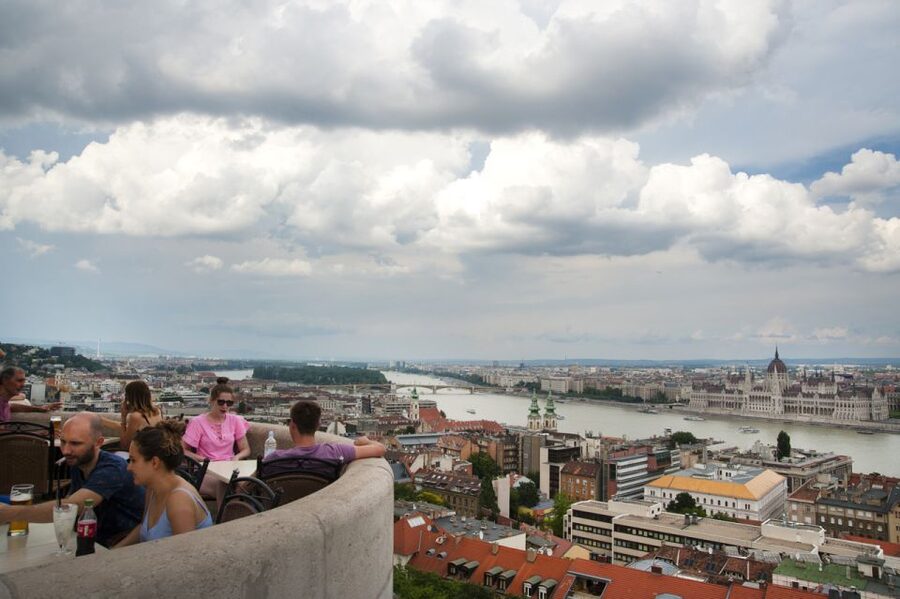
Budapest can feel like two separate cities divided by the Danube. Pest spreads across the flatter eastern bank, with grand avenues, ministries, cafés, and the Basilica. Buda rises on the western side, where the Castle District gives you older streets, royal buildings, and Matthias Church.
This tour links the two sides in one outing. That matters if you have only a short stay, limited walking energy, or no interest in spending an entire day on sightseeing. You get a useful first orientation rather than an exhausting march from one landmark to another.
The route is described as about 1.5 kilometers on foot. That is modest for a three-hour city tour, but do not mistake the short distance for a lack of content. Much of the time goes into explanation, questions, and the public transport crossing between Pest and Buda.
The main strength is interpretation. Budapest’s monuments are handsome, but the city becomes more understandable when you know how royal power, rapid 19th-century urban growth, Nazi dictatorship, Communist rule, and democratic change shaped them. The guide’s job here is not simply to point at a church and name its architect. It is to explain what the city has lived through.
A few more Budapest trips to weigh up
- Budapest: Buda Castle Walk with Saint Stephen’s Hall
★ 4.5 · 3,012 reviews - Big Bus Budapest Hop-On Hop-Off Bus and Walking Tour
★ 3.5 · 2,206 reviews - Budapest: Buda Castle District Walking Tour
★ 4.6 · 2,108 reviews
Starting beside St. Stephen’s Basilica
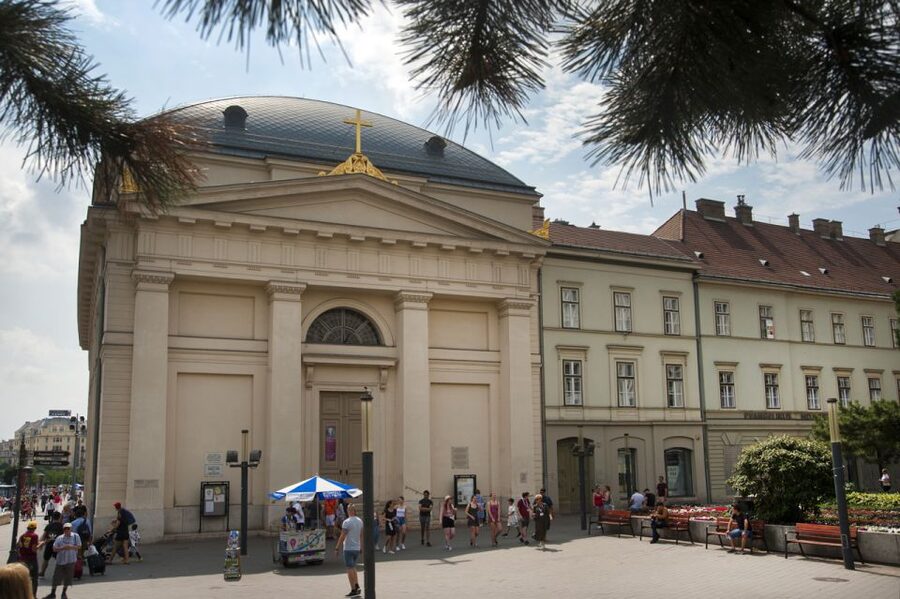
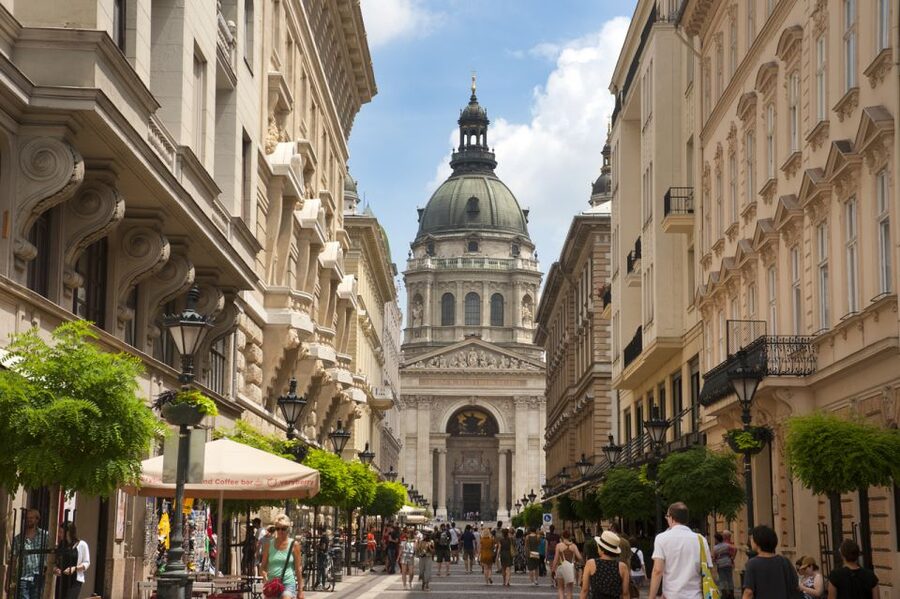
The meeting point is next to St. Stephen’s Basilica, in front of the California Coffee Company coffee shop. This is a practical place to begin because the Basilica is one of central Budapest’s clearest landmarks.
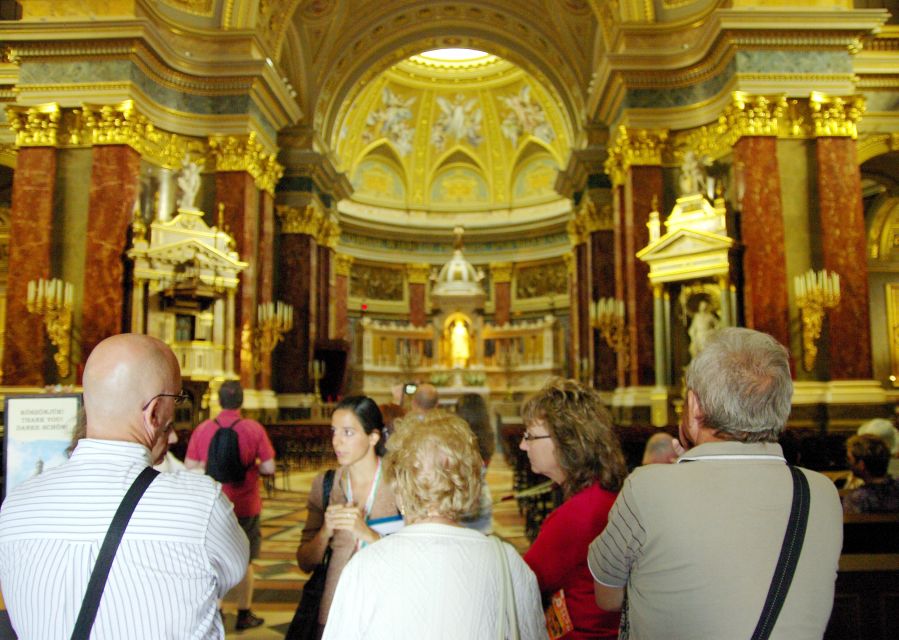
The building introduces you to the city’s religious and architectural character. Its monumental scale makes an immediate impression, and the guide can place it within the story of Budapest’s growth and faith. From here, you start on foot through the central Pest area.
I like beginning here because you are not first asked to locate an obscure street corner or a distant transport stop. You meet in a recognizable part of the city center, then move into the sightseeing route with the Basilica as your first fixed point.
The tour is in English. Since the guide does much of the work through storytelling, the quality of the individual guide matters. Several guides have led this experience, including Alexandra, Dominik, Dominic, Dalia, Oliver, Z, and Vikki. Their approach has been described as lively, friendly, patient, and full of local detail.
You should expect different personalities rather than a single fixed script. One guide may use more humor, while another may focus more heavily on political history. That variety can be a plus, especially if you enjoy asking questions rather than listening to a memorized speech.
Central Pest and the architecture of a growing capital
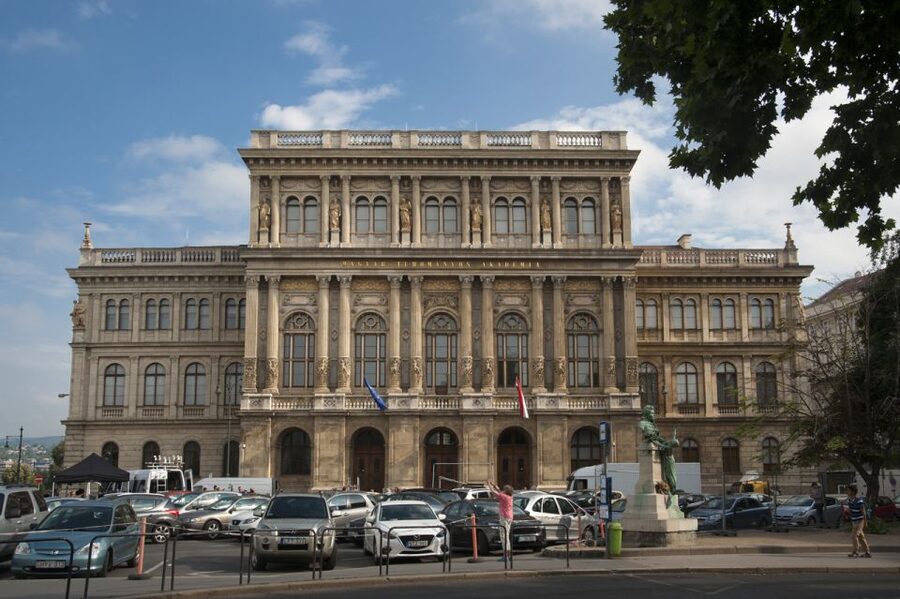
As you move through Pest, the tour focuses on major city-center monuments and the artistic and architectural character that helped Budapest earn its Paris of the East nickname. The point is not to compare every street with Paris. It is to help you read the grand urban style of the Hungarian capital.
The 19th century is especially important here. Budapest changed quickly as the city expanded and modernized. Large public buildings, religious landmarks, and civic spaces reflect that period of ambition. Your guide ties those changes to the political story, showing how the city’s physical appearance grew alongside its new role as a major European capital.
You will also hear about the earlier medieval royal residence and the later upheavals that changed Hungary. This broad time span is one of the tour’s useful features. In three hours, you are not studying each era in detail, but you are given a chronological frame for the city.
That frame helps you make better use of the rest of your stay. After this tour, a visit to Buda Castle is not just a walk around an attractive complex. A Parliament view is not merely a photo stop. Each place has a place in the larger story.
The amount of information can be substantial. One visitor described the experience as getting a great deal of information in a short time, while another joked that the hard part would be remembering it all. Bring a small notebook if you enjoy history, or take a few notes on your phone afterward while the details are still fresh.
The Hungarian Parliament from the outside
The route includes the magnificent exterior of the Hungarian Parliament building. This is an important sight, but you should book with the right expectation: the experience provides an exterior view and historical context, not a guided tour inside the Parliament.
The building works well as part of a walking route because its size and detail are easier to appreciate when you have time to look rather than simply pass by on a vehicle. Your guide can also connect the building to Hungary’s political life and the changes that followed the country’s authoritarian periods.
This is one place where a local guide adds value. A photograph gives you the outline and riverfront setting. An explanation gives you a sense of why the building matters, what it represents, and how the country’s political story affects the way you see it.
Do not expect a long architectural survey here. The tour covers several major locations in a limited time, so the Parliament is one chapter in a larger introduction.
Same riverbank, a completely different kind of day:
- Budapest: Unlimited Prosecco, Beer and Aperol Spritz Cruise
★ 4.8 · 25,310 reviews - Budapest: Széchenyi Spa Day Ticket with Optional Upgrades
★ 4.3 · 23,911 reviews - Budapest: Nighttime or Daytime Sightseeing Cruise
★ 4.2 · 21,062 reviews - Budapest: 1-Hour Evening Sightseeing Cruise with Drink
★ 4.5 · 8,330 reviews
Crossing the Danube by public transport
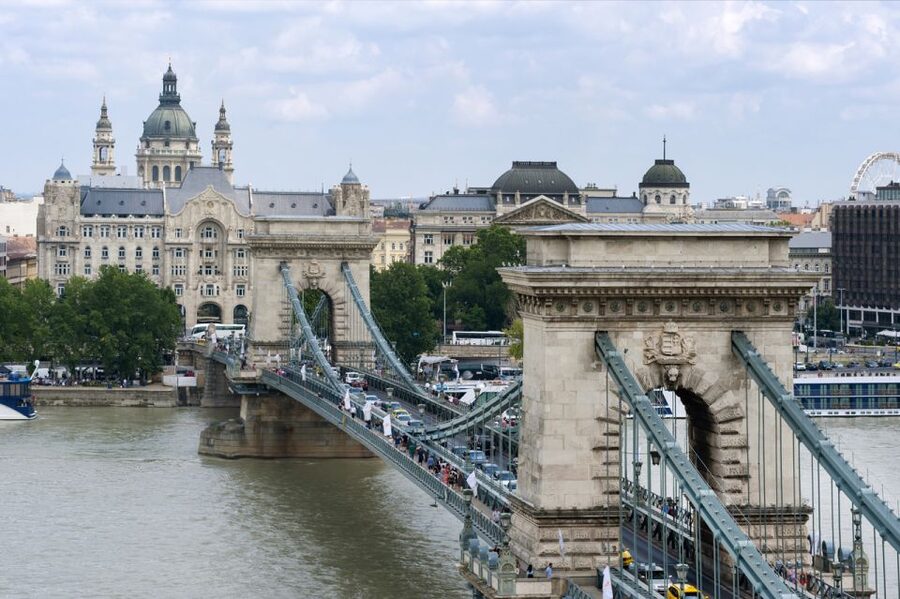
Rather than walking every step between Pest and Buda, the tour uses public transport to cross the river. Four tickets per person are required, and the stated cost is 1,400 HUF. Those tickets are not included in the tour price.
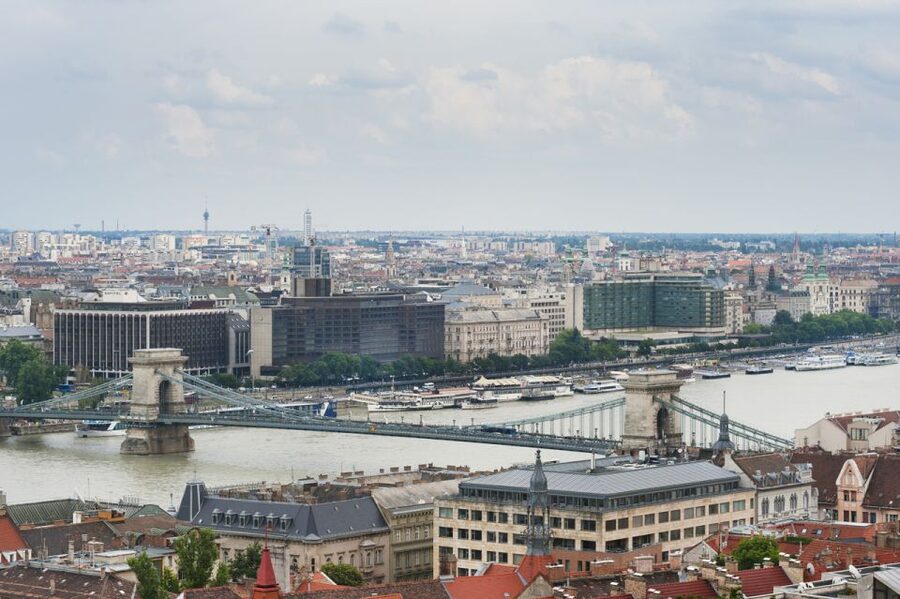
This arrangement is sensible. The river crossing is one of Budapest’s defining movements, but walking the full route could use valuable time and energy. Public transport keeps the tour at a comfortable pace and lets you spend more of the three hours on explanation and sightseeing.
You should arrange the tickets before or during the tour according to the guide’s instructions. Since the cost is separate, include it when comparing this experience with other Budapest tours. It is not a large extra expense, but knowing about it avoids an awkward surprise.
The crossing also gives the route a useful change of mood. Pest’s civic and urban center gives way to Buda’s hilltop royal quarter. Even without adding extra stops, that shift helps you understand Budapest as a city with distinct physical and historical halves.
Buda Castle and the medieval royal story
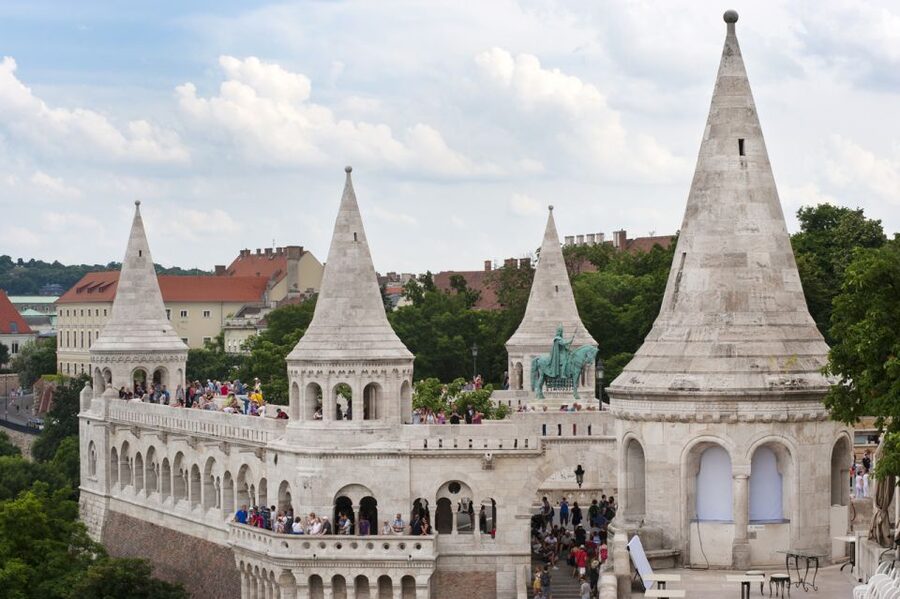
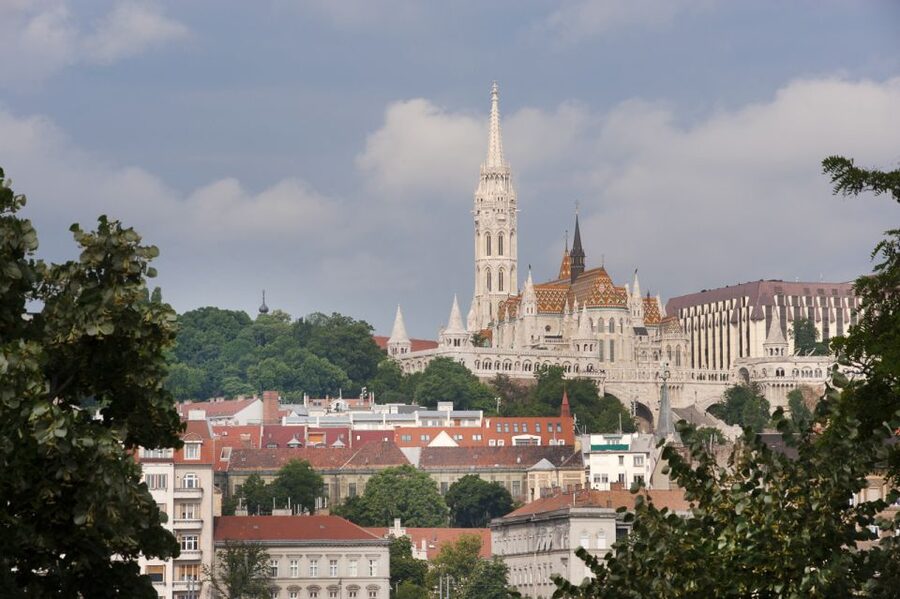
On the Buda side, the focus turns toward Buda Castle and the old royal center. The castle area gives the tour a different historical texture from central Pest. Here, your guide explains the medieval royal residence and the later changes that affected the district.
The value of this stop is the contrast. Pest shows you the modern capital’s grand urban growth, while Buda points back toward royal power and the older foundations of the city. Seeing both in one morning or afternoon gives you a stronger sense of Budapest’s long development.
The tour is not a substitute for a full Castle District visit. If you want to explore every courtyard, museum, and side street, you will need more time afterward. But it gives you the essential orientation, which is useful for deciding where to return on your own.
The route also benefits from the guide’s ability to relate buildings to political events. Budapest has lived through revolutions, occupation, dictatorship, and major political change. The Castle area is not treated as a frozen medieval postcard. It becomes part of a continuing national story.
Matthias Church and Budapest’s religious art
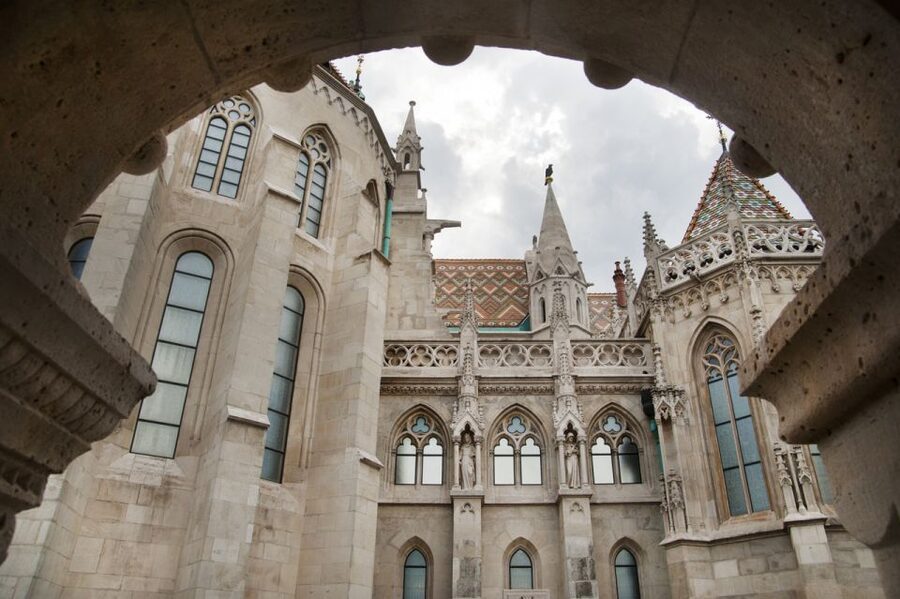
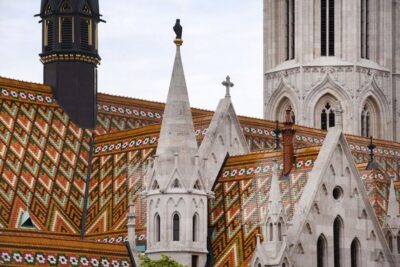
Matthias Church brings Gothic character to the Buda portion of the tour. Its ornate exterior and strong religious identity make it one of the most memorable architectural sights on the route.
The church is valuable not only for its design but also for the way it reflects the city’s shifting history. A building can serve as a religious center, a symbol of royal authority, and a survivor of political change. Your guide uses sights such as this to show how faith, art, and power overlap in Budapest.
The tour centers on seeing the main sights, so confirm with the guide what interior access is possible on your particular departure. The supplied details specifically highlight the church and its Gothic splendor, but they do not promise an interior visit.
For many visitors, this is the visual high point of the route. It provides a strong contrast with the Basilica and Parliament, and it helps explain why Budapest appeals to people interested in architecture as much as to those focused on history.
The difficult 20th century, told in human terms
The tour’s most unusual feature is its attention to Hungary’s 20th-century dictatorships. You hear about Nazi rule, Communist dictatorship, revolutions, and the transition to democracy.
That subject can easily become a string of dates and political labels. The best guides make it more direct by explaining how these systems affected ordinary life. Personal stories about living under Communism give the history a human scale. They help you understand that dictatorship was not only a matter of government buildings and official speeches. It shaped work, family life, speech, travel, and everyday choices.
This focus also connects Budapest to the rest of Europe. The history of Hungary did not unfold in isolation. The tour places the country’s difficult periods alongside wider European events, which is particularly useful if you have visited places in Poland or elsewhere in Central Europe.
I appreciate this balance. The tour includes the attractive monuments people come to see, but it does not polish away the painful parts of the past. You get the churches and castle, then the political history that gives those places greater meaning.
Some people want only architecture on a short walking tour. If that is you, the discussion of dictatorship may feel heavier than expected. If you want to understand the country rather than simply photograph it, this is one of the strongest reasons to choose this experience.
Guide style, pace, and group size
Guide quality is the central factor here. The strongest descriptions of the experience point to clear explanations, humor, patience, local knowledge, and a good walking speed. Alexandra has been praised for a lively presentation and for answering many questions. Dominik and Dominic have been described as especially strong on historical detail, while Dalia is known for giving extra time and showing passion for Budapest’s past.
One guide continued in good spirits during pouring rain, and another kept the group engaged through bitterly cold weather. That does not guarantee perfect conditions on your departure, but it suggests that the guiding style is not limited to sunny days.
A comfortable pace is promised, and the walking distance is short. You should still wear practical shoes because this is a walking tour through city streets and historic areas. The experience does not state that every surface is smooth or that the route is designed for all mobility needs, so contact the provider if that is important for you.
Private and small-group formats are available. A small group is the better choice if you want to ask questions, hear personal stories, and keep the experience conversational. A private departure may suit families or friends who want more control over the discussion, though the price can vary by booking format.
Is 41 dollars a fair price?
At 41 dollars per person, this is not the cheapest way to see Budapest’s monuments. You could walk around several public areas on your own for little or no cost. The real question is what you want to buy.
You are paying for three hours of structure, an English-speaking guide, historical context, and a route that joins Pest and Buda without requiring you to plan the transport connection. That is good value if you have limited time or want a strong first orientation.
The price is easier to justify for a private or small-group experience, where questions and personal discussion are more practical. If you are already well read on Hungarian history and prefer independent sightseeing, the cost may feel less attractive.
Remember to add 1,400 HUF for the four public transport tickets. The guide is included, but transit is not. There is no separate food, museum admission, or meal component listed, so you should see this as a focused sightseeing and history tour rather than a full-day city package.
Who should book this experience?
I would choose this tour for a first visit to Budapest, especially if you have one to three days in the city. It gives you a map in your head: Basilica and central Pest, Parliament, the Danube crossing, Buda Castle, and Matthias Church.
It also suits you if history matters as much as architecture. The attention to Nazi and Communist rule is more serious than the usual landmark checklist, and the personal stories make the modern past easier to grasp.
The short route works well for you if a long walking tour sounds tiring. Parents, older visitors, and anyone arriving after a busy travel day may appreciate the reduced distance, though you should ask about mobility needs if necessary.
I would look elsewhere if you want a food tour, a museum-heavy itinerary, entry inside Parliament, or a full day in the Castle District. This experience is a compact overview, not an exhaustive visit to every major attraction.
Practical details before you go
Meet next to St. Stephen’s Basilica, in front of the California Coffee Company coffee shop. Check the starting time when booking because departure times vary.
The tour lasts three hours and is offered in English with a live guide. Private and small-group choices are available. Since the route includes public transport, keep the extra 1,400 HUF per person in mind for four tickets.
The cancellation policy allows a full refund if you cancel at least 24 hours in advance. You can also reserve now and pay later, which helps if your Budapest schedule is still changing.
Should you book the Budapest Walking Tour?
Book it if you want a well-paced first look at both sides of Budapest, with real attention to the country’s modern political past. The route is efficient, the walking distance is manageable, and the guide’s storytelling is the main reason to pay rather than explore the landmarks alone.
Skip it if you want long interior visits or a specialized art, food, or castle tour. For most first-time visitors with limited time, though, the combination of Basilica, Parliament, Buda Castle, Matthias Church, public transport, and personal history makes this a sensible introduction at 41 dollars, plus transit.
FAQ
Where does the Budapest walking tour meet?
The meeting point is next to St. Stephen’s Basilica, in front of the California Coffee Company coffee shop.
How long does the tour last?
The tour lasts three hours.
How far do you walk?
The walking portion is about 1.5 kilometers, or roughly one mile. Public transport is used to cross the river between Pest and Buda.
Are public transport tickets included?
No. Four tickets per person are required, at a stated cost of 1,400 HUF.
What language is the tour offered in?
The live guided tour is offered in English.
Can I book a private or small-group tour?
Yes. Private and small-group options are available.
Just added around Budapest
- From Budapest: Guided Tour of Eger with Wine Tasting★ 4.5 · 6 reviews
- Budapest: Private Walking Tour with a Local Guide★ 3.6 · 6 reviews
- Budapest: Danube River Views Bike Ride★ 4.8 · 23 reviews
- Trash Art Museum: Hungary’s First Scrap Metal Exhibition★ 4.3 · 72 reviews
- Walk to recent and aged spiritual sanctuaries near Budapest★ 5.0 · 5 reviews
- Budapest: 3-Hour Trabant Sightseeing Tour★ 4.7 · 28 reviews
- True Crime Walking Tour in the Buda Castle district★ 5.0 · 26 reviews
- Audio visual multi-sensory chefs journey dinner experience★ 5.0 · 3 reviews
Walking Tours, compared.
Budapest City Landmarks Walking Tour in 2 Hours
Read our review →
3-Hour Orientation Walking Tour of Buda and Pest
Read our review →
Budapest Historical Sightseeing – Free Walking Tour
Read our review →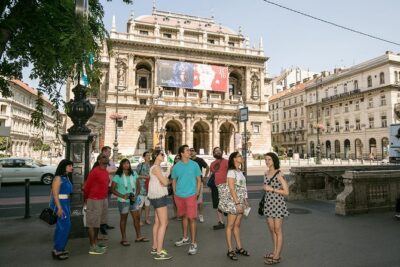
Budapest All in One Small Group Walking Tour with Strudel Stop
Read our review →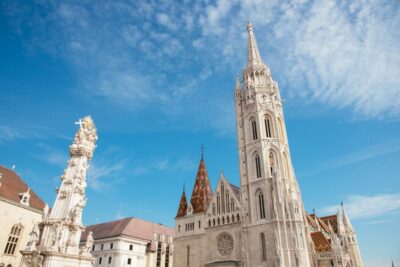
Buda Castle District Walking Tour with a Historian
Read our review →Browse the lists this tour appears in