
Reviewed · RUSSIAN JEEP TOURS
Cinematic Virtual Reality City Tour in a Russian Jeep
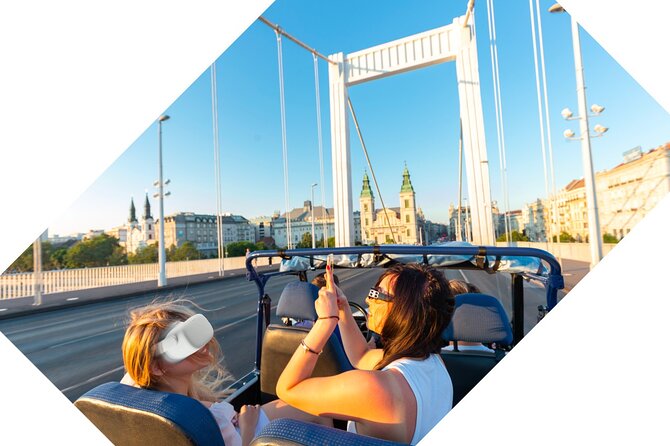
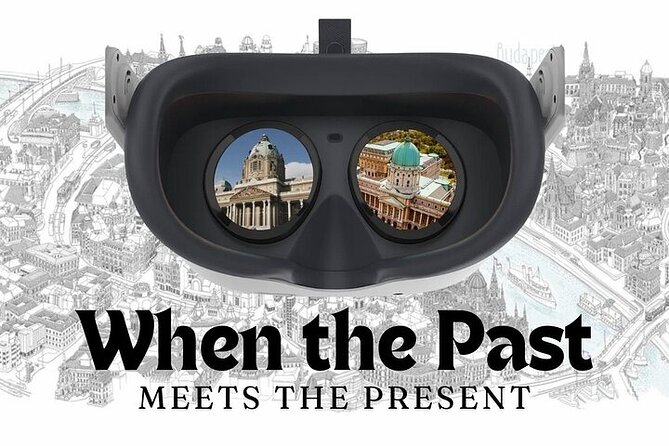
Budapest’s past becomes a short film on this private Russian Jeep tour. At each stop, you put on a VR headset and watch cinematic 2D scenes show how landmarks looked in earlier times. It is a clever way to add context to a city ride, especially if old buildings and vanished streets are hard to picture from plaques alone.
I like the private vehicle, since your group can ask questions and move at a relaxed pace. I also like the combination of an English-speaking guide and VR rather than a headset-only experience. The main caution is that the tour is more of a moving city overview than a series of long museum visits, and admission to Matthias Church is extra.
In This Review
- Key Points Before You Book
- Why the VR Works Best as a History Tool
- A Russian Jeep With a Personal Feel
- Castle Hill: Garden Bazaar, the Chain Bridge, and Fisherman’s Bastion
- Matthias Church and the Buda Castle Quarter
- Parliament, St. Stephen’s Basilica, and the Danube Side
- Andrássy Avenue, the Opera House, and Heroes’ Square
- Old Budapest Appears in Central Pest
- What the $3 Price Really Means
- Who Will Enjoy This Tour Most
- Should You Book the Russian Jeep VR Tour?
- FAQ
- How long does the Cinematic Virtual Reality City Tour last?
- Is hotel pickup and drop-off included?
- Is the tour private?
- What language is the guide?
- Is admission to Matthias Church included?
- Is the tour suitable for people with epilepsy?
Key Points Before You Book
- Cinematic VR at major sights: Watch short historical scenes at places such as the Chain Bridge, Buda Castle, and Blaha Lujza Square.
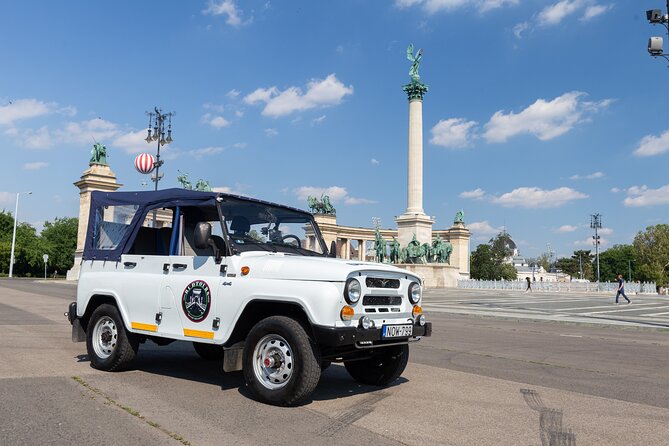
- A memorable Russian Jeep ride: The UAZ-style vehicle is part of the attraction, with a character that adds something different from a standard minibus.
- Private two-hour format: Only your group participates, with hotel pickup and drop-off included.
- A broad Budapest route: The tour links Buda Castle, the Danube, Parliament, Andrássy Avenue, Heroes’ Square, and central Pest.
- Good for first-time orientation: You see many important areas in one outing, though most stops are brief.
- Plan for an extra church ticket: Matthias Church admission is not included, and the upper level of Fisherman’s Bastion also requires payment.
Why the VR Works Best as a History Tool
Budapest is full of grand façades, bridges, and squares, but the city’s past is not always easy to read from the present street scene. The VR element helps fill that gap. Instead of simply hearing that a bridge was destroyed or that a square once looked different, you see a visual version of the earlier setting.
The videos are described as cinematic 2D presentations rather than a fully interactive virtual world. That distinction matters. You are not playing a historical game or walking through a digital reconstruction. You are watching a focused historical sequence at the real place where the event or older view belongs.
I find that approach useful for families and for anyone who prefers visual explanations. The headset gives each stop a clear story, while the guide can add details and answer questions in person. Since this is a private outing, you do not have to hold back a question because a large group is waiting.
The tour lasts about two hours, so expect short scenes rather than long lectures. The stops listed at five or 15 minutes give you enough time to see the setting and use the headset, but not enough time to tour every attraction inside.
More russian jeep tours in Budapest:
- Private Budapest City tour with Classic Russian Jeep or G-Wagon!
★ 5.0 · 386 reviews - Budapest: Private City Tour with a Vintage Russian Jeep
★ 4.9 · 246 reviews - Budapest Private City Tour With a Vintage Russian Jeep
★ 5.0 · 198 reviews
A Russian Jeep With a Personal Feel
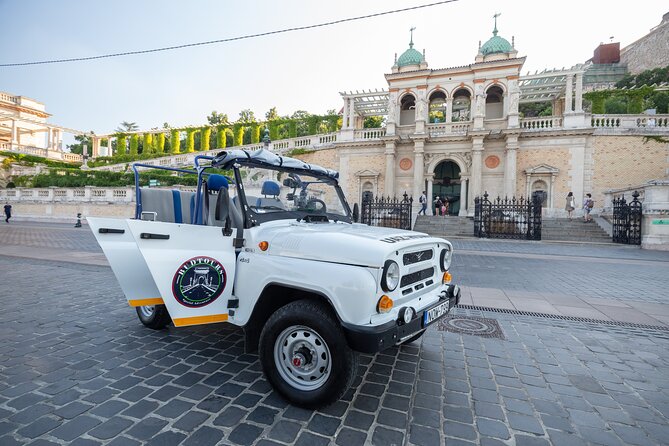
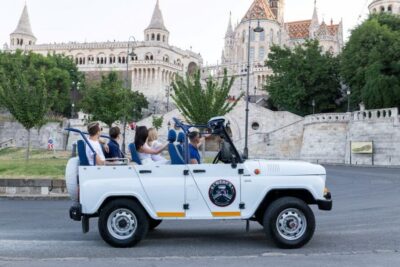
The vehicle is not just transport. The Russian Jeep, described in the feedback as a UAZ, is an unusual part of the experience. One person connected the vehicle with childhood memories of a grandfather’s Jeep, which tells you something about its character: this is a ride with personality, not anonymous city transport.
You receive private transportation, hotel pickup and drop-off, bottled water, and hot tea during winter. Those practical touches matter on a two-hour route with several stops. Pickup also makes the tour easier to fit into a first day in Budapest, when you may not yet know the city’s streets.
The guide is an important part of the value. Zsombor is specifically praised for being attentive, funny, and willing to answer questions. The experience includes an in-person English guide, although the supplied details do not promise that Zsombor will lead every departure.
The route includes Gellért Hill according to one account of the ride, although it is not listed as a formal numbered stop. Treat it as a possible scenic section rather than a guaranteed visit. The main appeal is the blend of driving, brief walks, historical video, and conversation.
Castle Hill: Garden Bazaar, the Chain Bridge, and Fisherman’s Bastion
The first part of the route focuses on Buda. At the Castle Garden Bazaar, you see a Neo-Renaissance complex connected with the Buda Castle area. It is now used for cultural events, exhibitions, concerts, and dance performances, so the setting is not only architectural.
The listed stop is brief, about three minutes. I would treat it as a quick introduction and photo pause rather than a proper visit. The VR presentation can add useful background, but you will not have time to explore the complex in detail.
At the Chain Bridge Lion Statue, the tour brings you to one of Budapest’s most recognizable crossings. The Széchenyi Chain Bridge links Buda and Pest across the Danube and is named for Count István Széchenyi, one of its major supporters.
This is one of the clearest places for the VR format to earn its keep. A bridge looks much the same as an object whether you know its story or not. Historical footage can show how its role and appearance changed over time. The stop is listed at about five minutes, so expect a concentrated presentation rather than time to walk across the bridge.
Fisherman’s Bastion gives you one of the best city views on Castle Hill. Its towers look medieval, but the structure was built in the early 20th century for Hungary’s millennium celebrations. That contrast is exactly the sort of detail that makes a short guide talk worthwhile.
The lower areas can be visited without an admission ticket, while the upper level requires payment. The tour information says admission is free for the stop, but also notes this upper-level charge, so ask the guide which area your visit covers before paying extra.
Matthias Church and the Buda Castle Quarter
Matthias Church is one of the most visually unusual churches in Budapest. Its interior combines oriental influences, historicist design, and Neo-Gothic elements, giving it a very different feel from a plain medieval church.
The stop is scheduled for about 15 minutes, but admission is not included. That creates a choice. You can stay outside and hear the explanation, or buy your own ticket for the interior. If the church matters to you, confirm the current entry cost and available time before the tour begins, since a 15-minute stop may not allow a leisurely visit.
Nearby Buda Castle crowns Castle Hill. The Castle Quarter brings together medieval, Baroque, and Neoclassical buildings, with historic homes and churches around the former royal palace. The VR scenes here are meant to show the castle’s earlier grandeur and help you picture the royal setting beyond the surviving walls.
This portion is strongest for first-time visitors who want an overview. It is less suited to anyone hoping to spend an hour inside the castle museums or wander every lane. The private format helps because you can ask for a little more time at a favorite point, but the total tour length still limits how far the schedule can stretch.
A few more Budapest trips to weigh up
- Budapest: City Sightseeing Hop-On Hop-Off Bus Tour & Extras
★ 4.1 · 4,337 reviews - Budapest City Landmarks Walking Tour in 2 Hours
★ 5.0 · 2,048 reviews - Budapest: Danube River City Lights Express Cruise
★ 4.1 · 1,608 reviews - Budapest: Grand City Tour with Parliament Visit
★ 4.4 · 1,598 reviews
Parliament, St. Stephen’s Basilica, and the Danube Side
The route then crosses to Pest and passes the Hungarian Parliament Building on Kossuth Square beside the Danube. Parliament is a grand Neo-Gothic symbol of Budapest and the home of Hungary’s National Assembly.
The listed Parliament stop is about five minutes, and admission is not included. The description says you pass by the building, so do not book this tour expecting an interior visit. Its value here is the exterior view and the VR presentation, which can connect the building you see today with earlier moments in its story.
St. Stephen’s Basilica is another major landmark on the Pest side. It honors Hungary’s first king and serves as an important Roman Catholic church for the Archdiocese of Esztergom-Budapest. It is also described as Hungary’s third-largest church and Budapest’s tallest.
No separate timed stop or included admission is specified for the basilica. Consider it part of the route’s visual survey rather than a guaranteed interior tour. If you want to enter, ask the guide how much time is available and whether the schedule allows it.
This section helps you understand Budapest as two cities joined by the Danube. The Jeep lets you cover ground quickly, while the guide and headset provide the historical thread.
Andrássy Avenue, the Opera House, and Heroes’ Square
Andrássy Avenue gives the tour a grand urban stretch. The boulevard is lined with Neo-Renaissance buildings and is part of Budapest’s UNESCO World Heritage designation. Along the way are upscale shops, cafés, restaurants, the State Opera House, the Zoltán Kodály Memorial Museum, the Hungarian University of Fine Arts, and the Ferenc Hopp Museum of East Asian Arts.
The planned stop is about 15 minutes. That is enough to see the avenue’s scale and hear how its cultural institutions fit into Budapest life. It is not enough to tour the museums or browse the shops, so think of this as a guided street-level introduction.
The Hungarian State Opera House receives a shorter stop of about five minutes. Its Neo-Renaissance exterior features a symmetrical design and composer statues, while the interior is known for marble decoration, frescoes, and gold details.
Admission is not included, and the schedule does not promise an inside visit. The VR sequence is therefore especially useful here, since it can show the Opera House’s earlier period without requiring a full performance or guided building tour.
The route also passes the House of Terror at 60 Andrássy Avenue. This museum deals with Hungary’s fascist and communist periods and commemorates people who were imprisoned, interrogated, tortured, or killed in the building. The subject is serious, and the brief pass-by cannot replace time inside the museum. Still, it gives you a useful marker for a later visit.
At the end of Andrássy Avenue, Heroes’ Square presents the Millennium Monument and statues of important Hungarian leaders and the Seven Chieftains of the Magyars. With City Park nearby, this is one of the route’s better photo stops. The scheduled 15 minutes should allow you to look around and use the headset without feeling rushed.
Old Budapest Appears in Central Pest
The route continues through several central Pest locations where modern streets hide earlier versions of the city.
New York Palace is noted for its café, a highly decorated place for coffee and tea. The tour may show you the exterior or point out the site, but the supplied details do not promise a café stop or a reserved table. If you want to sit inside, plan a separate visit.
At Blaha Lujza Square, the VR presentation shows how the area looked when the National Theatre occupied the site. Today it is a major transport and commercial point, but the historical scene helps you imagine the square before its present form.
The stop is listed at about five minutes. That is a good match for the headset presentation, though not for extended exploration. The appeal here is the contrast between an ordinary modern square and the cultural role it once played.
Ferenciek Square adds another architectural layer. The area includes Paris Garden, a hotel café, and Klotild Palace, once associated with the royal family. The VR presentation is intended to show the square in an earlier period of greater royal grandeur.
The route can also connect you with the former Erzsébet Bridge. The old bridge opened in 1903 and lasted until 1945. It held a world record in its category for 25 years and a Danube record for 70 years. This is a fine example of how the headset can restore something that no longer exists in its original form.
What the $3 Price Really Means
At the stated price of $3, this tour looks like an extraordinary bargain. Hotel pickup, private transport, an English-speaking guide, drinks, and VR equipment would normally make a city outing worth much more than the advertised amount.
Still, check the current price carefully before booking. A very low displayed fare can reflect a limited promotion, a pricing error, or conditions that are not clear in the supplied details. The value is excellent if the amount is accurate and includes the listed features.
The tour is not a substitute for a full walking tour of Castle Hill, an interior Parliament visit, a museum day, or a dedicated church tour. Its strength is coverage. In two hours, you see major sights on both sides of the Danube and get historical video at selected points.
I would compare the price with your goals. If you want a quick orientation with an unusual vehicle and a private guide, the value is strong. If you already know Budapest well and want slow, detailed visits, spend the money on individual admissions and a longer guided walk instead.
Who Will Enjoy This Tour Most
I would recommend it to first-time visitors, families, couples, and anyone who likes history explained through pictures. The private setup is useful for mixed-age groups because you can ask questions without keeping pace with a large party.
It also suits people who want hotel pickup and do not want to work out Budapest’s transport system on their first morning. The Russian Jeep adds a memorable touch for anyone who enjoys unusual vehicles.
The pace may frustrate you if you prefer long stops. The itinerary has several five-minute pauses, and admission is not included at Matthias Church, the Opera House, or Parliament. The provider also advises against the activity for people with epilepsy, which is important because the experience uses a VR headset.
Free cancellation is available when you cancel at least 24 hours before the start time. Cancellations inside that window are not refunded, and late changes are not accepted. Service animals are allowed, the tour is near public transport, and most people can participate.
Should You Book the Russian Jeep VR Tour?
Book it if you want a private Budapest overview with a strong visual history element, hotel pickup, and a vehicle that feels more distinctive than a standard tour van. The best parts are the Chain Bridge, Castle Hill, Heroes’ Square, and the old-city VR scenes at Blaha Lujza Square and Erzsébet Bridge.
Skip it if your main goal is entering museums, touring Parliament, or spending a full afternoon inside Matthias Church and Buda Castle. For everyone else, especially on a first visit, the combination of short stops, an attentive English guide, and cinematic historical scenes makes this an inventive way to get your bearings.
FAQ
How long does the Cinematic Virtual Reality City Tour last?
The tour lasts approximately two hours.
Is hotel pickup and drop-off included?
Yes. Hotel pickup and drop-off are included, along with private transportation.
Is the tour private?
Yes. Only your group participates in the activity.
What language is the guide?
The experience includes an in-person English-speaking guide.
Is admission to Matthias Church included?
No. Admission to Matthias Church is not included. The upper level of Fisherman’s Bastion also requires an admission fee.
Is the tour suitable for people with epilepsy?
The provider does not recommend this experience for people suffering from epilepsy because it uses a VR headset.
Just added around Budapest
- From Budapest: Guided Tour of Eger with Wine Tasting★ 4.5 · 6 reviews
- Budapest: Private Walking Tour with a Local Guide★ 3.6 · 6 reviews
- Budapest: Danube River Views Bike Ride★ 4.8 · 23 reviews
- Trash Art Museum: Hungary’s First Scrap Metal Exhibition★ 4.3 · 72 reviews
- Walk to recent and aged spiritual sanctuaries near Budapest★ 5.0 · 5 reviews
- Budapest: 3-Hour Trabant Sightseeing Tour★ 4.7 · 28 reviews
- True Crime Walking Tour in the Buda Castle district★ 5.0 · 26 reviews
- Audio visual multi-sensory chefs journey dinner experience★ 5.0 · 3 reviews
Russian Jeep Tours, compared.

Private Budapest City tour with Classic Russian Jeep or G-Wagon!
Read our review →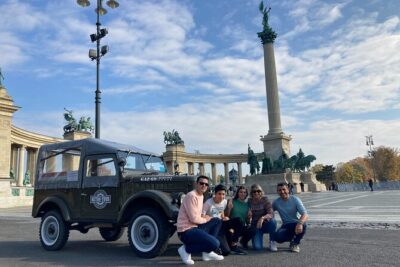
Iconic Budapest tour with Classic Russian Jeep and G-Wagon
Read our review →Browse the lists this tour appears in