
Reviewed · JEWISH HERITAGE TOURS
Jewish Heritage / Full tour
Budapest’s Jewish quarter carries both grand beauty and painful memory, and this tour connects the two unusually well. You’ll visit the Dohány Street Synagogue, the cemetery, the Emmanuel Tree, and two stark memorials, while guide Edith brings in personal stories about Hungary and Jewish life today. I like the small-group format and the way the tour leaves room for real questions rather than rushing from one plaque to the next.
I also like the compact three-hour schedule. It gives you a serious look at Budapest’s Jewish heritage without swallowing your whole day, and the walk includes the lively streets, street art, and nightlife of the present-day district. The main drawback is cost: the $80.86 tour price does not include the Dohány Synagogue admission, listed at €26 per person, and transportation is not included.
In This Review
- Key points to know before booking
- What this Jewish heritage tour is really about
- Starting with Budapest’s central meeting point
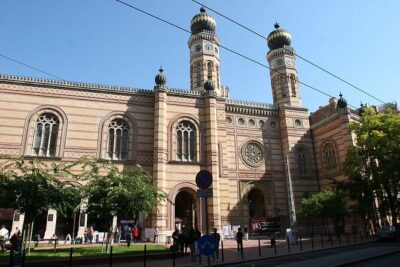
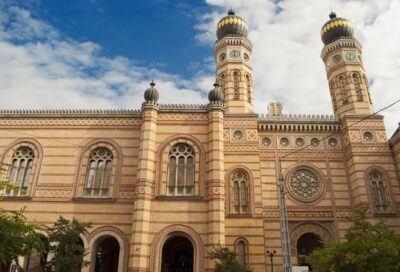
- Dohány Street Synagogue, Budapest’s grand centerpiece
- The Jewish quarter beyond the memorials
- Shoes on the Danube Bank, a memorial that needs no grand speech
- The controversial memorial to the victims of the German invasion
- Why Edith matters to the experience
- Price, timing, and what you really receive
- Who should take this tour?
- Practical advice for making the most of it
- Should you book the Jewish Heritage Full Tour?
- FAQ
- How long does the Jewish Heritage Full Tour last?
- What sights are included?
- Is the Dohány Street Synagogue entrance fee included?
- Is transportation included?
- Where does the tour start and end?
- Who is the guide?
- How large is the group?
- Can I cancel for a full refund?
Key points to know before booking
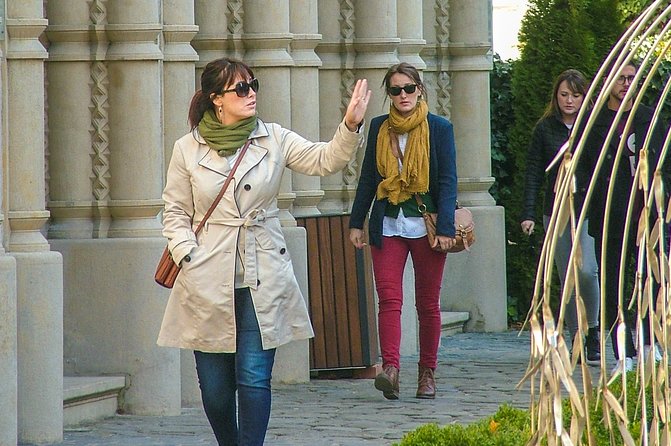
- Edith is the guide to look for: Her clear English, personal stories, and ability to adjust the pace are repeatedly praised.
- Dohány Street Synagogue is the centerpiece: The visit covers the synagogue, cemetery, memorial courtyard, and Emmanuel Tree, but the €26 entrance fee is extra.
- The Shoes on the Danube memorial is brief but powerful: Allow about 15 minutes for this quiet riverside stop.
- The tour links past and present: You’ll hear about wartime persecution, postwar Hungary, Soviet influence, current Jewish life, street art, and ruin-bar culture.
- Expect a walking tour with some transit help possible: Transportation is not included, though Edith may guide you through Budapest’s rapid transit system as part of the route.
- The subject matter is emotional: The memorials and stories can be difficult, but the tour treats them with care and room for discussion.
What this Jewish heritage tour is really about
This is not simply a checklist of synagogues and Holocaust memorials. It is a walking conversation about how Jewish life in Budapest was shaped by the Second World War, the Soviet period, later political disputes, and the city’s present-day culture.
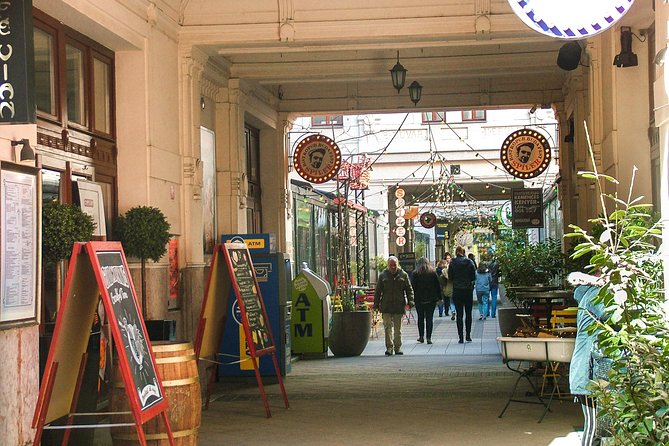
You begin near Deák Ferenc tér, a central meeting point, and finish at Dohány Street Synagogue on Dohány utca. The route covers major sights, but the strongest part is the space between them. As you walk through former Jewish neighborhoods, you see a district that is not frozen in the past. Cafés, street art, nightlife, and ruin bars now share the same streets as memorials and religious buildings.
That contrast matters. Budapest’s Jewish quarter is a place of remembrance, but it is also a living part of the city. I like that this experience does not treat Jewish history as a sealed chapter. The guide is encouraged to discuss what it means to be Jewish in Hungary today, giving the tour a present-day purpose as well as a historical one.
The group is intended to be small. The main description says a maximum of ten people, while the additional tour details give a maximum of thirteen. Either way, this should feel more personal than a large coach excursion, with a better chance to ask questions and hear the guide clearly.
More jewish heritage tours in Budapest:
- Budapest Jewish Heritage Memorial Walking Tour & Synagogue Entry
★ 5.0 · 568 reviews - Budapest: Jewish Heritage Guided Tour with Synagogue Ticket
★ 4.8 · 533 reviews - Jewish Quarter of Budapest Walking Tour
★ 4.7 · 369 reviews
Starting with Budapest’s central meeting point
The tour starts at Deák Ferenc tér, one of Budapest’s most central squares. This is a practical meeting place, but you should still read the confirmation carefully for the exact meeting instructions. Edith has been praised for sending clear directions and being on time, which is useful when you are trying to find a guide in a busy city center.
The route is mainly on foot. Some accounts of the experience describe using Budapest’s rapid transit system during the tour, but transportation is not included in the price. If the route uses public transit on your date, ask Edith how tickets should be handled.
The pace is described as comfortable rather than hurried. That suits this subject. You will want time to stop at memorials, listen to stories, and ask questions without feeling that the group is being pushed along.
Dohány Street Synagogue, Budapest’s grand centerpiece
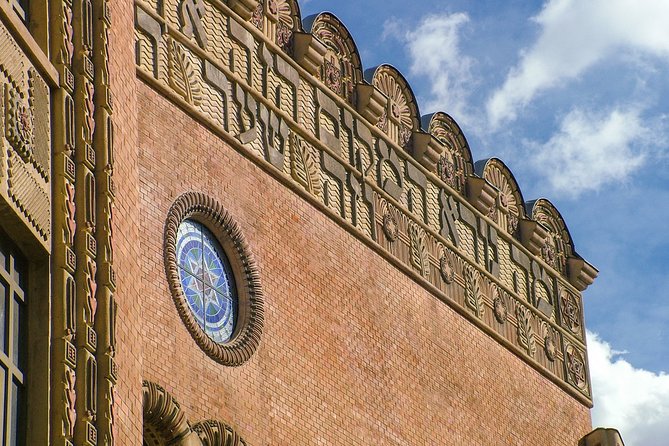
The main stop lasts about two hours and centers on Dohány Street Synagogue, described as the second-largest synagogue in the world and the largest in Europe. The synagogue itself is the visual high point of the tour, but the surrounding grounds are just as important.
Your visit includes:
- The synagogue building
- The Jewish cemetery
- The Raoul Wallenberg Memorial Garden
- The Emmanuel Tree memorial
- Historical streets and former community spaces
- An outside look at another functioning synagogue
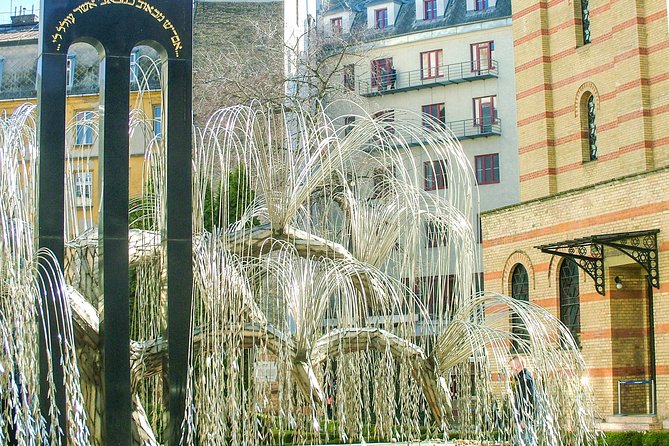
The cemetery is especially significant because it forms part of the synagogue complex and helps explain the scale of wartime loss. The Raoul Wallenberg Memorial Garden honors the Swedish diplomat who helped save Hungarian Jews during the Holocaust. At its center, the Emmanuel Tree carries the names of victims on its leaves, creating a memorial that is both beautiful and difficult to take in.
The tour also points out Tony Curtis’s connection to the Emmanuel Tree. That detail adds a human link between Budapest’s Jewish community and the wider Jewish diaspora.
Admission to Dohány Street Synagogue is not included. The listed entrance price is €26 per person, so your real cost is the $80.86 guide fee plus that admission. That makes this a fairly expensive three-hour activity, especially for two people. Still, I think the value is reasonable if you want context rather than a quick look around the building. The guide helps you understand how the synagogue, cemetery, garden, and neighborhood fit together.
You should also check the synagogue’s entry rules and any clothing requirements before arriving, since religious sites can have rules that differ from ordinary sightseeing attractions. The supplied details confirm the entrance fee but do not specify additional policies.
The Jewish quarter beyond the memorials
After, or while approaching, Dohány Street Synagogue, the tour takes you through the surrounding Jewish district. This part helps prevent a common mistake: seeing Budapest’s Jewish quarter only as a place of wartime tragedy.
The streets once held a large and active Jewish community. Today, the area is also known for street art and nightlife, including ruin bars. That mix can feel jarring. A memorial garden may be only a short walk from a noisy evening venue. Rather than hiding this tension, the tour uses it to ask how historic neighborhoods change and how memory survives in places that continue to evolve.
This is also where Edith’s conversational style seems most useful. Several descriptions of her guiding emphasize her ability to answer questions, tailor the walk to personal interests, and discuss subjects openly. If you want a tour that sticks strictly to dates and architecture, this may feel more personal than expected. If you want to understand how history affects ordinary life now, that is a strength.
A few more Budapest trips to weigh up
- Budapest: Historic Cruise with Welcome Drink
★ 4.7 · 6,512 reviews - Budapest Historical Sightseeing – Free Walking Tour
★ 5.0 · 1,302 reviews - Buda Castle District Dark History, Legends and Vampire Night Tour
★ 4.5 · 1,240 reviews - BloodThirsty Hungary: Walking tour & Dark Historical Stories
★ 4.9 · 633 reviews
Shoes on the Danube Bank, a memorial that needs no grand speech
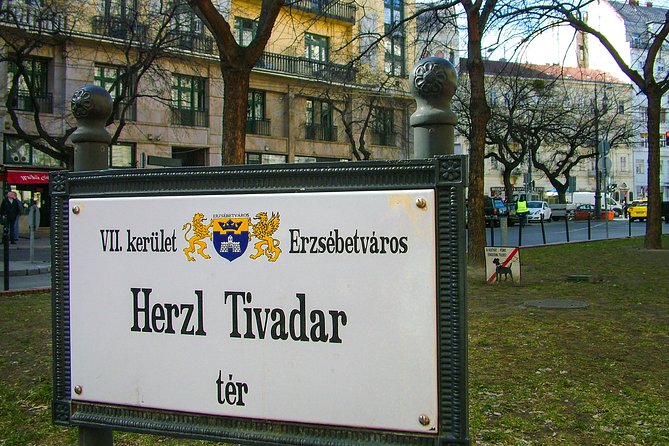
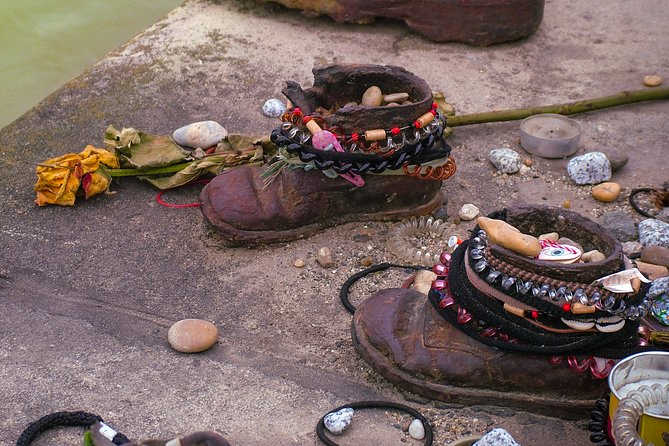
The Shoes on the Danube Bank memorial takes about 15 minutes and is free to visit. It consists of iron shoes along the river, recalling Jewish people who were shot at the Danube during the Second World War.
This is one of Budapest’s most affecting memorials because it uses an ordinary object to suggest the people who were forced to leave their shoes behind. You do not need a long explanation to understand the image, but a guide can provide the historical setting and answer questions that the sculpture itself cannot.
The riverside setting also changes the rhythm of the tour. After the synagogue’s architecture and formal memorial gardens, this is a spare, open-air stop. I would expect it to be quiet and emotionally heavy, even though the scheduled visit is short.
If you have limited mobility, note that this is a walking tour and that the route includes several outdoor stops. The information provided says most people can participate and that service animals are allowed, but it does not give detailed accessibility information for every surface or entrance.
The controversial memorial to the victims of the German invasion
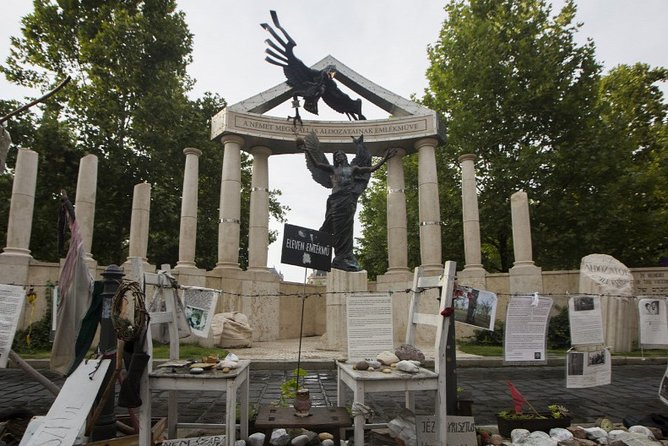
The final listed stop is the Memorial to the Victims of the German Invasion. The monument is one of Budapest’s most disputed public memorials. It was erected at night and has been guarded by police, while protest material has remained at the site since its creation.
The criticism centers on how the monument presents responsibility for Hungary’s wartime suffering. The official symbolism and the public response do not tell the same story, and that disagreement is central to understanding why the site remains controversial.
This is an important reason to take the tour with a guide. On your own, you can see the monument and the protest materials, but it is harder to understand the argument behind them. Edith’s role here is not just to identify the sculpture. She can explain why the site provokes such a strong response and how the debate relates to the experience of Hungarian Jews.
The stop lasts about 15 minutes and is free. It is brief, but it gives the tour a wider political frame. The story is not only about what happened during the war. It is also about how a country remembers, edits, or disputes that past.
Why Edith matters to the experience
The strongest feature of this tour is the guide. Edith is repeatedly praised for excellent English, clear explanations, warmth, punctuality, and a personal connection to the subject. She has shared family stories and reflections on Budapest and Hungary over several decades, including the Soviet period.
That personal element can make the tour more memorable, but it also means the experience may vary depending on who leads your departure. The supplied information names Edith often, so you may want to confirm whether she is your guide when booking or after receiving confirmation.
I particularly value the reports that she adjusts the tour to specific interests and physical limits. Some people want more time at the main synagogue. Others may care most about the memorials, the neighborhood, or present-day Jewish life. A small group gives the guide more room to respond.
The tone is serious, but not cold. Edith has also helped with directions, public transportation, restaurants, and ruin bars. Those recommendations are a useful bonus, especially if you want to continue exploring the Jewish quarter after the formal tour ends.
Price, timing, and what you really receive
The listed price is $80.86 per person for roughly three hours. The local licensed guide is included, but Dohány Street Synagogue admission costs an additional €26 per person, and transportation is not included.
Here is how I would judge the value:
- Good value for personal guidance: The tour covers several major sites and gives you direct access to a guide who can handle questions and explain disputed history.
- Less attractive for budget sightseeing: You will pay more than the basic cost of entering the synagogue, and the tour is relatively short.
- Strong value if context matters: The synagogue, cemetery, memorial garden, river shoes, and German Invasion Memorial each mean more when connected to one another.
- Convenient for a busy itinerary: Three hours leaves plenty of time for the Parliament, Buda Castle, the Central Market Hall, or an evening in the Jewish quarter.
The activity is often booked well ahead, around 75 days in advance on average. If your schedule is fixed, reserving early is sensible, particularly if you want a small group or hope to have Edith as your guide.
Confirmation is sent within 48 hours, subject to availability. Free cancellation is available up to 24 hours before the start time. Cancellations or changes made less than 24 hours ahead are not refunded, and poor weather may lead to a different date or a full refund.
Who should take this tour?
I would choose this experience if you want a focused introduction to Jewish Budapest and prefer conversation to a self-guided visit. It suits first-time visitors, repeat visitors who want a more specific subject, and anyone interested in how public memory shapes a city.
It is particularly useful if you are unsure how to approach the Jewish quarter on your own. The route gives you a clear framework, then adds the neighborhood’s current life, including street art and nightlife.
You should think twice if you want a purely architectural tour, dislike emotionally difficult subjects, or have only a very small sightseeing budget. The route deals directly with murder, persecution, wartime responsibility, and loss. That is not a flaw, but you should know the tone before booking.
It is also not the best choice if you want a long museum visit. The tour includes the synagogue complex and its memorial areas, but the full experience is a guided walk rather than a half-day museum program.
Practical advice for making the most of it
Wear comfortable shoes. You will walk between major stops, and the most meaningful parts of the tour happen outdoors as well as inside the synagogue complex.
Leave time after the tour to remain in the Jewish quarter. You may want to revisit a street, look more closely at its public art, or stop for food or a drink. The tour’s short schedule is useful because it introduces the area without dictating the rest of your day.
Bring questions. The experience is designed to encourage discussion about Jewish life in Hungary today, and Edith’s strength is explaining details in response to what interests you. A quiet, respectful question can lead to a much better understanding than memorizing another date.
Finally, budget for the synagogue entrance fee from the start. The extra €26 changes the total price enough that you should not treat it as a minor surprise.
Should you book the Jewish Heritage Full Tour?
I would book it if you want a thoughtful, small-group introduction to Budapest’s Jewish quarter, especially if Edith is leading. The combination of Dohány Street Synagogue, the cemetery, Emmanuel Tree, Shoes on the Danube, and the disputed German Invasion Memorial gives you both the beauty and the pain of this part of Budapest.
The price is not low once admission is added, and the tour is only about three hours. But the value comes from the guide’s personal explanations, the chance to discuss difficult questions, and the link between historic sites and Jewish life in the city today.
Choose it for meaning and context, not just sightseeing speed. If that is what you want, this is one of the more useful ways to spend a morning in Budapest.
FAQ
How long does the Jewish Heritage Full Tour last?
The tour lasts approximately three hours.
What sights are included?
The route includes Dohány Street Synagogue, its cemetery, the Raoul Wallenberg Memorial Garden, the Emmanuel Tree, historical streets in the Jewish district, an outside visit to another functioning synagogue, Shoes on the Danube Bank, and the Memorial to the Victims of the German Invasion.
Is the Dohány Street Synagogue entrance fee included?
No. Admission is listed at €26 per person and must be paid separately.
Is transportation included?
No. Transportation is not included. Some tour descriptions indicate that Budapest’s rapid transit system may be used during the route, so confirm the arrangements with your guide.
Where does the tour start and end?
The tour starts at Deák Ferenc tér in Budapest and ends at Dohány Street Synagogue, Dohány u. 2.
Who is the guide?
The tour is led by a local licensed guide. Edith is specifically associated with the experience and is praised for her clear English, personal stories, and ability to tailor the tour.
How large is the group?
The tour is intended to be small, with a stated maximum of ten people. The additional information gives a maximum of thirteen, so the exact group limit may vary.
Can I cancel for a full refund?
Yes. You can cancel at least 24 hours before the start time for a full refund. Cancellations or changes made less than 24 hours before the tour are not refunded, and poor weather may result in a different date or a full refund.
Just added around Budapest
- From Budapest: Guided Tour of Eger with Wine Tasting★ 4.5 · 6 reviews
- Budapest: Private Walking Tour with a Local Guide★ 3.6 · 6 reviews
- Budapest: Danube River Views Bike Ride★ 4.8 · 23 reviews
- Trash Art Museum: Hungary’s First Scrap Metal Exhibition★ 4.3 · 72 reviews
- Walk to recent and aged spiritual sanctuaries near Budapest★ 5.0 · 5 reviews
- Budapest: 3-Hour Trabant Sightseeing Tour★ 4.7 · 28 reviews
- True Crime Walking Tour in the Buda Castle district★ 5.0 · 26 reviews
- Audio visual multi-sensory chefs journey dinner experience★ 5.0 · 3 reviews
Jewish Heritage Tours, compared.
Budapest Jewish Heritage Memorial Walking Tour & Synagogue Entry
Read our review →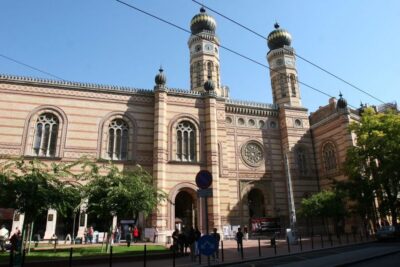
Jewish Heritage Guided Tour with Synagogue Ticket
Read our review →
Past and Present of Budapest Jewish District Tour
Read our review →
Budapest Dohany Synagogue & Hungarian Jewish Museum & free extras
Read our review →
Jewish History Guided Walking Tour with Historian
Read our review →Browse the lists this tour appears in