
Reviewed · ART NOUVEAU TOURS
Budapest Art Nouveau Walking Tour
Budapest’s Art Nouveau is not merely pretty decoration. It is a bold national style, full of colored ceramics, curling forms, folk patterns, and Asian references. This three-hour walk takes you into that world, with special attention to Ödön Lechner, the architect often called Hungary’s Gaudi, and his daring use of Zsolnay porcelain.
I like the chance to see both grand exteriors and selected interiors, especially Gresham Palace and the Hungarian State Treasury. I also like the history behind the style: Hungarian designers were not copying Paris or Vienna exactly, but shaping a look they felt belonged to their own country. The main consideration is that some interiors depend on the day, and the $123 price is easiest to justify if you care deeply about art and architecture.
In This Review
- Key details to know before you go
- Why Budapest’s Art Nouveau feels different
- Starting with Bedő House and the language of ornament
- Ödön Lechner’s Hungarian State Treasury
- Gresham Palace and Budapest at its grandest
- From Rózsavölgyi Street to everyday Art Nouveau
- Thonet House and the power of Zsolnay ceramic
- Paris Passage and the indoor side of the style
- Ending at Kazinczy Street Synagogue
- What $123 buys you
- Who should book this walk
- Should you book the Budapest Art Nouveau Walking Tour?
- FAQ
- How long is the Budapest Art Nouveau Walking Tour?
- What language is the tour conducted in?
- Is the tour private or shared?
- Where does the tour start?
- Is hotel pickup available?
- Are public transport tickets included?
- Can I enter the Hungarian National Bank on a weekend?
- Is the Orthodox Synagogue on Kazinczy Street open every day?
- Are there extra admission fees?
Key details to know before you go
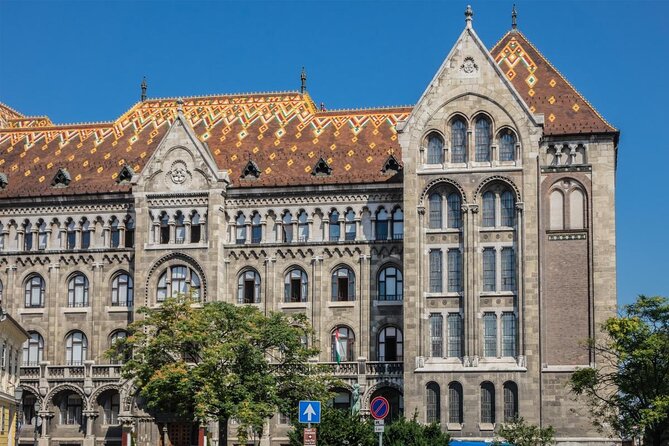
- Lechner’s Postal Bank shows how Hungarian architects turned practical buildings into colorful works of art.
- Gresham Palace gives you a look at one of Budapest’s most lavish Art Nouveau entrances and interiors.
- Zsolnay porcelain is a major theme, with ceramics used as weatherproof decoration on building facades.
- Asian and Hungarian motifs reveal the era’s interest in eastern origins, folklore, and national identity.
- Weekend schedules matter: the Hungarian National Bank and Kazinczy Street Orthodox Synagogue may be closed.
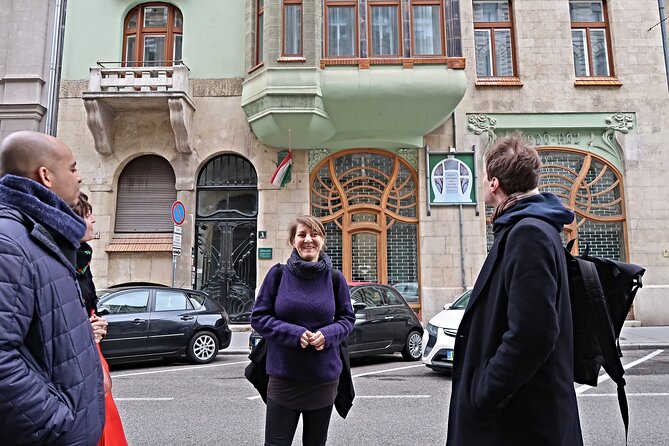
- The guide makes the difference: English-speaking art historians lead the walk, and guide Anna has been praised for her friendly, informed approach.
Why Budapest’s Art Nouveau feels different
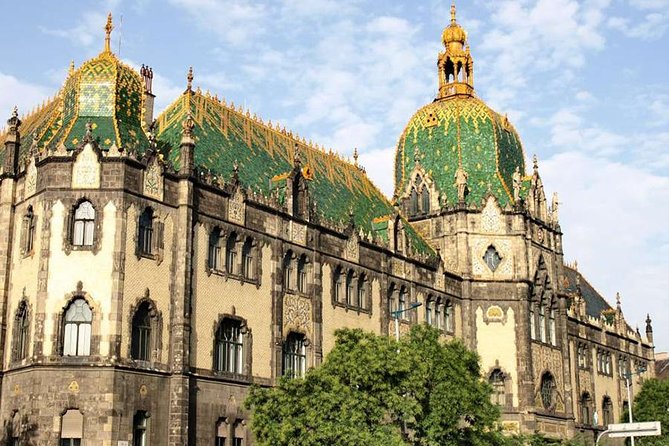
Around 1900, Budapest was an ambitious capital with money to spend and a strong desire to look modern. Art Nouveau offered a fresh break from strict historic styles. Instead of repeating old Greek, Roman, or Gothic formulas, architects played with curved lines, flowers, animals, geometric patterns, new materials, and unusual color.
Hungary developed its own branch of the movement, usually called Hungarian Secession. Ödön Lechner was its leading figure. He borrowed ideas from European Art Nouveau, Hungarian folk art, India, Persia, and other parts of Asia, then combined them with modern construction.
That blend is what makes this walk worthwhile. You are not just looking at ornamental doorways. You are considering why a bank might be covered in shiny ceramic, why a synagogue might use Art Nouveau curves, and why Hungarian architects placed eastern-looking designs on buildings at a time when the country was thinking hard about its national identity.
The walk also gives you a useful reminder that Art Nouveau was not limited to museums. In Budapest, it appears on banks, apartment houses, department stores, coffeehouses, shops, bath buildings, and religious buildings. You see the style in places made for ordinary city life, not only in grand monuments.
More art nouveau tours in Budapest:
- Private Art Nouveau Tour Budapest
★ 5.0 · 21 reviews - Art Nouveau Tour in Budapest: 3-Hour Private Tour
★ 4.6 · 21 reviews - Art Nouveau Treasures of Budapest – Exclusive Private Tour
★ 5.0 · 18 reviews
Starting with Bedő House and the language of ornament
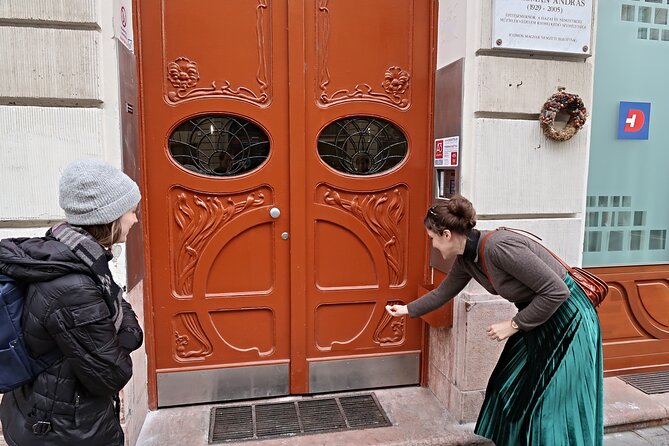
Bedő House is one of the tour’s early Art Nouveau stops. The building helps set the tone for the rest of the walk because Hungarian Secession often works through small details as much as sweeping shapes.
Look closely at the facade rather than taking a quick photograph and moving on. You may find stylized flowers, curved lines, decorative windows, and patterns that seem halfway between nature and geometry. Your guide can explain how those details fit the wider movement and how Hungarian designers gave them a local character.
A stop such as Bedő House is useful because it trains your eye. After a few minutes, you begin to notice repeated ideas across Budapest: ceramic panels, decorative ironwork, unusual lettering, colored surfaces, and motifs that suggest plants, birds, or distant cultures.
The tour can also include the House of Hungarian Art Nouveau, a small museum and coffeehouse. An additional charge of 1,000 HUF per person may apply if it is open and included on your particular route. This is worth considering if you want a more concentrated look at period interiors and decorative arts rather than only building facades.
Ödön Lechner’s Hungarian State Treasury
The Hungarian State Treasury, also known as the former Postal Bank in tour descriptions, is the clearest expression of Lechner’s approach. Its roofline and facade make practical architecture feel theatrical, with colorful Zsolnay ceramics playing a central role.
Zsolnay porcelain came from the town of Pécs in southern Hungary. It was not used only for plates and vases. Architects placed it on roofs and facades because it could handle weather while offering a bright, polished surface. In Budapest’s Art Nouveau buildings, it can look almost jewel-like, though I would not reduce the work to decoration alone. The ceramic helped create a new architectural vocabulary.
Your guide will likely point out how the building’s details connect to Hungarian identity and eastern motifs. At the time, many Hungarian artists and thinkers were interested in the supposed Asian origins of the Hungarian people. That interest mixed with a wider European fascination with the Orient, so the building reflects both national ambition and international fashion.
The interior access here is not guaranteed every day. The Hungarian National Bank is closed to tour visitors on weekends, and this can affect the route. If you are especially interested in Lechner or Zsolnay ceramics, a weekday booking gives you a better chance of seeing the relevant interior spaces.
Gresham Palace and Budapest at its grandest
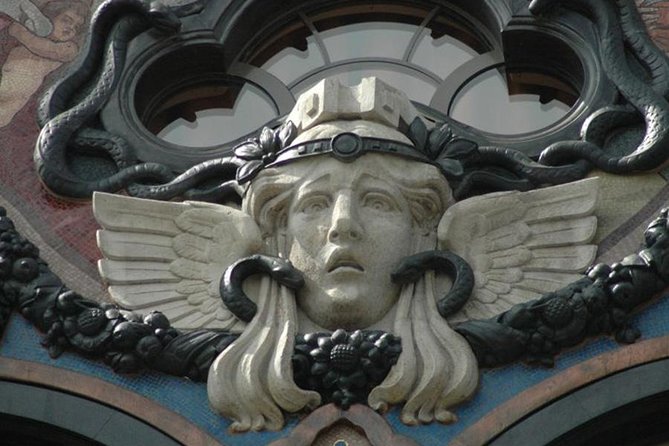
Gresham Palace is the tour’s most lavish architectural stop. Built for the Gresham insurance company, it reflects the wealth and confidence of Budapest during the Belle Époque.
The exterior rewards a slow look. Check the windows, ironwork, mosaics, stone carving, and decorative figures. Art Nouveau is often associated with soft plant forms, but Gresham also shows how the style could be formal and luxurious, suited to a major commercial building.
The entrance hall is especially important because visitors can usually get inside far enough to see some of the interior design. That matters on a walking tour. Many historic buildings are best viewed from the pavement, but Gresham lets you connect the facade with the indoor details.
You should not expect a full private tour of every room. The experience is a guided look at accessible areas, with the guide explaining how the building’s surfaces, patterns, and materials work together. If you like architecture, this is the place to pause and compare the exterior’s public image with the more enclosed atmosphere inside.
Gresham Palace also helps explain the social side of Art Nouveau. These buildings were not modest experiments. They announced that Budapest could compete with other European capitals in business, design, and urban culture.
A few more Budapest trips to weigh up
- Budapest: Buda Castle Walk with Saint Stephen’s Hall
★ 4.5 · 3,012 reviews - Big Bus Budapest Hop-On Hop-Off Bus and Walking Tour
★ 3.5 · 2,206 reviews - Budapest: Buda Castle District Walking Tour
★ 4.6 · 2,108 reviews - Budapest City Landmarks Walking Tour in 2 Hours
★ 5.0 · 2,048 reviews
From Rózsavölgyi Street to everyday Art Nouveau
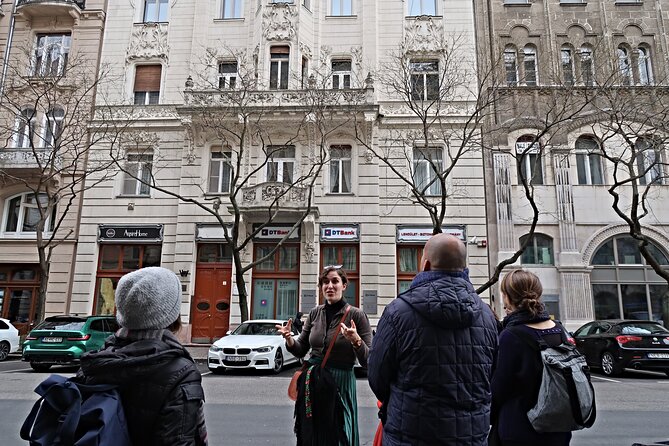
Rózsavölgyi Street adds a different scale to the walk. The tour is not limited to one or two famous landmarks. It also brings you to smaller structures where Art Nouveau appears in shopfronts, entrances, and commercial details.
One possible stop is a flower shop with its original interior. That detail is valuable because it shows how the style reached ordinary businesses. A shop designed in this period could use the same ideas found on a palace facade, but on a more intimate scale.
The route can also include a department store and several bank offices. These stops show how Art Nouveau served commerce. Curved lines, decorative lettering, ceramics, and carefully planned interiors helped businesses look modern and prosperous.
I like this part of the walk because it keeps the subject from becoming a parade of grand facades. You see that design was part of daily urban life. The best buildings invited people to enter, shop, bank, meet, and spend time in attractive surroundings.
At the same time, expect some stops to be viewed from outside or through limited entrance areas. A three-hour walk cannot provide extended access to every building, and commercial properties may have changing opening rules. The guide’s explanations are important here, since a short stop can still make sense when you know what to look for.
Thonet House and the power of Zsolnay ceramic
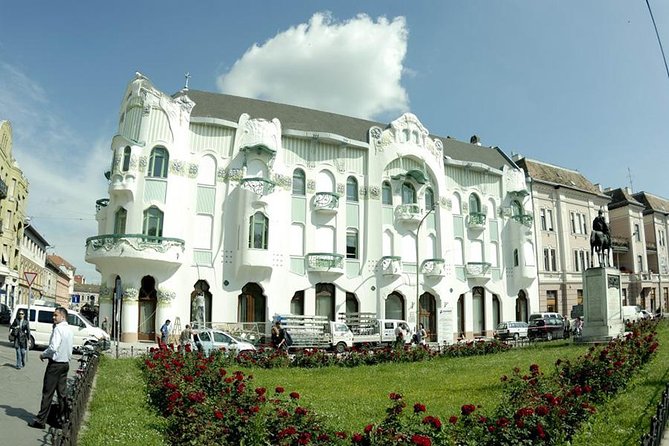
Thonet House is another good place to examine the role of ceramic in Hungarian Art Nouveau. Its facade shows how Zsolnay tiles could turn a city building into something colorful and memorable.
The use of ceramics had practical value as well as visual appeal. A glazed surface could resist Budapest’s weather, while its color and texture gave architects options that plain stone or plaster could not provide. The result is a building that changes as light moves across its surface.
Ask your guide to point out which parts are structural and which are decorative. That distinction helps you understand the period’s design. Art Nouveau often tried to make the whole building feel unified, from the roofline down to the door handles and interior fittings.
You will also hear more about the Asian motifs used by Hungarian designers. These may appear in stylized shapes, decorative patterns, or references to eastern art. They should be read in their historical setting. The designs reflect both Hungary’s search for national roots and the broader European fashion for Asian-inspired imagery.
Paris Passage and the indoor side of the style
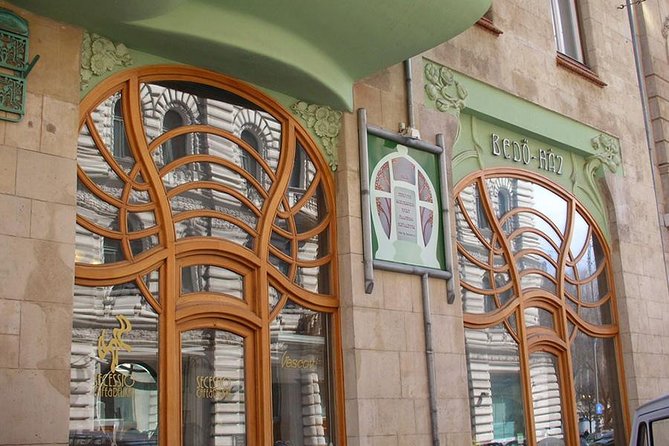
Paris Passage offers a change in mood and scale. Passages and department-store interiors were made for movement, shopping, and social life, so their design had to attract attention while guiding people through a commercial space.
The tour may also include a small Art Nouveau museum and coffeehouse. This is one of the more personal stops because it gives you a chance to see objects and interior details at close range. Facades can be hard to study from street level. A museum setting lets you look at ceramics, furniture, decorative pieces, and patterns without traffic or crowds competing for your attention.
An indoor stop can also help you understand how Art Nouveau worked as a total style. The movement was not only about architecture. It included applied arts and fine art, with designers trying to make interiors, objects, signs, and buildings belong to the same visual world.
The exact order and number of indoor stops can change. The tour description says the route depends partly on the day and that it can be adapted to your interests. That flexibility is useful, but it also means you should confirm what will be open when you book.
Ending at Kazinczy Street Synagogue
The Orthodox Synagogue on Kazinczy Street is a fitting final stop because it shows Art Nouveau in a religious setting. Its interior is described as small but exquisite, with a distinctive Art Nouveau design rather than the restrained appearance you might expect from a place of worship.
The synagogue also expands the story beyond banks and commercial buildings. Art Nouveau was used to express community identity, faith, and modernity as well as wealth. You can consider how decorative design changes the feeling of a sacred interior.
An additional fee of 2,000 HUF per person may apply when this site is open. It is closed on Saturdays, so avoid that day if the synagogue is a priority. If the building cannot be entered, the guide can adapt the route or extend it with other Art Nouveau sites.
Possible replacements include the Gellért Bath Hotel, the Museum of Applied Arts, and the Geology Museum. These alternatives are not identical to the synagogue, but they keep the focus on Budapest’s design culture. The Museum of Applied Arts, in particular, is a useful choice for anyone interested in decorative materials and the broader Art Nouveau movement.
What $123 buys you
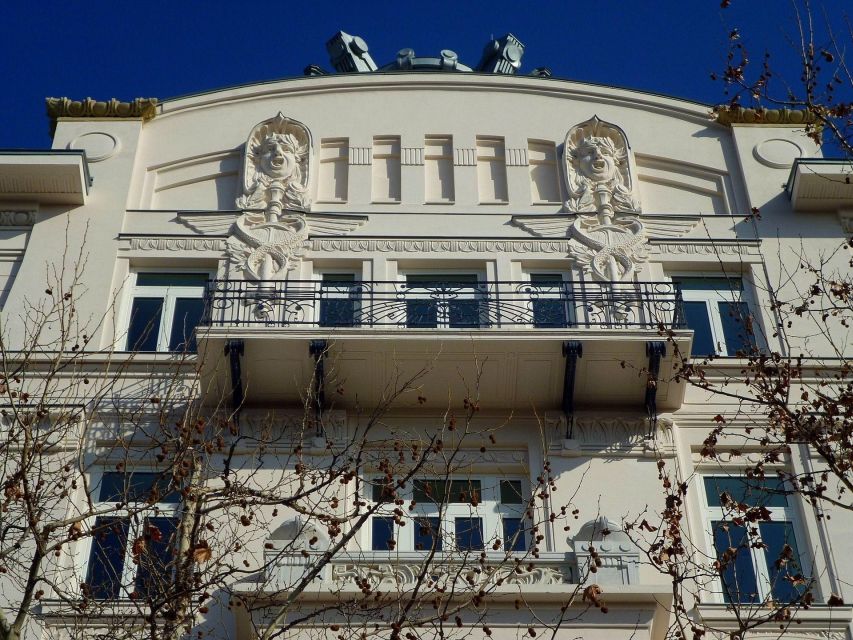
At $123 per person, this is not a cheap general sightseeing walk. You are paying for a specialist guide, a focused route, and access or orientation at buildings that are easy to miss when exploring Budapest on your own.
The value is strongest for you if you enjoy architecture, design, urban history, or photography. A guide can explain why a roof uses Zsolnay ceramic, how Hungarian Secession differs from Viennese Art Nouveau, and what the eastern motifs meant to designers. That sort of explanation is hard to get from a quick self-guided stroll.
The price is also easier to defend if you choose a private or small-group option and care about asking questions. Guide Anna, who has led the tour, is described as friendly and highly informed about Budapest’s art and history. A German-speaking guide has also been available, though the standard language listed here is English.
The value is weaker if you mainly want famous sights, a fast overview of central Budapest, or guaranteed access to every interior. Some admissions cost extra, and weekend closures can change the experience. Tram and metro tickets are not included, though the route is primarily on foot.
Three hours is a sensible length. It gives you time to look upward, hear the design story, and enter selected buildings without turning the day into an exhausting architecture marathon. Wear comfortable shoes and allow enough time to stop for photographs, since the details are often high above street level.
Who should book this walk
I would recommend this tour to anyone who has already seen Budapest’s major landmarks and wants to understand the city’s architecture at a closer range. It is also a strong first choice for people who prefer a theme to a general city tour.
Art students, design fans, photographers, and architecture-minded visitors will get the most from it. Families with older children may enjoy the bright ceramics and unusual shapes, though the value depends on how interested everyone is in buildings and decorative arts.
This is less suitable if you dislike walking, want a museum-heavy outing, or need a fixed route with guaranteed indoor entry. The guide can adjust the walk, but the experience remains centered on architecture viewed across central Budapest.
Book a weekday if the Hungarian National Bank interior and Kazinczy Street Synagogue matter to you. Before paying, check whether the House of Hungarian Art Nouveau or the synagogue admission will be added, since those costs are separate.
Should you book the Budapest Art Nouveau Walking Tour?
Book it if you want more than a list of pretty buildings. The walk explains how Budapest’s architects used Zsolnay porcelain, Hungarian folk references, and Asian motifs to create a style that was modern but strongly tied to national identity.
I would choose it for a private or small-group day, especially on a weekday, and tell the guide which buildings matter most to you. If Gresham Palace, Lechner, and Hungarian Secession are high on your list, this is a well-focused way to see them.
Skip it if $123 feels too steep for a specialist tour or if you mainly want outdoor sightseeing without extra admissions. For the right audience, though, the combination of expert interpretation, selected interiors, and unusual buildings makes this one of Budapest’s more rewarding architecture walks.
FAQ
How long is the Budapest Art Nouveau Walking Tour?
The tour lasts three hours.
What language is the tour conducted in?
The listed tour language is English.
Is the tour private or shared?
Private and small-group options are available.
Where does the tour start?
The starting point depends on the option selected. If you choose a central meeting point instead of hotel or holiday-flat pickup, the meeting location is Madal Café at Budapest, Alkotmány u. 4.
Is hotel pickup available?
Pickup is optional. You can arrange a central meeting instead of personal pickup at your hotel or holiday flat.
Are public transport tickets included?
No. Tram and metro tickets are not included in the tour price.
Can I enter the Hungarian National Bank on a weekend?
No. The Hungarian National Bank is closed to the tour on weekends, so the route may be changed on those days.
Is the Orthodox Synagogue on Kazinczy Street open every day?
No. The synagogue is closed on Saturdays. The tour can be adapted if it cannot be visited.
Are there extra admission fees?
Potential extra charges include 1,000 HUF per person for the House of Hungarian Art Nouveau and 2,000 HUF per person for the Orthodox Synagogue on Kazinczy Street. These costs apply if the sites are open and included in your tour.
Just added around Budapest
- From Budapest: Guided Tour of Eger with Wine Tasting★ 4.5 · 6 reviews
- Budapest: Private Walking Tour with a Local Guide★ 3.6 · 6 reviews
- Budapest: Danube River Views Bike Ride★ 4.8 · 23 reviews
- Trash Art Museum: Hungary’s First Scrap Metal Exhibition★ 4.3 · 72 reviews
- Walk to recent and aged spiritual sanctuaries near Budapest★ 5.0 · 5 reviews
- Budapest: 3-Hour Trabant Sightseeing Tour★ 4.7 · 28 reviews
- True Crime Walking Tour in the Buda Castle district★ 5.0 · 26 reviews
- Audio visual multi-sensory chefs journey dinner experience★ 5.0 · 3 reviews
Art Nouveau Tours, compared.
Art Nouveau Tour in Budapest: 3-Hour Private Tour
Read our review →
Art Nouveau Treasures of Budapest – Exclusive Private Tour
Read our review →
Browse the lists this tour appears in