
Reviewed · ART NOUVEAU TOURS
Budapest Art Nouveau Walking Tour
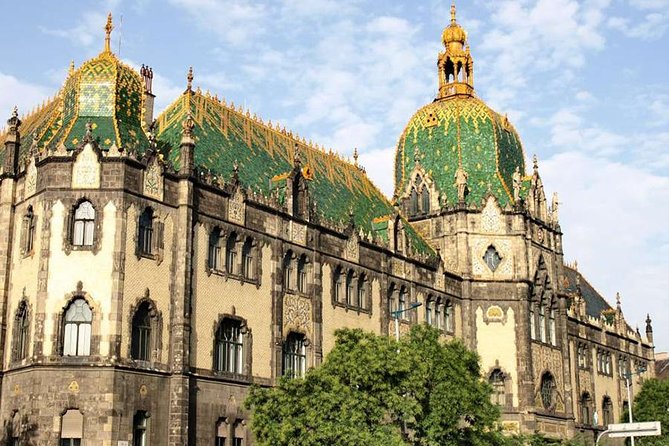
Budapest’s Art Nouveau is at its best when you look up. A flower shop, a bank, and an apartment building become part of a larger story about Hungarian design, national identity, and the bold architect Ödön Lechner. I like this tour because it connects grand landmarks with smaller details, especially the colorful tiles made by the Zsolnay factory. I also like the historian guide and the small-group format, which gives you room to ask questions.
The main drawback is the price: $126.16 per person is a serious spend for a three-hour walk. You also pay for public transport and possibly the synagogue entrance, so the final cost can rise. One practical point needs checking when you book: the tour is described as limited to six in one place and eight in another.
In This Review
- Key points to know before booking
- Why Budapest Art Nouveau rewards a guided walk
- Meeting at Madal Cafe and getting oriented
- Gresham Palace: a grand opening lesson
- The Royal Postal Savings Bank and Lechner’s bold ideas
- Thonet House and the role of Zsolnay ceramics
- The Art Nouveau flower shop and smaller details
- Kazinczy Street Synagogue: a striking final stop
- What the $126.16 price includes
- Walking, transport, and practical comfort
- Who will get the most from this tour
- Should you book the Budapest Art Nouveau Walking Tour?
- FAQ
- How long does the Budapest Art Nouveau Walking Tour last?
- Where does the tour begin?
- Where does the tour end?
- Is public transportation included?
- Is the synagogue admission included?
- What is the cancellation policy?
Key points to know before booking
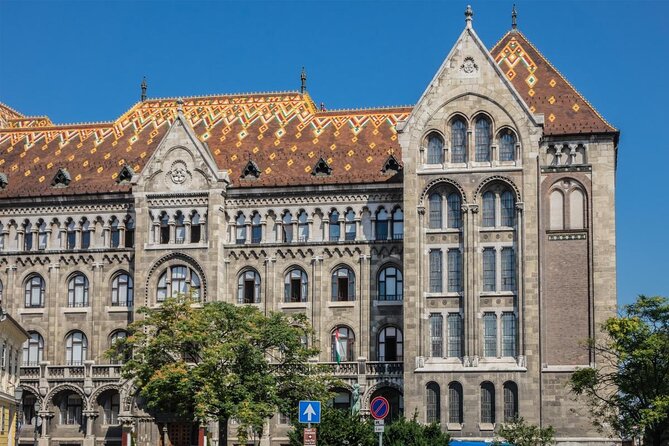
- Ödön Lechner’s work is the main attraction: See the Royal Postal Savings Bank and learn why Lechner is often compared with Gaudí.
- The route mixes famous buildings and close-up details: Gresham Palace, Thonet House, and an Art Nouveau flower shop show different sides of the style.
- The tour ends inside Budapest’s Orthodox synagogue: The Kazinczy Street Synagogue visit is included except on Saturdays, with an additional fee if the site is open and charged that day.
- Expect a moderate amount of walking: Comfortable shoes matter, and some public transport is used at your own expense.
- The small group is a real advantage: The stated maximum is six in the highlights and eight in the additional information, so confirm the limit before paying.
- You can choose morning or afternoon: That makes it easier to fit around other Budapest plans.
Why Budapest Art Nouveau rewards a guided walk
Budapest has plenty of grand architecture, but Art Nouveau can be easy to miss if you only visit the city’s headline sights. Its best clues are often above eye level: a curling plant motif, a ceramic roof edge, a strange animal shape, or a facade that refuses to follow straight lines.
I like this tour because it treats the city as a design lesson rather than a parade of buildings. Your guide explains the movement’s history, its visual elements, and the thinking behind its designs. That matters in Budapest, where Art Nouveau was not simply copied from western Europe. Hungarian architects gave it local character through folk-inspired patterns and colorful ceramics.
The focus on Ödön Lechner gives the walk a clear thread. Lechner is Hungary’s best-known Art Nouveau architect, and the Royal Postal Savings Bank is one of the strongest places to understand his style. You are not just looking at decoration. You are seeing an attempt to create a distinctly Hungarian form of modern architecture.
The tour lasts about three hours. That is long enough to make useful connections without taking up an entire day. It is also short enough to pair with a museum, a thermal bath, or an evening program. Since the route uses some public transport, keep a little flexibility in your schedule and budget for the necessary passes.
More art nouveau tours in Budapest:
- Art Nouveau Tour in Budapest: 3-Hour Private Tour
★ 4.6 · 21 reviews - Private Art Nouveau Tour Budapest
★ 5.0 · 21 reviews - Art Nouveau Treasures of Budapest – Exclusive Private Tour
★ 5.0 · 18 reviews
Meeting at Madal Cafe and getting oriented
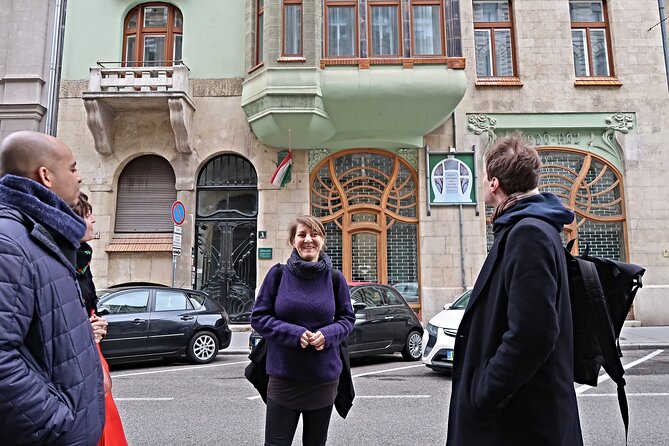
The walk begins at Madal Cafe Budapest, at Alkotmány u. 4 in the 5th district. This is a central starting point near public transport, but it is worth arriving early. The meeting area can be busy, and one person nearly missed the guide there.
I would not treat this as a casual arrive-at-the-last-second meeting. Give yourself time to locate the cafe and identify the group. Your booking confirmation is issued at the time of booking, so keep the details easy to access on your phone.
The tour is offered in English, with morning and afternoon departure choices. The small-group arrangement should make the start less hectic once everyone has met. Still, the published group size is inconsistent, with a maximum of six in the main description and eight in the additional information. If the size of the group matters to you, ask Insight Cities to confirm it before booking.
Gresham Palace: a grand opening lesson
The first stop is Gresham Palace, where you spend about 20 minutes examining the facade and interior design. The building began as office space and luxury apartments and is now Budapest’s most luxurious hotel.
You will not pay an admission fee for this stop. The value here is visual and architectural. Gresham Palace gives you a polished introduction to the movement, with enough grand detail to show how Art Nouveau could operate at a large urban scale.
The guide helps you read the building instead of simply photographing it. Look for the way the facade handles curves, ornament, and repeated forms. The interior design is also part of the discussion, which matters because Art Nouveau works best when the outside and inside feel connected.
There is one limitation. This is a working luxury hotel, not a public museum, so access to interior areas can depend on the day’s conditions. The tour description specifically promises admiration of the interior designs, but you should not assume that every hotel space is open for an extended visit.
The Royal Postal Savings Bank and Lechner’s bold ideas
The second stop, the Royal Postal Savings Bank, is the architectural centerpiece. You spend about 20 minutes with the building, designed by Ödön Lechner, often called the Gaudí of Hungary.
That nickname is useful, but it can also oversimplify. The guide’s job is to explain Lechner on his own terms, especially his interest in creating a Hungarian Art Nouveau. The discussion includes the entrance hall and its interior design elements, giving you a closer look at how the building’s ideas continue indoors.
The bank is especially important because it shows how public architecture could carry a national message. The tour explains the shapes, decorations, and design choices rather than leaving you with a list of dates and names. I find that approach far more useful than a quick photo stop.
The 20-minute visit is enough for a focused explanation, but not enough to study every feature at leisure. If this is the stop you are most excited about, take notes or photographs as the guide talks. You may want to return later and spend more time looking at the building on your own.
A few more Budapest trips to weigh up
- Budapest: Buda Castle Walk with Saint Stephen’s Hall
★ 4.5 · 3,012 reviews - Big Bus Budapest Hop-On Hop-Off Bus and Walking Tour
★ 3.5 · 2,206 reviews - Budapest: Buda Castle District Walking Tour
★ 4.6 · 2,108 reviews - Budapest City Landmarks Walking Tour in 2 Hours
★ 5.0 · 2,048 reviews
Thonet House and the role of Zsolnay ceramics
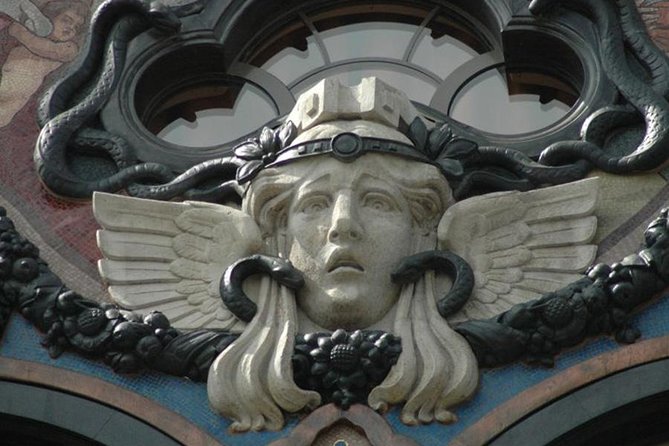
At Thonet House, the tour turns to the tiles that helped make Hungarian Art Nouveau distinctive. You spend around 20 minutes considering the facade and the role of the Zsolnay porcelain and ceramics factory in Pécs, a city in southern Hungary.
This is where the walk moves from architecture as a whole to the materials that make it memorable. Ceramic tiles were more than surface decoration. They allowed architects to add color, texture, and unusual shapes to facades while protecting the building from the weather.
Zsolnay’s innovations are central to the explanation. Once you know to look for the ceramic work, Budapest’s buildings become easier to read. A wall is no longer just a wall. It may reveal the technology, taste, and local identity behind the design.
Thonet House also helps balance the tour. Gresham Palace and the Royal Postal Savings Bank are grand public landmarks, while this stop gives you a closer look at facade treatment. The visit is still brief, so the guide’s explanation is important. Without it, you might notice the tiles but miss why they changed Hungarian architecture.
The Art Nouveau flower shop and smaller details
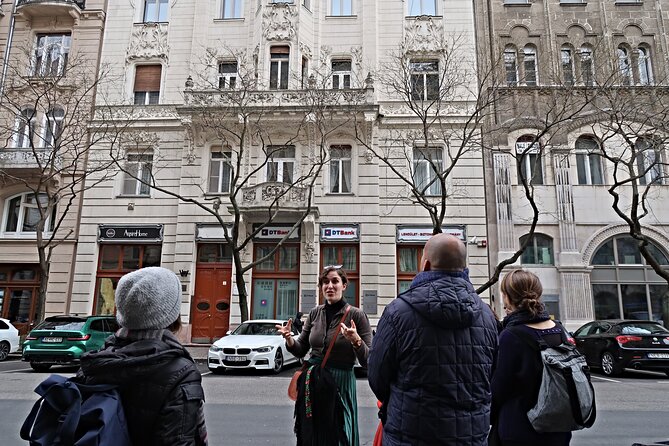
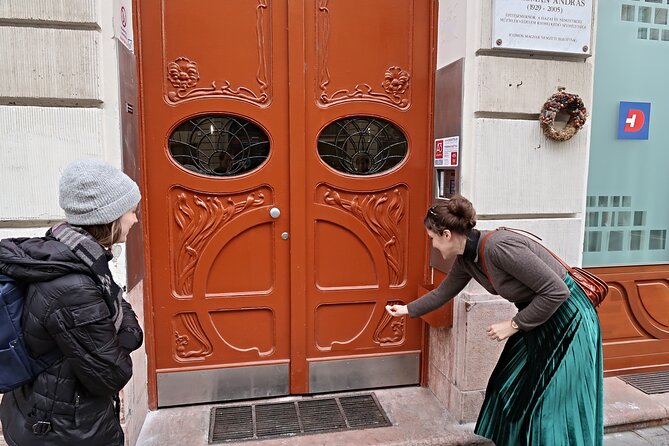
The tour also includes an Art Nouveau flower shop, one of the more unusual examples on the route. The supplied details do not give it a separate timed stop, so expect it to be folded into the walking route rather than treated like a full museum visit.
That is part of the appeal. Art Nouveau was not limited to banks and palaces. It appeared in everyday commercial spaces, where a shopfront could use flowing lines, plant forms, and decorative details to attract customers.
I like this kind of stop because it gives the style a human scale. You can compare a small shop with the more formal buildings seen elsewhere and ask how the same design ideas change when used for a business. It also helps you notice that Budapest’s Art Nouveau is spread through the city, not confined to one monument district.
The guide can point out what to look for, but you should keep your eyes open between stops. The route is built around observation, and some of the most enjoyable moments may come from details you would otherwise walk past.
Kazinczy Street Synagogue: a striking final stop
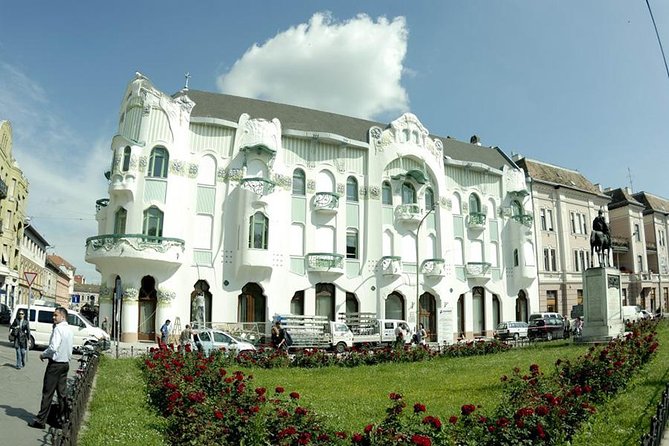
The walk ends at the Orthodox Kazinczy Street Synagogue, at Kazinczy u. 29 to 31 in the 7th district. The synagogue is decorated in Art Nouveau style, making it a fitting final stop because it shows the movement in a religious setting.
The planned visit lasts about 25 minutes. Except on Saturdays, the tour includes a visit to the synagogue’s interior. An additional cost may apply if the Orthodox Synagogue is open on the day of your tour, and the entrance fee is not included in the tour price.
That makes this stop worth checking before you go. The exterior alone is part of the architectural route, but the interior adds another layer to the experience. You can see how Art Nouveau was adapted to a place of worship rather than a hotel, bank, or shop.
The tour ends here, which is convenient if you plan to continue exploring the Jewish Quarter. The ending point is not the starting point, so you should plan your next activity from Kazinczy Street rather than from the cafe.
What the $126.16 price includes
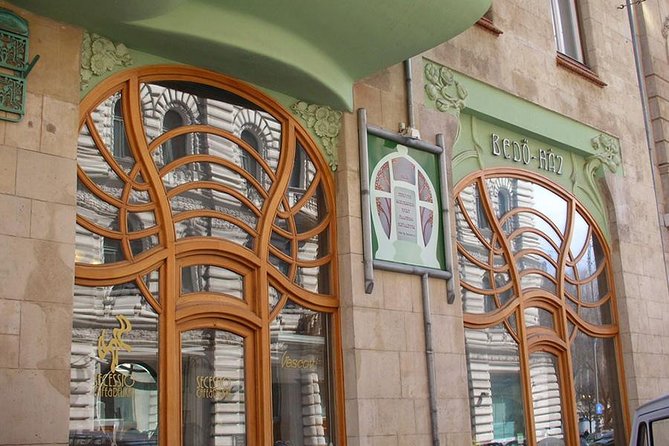
At $126.16 per person, this is not a budget walking tour. The fee covers the historian guide, but not public transportation passes, food, drinks, or the possible synagogue admission.
The value depends on what you want from Budapest. If you only want to see the exteriors and take photographs, you can walk past these buildings independently for far less. The tour earns its price through interpretation: why Lechner matters, how Hungarian Art Nouveau developed, and what the tiles, shapes, and interior details are doing.
The small group also affects the value. A guide speaking to six or eight people can usually give more attention than one leading a large city walk. The available feedback gives strong support to the guide’s expertise and flexibility, including one account of a guide who was willing to follow the group’s interests elsewhere in the city.
That flexibility is useful, but do not assume the entire itinerary can be changed. The four named stops form the structure of the tour, and the timing at each is fairly short. If you want a private, fully customized architecture day, this is not that product.
Group discounts are available, which may make the price easier to justify for two or more people. Free cancellation is allowed until 24 hours before the start time. Changes or cancellations inside that 24-hour window are not accepted for a refund.
Walking, transport, and practical comfort
You should expect a moderate amount of walking over three hours. Comfortable shoes are a simple but important choice, especially since the route includes several stops and some public transport.
Public transport passes are not included. You pay for those yourself, so check that you have a way to cover the rides before the tour begins. The experience is near public transportation at both the general meeting area and the route itself.
Most people can participate, according to the supplied information. No special access restrictions are listed, but the walk is still a walking tour, not a vehicle-based sightseeing experience. If you need a specific accommodation, ask the provider before booking rather than relying on the general participation note.
Morning and afternoon departures are helpful. A morning tour leaves the rest of the day open, while an afternoon walk can fit after other central Budapest sights. Since the final stop is in the Jewish Quarter, an afternoon departure may also work well with evening plans nearby.
Who will get the most from this tour
I would choose this experience if you enjoy architecture but want help understanding what you see. It suits visitors who have already noticed Budapest’s grand buildings and now want to learn why they look the way they do.
It is also a good match for anyone interested in Ödön Lechner, Zsolnay ceramics, decorative arts, or the link between architecture and Hungarian identity. The route gives you several building types rather than repeating the same kind of monument.
You may want to skip it if you dislike walking, need a very low-cost activity, or prefer to spend long periods inside each site. The itinerary gives each main stop about 20 minutes, with 25 minutes at the synagogue, so the pace is structured and purposeful.
The strongest reasons to book are the historian-led interpretation and the small group. The main caution is to confirm the group limit, synagogue charge, and public transport cost before committing to the $126.16 price.
Should you book the Budapest Art Nouveau Walking Tour?
Book it if you want more than a checklist of pretty facades. The tour links Gresham Palace, Lechner’s Royal Postal Savings Bank, Thonet House, Zsolnay ceramics, an Art Nouveau flower shop, and Kazinczy Street Synagogue into one clear story.
I would especially recommend it for first-time visitors who want an architectural foundation, and for returning visitors who have already seen Budapest’s better-known sights. Skip it if you are looking for a cheap orientation walk or a full interior tour of every building.
The rating is 4.9 from 17 reviews, with 100 percent recommending the experience. That matches the tour’s strongest feature: a focused route led by a guide who can explain the details that are easy to miss on your own.
FAQ
How long does the Budapest Art Nouveau Walking Tour last?
The tour lasts approximately three hours.
Where does the tour begin?
It begins at Madal Cafe Budapest, Alkotmány u. 4, 1054 Hungary.
Where does the tour end?
The tour ends at the Budapest Orthodox Synagogue at Kazinczy u. 29 to 31, 1075 Hungary.
Is public transportation included?
No. Public transportation passes are not included, and you pay for them separately.
Is the synagogue admission included?
No. An additional cost may apply if the Orthodox Synagogue on Kazinczy Street is open on the day of the tour. The tour includes an interior visit except on Saturdays.
What is the cancellation policy?
You can cancel up to 24 hours before the experience begins for a full refund. Cancellations or changes made less than 24 hours before the start time are not accepted for a refund.
Just added around Budapest
- From Budapest: Guided Tour of Eger with Wine Tasting★ 4.5 · 6 reviews
- Budapest: Private Walking Tour with a Local Guide★ 3.6 · 6 reviews
- Budapest: Danube River Views Bike Ride★ 4.8 · 23 reviews
- Trash Art Museum: Hungary’s First Scrap Metal Exhibition★ 4.3 · 72 reviews
- Walk to recent and aged spiritual sanctuaries near Budapest★ 5.0 · 5 reviews
- Budapest: 3-Hour Trabant Sightseeing Tour★ 4.7 · 28 reviews
- True Crime Walking Tour in the Buda Castle district★ 5.0 · 26 reviews
- Audio visual multi-sensory chefs journey dinner experience★ 5.0 · 3 reviews
Art Nouveau Tours, compared.
Art Nouveau Tour in Budapest: 3-Hour Private Tour
Read our review →
Art Nouveau Treasures of Budapest – Exclusive Private Tour
Read our review →
Browse the lists this tour appears in