
Reviewed · ART NOUVEAU TOURS
Private Art Nouveau Tour Budapest
Budapest’s Art Nouveau is easy to miss if you only follow the usual sights. This private tour brings you inside grand passages, music halls, banks, cafés, and urban palaces, with guides such as Szoke Zsuzsanna, also called Suzy, explaining how Hungarian design broke away from outside models. I like the focus on interiors, especially the Liszt Academy and Parisian Passage Café. I also like that the guide can adjust the route, pace, and transport to your needs.
The main drawback is that this is an architecture walk, not a polished, fixed-route show. Some stops are short, public transportation tickets cost extra, and the Museum of Applied Arts can only be viewed from outside during renovation. If you prefer a tightly timed group excursion, the guide’s flexibility may feel loose.
In This Review
- Key points before you book
- Why Budapest’s Art Nouveau deserves a dedicated tour
- Parisian Passage Café: start with Budapest glamour
- Liszt Academy and the art of music
- Vaci Street: Art Nouveau hiding in plain sight
- Torok-Bankhaz and Miksa Roth’s decorative vision
- Postatakarék Bank and Ödön Lechner’s Hungarian style
- House of Hungarian Art Nouveau
- Budapest Zoo: a wider view of Secession
- Museum of Applied Arts: a superb façade, with a clear limitation
- A private guide changes the pace
- Price, transport, and walking
- Who should book this Budapest tour?
- Should you book it?
- FAQ
- How long does the Private Art Nouveau Tour Budapest last?
- How much does the tour cost?
- Is the tour private?
- Is hotel or port pickup available?
- Is the tour offered in English?
- Is coffee included?
- Are public transportation tickets included?
- Can I cancel for a full refund?
Key points before you book
- Private guiding for up to 15 people: You pay $243.53 per group, not per person, so the value improves sharply with a small group.
- Four hours of Budapest design: The route links Art Nouveau, Hungarian Secession, and the early shift toward Art Deco.
- Interiors matter here: You may enter the Parisian Passage, Liszt Academy, selected public buildings, and possibly other places when access allows.
- Coffee is part of the experience: A complimentary coffee or tea is served in an Art Nouveau setting.
- Hotel or port pickup is included: This is useful if you are arriving by cruise ship or staying away from central Budapest.
- The route is flexible: Guides including Suzy and Bogata have adapted the outing for limited walking ability and added extra stops when time allowed.
Why Budapest’s Art Nouveau deserves a dedicated tour
Budapest is famous for thermal baths, grand boulevards, and the Danube panorama, but its Art Nouveau buildings reward a slower look. Here, the style is often called Secession, a Central European version of Art Nouveau that sought new forms instead of copying older European decoration.
Hungarian designers took that idea in their own direction. They used colored tiles, floral patterns, folk motifs, curved lines, mosaics, and ceramic details. The result can feel playful, theatrical, and distinctly local. You will see buildings that look like palaces, fantasy castles, or elaborate storybooks, yet they were often built for practical purposes such as banking, education, shopping, and public administration.
That context is the real reason to choose a specialist guide. Without one, you may notice a turquoise roof or a curling doorway but miss the argument the building is making. The guide helps you see how architecture reflects Hungarian identity, the growth of Budapest, and the period’s artistic links with Europe.
I like that the tour does not treat Art Nouveau as one narrow look. The route covers international Secession, Hungarian National Style, decorative interiors, and the transition toward Art Deco. You get a broader picture of the period instead of a collection of pretty façades.
More art nouveau tours in Budapest:
- Art Nouveau Tour in Budapest: 3-Hour Private Tour
★ 4.6 · 21 reviews - Art Nouveau Treasures of Budapest – Exclusive Private Tour
★ 5.0 · 18 reviews - Budapest Art Nouveau Walking Tour
★ 5.0 · 17 reviews
Parisian Passage Café: start with Budapest glamour
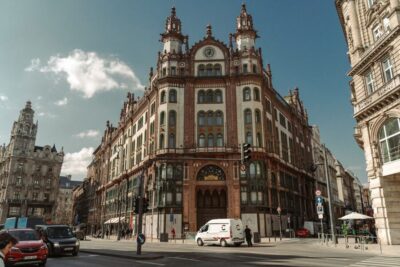
The recently restored Parisian Passage Café is an attention-grabbing first stop. Its passage and interior offer the kind of ornate setting that makes you slow down before the guide has even started explaining the details.
Allow about 30 minutes here. You will look at both the passage and the interior, and the stop gives you an immediate sense of how Budapest’s commercial buildings once mixed shopping, social life, and decoration. The setting is also where the included coffee or tea fits naturally into the tour.
The practical point is that the coffee is not simply a refreshment squeezed into a busy route. It gives you time to sit in an Art Nouveau environment and look at the details at close range. That is far more useful than racing past a façade while trying to hear a guide over city noise.
Because this building has been renovated, access and the exact experience can depend on the day. Still, it is one of the strongest stops for anyone who wants to feel the style from inside rather than only photograph it from the pavement.
Liszt Academy and the art of music
The Liszt Academy brings Art Nouveau into the world of music. Located in central Budapest, the Academy of Music was designed as both a working institution and a grand statement about Hungarian culture.
The visit lasts about 15 minutes, but that is enough to see the hall, mosaics, and other interior decoration when access is available. I would pay close attention to the way the ornament supports the building’s purpose. This is not decoration added at random. Music, national culture, and architecture meet in the same place.
A short visit also means you should not expect a full museum tour or concert experience. The value comes from the guide pointing out details that you might otherwise pass without noticing. If music and decorative art interest you, this may be one of the most memorable interiors on the route.
Vaci Street: Art Nouveau hiding in plain sight
Vaci Street is Budapest’s best-known shopping and fashion street, but the tour uses it for more than window-shopping. Over roughly 30 minutes, you walk past urban palaces and stop to examine their Art Nouveau features.
This is a good reminder that Budapest’s Secession style is not confined to one museum district. Commercial buildings and private residences also carried the period’s new design language. Look upward, since many of the most interesting details are above street level: façades, balconies, window frames, and decorative panels.
The drawback is that Vaci Street is a busy public thoroughfare. You may need to pause at the side of the street rather than stand directly in front of every building. Comfortable shoes and attention to traffic will make this part easier.
I like this stop because it connects architecture with ordinary city life. You are not viewing a building in isolation. You are seeing how decorative design was woven into a working shopping street.
A few more Budapest trips to weigh up
- Private Budapest TukTuk Tour: Custom Route, Hotel Pickup
★ 5.0 · 1,307 reviews - Budapest Essentials Private Tour Highlights and Hidden Gems
★ 5.0 · 861 reviews - Budapest Private Tuk Tuk Half-Day Tour
★ 5.0 · 606 reviews - Budapest One Way Private Transfer to or from Airport
★ 4.5 · 548 reviews
Torok-Bankhaz and Miksa Roth’s decorative vision
The Torok-Bankhaz Building helps explain the change from Art Nouveau to Art Deco. The stop lasts about 15 minutes and focuses on a period when architects were moving from flowing, plant-like decoration toward cleaner and more geometric forms.
The building is also linked with Miksa Roth, one of Hungary’s important decorative artists. His work helps you understand that Art Nouveau was not only about architecture. Glass, mosaics, ornament, and interior surfaces all played a part in the finished effect.
This stop is especially useful if you want a bit of design history rather than a simple list of buildings. The guide can show you what changed and why the early 20th century did not produce one single style.
Postatakarék Bank and Ödön Lechner’s Hungarian style
The Postatakarék Bank is one of the clearest expressions of the Hungarian National Style of Secession. It is associated with Ödön Lechner, the architect most closely tied to Hungary’s distinctive Art Nouveau identity.
Expect an exterior filled with unusual detail, including colorful surfaces and castle-like touches. The building can look almost fanciful at first, but the guide’s explanation gives the decoration a cultural purpose. Lechner and his peers were searching for a style that felt Hungarian rather than simply borrowed from Vienna, France, or Belgium.
This is one of the places where a specialist guide earns the tour price. You can take a picture without help, but you may not understand why the roofline, ceramic decoration, and folk references matter. The visit is listed at about 15 minutes, so listen closely and ask questions while you are there.
House of Hungarian Art Nouveau
The House of Hungarian Art Nouveau is dedicated to the Secession period and the development of the Hungarian National Style. Its value is less about one famous exterior and more about giving you a framework for the buildings you have already seen.
The visit lasts about 15 minutes. Use it to connect the motifs from the Postatakarék Bank and other stops with the larger story of Hungarian design. The guide can also explain the outside influences that shaped local architecture.
For architecture fans, this stop adds useful structure. For someone who only wants quick sightseeing, it may feel more academic. That difference matters. This tour is aimed at people who enjoy asking why a building looks the way it does, not only those searching for a list of photogenic stops.
Budapest Zoo: a wider view of Secession
The tour also includes a look at buildings connected with the Budapest Zoo. This section shows how varied Art Nouveau and Secession could be when applied to a public complex rather than a bank, café, or academy.
The information provided does not specify a separate admission or a fixed time here, so treat it as a viewing stop rather than a full zoo visit. You will be looking at architectural details and discussing the different ways the style appeared across Budapest.
That variety is important. It keeps the tour from presenting Hungarian Art Nouveau as one repeated formula. The zoo buildings help broaden the picture and show how the period’s ideas reached public spaces.
Museum of Applied Arts: a superb façade, with a clear limitation
The Museum of Applied Arts is another major example of the Hungarian National Style. Its building carries the colors, shapes, and decorative energy associated with Lechner’s approach.
At present, renovation limits the visit to the façade. You should not book this tour expecting to explore the museum’s interior. Even so, the exterior is worth seeing, and the guide can explain the building’s design in a way that makes the renovation limitation less frustrating.
This is a good example of the tour’s balance. You get an important building, but not every stop offers full interior access. The guide may find other interior opportunities, but you should regard those as dependent on access rather than guaranteed inclusions.
A private guide changes the pace
The strongest part of this experience is the private format. Your group can ask questions, linger over a mosaic, or move on when a stop has made its point. The advertised capacity is up to 15 people, but the price is per group, so it makes the most financial sense for families or friends sharing the booking.
The guides bring different strengths. Szoke Zsuzsanna, known as Suzy, is described as combining art expertise with Hungarian history. Michael has tailored routes at short notice and arranged access to places that are not normally open to the public. Bogata has adapted the outing for a participant with limited walking ability, using taxis and public transportation.
Those details suggest a guide-led experience rather than a rigid script. That can be a major advantage if your group has special interests or mobility concerns. It can also mean the route feels less fixed. One Spanish-language assessment found the guide so spontaneous that the plan seemed to develop during the tour. If you like a carefully timed schedule, say so at the beginning.
The tour is offered in English. Pickup and drop-off are available from hotels or ports, and the supplier says the examples shown are not restrictive. Confirm your exact location when booking, since the meeting point affects how the four hours are used.
Price, transport, and walking
At $243.53 per group, the price is reasonable for a four-hour private tour if you have several people sharing it. A group of two pays a premium for personal attention, but a group of six or more gets much stronger value per person.
The fee includes a professional art historian guide, private service, hotel or port pickup and drop-off, and coffee or tea. Public transportation tickets are not included. Taxis or transit may be used when the route or mobility needs call for them, so keep a little extra money available.
The route includes walking along Vaci Street and between city buildings. Most people can participate, but the experience is not a seated sightseeing ride. Wear smart casual clothing and comfortable shoes. It operates in all weather, so bring appropriate protection for rain, cold, or heat.
The free cancellation rule is useful: cancel at least 24 hours before the local start time for a full refund. Changes or cancellations inside that window are not accepted for a refund.
Who should book this Budapest tour?
I would choose this for anyone who already enjoys architecture, decorative art, urban history, or photography. It also suits a first-time visitor who wants to understand Budapest beyond its headline sights.
It is a particularly good match for:
- Couples or families who want a private pace
- Small groups splitting the cost
- Visitors interested in Lechner and Miksa Roth
- Cruise passengers who need port pickup
- People who appreciate interiors, mosaics, and design details
- Anyone who wants a guide to connect buildings with Hungarian culture
I would hesitate if you want a broad Budapest overview with Parliament, Buda Castle, and the Danube all included. This tour stays focused on Art Nouveau and related styles. I would also check the current renovation status of the Museum of Applied Arts before booking if that building is your main reason for going.
Should you book it?
Book this tour if you want Budapest’s decorative architecture explained by a real specialist rather than glanced at from a sightseeing bus. The Parisian Passage Café, Liszt Academy, Postatakarék Bank, and Lechner’s Hungarian style give the outing plenty of visual appeal, while the private format lets you shape the pace.
The best value comes with a group of several people. Tell the guide in advance if you need fewer stairs, shorter walking stretches, extra time for photography, or a tighter plan. With that small bit of planning, this is a thoughtful way to see the Budapest many visitors walk past without noticing.
FAQ
How long does the Private Art Nouveau Tour Budapest last?
The tour lasts approximately four hours.
How much does the tour cost?
The price is $243.53 per group, with up to 15 people included.
Is the tour private?
Yes. Only your group participates in the private activity.
Is hotel or port pickup available?
Yes. Pickup and drop-off are offered from hotels or ports specified by the participants.
Is the tour offered in English?
Yes. English is the listed tour language.
Is coffee included?
Yes. Coffee and/or tea are included, served in an Art Nouveau setting.
Are public transportation tickets included?
No. Public transportation tickets are not included in the tour price.
Can I cancel for a full refund?
Yes. You can cancel at least 24 hours before the experience start time for a full refund. Cancellations or changes made less than 24 hours before the start are not refunded or accepted.
Just added around Budapest
- From Budapest: Guided Tour of Eger with Wine Tasting★ 4.5 · 6 reviews
- Budapest: Private Walking Tour with a Local Guide★ 3.6 · 6 reviews
- Budapest: Danube River Views Bike Ride★ 4.8 · 23 reviews
- Trash Art Museum: Hungary’s First Scrap Metal Exhibition★ 4.3 · 72 reviews
- Walk to recent and aged spiritual sanctuaries near Budapest★ 5.0 · 5 reviews
- Budapest: 3-Hour Trabant Sightseeing Tour★ 4.7 · 28 reviews
- True Crime Walking Tour in the Buda Castle district★ 5.0 · 26 reviews
- Audio visual multi-sensory chefs journey dinner experience★ 5.0 · 3 reviews
Art Nouveau Tours, compared.
Art Nouveau Tour in Budapest: 3-Hour Private Tour
Read our review →
Art Nouveau Treasures of Budapest – Exclusive Private Tour
Read our review →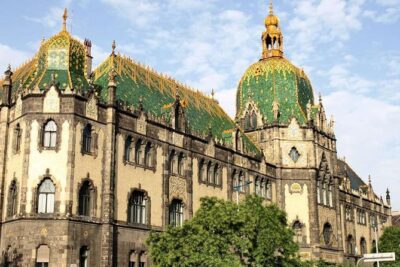
Browse the lists this tour appears in