
Reviewed · JEWISH HERITAGE TOURS
Budapest: Jewish Heritage Walking Tour with Historian Guide
Budapest’s Jewish District is more than a cluster of impressive synagogues. It is a place where elegant streets, ruined buildings, memorials, and traces of the wartime ghetto sit close together. This two-hour walk connects those pieces with the help of a field historian, Daniel, who has earned praise for making difficult Hungarian history clear and engaging.
I like the small group of no more than 10 people, since it gives you a better chance to hear the guide and ask questions. I also like that the route includes both major religious buildings and quieter Holocaust memorials, including a remnant of the ghetto wall and the Carl Lutz Memorial. The main limitation is important: Kazinczy Street Synagogue is temporarily closed, so you see it from outside and do not receive an entry ticket there.
In This Review
- Key points to know before booking
- Why this walk matters in Budapest
- Starting at Deák Square’s Lutheran Church
- Rumbach Street Synagogue and its changing story
- Walking through streets that carry more than one story
- Gozsdu Passage, a lively route with an older past
- Holocaust memory at the ghetto wall
- The Carl Lutz Memorial and people who helped
- Kazinczy Street Synagogue from the outside
- What Daniel’s guiding style adds
- Is $62 a fair price?
- Who should book this experience?
- How to make the most of the two hours
- Should you book the Jewish Heritage Walking Tour?
- FAQ
- Where does the Budapest Jewish Heritage Walking Tour begin?
- How long does the tour last?
- What language is the tour conducted in?
- How large is the group?
- Is entry to Rumbach Street Synagogue included?
- Can I enter Kazinczy Street Synagogue?
- Are Holocaust memorials included?
- What is not included in the price?
Key points to know before booking
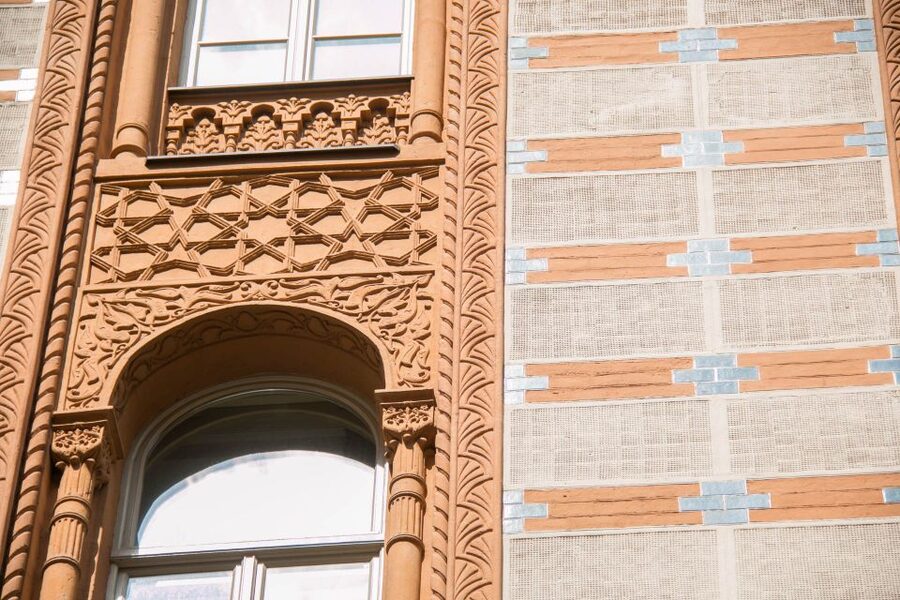
- Rumbach Street Synagogue: Enter one of Budapest’s most striking historic synagogues, with a guided visit included in the price.
- Historian Daniel: The tour is led in English by a field expert rather than a general city guide.
- Holocaust memorials: See a remnant of the ghetto wall, the Carl Lutz Memorial, and a Memory Wall.
- Kazinczy Street Synagogue: View the building from outside while restoration work continues.
- Compact two-hour route: The walk begins at Deák Square and moves through the Jewish District on the Pest side.
- Good value for history-minded visitors: At $62, the price includes the guide, Rumbach entry, and ghetto wall memorial access.
Why this walk matters in Budapest
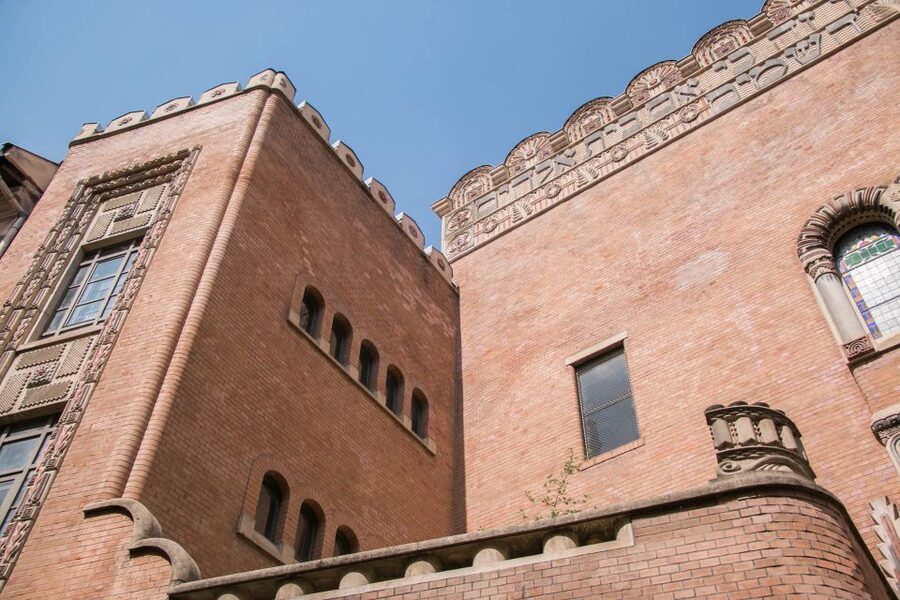
From the 18th century until the middle of the 20th century, Pest was home to one of the region’s most important Jewish communities. That past is still visible in the streets around the Jewish District, but it is not always easy to read without help.
A synagogue may look like an architectural sight at first glance. A narrow lane may seem like just another shortcut between cafés and shops. A fragment of wall may be easy to miss. The value of this tour is that Daniel ties these places together and explains how religious life, neighborhood life, famous residents, wartime persecution, and postwar memory fit into the same part of the city.
I would choose this walk if you want more than a quick photo outside a synagogue. It gives you a framework for understanding the district, and it does so within two hours, a useful length for fitting into a busy Budapest day.
More jewish heritage tours in Budapest:
- Budapest Jewish Heritage Memorial Walking Tour & Synagogue Entry
★ 5.0 · 568 reviews - Budapest: Jewish Heritage Guided Tour with Synagogue Ticket
★ 4.8 · 533 reviews - Jewish Quarter of Budapest Walking Tour
★ 4.7 · 369 reviews
Starting at Deák Square’s Lutheran Church
The meeting point is at the entrance to the Lutheran Church at Deák Square, near the M2 metro entrance. Deák Square is one of Budapest’s main transport hubs, so it is a practical place to begin, though you should allow a few minutes to find the correct church entrance.
Starting here also places you close to the eastern edge of the Jewish District. From the first steps, the tour can move naturally from central Pest into streets that once supported homes, shops, religious institutions, and community life.
The meeting point is not hotel pickup, so you need to make your own way there. If you are unsure of the location, the operator asks you to request help in advance. That is worth doing if you are unfamiliar with Budapest’s metro exits.
Rumbach Street Synagogue and its changing story
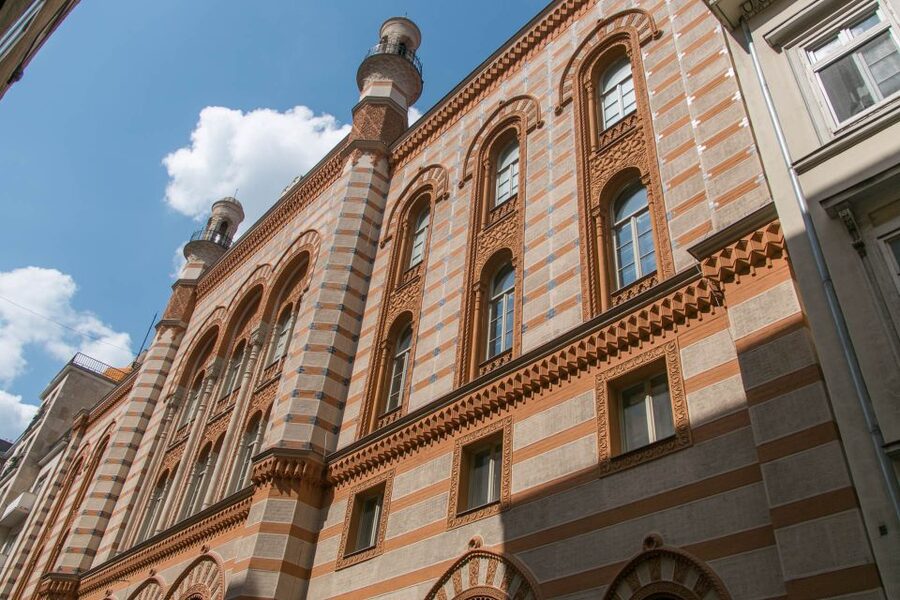
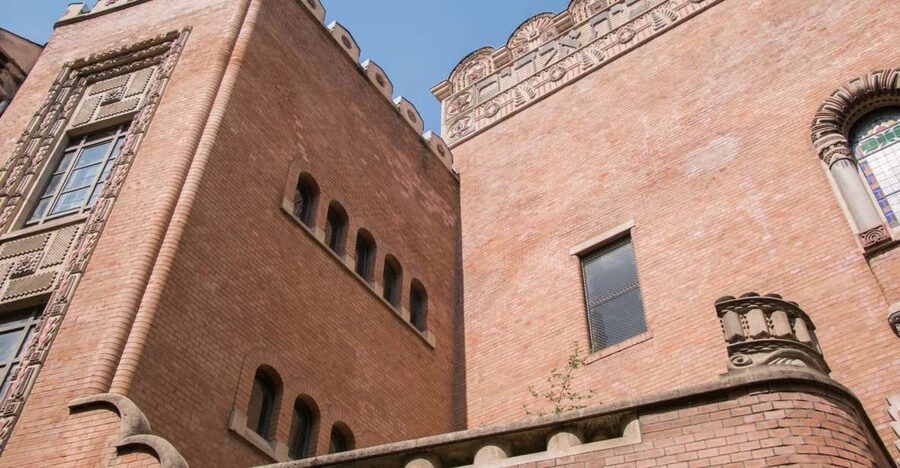
Rumbach Street Synagogue is the major interior visit on this walk. Your ticket is included, and the guide leads you through the building rather than leaving you to inspect it on your own.
The synagogue is presented as both an art historical sight and a record of its own time. That combination matters. You are not simply looking at decoration or taking in a beautiful interior. You are learning how the building belonged to the Jewish life of Pest and how its meaning changed through the city’s difficult 20th-century history.
I like this part of the route because it gives the tour a strong visual center. After walking through streets and hearing about people and events, you have a substantial building where those stories become easier to picture.
The stop is described as a photo opportunity and guided sightseeing visit. Bring a camera if you enjoy architectural photography, but expect the guide’s explanation to be the main point. The tour is conducted in English.
Walking through streets that carry more than one story
Between the formal sights, Daniel leads you through the Jewish District itself. This portion keeps the experience from becoming a sequence of indoor visits.
The streets have their own stories: who lived there, which people became famous, and what they were known for. The route also addresses two synagogues that once stood in the district but were demolished by the 1930s. Those lost buildings are a useful reminder that the neighborhood’s Jewish landmarks are only part of what once existed.
This is where a historian guide can add real value. A standard sightseeing walk might point out the best-known buildings. A historian can also explain absences, changes, and the less obvious traces that do not announce themselves with a large sign.
You should expect a walking tour rather than a museum lecture. The route includes repeated outdoor sections, so comfortable shoes are sensible. The supplied information does not give a distance or accessibility rating, so anyone who needs specific mobility details should ask before booking.
A few more Budapest trips to weigh up
- Budapest: Historic Cruise with Welcome Drink
★ 4.7 · 6,512 reviews - Budapest Historical Sightseeing – Free Walking Tour
★ 5.0 · 1,302 reviews - Buda Castle District Dark History, Legends and Vampire Night Tour
★ 4.5 · 1,240 reviews - BloodThirsty Hungary: Walking tour & Dark Historical Stories
★ 4.9 · 633 reviews
Gozsdu Passage, a lively route with an older past
Gozsdu Passage is included as a photo stop and guided sightseeing point. Today it is one of the familiar social and commercial passages in central Budapest, but on this walk it is also considered in relation to the surrounding district and its past.
I appreciate the inclusion of a place that is not only a formal memorial or synagogue. It helps you see how Budapest’s Jewish District works as a living part of the city, with everyday activity layered over older community stories.
Do not expect Gozsdu Passage to be a long stop with a separate admission. It is part of the walking route, and the guide uses it to explain the area. The contrast between a popular modern passage and the district’s earlier history is part of the point.
Holocaust memory at the ghetto wall
The Holocaust section is one of the most serious parts of the tour. You see a remnant of the ghetto wall and receive entry to the Ghetto Wall Memorial.
This is a valuable stop because it brings the wartime story down to a physical scale. A wall fragment can seem modest beside Budapest’s grand architecture, yet it helps show how persecution reshaped ordinary streets and confined the Jewish population.
The tour also includes a Memory Wall and stories of people who survived, along with accounts of people who helped others survive. The focus is not only on destruction. It also considers individual choices, courage, and the practical acts that made survival possible.
The subject requires attention. Two hours is enough for an introduction and several connected stops, but not enough to cover every chapter of Hungarian Jewish history. If you want an extended Holocaust study, you should pair this walk with a separate museum or memorial visit rather than expecting one tour to cover everything.
The Carl Lutz Memorial and people who helped
The Carl Lutz Memorial is another important wartime stop. The guide uses it to discuss the people who took action to protect others during the Holocaust.
This adds a human scale to the route. You hear about miraculous survivals and the people who helped make them possible, rather than receiving only dates and broad political facts. Daniel’s role is especially useful here because the memorials can be small and easy to pass without context.
The exact amount of time at each memorial can vary, depending on the group’s questions and the walking pace. Since the group is limited to 10, you should have a better setting for asking about details than you would on a large city tour.
Kazinczy Street Synagogue from the outside
Kazinczy Street Synagogue is part of the route, but the current arrangement needs careful attention. The synagogue is temporarily closed because of reconstruction, so the visit is outside only. There is no entry ticket included, and you should not book this tour expecting two synagogue interiors.
Even from the street, the building adds an important piece to the district’s religious and architectural story. Daniel can explain its place in the neighborhood and compare it with Rumbach Street Synagogue.
The closure is the clearest drawback of the current tour. If entering both synagogues is your main reason for booking, wait until Kazinczy reopens or confirm the current situation before reserving. If your main goal is the district’s broader history, the outdoor stop still fits the route well.
What Daniel’s guiding style adds
The tour provider is Kálmán Dániel, under the name Walk with a Historian. Daniel is the guide identified in the experience details, and the strongest praise centers on his command of the subject, friendly manner, and ability to make the material interesting and informative.
That matters here because the district’s story is layered and sometimes painful. A guide needs to explain religious history, architecture, Hungarian history, wartime persecution, and individual survival stories without turning the walk into a list of unrelated facts.
The available feedback repeatedly points to Daniel’s strong subject knowledge and clear delivery. One comment describes the tour as content-rich and specifically values having a real historian lead it. Another calls Daniel brilliant and recommends him for the way his knowledge made the tour interesting. A German review praises the broad amount of information, while a French reviewer highlights the interesting facts and beautiful synagogues.
The tone also seems approachable. Daniel is described as friendly, which is useful when the subject matter becomes difficult. You can expect a serious tour, but not necessarily a stiff one.
Is $62 a fair price?
At $62 per person, this is not the cheapest way to see Budapest’s Jewish District. You are paying for a two-hour small-group experience, an English-speaking historian, admission to Rumbach Street Synagogue, and entry to the Ghetto Wall Memorial.
The value depends on how much interpretation you want. If you only want to photograph the synagogues from the street, the price will feel high. If you want a guide who can explain the district’s religious life, vanished synagogues, Holocaust memorials, and local stories in a compact route, the fee is easier to justify.
The group limit of 10 improves the value. A smaller group usually means less waiting and a better chance to ask about a particular building or story. The price does not include food, drinks, or transportation, but the starting point is central and close to Deák Square’s metro connection.
You can also reserve now and pay later, with free cancellation up to 24 hours before the start time. That gives you some flexibility, though you still need to check the available starting times for your chosen date.
Who should book this experience?
I would recommend this walk to:
- You are interested in Jewish history, Hungarian history, or religious architecture.
- You prefer a historian’s explanation to a general overview.
- You want to see Holocaust memorials in the district without spending half a day on a longer program.
- You like small groups and the chance to ask questions.
- You are comfortable with a thoughtful subject that includes persecution, survival, and loss.
- You want a structured introduction before exploring the Jewish District on your own.
It may be less suitable if you need a fully accessible route, since no specific accessibility information is provided. It is also not the best match if your top priority is entering Kazinczy Street Synagogue, because that building is currently closed for restoration.
How to make the most of the two hours
Meet at the Lutheran Church entrance rather than simply heading to Deák Square and searching at the last moment. The area has several exits and landmarks, so checking the location in advance can save time.
Wear shoes suitable for city walking. The tour includes several outdoor sections through the Jewish District, along with stops at buildings and memorials.
Keep your questions for the guide. The route is designed around stories, including the former locations of demolished synagogues and the people associated with the streets. Asking about a building that catches your eye can make the walk more personal.
Finally, plan your expectations around the current synagogue closure. Rumbach Street Synagogue is the interior visit. Kazinczy Street Synagogue is viewed from outside until reconstruction is complete.
Should you book the Jewish Heritage Walking Tour?
Book it if you want a focused introduction to Budapest’s Jewish District led by a specialist historian. The strongest reasons are Daniel’s clear command of the subject, the small group, the included Rumbach Street Synagogue entry, and the careful attention to Holocaust memorials and personal survival stories.
Think twice if you are mainly looking for synagogue interiors, since Kazinczy is temporarily closed. At $62, the tour earns its price through explanation and access rather than sheer number of stops. For a history-minded visitor who wants the district to make sense, that is a fair trade.
FAQ
Where does the Budapest Jewish Heritage Walking Tour begin?
It begins at the entrance of the Lutheran Church at Deák Square, near the M2 metro entrance of Deák Square.
How long does the tour last?
The tour lasts two hours.
What language is the tour conducted in?
The live tour guide speaks English, and English is the listed tour language.
How large is the group?
The tour is limited to 10 participants.
Is entry to Rumbach Street Synagogue included?
Yes. The tour includes a visit to Rumbach Street Synagogue and its entry ticket.
Can I enter Kazinczy Street Synagogue?
No. Kazinczy Street Synagogue is temporarily closed for reconstruction, so the tour visits it from outside only.
Are Holocaust memorials included?
Yes. The route includes the Ghetto Wall Memorial, a remnant of the ghetto wall, the Carl Lutz Memorial, and a Memory Wall.
What is not included in the price?
Food, drinks, hotel pickup and drop-off, and entry to Kazinczy Street Synagogue are not included.
More Walking Tours in Budapest
- Budapest: Buda Castle Walk with Saint Stephen’s Hall
★ 4.5 · 3,012 reviews - Big Bus Budapest Hop-On Hop-Off Bus and Walking Tour
★ 3.5 · 2,206 reviews - Budapest: Buda Castle District Walking Tour
★ 4.6 · 2,108 reviews - Budapest City Landmarks Walking Tour in 2 Hours
★ 5.0 · 2,048 reviews
Just added around Budapest
- From Budapest: Guided Tour of Eger with Wine Tasting★ 4.5 · 6 reviews
- Budapest: Private Walking Tour with a Local Guide★ 3.6 · 6 reviews
- Budapest: Danube River Views Bike Ride★ 4.8 · 23 reviews
- Trash Art Museum: Hungary’s First Scrap Metal Exhibition★ 4.3 · 72 reviews
- Walk to recent and aged spiritual sanctuaries near Budapest★ 5.0 · 5 reviews
- Budapest: 3-Hour Trabant Sightseeing Tour★ 4.7 · 28 reviews
- True Crime Walking Tour in the Buda Castle district★ 5.0 · 26 reviews
- Audio visual multi-sensory chefs journey dinner experience★ 5.0 · 3 reviews
Jewish Heritage Tours, compared.
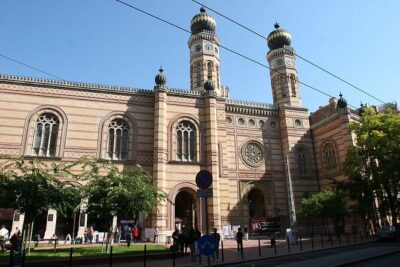
Budapest Jewish Heritage Memorial Walking Tour & Synagogue Entry
Read our review →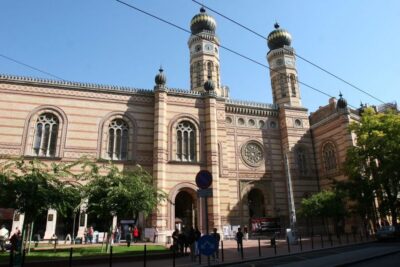
Jewish Heritage Guided Tour with Synagogue Ticket
Read our review →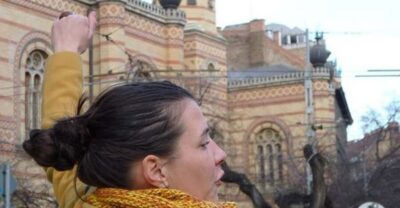
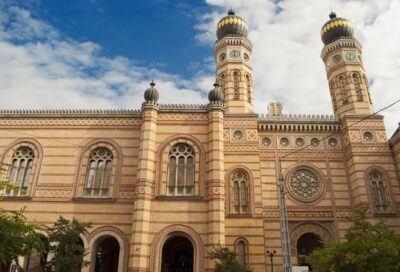
Past and Present of Budapest Jewish District Tour
Read our review →
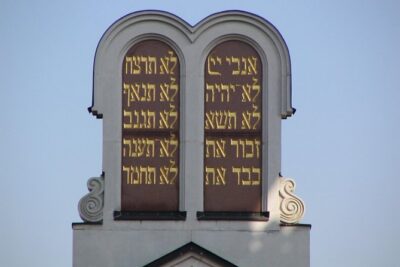
Budapest Dohany Synagogue & Hungarian Jewish Museum & free extras
Read our review →
Jewish History Guided Walking Tour with Historian
Read our review →Browse the lists this tour appears in