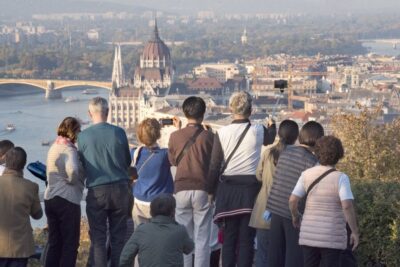
Reviewed · TOURS
Budapest: Virtual Reality Tour in 8 Languages
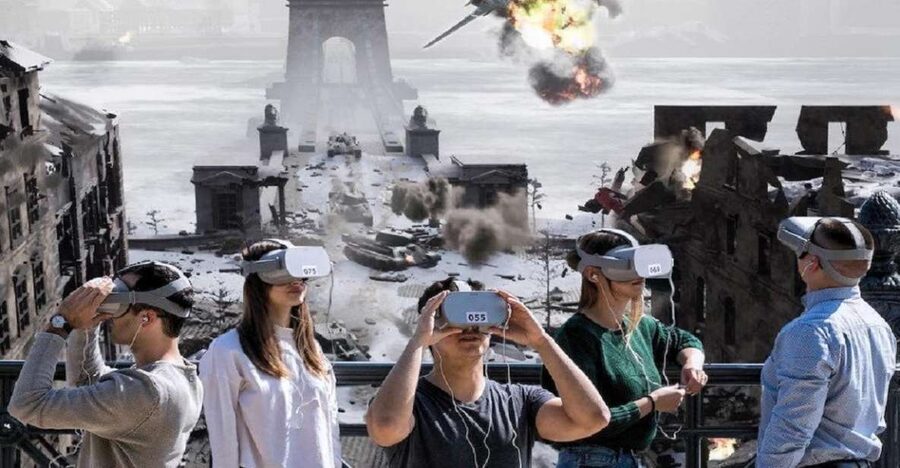
The clever idea here is simple: you stand beside Budapest’s real monuments while a virtual scene shows how they looked during major moments in the city’s past. At six stops around the Buda Castle District, the headset shifts you from the present to medieval construction, wartime destruction, and the 1956 Hungarian Revolution.
I like the strong connection between the actual streets and the digital scenes. I also like the choice of eight audio languages, which makes the historical material easier to follow. The main drawback is the walking route and the headset itself, so this is not a good fit if you have mobility limits, epilepsy, migraines, heart problems, or a fear of heights.
In This Review
- Key points to know before booking
- Starting near Chain Bridge on the Buda side
- Putting on the headset and entering another Budapest
- Stop one: the castle during its medieval construction
- Stop two: battles around the castle
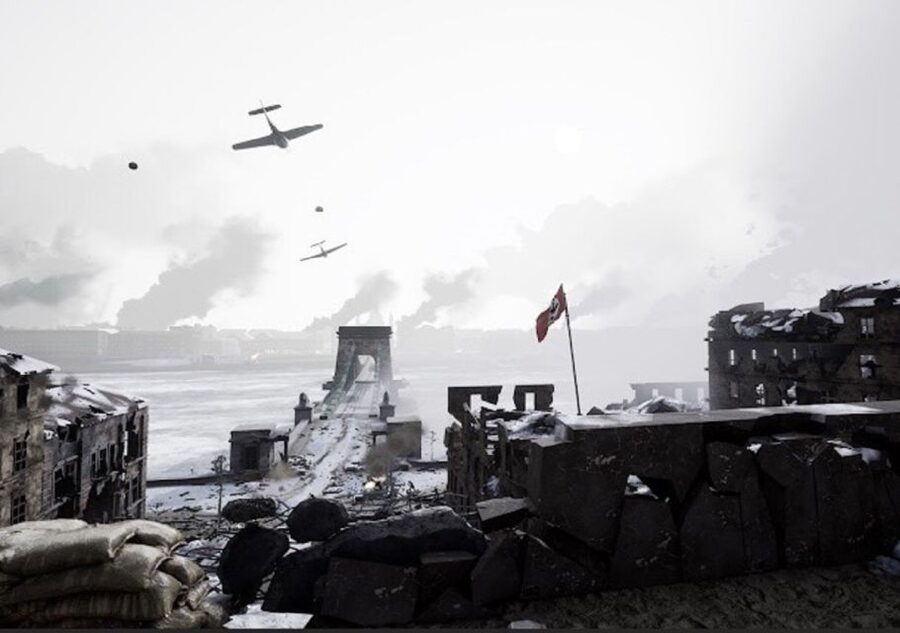
- Stop three: World War II and the ruined city
- Stop four: the 1956 Hungarian Revolution
- Stop five: seeing Budapest from above
- Stop six: the final link between past and present
- What the guide adds to the technology
- Is $39 a fair price?
- Walking, weather, and what to carry
- Who will enjoy this Budapest VR tour?
- Should you book the VR Tour in Buda?
- FAQ
- Where does the Budapest VR tour begin?
- How long does the tour last?
- What languages are available?
- What should I bring?
- Is the tour suitable for people with mobility impairments?
- Can I cancel the booking?
Key points to know before booking
- Six VR stops in Buda Castle District: The tour links real viewpoints and monuments with scenes from Budapest’s past.
- Medieval to modern history: You see the castle under construction, battles, World War II damage, and the 1956 Revolution.
- Live guidance in two languages: A guide leads the walk in English or Hungarian.
- Audio narration in eight languages: Choose from English, Chinese, German, Hungarian, Spanish, Russian, Italian, or French.
- A short uphill walk: Wear comfortable shoes and carry water in hot weather.
- Headset deposit required: Bring a passport, ID card, or 200 euros for the equipment deposit.
Starting near Chain Bridge on the Buda side
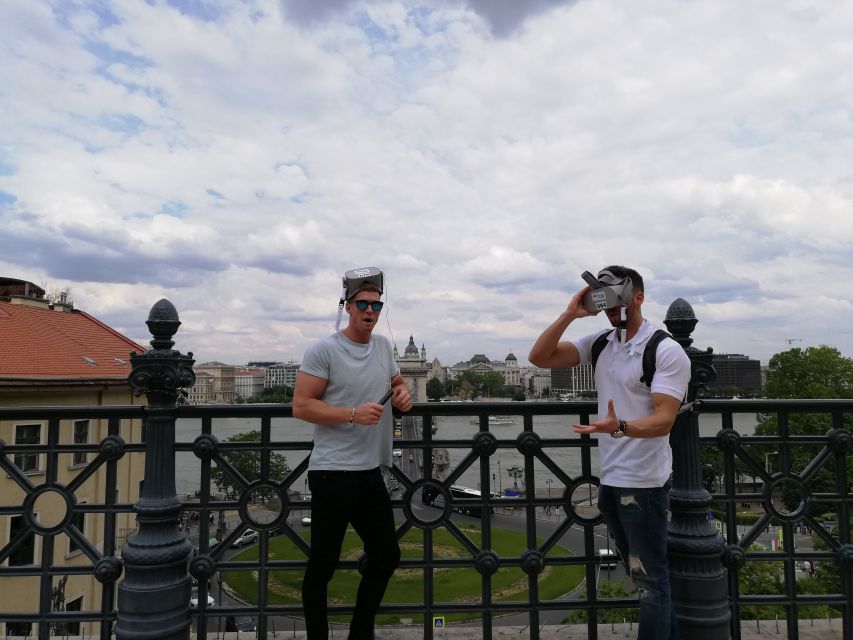
Your tour begins at Lánchíd u. 23, near Clark Ádám Square and the Buda end of the Chain Bridge. Look for the VR Tour flags facing the street, and arrive 15 minutes before departure so the guide can check everyone in and prepare the equipment.
This is a handy starting point if you are already exploring the riverfront. Clark Ádám Square sits below the Castle District, so the meeting point gives you a clear sense of the climb ahead. The route includes a light hike, and the walk between the six VR stops is part of the experience rather than dead time.
The guide leads you from one point to the next and helps you get around. That matters in the Castle District, where the historic streets and open spaces can feel confusing on a first visit. Your live guide speaks English or Hungarian, while the audio portion inside the VR experience can be heard in eight languages.
The tour description gives a duration of 1.5 hours, while the walking description calls it roughly two hours. Check the selected departure when booking and allow enough time for the longer estimate, especially if you have another appointment afterward.
Other Budapest days people book alongside this one:
- Budapest: Unlimited Prosecco, Beer and Aperol Spritz Cruise
★ 4.8 · 25,310 reviews - Budapest: Széchenyi Spa Day Ticket with Optional Upgrades
★ 4.3 · 23,911 reviews - Budapest: Nighttime or Daytime Sightseeing Cruise
★ 4.2 · 21,062 reviews
Putting on the headset and entering another Budapest
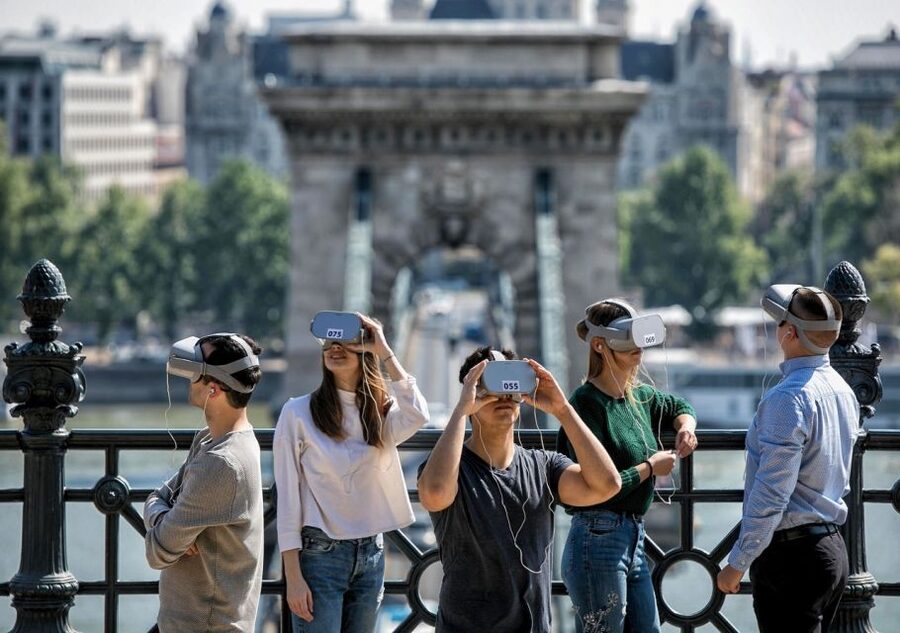
The virtual reality gear is provided at the meeting point. A sterile headset is included, and you can request a hygienic mask. You will also need to leave a passport, ID card, or 200 euros as a deposit for the equipment, so this is one of those tours where carrying identification is useful.
Once the headset is on, the modern city around you becomes a reference point for the digital scenes. You are not simply watching a historical film indoors. You are walking through the real Castle District, then using the headset to see earlier versions of the places around you.
The audio guide explains what is happening during each scene and sets the events in Hungarian history in context. That makes the experience more useful than a string of visual effects. You get the spectacle of virtual reality, but the narration gives you a reason to care about what you are seeing.
The practical issue is comfort. Some people adjust to VR quickly, while others do not. The activity is specifically not recommended for people with migraines or epilepsy, and it is not suitable for people with heart problems or a fear of heights. If you know that headsets or simulated height scenes bother you, choose a conventional walking tour instead.
Stop one: the castle during its medieval construction
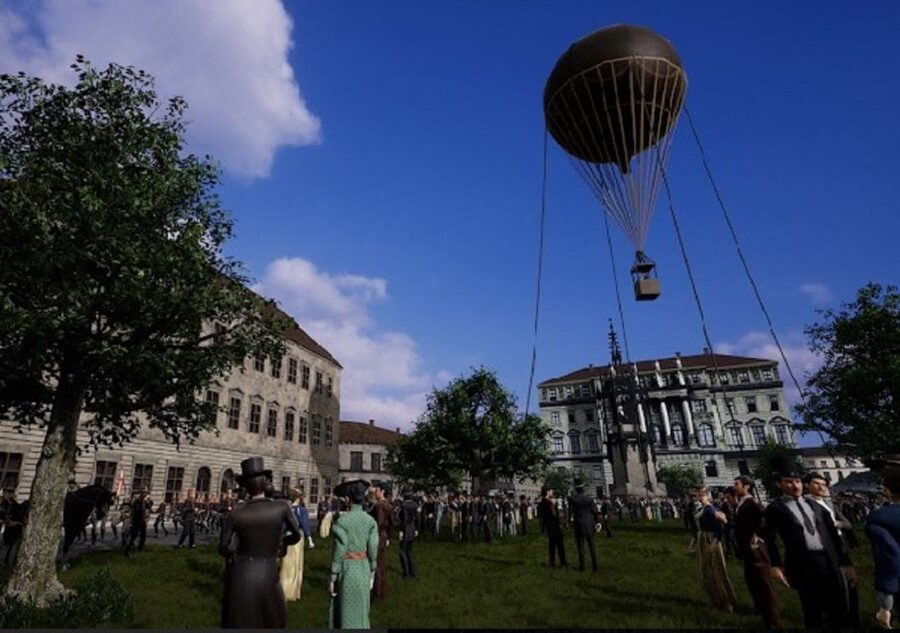
One of the tour’s central scenes takes you back to the Middle Ages, when the castle was being built. The value of this stop is the change in scale. In the present, you see stone walls and grand buildings. Through the headset, you get a sense of the construction process and the castle as a working project rather than a finished monument.
This is a good early introduction to the tour’s method. You look at a real place, then see a version that no longer exists. The guide’s narration helps connect the image to the role of the castle and the development of Buda.
Do not expect a full archaeological lecture. The tour is designed as a moving, visual history lesson, with several short experiences joined by a walk. If you want detailed architectural analysis, a specialist museum tour will offer more depth. If you want a clear picture of how the district changed over time, this format has more immediate impact.
Stop two: battles around the castle
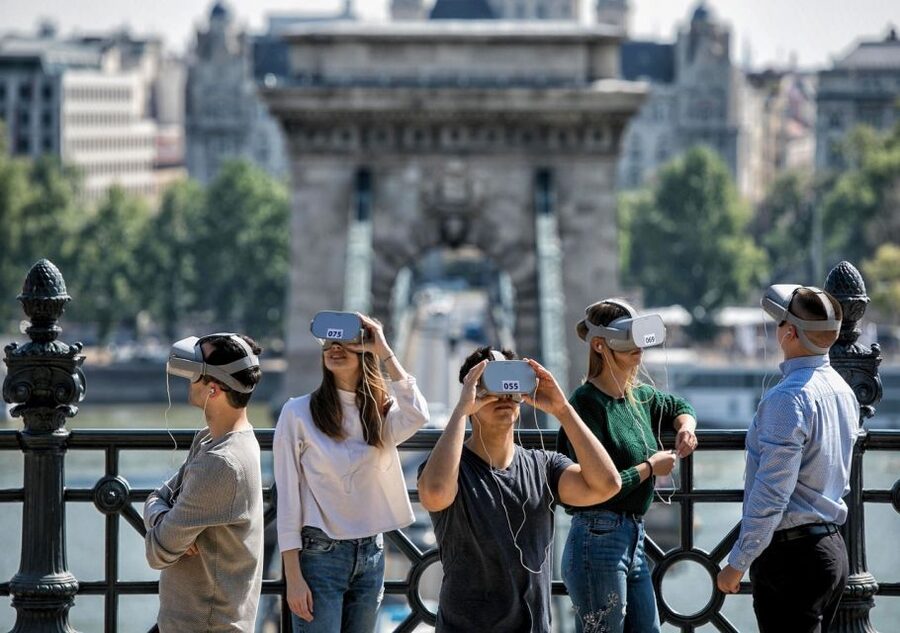
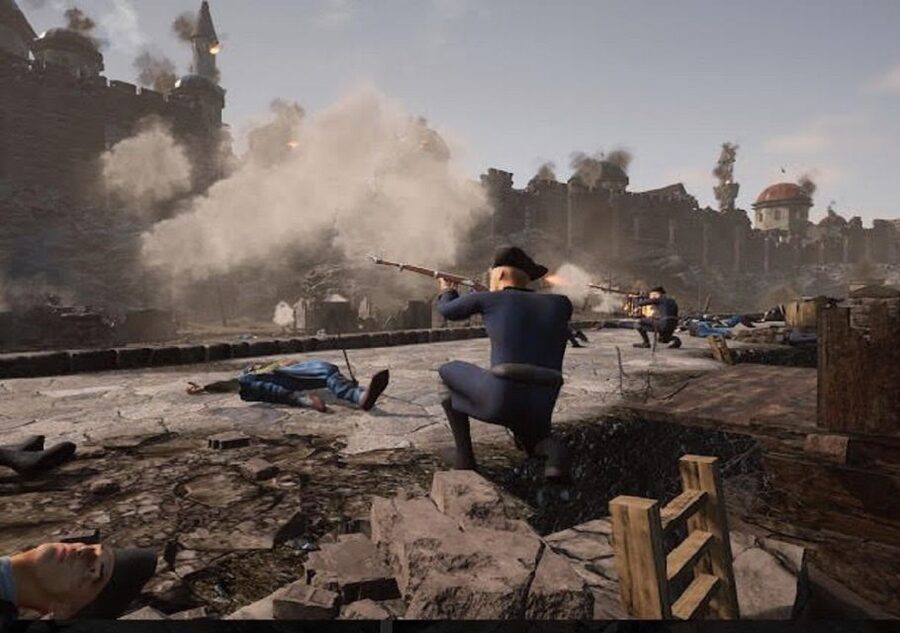
The next historical scenes bring conflict into the Castle District. The VR displays show battles and the destruction that shaped Budapest. Seeing these events in the same setting where you are standing gives the material a physical connection that a textbook cannot provide.
The technology is especially helpful here because battle damage and vanished structures can be hard to imagine from present-day ruins or restored buildings. You may find yourself looking at a calm square while the headset presents a far more violent version of the same place.
The subject matter is not light. The tour describes brutal battles and destruction, so it may not suit anyone looking for a gentle sightseeing stroll. Still, the guide and audio narration keep the scenes tied to the city’s story rather than treating them as action sequences.
A strong part of the experience is the back-and-forth between the current view and the historical one. You remove the headset or finish a scene, and the present-day district comes back into focus. That contrast gives you a better eye for what has survived, what was rebuilt, and what is gone.
Same riverbank, a completely different kind of day:
- Budapest: 1-Hour Evening Sightseeing Cruise with Drink
★ 4.5 · 8,330 reviews - Budapest Danube Cruise and Dinner Options, Live Music and Dance
★ 4.5 · 7,428 reviews - Budapest: Historic Cruise with Welcome Drink
★ 4.7 · 6,512 reviews - Budapest: St. Stephen’s Basilica Entry with Terrace Option
★ 4.5 · 6,399 reviews
Stop three: World War II and the ruined city
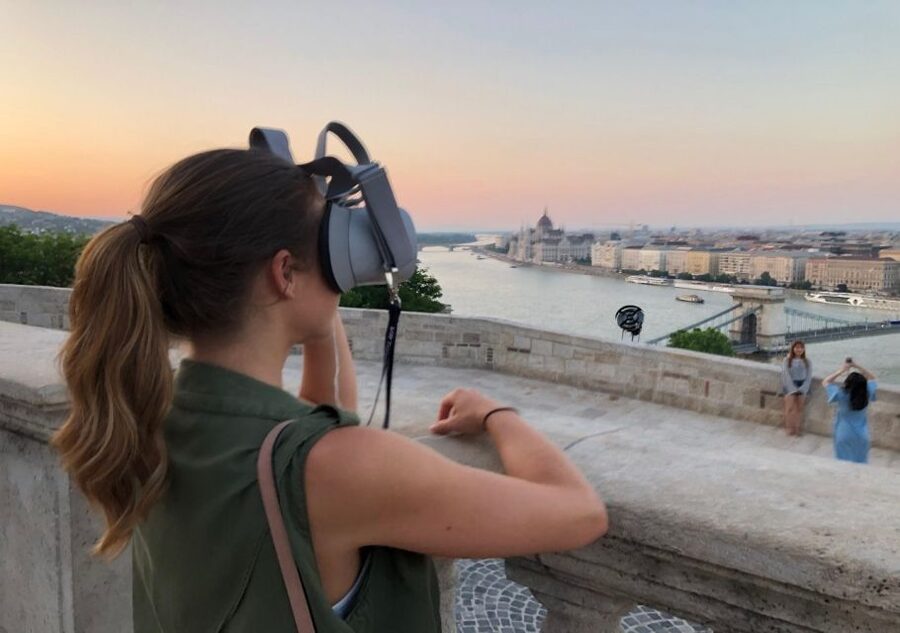
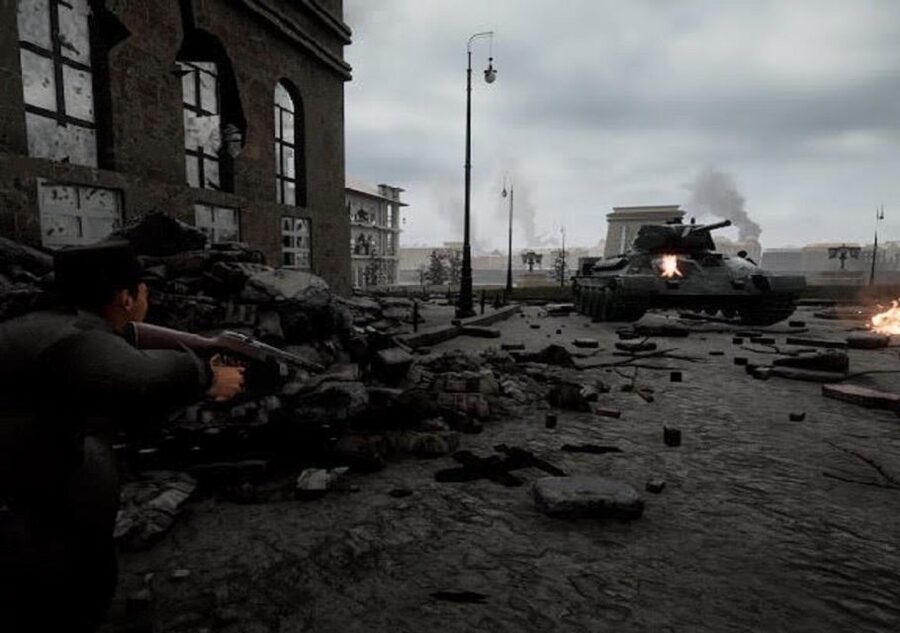
The World War II section shows Budapest during one of its most destructive periods. The VR display lets you see the damage in a way that is difficult to grasp from clean facades and restored public spaces alone.
This is likely to be one of the more serious sections of the route. The point is not just to show ruins, but to explain the scale of the destruction and its effect on Budapest. The audio narration supplies the basic context as the images unfold.
I find this kind of stop useful for first-time visitors because it corrects a common mistake: assuming that every old-looking building has survived unchanged. Budapest’s historic center contains layers of rebuilding, repair, and loss. The VR scenes make those layers easier to picture.
The limitation is that the headset can only present a selected version of events. You receive an accessible overview, not a complete account of World War II in Hungary. Use the tour as an introduction, then visit a museum or read more if this period becomes a major interest.
Stop four: the 1956 Hungarian Revolution
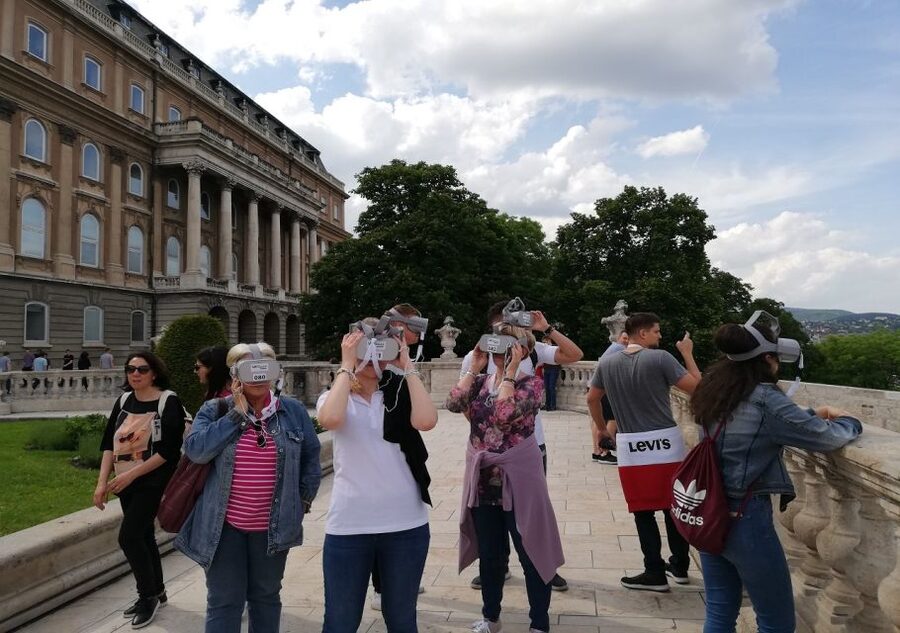
The 1956 Revolution brings the story into the modern era. This stop shows the outbreak of the revolution and places the event within the streets and buildings of Budapest.
For you, the main benefit is continuity. The tour does not stop at medieval walls. It moves from the castle’s early construction to battles, wartime damage, and a political uprising that is still part of Hungary’s modern identity.
The historical jump also shows why the tour’s time-shifting format works. Instead of treating Budapest as one fixed old city, you see it as a place repeatedly changed by power, war, rebuilding, and public action.
As with the World War II section, the audio commentary is important. The visuals can show a crowd, a street, or a dramatic event, but the narration tells you why it mattered. Listen closely, particularly if you are using one of the translated audio tracks.
Stop five: seeing Budapest from above
One highlight is a bird’s eye view over the city. This gives you a break from street-level scenes and helps you understand the setting of the Castle District.
The high view is also the reason the activity is not recommended for people afraid of heights. Even though the sensation comes through the headset, it can feel very different from standing on a normal lookout. If you are comfortable with heights, this section can help you connect Buda Castle to the Danube, Chain Bridge, and the wider city.
It is a useful reminder that Budapest’s major sights make more sense when you see their relationship to one another. The castle is not an isolated attraction. It sits above the river, opposite Pest, and beside the bridge routes that have long linked the two sides of the city.
The supplied details do not identify the exact order of all six stops or provide a separate description for each one. Expect the bird’s eye scene and the historical scenes to be woven into the walking route rather than presented as a fixed museum-style sequence.
Stop six: the final link between past and present
The sixth stop completes the route’s timeline and returns you to the present-day district. By this point, the headset has shown several versions of Budapest, from medieval construction through conflict and political change.
The strength of the final stop is the accumulated comparison. You have walked through the real streets while seeing how the area looked at different moments. That makes the return to the meeting point feel like part of the lesson, not simply the end of an attraction.
Because the tour uses six stops, no single scene has to carry the whole experience. Some sections may appeal more to you than others. History fans may prefer the medieval castle and wartime scenes, while visitors interested in modern Hungary may find the 1956 material most useful.
What the guide adds to the technology
The live guide is not just there to point out the next stop. The guide leads the route, helps you move through the Castle District, and provides the human explanation around the headset scenes.
That distinction matters. Virtual reality can show a convincing image, but it cannot answer a practical question about where you are or explain why a particular location matters unless the tour provides context. Here, the guide handles the route while the audio narration explains the historical action.
The guide service is available in English and Hungarian. If you speak another language, the audio guide covers Chinese, German, Spanish, Russian, Italian, and French in addition to English and Hungarian. This is one of the tour’s best practical features because you can focus on the scene without trying to follow a live explanation in a language you do not understand well.
The equipment also received strong praise for its quality. That does not mean the headset will suit everyone, but it does suggest that the main attraction is the VR presentation itself, not a gimmick added to an ordinary walk.
Is $39 a fair price?
At $39 per person, this is priced above a basic free walk through the Castle District but below many private, highly specialized sightseeing experiences. You are paying for the headset, the six digital scenes, the guide, the audio narration, and the organized route.
The value depends on what you want from Budapest. If you mainly want live stories, personal conversation, and detailed architectural explanation, a traditional walking tour may give you more. If you want to see lost buildings, battles, and historic events placed directly onto the modern city, the VR element makes the price easier to justify.
The experience also offers something that is hard to reproduce on your own. You can visit Buda Castle without a guide, but you cannot easily stand in the district and view its medieval construction or wartime destruction through a coordinated set of scenes.
The strongest reason to book is the combination of technology and place. The strongest reason to skip it is that you may not enjoy wearing a headset while walking, particularly if you are sensitive to motion, heights, or visual effects.
Walking, weather, and what to carry
Wear comfortable shoes. The tour includes a light hike, and the Castle District is not a flat indoor attraction. You will walk between stops with the guide, so footwear matters more here than it would on a short monument visit.
Take water during hot summer tours. The provided information specifically recommends bringing something to drink, and the walking route gives you a practical reason to follow that advice.
Arrive 15 minutes early. That leaves time to locate the flags, meet the guide, handle the equipment deposit, and fit the headset without cutting into the tour.
Bring a passport or ID card, or be prepared to provide 200 euros as the headset deposit. The information allows either identification or the cash deposit, so check what you prefer before leaving your hotel.
The activity is not suitable for people with mobility impairments, heart problems, epilepsy, migraines, or a fear of heights. These are not minor footnotes. The route, the headset, the simulated height view, and the walk all affect comfort and safety.
Free cancellation is available up to 24 hours before departure, and you can reserve now and pay later. That flexibility is useful if your Budapest schedule depends on weather or changing plans.
Who will enjoy this Budapest VR tour?
I would recommend it to first-time visitors who want an engaging introduction to Hungarian history without spending several hours in a museum. Families with older children may also like the visual format, though the material includes battles and destruction rather than only light entertainment.
It suits people who learn best by seeing events take shape. The tour gives you a time line, but it does not require you to memorize dates before you arrive. The guide and audio narration do the basic explanatory work.
It is also a good option for repeat visitors who have already seen Buda Castle in its present form. The virtual scenes add another layer to familiar sights and may help you notice the district differently afterward.
I would not choose it for anyone seeking a slow, quiet walk or a long architectural discussion. I would also avoid it if you already know that VR gives you headaches, disorientation, or anxiety. The headset is the main event, not a small add-on.
Should you book the VR Tour in Buda?
Book this experience if you want to connect Budapest’s actual streets with scenes of medieval construction, war, revolution, and the city from above. The helpful guide, high-quality VR, and eight audio languages make it practical for an international audience.
Skip it if you dislike headsets, need a fully accessible route, or prefer a detailed human-led history tour with no simulated effects. At $39, the experience is good value for visitors who want a visual history lesson tied to the Buda Castle District, especially if you arrive ready to walk and carry water.
FAQ
Where does the Budapest VR tour begin?
It begins at Budapest, Lánchíd u. 23, 1013 Hungary, on the Buda side near Chain Bridge and Clark Ádám Square. Look for the VR Tour flags facing the street.
How long does the tour last?
The stated duration is 1.5 hours. The walking description refers to a roughly two-hour tour, so check the departure details and allow extra time.
What languages are available?
The live guide speaks English or Hungarian. The included audio guide is available in English, Chinese, German, Hungarian, Spanish, Russian, Italian, and French.
What should I bring?
Bring comfortable shoes, drinking water during hot summer tours, and a passport or ID card. You may also provide 200 euros as a deposit for the VR headset.
Is the tour suitable for people with mobility impairments?
No. The activity is not suitable for people with mobility impairments and includes a light hike between six stops.
Can I cancel the booking?
Yes. You can cancel up to 24 hours before the tour for a full refund. Reserve now and pay later is also available.
Just added around Budapest
- From Budapest: Guided Tour of Eger with Wine Tasting★ 4.5 · 6 reviews
- Budapest: Private Walking Tour with a Local Guide★ 3.6 · 6 reviews
- Budapest: Danube River Views Bike Ride★ 4.8 · 23 reviews
- Trash Art Museum: Hungary’s First Scrap Metal Exhibition★ 4.3 · 72 reviews
- Walk to recent and aged spiritual sanctuaries near Budapest★ 5.0 · 5 reviews
- Budapest: 3-Hour Trabant Sightseeing Tour★ 4.7 · 28 reviews
- True Crime Walking Tour in the Buda Castle district★ 5.0 · 26 reviews
- Audio visual multi-sensory chefs journey dinner experience★ 5.0 · 3 reviews
Tours, compared.

City Sightseeing Hop-On Hop-Off Bus Tour & Extras
Read our review →
Buda Castle District Vampires and Myths Night Tour
Read our review →
Budapest City Landmarks Walking Tour in 2 Hours
Read our review →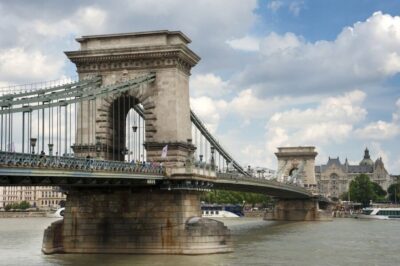
3-Hour Orientation Walking Tour of Buda and Pest
Read our review →