Reviewed · TOURS
Tiny Sculptures, Big Stories: Kolodko mini statue tour
Budapest’s smallest monuments often carry its sharpest jokes. This tour turns Mihail Kolodko’s tiny bronze statues into a citywide treasure hunt, linking local folklore, pop culture, politics, and neighborhood life. I like the way you must actually search for many of the figures, and I like that guide ET, also called Etele, adds stories about Budapest beyond the statues. The main consideration is pace: you may walk a lot and use several forms of public transport in 2.5 hours.
I also appreciate the small group, capped at 10 people, and the chance to shape the route around what you have already seen. The advertised duration is 2.5 hours, though the itinerary also refers to a three-hour guided tour, so confirm the exact timing when you book.
In This Review
- Key points at a glance
- Why tiny statues make a good Budapest tour
- Meeting at the New York Café in Pest
- Searching for Kolodko’s bronze characters
- Folklore, politics, and everyday Budapest
- The synagogue and other city sights
- Moving through Budapest by tram, metro, and more
- Crossing to Buda and finishing at Szent Gellért tér
- How much walking should you expect?
- What the $35 price buys you
- Who will enjoy this experience most?
- Practical booking advice
- Should you book the Kolodko mini statue tour?
- FAQ
- Where does the Kolodko mini statue tour begin?
- Where does the tour finish?
- How long does the experience last?
- Are public transport tickets included?
- What language is the tour conducted in?
- How large is the group?
Key points at a glance
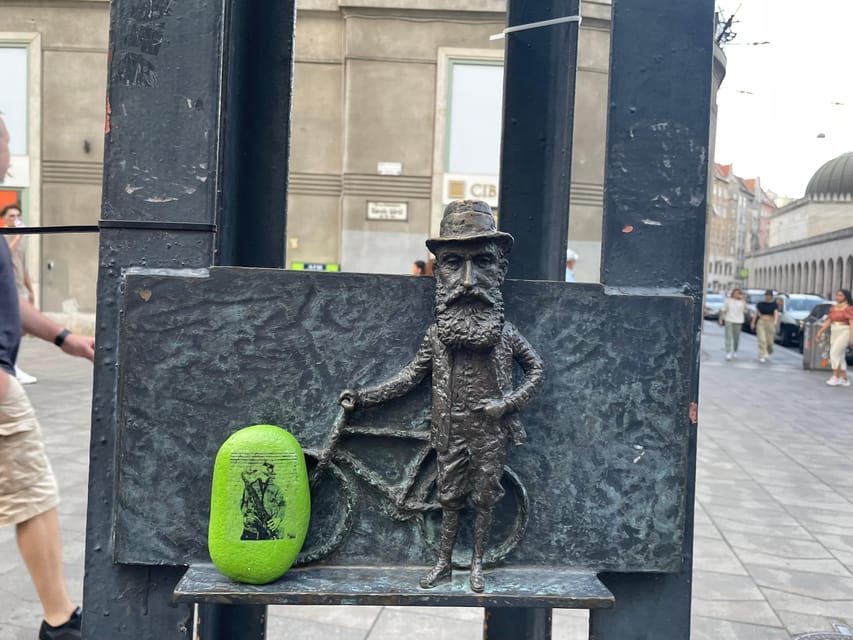
- A citywide statue hunt: Look closely for Kolodko’s small bronze works, some of which are easy to miss without a guide.
- Stories behind the sculptures: Each figure connects to a legend, joke, cultural reference, political idea, or local place.
- Pest to Buda: Begin outside the New York Café and finish at Szent Gellért tér, near the Danube.
- Public transport included: Trams, metro, and other city transport help you cover more ground than a walking tour alone.
- A personal route: ET can adjust the outing around your interests and the Budapest sights you have already visited.
- Comfortable shoes matter: The hunt is more rewarding when you are ready for plenty of walking between stops.
Why tiny statues make a good Budapest tour
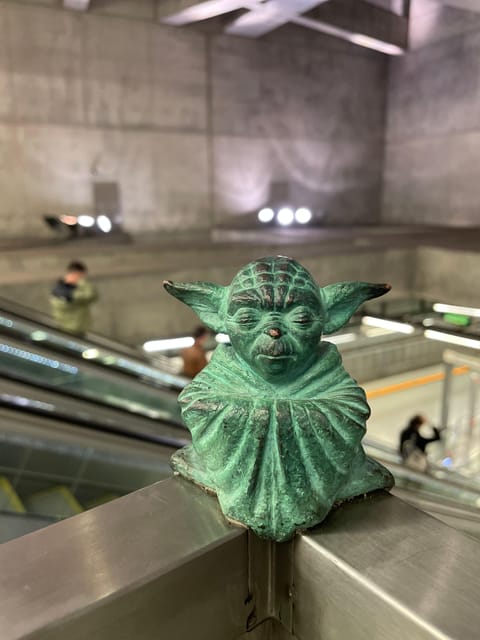
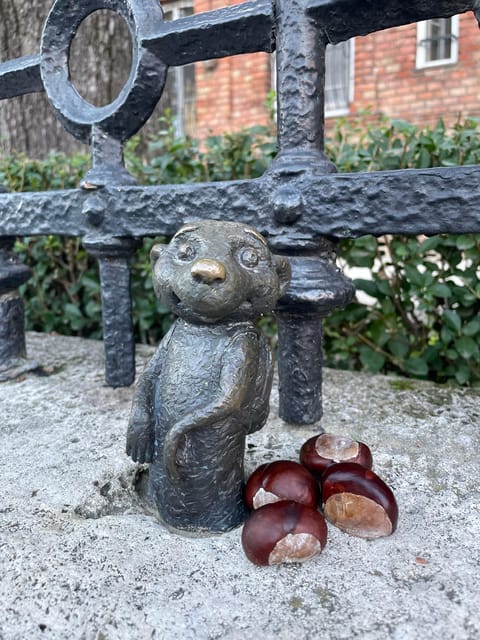
Kolodko’s sculptures are not grand monuments designed to dominate a square. They are small, witty objects placed around the city, often close to streets, bridges, riverside paths, or ordinary buildings. You may walk past one without noticing it. That is the point.
The statue hunt changes how you look at Budapest. Instead of scanning only for the Parliament, castle, or grand cafés, you start checking corners and low walls. A small figure can lead into a story about Hungarian folklore, a neighborhood, a well-known character, or an episode from the city’s past.
I like this format because the art gives the tour a clear purpose without trapping you in a rigid sightseeing route. You are not simply being led from one famous building to the next. You are following clues and learning why a particular place matters.
The statues also provide an easy way into subjects that can feel heavy in a conventional history lesson. Humor, popular culture, and local jokes make Budapest’s political and social story more approachable. ET’s job is not just to point at bronze figures. He connects each one to the street around it.
Other Budapest days people book alongside this one:
- Budapest: Unlimited Prosecco, Beer and Aperol Spritz Cruise
★ 4.8 · 25,310 reviews - Budapest: Széchenyi Spa Day Ticket with Optional Upgrades
★ 4.3 · 23,911 reviews - Budapest: Nighttime or Daytime Sightseeing Cruise
★ 4.2 · 21,062 reviews
Meeting at the New York Café in Pest
The tour begins in front of the entrance to the New York Café, one of Budapest’s best-known landmarks. This is a useful meeting point because it is memorable and easy to identify, though the café itself is not presented as a full stop on the tour. You should arrive at the entrance rather than assume the guide will meet you inside.
Starting on the Pest side gives the outing a natural beginning in the city’s flatter, more urban half. From there, the route can move through different neighborhoods before crossing toward Buda. The contrast matters. You get more than a collection of isolated statues because the surrounding streets become part of the story.
ET is the named guide for this experience. His style, based on the available tour details, is conversational and flexible. He encourages you to look for a statue before explaining it, which gives the activity a playful rhythm. Instead of receiving a lecture first, you get a small challenge: find the object, notice its details, then hear why it is there.
That approach works well for families, couples, and adults who prefer an active tour. It also leaves room for questions. Past outings have included conversations about local culture, pop culture, politics, street art, and everyday life in Budapest.
Searching for Kolodko’s bronze characters
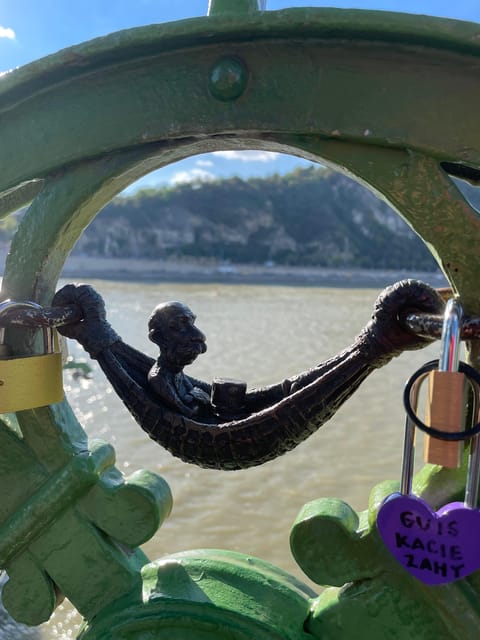
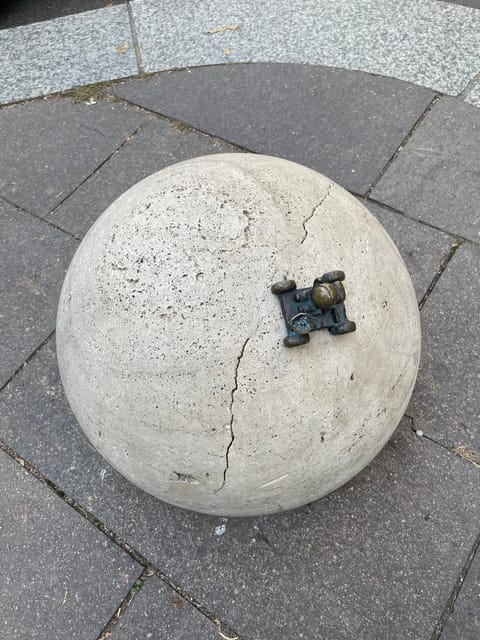
The best part of the experience is the search itself. Kolodko’s works are miniatures, so they do not always announce themselves. You may need to examine a ledge, look beside a path, or scan a spot that seems ordinary at first.
This is where a local guide earns the fee. You could try to find statues on your own, but the challenge is knowing where to look and understanding the reference once you get there. ET can supply both pieces: the location and the story.
The number of statues varies. One small-group outing found about 15 sculptures, while a particularly flexible private outing covered more. Another person later used a map supplied by ET to find additional works during the rest of a Budapest visit. You should not treat any exact statue count as guaranteed. The route depends on the day, group interests, starting time, and how long each discussion takes.
That uncertainty is not necessarily a flaw. A route built around 15 carefully explained statues may be more satisfying than a rushed attempt to collect every possible figure. If your priority is quantity, tell ET at the start. If you prefer fewer stops with more conversation, the small-group format should suit you better.
Folklore, politics, and everyday Budapest
The statues are the hook, but the stories are the real substance. The tour description promises local legends and neighborhood context, while the experience details point to pop culture and politics as well. That mix gives the outing more range than a simple street-art walk.
A figure might offer a joke about a familiar cultural character. Another may reflect a political idea or a local memory. A third may make sense only when you understand the street, district, or river beside it. The pleasure comes from seeing how a tiny artwork can connect an ordinary location to a larger story.
I like tours that explain not only what you are looking at, but why here. A sculpture placed near the Danube has a different meaning from one tucked into a side street. A statue near a synagogue or another major sight can open a discussion about the people and traditions that shaped that part of Budapest.
The tour is also a good choice if you have already spent time at the city’s major monuments. Instead of repeating the standard introduction, ET can show you a less obvious side of Budapest. Several experiences were adapted around places already visited, allowing the route to provide new neighborhoods or new angles on familiar sights.
Same riverbank, a completely different kind of day:
- Budapest: 1-Hour Evening Sightseeing Cruise with Drink
★ 4.5 · 8,330 reviews - Budapest Danube Cruise and Dinner Options, Live Music and Dance
★ 4.5 · 7,428 reviews - Budapest: Historic Cruise with Welcome Drink
★ 4.7 · 6,512 reviews - Budapest: St. Stephen’s Basilica Entry with Terrace Option
★ 4.5 · 6,399 reviews
The synagogue and other city sights
The synagogue is listed among the highlights, but the available details do not promise a specific interior visit or a full synagogue tour. Think of it as part of the urban route and story setting, not as a separate admission-based attraction.
That distinction matters if you are booking because you want a detailed religious or architectural tour. This experience is centered on Kolodko’s sculptures. The synagogue and other attractions add context between statue stops, but they do not replace a dedicated visit.
The same is true of the city sightseeing along the way. You will learn about Budapest and pass through interesting areas, but the exact sequence can change. ET has adjusted outings to avoid places already seen and to follow individual interests. That flexibility is valuable, though it means you should not expect a fixed checklist of landmarks.
Moving through Budapest by tram, metro, and more
This is not a pure walking tour. Public transport is part of the design, and ticket prices are included. Using city transport lets you reach sculptures spread across Pest and Buda without spending the whole afternoon on foot.
The transport also gives you a better sense of Budapest as a lived-in city. You move through it as residents do, rather than viewing it only from a sightseeing route. Depending on the group and route, the experience may involve tram, metro, train, or even bikes, according to the outing details.
That variety is a strength, but it brings a few practical points. You should be ready to board and leave vehicles efficiently, keep track of the group, and stay alert around busy roads and stations. The experience is limited to 10 people, which helps, but it is still wise to keep your belongings secure and listen for instructions when crossing streets.
Public transport can also affect timing. A short ride may connect two statue areas, but waiting and transfers take part of the tour. If you want a slow photography session at every stop, you may see fewer sculptures. If you want to cover ground and learn the city’s layout, the transport-based format is a good fit.
Crossing to Buda and finishing at Szent Gellért tér
The tour starts in Pest and ends at Szent Gellért tér on the Buda side. This creates a satisfying east-to-west shape, with the Danube acting as more than a backdrop. You finish in a central Buda location with straightforward ways to return to the city.
Szent Gellért tér is close to the river and gives you a clear sense that you have crossed from one half of Budapest to the other. It is a useful ending point if you want to continue exploring Buda afterward. The route does not return you to the New York Café, so plan your next stop from Szent Gellért tér rather than from the original meeting point.
The finish also makes this tour useful early in a Budapest stay. You begin learning how Pest and Buda connect, how public transport fits together, and where the river sits within the city. One person used the tour as an early introduction and found it helpful for getting oriented. That is a practical benefit, especially on a short visit.
How much walking should you expect?
The exact distance is not given, but the experience clearly involves substantial walking between statues. One detailed description recommends comfortable shoes, and that is sensible advice. You may walk through several neighborhoods, pause at street corners, enter transport stations, and continue on foot after each ride.
This is not a strenuous hike, but it is more active than a café-to-café sightseeing outing. Cold or snowy weather can make the search less comfortable, though the tour has operated in those conditions. Bring suitable layers and shoes if you visit in winter.
The walking is part of the value. A statue hunt loses some of its charm if you rush from one vehicle to another. Still, tell ET if you have mobility concerns or a strong preference for a slower pace. The route has been customized for individual interests, so speaking up early gives the guide a chance to set realistic expectations.
What the $35 price buys you
At $35 per person, this tour sits in a reasonable range for a 2.5-hour small-group experience, particularly because public transport tickets are included. You are paying for more than directions to bronze statues. The price covers a local guide, interpretation, route planning, transport coordination, and access to stories that are difficult to gather from a standard guidebook.
The small group is important here. With a maximum of 10 people, you can usually ask questions without turning the tour into a crowded procession. If the booking level is low, the outing may feel almost private. Several dates have had only one or two participants, and ET adapted the route accordingly.
The value depends on what you want from a tour. If you only want a list of statue locations, you could seek them out independently. If you want the background, neighborhood connections, and help spotting tiny works in a city you do not know, the fee is easier to justify.
You should also remember that the statues themselves do not require an attraction ticket. The cost is for the guiding and the experience of finding them, not admission to a museum or monument. That makes the tour especially appealing to someone who has already paid for several major Budapest attractions and wants a different kind of afternoon.
Who will enjoy this experience most?
I would choose this tour if you like street art, local jokes, folklore, urban history, or small details that other sightseeing programs skip. It is also a good match for repeat visitors who have already seen the headline sights.
Families can enjoy the hunt because children have a clear task: find the statue. Adults get the fuller stories about culture and politics. The balance depends on the group, but the format is more interactive than standing quietly in front of a large monument.
It suits solo visitors particularly well because a small group and a talkative guide make it easy to ask questions. Couples and friends should enjoy the relaxed pace and unusual photo stops. People who dislike walking, public transport, or flexible routes may prefer a more traditional bus or fixed walking tour.
English is the listed language. ET is described as fluent in English, and the experience details identify English as the operating language. If you need another language, confirm before booking rather than assuming it is available.
Practical booking advice
Reserve this tour for a morning or afternoon when you can walk comfortably and do not have a tight appointment immediately afterward. Since the route can change with group interests and transport, leave some breathing room around the advertised 2.5 hours.
You can cancel up to 24 hours before the activity for a full refund, and the reserve-now-pay-later option keeps your plans flexible. These policies are useful when your Budapest schedule is still taking shape.
Meet outside the New York Café entrance, not at a vague nearby street corner. Wear comfortable shoes, carry water, and keep your phone ready for close-up statue photos. The included transport tickets remove one small chore, but you should still stay with the group during transfers.
Also, do not book this expecting to see every Kolodko sculpture in Budapest. The number varies, and the best route may be the one that matches your interests rather than the one with the highest count.
Should you book the Kolodko mini statue tour?
Book it if you want Budapest to feel less like a list of major sights and more like a city full of small clues. The combination of a treasure hunt, local stories, public transport, and Pest-to-Buda routing gives you a useful sense of place for $35.
I would especially recommend it early in a first visit, when ET’s city orientation can help you find your way around, or late in a trip, when you want something beyond the usual monuments. It is also a strong choice for repeat visitors and anyone who enjoys quirky art with a cultural backstory.
Skip it if you want a fixed itinerary, a long architectural lecture, or a tour focused mainly on entering major attractions. The route is flexible, the walking is real, and the statues are deliberately small. For the right person, that is exactly the fun.
FAQ
Where does the Kolodko mini statue tour begin?
The meeting point is in front of the entrance to the New York Café in Budapest.
Where does the tour finish?
The tour finishes at Szent Gellért tér on the Buda side, a central location with easy connections for continuing around the city.
How long does the experience last?
The activity is listed as 2.5 hours. The itinerary also refers to a three-hour guided tour, so you should confirm the exact timing when checking available departures.
Are public transport tickets included?
Yes. Public transport tickets are included in the activity price.
What language is the tour conducted in?
The tour is conducted in English, with a live English-speaking guide.
How large is the group?
The group is limited to 10 participants. If fewer people book, the outing may feel more personal and the route can be adjusted around your interests.
Just added around Budapest
- From Budapest: Guided Tour of Eger with Wine Tasting★ 4.5 · 6 reviews
- Budapest: Private Walking Tour with a Local Guide★ 3.6 · 6 reviews
- Budapest: Danube River Views Bike Ride★ 4.8 · 23 reviews
- Trash Art Museum: Hungary’s First Scrap Metal Exhibition★ 4.3 · 72 reviews
- Walk to recent and aged spiritual sanctuaries near Budapest★ 5.0 · 5 reviews
- Budapest: 3-Hour Trabant Sightseeing Tour★ 4.7 · 28 reviews
- True Crime Walking Tour in the Buda Castle district★ 5.0 · 26 reviews
- Audio visual multi-sensory chefs journey dinner experience★ 5.0 · 3 reviews
Tours, compared.

City Sightseeing Hop-On Hop-Off Bus Tour & Extras
Read our review →
Buda Castle District Vampires and Myths Night Tour
Read our review →
Budapest City Landmarks Walking Tour in 2 Hours
Read our review →
3-Hour Orientation Walking Tour of Buda and Pest
Read our review →