
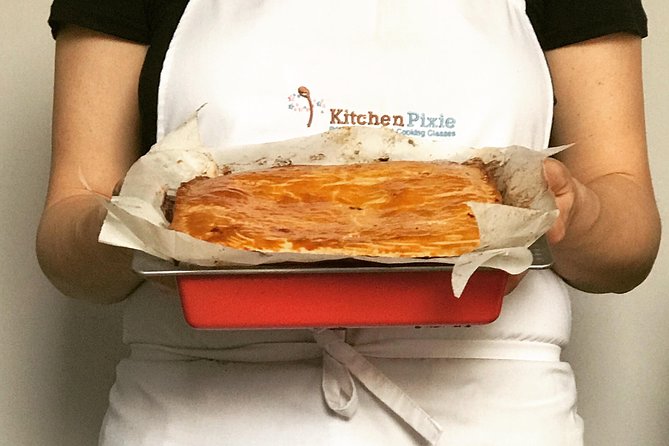
Reviewed · JEWISH HERITAGE TOURS
Authentic Jewish Cooking Class by a Professional chef
The best part of this Budapest experience is that you do not just watch a chef cook. You make the meal yourself, from mixing and kneading to stirring and serving. Professional chef Marti guides the work, then sits down with you to enjoy the finished three-course dinner.
I like the small group size of up to eight and the family recipes written in English, which give this class value after you leave Budapest. I also like the hotel taxi pickup and drop-off, a useful touch when you are carrying a full meal in your stomach and do not want to puzzle out public transport afterward. The main consideration is that the food is traditional Jewish cooking, but not kosher, so guests with strict kosher needs should not book it expecting kosher preparation.
In This Review
- Key points at a glance
- Cooking Jewish Budapest food with Chef Marti
- A warm start with Jewish snacks and Hungarian drinks
- Making Jewish egg paté and challah
- Honey chicken, dried fruit, and the meaning of Rosh Hashanah
- Rugelach and a taste of Hanukkah
- What the four hours actually give you
- Why the small group matters
- Price, transport, and the real value
- Timing your morning or afternoon
- Dietary needs and the kosher question
- Who will enjoy this class most
- Booking details and cancellation
- Should you book this Budapest cooking class?
- FAQ
- Where does the cooking class start?
- How long does the experience last?
- What time does the class start?
- Is the class taught in English?
- What food will I prepare?
- Is the food kosher?
- Are ingredients and cooking equipment included?
- What drinks are included?
- What is the cancellation policy?
Key points at a glance
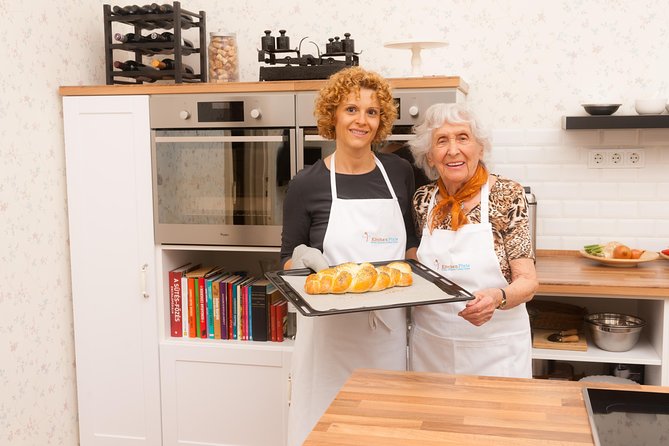
- Three dishes, hands-on: Make Jewish egg paté with challah, honey chicken with dried fruit, and rugelach.
- Chef-led instruction: Marti gives practical help, and you do the actual mixing, kneading, stirring, and cooking.
- Food with a story: The recipes connect to Rosh Hashanah, Hanukkah, and Jewish life in Central Europe.
- Drinks included: Taste pálinka, Hungarian wine, homemade soft drinks, mineral water, coffee, and tea.
- Small and personal: The class takes no more than eight people, with a cosy kitchen setting rather than a basement room.
- Simple transport: Hotel taxi pickup and drop-off are included, although the listed meeting point is Király u. 77.
Cooking Jewish Budapest food with Chef Marti
This is a four-hour cooking session built around food, conversation, and practical work. You arrive at Flavors of Budapest and receive the ingredients, equipment, tools, and apron needed for the class. You do not need to pack cooking supplies or shop beforehand.
The class is offered in English, and the recipes are provided in English so you can repeat the dishes at home. That matters. Many cooking classes end with a pleasant meal and a fading memory of what went into it. Here, you leave with written family recipes and a clearer sense of how the dishes come together.
The group limit is eight people. That is large enough for a social meal but small enough for Marti to help with individual tasks. One particularly useful detail is that this is described as a full hands-on class. Marti does not simply perform each step while you watch. She explains or demonstrates the work, then lets you do it.
That makes the class a good fit even if you are not a confident cook. The food is prepared with guidance, and the point is participation rather than culinary perfection. If your usual home cooking begins with a microwave, you should still be able to take part.
More jewish heritage tours in Budapest:
- Budapest Jewish Heritage Memorial Walking Tour & Synagogue Entry
★ 5.0 · 568 reviews - Budapest: Jewish Heritage Guided Tour with Synagogue Ticket
★ 4.8 · 533 reviews - Jewish Quarter of Budapest Walking Tour
★ 4.7 · 369 reviews
A warm start with Jewish snacks and Hungarian drinks
The experience begins with a typical Jewish welcome snack. You also receive drinks during the class, including one pálinka, two deciliters of Hungarian wine, homemade soft drinks, mineral water, coffee, and tea.
Pálinka is a strong Hungarian fruit brandy, so treat the serving as a taste rather than a challenge. The wine and homemade soft drinks offer easier options, and the range of nonalcoholic choices is helpful for anyone who does not drink.
This opening gives the class a social rhythm before the main cooking begins. You are not being rushed from one recipe to the next. The drinks and snack help turn the kitchen into a shared table, while Marti adds information about Central European Jews and Jewish life in Budapest.
The historical material is not an extra lecture tacked onto the meal. It helps explain why the recipes matter. Food traditions often show how communities carried customs across borders, adapted to local ingredients, and marked important holidays at the family table.
Making Jewish egg paté and challah
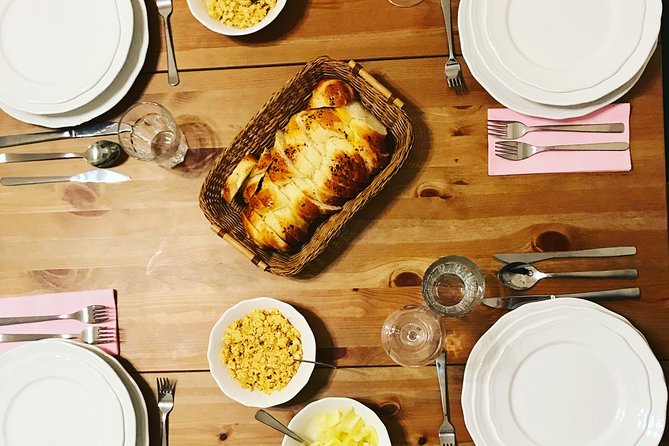
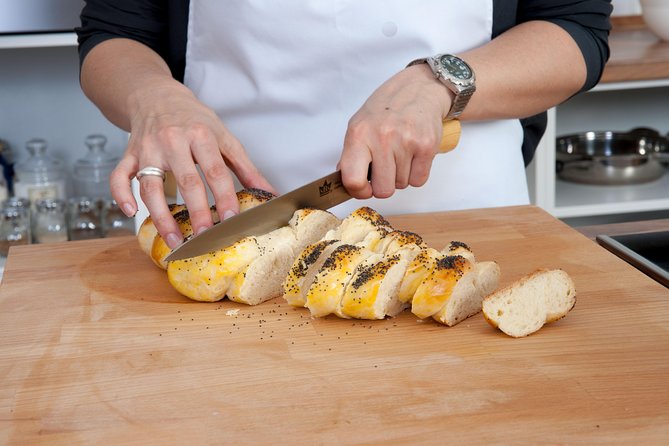
The starter is Jewish egg paté served with challah. The challah is a braided Jewish bread, and the egg mixture is soft and creamy.
This first course gives you a gentle introduction to the class. You work with simple ingredients, but the result depends on texture and balance. The contrast between the soft egg paté and the bread makes it a natural welcome dish, and the bread also gives you something to taste while the main course and dessert take shape.
Challah is especially suited to a cooking class because its braided form adds a hands-on element. You are not just assembling food on a plate. You get to handle the dough and see how a familiar bread becomes part of a Jewish meal.
The starter also shows why the class is more than a generic Budapest cooking lesson. You are preparing a dish tied to Jewish home cooking, then hearing the cultural setting around it. The recipe may be approachable, but the story gives it a larger place at the table.
Honey chicken, dried fruit, and the meaning of Rosh Hashanah
The main course is honey chicken with dried plum and apricot, served with boiled rice. The combination of sweet fruit and honey gives the dish a distinctive character, quite different from a standard roast chicken meal.
The recipe is connected with Rosh Hashanah, the Jewish New Year. Jewish families eat honey and other sweet foods at this time, with the hope that the coming year will be lucky and sweet. That simple explanation gives the dish a useful cultural anchor. You understand not just what you are cooking, but why the ingredients belong together.
Cooking the main course also gives you a chance to work with several textures and flavors. The chicken provides the savory base, while the dried plum, apricot, and honey bring sweetness. Rice keeps the plate simple and lets the sauce and fruit carry the character.
This is probably the most substantial part of the class, and it is prepared as a shared meal at the end. You will not be handed a small tasting portion and sent on your way. The plan is to sit together and eat the result of your work.
A few more Budapest trips to weigh up
- Budapest Cooking Class & Market Tour with Local Guide & Wines
★ 5.0 · 553 reviews - Premium Hungarian Home Cooking Experience with Chef Marti
★ 5.0 · 169 reviews - Hungarian Cooking and optional Local Market Tour
★ 4.5 · 98 reviews - Budapest: Hungarian Cooking Class and Market Walk
★ 5.0 · 91 reviews
Rugelach and a taste of Hanukkah
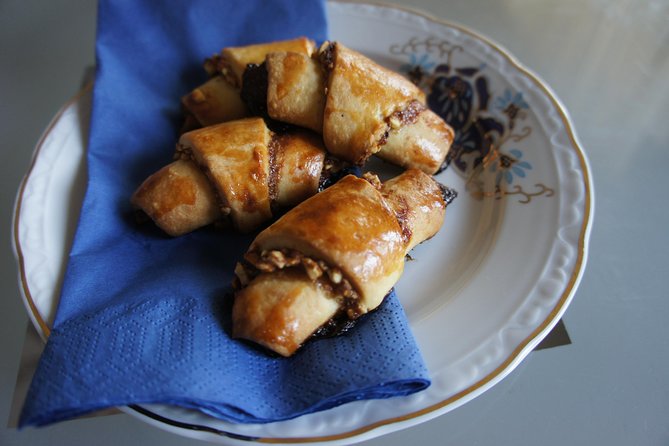
Dessert is rugelach, a small crescent-shaped pastry associated here with Hanukkah. The class also explains that the original version was more modest than many modern forms, which often use cream cheese.
That detail makes rugelach a good final lesson. Recipes change over time, and family food is rarely fixed in one perfect form. You get to see how a traditional pastry can develop while still keeping its holiday connection.
The dessert is prepared as part of the same three-course menu, not as a separate demonstration. Since it comes after the egg paté and chicken, the crescent shape and sweet finish give the meal a clear ending.
If you enjoy baking, this may be the most appealing part of the class. If you prefer savory cooking, the pastry still adds variety and makes the experience feel like a full family meal rather than a single recipe workshop.
What the four hours actually give you
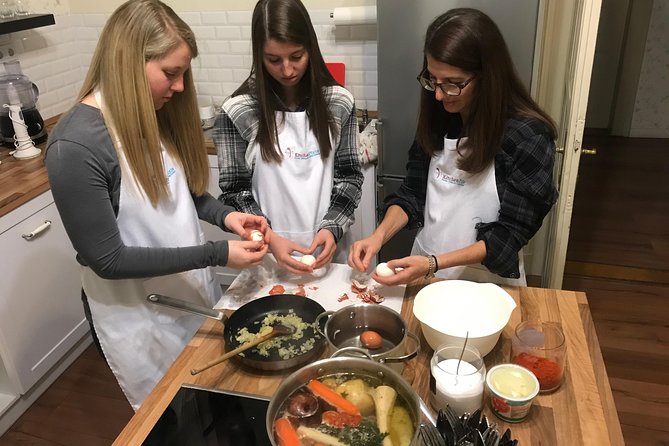
Four hours is a generous amount of time for three dishes. It allows Marti to explain the food, guide the work, and share stories without turning every step into a race.
The class includes all local ingredients, kitchen pots, equipment, tools, and an apron. That all-in setup keeps the focus on cooking. You do not need to wonder which knife to bring or how to find a specialty ingredient in an unfamiliar city.
You also have time to taste as you go. That is useful for learning. Cooking is not just following written instructions. You begin to notice how a mixture feels, how a dough changes, and how sweetness affects a savory dish.
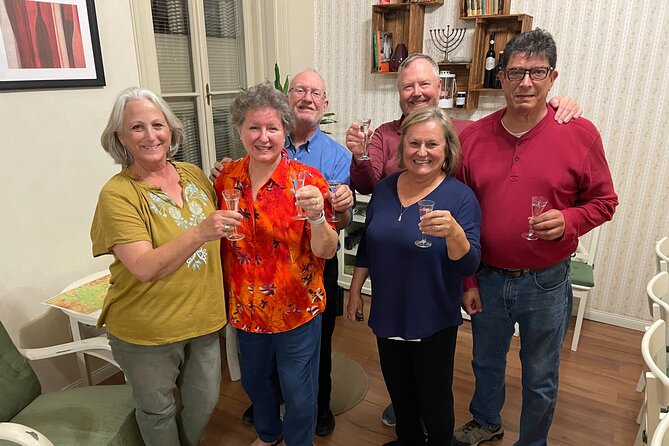
The class finishes with everyone eating together. I like this ending because it gives the activity a proper payoff. You have made the food, but you also have time to talk about it and enjoy it while it is fresh.
Why the small group matters
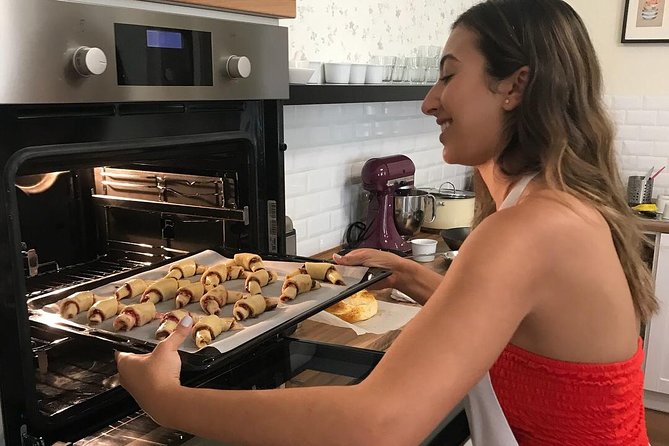
A maximum of eight people is one of the strongest practical features. Cooking becomes frustrating when too many hands crowd around one work surface or when each person gets only a token task.
In this group size, you can expect more room to participate. The most useful description of the teaching style is simple: Marti shows or explains the step, then you do it. That is much better than standing behind a chef while the important work happens out of reach.
The small setting should also make it easier to ask questions. You can check a technique, ask about an ingredient, or clarify a recipe while the dish is in progress. For a beginner, that personal help can be the difference between following a class and actually learning from it.
The setting is described as cosy and not a basement room. That may sound like a minor point, but comfort matters during four hours of cooking. You want a pleasant kitchen where you can work, eat, and listen without feeling confined.
Price, transport, and the real value
The price is $119.21 per person. That is not a cheap meal, but it includes more than lunch or dinner. You receive a four-hour class, a three-course menu, a welcome snack, all ingredients and equipment, an apron, English recipes, professional guidance, and several drinks.
The hotel taxi pickup and drop-off add practical value. The stated meeting point is Budapest, Király u. 77, 1077 Hungary, and the activity ends back at the meeting point. At the same time, the experience says taxi transport from your Budapest hotel is included, so confirm the pickup details when booking if you plan to use that service.
I would compare the price with a private meal, a standard cooking lesson, and the cost of organizing similar ingredients yourself. The class combines all three, with a cultural talk included. It is particularly useful on a trip when you want an evening or morning activity that does not depend on sightseeing weather.
The value is weaker if you only want a quick tasting. This is a long, participatory class, and you are paying for instruction and time as much as for food. Choose it because you want to cook and understand the dishes, not simply because you want a meal.
Timing your morning or afternoon
The experience is available in the morning or afternoon, while the listed start time is 9:00 a.m. Check the time offered for your chosen date when booking.
A morning session can work well early in a Budapest stay. It gives you a structured start to the day and leaves the afternoon open. It may also suit you if you prefer to cook when you are fresh and hungry.
An afternoon class can fit better after a morning walk or museum visit. The four-hour length means you should keep the rest of that day light. This is not a quick stop you can squeeze between tightly timed attractions.
The class is near public transportation, but the included taxi option reduces planning. Give yourself enough time to reach the pickup point if you are not using hotel transport.
Dietary needs and the kosher question
You should advise the provider of specific dietary requirements when booking. The available information does not promise substitutions, so do not assume every request can be handled.
The dishes are traditional Jewish dishes, but the cooking is explicitly not kosher. That is the key food restriction to understand before paying. If kosher preparation is essential for religious reasons, this is not the right experience.
For other dietary needs, ask in advance rather than waiting until the kitchen. The menu includes egg, wheat in the challah and rugelach, chicken, dried fruit, rice, and dairy may be involved in the modern rugelach recipe. The class information does not state that every ingredient can be changed, so early notice is the sensible approach.
Who will enjoy this class most
I would recommend this experience to you if you like food with a cultural connection and prefer doing something active rather than sitting through a standard tasting. It suits couples, friends, solo participants, and small families who enjoy sharing kitchen work.
It is also a good choice for nervous cooks. The class is guided by a professional chef, the group is capped at eight, and the food is made together. You do not need advanced technique to take part.
The experience may be less suitable if you want a strictly kosher meal, a fast activity, or a large social party. It is also not the best match for someone who dislikes sweet and savory combinations, since honey, plum, and apricot are central to the main course.
The strongest reason to book is the combination of full participation and food history. You are not simply copying a recipe. You are learning where the meal fits in Jewish holiday traditions and Budapest’s Central European setting.
Booking details and cancellation
Confirmation is provided at the time of booking. The activity requires a minimum number of participants, so a cancellation for that reason can result in another date or experience, or a full refund.
You can cancel for a full refund if you do so at least 24 hours before the start time. Cancellations or changes made less than 24 hours before the experience are not refunded or accepted, and the cut-off uses local Budapest time.
The activity ends at the meeting point, with hotel taxi pickup and drop-off included according to the experience details. Since both a fixed meeting point and hotel transport are given, check the exact arrangement after booking.
Should you book this Budapest cooking class?
Book it if you want to cook a complete Jewish meal, hear clear stories about Jewish life in Budapest, and take home recipes you can use. The small group, professional instruction from Marti, included drinks, and taxi transport make the $119.21 price easier to justify.
Skip it if you need kosher cooking, want only a short food sample, or prefer to spend four hours sightseeing. For everyone else, this is a practical way to connect Budapest with its food traditions, with enough hands-on work to make the meal feel like your own.
FAQ
Where does the cooking class start?
The listed meeting point is Budapest, Király u. 77, 1077 Hungary.
How long does the experience last?
The cooking experience lasts approximately four hours.
What time does the class start?
The listed start time is 9:00 a.m. Morning and afternoon class times are offered, so confirm the available time for your date.
Is the class taught in English?
Yes. The experience is offered in English, and the recipes are provided in English.
What food will I prepare?
You will prepare Jewish egg paté with challah, honey chicken with dried plum and apricot with boiled rice, and rugelach for dessert.
Is the food kosher?
No. The dishes are traditional Jewish dishes, but the cooking class is not kosher.
Are ingredients and cooking equipment included?
Yes. Local ingredients, kitchen pots, kitchen equipment, kitchen tools, and an apron are included.
What drinks are included?
The inclusions are one pálinka, two deciliters of Hungarian wine, homemade soft drinks, mineral water, one coffee, and tea.
What is the cancellation policy?
You can cancel at least 24 hours before the start time for a full refund. Cancellations and changes made less than 24 hours before the start time are not accepted or refunded.
More Workshops in Budapest
- Budapest: Hungarian Chimney Cake Workshop in the City Center
★ 4.8 · 885 reviews - Chimney Cake Workshop Budapest Downtown – Kürtőskalács Class
★ 5.0 · 220 reviews - Budapest: Essentials of Hungarian Wine Tasting Class
★ 4.9 · 174 reviews - Hungarian Strudel Making Class: Stretch & Fill Two Ways
★ 5.0 · 76 reviews
Just added around Budapest
- From Budapest: Guided Tour of Eger with Wine Tasting★ 4.5 · 6 reviews
- Budapest: Private Walking Tour with a Local Guide★ 3.6 · 6 reviews
- Budapest: Danube River Views Bike Ride★ 4.8 · 23 reviews
- Trash Art Museum: Hungary’s First Scrap Metal Exhibition★ 4.3 · 72 reviews
- Walk to recent and aged spiritual sanctuaries near Budapest★ 5.0 · 5 reviews
- Budapest: 3-Hour Trabant Sightseeing Tour★ 4.7 · 28 reviews
- True Crime Walking Tour in the Buda Castle district★ 5.0 · 26 reviews
- Audio visual multi-sensory chefs journey dinner experience★ 5.0 · 3 reviews
Jewish Heritage Tours, compared.

Budapest Jewish Heritage Memorial Walking Tour & Synagogue Entry
Read our review →
Jewish Heritage Guided Tour with Synagogue Ticket
Read our review →


Past and Present of Budapest Jewish District Tour
Read our review →
Budapest Dohany Synagogue & Hungarian Jewish Museum & free extras
Read our review →
Jewish History Guided Walking Tour with Historian
Read our review →Browse the lists this tour appears in