
Reviewed · COMMUNISM & MEMENTO PARK TOURS
Budapest Hammer & Sickle Communist Times Tour
Budapest’s Communist past becomes far easier to understand when you connect ordinary objects with the places where history happened. This tour pairs a hands-on retro museum with a walk through protest sites, Soviet memorials, Parliament Square, and the moving Shoes on the Danube Bank memorial.
I like the way it links daily life and political history, from banana shortages and black markets to the 1956 uprising and the fall of the Iron Curtain. I also like the small group size, which gives you room to ask questions and, with guides such as George, Laszlo, Tomas, Anna, Andrea, and Rebecca, often turns the outing into a real conversation.
The main drawback is the price, $79.65, for a two-and-a-half-hour experience. You also need to listen closely outdoors, since there is no audio equipment, and street noise or bad weather can make parts of the walking tour harder.
In This Review
- Key points to know before you book
- Why the retro museum makes the Communist era understandable
- Beginning near Deák Ferenc Square and St. Stephen’s Basilica
- Liberty Square and the Soviet memorial
- Parliament Square and the first days of the 1956 Revolution
- The October 25 memorial and the cost of protest
- Imre Nagy, remembrance, and the return of public memory
- What World War I and World War II add to the tour
- A walking tour with real conversation, not a headset
- Is $79.65 a fair price?
- Who should book this Budapest Communist history tour?
- Should you book it?
- FAQ
- How long does the Budapest Hammer & Sickle Communist Times Tour last?
- What time and where does the tour start?
- Where does the tour finish?
- Is the tour conducted in English?
- Is the Retro Interactive Museum included?
- Is hotel pickup included?
- Is the tour suitable for children?
- What happens if it rains?
Key points to know before you book
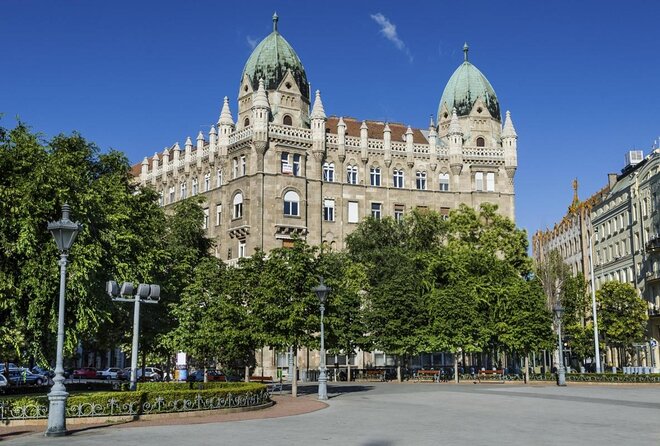
- A basement-style Communist-era display: See household objects, books, photographs, games, and furnishings that explain how families lived behind the Iron Curtain.
- The 1956 Revolution on location: Visit Parliament Square, the October 25 memorial, and Imre Nagy’s statue while your guide explains the protests and Soviet response.
- A useful World War I and World War II introduction: The tour sets Communist rule within the larger story of Hungary’s 20th-century political upheaval.
- A small English-language group: The maximum is 10 people, and some departures have only two or three participants.
- A central downtown finish: The walk ends near Liberty Square, close to public transportation and other major Pest sights.
- Best for adults and older teens: The activity is not recommended for children under 14 and works best for people interested in modern European history.
Why the retro museum makes the Communist era understandable
Political history can feel remote. A speech, a border, or a change of government may be important, but it does not always tell you how people spent Tuesday evening at home.
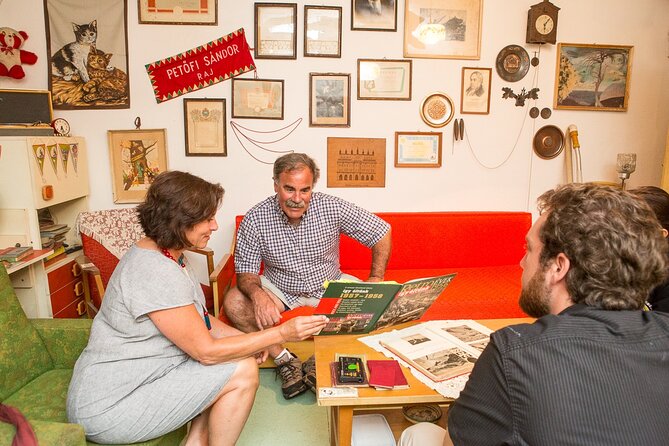
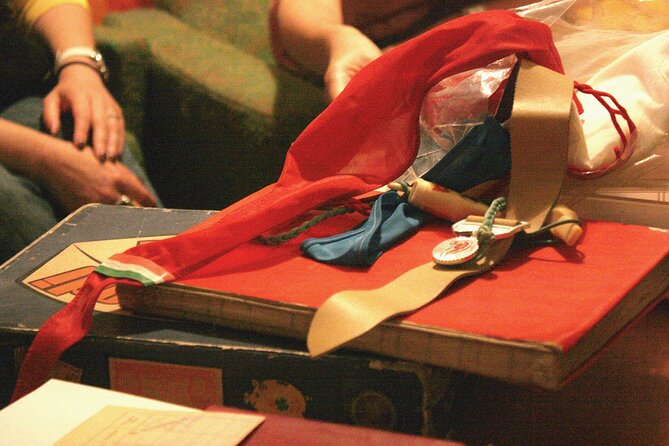
The Budapest Retro Interactive Museum helps bridge that gap. You might see a mock-up of a 1960s or early 1970s living room, along with books, games, photographs, household items, and other pieces of everyday life. Your guide explains what these objects meant and how families used them.
That is the strongest part of the experience for many people because it moves beyond dates and slogans. You learn how children were raised, how families traveled, where they could go, and how difficult it could be to get a passport. Stories about black markets and long lines for bananas show the system through small, memorable details.
The museum also gives you useful questions to carry into the outdoor walk. Why did people put up with shortages? How did the government control movement? Why did a country that had fought for independence accept Soviet influence after World War II? The objects make the later explanations easier to follow.
The indoor section may take place in a basement-style setting, which is part of its appeal but not everyone’s favorite format. One account found the apartment display a little long. If you prefer monuments and open-air sightseeing, you may want a tour that spends more time on the streets.
More communism & memento park tours in Budapest:
- Budapest: Communist History Tour with House of Terror Option
★ 4.8 · 182 reviews - Communism in Hungary with a Historian
★ 5.0 · 70 reviews - Budapest: 3-Hour Walking Tour About Communism (Small Group)
★ 4.7 · 70 reviews
Beginning near Deák Ferenc Square and St. Stephen’s Basilica
The meeting point is at the Lutheran Church on Ferenc Deák Square, at Deák Ferenc tér 4. The start time is 3:00 pm, placing the walk in the afternoon and making it easy to fit around a morning visit to Buda Castle, the Central Market Hall, or another Budapest sight.
The first stop is St. Stephen’s Basilica, where the guide explains how Communist rule affected religious life and the operation of different churches. You are not given an admission ticket to the basilica as part of this stop, so expect an exterior discussion rather than a church visit included in the tour.
This opening also helps show that Communist control was not limited to elections or factories. It reached into worship, public institutions, education, travel, and family life. The stop is brief, about 15 minutes, so it serves as a starting point rather than a full church tour.
I would arrive a little early. Deák Ferenc Square is a central transport hub, and finding the correct church entrance is easier before the group gathers.
Liberty Square and the Soviet memorial
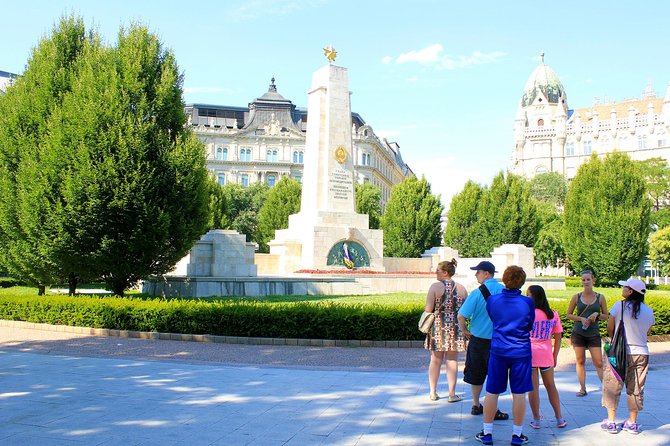
From the starting area, the tour moves toward Szabadság tér, or Liberty Square. This is one of the most useful stops because the square brings together several layers of Hungary’s modern political story.
At the Soviet Memorial, you hear about the end of World War II, the beginning of Soviet occupation, and the way the Communist Party took power. The transition was not simply a clean change from one government to another. Hungary’s wartime experience, defeat, foreign occupation, and internal political pressure all shaped what came next.
The memorial remains a sensitive subject. Your guide can explain why it exists and how it fits into the city’s public memory. The tour also presents Liberty Square as a place where Hungary’s relationship with the Soviet Union is still visible and debated.
This stop is free and lasts about 15 minutes. Because it is outdoors, comfortable shoes and clothing suited to the forecast matter. The tour runs in all weather, and there is no audio headset to help you hear over traffic, aircraft, demonstrations, or other city noise.
Parliament Square and the first days of the 1956 Revolution
The Hungarian Parliament Building is the visual centerpiece of the walking portion. The tour does not include an interior Parliament visit, but the square in front of the building carries major importance in the story of the 1956 Revolution.
Here, your guide explains what led to the uprising, how students and citizens organized protests, and how the Communist leadership reacted. You also hear about speeches, marches, and the first shots fired during the revolution.
The 1956 uprising began as a demand for greater freedom and national independence. It soon became a direct challenge to the Soviet-backed government. Soviet forces eventually invaded, crushing the revolt, but the events remained central to Hungarian identity and are officially remembered each year on October 23.
Allow about 20 minutes at Parliament Square. The explanation is more political than scenic, so this stop rewards careful listening. If you have already visited Parliament on your own, this tour gives you a different reason to return to the area.
A useful detail is the focus on Imre Nagy, the Communist leader who turned against Soviet demands and supported the revolutionary cause. He was later executed for treason. His story shows why the revolution cannot be reduced to a simple contest between Communists and anti-Communists. Political loyalties shifted quickly, and the choices made in those days carried fatal consequences.
Same riverbank, a completely different kind of day:
- Budapest: Unlimited Prosecco, Beer and Aperol Spritz Cruise
★ 4.8 · 25,310 reviews - Budapest: Széchenyi Spa Day Ticket with Optional Upgrades
★ 4.3 · 23,911 reviews - Budapest: Nighttime or Daytime Sightseeing Cruise
★ 4.2 · 21,062 reviews - Budapest: 1-Hour Evening Sightseeing Cruise with Drink
★ 4.5 · 8,330 reviews
The October 25 memorial and the cost of protest
The In Memoriam 1956 October 25 Memorial and Exhibition focuses on one of the most painful moments of the uprising. On October 25, the military authorities and Soviet tanks fired into a gathering crowd.
The exhibition uses archival footage and personal recollections to present the event. That combination gives you both the public record and the human effect. It is a compact stop, scheduled for about 15 minutes, but it may be one of the most emotionally serious parts of the tour.
The memorial is underground, or connected to an underground exhibition space, according to the route used by the guide. Several people found this presentation especially powerful because it provides a physical setting for events that can otherwise seem abstract.
This is not a light sightseeing stop. The guide’s role matters here. Guides including Tomas, Rebecca, and others have been praised for explaining difficult material with care and for answering questions without pushing a political line. Still, the tone is sober, and you should not expect a casual stroll with only a few historical dates.
Imre Nagy, remembrance, and the return of public memory
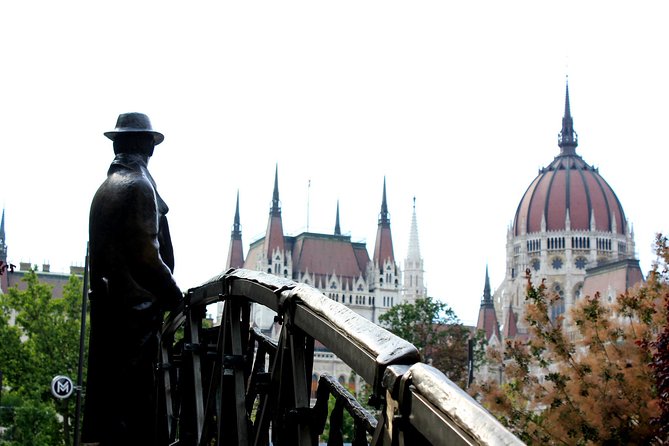
The statue of Imre Nagy gives the tour another chance to explain the revolution’s leadership and its later place in Hungary’s change of government.
Nagy was executed after the uprising, but his reburial became an important moment in the shift away from Communist rule. The tour connects that ceremony with the wider collapse of Soviet control and the fall of the Iron Curtain.
This stop is free and lasts about 15 minutes. It also shows how monuments can change meaning over time. A statue is not only a piece of public art. It can mark an official version of history, a suppressed memory, or a newly accepted national story.
If you are interested in the period after 1956, ask your guide how the events of the revolution were remembered during Communist rule and how that memory changed later. The tour is designed for questions, and small groups make that easier.
What World War I and World War II add to the tour
The experience begins with a 19th-century and World War I overview before moving into World War II and Communist rule. That background is useful because Hungary’s later political choices did not appear from nowhere.
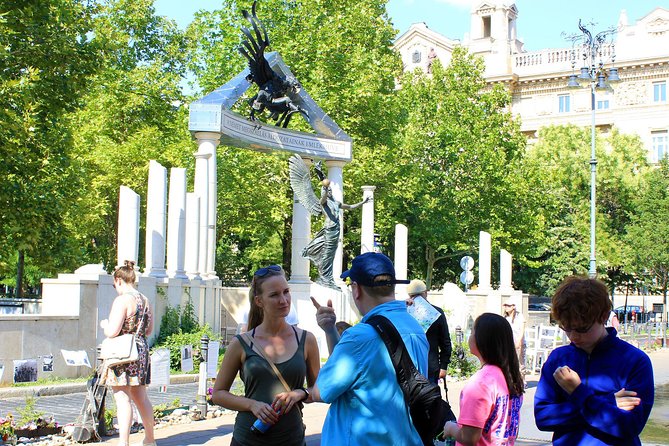
The World War II portion includes the Shoes on the Danube Bank Holocaust memorial. The shoes represent Jewish people who were ordered to remove their footwear before being shot beside the river. The memorial is simple, direct, and difficult to forget.
The stop adds an important warning to the tour’s political story. Hungary’s 20th century was shaped not only by Soviet occupation and Communist repression, but also by fascism, war, persecution, and the Holocaust. A tour that skipped those subjects would give you a distorted picture of the country’s past.
The guides have different personalities and teaching styles. George is described as particularly passionate about Budapest, politics, and the history of the city. Laszlo is noted for clear explanations, while other guides have adjusted the discussion to match the interests of the people in the group. Your experience will depend partly on the individual assigned that day.
A walking tour with real conversation, not a headset
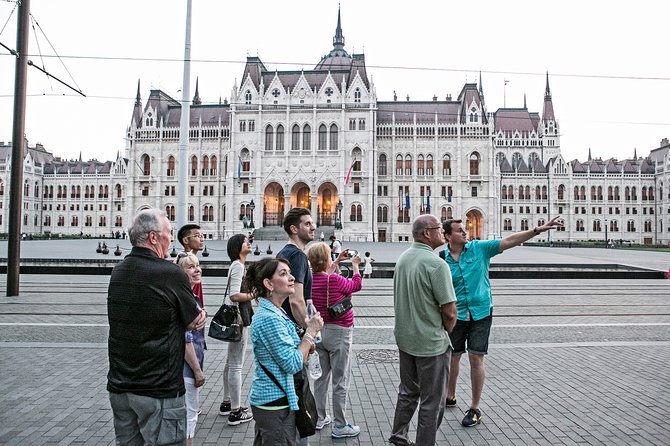
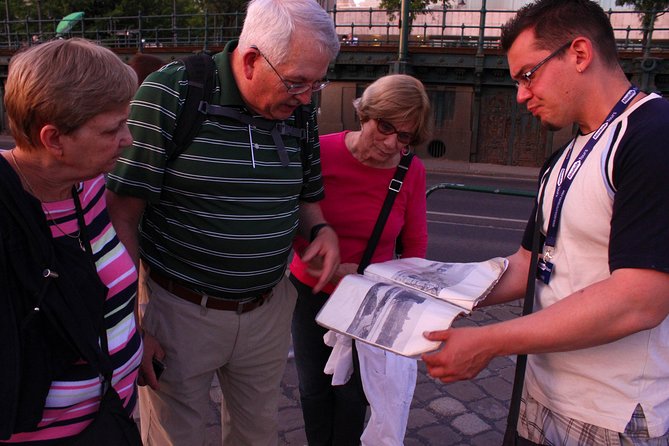
The group limit is 10 people, which is a major practical advantage. Some departures have had only two or three people, and one had just a single participant. In a small group, you can ask about your own interests instead of standing at the back while the guide gives a fixed speech.
The tradeoff is that there are no headphones or audio equipment. You need to stay close to the guide, especially at Parliament, Liberty Square, and busy downtown streets. Aircraft noise caused a hearing problem during one departure, and ordinary city sounds can have the same effect.
The route lasts about two and a half hours, although some tours have run closer to three hours. You should be ready for a fair amount of standing and walking. The tour is near public transportation, and it finishes around Liberty Square in central Pest rather than returning you to the starting point.
There is no hotel pickup or drop-off. Coffee, tea, or a soft drink is included, and some departures have included a snack or a light meal in the indoor portion. Since the formal inclusions specify a drink rather than a full meal, do not book this as a food tour.
Is $79.65 a fair price?
At $79.65 per person, this is not Budapest’s cheapest history walk. You can find free or low-cost Communist-themed walks, and the paid tour may not suit a strict budget.
The value comes from the combination of three elements: an English-speaking guide, entry to the Retro Interactive Museum, and a focused route through places tied to 1956 and the Soviet period. You are paying for interpretation, not just transportation between monuments.
I think the price makes sense if you want a clear introduction to modern Hungarian history early in your stay. The tour gives you context that can improve later visits to Parliament, Liberty Square, the Danube memorials, and museums dealing with the 20th century.
It is less appealing if you only want to see major sights quickly or if you already know Hungary’s Communist period well. The indoor apartment display and long explanations may feel slow if you prefer a brisk photo stop. The strongest value comes when you ask questions and take an active interest in how political change affected ordinary households.
The experience is recommended by 94 percent of customers and has a 4.7 rating from 68 reviews. Those figures suggest a strong record, but they do not remove the two main variables: outdoor noise and the individual guide.
Who should book this Budapest Communist history tour?
I would choose this tour for adults, older teenagers, history fans, and anyone who wants more than postcard views. It is especially useful during your first days in Budapest because it gives you a framework for understanding the city’s monuments and current political memory.
It also suits people who enjoy personal stories. Several guides have lived through the Communist period or the transition away from it, and that first-hand perspective can make shortages, travel limits, school life, and family routines feel more immediate.
I would think twice if you are traveling with children under 14, since the tour is not recommended for that age group. I would also skip it if you dislike serious wartime subjects, long explanations, or walking outdoors in uncertain weather.
Book at least a day ahead if your plans may change. Free cancellation is available until 24 hours before the 3:00 pm start time, but changes or cancellations inside that window are not accepted for a refund. The activity is often booked about 36 days ahead, so reserving early is sensible during busy periods.
Should you book it?
Book it if you want Budapest’s recent past explained at the places where it happened, with a museum section that shows how families actually lived. The small groups, strong guide reports, and mix of political history with household details make this more useful than a basic monument walk.
Skip it if you want an inexpensive, fast tour or a full interior visit to Parliament. For most adults interested in Hungary’s 20th century, I think the museum, the 1956 sites, and the Shoes on the Danube Bank memorial justify the cost, especially near the start of a Budapest visit.
FAQ
How long does the Budapest Hammer & Sickle Communist Times Tour last?
The tour lasts approximately 2 hours and 30 minutes. Some departures have lasted close to three hours.
What time and where does the tour start?
It starts at 3:00 pm at the Lutheran Church of Ferenc Deák Square, Budapest, Deák Ferenc tér 4, 1052 Hungary.
Where does the tour finish?
The tour finishes near Liberty Square at Szabadság tér 1, 1054 Budapest, in the center of downtown.
Is the tour conducted in English?
Yes. An English-speaking guide leads the experience.
Is the Retro Interactive Museum included?
Yes. Entry to the Budapest Retro Interactive Museum is included. The museum presents household objects, photographs, books, games, and other items connected with everyday life behind the Iron Curtain.
Is hotel pickup included?
No. Pickup and drop-off are not included. The tour begins and ends in central Budapest, near public transportation.
Is the tour suitable for children?
The activity is not recommended for children under 14. Most older participants can take part.
What happens if it rains?
The tour operates in all weather conditions, so you should dress appropriately. No audio equipment or headphones are provided, so staying close to the guide is important when outdoor noise is strong.
Just added around Budapest
- From Budapest: Guided Tour of Eger with Wine Tasting★ 4.5 · 6 reviews
- Budapest: Private Walking Tour with a Local Guide★ 3.6 · 6 reviews
- Budapest: Danube River Views Bike Ride★ 4.8 · 23 reviews
- Trash Art Museum: Hungary’s First Scrap Metal Exhibition★ 4.3 · 72 reviews
- Walk to recent and aged spiritual sanctuaries near Budapest★ 5.0 · 5 reviews
- Budapest: 3-Hour Trabant Sightseeing Tour★ 4.7 · 28 reviews
- True Crime Walking Tour in the Buda Castle district★ 5.0 · 26 reviews
- Audio visual multi-sensory chefs journey dinner experience★ 5.0 · 3 reviews
Communism & Memento Park Tours, compared.
Communist History Tour with House of Terror Option
Read our review →
3-Hour Walking Tour About Communism (Small Group)
Read our review →
Lives of Hungarians Under Communist and Capitalist system
Read our review →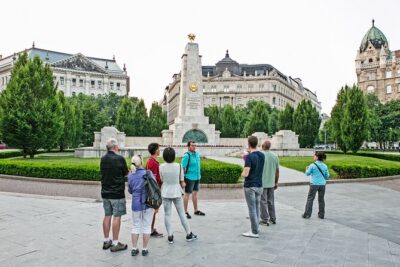
Private Budapest Hammer & Sickle Communist Times Tour
Read our review →
Browse the lists this tour appears in