
Reviewed · COMMUNISM & MEMENTO PARK TOURS
Budapest: 3-Hour Walking Tour About Communism (Small Group)
Budapest’s Communist past is not confined to a museum. It appears in bullet-scarred buildings, monuments, subway stations, and ordinary streets around central Pest. This three-hour walk connects those clues to Hungary’s path from World War II through the 1956 revolution and the fall of the system in 1989.
I like two things especially: the guide’s personal and family stories, and the stop at a retro café that has changed little since it opened in 1961. The small group, limited to 10 people, also gives guides such as Judit, Greg, Virág, Monica, and Zsuzsanna room to answer questions.
The main consideration is that the walk covers a large subject in only three hours. One past participant wanted a more orderly, chronological explanation, so this tour suits you best if you enjoy discussion and connections, not a tightly scripted history lecture.
In This Review
- Key points to know before you book
- Why this Communist history walk feels different
- Starting at Deák tér in central Pest
- From World War II to the 1956 revolution
- Understanding how Communism worked in daily life
- Reading monuments, symbols, and street details
- Riding Budapest’s red M2 subway
- A drink in a café frozen in another era
- How the guides shape the experience
- Is $57 a fair price for three hours?
- Who should take this Budapest Communist tour?
- Practical advice for getting the most from the walk
- Should you book it?
- FAQ
- Where does the tour meet?
- How do I get to the meeting point?
- How long does the tour last?
- What language is the tour in?
- Is the subway ticket included?
- What is included besides the guide and walking tour?
Key points to know before you book
- Personal stories give the Communist era a human scale: Guides share family experiences alongside political history, including daily hardships, comic moments, and life after socialism.
- The route begins at Deák tér: Meet in front of Kempinski Hotel Corvinus, facing the Ferris wheel on Erzsébet Square.
- A ride on the red M2 subway is part of the tour: Your transportation ticket is included, and the subway helps connect the walking sections.
- The café stop is a real period piece: You’ll have a drink in a Budapest bar that has changed very little since 1961.
- The subject reaches beyond 1945: Expect context from World War II, the 1956 revolution, the transition around 1989, and the early 1990s.
- Small groups make conversation possible: The tour is limited to 10 participants and runs in English with a live guide.
Why this Communist history walk feels different
A standard city tour can point out a statue or a damaged wall and move on. This one asks you to consider who put it there, who feared it, who ignored it, and how people feel about it now.
That distinction matters in Budapest. The Communist period was not a single block of time with one simple mood. Hungary experienced Soviet control, political repression, changing degrees of state socialism, the memory of the 1956 uprising, and a gradual move toward the political changes of 1989 and the early 1990s.
Your guide’s job is to make those shifts understandable. The tour aims to explain the ideology itself, how it arrived in Hungary, how it ruled, and what remains after its collapse. You also get the local view, which is often more useful than a list of dates.
Guides have included Judit, Greg, Virág, Dániel, Gábor, Gergely, Monica, and Zsuzsanna. The exact guide can vary, but the strongest feature of the experience is the combination of formal historical explanation and lived family memory.
More communism & memento park tours in Budapest:
- Budapest: Communist History Tour with House of Terror Option
★ 4.8 · 182 reviews - Communism in Hungary with a Historian
★ 5.0 · 70 reviews - Budapest Hammer & Sickle Communist Times Tour
★ 4.5 · 68 reviews
Starting at Deák tér in central Pest
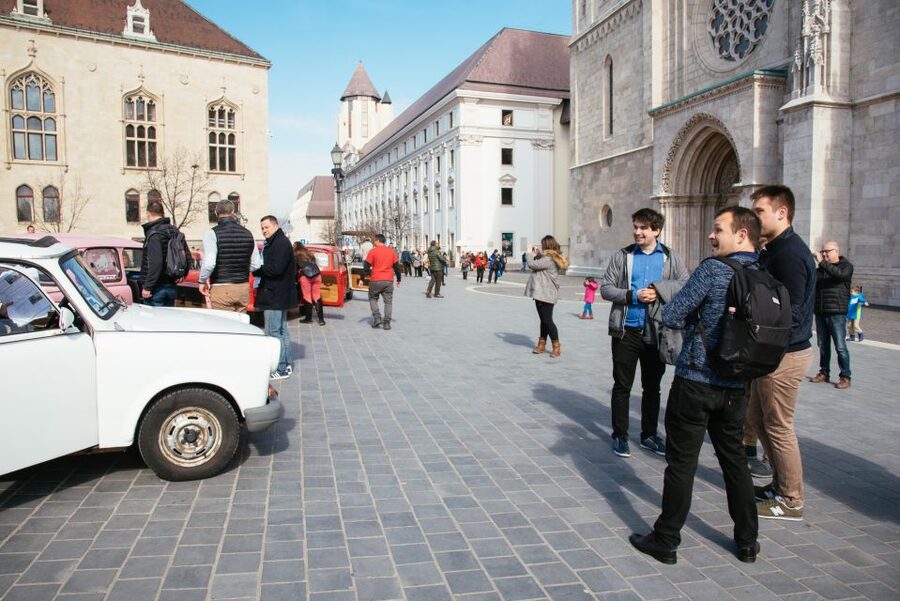
The meeting point is in front of the Kempinski Hotel Corvinus Budapest at Erzsébet tér 7, facing the Ferris wheel. This is one of the easiest places in the city to reach, since Deák Ferenc tér is served by the M1, M2, and M3 subway lines, along with several buses and trams.
That central location is more than a practical choice. Deák tér puts you in the middle of modern Budapest, where polished public spaces sit close to buildings and street details that carry older political stories.
I would arrive a little early. The meeting point is easy to find, but Erzsébet Square can be busy and the hotel has several visible entrances. Have your confirmation ready and look for the guide near the hotel facing the Ferris wheel.
The walk begins through one of Pest’s pleasant central areas. You will not spend the entire three hours inside a formal memorial site. Instead, the guide uses the city itself as the classroom, pointing out remnants of Communism and explaining how earlier events shaped the streets around you.
From World War II to the 1956 revolution
The Communist story in Hungary makes little sense without the events that came before it. The tour therefore reaches back to World War II and the upheavals that changed the country’s political direction.
You can expect discussion of the forces that battered and reshaped Hungary before the Communist system took firm hold. That wider frame is valuable because it shows why postwar politics did not develop in isolation.
The walk also focuses on the 1956 revolution. This was a crucial turning point in Hungarian memory, and the guide uses central Budapest to explain its meaning and aftermath.
Look closely at the buildings as you go. Bullet holes and other traces are part of the city’s physical record. They can be easy to miss when you are focused on cafés, shops, and the next sightseeing stop, but a guide helps turn those small details into evidence.
This is one of the tour’s best habits: it teaches you to read Budapest instead of simply photographing it. You may see the same square differently after hearing what happened there and how the city remembers it.
Understanding how Communism worked in daily life
The tour is not only about leaders, parties, and state policy. It also addresses what the system felt like for ordinary Hungarian families.
Family stories help explain shortages, pressure, compromise, and the small ways people found humor in an official system. The personal material is especially useful if you know little about life behind the Iron Curtain, since political terms can otherwise remain abstract.
Several guides have drawn on their own childhood memories or stories passed through relatives and friends. Dániel’s family anecdotes, for example, were praised for showing what Communist life felt like rather than merely describing its theory. Greg’s background growing up in Budapest also allowed the discussion to move into everyday life, religion, media, politics, and the period after socialism.
You should not expect every story to be the same, since the guide changes. But the format clearly leaves space for these personal accounts, and that is a major reason to choose this walk over a purely academic lecture.
There is also room for questions. Participants have asked about post-1956 Communism, the move toward softer socialism, the opening of the Hungary-Austria border, and the political changes that followed. If you have a particular interest, raise it early so the guide can shape the discussion around it.
A few more Budapest trips to weigh up
- Budapest: Buda Castle Walk with Saint Stephen’s Hall
★ 4.5 · 3,012 reviews - Big Bus Budapest Hop-On Hop-Off Bus and Walking Tour
★ 3.5 · 2,206 reviews - Budapest: Buda Castle District Walking Tour
★ 4.6 · 2,108 reviews - Budapest City Landmarks Walking Tour in 2 Hours
★ 5.0 · 2,048 reviews
Reading monuments, symbols, and street details
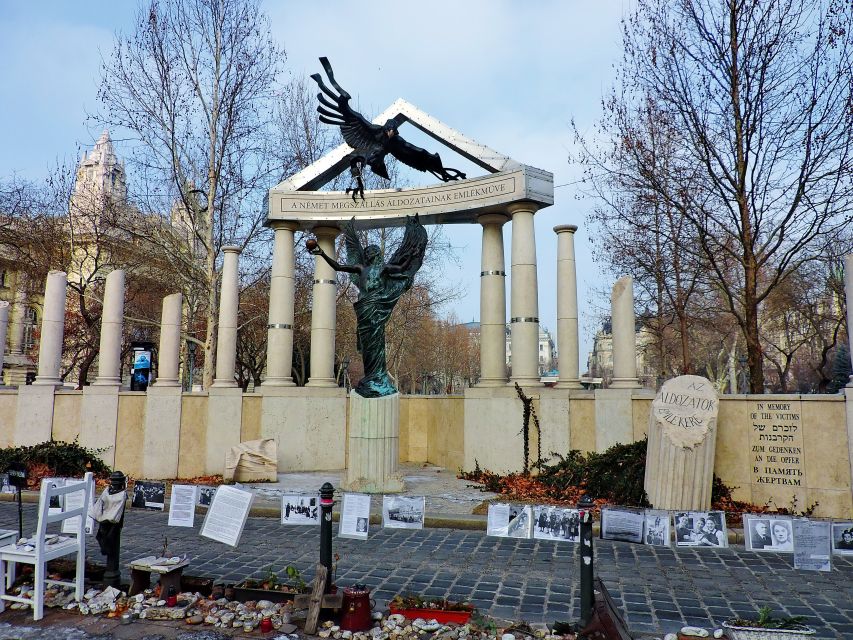
Central Budapest contains more political clues than first-time visitors may realize. Monuments and statues can look like background scenery until someone explains the argument behind them.
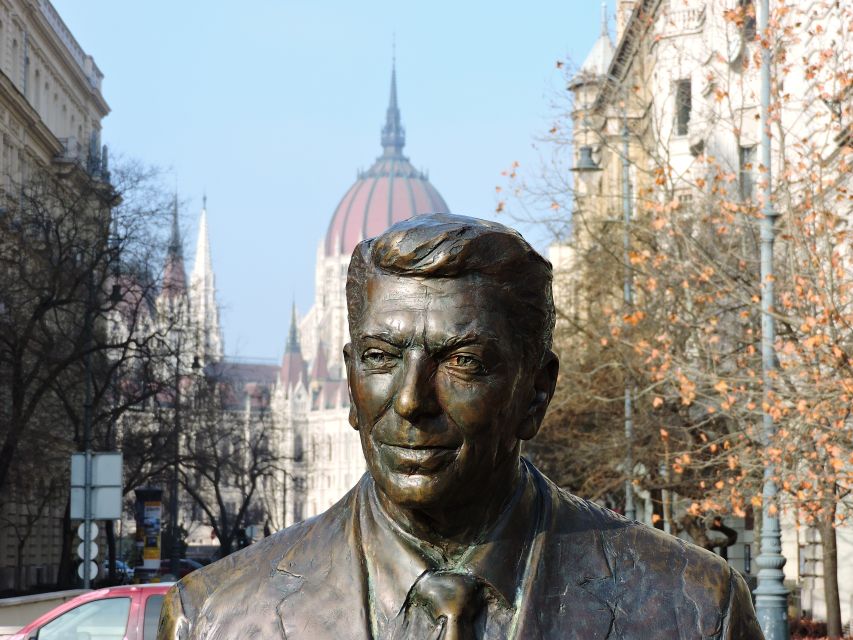
A useful example is the former Soviet monument and the continued presence of a statue connected with Ronald Reagan. The point is not simply to identify each object. The guide explains why Hungarians may view these symbols in ways that differ from a visitor’s first impression.
The walk also brings in street art, pop culture references, and small details of daily life. Zsuzsanna was especially praised for connecting monuments and important buildings with these less obvious signs of how history remains part of modern Budapest.
This gives the tour a broader cultural reach. You are not only learning what happened during Communism. You are also considering how memory, national identity, and politics show up in public space today.
The drawback is that this style can feel less tidy than a chronological museum display. You may move between a physical site, a personal story, and a political explanation. If you need a strict timeline, take a few notes or ask the guide to place an event clearly in sequence.
Riding Budapest’s red M2 subway
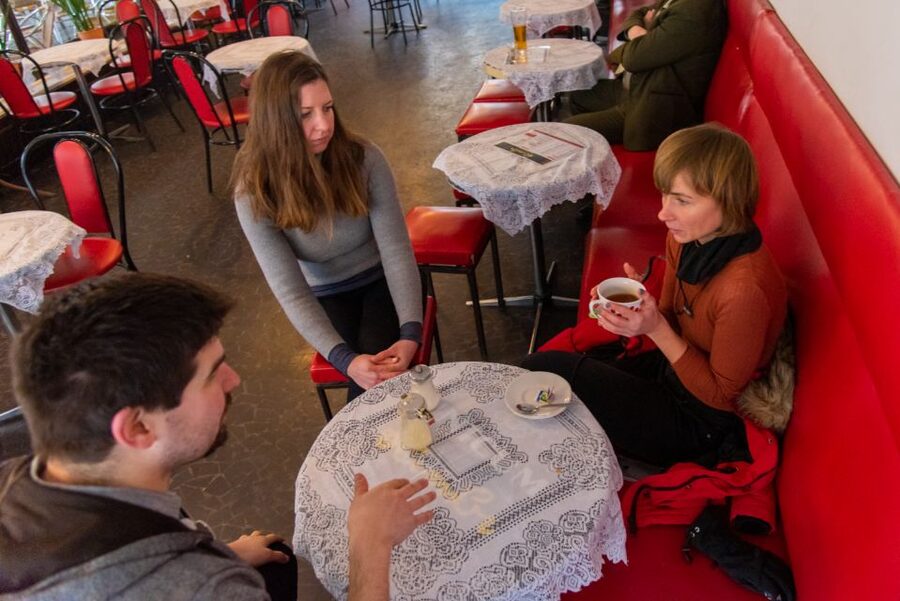
A subway ride is included, with the ticket provided as part of the tour. The route uses the red M2 line, adding a normal piece of Budapest life to an experience about the past.
That is a smart touch. Public transportation makes the tour feel less like a procession from attraction to attraction. It also shows how a city’s Communist-era infrastructure remains part of ordinary routines.
The subway section breaks up the walking and gives the group a change of pace. At the same time, you should be prepared for a tour that involves both walking and standing. The supplied details do not specify a total distance or the exact number of stops, so wear comfortable shoes and allow yourself enough energy for three active hours.
The M2 ride is not presented as a separate sightseeing attraction. Its value is in the connection between places and in seeing how older systems continue to function within today’s Budapest.
A drink in a café frozen in another era
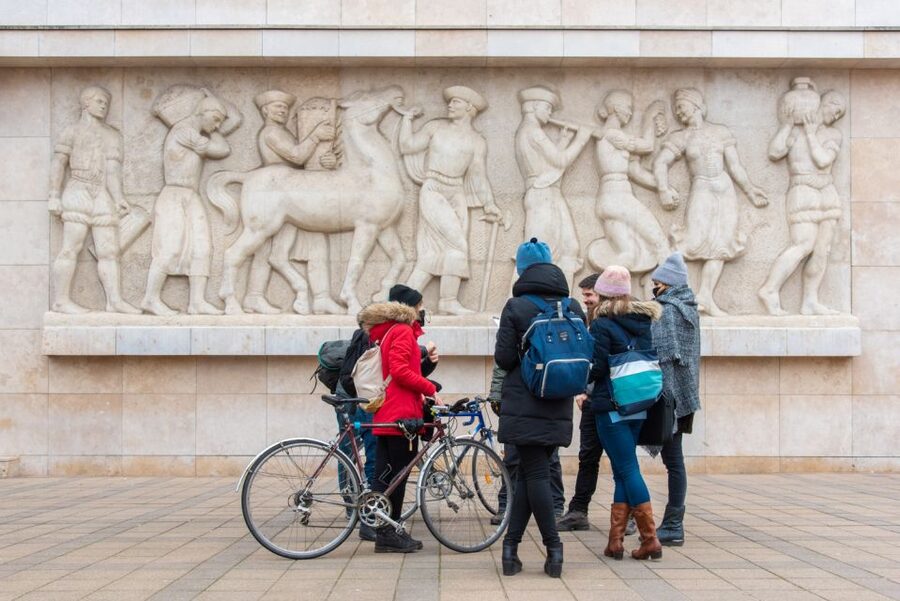
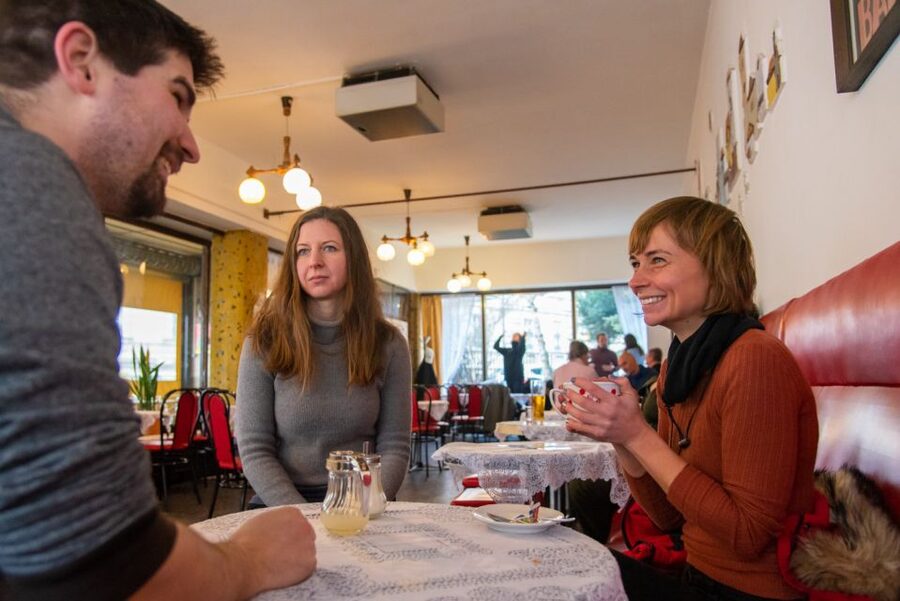
The tour includes a drink in a cult retro café that has changed very little since opening in 1961. This is not just a scheduled refreshment stop.
The café gives you a setting for conversation and a physical sense of the period. After hearing about ideology, repression, family life, and political change, sitting in a place that retains its old character can make the subject feel less distant.
The stop also changes the rhythm of the tour. Instead of listening while walking, you can sit and ask questions. Several guides have used the break for an informal discussion, and the relaxed setting seems to be one of the most appreciated parts of the experience.
Your included drink is a modest benefit, but the real value is the chance to talk with the guide. Ask about the parts of Hungarian history that interest you most, including daily life, religion, media, politics, the 1956 revolution, or the transition after 1989.
The café is also a useful reminder that a city’s history survives in ordinary interiors, not only in grand memorials. You do not need a major monument to understand a past era. Sometimes a familiar table, old-fashioned room, or long-running neighborhood bar says quite a bit.
How the guides shape the experience
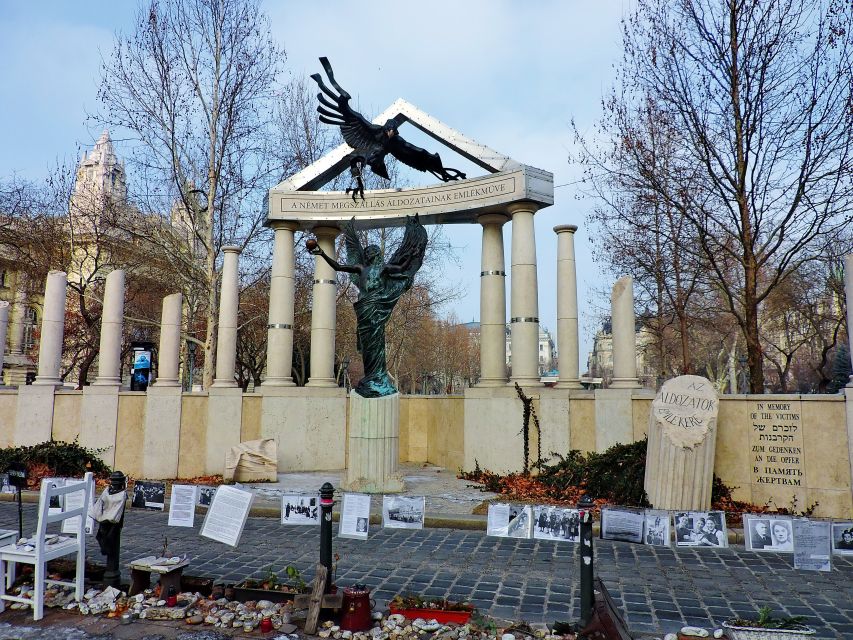
The guide matters greatly on a discussion-based history tour. The recorded guide roster includes several people, and individual styles will naturally differ.
Judit has been praised for her clear historical background, warm manner, and willingness to answer questions. She has also led related walks in Pest, giving some visitors a useful connection between the Communist theme and the wider city.
Virág has been described as animated and well informed, keeping participants involved while moving through Budapest. Monica brought strong passion to the subject, with an approach that helped make the period feel tangible rather than remote.
Greg’s strength is personal insight and extended conversation. One particularly useful feature of his style is the ability to tailor the discussion when a participant has a strong interest in post-1956 Hungary or the border opening with Austria.
Zsuzsanna’s approach links national history with street art, pop culture, and everyday details. Dániel has used family stories to explain both the theory of Communism and what it was like to live under it.
You cannot select a particular guide from the information provided, so book this experience for the format rather than for one named person. The common thread is an English-speaking historian guide who welcomes questions and aims to connect political history with personal experience.
Is $57 a fair price for three hours?
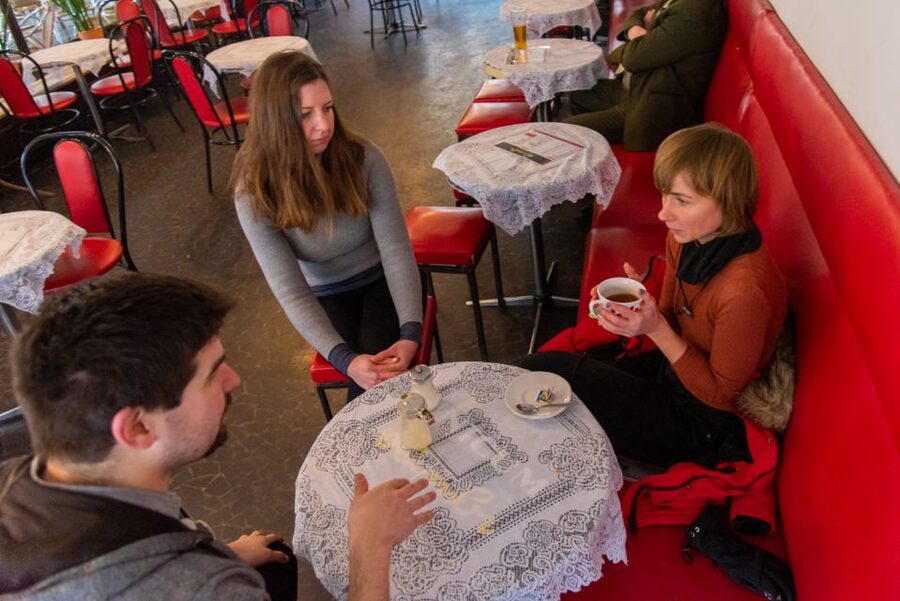
At $57 per person, this is not the cheapest way to see central Budapest. You are paying more than the cost of wandering through the same streets with a guidebook, and the subway ticket and drink alone do not account for the full price.
The value comes from interpretation. You receive three hours with a specialist guide, a small group capped at 10 people, a subway ticket, and a drink at the retro café. More important, the guide helps you understand details you would probably walk past.
I consider the price fair if you are genuinely interested in Hungarian history, politics, or modern culture. It is also good value for a first or second day in Budapest, when context can improve the rest of your sightseeing.
The calculation is less favorable if you want a broad list of major attractions, a panoramic city walk, or a short introduction to Budapest’s architecture. This is a focused history tour, and much of its value depends on your willingness to listen, ask questions, and think about difficult subjects.
Free cancellation up to 24 hours before the start gives you some flexibility, and you can reserve now and pay later. Starting times vary, so check availability for your chosen date.
Who should take this Budapest Communist tour?
I would recommend it to you if you enjoy history that connects politics to ordinary life. It is particularly useful if you have visited a Communist-era museum but still feel that you understand the events only in broad outline.
The tour also suits anyone curious about how Hungarians view monuments, Soviet influence, the 1956 revolution, and the transition to democracy. The local family stories add something you cannot get from a museum label.
It is a good choice for solo visitors and couples who prefer conversation over a large group. With no more than 10 participants, the guide can respond to questions and, when the group is smaller, may make the discussion more personal.
I would choose another tour if you want a strictly chronological lecture or if your main goal is famous sights. The walk uses central Pest, but the focus is historical interpretation rather than ticking off every major Budapest attraction.
Practical advice for getting the most from the walk
Wear comfortable shoes. The experience lasts three hours and combines city walking with a subway ride, so you will want to stay comfortable rather than dress only for photographs.
Bring questions. The guides welcome them, and the strongest discussions have covered subjects ranging from post-1956 politics to church, media, border changes, and daily life.
Do not judge the route only by the number of monuments. The value is often in the explanation of a bullet hole, statue, building, or public square that would otherwise seem ordinary.
If you have already visited the House of Terror Museum, this tour can work as a useful companion. One guide was specifically praised for extending the story beyond the museum’s strongest period, placing postwar events within a longer account that reached into the early 2000s.
Plan the rest of your day with some flexibility. The tour ends after a café conversation, but the exact finishing point is not provided. If you have a fixed lunch reservation or timed attraction, leave a buffer.
Should you book it?
Book this tour if you want to understand why Budapest looks and feels the way it does, especially through the eyes of people who lived through the Communist period. The personal stories, public symbols, and retro café stop give the subject a human scale.
Skip it if you want a fast sightseeing circuit or a purely visual tour. For $57, the payoff comes from the guide’s explanations and your own questions, not from a long list of included attractions.
For most history-minded visitors, I would put it near the start of a Budapest stay. Three hours is enough to give you a useful framework, and the rest of the city will make more sense afterward.
FAQ
Where does the tour meet?
The meeting point is in front of Kempinski Hotel Corvinus Budapest at Erzsébet tér 7, 1051 Budapest, facing the Ferris wheel on Erzsébet Square.
How do I get to the meeting point?
You can reach Deák Ferenc tér by the M1, M2, or M3 subway lines, as well as several buses and trams.
How long does the tour last?
The walking tour lasts three hours. Starting times vary, so you need to check availability for your chosen date.
What language is the tour in?
The tour is conducted in English with a live guide.
Is the subway ticket included?
Yes. The tour includes a transportation ticket for the ride on Budapest’s red M2 subway line.
What is included besides the guide and walking tour?
The price includes an expert guide, a drink in the retro café, and the subway transportation ticket.
More 3-Hour Experiences in Budapest
- 3-Hour Orientation Walking Tour of Buda and Pest
★ 4.8 · 1,834 reviews - Budapest: 3-Hour Grand City Tour and Castle Walk
★ 4.3 · 1,437 reviews - Budapest: 3-Hour Live Guided Sightseeing Tour
★ 4.4 · 1,041 reviews - 3 Hours Budapest Segway Grand City Tour Buda, Margaret and Pest
★ 5.0 · 255 reviews
Just added around Budapest
- From Budapest: Guided Tour of Eger with Wine Tasting★ 4.5 · 6 reviews
- Budapest: Private Walking Tour with a Local Guide★ 3.6 · 6 reviews
- Budapest: Danube River Views Bike Ride★ 4.8 · 23 reviews
- Trash Art Museum: Hungary’s First Scrap Metal Exhibition★ 4.3 · 72 reviews
- Walk to recent and aged spiritual sanctuaries near Budapest★ 5.0 · 5 reviews
- Budapest: 3-Hour Trabant Sightseeing Tour★ 4.7 · 28 reviews
- True Crime Walking Tour in the Buda Castle district★ 5.0 · 26 reviews
- Audio visual multi-sensory chefs journey dinner experience★ 5.0 · 3 reviews
Communism & Memento Park Tours, compared.
Communist History Tour with House of Terror Option
Read our review →
Lives of Hungarians Under Communist and Capitalist system
Read our review →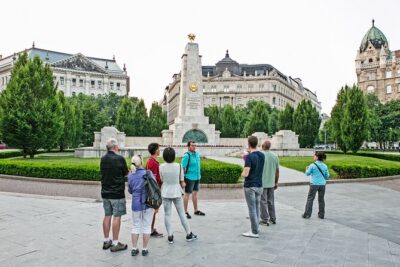
Private Budapest Hammer & Sickle Communist Times Tour
Read our review →
Browse the lists this tour appears in