
Reviewed · COMMUNISM & MEMENTO PARK TOURS
Communism in Hungary with a Historian
Budapest’s communist past comes alive here through ordinary places: a church watched by the state, a square marked by protest and repression, a former bunker, and a café that has changed little since 1961. The guides, including Gábor, Greg, András, Virág, Raymond, and Judit, explain how political control reached into work, housing, religion, and family life.
I like the small group of no more than 10, which gives you room to ask questions rather than follow a flag through the city. I also like that the tour crosses Buda and Pest by public transport, with metro tickets included, then ends over coffee at Bambi Café. The main consideration is that much of the experience happens outdoors, and the church and Parliament are discussed from outside rather than visited inside.
In This Review
- Key points to know before booking
- Why this Budapest history walk feels different
- Starting at Elizabeth Square, once Stalin Square
- St. Stephen’s Basilica and the pressure on religion
- Szabadság tér, monuments, embassies, and a bunker
- Parliament and the story of Bloody Thursday
- Crossing the city by metro
- Bambi Café and the taste of everyday communism
- The guides and the importance of personal stories
- Who will get the most from this tour
- Is $59.13 a fair price?
- Should you book Communism in Hungary with a Historian?
- FAQ
- How long is Communism in Hungary with a Historian?
- What time does the tour start?
- Where does the tour begin?
- Where does the tour usually finish?
- Can the ending point change?
- How large is the group?
- Is transportation included?
- Is coffee included?
- Can I cancel for a full refund?
Key points to know before booking
- Personal stories make the politics human: Guides explain national events through family experiences of factory nationalization, forced housing changes, religion, work, and fear of informing.
- The route covers both sides of the Danube: You begin at Elizabeth Square on the Pest side and usually finish at Bambi Café in Buda.
- The 1956 revolution gets proper attention: At Parliament, you learn about Bloody Thursday on Kossuth Square.
- A communist-era café is part of the experience: Coffee is included at Bambi Café, which opened in 1961 and retains much of its old character.
- Metro tickets are included: This saves a little money and keeps the three-hour route moving.
- It is history rather than landmark collecting: Expect explanations of daily life, state control, churches, political fear, and the Cold War, not a parade of grand interiors.
Why this Budapest history walk feels different
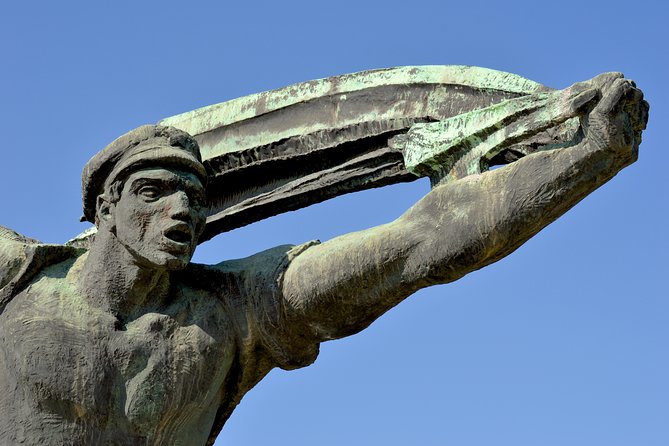
Many city tours use Budapest’s grand buildings as a backdrop for royal or architectural stories. This one asks what happened to the people living and working among those buildings after the Second World War, when Hungary came under communist rule.
That change in focus is the tour’s main strength. You hear about the nationalization of private businesses, the reshaping of housing, the pressure placed on churches, and the fear that a neighbor or colleague might report you to the party. One especially striking family story describes a factory owner whose business was taken by the state, then forced to work there as poorly paid help under a party loyalist with little practical experience.
These details help you understand communism as a system that affected breakfast tables, apartments, jobs, schools, faith, and friendships. The guides also place the communist period beside Hungary’s interwar years, the Second World War, and the country’s return to freedom. That wider frame matters because the period did not begin in a vacuum.
The tone is generally balanced. Gábor, Greg, András, Virág, Raymond, Judit, and the other guides are praised for making room for questions and for explaining more than one side of the political story. The strongest guides do not reduce the period to slogans. They show why some people adapted, why others resisted, and why memories of the era can still be complicated.
The tour has a 4.9 out of 5 rating from 70 ratings, with 99 percent recommending it. Those figures cannot tell you exactly which guide you will receive, but they do point to a consistently strong experience across a team of historians and history students.
More communism & memento park tours in Budapest:
- Budapest: Communist History Tour with House of Terror Option
★ 4.8 · 182 reviews - Budapest: 3-Hour Walking Tour About Communism (Small Group)
★ 4.7 · 70 reviews - Budapest Hammer & Sickle Communist Times Tour
★ 4.5 · 68 reviews
Starting at Elizabeth Square, once Stalin Square
Meet at 2 p.m. outside the Kempinski Hotel Corvinus Budapest at Elizabeth Square, known in Hungarian as Erzsébet tér. This central Pest location is easy to reach and gives the tour a useful starting point: the square itself carries traces of Budapest’s political changes.
The guide explains why it was once associated with Stalin and points out monuments and stories connected to the communist period. You spend about 15 minutes here. It is a short opening stop, but it sets the pattern for the afternoon: familiar public spaces become evidence of how governments use statues, names, ceremonies, and architecture to shape public memory.
This part is not about entering a major attraction. Admission is free, and the value comes from the explanation. If you have already walked through Elizabeth Square without knowing its political past, the introduction can change how you read the center of Budapest.
St. Stephen’s Basilica and the pressure on religion
The group then walks by St. Stephen’s Basilica, or Szent István Bazilika. You see the exterior and spend roughly 15 minutes discussing churches and religious life under communism.
This is an important addition because a tour focused only on statues and government buildings can make the era seem like a story about party offices and revolutions. Religion shows another side of state control. The guide explains how churches survived and uses family stories to show the gap between official policy and private belief.
One account describes a church making financial concessions to the party in order to continue operating. That kind of detail gives you a better sense of the compromises institutions faced. It also helps explain why religious life could continue, but not always freely.
There is no interior visit listed here, and admission is not included. You should think of the basilica as a discussion stop, not a basilica tour. If you want to see the church inside, plan separate time for that.
Szabadság tér, monuments, embassies, and a bunker
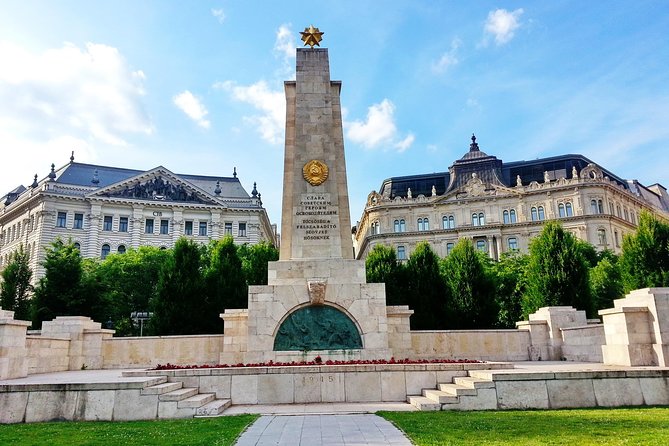
Szabadság tér is the longest formal stop, at about 45 minutes, and it is likely to be the heart of the walking portion. The square contains memorials, statues, embassies, and visible traces of the political conflicts that shaped modern Hungary.
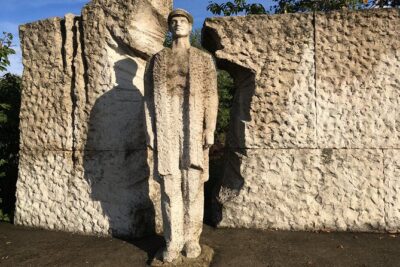
The guide uses these objects to explain the communist period rather than simply naming them. You may see part of a bunker from the outside, and the route has also included sites such as an old terminal or train station. The precise path can vary, but the point remains the same: the city’s streets preserve clues that are easy to miss without context.
The embassies add another layer. They remind you that Hungary’s communist experience was tied to larger Cold War power struggles, not only domestic politics. The monuments, meanwhile, show how competing versions of the past can occupy the same few blocks.
Allow yourself to listen carefully here. Forty-five minutes is long enough for a proper explanation, but you will be standing outdoors while the guide talks. On a rainy or cold day, warm clothing and sturdy shoes will make a real difference. One small group completed the tour in rain and cold, helped by a guide who kept the pace and energy up, but fair weather will make the experience more comfortable.
Same riverbank, a completely different kind of day:
- Budapest: Unlimited Prosecco, Beer and Aperol Spritz Cruise
★ 4.8 · 25,310 reviews - Budapest: Széchenyi Spa Day Ticket with Optional Upgrades
★ 4.3 · 23,911 reviews - Budapest: Nighttime or Daytime Sightseeing Cruise
★ 4.2 · 21,062 reviews - Budapest: 1-Hour Evening Sightseeing Cruise with Drink
★ 4.5 · 8,330 reviews
Parliament and the story of Bloody Thursday
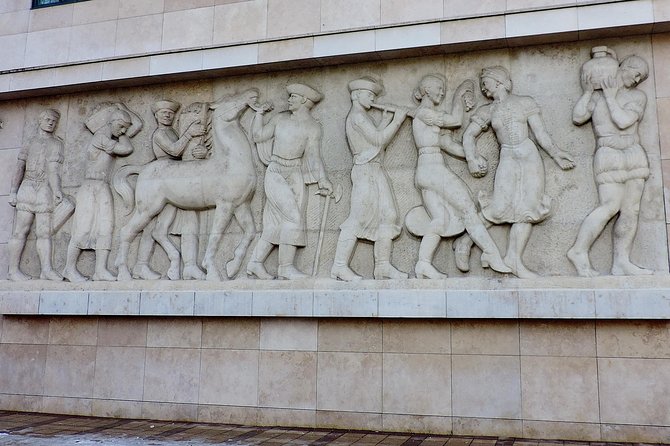
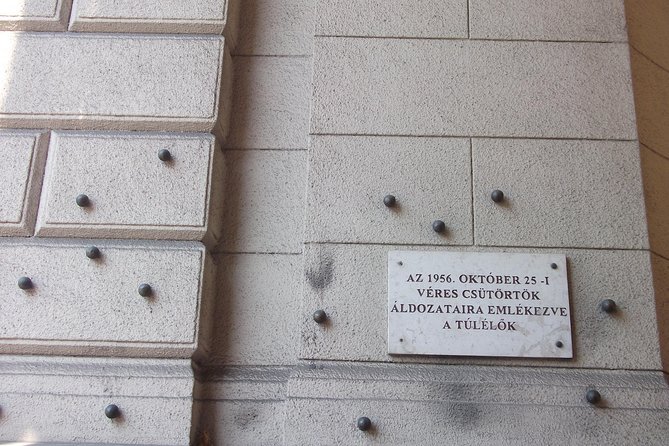
At the Hungarian Parliament Building, the guide covers one of the most important episodes of the 1956 revolution: Bloody Thursday on Kossuth Square.
You do not enter Parliament as part of this experience. Instead, you stand outside and learn how the square became the setting for a deadly confrontation during the uprising. The building gives the story scale, but the guide’s explanation supplies the human meaning.
This is where the tour connects the physical city to the political story most clearly. Parliament is one of Budapest’s most familiar sights, yet its role in 1956 is easy to miss if you only admire the façade. The discussion helps you understand why the revolution mattered, how Hungarians challenged Soviet-backed rule, and why the memory of that day remains so powerful.
The stop lasts about 15 minutes. That is enough for a focused account, though not enough for a full study of the revolution. If 1956 is your main interest, treat this tour as an introduction and consider visiting a museum or memorial on your own.
Crossing the city by metro
Public transport is part of the design, not an afterthought. Metro tickets are included, and the route moves between Budapest’s Pest and Buda sides. That saves you the hassle of buying a ticket during the tour and lets the guide use the city itself as part of the lesson.
The metro ride also gives you a short break from walking. You are not spending three straight hours on pavement, though you should still expect a substantial amount of walking between stops. The meeting point is central, and the usual end point near Margaret Bridge makes it easy to continue exploring afterward.
Because the tour starts on the Pest side and usually finishes in Buda, pay attention to the end point before making evening plans. The guide may end at Bambi Café on Frankel Leó út, close to central Buda and Margaret Bridge. In colder or wet weather, the group often finishes back on the Pest side near the starting area instead.
That weather adjustment is practical. It also means you should not assume the final location will always be identical. Ask your guide for the exact ending point if you have a dinner reservation or another appointment.
Bambi Café and the taste of everyday communism
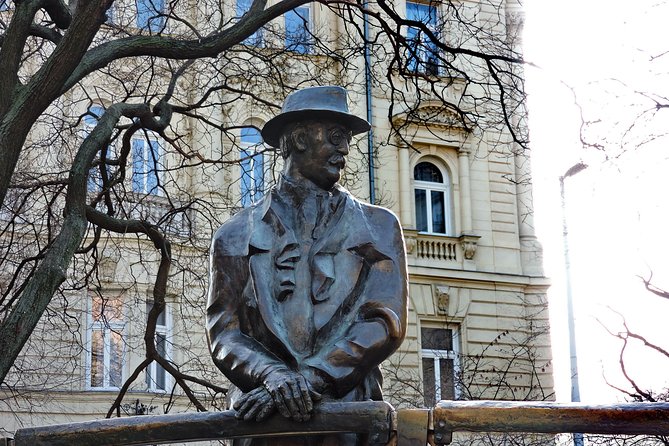
The final stop is Bambi Café, a coffeehouse opened in 1961. Coffee is included, and the café has kept much of its old character.
This ending works because it brings the subject down to street level. After talking about state power, revolution, churches, and political monuments, you sit in a place connected to everyday life during the communist period. It is not presented as a polished museum display. Its appeal comes from its continued use and its links to ordinary Budapest.
You can use this time to ask follow-up questions. Guides have connected the café conversation to current politics and to the experience of living under the old system. The discussion may be especially useful if you want to compare official ideology with the practical routines of work, shopping, education, and family life.
Coffee is included, but the café stop is more than a refreshment break. It gives the tour a natural ending and leaves you with a place you can revisit independently. If you prefer a tour that ends at a major monument, this may feel modest. If you value small, authentic details, it is one of the better choices on the route.
The guides and the importance of personal stories
The guide can vary, so your experience will depend partly on who leads the group. The team includes people such as Gábor, Greg, András, Virág, Raymond, Judit, Gabriel, Peter, and Daniel. Several guides have academic or personal ties to the subject, and Virág has written a thesis on the communist era.
Personal stories are used often. One guide explains how his family lost its factory and housing after nationalization. Other guides speak about church compromises, working conditions, political loyalty, and the fear of being reported. These accounts give you something a list of dates cannot provide.
The best part is the chance to ask questions. The group limit of 10 makes that realistic. You are not likely to receive a private tour, but you should have far more access to the guide than on a large city walk.
Language matters here because the subject can be complex. The tour is offered in English, and one guide was praised for speaking slowly and clearly for a participant who found English difficult. If English is not your first language, the small group and question-friendly format should help, though the material still includes political terms and historical detail.
Who will get the most from this tour
I would recommend this experience to you if you enjoy modern European history, the Cold War, the 1956 revolution, or the way politics affects daily life. It also suits anyone who has already seen Budapest’s main sights and wants a different way to understand the city.
The tour is especially useful early in your stay. A guide can give you historical context that changes how you see later visits to Parliament, public squares, churches, and neighborhoods. You do not need prior study, but a basic interest in twentieth-century Europe will help you appreciate the connections.
It is less suitable if you want palace interiors, long museum visits, or a tour built around architecture. The basilica and Parliament are viewed from outside, and much of the material is delivered while standing in public spaces.
Most people can participate, and service animals are allowed. The route is near public transportation. Still, expect outdoor walking and some time on your feet, so consider the weather before booking.
Is $59.13 a fair price?
At $59.13 per person, this is not the cheapest way to spend an afternoon in Budapest. You can walk through the same central streets for free. What you are paying for is interpretation, a small group, included metro tickets, a historian-led discussion, and coffee at Bambi Café.
That makes the value strongest if you want context rather than transportation or admission tickets. The tour lasts about three hours, so the cost works out to roughly $20 per hour before considering the included coffee and metro fare. For a group capped at 10, that is reasonable for a specialized history walk.
The price is harder to justify if you are mainly interested in seeing interiors or collecting famous sights. There are no included entries to St. Stephen’s Basilica or Parliament, and the tour does not replace a museum visit.
The booking pattern suggests this experience is often reserved about 23 days ahead. If your dates are fixed, booking early is sensible, especially if you want a particular afternoon. Free cancellation is available up to 24 hours before the 2 p.m. start time. Changes or cancellations inside that window are not accepted for a refund.
Should you book Communism in Hungary with a Historian?
Book it if you want Budapest explained through people and politics, not just monuments. The mix of public squares, 1956 history, church life, transport, family memories, and Bambi Café gives you a useful picture of how communism shaped daily life in Hungary.
I would be most inclined to book this early in a Budapest visit, when the stories can add meaning to the rest of your sightseeing. Choose a different tour if you need indoor attractions, a guaranteed visit inside Parliament or the basilica, or a route with little walking.
For history-minded visitors, the small group and several strong guides make the $59.13 cost fair. Bring comfortable shoes, dress for the weather, and leave time after the tour to continue the conversation over a drink or meal near Buda’s Margaret Bridge.
FAQ
How long is Communism in Hungary with a Historian?
The tour lasts approximately three hours.
What time does the tour start?
The scheduled start time is 2 p.m.
Where does the tour begin?
It begins at the Kempinski Hotel Corvinus Budapest, at Budapest, Erzsébet tér 7-8, 1051 Hungary.
Where does the tour usually finish?
It usually ends at Bambi Café on the Buda side, at Budapest, Frankel Leó út 2-4, 1027 Hungary, near central Buda and Margaret Bridge.
Can the ending point change?
Yes. On colder or wet days, the tour often ends on the Pest side in the center, close to the starting point.
How large is the group?
The group has a maximum of 10 participants.
Is transportation included?
Metro tickets are included. The tour travels between parts of Buda and Pest using public transportation.
Is coffee included?
Yes. The tour usually concludes at Bambi Café, where coffee is included.
Can I cancel for a full refund?
You can cancel at least 24 hours before the local start time for a full refund. Cancellations or changes made less than 24 hours before the start are not accepted for a refund.
Just added around Budapest
- From Budapest: Guided Tour of Eger with Wine Tasting★ 4.5 · 6 reviews
- Budapest: Danube River Views Bike Ride★ 4.8 · 23 reviews
- Budapest: Private Walking Tour with a Local Guide★ 3.6 · 6 reviews
- Trash Art Museum: Hungary’s First Scrap Metal Exhibition★ 4.3 · 72 reviews
- Walk to recent and aged spiritual sanctuaries near Budapest★ 5.0 · 5 reviews
- Budapest: 3-Hour Trabant Sightseeing Tour★ 4.7 · 28 reviews
- True Crime Walking Tour in the Buda Castle district★ 5.0 · 26 reviews
- Audio visual multi-sensory chefs journey dinner experience★ 5.0 · 3 reviews
Communism & Memento Park Tours, compared.
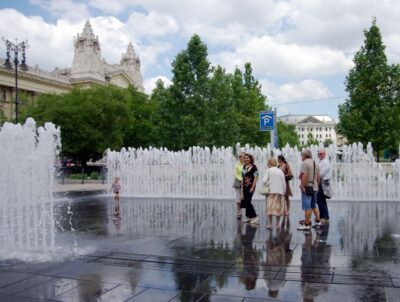
Communist History Tour with House of Terror Option
Read our review →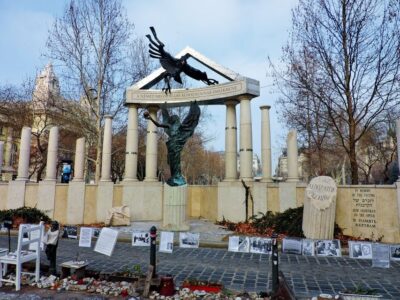
3-Hour Walking Tour About Communism (Small Group)
Read our review →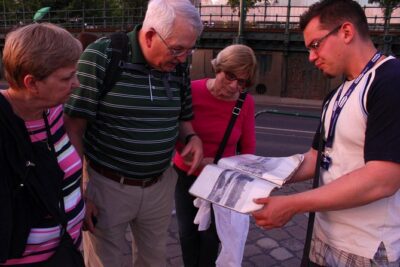
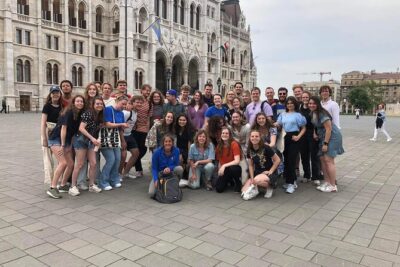
Lives of Hungarians Under Communist and Capitalist system
Read our review →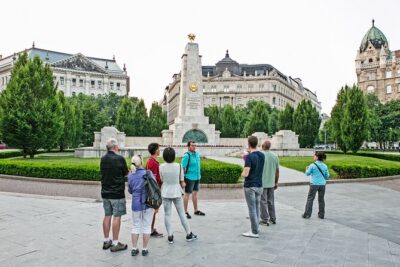
Private Budapest Hammer & Sickle Communist Times Tour
Read our review →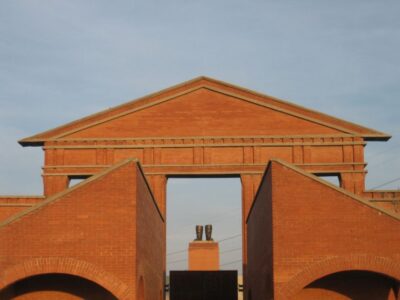
Browse the lists this tour appears in