
Reviewed · COMMUNISM & MEMENTO PARK TOURS
Budapest: Communist History Tour with House of Terror Option
Budapest’s Communist past is not locked in a textbook. It is written into Parliament Square, Liberty Square, church windows, memorials, and the surviving Soviet monument. This tour connects those places to the 45 years Hungary spent under Soviet military occupation, then lets you choose between the playful Budapest Retro Center and the grim House of Terror Museum.
I like the small groups, capped at 10, and the chance to learn from a Hungarian guide who can explain what life felt like beyond dates and political slogans. I also like the choice of mood: the Retro Center shows daily life through homes, cars, television, and space travel, while House of Terror confronts imprisonment, torture, deportation, and political trials.
The main consideration is that the experience covers heavy material at a brisk pace, and the walking portion may be tiring if you are unwell or use a walking aid. The House of Terror option can also feel emotionally intense, so choose it for serious historical study, not a light museum visit.
In This Review
- Key points to know before you book
- Parliament Square, where the story begins
- Liberty Square and the last Soviet monument
- Cardinal Mindszenty’s windows and the cost of exile
- The Cold War bunker hidden below the city
- Sites connected with the 1956 revolution
- Morning choice: everyday life at the Budapest Retro Center
- Afternoon choice: House of Terror Museum
- Why a guide makes a difference inside the museum
- What the $58 price gets you
- Who will enjoy this tour most
- Should you book the Communist History Tour?
- FAQ
- How long does the Communist History Tour last?
- What language is the tour offered in?
- How large is the group?
- What sites are included in the walking tour?
- Can I choose between two museums?
- Is the guide an employee of the museum?
Key points to know before you book
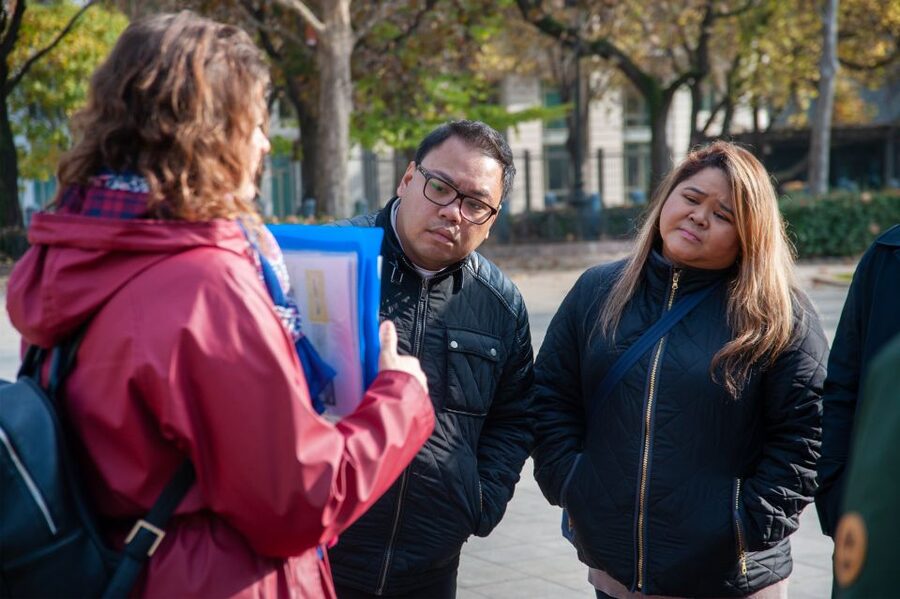
- Two sharply different museum choices: Pick the cheerful, hands-on Retro Center or the dark and confronting House of Terror.
- A walk through central Budapest: See Parliament, Liberty Square, the Soviet Liberation Memorial, Cardinal Mindszenty’s exile windows, and places tied to the 1956 uprising.
- A guide-led history lesson: English-speaking guides such as Alexandra, Flora, Noémi, Bea, Kati, and Veronika have been praised for clear explanations and personal insight.
- Small groups matter: The limit of 10 people leaves room for questions and can sometimes result in an almost private tour.
- A useful Cold War stop: You will see the ventilation channels of a secret underground nuclear bunker built during the Cold War.
- Two hours, with an important caveat: The stated duration is 2 hours, but museum visits and especially thoughtful questions may require extra time.
Parliament Square, where the story begins
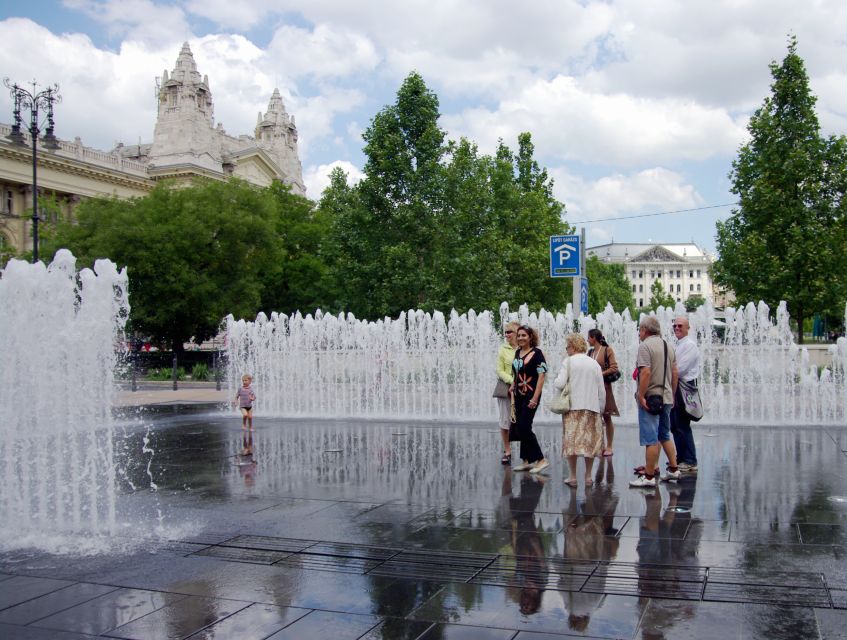
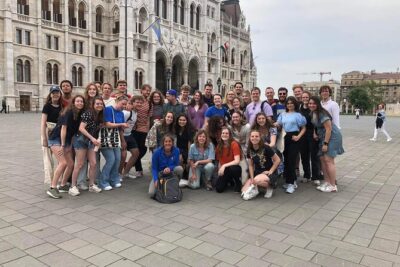
The tour starts near the magnificent Hungarian Parliament, one of Budapest’s most recognizable buildings. Here, the setting is grand, but the subject quickly turns painful. Your guide introduces the period of Soviet occupation and points out monuments connected with the victims of Hungary’s Communist dictatorship.
This opening works because it gives you a physical place to begin. You are not hearing a loose collection of facts about Eastern Europe. You are standing in the political heart of Hungary, where national power, Soviet pressure, public protest, and remembrance all meet.
Your guide should help explain the difference between the postwar years, the brutal dictatorship of the 1940s and 1950s, and the later decades of state socialism. That distinction matters. The Communist period lasted 45 years, but it was not one unchanging block of time.
The best part of this walk is the local framing. Guides including Alexandra, Flora, Kati, Bea, Noémi, and Veronika have been praised for explaining difficult subjects in clear English. Several guides have also shared family or personal memories of growing up under the Communist system, which can make the period feel less remote.
More communism & memento park tours in Budapest:
- Communism in Hungary with a Historian
★ 5.0 · 70 reviews - Budapest: 3-Hour Walking Tour About Communism (Small Group)
★ 4.7 · 70 reviews - Budapest Hammer & Sickle Communist Times Tour
★ 4.5 · 68 reviews
Liberty Square and the last Soviet monument
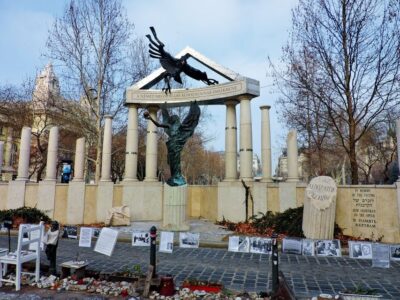
From Parliament, the route continues to Liberty Square. This is one of Budapest’s most politically loaded public spaces, and your guide points out the Soviet Liberation Memorial, described as the last Communist monument remaining in its original place in the city.
The monument is useful for understanding how public memory works. A statue can be a symbol of liberation to one generation and a reminder of occupation to another. Your guide can place it within the larger story of Hungary’s shifting relationship with Moscow, the memory of wartime suffering, and the arguments that continued after 1989.
Liberty Square also helps you see how Budapest’s past sits beside its present. The city is not a museum frozen in one era. Modern life carries on around these markers, sometimes making them easier to overlook. A walking tour forces you to stop and ask why a monument remains, who it honors, and how people interpret it now.
Bring comfortable shoes. The tour is not a long day hike, but it involves outdoor walking and repeated stops. One past participant had trouble keeping up while ill, and another group included people using walking aids. A considerate guide can wait for the group, but you should still judge your own energy carefully.
Cardinal Mindszenty’s windows and the cost of exile
The route includes the famous windows where Cardinal József Mindszenty spent years in exile. Mindszenty was a leading anti-Communist figure in Hungary and a powerful symbol of resistance for many Catholics.
This stop adds a human scale to the political story. Instead of hearing only about governments and police forces, you see how a single public figure’s confinement became part of the city’s memory. The windows also help explain the pressure placed on religious institutions and outspoken opponents of the regime.
Your guide is especially useful here because the significance of the site is easy to miss on your own. There may be no elaborate display explaining every detail. The value comes from the story attached to the place and the context your guide provides.
If you have family connections to Hungary, this part of the walk may carry extra weight. The tour is not designed as a genealogy service, but it can give you a clearer setting for the lives of parents, grandparents, or older relatives who lived through the period.
The Cold War bunker hidden below the city
One of the more unusual details on the route is the ventilation system linked to a secret underground nuclear bunker. You do not simply hear that Budapest lived under Cold War fears. You see a surviving trace of the preparations made for a possible nuclear conflict.
This is a good example of why the walking section earns its place in the experience. A museum can show you objects and photographs, but a street route lets you read the city itself. Ventilation channels are not dramatic at first glance, yet they open a window onto the secrecy, fear, and military planning of the era.
Do not expect a full bunker visit from the information provided. The tour includes seeing the ventilation channels of the facility, not a promise of unrestricted access to every underground room. That distinction is worth keeping in mind if the bunker is your main reason for booking.
A few more Budapest trips to weigh up
- Budapest: Historic Cruise with Welcome Drink
★ 4.7 · 6,512 reviews - Budapest Historical Sightseeing – Free Walking Tour
★ 5.0 · 1,302 reviews - Buda Castle District Dark History, Legends and Vampire Night Tour
★ 4.5 · 1,240 reviews - BloodThirsty Hungary: Walking tour & Dark Historical Stories
★ 4.9 · 633 reviews
Sites connected with the 1956 revolution
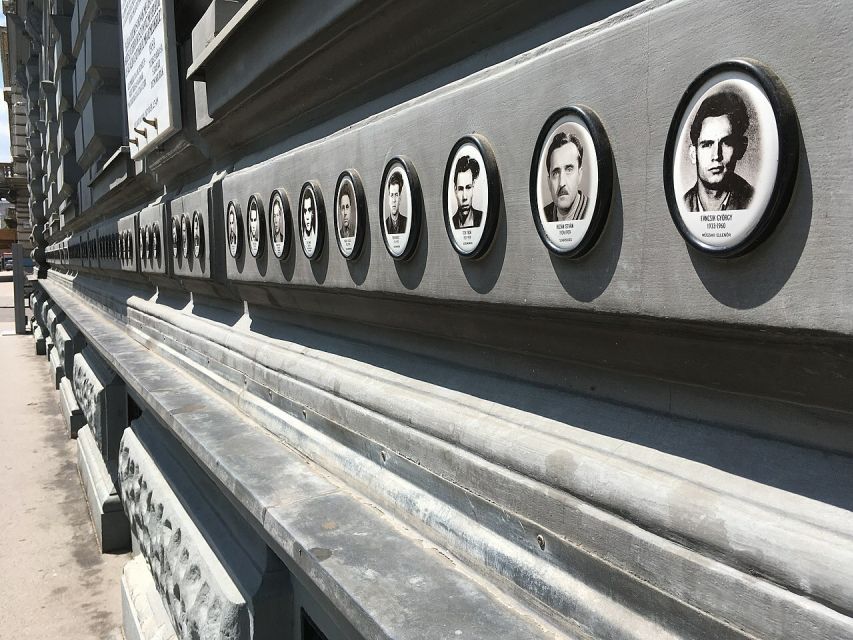
The walk also covers places tied to Hungary’s anti-Soviet revolution of 1956. Your guide explains how the uprising began, what Hungarians hoped to change, and what followed when Soviet forces intervened.
This is the point where the earlier monuments and political sites come together. The revolution was not an abstract Cold War footnote. It was a direct challenge to Soviet control, followed by violence, arrests, political punishment, and long-term consequences for Hungarian society.
I find this section particularly helpful for visitors who know the basic outline but not the Hungarian perspective. A guide can explain why 1956 remains such a central part of national memory and how the failed uprising shaped the decades that followed.
The walking tour is also a good choice for younger visitors studying Communism at school. One family used it as a way to connect classroom learning with real places in Budapest. That is a sensible use of the tour, especially if you encourage questions along the way.
Morning choice: everyday life at the Budapest Retro Center
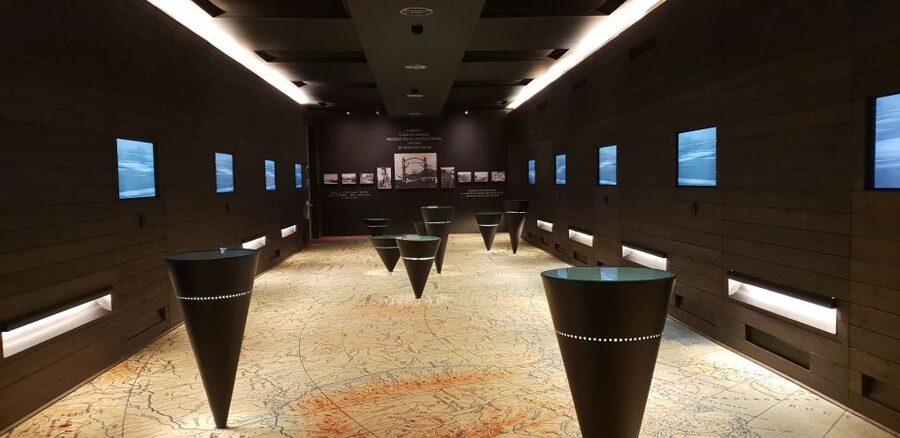
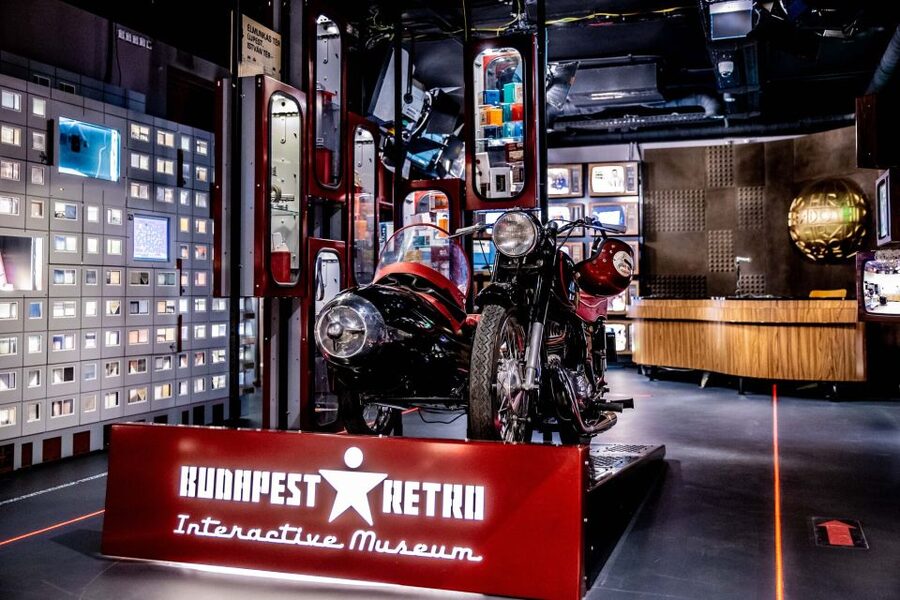
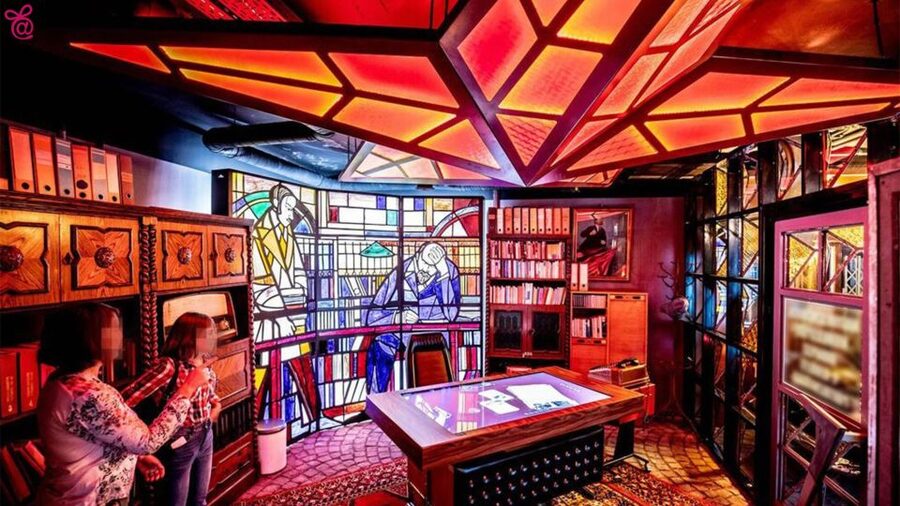
Choose the morning option if you want to follow the walking tour with a guided visit to the Budapest Retro Center. The museum covers daily life from roughly the 1960s through the 1980s, using three floors of objects, interiors, vehicles, street scenes, and interactive displays.
This is the lighter of the two museum choices, but lighter does not mean unimportant. Political history often makes more sense when you see how ordinary people lived inside the system. The displays include typical home designs, period vehicles, thousands of household objects, Soviet-Hungarian space-flight material, and street views.
You may also find playful activities, such as dressing as a Communist comrade or trying your hand as a television news presenter from the period. Those touches make the museum more approachable, especially for families or anyone who does not want to spend the whole experience in a room of grim evidence.
The Retro Center can also correct a common misunderstanding. Communism was not only police stations, shortages, speeches, and prison cells. It was also school, work, television, furniture, cars, holidays, technology, and private family life. A display of an ordinary living room can sometimes explain the texture of an era better than a political timeline.
The stated tour duration is 2 hours, and the Retro Center visit is described as lasting 1 hour after the walking portion. Check the exact start time and planned schedule when booking, since the walk and museum together may feel tighter than a simple two-hour city tour.
Afternoon choice: House of Terror Museum
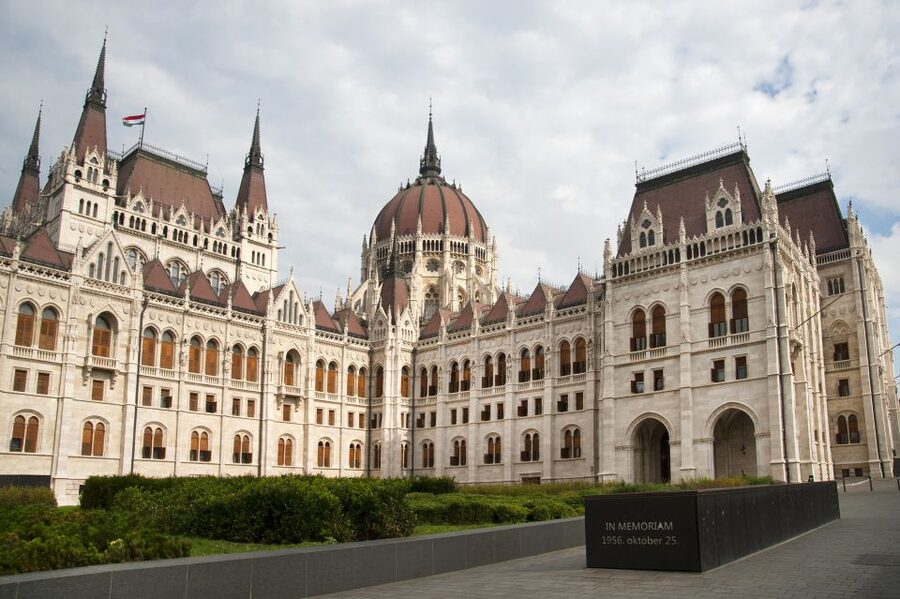
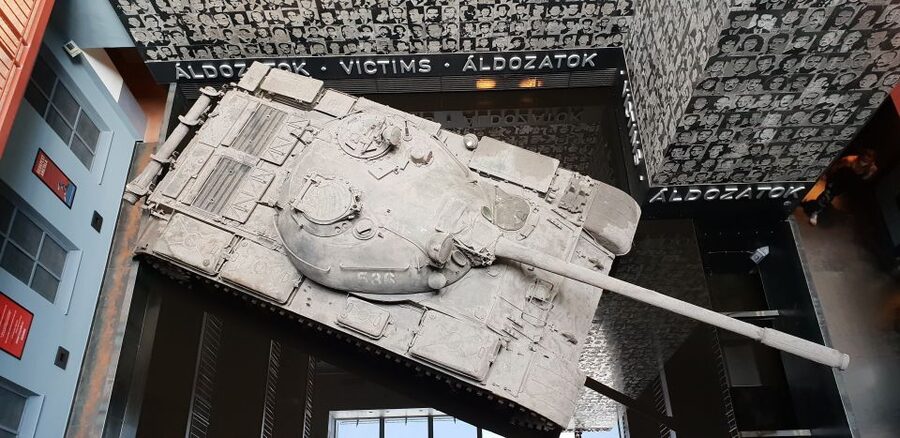
Choose the afternoon option if you want the more serious and unsettling museum experience. The House of Terror occupies the former headquarters of the AVO State Protection Police, Hungary’s local version of the Soviet KGB. The building commemorates victims of both Nazi and Communist terror.
The museum covers the years from World War II and Nazi rule through Soviet occupation, the life and economy of the 1950s, the 1956 revolution, and the end of Communism in 1989. Inside, you can expect rooms connected with interrogation and torture, the office of the feared director, and exhibits about deportations, labor camps, and political trials.
This is not a gentle introduction to Hungarian history. The material is designed to shock, and the subject matter includes imprisonment, violence, forced labor, and loss. I would not choose it for a casual hour between cafés. I would choose it if you want to understand the machinery of dictatorship and are prepared for a somber visit.
The ticket arrangements depend on the option you select. One version provides an additional House of Terror ticket for you to visit independently after the walking tour. Another offers a guided visit inside the museum. The guide is an independent professional, not a museum employee, and you receive the ticket from the guide rather than from the museum ticket office.
That last detail is practical. Do not waste time searching for your ticket at the counter. Meet your guide as instructed for your selected option and collect the admission there.
Why a guide makes a difference inside the museum
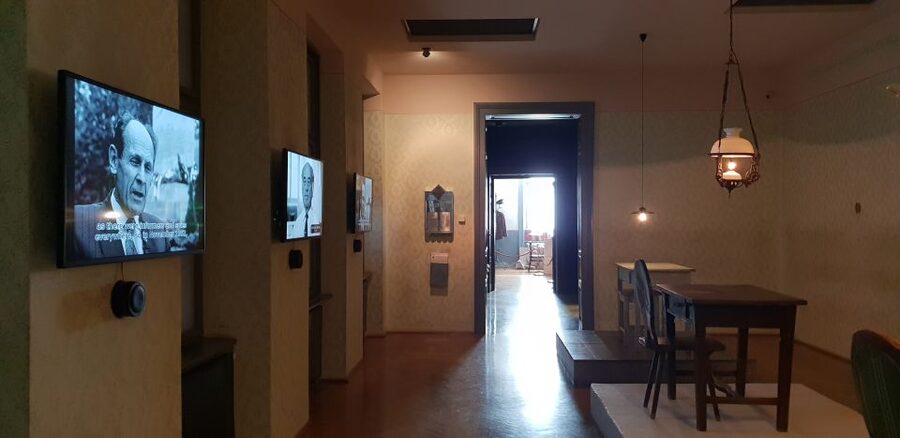
House of Terror contains a great deal of material, and it can be hard to know what deserves your attention first. A guide can connect the rooms to the wider sequence of events, explain unfamiliar names and institutions, and help you understand how Nazi and Communist rule differed while sharing certain methods of control.
Guides such as Noémi, Alexandra, Flora, and Kati have been praised for clear presentation, patience, and sincere treatment of difficult subjects. One guide extended the visit so the group could see more of the relevant exhibits. That sort of flexibility is valuable, though you should not assume every tour will run longer than scheduled.
A guided museum visit is especially useful if English is not your first language or if you have limited background in Hungarian history. One guide handled both Hungarian and English for a mixed-language family. The activity itself is offered in English, but the guides’ ability to adjust explanations can make the experience easier to follow.
The independent museum option may suit you if you prefer silence and your own pace. The guided option is better if you want interpretation as you move through the building and a chance to ask questions immediately.
What the $58 price gets you
At $58 per person, this is not the cheapest way to spend two hours in Budapest. The value depends on which museum you choose and how much you care about historical context.
You are paying for a professional English-speaking guide, a small group limited to 10, the Communist-themed walking route, and admission to either the Budapest Retro Center or House of Terror, depending on your selection. For a first visit to Budapest, the route efficiently joins several central sites that might otherwise seem unrelated.
The small group is a real advantage. With only a few people, you can ask about family history, religion, the 1956 revolution, or daily life without holding up a large crowd. Some departures may be intimate enough to feel almost private, though you should not count on being alone.
The price makes less sense if you only want exterior photographs or already have a strong grasp of Hungarian political history. You can see several monuments independently. The fee earns its keep through the explanations, the museum admission, and the connections between places.
Who will enjoy this tour most
I would recommend this experience to anyone interested in the Cold War, Soviet rule, political history, or modern Hungary. It also suits students, history teachers, and people tracing a family connection to Hungary.
Choose the Retro Center if you want a broader look at daily life and prefer displays that are interactive and occasionally funny. It is the better fit for families and for anyone who wants serious history without two hours of grim subject matter.
Choose House of Terror if you want to study dictatorship, repression, and resistance. Expect a more disturbing visit, especially in the rooms linked with interrogation, torture, deportation, and political trials.
You should also be ready to walk outdoors and stay with the group. The guide can be attentive to people who need more time, but the route still requires movement between sites. If you are sick, have limited mobility, or tire easily, consider this before booking.
Should you book the Communist History Tour?
I would book this tour if you want more than a quick look at Budapest’s monuments. The strongest feature is the combination of real city locations and local explanation, followed by a museum choice that lets you set the tone.
For a gentler, more everyday portrait of the Communist years, select the Budapest Retro Center. For a difficult but serious account of state terror, select House of Terror and, if available for your departure, take the guided museum option.
At $58, it is a fair buy for a small group, museum admission, and a guide who can answer questions in context. Just allow enough energy for the walking portion, and do not expect the House of Terror to be entertaining. This is a useful Budapest tour for understanding how the past still shapes the city you see today.
FAQ
How long does the Communist History Tour last?
The listed duration is 2 hours. The morning option includes a 1-hour guided visit to the Budapest Retro Center after the walking portion, so you should check the exact schedule for your chosen departure.
What language is the tour offered in?
The live tour guide speaks English.
How large is the group?
The tour is limited to 10 participants.
What sites are included in the walking tour?
The route begins near the Hungarian Parliament and continues to monuments connected with the victims of Communist rule, Liberty Square, the Soviet Liberation Memorial, Cardinal Mindszenty’s exile windows, Cold War bunker ventilation channels, and sites linked with the 1956 revolution.
Can I choose between two museums?
Yes. The morning option includes the Budapest Retro Center. The afternoon option offers House of Terror Museum access, with the exact format depending on the option selected.
Is the guide an employee of the museum?
No. The guide is an independent professional and is not employed by the museum. You receive the museum ticket from the guide, not from the museum ticket office.
Just added around Budapest
- From Budapest: Guided Tour of Eger with Wine Tasting★ 4.5 · 6 reviews
- Budapest: Private Walking Tour with a Local Guide★ 3.6 · 6 reviews
- Budapest: Danube River Views Bike Ride★ 4.8 · 23 reviews
- Trash Art Museum: Hungary’s First Scrap Metal Exhibition★ 4.3 · 72 reviews
- Walk to recent and aged spiritual sanctuaries near Budapest★ 5.0 · 5 reviews
- Budapest: 3-Hour Trabant Sightseeing Tour★ 4.7 · 28 reviews
- True Crime Walking Tour in the Buda Castle district★ 5.0 · 26 reviews
- Audio visual multi-sensory chefs journey dinner experience★ 5.0 · 3 reviews
Communism & Memento Park Tours, compared.
3-Hour Walking Tour About Communism (Small Group)
Read our review →
Lives of Hungarians Under Communist and Capitalist system
Read our review →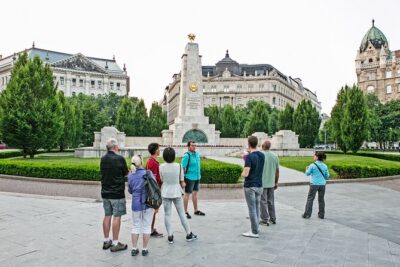
Private Budapest Hammer & Sickle Communist Times Tour
Read our review →
Browse the lists this tour appears in