
Reviewed · COMMUNISM & MEMENTO PARK TOURS
Private Budapest Hammer & Sickle Communist Times Tour
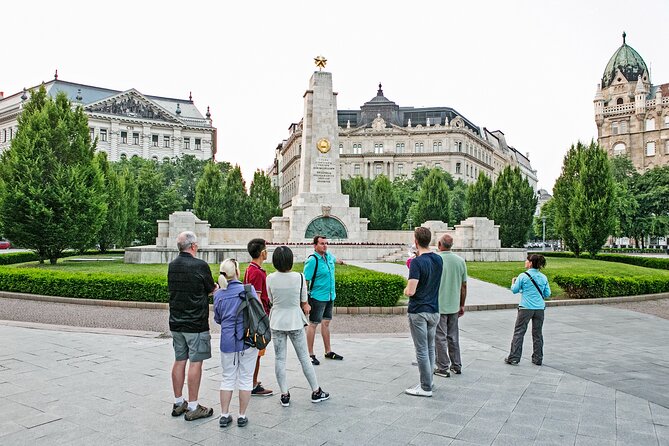
Prague’s 20th-century story is written into ordinary streets: a former prison on Bartolomejska Street, the squares where Soviet tanks rolled in, and the balcony where a communist leader announced a government takeover. This private walk brings those places together with personal stories, old photographs, and the political background that can be easy to miss when you are focused on castles and church towers.
I like two things right away. The private format means your guide can adjust the discussion to your interests, as guides such as Martina, Mike, Martin, and Honza have done for past groups. I also like the route’s focus on real locations, especially National Avenue, Wenceslas Square, the former Nazi and communist offices, and Letna Park. The main drawback is the amount of outdoor walking and standing. Cold, heat, rain, stairs, high curbs, and slippery surfaces can make the three-hour outing tiring.
In This Review
- Key points at a glance
- First, confirm the city: Prague or Budapest
- Bartolomejska Street and the first hard look at occupation
- National Avenue and the two generations of protest
- Wenceslas Square: tanks, speeches, and public memory
- Republic Square and the return of independence
- Old Town, Gottwald’s balcony, and Einstein’s Prague
- The old Jewish quarter and former power centers
- Letna Park and the vanished Stalin monument
- Guide quality can make or break the experience
- Is $133.67 per person good value?
- Who should book this Prague history walk?
- Final verdict: book it after checking the details
- FAQ
- Where does the tour take place?
- How long does the tour last?
- Is this a private tour?
- Is an English-speaking guide included?
- What historical periods does the tour cover?
- Is pickup available?
- Is the tour suitable for children?
- Is the tour suitable for people with limited mobility?
Key points at a glance
- The advertised route is in Prague, not Budapest: Check the city and meeting details carefully before paying, since the title and location information do not match the detailed route.
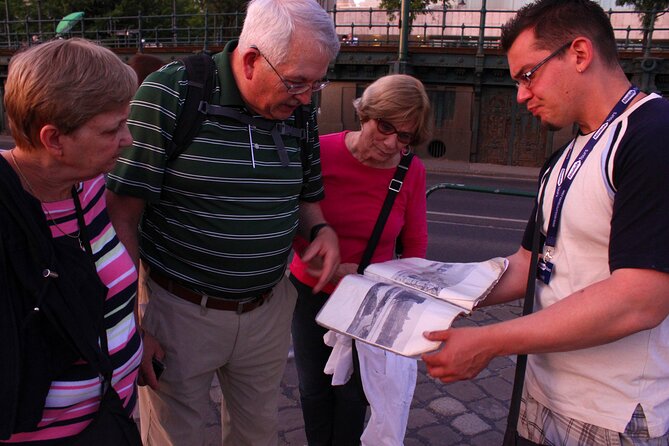
- A private English-language walk: Only your group participates, with a licensed guide and the chance to shape the conversation.
- Two major eras in one tour: The route covers Nazi occupation, World War II, Soviet control, the Prague Spring, and the 1989 Velvet Revolution.
- Important squares become historical stages: National Avenue, Wenceslas Square, and Republic Square each connect to major turning points.
- Expect a serious walking commitment: About two hours are continuous, with stairs, uneven curbs, and slick surfaces.
- Best for history-minded adults and older teenagers: The subject is not recommended for children under 14.
First, confirm the city: Prague or Budapest
The experience title and summary identify Budapest, but the detailed route is unmistakably Prague. It begins in central Prague, visits Bartolomejska Street, National Avenue, Wenceslas Square, Republic Square, the Old Jewish Cemetery, and Letna Park, and ends in central Prague.
That is not a small wording issue. It affects your flight plans, hotel location, meeting point, and entire day. Before booking, confirm that you are selecting the Prague tour you want, not a Budapest product with a badly matched description.
The timing also needs a close look. The main description says about 3.5 hours, while the quick tour details say three hours. Plan for roughly three to three and a half hours, not a tightly scheduled two-hour slot.
Pickup is offered, but drop-off is not included. The tour uses central streets and is near public transportation, so you should have ways to continue sightseeing afterward. A refreshment stop with a beverage is included.
More communism & memento park tours in Budapest:
- Budapest: Communist History Tour with House of Terror Option
★ 4.8 · 182 reviews - Communism in Hungary with a Historian
★ 5.0 · 70 reviews - Budapest: 3-Hour Walking Tour About Communism (Small Group)
★ 4.7 · 70 reviews
Bartolomejska Street and the first hard look at occupation
The walk starts with an introduction to Prague’s 20th-century past before heading to Bartolomejska Street. This is home to a former World War II prison later associated with secret police abuse and torture.
It is a grim opening, but a useful one. Instead of beginning with grand monuments, the guide starts with imprisonment and state violence. That sets the tone for the rest of the walk: this is not a general city tour with a few communist-era anecdotes added on. It is built around power, fear, resistance, and the people caught between them.
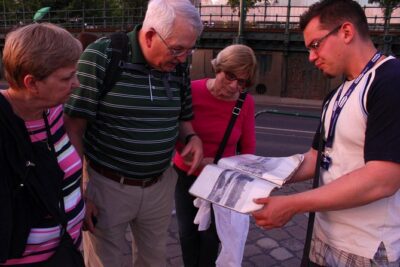
The quality of this stop depends heavily on your guide. The strongest guides have used photographs, articles, and other material on a tablet to show how places looked in earlier decades. That can make an otherwise plain street easier to read.
One weakness to watch for is too much talking in one spot. A past guide reportedly spent more than an hour speaking before the walking portion properly began. That is a poor use of time on a hot day, and it would be even harder in winter. If your group has specific interests, say so early and ask for a clear balance between explanation and walking.
National Avenue and the two generations of protest
National Avenue divides Prague’s Old Town and New Town, but its importance goes far beyond its central location. The route connects two very different protest movements here.
In 1939, students demonstrated against the occupying Nazis. In 1989, another generation gathered against communist rule. Those events were separated by half a century, yet the avenue became a place where public resistance challenged outside control and domestic repression.
This is one of the tour’s strongest ideas. You are not just being shown a street. You are asked to compare the risks faced by students under Nazi occupation with the protest movement that helped bring down communist rule.
The guide’s delivery matters here. The tour has received especially strong praise for guides who explain what daily life felt like under both systems rather than reciting dates. Native Czech guides who grew up in Prague can add personal context, and one guide had personally lived through the communist period. That firsthand connection can make the discussion more immediate, though the experience will vary by the person leading your walk.
Wenceslas Square: tanks, speeches, and public memory
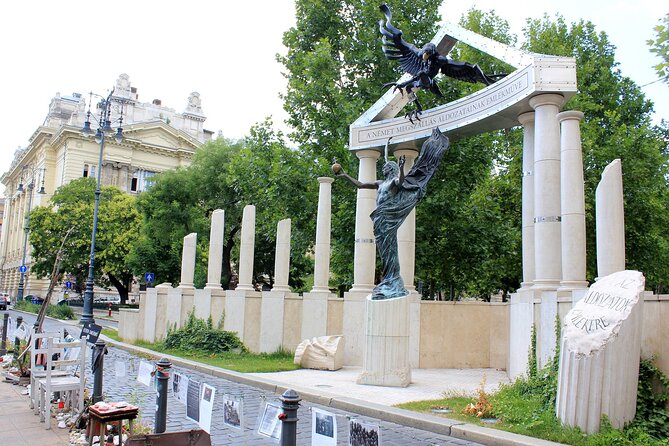
Wenceslas Square is the historical center of the Czech struggle against foreign occupation. Its broad open space has hosted political gatherings, public declarations, protests, and moments of national crisis.
Your guide explains the Prague Spring of 1968, when reform-minded communists attempted to loosen Soviet control and create a more liberal form of socialism. Soviet-led forces responded with tanks. The square also recalls the human cost of the period, including the events of early 1969, when the crackdown and public despair continued to shape Czech memory.
The same square later became central to the Velvet Revolution of 1989. You will hear how the peaceful movement challenged communist rule and helped bring political change.
I like this stop because the setting does much of the teaching. Wenceslas Square is easy to reach and visually familiar, but it carries several layers of modern Czech history. A good guide helps you picture the crowds, speeches, and military presence without turning the stop into a lecture disconnected from the place.
The drawback is that the square is open and exposed. In cold weather, you may spend a long time standing still while listening. Dress for the forecast, and wear shoes suited to a long urban walk.
A few more Budapest trips to weigh up
- Private Budapest TukTuk Tour: Custom Route, Hotel Pickup
★ 5.0 · 1,307 reviews - Budapest Essentials Private Tour Highlights and Hidden Gems
★ 5.0 · 861 reviews - Budapest Private Tuk Tuk Half-Day Tour
★ 5.0 · 606 reviews - Budapest One Way Private Transfer to or from Airport
★ 4.5 · 548 reviews
Republic Square and the return of independence
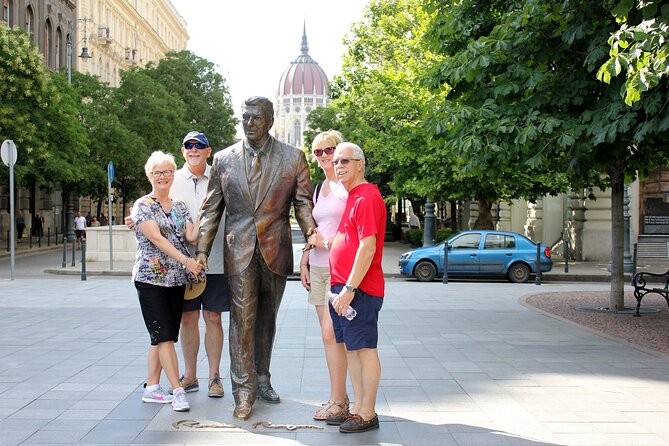
Republic Square takes the story back to 1918, when an independent Czechoslovakia was proclaimed. The tour then moves through the square’s World War II role, including the Czech resistance and secret radio broadcasts connected with the 1945 Prague Uprising.
The later political reversal is striking. A location tied to national independence eventually became home to the Communist Party only a few years later. That change helps explain why Prague’s public spaces matter so much. The same buildings and squares were repeatedly claimed by different political powers.
This part of the walk is also useful for understanding the city’s transition between democratic hopes, occupation, resistance, and communist control. You are likely to get more from it if you already know a little about the breakup of empires after World War I, but the guide provides the basic setting.
Old Town, Gottwald’s balcony, and Einstein’s Prague
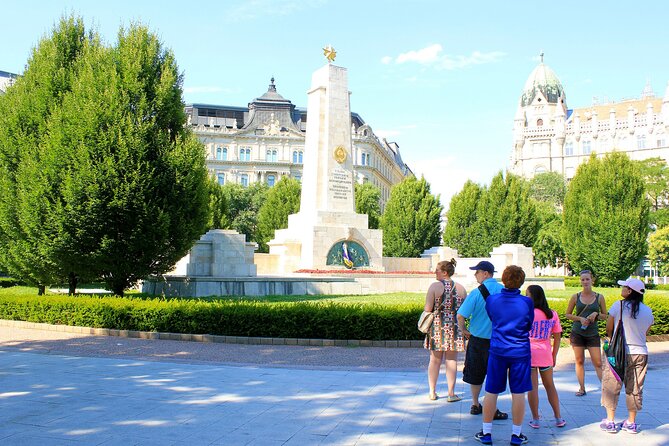
The route then turns into the Old Town, where architectural beauty can distract from the harder events that took place there. One key stop is the balcony from which Klement Gottwald declared the communist takeover of the Czech government in 1948.
That moment marked the end of the postwar political balance and the start of a firmly communist state. Standing at the actual location gives the event a sharper edge than reading about it in a timeline.
The walk also points out where Albert Einstein lived while working at Prague’s Charles University. The guide connects his theories with the later invention of the atomic bomb. This is an interesting shift in subject, linking Prague’s intellectual life with the scientific developments that changed World War II and the Cold War.
Here, the tour may feel less tightly organized than a simple chronological walk. Some guides move from issue to issue while circling the inner part of the Old Town. If you prefer a clean sequence from Nazi occupation to communist rule to the Velvet Revolution, ask your guide to explain the order of the route at the start.
The old Jewish quarter and former power centers
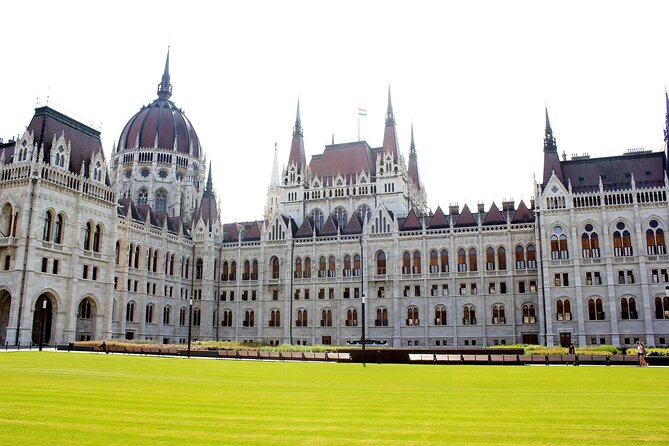
The route includes the Old Jewish Cemetery and other landmarks in the old Jewish quarter. The cemetery itself is not simply a scenic stop. It places the 20th-century story within Prague’s longer experience of persecution, displacement, and political control.
You also see former headquarters connected with the Nazi SS and the communist-era KGB. These buildings are valuable precisely because they are part of the functioning city rather than isolated museum pieces. The tour helps you notice how offices, streets, and public buildings were used by different authorities over time.
The description also refers to former Gestapo locations. Because the route centers on buildings and exterior sites, do not expect every stop to be an interior visit. The experience is primarily a walking and storytelling tour, with the city itself serving as the setting.
One past participant felt too much time was spent in a museum and would have preferred to visit it at the end independently. That is worth keeping in mind if your booking includes an indoor museum element. Ask how much time will be spent inside and how much remains for the street route.
Letna Park and the vanished Stalin monument
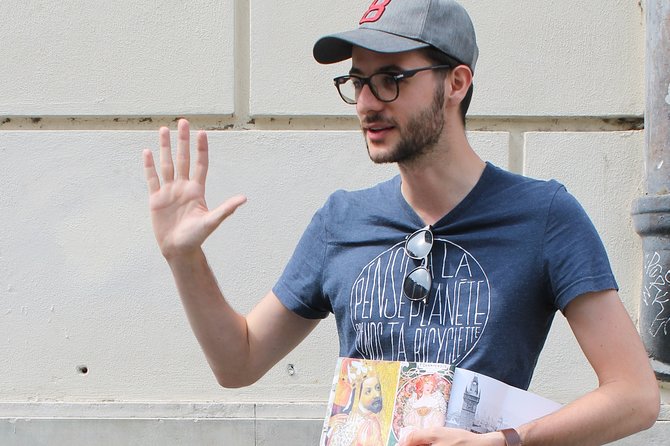
The tour finishes at Letna Park along the Vltava River. From here, the guide explains the enormous statue of Stalin built in 1955 and destroyed in 1962.
The statue’s short life captures the uneasy shift in communist politics. It was built as a public symbol of loyalty, then removed only a few years later as the political climate changed. The site is now more useful for what it makes you imagine than for what remains physically visible.
Ending at Letna Park gives the walk a broader view of Prague. After several hours of prisons, offices, squares, and protest sites, the riverside setting offers room to think about the city’s changes. The tour then returns to central Prague, though drop-off is not included.
Guide quality can make or break the experience
The strongest part of this tour is the guide. Several guides have been singled out for being friendly, patient, flexible, and passionate about Czech 20th-century events. Honza adjusted the route to suit a small group’s interests, while Mike was praised for explaining what life was like under both Nazi and communist rule.
Martina brought personal insight from having lived through the communist period. Martin tailored part of the outing to a participant’s interest in libraries and added a visit to Prague’s public library. These examples show the value of a private booking: you can ask for more Cold War history, more World War II, or more attention to everyday life.
There are limits. One guide’s English was difficult for a participant to follow, and another group found the route poorly organized and the meeting instructions unclear. A private tour does not guarantee a perfect guide match.
At the beginning, tell your guide what matters most to you. Ask for clear directions to the meeting point, confirm whether the route includes both Nazi and communist history, and request a chronological structure if that helps you follow the story.
Is $133.67 per person good value?
At $133.67 per person, this is not a cheap walking tour. The value depends on your group size and how much you want personal attention.
For a larger private group, the price may make sense because only your party participates, the guide can answer detailed questions, pickup is offered, and a drink stop is included. You are paying for a specialist subject and a flexible conversation, not just for a route between landmarks.
For one or two people, the cost is harder to justify unless modern Czech history is a major reason for your visit. A general city walk will cover more famous sights for less money. This tour earns its price when you want the Nazi and communist periods explained at street level.
The average rating is 4.4 out of 5 from 47 reviews, but the spread is important. Many people found the guides exceptional, while a few had serious problems with meeting directions, organization, English clarity, or time spent standing still. I would book it for the subject matter, but I would confirm the practical details first.
Who should book this Prague history walk?
You are a good match if you:
- Enjoy World War II, Cold War, and modern European political history
- Want to understand the Prague Spring and Velvet Revolution at the actual locations
- Prefer a private guide to a large group
- Like asking questions and shaping the route
- Are comfortable walking for several hours
- Are at least 14 and can manage stairs, high curbs, and slippery surfaces
I would think twice if you want mostly indoor sightseeing, have limited mobility, or dislike long explanations outdoors. The tour runs in all weather, and about two hours involve continuous walking. It is not suitable for people who struggle with uneven surfaces.
The experience also works well early in a Prague visit if you want a modern political framework for the city. One guide even helped a participant get oriented to Prague while explaining its recent past. Just do not book it expecting a relaxed introduction to Old Town architecture. The focus is darker and more specific.
Final verdict: book it after checking the details
I would recommend this tour to history-focused visitors who want more than Prague’s medieval center. The best guides bring the subject to life with old photographs, firsthand memories, and a clear sense of how ordinary streets became places of protest and control.
Before booking, confirm that the tour is in Prague, not Budapest, and ask about the exact meeting point, duration, route balance, and whether both Nazi and communist subjects are included. If you prepare for the walking and get a strong English-speaking guide, this can be one of the most thought-provoking ways to understand modern Prague.
FAQ
Where does the tour take place?
The detailed route takes place in Prague, Hungary is not part of the described itinerary. Confirm the city before booking because the experience title and location information contain conflicting details.
How long does the tour last?
The tour is described as lasting about three to three and a half hours. Plan for the longer estimate so you are not rushed afterward.
Is this a private tour?
Yes. Only your group participates in the activity.
Is an English-speaking guide included?
Yes. The tour includes a licensed English-speaking expert guide.
What historical periods does the tour cover?
It covers World War II, Nazi occupation, resistance activity, communist rule, the Prague Spring, the 1989 Velvet Revolution, and related events in modern Czech history.
Is pickup available?
Yes. Pickup is offered. Drop-off is not included.
Is the tour suitable for children?
The subject matter is not recommended for children under 14.
Is the tour suitable for people with limited mobility?
No. The experience includes about two hours of continuous walking on high curbs, stairs, and slippery surfaces, so it is unsuitable for people with limited mobility.
Just added around Budapest
- From Budapest: Guided Tour of Eger with Wine Tasting★ 4.5 · 6 reviews
- Budapest: Private Walking Tour with a Local Guide★ 3.6 · 6 reviews
- Budapest: Danube River Views Bike Ride★ 4.8 · 23 reviews
- Walk to recent and aged spiritual sanctuaries near Budapest★ 5.0 · 5 reviews
- Trash Art Museum: Hungary’s First Scrap Metal Exhibition★ 4.3 · 72 reviews
- Budapest: 3-Hour Trabant Sightseeing Tour★ 4.7 · 28 reviews
- True Crime Walking Tour in the Buda Castle district★ 5.0 · 26 reviews
- Audio visual multi-sensory chefs journey dinner experience★ 5.0 · 3 reviews
Communism & Memento Park Tours, compared.
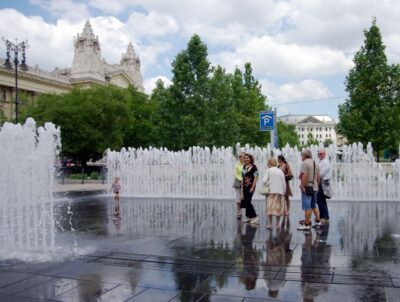
Communist History Tour with House of Terror Option
Read our review →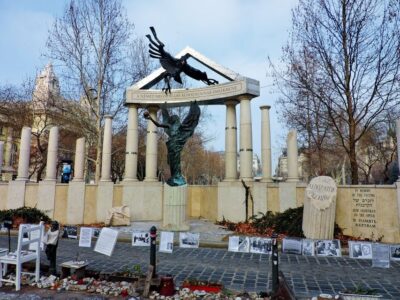
3-Hour Walking Tour About Communism (Small Group)
Read our review →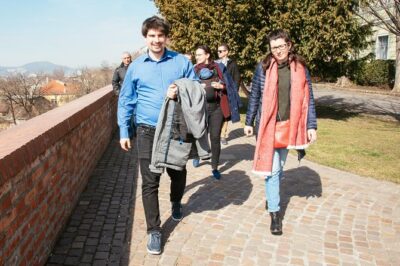
Lives of Hungarians Under Communist and Capitalist system
Read our review →
Browse the lists this tour appears in