
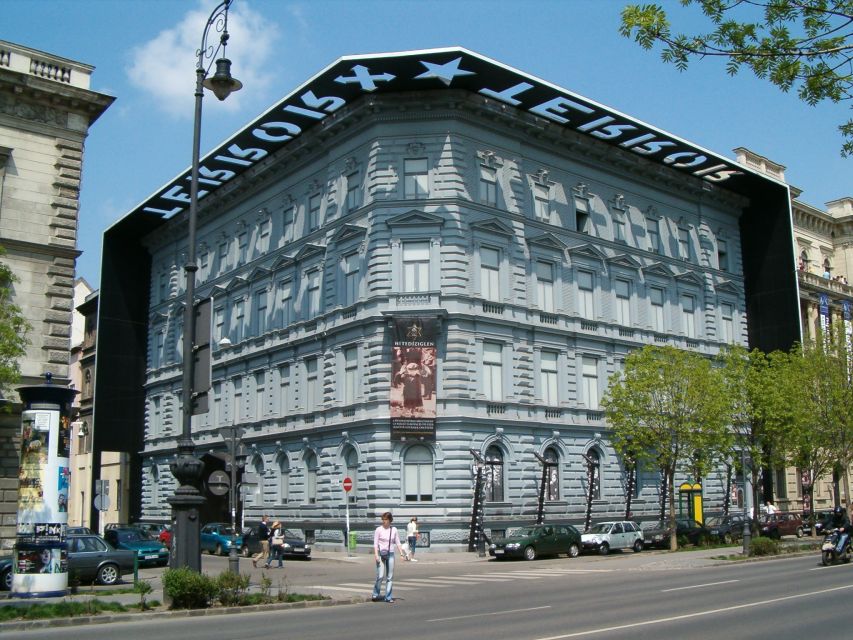
Reviewed · COMMUNISM & MEMENTO PARK TOURS
Life Under Communism with House of Terror or Statue Park
Budapest’s communist past comes into focus through ordinary details: where people met, how the system shaped daily choices, and what changed after the late 1980s. This three-hour private tour begins at Bambi Eszpresszó, an emblematic meeting place from the 1980s, then builds a personal picture of life from the 1960s onward.
I like the flexible, one-on-one format, since Annamaria and Miklos can adjust the discussion to your interests and level of background knowledge. I also like that the tour includes a ride on Budapest public transport, letting you see parts of the city you might otherwise miss. The main drawback is practical: the tour is not suitable for people with mobility impairments, and food, drinks, and transport costs are not included.
In This Review
- Key points to know before booking
- What this communist-era tour is really about
- Starting at Bambi Eszpresszó in Budapest
- From the 1960s to the late 1980s
- Seeing Budapest by public transport
- House of Terror or Statue Park
- A private conversation instead of a standard group tour
- Who will get the most from the experience
- How to prepare for the three hours
- Should you book Life Under Communism?
- FAQ
- How long does the Life Under Communism tour last?
- How much does the private tour cost?
- Where does the tour begin?
- Can the guide pick me up at my accommodation?
- Which languages are available?
- Is the tour private?
- Does the tour include food or drinks?
- Is transportation included?
- Which historical site will I visit?
- What should I bring?
- Can I cancel the booking?
- Is the tour suitable for people with mobility impairments?
Key points to know before booking
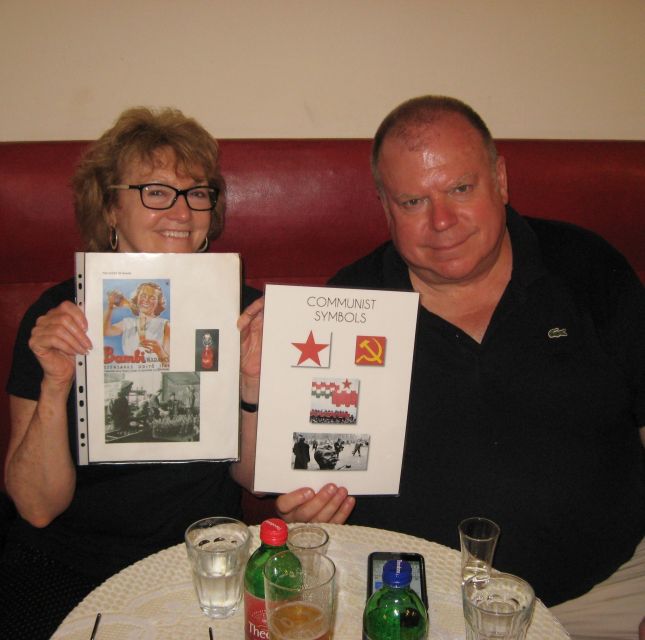
- Start at Bambi Eszpresszó: Begin at a symbolic 1980s meeting place rather than a standard sightseeing office.
- Hear about daily life: Learn how communist rule affected work, shopping, travel, housing, and social life at several levels.
- Private group of up to five: The guide can shape the conversation around your questions and prior knowledge.
- House of Terror or Statue Park: The program includes one of these communist-era history sites, according to the arrangement for your tour.
- Personal and interactive: Expect discussion, printed materials, notebooks, and pens rather than a passive lecture.
- Flexible pickup: Your guide can meet you at your Budapest accommodation before you travel together to the first stop.
What this communist-era tour is really about
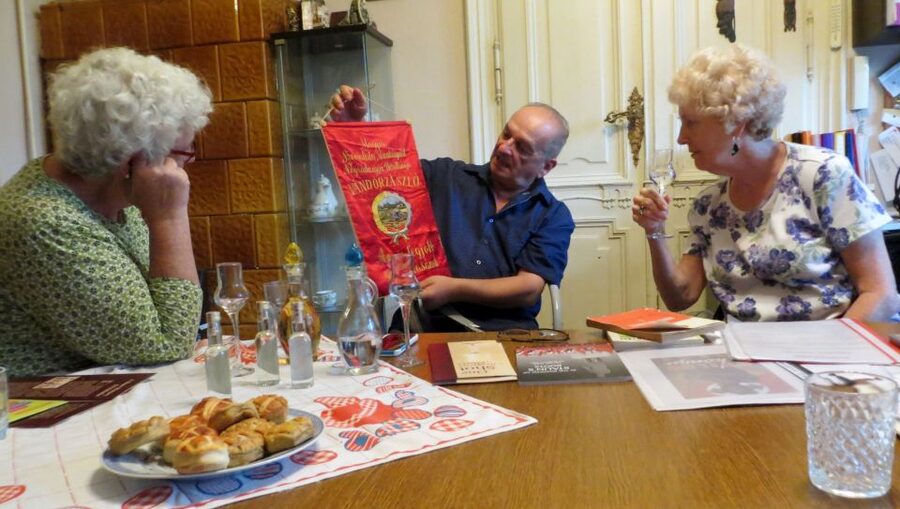
This is not just a tour of statues, buildings, and political dates. Its main subject is ordinary life under a communist system, especially from the 1960s through the late 1980s.
You will receive an overview of how the system worked on more than one level. That matters because political history can feel remote when it is presented only through leaders and official events. Here, the focus is also on how government decisions affected personal routines and the choices people could make.
The presentation is interactive and personal. You can ask questions, compare your own assumptions with Hungarian experience, and guide the conversation toward subjects that interest you most. If you already know the broad outline of the Cold War, the value is in the local detail. If the period is new to you, the guides can provide the basic framework first.
Annamaria and Miklos lead the program in English, German, or French. The available languages make this a useful option for mixed-language groups, though you should select and confirm your preferred language when arranging the tour.
The experience is especially well suited to people who want context rather than a fast list of dates. You will be looking at the past through Budapest, but the discussion also helps explain why traces of that era can still be seen in Hungary today.
More communism & memento park tours in Budapest:
- Budapest: Communist History Tour with House of Terror Option
★ 4.8 · 182 reviews - Communism in Hungary with a Historian
★ 5.0 · 70 reviews - Budapest: 3-Hour Walking Tour About Communism (Small Group)
★ 4.7 · 70 reviews
Starting at Bambi Eszpresszó in Budapest
The tour begins at Bambi Eszpresszó, described as a symbolic meeting place of the 1980s. This gives the opening conversation a useful setting. Instead of starting with an abstract explanation of communism, you begin in a place connected with the social world of that period.
The café is important here as a point of reference. It represents the kind of everyday setting where people met and talked, and it helps shift the subject away from government offices and grand monuments. The tour uses that starting point to introduce the atmosphere of the era and the way public and private life overlapped.
Your guide can meet you at your accommodation in Budapest and travel with you to the first stop. You should provide the local partner with the exact pickup location. Since transportation is not included as a separate service, plan for any public transport or other travel costs during the program.
Wear comfortable shoes and clothing suited to the weather. This is a city tour with movement between locations, and the route is not designed for people with mobility impairments.
From the 1960s to the late 1980s
The central lecture covers several decades, rather than focusing on one isolated political event. That broad time span lets you see change within the communist period itself.
The 1960s, 1970s, and 1980s were not identical. A good discussion of the period needs to explain how the system operated while also showing that daily life could shift over time. The guides aim to give you that wider view, including the way communist rule affected Hungary and the changes that followed during the past fifty years.
The personal format is useful here. You can ask for clarification when a political term is unfamiliar, or spend more time on daily routines if that is what interests you. The tour can also be adjusted to the group’s knowledge level, so you are less likely to receive either a basic lecture for specialists or an overly technical history lesson for beginners.
Printed materials, notebooks, and pens are included. These are small additions, but they support the discussion. You can write down names, dates, or questions while the subject is fresh instead of trying to remember everything later.
The tone is intended to be an honest exchange. The most praised part of the experience is the guide’s ability to explain the subject clearly, share personal experiences of the Hungarian communist era, and leave room for a real dialogue. That makes the tour more useful than a fixed script if your group has specific questions.
Seeing Budapest by public transport
One of the tour’s practical pleasures is the chance to use Budapest’s public transportation system with your guide. The trip between locations becomes part of the experience rather than dead time.
A guide can point out parts of the city that you might not reach on a standard central sightseeing route. The transportation element also helps you think about the city as a place where people lived under the system, not simply as a collection of historic sights.
You should keep your expectations realistic. The tour description does not promise a long list of named stops or a set route for every group. The program can be adapted, and the exact path may depend on the group’s interests, the pickup point, and the selected historical site.
That flexibility is an advantage for a private group. It also means you should tell the local partner about special requests before the tour. The guides are willing to adapt the program as much as they can.
Same riverbank, a completely different kind of day:
- Budapest: Unlimited Prosecco, Beer and Aperol Spritz Cruise
★ 4.8 · 25,310 reviews - Budapest: Széchenyi Spa Day Ticket with Optional Upgrades
★ 4.3 · 23,911 reviews - Budapest: Nighttime or Daytime Sightseeing Cruise
★ 4.2 · 21,062 reviews - Budapest: 1-Hour Evening Sightseeing Cruise with Drink
★ 4.5 · 8,330 reviews
House of Terror or Statue Park
The experience is offered with the House of Terror or Statue Park. The information provided does not set out a fixed choice for every booking, so confirm which option applies to your reservation if one site matters more to you.
The House of Terror is associated with Hungary’s 20th-century dictatorships and offers a museum-based way to examine the period. If your program includes it, expect the tour’s wider discussion to gain a more formal historical setting.
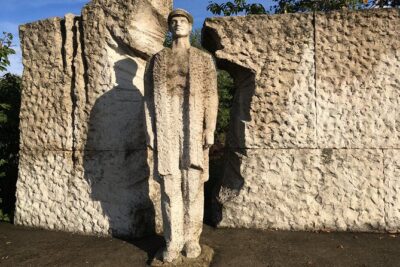
Statue Park presents another kind of encounter with the communist past. Relocated statues and public monuments can show how political messages were placed in everyday public space. If this is your selected stop, the physical remains of official imagery become a useful partner to the discussion about ideology and memory.
Neither option should be treated as the entire tour. The site visit fits into a larger program about personal experience and daily life. The real value comes from having a guide connect the location to the social and political themes introduced at Bambi Eszpresszó.
Because the exact itinerary can be shaped around the group, ask about the planned site when you book. That simple question will help you decide if the experience matches your interests and give you a clearer idea of the walking and transport involved.
A private conversation instead of a standard group tour
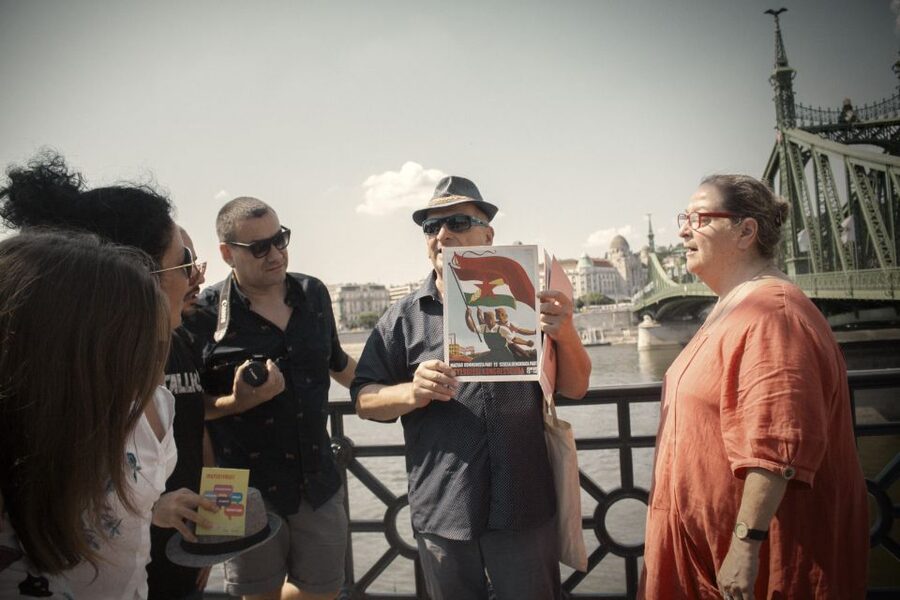
The price is $282 for a private group of up to five people. That is a sizeable cost for a three-hour activity if you are alone or traveling as a couple. For five people, the group price works out to about $56.40 per person, before any transport, food, or drink costs.
The value depends heavily on how much you want personal discussion. A large scheduled tour may cost less, but it generally cannot adjust the pace and subject matter to your group. Here, your guide can respond to your questions, tailor the tour to your background, and spend more time on the parts of Hungarian life that matter to you.
For a family, small group of friends, or several people with a serious interest in modern European history, the price can make sense. For someone looking only for a quick introduction to Budapest’s communist monuments, it may be more than necessary.
The strongest reason to book is not the number of sights. It is access to a personal explanation of a difficult period, supported by a guide who can discuss personal experience and local context. The guide-led public transport portion adds another layer, but the conversation remains the heart of the program.
Who will get the most from the experience
I would recommend this tour most strongly to people who enjoy asking questions and comparing public history with private experience. It suits history buffs, students of the Cold War, and visitors who want to understand how political systems affect normal routines.
It also works well for people who know little about Hungary’s communist period. The presentation begins with an overview of how the system worked, so you do not need a detailed background before arriving.
The private format helps if your group has different interests. One person may want to discuss politics, another may care about social life, and another may want to understand the visible remains of the period in modern Budapest. The guide can shape the exchange instead of forcing everyone through the same rigid script.
This is less suitable if you want a purely visual sightseeing tour or a light historical outing. The subject is serious, and the experience depends on your willingness to listen, ask, and think about uncomfortable parts of the past.
Mobility is another clear consideration. The activity is not suitable for people with mobility impairments, and you should expect to move between locations. Comfortable footwear and weather-appropriate clothing are essential.
How to prepare for the three hours
Before booking, decide which language you need: English, German, or French. Then send the local partner your Budapest accommodation details and any special requests.
You do not need to bring study materials. Printed materials, notebooks, and pens are provided. Still, I would arrive with a few questions of your own, since the tour is designed for interaction rather than silent listening.
Plan for your own food and drinks. Neither is included. You should also account for transportation costs, since transportation is not included in the price, even though the guide accompanies you on public transport during the program.
Check the weather before leaving. The meeting and travel between locations require suitable clothing, and the tour notes specifically recommend comfortable shoes and weather-appropriate clothes.
The booking terms are useful for uncertain plans. You can cancel up to 24 hours before the activity for a full refund, and the reserve-now, pay-later option lets you hold the booking without paying immediately.
Should you book Life Under Communism?
Book this tour if you want a personal, discussion-based look at Budapest under communism, not just a quick stop at a monument. The strongest features are the private group format, the opening at Bambi Eszpresszó, the public transport portion, and the guides’ ability to adapt the discussion to your knowledge and interests.
I would be more cautious if you are on a tight budget, have mobility limitations, or prefer a fixed itinerary with many clearly named sights. The $282 group price is easiest to justify when shared by four or five people.
For a small group that wants to understand how Hungary’s communist era affected real life, this offers an unusually direct way to ask questions and connect the past with Budapest as you see it today.
FAQ
How long does the Life Under Communism tour last?
The tour lasts three hours.
How much does the private tour cost?
The price is $282 for a private group of up to five people.
Where does the tour begin?
The program begins at Bambi Eszpresszó, an emblematic meeting place associated with the 1980s.
Can the guide pick me up at my accommodation?
Yes. The guide will meet you at your accommodation in Budapest before traveling with you to the first stop. You need to tell the local partner where you want to be picked up.
Which languages are available?
The tour is available in English, German, and French.
Is the tour private?
Yes. It is offered as a private group experience for up to five people.
Does the tour include food or drinks?
No. Food and drinks are not included.
Is transportation included?
Transportation is not included as a separate part of the price. The program does include traveling with the guide on Budapest public transportation.
Which historical site will I visit?
The experience is offered with the House of Terror or Statue Park. Confirm the planned site with the local partner when booking.
What should I bring?
Bring comfortable shoes, comfortable clothing, and clothing suitable for the weather. Printed materials, notebooks, and pens are provided.
Can I cancel the booking?
Yes. You can cancel up to 24 hours in advance for a full refund.
Is the tour suitable for people with mobility impairments?
No. The activity is listed as unsuitable for people with mobility impairments.
Just added around Budapest
- From Budapest: Guided Tour of Eger with Wine Tasting★ 4.5 · 6 reviews
- Budapest: Private Walking Tour with a Local Guide★ 3.6 · 6 reviews
- Budapest: Danube River Views Bike Ride★ 4.8 · 23 reviews
- Trash Art Museum: Hungary’s First Scrap Metal Exhibition★ 4.3 · 72 reviews
- Walk to recent and aged spiritual sanctuaries near Budapest★ 5.0 · 5 reviews
- Budapest: 3-Hour Trabant Sightseeing Tour★ 4.7 · 28 reviews
- True Crime Walking Tour in the Buda Castle district★ 5.0 · 26 reviews
- Audio visual multi-sensory chefs journey dinner experience★ 5.0 · 3 reviews
Communism & Memento Park Tours, compared.
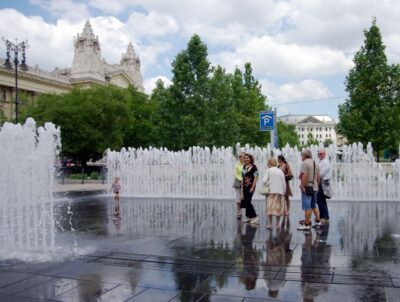
Communist History Tour with House of Terror Option
Read our review →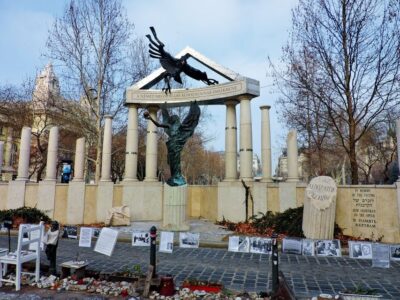
3-Hour Walking Tour About Communism (Small Group)
Read our review →

Lives of Hungarians Under Communist and Capitalist system
Read our review →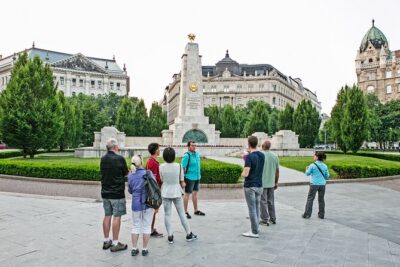
Private Budapest Hammer & Sickle Communist Times Tour
Read our review →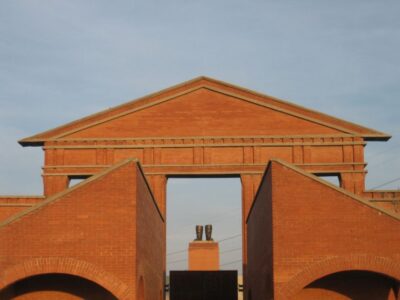
Browse the lists this tour appears in