
Reviewed · COMMUNISM & MEMENTO PARK TOURS
Memento Park: Official Guided Tour with Entry Ticket
Memento Park gathers Budapest’s unwanted communist monuments in one open-air museum, where bronze workers, soldiers, leaders, and political symbols reveal how public art once served the state. I like the way the guide explains the propaganda behind the statues, and I like the chance to photograph yourself in a real Trabant, the boxy car that defined ordinary motoring behind the Iron Curtain.
The main drawback is location. Memento Park sits outside central Budapest, and public transport takes about 40 minutes. The gravel paths also call for sensible shoes, and this is a history-heavy outing rather than a quick photo stop. If you meet guide Ildi, expect a warm, lively explanation shaped by personal experience of the communist period.
In This Review
- Key points to know before you go
- Why Memento Park is worth the trip outside Budapest
- Starting at Witness Square and Stalin’s Grandstand
- Reading the communist statues in Statue Park
- The End Wall and what the tour leaves you with
- Stay afterward for the Trabant, films, and exhibitions
- Is the $28 price good value?
- Getting there from central Budapest
- Who will get the most from this guided visit?
- Should you book Memento Park with a guide?
- FAQ
- Where is Memento Park located?
- How long does the guided tour take?
- What language is the tour offered in?
- Where do I meet the guide?
- What does the ticket include?
- Is transportation included?
- Is food included?
- Is Memento Park wheelchair accessible?
- What should I bring?
Key points to know before you go
- Stalin’s Grandstand reveals more than a public monument: You enter the outside area and see the hidden rooms beneath the old viewing platform.
- The Waving Balcony gives you a useful view: From here, your guide connects the park with Budapest’s wider communist past.
- The statues work better with explanation: Workers, political figures, and movement heroes can look alike until you learn how their poses and symbols functioned.
- The Trabant adds a human touch: The retro car offers a fun photo opportunity amid an otherwise serious museum.
- The tour takes about 70 minutes: Additional time is available for films, exhibitions, photos, and the souvenir shop.
- The setting is practical, not polished: Expect gravel promenades, changing weather, and an out-of-town journey.
Why Memento Park is worth the trip outside Budapest
Memento Park is not a collection of random old statues. It is a place where Hungary’s former public symbols have been removed from their original streets and placed together for inspection. That change in setting matters.
In central Budapest, a giant statue of a worker or Soviet soldier once helped shape the public world every day. Here, you can look at the same figure with distance. You are no longer being told where to look or what the monument means. You can study its scale, pose, facial expression, and repeated political symbols.
I like that the park does not depend on a grand indoor museum. The statues are out in the open, where their size becomes clear. You walk among them rather than viewing them as small objects behind glass. That makes the contrast sharper: public art designed to command attention now sits together as a record of a system that has passed.
The guided visit adds the context that the statues cannot provide on their own. Without help, some pieces may look like generic heroic figures. With an explanation of communist imagery, they become evidence of a system that used art, architecture, and public ceremony to influence citizens.
The experience has an average rating of 4.5 from 31 ratings, and the strongest praise centers on the guides’ explanations. That matches the nature of the park. The statues are the reason to come, but the guide is what helps you read them.
More communism & memento park tours in Budapest:
- Budapest: Communist History Tour with House of Terror Option
★ 4.8 · 182 reviews - Communism in Hungary with a Historian
★ 5.0 · 70 reviews - Budapest: 3-Hour Walking Tour About Communism (Small Group)
★ 4.7 · 70 reviews
Starting at Witness Square and Stalin’s Grandstand
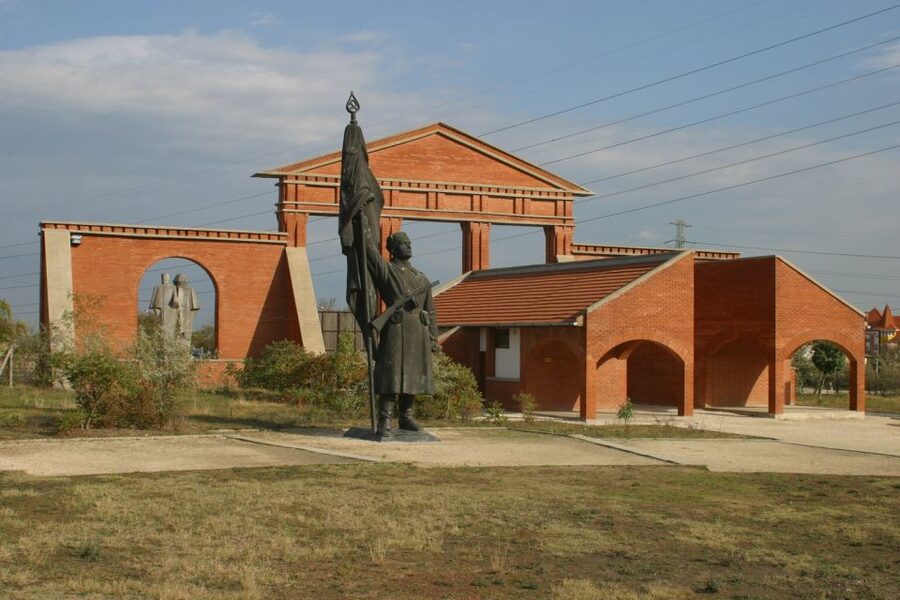
Meet your English-speaking guide at the Memento Park cash desk, presenting your ticket before the walk begins. The tour starts at Witness Square, the open area in front of the main park.
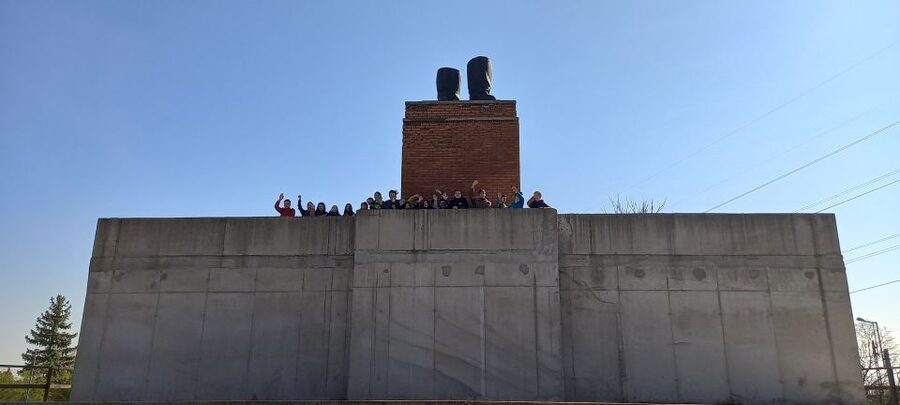
This first part focuses on the museum’s outside unit, including Stalin’s Grandstand. The name alone gives you a sense of the political theater once connected with the site. The grandstand is not just something to photograph from the outside. The tour also takes you into its hidden rooms, adding an unexpected layer to what first appears to be a simple public structure.
I find this a strong opening because it gives you architecture before statues. You begin with the place where authority was displayed, then move on to the monuments that supported that authority. The hidden rooms help you picture the less public side of official events, even if the exact purpose of every space is not immediately obvious without the guide’s account.
From the Waving Balcony, you look toward the surrounding area and historic sights beyond the park. The view is useful because it places Memento Park in relation to Budapest rather than treating it as an isolated display. You get a sense of the city’s edge and the distance between the tourist center and this former political world.
The walk is interactive, so bring questions. The supplied details describe the guided portion as about 70 minutes, while the itinerary also lists a 95-minute guided segment and a separate 35-minute portion involving local snacks and food tasting. Since the stated inclusions cover admission and the guided tour, not food or drinks, I would treat the reliable expectation as a guided visit of roughly an hour to an hour and a half, followed by optional time in the park.
Reading the communist statues in Statue Park
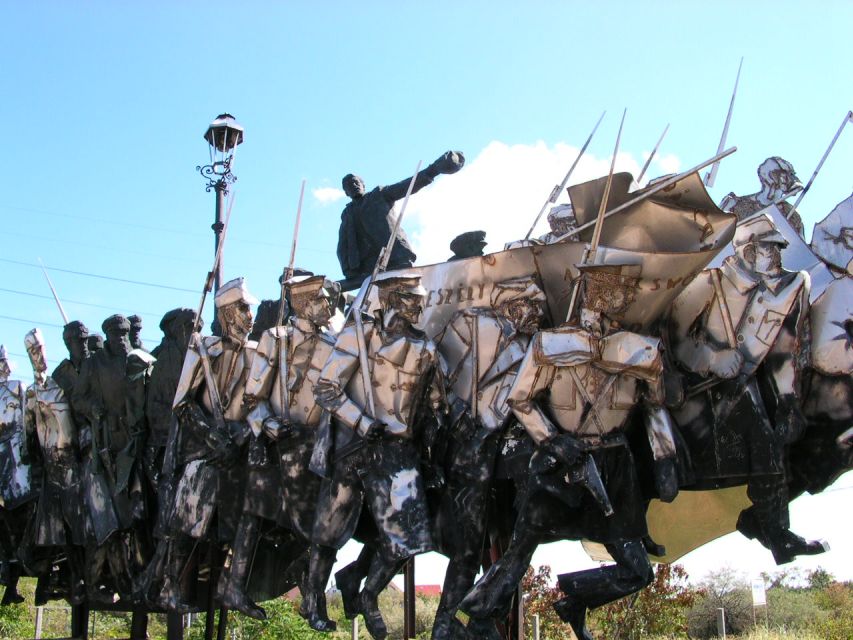
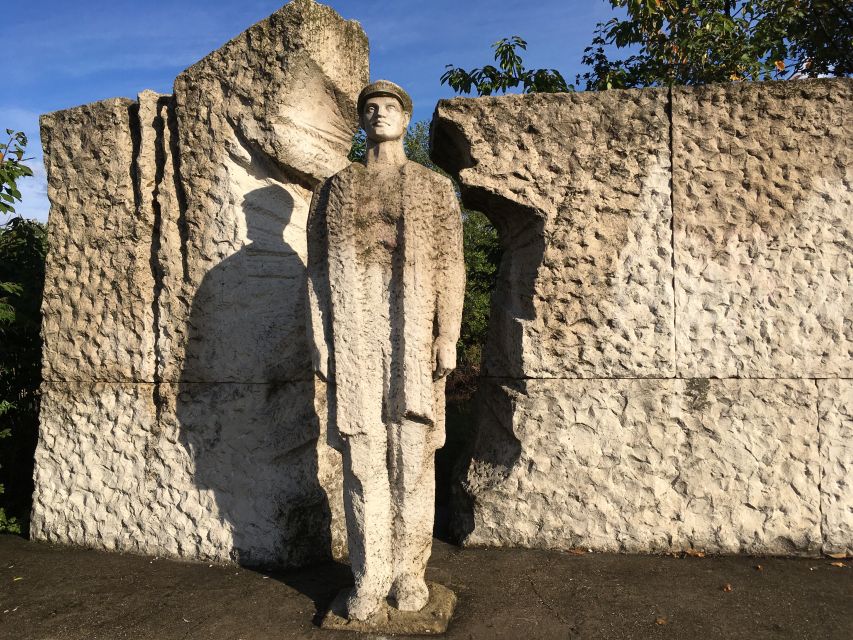
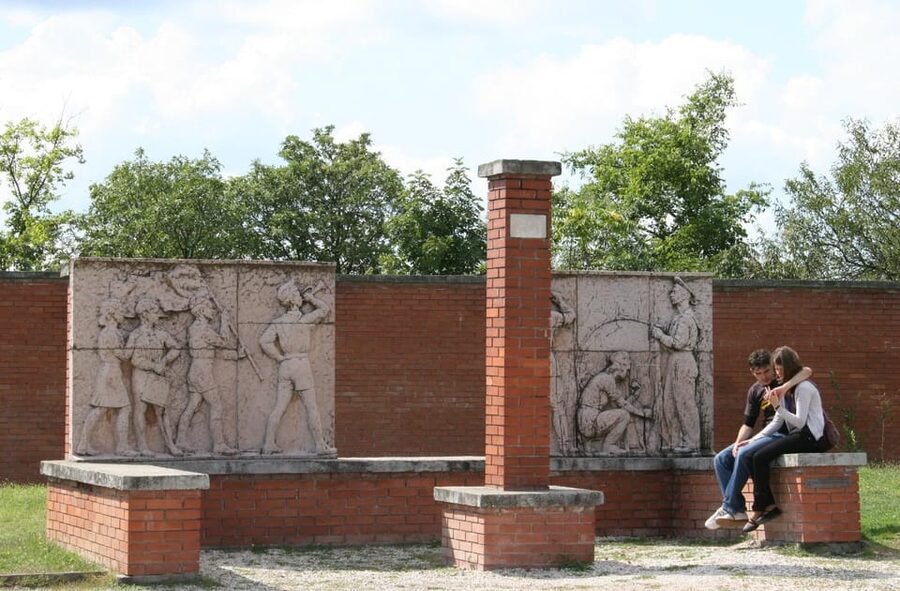
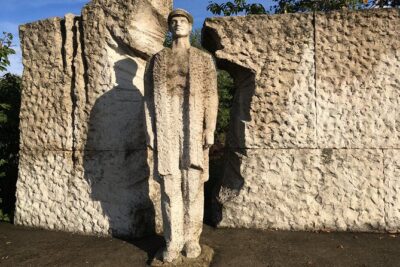
The main Statue Park holds the monuments removed from Budapest’s streets after the end of communist rule. Your guide introduces statues of workers, Hungarian and international communist figures, and major events linked to the workers’ movement.
This is the heart of the experience. The figures are large, formal, and designed to look certain of themselves. Workers may appear strong and united. Leaders may be shown with purpose and authority. Groups may be arranged to suggest progress, solidarity, or historical inevitability.
A guide helps you notice the choices behind those poses. Why is one figure placed in front? Why are arms raised? Why does a worker face in a particular direction? How does the scale of bronze affect the person standing below it? Those questions turn a walk among statues into a lesson in political communication.
I especially like the way this can widen your understanding beyond famous leaders. The park is also about ordinary people and the public messages they encountered. The guide discusses daily life behind the Iron Curtain, giving you a better sense of the gap between official slogans and the experience of Hungarian citizens.
That human side is important. A museum about dictatorship can become a parade of dates and names. Here, the walk connects the physical objects with questions about work, public behavior, restricted choices, and the pressure to accept the state’s version of reality. The strongest tour guides make that connection clear without turning the visit into a lecture.
Guide Ildi receives particular praise for making the subject accessible and involving. Her explanations focus on architectural design, symbolism, and the way propaganda influenced and controlled Hungarian citizens. If she leads your group, expect plenty of room for questions and a personal connection to the period.
The park is not designed as a light entertainment stop. The subject is serious, and the guided format keeps the focus on history. That is a benefit if you want background and interpretation. If you prefer to examine statues quietly at your own pace, the tour may feel more structured than necessary. You can still stay afterward for your own look around.
The End Wall and what the tour leaves you with
The guided walk finishes at the End Wall. This gives the tour a clear endpoint and brings the park’s central idea into focus: these monuments have not simply vanished. They have been moved, preserved, and placed in a setting where you can question the messages they once carried.
I like that the tour does not pretend the past can be erased by removing statues from city squares. The park keeps the objects available for study. It also changes their meaning. A figure that once represented power may now prompt questions about power, memory, and public space.
The final stop works best if you have paid attention to the explanations along the way. You will have seen individual figures, but you will also have learned to connect them to a broader system of images and rituals. That is the real value of the guided visit.
A few more Budapest trips to weigh up
- Budapest: Széchenyi Spa Day Ticket with Optional Upgrades
★ 4.3 · 23,911 reviews - Budapest: Parliament Building Entry Ticket and Audio Guide
★ 4.5 · 3,844 reviews - Budapest: Full-Day Gellért Spa Ticket
★ 4.2 · 3,340 reviews - Budapest: Cinema Mystica Entry Ticket
★ 4.3 · 3,103 reviews
Stay afterward for the Trabant, films, and exhibitions
Your ticket includes access to the park and its premises, so you are not required to leave when the guided portion ends. Use the extra time for photos, the souvenir shop, and the additional displays.
The Trabant is the easiest part of the visit to enjoy without much explanation. This small retro car became a familiar symbol of everyday life in Eastern Europe. Taking a photo inside or beside the original vehicle gives you a modest, human-scale memory of the period, a welcome change after the huge bronze monuments.
The Most Cheerful Barrack contains exhibitions and a movie show. The spy recruitment films are described as unintentionally funny, which makes them an interesting companion to the more formal statue collection. Their tone can reveal plenty about official media and the way the regime tried to present its world.
I would not rush away after the tour. The guided walk supplies the framework, but the films and exhibitions let you see more of the era’s visual language. If you are short on time, stay long enough for the Trabant and a few photos. If modern European history is a main reason for your Budapest visit, allow extra time for the indoor material.
Food and drinks are not included. The itinerary information refers to local snacks and food tasting in one segment, but the stated exclusions say food and drinks are separate. Bring this in mind when planning the visit, and do not assume a snack is part of the ticket price.
Is the $28 price good value?
At $28 per person, this is not the cheapest half-day addition to Budapest. You also need to pay for getting there, since transportation is not included. Still, the ticket covers admission and a live English-language guide, and that guide does the work that makes the park understandable.
I see the price as fair for visitors who want history rather than a quick collection of unusual photographs. The statues would still be striking without commentary, but you could miss the symbols, public function, and human context that make them important. The guided explanation is the part that turns the visit into an educational experience.
The value is strongest for first-time visitors to Memento Park. If you already know communist-era Hungarian history well, you might prefer an unguided look and more time with the films. For most people, though, the guide saves you from guessing what each monument represents.
The tour also has free cancellation up to 24 hours before the start and a reserve-now, pay-later option. Those terms are useful if your Budapest schedule depends on weather or changing plans, although the tour runs in rain or shine.
Getting there from central Budapest
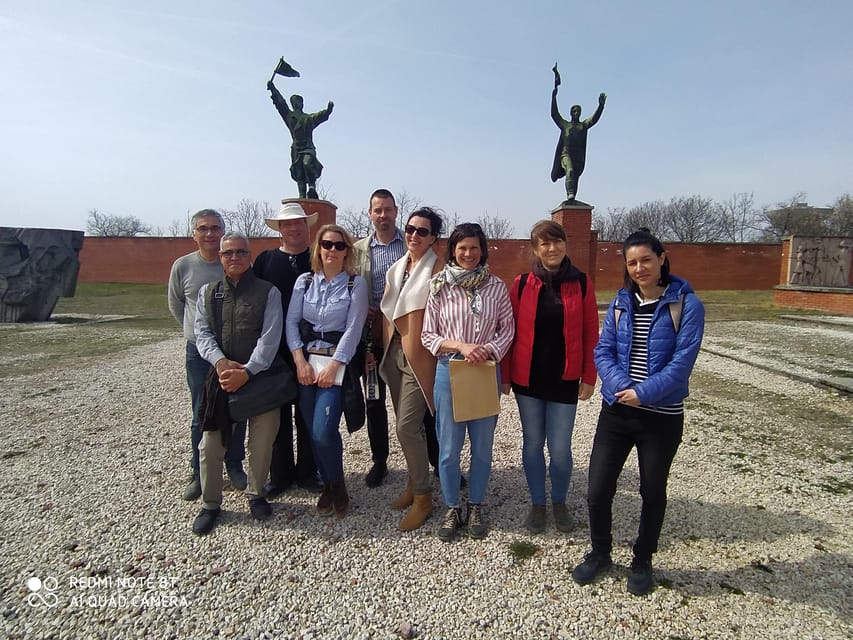
Memento Park is on the outskirts of Budapest. Public transportation takes about 40 minutes, so build the journey into your day rather than treating the park as a quick stop between central attractions.
A taxi is the easier choice if you want to save time or are traveling with a small group. Public transport may make better sense for a tighter budget, but you should allow enough time to arrive at the cash desk 15 minutes before the activity starts.
That early arrival matters because you must present your voucher before joining the group. Arriving late could mean missing the opening at Witness Square, which provides the basic setting for the rest of the tour.
The park’s promenades are covered with gravel. Comfortable shoes are not optional advice here, especially if you plan to stay for photos and exhibitions afterward. Bring sunscreen and weather-appropriate clothing, since much of the visit takes place outside and the tour runs in all conditions.
The setting is wheelchair accessible, but gravel can still affect comfort and pace. If mobility is a concern, plan extra time and confirm any personal access needs when booking.
Who will get the most from this guided visit?
This tour suits you if you enjoy history explained through real places and objects. It is especially useful if you want to understand how propaganda worked in daily public life, not just memorize the names of communist leaders.
It also suits visitors who want a different side of Budapest. The city center offers grand architecture, cafés, and well-known sights. Memento Park shows a quieter edge of the city and deals directly with a difficult part of Hungary’s recent past.
The tour is less suitable for young children. Children under 10 are not permitted, and the subject is serious even for older children. Teenagers with an interest in politics, architecture, or modern history may find the statues and films worthwhile, especially if they are willing to ask questions.
You should also think about your preferred pace. The program is interactive and guide-led. That means you get structure and explanation, but less freedom during the main walk. You can explore independently after the tour, which gives you the best of both approaches.
Should you book Memento Park with a guide?
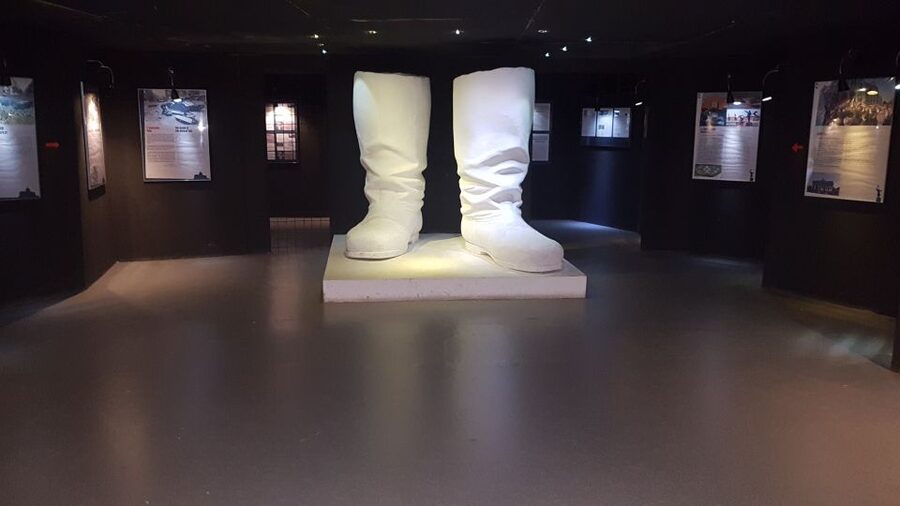
Book this experience if you want the communist statues to make sense, not merely look unusual in photographs. The guide-led format explains the architecture, symbols, political figures, and daily life behind the Iron Curtain, with Ildi praised for bringing personal insight and energy to the subject.
Skip it if you have very little time in Budapest, dislike history-heavy visits, or do not want to spend about 40 minutes reaching the outskirts. You can still enjoy the Trabant, films, and striking bronze figures, but the trip is most worthwhile when you give the subject your attention.
For $28, I consider the guided option good value for a visitor interested in modern Hungarian history. Go prepared for gravel, changing weather, and a serious topic. Allow extra time after the walk, and Memento Park becomes more than a pile of old statues. It becomes a clear, memorable lesson in how public space can be used to shape public thought.
FAQ
Where is Memento Park located?
Memento Park is in Central Hungary, on the outskirts of Budapest. Reaching it by public transportation from central Budapest takes about 40 minutes.
How long does the guided tour take?
The guided portion is described as taking about 70 minutes. The itinerary also lists a 95-minute guided segment and a separate 35-minute segment, so allow roughly an hour to an hour and a half for the guided visit and additional time for the park.
What language is the tour offered in?
The live guided tour is offered in English.
Where do I meet the guide?
Meet the guide at the Memento Park cash desk. Arrive 15 minutes before the activity begins and present your voucher.
What does the ticket include?
The ticket includes admission to Memento Park and its premises, along with the guided tour.
Is transportation included?
No. Transportation to Memento Park is not included in the price.
Is food included?
Food and drinks are not included. The activity information lists food tasting in one itinerary segment, but the stated exclusions say food and drinks are separate.
Is Memento Park wheelchair accessible?
Yes, the activity is listed as wheelchair accessible. Keep in mind that the promenades are covered with gravel.
What should I bring?
Bring comfortable shoes, a camera, sunscreen, and clothing suited to the weather. The tour runs in rain or shine.
Just added around Budapest
- From Budapest: Guided Tour of Eger with Wine Tasting★ 4.5 · 6 reviews
- Budapest: Private Walking Tour with a Local Guide★ 3.6 · 6 reviews
- Budapest: Danube River Views Bike Ride★ 4.8 · 23 reviews
- Trash Art Museum: Hungary’s First Scrap Metal Exhibition★ 4.3 · 72 reviews
- Walk to recent and aged spiritual sanctuaries near Budapest★ 5.0 · 5 reviews
- Budapest: 3-Hour Trabant Sightseeing Tour★ 4.7 · 28 reviews
- True Crime Walking Tour in the Buda Castle district★ 5.0 · 26 reviews
- Audio visual multi-sensory chefs journey dinner experience★ 5.0 · 3 reviews
Communism & Memento Park Tours, compared.
Communist History Tour with House of Terror Option
Read our review →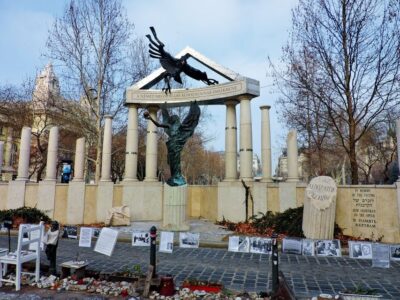
3-Hour Walking Tour About Communism (Small Group)
Read our review →
Lives of Hungarians Under Communist and Capitalist system
Read our review →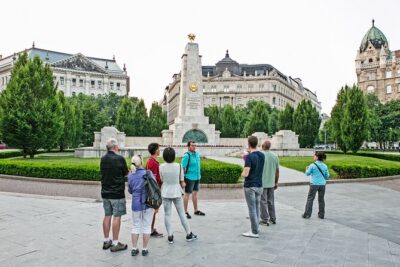
Private Budapest Hammer & Sickle Communist Times Tour
Read our review →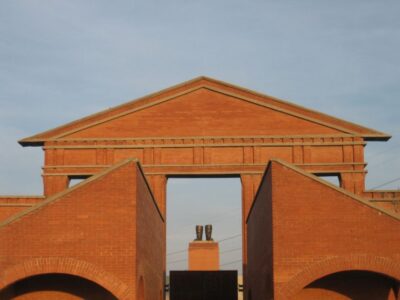
Browse the lists this tour appears in