
Reviewed · COMMUNISM & MEMENTO PARK TOURS
Communist Budapest Private Walking Tour
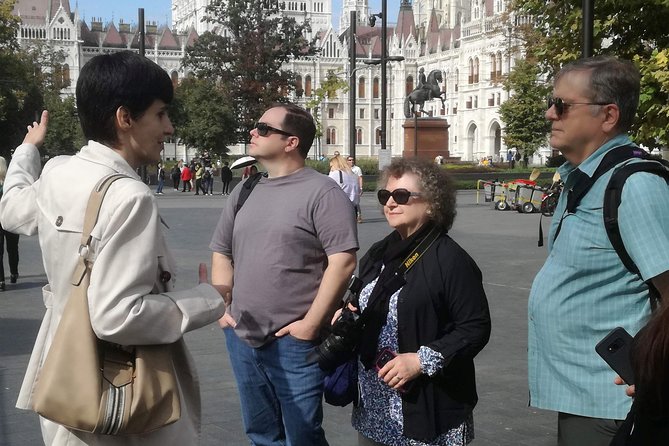
Communist Budapest is easiest to understand when you move through the city rather than sit in a museum. This private tour links the 1956 uprising, Cold War landmarks, socialist statues, and a 1970s housing estate into one three-hour story, led by a local historian.
I like the small private format, since your guide can adjust the discussion to your interests. I also like the mix of major sights and everyday subjects, including food shortages, state control, May Day parades, and life under Hungary’s version of goulash communism.
The main drawback is that the tour does not include entry to the House of Terror Museum. You finish outside, so plan another visit if you want the full indoor exhibition. Also check the final group limit when booking, as the supplied details mention both six and eight people, with the headline price listed for up to 10.
In This Review
- Key points
- Why Communist Budapest Works Best on Foot and by Metro
- Parliament and Liberty Square: Revolution and Cold War Power
- Ronald Reagan’s Statue and Hungary’s Debt to the West
- Bem József Square and the Start of the 1956 Uprising
- Puskás Stadium and Socialist Realist Sculpture
- May Day Routes, Housing Estates, and Everyday Goulash Communism
- House of Terror: A Strong Ending, Not an Included Museum Visit
- What the Private Format Adds
- Transport, Timing, and What to Bring
- Who Will Get the Most From This Walk
- Should You Book the Communist Budapest Tour?
- FAQ
- How long is the Communist Budapest Private Walking Tour?
- What language is the tour offered in?
- Is the tour private?
- Where does the tour start?
- Where does the tour finish?
- Is entry to the House of Terror Museum included?
- Are metro and tram tickets included?
- How much does the experience cost?
- Can I cancel for a full refund?
Key points
- Begin at Parliament and Liberty Square: Connect the 1956 revolution, the Cold War, the Soviet Army monument, Ronald Reagan, and an atomic shelter.
- Visit Bem József Square: See where the first major demonstration of the 1956 uprising began and pause at a coffeehouse with its 1960s interior.
- Read the propaganda in stone: The former People’s Stadium, now Puskás Stadium, still has socialist realist statues.
- Use public transport as part of the lesson: Your guide helps with metro and tram tickets, making it easier to connect scattered sites.
- Finish at the House of Terror: The former secret service headquarters and Berlin Wall section provide a useful next step for independent museum visitors.
- Meet Andras or Kata: Both are named guides associated with especially personal, clear storytelling and the ability to shape the tour around your interests.
Why Communist Budapest Works Best on Foot and by Metro
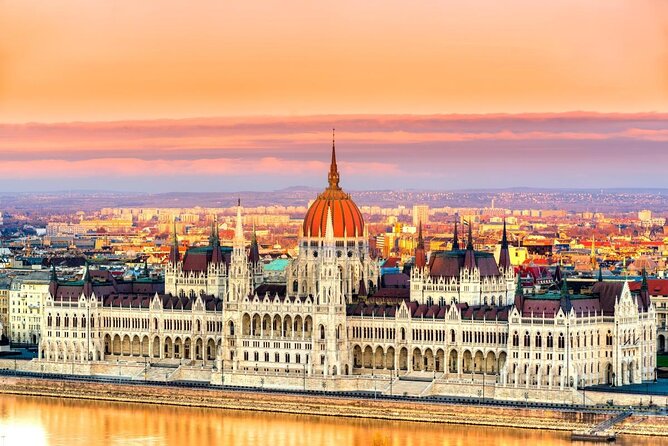
Hungary’s communist period lasted from 1949 until 1989, but its traces are not gathered in one historic quarter. They appear beside Parliament, on broad parade routes, in public squares, around sports grounds, and in ordinary housing districts.
That makes the transport between stops useful. You are not simply being driven from one photo stop to another. You move through Budapest by metro, tram, or on foot, with the guide explaining how each location fits the larger story.
The tour begins at a central hotel or flat if you arrange pickup. If you do not provide an address or prefer to meet independently, the default meeting point is at Frankel Leó út 2-4. You should arrive 15 minutes early.
The experience is offered in English, with morning and afternoon departures. A private historian guide leads your group, and the price is charged per group rather than per person. At $393.17, it makes the most sense for a group sharing the cost, especially if you want a discussion shaped around your own questions.
More communism & memento park tours in Budapest:
- Budapest: Communist History Tour with House of Terror Option
★ 4.8 · 182 reviews - Communism in Hungary with a Historian
★ 5.0 · 70 reviews - Budapest: 3-Hour Walking Tour About Communism (Small Group)
★ 4.7 · 70 reviews
Parliament and Liberty Square: Revolution and Cold War Power
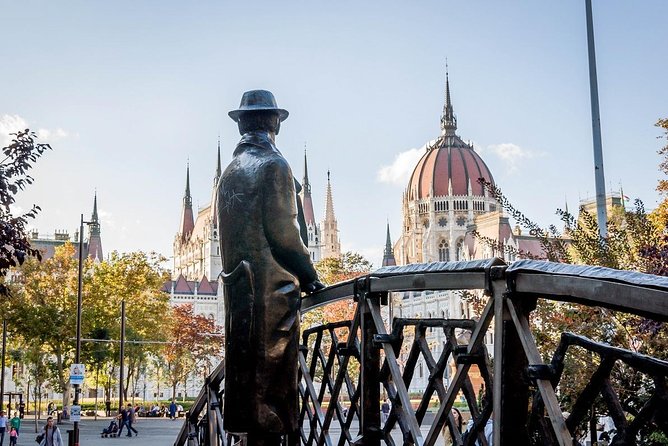
The first major part of the route takes you by subway to Kossuth Square, directly in front of the Hungarian Parliament Building. The focus here is not a standard Parliament tour. Instead, you look at monuments tied to the 1956 revolution and consider how this public space became connected with protest, power, and national memory.
From Parliament, the route continues toward Liberty Square. This is one of the most useful sections for understanding the Cold War because different political memories sit close together.
You discuss the US Embassy, the monument to the Soviet Army, and the statue of Ronald Reagan. An atomic shelter also enters the story, bringing the Cold War down from international politics to the fear of what ordinary people might face during a nuclear crisis.
I like this opening because it gives you competing viewpoints in the same urban setting. The Soviet monument, American presence, Hungarian revolution, and Reagan statue do not tell one simple story. Your guide can explain how Hungary remembers Soviet control while also recognizing the outside forces that helped end the Iron Curtain.
The listed stop lasts about 25 minutes, with no admission charge. The only extra cost here is public transport if you do not already have a Budapest pass.
Ronald Reagan’s Statue and Hungary’s Debt to the West
The Reagan statue receives its own short stop of about 10 minutes. It is easy to treat it as a quick photo opportunity, but the guide explains why the monument matters to Hungarian memory.
Hungarian views of Reagan include a sense of obligation for his efforts to bring down the Iron Curtain. That does not erase the complexity of the period, and the location near Cold War monuments gives you a chance to ask how local and international politics met in Budapest.
This is a good example of why a private guide helps. You can ask how Hungarians view the end of communism, how public monuments change meaning, or why certain foreign figures receive a place in the city. The stop is brief, so it works best as part of the larger explanation rather than as a separate attraction.
Bem József Square and the Start of the 1956 Uprising
Bem József Square is one of the emotional centers of the route. The first major demonstration of the 1956 uprising began here, making the square more than a pleasant urban space. You learn how a public gathering grew into a national revolt against Soviet domination and the Hungarian communist system.
The stop lasts about 25 minutes and includes a coffeehouse that has kept its original 1960s interior. That detail matters. Political history can feel remote when it is reduced to leaders, dates, and monuments. A preserved café gives you a more ordinary point of contact with the period.
I would pay close attention here to the contrast between public protest and daily routine. The square recalls a dramatic uprising, while the coffeehouse hints at the quieter habits and limited choices of life under communism.
The tour does not promise a long café visit, and the admission details do not list a drink or meal. Treat the interior as part of the setting, not as a dedicated dining stop.
A few more Budapest trips to weigh up
- Budapest: Buda Castle Walk with Saint Stephen’s Hall
★ 4.5 · 3,012 reviews - Big Bus Budapest Hop-On Hop-Off Bus and Walking Tour
★ 3.5 · 2,206 reviews - Budapest: Buda Castle District Walking Tour
★ 4.6 · 2,108 reviews - Budapest City Landmarks Walking Tour in 2 Hours
★ 5.0 · 2,048 reviews
Puskás Stadium and Socialist Realist Sculpture
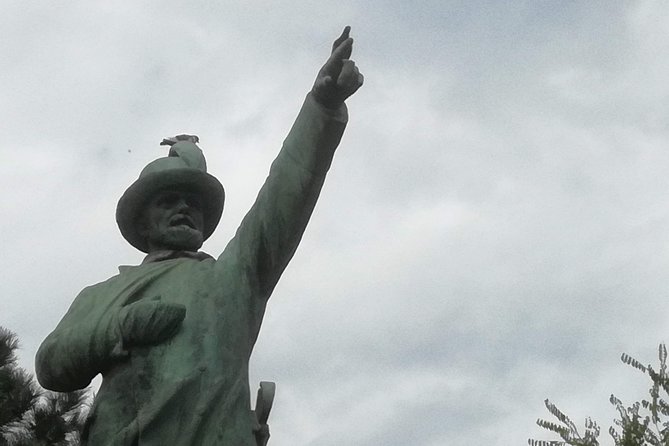
The route also calls at the former People’s Stadium, now Puskás Stadium. The visit lasts about 20 minutes and is free.
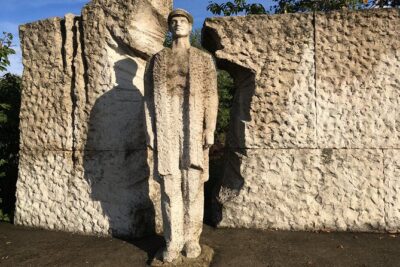
The important feature is the set of classic socialist realist statues still in place. These works show how the regime used public art and athletic spaces to promote physical strength, collective purpose, and loyalty to the state.
Your guide can help you read the statues as political messaging rather than decorative sculpture. Look for the heavy, idealized style favored by communist governments. Bodies and poses were designed to project confidence and unity, even when daily life was marked by shortages and political limits.
The stadium stop adds a visual break from squares and government buildings. It also helps explain how propaganda reached beyond official speeches. It appeared in sports, architecture, monuments, parades, and the design of public space.
You should not expect admission to a match or an extended stadium visit. The listed activity is a short exterior stop, useful for the surviving statues and the discussion around them.
May Day Routes, Housing Estates, and Everyday Goulash Communism
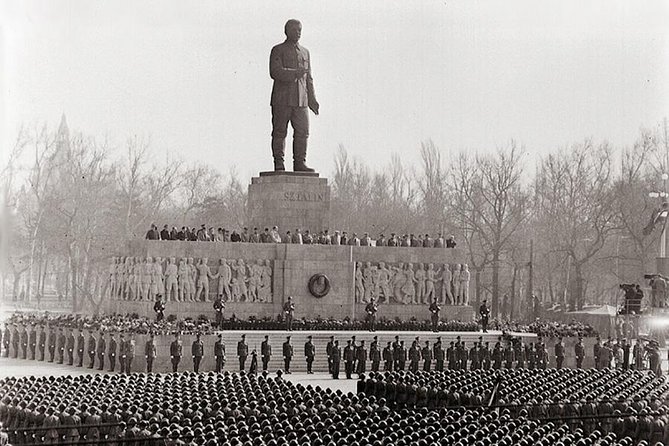
One of the strongest parts of this experience is its attention to ordinary life. The tour covers streets used for May Day parades and includes a 1970s housing estate.
These details help you move past the familiar images of secret police and revolution. May Day parades show how the state claimed the streets and staged public unity. A housing estate points to the practical side of socialist planning, where large blocks were built to house growing urban populations.
The phrase goulash communism refers to Hungary’s softer, more consumer-oriented form of communist rule compared with some other Soviet-aligned states. Softer did not mean free or easy. You discuss privations and the restrictions that shaped everyday life, while also considering why the Hungarian system developed its particular character.
The housing estate is especially valuable for anyone who wants more than political symbolism. A monument tells you what the state wanted people to believe. Housing tells you how the state organized daily living.
The precise estate included can depend on the guide and the route, so I would ask at booking if this part is especially important to you. The supplied tour details identify a 1970s housing estate but do not name the specific development.
House of Terror: A Strong Ending, Not an Included Museum Visit
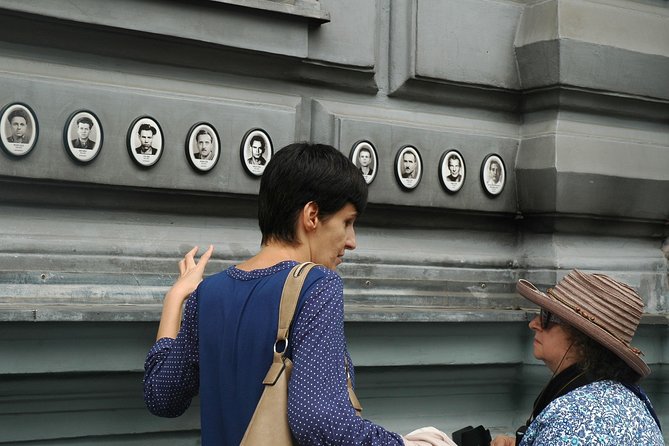
The tour concludes outside the House of Terror Museum at Andrássy út 60. The building served as the headquarters of Hungary’s communist secret services, and a section of the Berlin Wall is displayed in front.
This is a powerful endpoint because it gathers several themes from the walk: surveillance, state violence, political imprisonment, and the memory of both Nazi and communist rule in Hungary. Your guide can set up the museum and explain why the building matters before you decide how to continue.
The museum exhibition is not included in the tour. You need a separate admission if you want to go inside, and the three-hour walking experience does not include that visit.
I see this as a useful limitation rather than a serious flaw. A museum visit can take much longer than the tour itself, and keeping it separate lets you choose between continuing with the exhibition or moving on to another part of Budapest. If you want both, leave time in your schedule rather than booking a tight afternoon commitment.
What the Private Format Adds
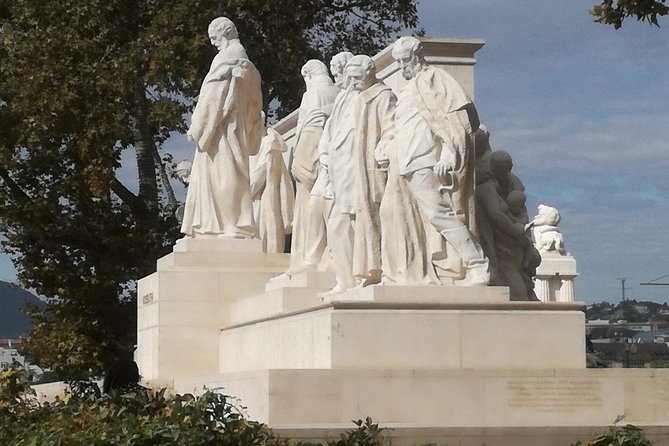
A private guide changes the pace and the level of detail. You can ask about family life, censorship, shopping, transport, political monuments, or the fall of communism without waiting for a large group to catch up.
Andras is described as kind, highly informed, and willing to adjust the route to suit your interests. Kata is praised for explaining clearly, bringing a broad world view, and adding humor and grace to the experience. Those qualities matter on a serious subject. The tour deals with repression and hardship, but it does not need to become grim or academic.
The group size needs a careful check. The headline information says the price is for a group of up to 10, the highlights mention a maximum of six, and the additional details say a maximum of eight participants. Since the product is private, the practical value depends on the actual number allowed for your booking.
For two people, $393.17 is a substantial cost. For six to eight people sharing the charge, the price becomes more reasonable, particularly if you want a specialist guide and a flexible conversation. A larger private group should confirm the limit before paying.
Transport, Timing, and What to Bring
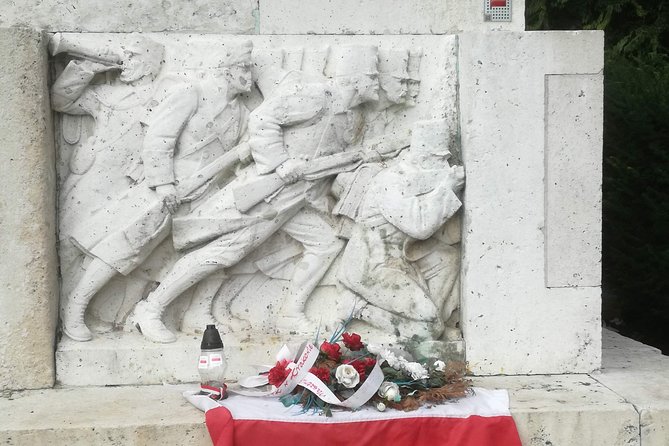
The tour lasts about three hours. Because the sites are spread across Budapest, expect a mixture of walking, subway travel, tram travel, and short transfers on foot.
Metro and tram tickets are not included. If you do not have a transport pass, the guide will help you buy the required tickets. This keeps the logistics simple, but you should still carry a little time and patience for ticket purchases and city movement.
Pickup is offered from a central hotel or flat. The company requests your address when sending your guide’s phone number and photo. If you do not arrange pickup, use the default meeting point and arrive 15 minutes before the start.
Wear comfortable shoes and dress for the weather. The tour includes outdoor squares and streets, and the supplied information does not promise indoor shelter at each stop. A morning departure may suit you if you want the rest of the day for the House of Terror. An afternoon departure could work well if you prefer a slower start.
The experience is near public transportation, and most people can participate. No special accessibility details are supplied, so contact the provider directly if you need a specific arrangement.
Who Will Get the Most From This Walk
I would choose this tour if you want Budapest’s communist period explained through places rather than dates alone. It suits people who have already seen the Parliament exterior and want a more focused subject, as well as first-time visitors who want a different side of the city.
It is also a good fit for:
- Couples or families who want a private discussion rather than a fixed group lecture
- People interested in the 1956 uprising and Cold War politics
- Architecture and public-art enthusiasts drawn to socialist realist monuments
- Visitors planning to see the House of Terror and wanting context first
- Groups willing to share the cost of a specialist guide
I would think twice if you want a museum-heavy experience, since no museum admission is included. I would also skip it if your main goal is a general introduction to Budapest’s churches, cafés, royal buildings, or art museums. This walk stays focused on communist rule from 1949 to 1989.
Free cancellation is available if you cancel at least 24 hours before the local start time. Changes or cancellations made inside that window are not accepted for a refund.
Should You Book the Communist Budapest Tour?
Book it if the 1956 uprising, Soviet influence, Cold War politics, propaganda, and everyday life under communism are high on your Budapest list. The strongest reason to choose it is the combination of a private historian and real city locations, from Bem Square to a socialist housing estate.
The value improves sharply when several people share the $393.17 group price. Before booking, confirm the permitted group size and ask which housing estate is planned if that detail matters to you.
For the best follow-up, finish at the House of Terror and visit the museum separately if you still have time and interest. You will leave the walk with a clearer sense of how political power shaped Budapest’s streets, monuments, housing, and public memory.
FAQ
How long is the Communist Budapest Private Walking Tour?
The tour lasts approximately three hours.
What language is the tour offered in?
The tour is offered in English.
Is the tour private?
Yes. A private historian guide leads the group.
Where does the tour start?
Pickup is offered from a central hotel or flat. If you do not arrange pickup, meet at Budapest, Frankel Leó út 2-4, 1027 Hungary, 15 minutes before the start.
Where does the tour finish?
The tour finishes outside the House of Terror Museum at Andrássy út 60 in Budapest.
Is entry to the House of Terror Museum included?
No. The tour ends outside the museum, and admission to the indoor exhibition is not included.
Are metro and tram tickets included?
No. Your guide will help you purchase the required tickets if you do not already have a transport pass.
How much does the experience cost?
The listed price is $393.17 per group. The supplied details give different maximum group sizes, including six, eight, and 10, so confirm the limit when booking.
Can I cancel for a full refund?
Yes, if you cancel at least 24 hours before the experience’s local start time. Cancellations or changes made less than 24 hours in advance are not refunded or accepted.
Just added around Budapest
- From Budapest: Guided Tour of Eger with Wine Tasting★ 4.5 · 6 reviews
- Budapest: Private Walking Tour with a Local Guide★ 3.6 · 6 reviews
- Budapest: Danube River Views Bike Ride★ 4.8 · 23 reviews
- Trash Art Museum: Hungary’s First Scrap Metal Exhibition★ 4.3 · 72 reviews
- Walk to recent and aged spiritual sanctuaries near Budapest★ 5.0 · 5 reviews
- Budapest: 3-Hour Trabant Sightseeing Tour★ 4.7 · 28 reviews
- True Crime Walking Tour in the Buda Castle district★ 5.0 · 26 reviews
- Audio visual multi-sensory chefs journey dinner experience★ 5.0 · 3 reviews
Communism & Memento Park Tours, compared.
Communist History Tour with House of Terror Option
Read our review →
3-Hour Walking Tour About Communism (Small Group)
Read our review →
Lives of Hungarians Under Communist and Capitalist system
Read our review →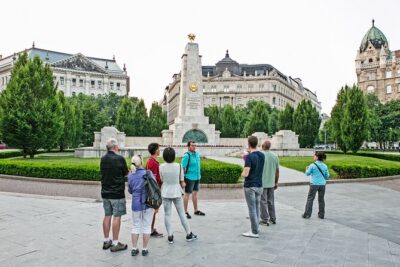
Private Budapest Hammer & Sickle Communist Times Tour
Read our review →
Browse the lists this tour appears in