
Reviewed · COMMUNISM & MEMENTO PARK TOURS
Communist Budapest Walking Tour
Budapest’s communist past is not confined to a museum. It is written across Parliament, Freedom Square, Soviet monuments, stadium statues, and old public squares. This three-hour walk links those places into a clear story about the 1956 uprising, Soviet power, Cold War politics, and daily life under the regime.
I like the way the tour combines major sights with less obvious details, including an atomic shelter, socialist realist statues, and a 1960s coffeehouse interior. I also like the small-group format and the chance to discuss the subject with a historian such as Andras or Kata. The drawback is simple: at $126.50 per person, this is not a budget sightseeing walk, and the House of Terror admission is not included.
In This Review
- Key points to know before booking
- Why Communist Budapest is worth three hours
- Starting near the Danube and reaching Parliament
- Freedom Square and Budapest’s Cold War symbols
- A brief look at the House of Terror’s dark exterior
- Puskás Stadium and propaganda in stone
- Ronald Reagan’s Budapest connection
- Bem József Square and the first major protest of 1956
- What the guides add to the walk
- Is $126.50 a fair price?
- Timing, walking, and who should book
- Should you book Communist Budapest?
- FAQ
- How long is the Communist Budapest Walking Tour?
- What language is the tour offered in?
- What is the price?
- Where does the tour start?
- Where does the tour end?
- Is admission to the House of Terror Museum included?
- Is public transportation included?
- How large is the group?
- Can I cancel for a full refund?
Key points to know before booking
- Parliament sets the political stage: Begin at Kossuth Square with monuments tied to the 1956 revolution.
- Freedom Square packs in Cold War symbols: See the Soviet War Memorial, the US Embassy, Ronald Reagan’s statue, and an atomic shelter.
- Puskás Stadium reveals propaganda in stone: Socialist realist statues remain around the former People’s Stadium.
- Bem József Square connects directly to the uprising: This is where the first major demonstration of 1956 began.
- The tour ends at the House of Terror: You can continue on your own, but museum admission costs extra.
- Small groups make discussion possible: The activity is capped at a maximum of eight people, with morning and afternoon departures.
Why Communist Budapest is worth three hours
If you only see Budapest’s grand architecture and thermal baths, you can miss the political story that shaped modern Hungary. This walk gives you a framework for understanding why certain monuments remain, why others were removed, and how the city remembers Soviet rule today.
The subject is serious, but the format is not a lecture in a sealed room. You move through central Budapest, stopping at places where political events actually unfolded. That physical connection matters. A square becomes more than a photo stop when you learn that a protest began there, or that a monument once carried a very different message.
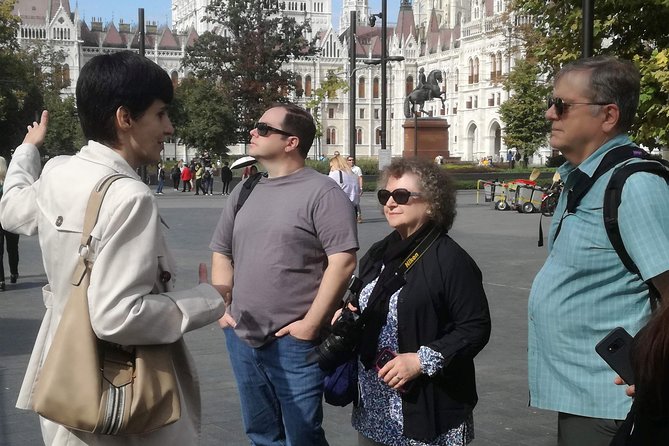
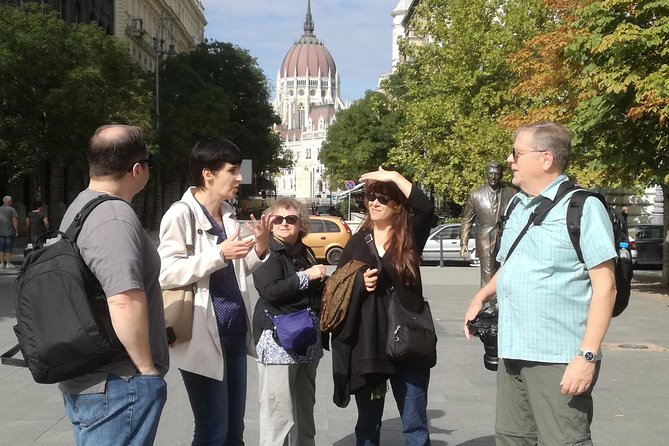
The tour is led by a local historian, and the strongest part is likely to be the discussion. Questions about censorship, propaganda, the 1956 uprising, Cold War loyalties, and ordinary life in communist Hungary fit naturally into the walk. Guides named in the feedback include Andras and Kata, both praised for giving detailed answers and helping visitors understand what daily life felt like, not just what happened on a timeline.
You should choose this tour if you want context and conversation. If you only want attractive buildings and quick photographs, it may feel too serious. One direct piece of advice applies here: bring good walking shoes and water, and come ready to listen.
More communism & memento park tours in Budapest:
- Budapest: Communist History Tour with House of Terror Option
★ 4.8 · 182 reviews - Communism in Hungary with a Historian
★ 5.0 · 70 reviews - Budapest: 3-Hour Walking Tour About Communism (Small Group)
★ 4.7 · 70 reviews
Starting near the Danube and reaching Parliament
The published meeting point is at Frankel Leó út 2-4 in District II. From there, the group uses the subway to reach Kossuth Square in front of the Hungarian Parliament Building. Public transport is part of the practical design of the tour, so you should have a Budapest transit pass or be ready to buy tram or metro tickets with help from your guide.
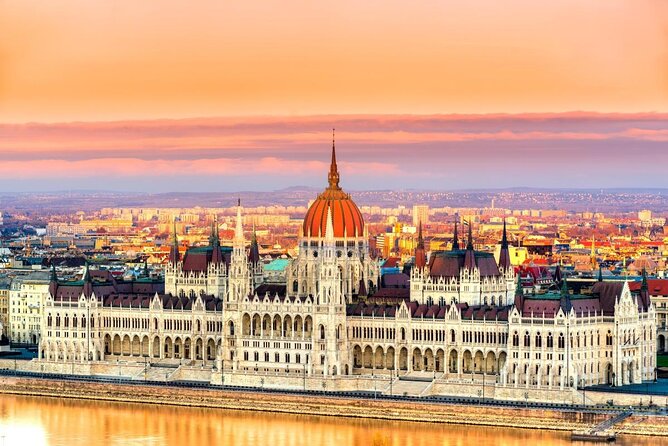
At Kossuth Square, the focus is not a full architectural tour of Parliament. Instead, the guide uses the setting to introduce monuments connected with the 1956 revolution and the political forces behind it.
This is a useful opening because Parliament immediately places the story in the center of Hungarian public life. You are not starting with an abstract definition of communism. You are standing beside the country’s seat of government and looking at the marks left by a revolt that challenged Soviet control.
The stop lasts about 25 minutes. That is enough time for explanation and questions, but not for an extended visit inside Parliament. Admission to Parliament is not part of this activity, so you should not expect an interior tour.
Freedom Square and Budapest’s Cold War symbols
From Parliament, the walk continues to Liberty Square, also called Freedom Square. This is one of the most rewarding portions of the route because several powerful and conflicting symbols sit close together.
You see the US Embassy, the Soviet War Memorial, and a statue of Ronald Reagan. The square becomes a lesson in Cold War memory. The Soviet monument recalls the Red Army’s role at the end of the Second World War and the decades of Soviet influence that followed. The US Embassy points to the Western side of the political divide, while Reagan’s statue reflects Hungary’s gratitude for his role in challenging the Iron Curtain.
The Reagan statue is a particularly useful stop because it adds a Hungarian perspective to a familiar American political figure. The tour explains the local sense of obligation to Reagan for efforts that helped bring down the Iron Curtain. You get more than a standard account of the Cold War, since the discussion shows how Hungary remembers the period from inside the former Eastern Bloc.
There is also an atomic shelter connected with this part of the route. The shelter gives the Cold War a physical edge. Nuclear fear was not only a matter of speeches and military maps. It shaped buildings, planning, and public anxiety.
The Freedom Square portion lasts about 25 minutes. You will want to pay attention here rather than rush between monuments. The value lies in seeing how different political messages share one public space.
A brief look at the House of Terror’s dark exterior
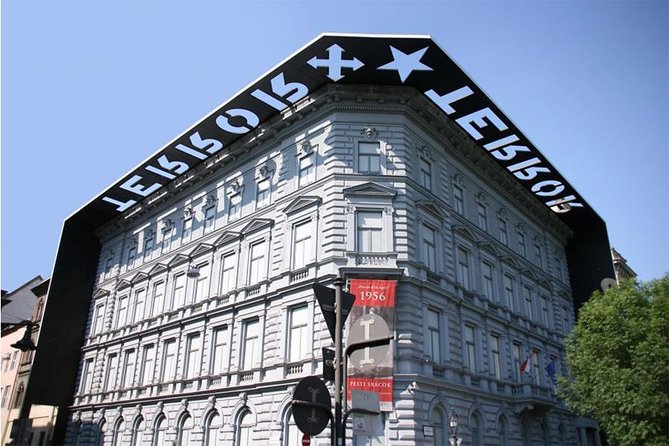
The tour concludes outside the House of Terror Museum at Andrássy út 60. The building once served as headquarters for Hungary’s communist secret services, and its exterior alone makes a strong final point.
A slab of the Berlin Wall is placed in front of the building. That detail connects Hungary’s national story to the wider collapse of communist rule across Central and Eastern Europe.
The guided portion ends outside, and museum admission is not included. That is both a limitation and a practical advantage. You are free to decide if you want to spend more time and money inside, rather than being committed to a museum visit that may not suit your schedule.
If you do enter later, the tour gives you useful preparation. You will already have discussed the political setting, the 1956 uprising, Soviet influence, and the role of secret police institutions. If you are traveling with limited time, you can also treat the exterior as the endpoint and continue with your day.
The final stop lasts about 15 minutes. The building is imposing, but the real value comes from the guide explaining why this location carries such weight in Hungary’s memory.
A few more Budapest trips to weigh up
- Budapest: Buda Castle Walk with Saint Stephen’s Hall
★ 4.5 · 3,012 reviews - Big Bus Budapest Hop-On Hop-Off Bus and Walking Tour
★ 3.5 · 2,206 reviews - Budapest: Buda Castle District Walking Tour
★ 4.6 · 2,108 reviews - Budapest City Landmarks Walking Tour in 2 Hours
★ 5.0 · 2,048 reviews
Puskás Stadium and propaganda in stone
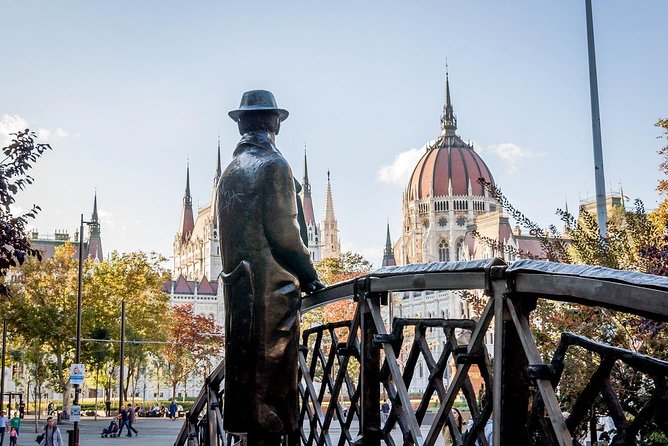
The route also includes the former People’s Stadium, now Puskás Ferenc Stadium. The stadium is associated with Hungarian football, but this tour looks at its remaining socialist realist statues.
These sculptures show how the communist regime used public art and sports architecture to project strength, discipline, and collective purpose. The statues were not placed simply to decorate a sports ground. They helped present the ideal citizen and the ideal state.
This stop is useful because propaganda can be easier to understand when you see it in a public setting. A political slogan on a wall can feel distant. A monumental figure outside a stadium shows how the government shaped everyday visual surroundings.
The visit lasts about 20 minutes, and admission is free. You should not expect a stadium match or a full sports tour. The focus is on the architecture and statues that remain from the socialist period.
For me, this is the kind of stop that justifies taking a specialist tour rather than following a standard city route. You might walk past the stadium without knowing what its statues were meant to communicate. A historian can point out the message and explain how it fit the broader political system.
Ronald Reagan’s Budapest connection
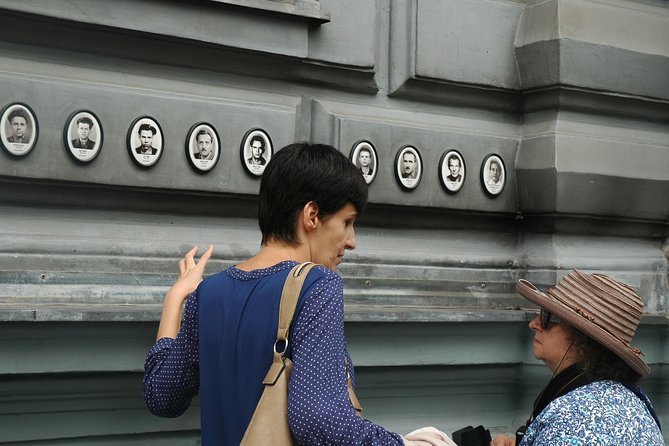
The Ronald Reagan statue receives its own short stop of about 10 minutes, even though it is also part of the Freedom Square story. That extra attention makes sense because the statue raises a question many people have when visiting Budapest: why is an American president honored here?
The answer concerns the end of the Cold War and Hungarian appreciation for Reagan’s pressure on the Soviet system. The guide explains the Hungarian sense of obligation to him for helping bring down the Iron Curtain.
This is a quick stop, but it adds balance to the tour. The walk is not only about Soviet control or Hungarian suffering. It also shows how modern Hungary publicly remembers the outside forces and political figures connected with the end of that era.
You will have time for photographs and a focused explanation. The statue is free to see, and no special ticket is needed.
Bem József Square and the first major protest of 1956
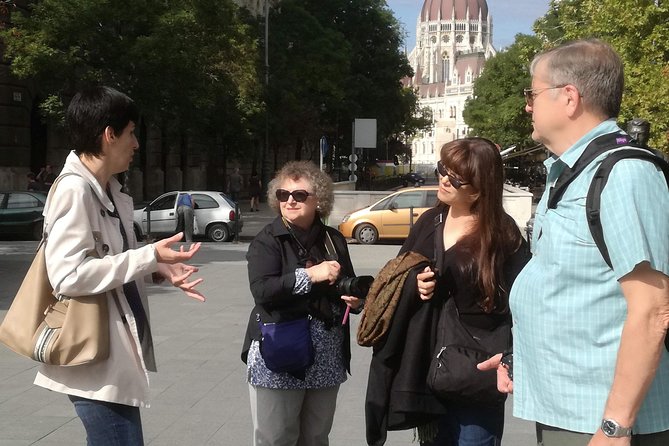
Bem József Square is one of the most historically important stops. It is identified as the place where the first major demonstration of the 1956 uprising began.
The square helps turn the uprising from a date in a textbook into a public gathering with a location and a human scale. Your guide can explain how opposition grew, why demonstrations became so important, and how the events fit into Hungary’s struggle against Soviet-backed rule.
There is also a coffeehouse on the square that has retained its original interior from the 1960s. That detail gives the stop a welcome everyday angle. Political history is often told through leaders, armies, and speeches. An old café interior hints at how much of life continued in ordinary spaces while the state controlled the larger political world.
The stop lasts about 25 minutes. The coffeehouse is not presented as a separate meal or tasting stop, so you should not book this expecting a café break. Think of it as a visual reminder of the period and a chance to discuss the difference between public politics and private life.
The square is one of the best places to ask questions. The guides are encouraged to discuss the experience of living under communism, and this is where the subject can move beyond dates and monuments.
What the guides add to the walk
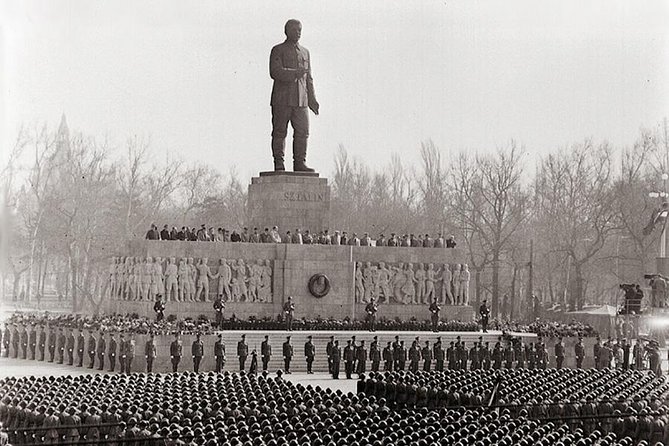
A communist history tour rises or falls on the guide. Dates and monument names are easy to find online. What you are paying for is the ability to connect them and answer the awkward questions.
The guide is described as an expert local historian and an enthusiastic host. Andras and Kata are names associated with especially strong feedback. Andras is noted for detailed answers and broad discussion of key moments in Hungarian history. Kata is praised for giving clear historical information and helping explain what life under communism felt like.
You should still understand the style before booking. This is not a light sightseeing stroll with occasional historical comments. It is a focused history walk. If you want a serious conversation about communism, the Cold War, propaganda, and the 1956 uprising, the format should suit you well.
The group size helps. The activity has a maximum of eight people, and the tour is presented as a small-group experience. A compact group gives you a better chance to ask follow-up questions instead of listening from the back of a large crowd.
Is $126.50 a fair price?
At $126.50 per person, this tour costs far more than a basic self-guided walk. You are paying for three hours with a specialist historian, route planning, interpretation at several sites, and the chance to ask detailed questions in a small group.
The price makes more sense if Budapest’s twentieth-century politics is a main reason for your visit. A good guide can save you hours of reading and help you notice symbols you might otherwise pass without understanding.
The value is weaker if you mainly want general sightseeing. Several stops are free, and the House of Terror ticket is extra. You also pay for metro or tram tickets unless you already have a Budapest visitor pass.
For a person who wants a quick overview, $126.50 may feel steep. For someone who wants a focused, expert-led discussion rather than a broad city tour, the cost can be justified. The strong five-star feedback points especially to the quality of the guides, not to luxury transport or included admissions.
Timing, walking, and who should book
You can choose a morning or afternoon departure. That flexibility is useful if you have other Budapest plans, although the supplied details do not specify the exact departure times.
The tour lasts about three hours and combines walking with subway travel. Wear comfortable shoes and carry water. The route includes several outdoor stops, and you should be prepared to spend time standing while the guide explains the monuments.
Most people can take part, and the tour operates near public transportation. The activity is offered in English. Confirmation is provided at booking.
I would recommend it to:
- Visitors interested in Hungarian and European twentieth-century history
- People who prefer discussion and interpretation to passive sightseeing
- Anyone planning to visit the House of Terror and wanting background first
- Repeat visitors who have already seen Budapest’s standard sights
- Students, teachers, and readers interested in the Cold War
I would hesitate to recommend it to someone who wants a relaxed café walk, a general introduction to Budapest, or a tour with many interior admissions included.
Should you book Communist Budapest?
Book this tour if you want to understand how communism shaped Budapest and how Hungary remembers the Cold War today. The strongest reasons are the historian-led discussion, the small group, and the route’s mix of major places and easy-to-miss details.
Before paying, be clear about the focus. You will not tour Parliament’s interior, and the House of Terror museum is not included. You will see the building from outside and finish there, with the option to visit independently.
For history-minded visitors, the tour offers a useful three-hour introduction with real places, strong context, and room for questions. For casual sightseeing, save the money and explore the monuments on your own. The choice comes down to whether you want to see communist Budapest or understand it.
FAQ
How long is the Communist Budapest Walking Tour?
The tour lasts approximately three hours.
What language is the tour offered in?
The tour is offered in English.
What is the price?
The listed price is $126.50 per person.
Where does the tour start?
The meeting point is Budapest, Frankel Leó út 2-4, 1027 Hungary.
Where does the tour end?
The tour ends outside the House of Terror Museum at Andrássy út 60, 1062 Budapest.
Is admission to the House of Terror Museum included?
No. The guided tour concludes outside the museum, and admission to the exhibit is not included.
Is public transportation included?
No. Your guide can help you purchase Budapest tram and metro tickets if you do not already have a visitor pass.
How large is the group?
The activity has a maximum of eight travelers.
Can I cancel for a full refund?
Yes. You can cancel at least 24 hours before the experience start time for a full refund. Cancellations or changes made less than 24 hours before the start time are not accepted for a refund.
Just added around Budapest
- From Budapest: Guided Tour of Eger with Wine Tasting★ 4.5 · 6 reviews
- Budapest: Private Walking Tour with a Local Guide★ 3.6 · 6 reviews
- Budapest: Danube River Views Bike Ride★ 4.8 · 23 reviews
- Trash Art Museum: Hungary’s First Scrap Metal Exhibition★ 4.3 · 72 reviews
- Walk to recent and aged spiritual sanctuaries near Budapest★ 5.0 · 5 reviews
- Budapest: 3-Hour Trabant Sightseeing Tour★ 4.7 · 28 reviews
- True Crime Walking Tour in the Buda Castle district★ 5.0 · 26 reviews
- Audio visual multi-sensory chefs journey dinner experience★ 5.0 · 3 reviews
Communism & Memento Park Tours, compared.
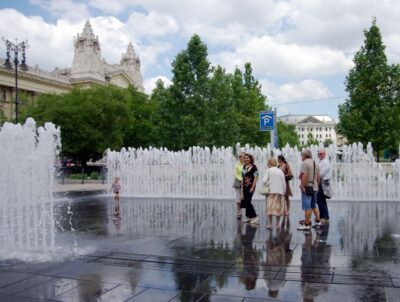
Communist History Tour with House of Terror Option
Read our review →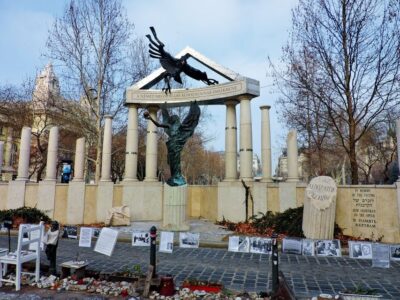
3-Hour Walking Tour About Communism (Small Group)
Read our review →
Lives of Hungarians Under Communist and Capitalist system
Read our review →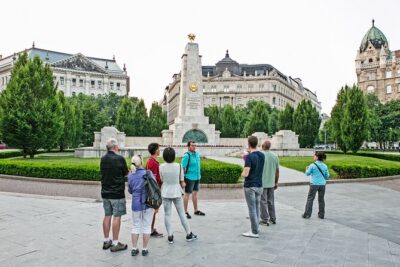
Private Budapest Hammer & Sickle Communist Times Tour
Read our review →
Browse the lists this tour appears in