
Reviewed · COMMUNISM & MEMENTO PARK TOURS
Communist History Evening Walking Tour of Budapest
Budapest’s communist past is easiest to grasp on the streets where it happened. This two-hour evening walk links former monuments, churches, protest sites, and government buildings, helping you see how the regime changed both the city and everyday Hungarian life.
I like the small group of up to 15 and the clear route from Blaha Lujza tér to Parliament Square. I also like the personal angle: Victoria, one of the guides, is a university history professor who brings in stories about modern Budapest, not just dates and architecture. The main drawback is that some explanations take place in noisy or awkward street spots, and the tour requires about 3 kilometers of walking.
In This Review
- Key points at a glance
- Why Budapest’s communist story works best as a walking tour
- Meeting at Blaha Lujza tér and walking toward Andrassy Avenue
- St. Stephen’s Basilica and the pressure on Hungarian religion
- Liberty Square, the former stock exchange, and public protest
- Parliament Square and the violence of the 1956 uprising
- What makes the guiding particularly valuable
- A candid look at the route and walking demands
- Is $36.01 a fair price for two hours?
- Who should book this experience?
- Booking, cancellation, and practical details
- Should you book the Communist History Evening Walking Tour?
- FAQ
- Where does the tour begin?
- Where does the tour end?
- How long is the tour?
- How far do I need to walk?
- Is the tour offered in English?
- What happens if the tour is canceled because of weather?
Key points at a glance
- Three major stops, 22 locations: The walk connects St. Stephen’s Basilica, Liberty Square, Parliament, and other politically important sites.
- A guide-led history lesson: Victoria is praised for clear English, humor, strong historical detail, and answers to difficult questions.
- A look beyond museums: You hear how communism affected religion, business, public protest, football, and present-day Hungarian society.
- A practical evening route: Meet at 6:00 pm at Blaha Lujza tér and finish near the Kossuth Lajos tér metro station and tram 2.
- Good value at $36.01: For two hours of focused history and a small group, the price is fair, especially if this is your first visit to Budapest.
- Come prepared to walk: You need to cover about 3 kilometers on foot, with bottled water supplied.
Why Budapest’s communist story works best as a walking tour
A museum can show you an object from the communist era. A walking tour can show you where power was exercised, where protests turned bloody, and how old institutions were altered or shut down.
That is the real strength here. You move through central Budapest while the guide explains how streets and monuments changed under communism. The subject is not treated as a sealed-off chapter from 1945 to 1989. Instead, you get a sense of how that period still affects Hungarian politics, religion, memory, and daily life.
The route covers parts of Districts VIII, VII, VI, and V. Some stops are handsome and polished. Others are simply ordinary corners with a difficult past. That contrast matters. History does not always happen beside a grand building with a neat plaque.
The tour begins at 6:00 pm, when the central streets take on a different feel. It ends at Parliament Square, close to the red metro line at Kossuth Lajos tér and tram 2. That makes it easy to continue your evening without a long return journey.
More communism & memento park tours in Budapest:
- Budapest: Communist History Tour with House of Terror Option
★ 4.8 · 182 reviews - Communism in Hungary with a Historian
★ 5.0 · 70 reviews - Budapest: 3-Hour Walking Tour About Communism (Small Group)
★ 4.7 · 70 reviews
Meeting at Blaha Lujza tér and walking toward Andrassy Avenue
Your starting point is Blaha Lujza tér, at 1085 Budapest. From there, the group moves through central Budapest toward Andrassy Avenue, with the guide explaining how the surrounding areas and former monuments changed over time.
The route is useful because it gives you a framework for the city. Instead of seeing Andrassy Avenue only as an elegant boulevard, you learn to read it as a place shaped by political systems, public memory, and changing ideas about national identity.
You should arrive ready to walk rather than expecting a series of long indoor talks. The tour takes place outside, and the supplied water is a thoughtful touch. Bring comfortable shoes and consider the weather before booking. If poor weather cancels the experience, you are offered another date or a full refund.
St. Stephen’s Basilica and the pressure on Hungarian religion
The first named stop is St. Stephen’s Basilica, where you spend about 10 minutes. Admission is free, and the focus is not a formal church tour. Instead, the guide explains how communism affected the Hungarian church and religious life.
This is a useful early stop because it shows that communist rule was not only about factories, government offices, and political slogans. Religious institutions also had to operate under a system that challenged or restricted their influence.
The basilica also supplies a memorable human story involving Ferenc Puskas, Hungary’s famous football player. You hear how he fled the communist system and was later buried at the church. That connection gives the political history a personal scale. A football star, a national symbol, and a major church all meet in one explanation.
The stop is short, so expect a focused talk rather than a long look inside the basilica. If you want to study the building’s art and architecture, plan a separate visit. Here, the church is mainly a doorway into the relationship between communism, religion, and national identity.
Liberty Square, the former stock exchange, and public protest
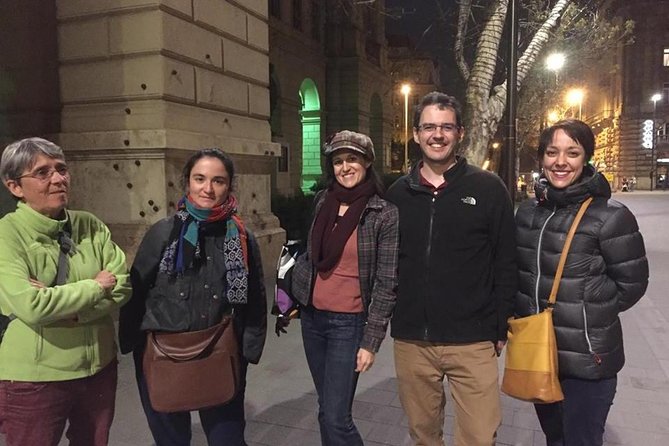
Liberty Square is the most layered stop on the route. You spend about 15 minutes here, learning that the area once held the stock exchange, which was closed at the beginning of the communist period.
That detail helps explain the economic side of the regime. Communism did not simply add new leaders to an old system. It changed ownership, business, institutions, and the way public life was organized.
The square also witnessed bloody protests. This makes it an important place to pause and consider how political change appeared on the ground. A public square can be a financial center, a ceremonial space, or a place of confrontation, depending on who controls it and what people are willing to risk.
Liberty Square is also a good test of the guide. The facts alone are not enough. You need help connecting the former stock exchange, state power, and street protest. Victoria’s university background is especially useful here, since the explanations go beyond a quick list of dates.
One practical weakness is that outdoor discussions can be interrupted by street noise, children, or people passing through. You may not always be standing in the perfect spot for listening. That is a small inconvenience, but it is worth knowing if you prefer museum-like quiet.
A few more Budapest trips to weigh up
- Budapest: Historic Cruise with Welcome Drink
★ 4.7 · 6,512 reviews - Budapest Historical Sightseeing – Free Walking Tour
★ 5.0 · 1,302 reviews - Buda Castle District Dark History, Legends and Vampire Night Tour
★ 4.5 · 1,240 reviews - BloodThirsty Hungary: Walking tour & Dark Historical Stories
★ 4.9 · 633 reviews
Parliament Square and the violence of the 1956 uprising
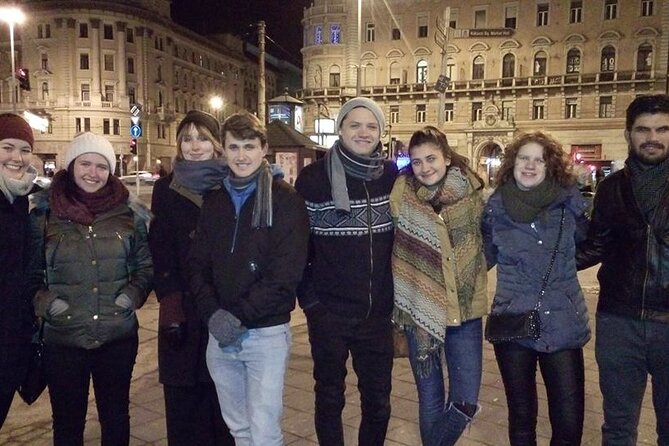
The walk finishes at the Hungarian Parliament Building, in Kossuth Lajos tér. This is where the 1956 uprising against the ruling Communist Party took place, and where considerable blood was shed.
The location gives the final part of the tour real weight. Parliament is one of Budapest’s grandest sights, yet the square also carries memories of resistance and loss. The contrast between the ornate building and the violence connected with the site is precisely why a guide adds value.
You learn about Hungarian resistance to communism and the sacrifices made in the country’s path toward freedom. The tour does not treat liberation as a simple, tidy story. It points you toward the cost of political change and the effects that remained after the regime ended.
The tour ends here rather than returning to the starting point. That is convenient if you want to see Parliament at night or continue by metro or tram. It also gives the route a clear narrative shape: beginning in the city’s inner districts, moving through institutions and protest spaces, and ending at the seat of national government.
What makes the guiding particularly valuable
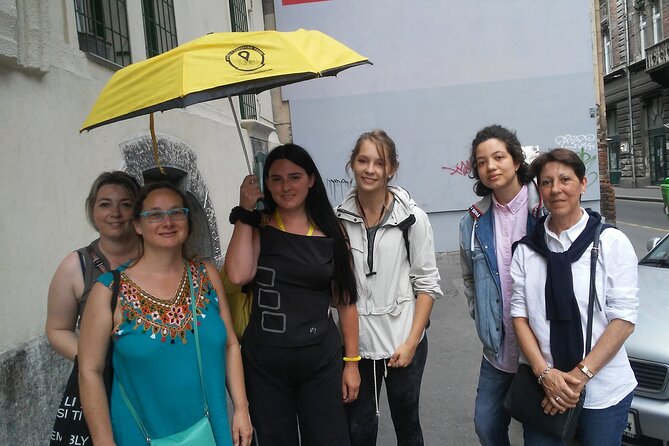
The strongest part of this experience is the guide. Victoria receives repeated praise for her clear speech, polished English, humor, and ability to hold attention. One particularly useful detail is that she teaches history at a university. That can make a real difference on a subject with so many competing memories and political interpretations.
You should expect more than a memorized script. The guide discusses what it is like to live in Budapest today and connects the communist period to present-day Hungarian society. That is something you generally will not get from simply walking past monuments or visiting a standard city attraction.
A good guide also makes room for questions. The tour is described as able to answer most questions, which matters because visitors often want to ask about family memories, the 1956 uprising, religion, emigration, or the end of communism. You should still think of this as a two-hour introduction, not a complete course in modern Hungarian history.
The small group helps. With a maximum of 15 people, you are more likely to hear the explanation and ask a question than on a large coach excursion. The group size also suits a serious subject, since the tour depends on conversation and attention rather than spectacle.
A candid look at the route and walking demands
This is a walking tour in the full sense. You need to cover about 3 kilometers under your own power, or use a wheelchair if you can manage the route that way. Most people can participate, and service animals are allowed.
The tour operates near public transportation, but you should still plan your arrival. The starting point is Blaha Lujza tér, while the ending point is Kossuth Lajos tér. Since the start and finish are different, do not leave a bag or arrange a meeting at the first location for after the tour.
The route includes 22 locations and monuments across several central districts. That is a lot of ground for two hours. You will see and hear about more places than the three main stops suggest, but some explanations will necessarily be brief.
I like this pace for a first introduction. It gives you a broad map of communist-era Budapest and helps you decide where to return later. If you want long periods at each site, private discussion, or time for photographs, the route may feel quick.
The guide may also need to position the group wherever there is room. At times, you could be beside a fountain, in a smelly corner, or in a busy thoroughfare. Wear shoes that can handle city pavement, and stay close enough to hear.
Is $36.01 a fair price for two hours?
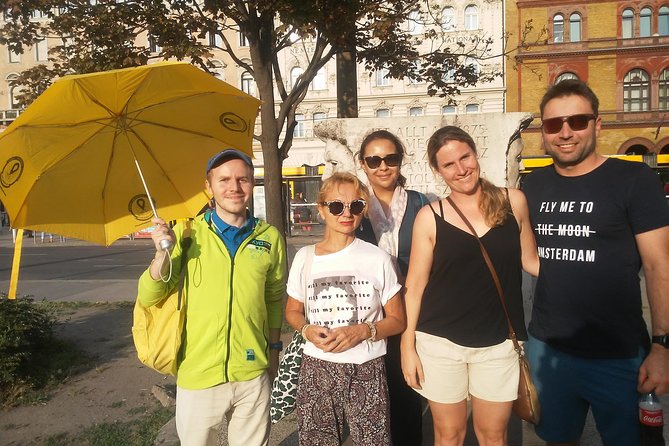
At $36.01 per person, this is not the cheapest way to spend two hours in Budapest. You can walk through many central streets for free. The question is what you receive for the fee.
Here, you are paying for an organized route, an English-speaking guide, historical interpretation, a maximum group size of 15, and a subject that is easy to miss on a standard sightseeing walk. Bottled water is included, while drinks, parking, and unrelated facility or equipment fees are not part of the price.
I consider the cost fair if you have a real interest in twentieth-century history. The value is less clear if you mainly want panoramic views, interior visits, or a general introduction to Budapest. This is a specialist walking tour, not a substitute for a classic city highlights tour.
It also makes sense early in your stay. Once you understand the political background, later visits to Parliament, Liberty Square, museums, and memorials can feel more meaningful.
For an even fuller picture, consider pairing the walk with the House of Terror Museum. The tour itself does not include museum admission, but the museum was specifically suggested as a useful follow-up for anyone who wants more on Hungary’s communist and totalitarian past.
Who should book this experience?
I would recommend it to you if you enjoy political history, modern Europe, public memorials, and walking tours that explain how a city changed. It is also a good fit if you want to hear about Budapest from someone who can discuss both historical events and present-day life.
It suits curious first-time visitors who do not want a routine sightseeing circuit. It can also work well for students, parents with older children, and anyone considering formal study of history. Victoria’s teaching background and the tour’s question-friendly format should appeal to people who like detail.
You may want to skip it if you dislike walking, outdoor explanations, or politically serious subjects. The tour includes beautiful places, but not every location is beautiful. Some matter because of what happened there, not because they make a striking photograph.
The start time also deserves thought. At 6:00 pm, you need to protect your evening for the full two hours. That is a good time for a focused history walk, but it may conflict with dinner plans or another booked activity.
Booking, cancellation, and practical details
Confirmation is provided when you book. The experience is offered in English, and the group can include no more than 15 people.
You can cancel up to 24 hours before the start time for a full refund. Changes or cancellations made less than 24 hours before the start time are not accepted for a refund. The cut-off follows local Budapest time.
The tour requires good weather and a minimum number of participants. If poor weather or an insufficient number of participants causes cancellation, you are offered another date or experience, or a full refund.
There is no need to arrange parking for the tour itself, since it begins and ends near public transportation. The walk finishes at Budapest Parliament, Kossuth Lajos tér 1-3, close to the red metro line and tram 2.
Should you book the Communist History Evening Walking Tour?
Book it if you want Budapest’s communist era explained through real streets, institutions, churches, and protest sites rather than presented as a collection of museum objects. The route is focused, the group is small, and the guide’s strength appears to be clear, personal explanation.
At $36.01, it is best value for someone who will listen closely and ask questions. If your main goal is architecture or general sightseeing, choose a broader city walk instead. If you want to understand how communism shaped Hungarian religion, business, resistance, and modern society, this two-hour route is a strong choice.
FAQ
Where does the tour begin?
The tour begins at Blaha Lujza tér in Budapest at 6:00 pm.
Where does the tour end?
It ends at Parliament Square, at Kossuth Lajos tér 1-3. The finish is near the Kossuth red line metro station and tram 2.
How long is the tour?
The walking tour lasts approximately two hours.
How far do I need to walk?
You need to cover about 3 kilometers on foot, or wheel yourself along the route if applicable.
Is the tour offered in English?
Yes. The experience is offered in English.
What happens if the tour is canceled because of weather?
You are offered a different date or a full refund if poor weather causes the tour to be canceled.
More Evening Experiences in Budapest
- Budapest: 1-Hour Evening Sightseeing Cruise with Drink
★ 4.5 · 8,330 reviews - Budapest By Night Sightseeing Cruise
★ 4.1 · 5,835 reviews - Budapest: Evening Cruise including Drinks and Live Music
★ 4.1 · 5,512 reviews - Budapest: Buda Castle District Vampires and Myths Night Tour
★ 4.6 · 3,830 reviews
More Walking Tours in Budapest
- Budapest: Buda Castle Walk with Saint Stephen’s Hall
★ 4.5 · 3,012 reviews - Big Bus Budapest Hop-On Hop-Off Bus and Walking Tour
★ 3.5 · 2,206 reviews - Budapest: Buda Castle District Walking Tour
★ 4.6 · 2,108 reviews - Budapest City Landmarks Walking Tour in 2 Hours
★ 5.0 · 2,048 reviews
Just added around Budapest
- From Budapest: Guided Tour of Eger with Wine Tasting★ 4.5 · 6 reviews
- Budapest: Private Walking Tour with a Local Guide★ 3.6 · 6 reviews
- Budapest: Danube River Views Bike Ride★ 4.8 · 23 reviews
- Trash Art Museum: Hungary’s First Scrap Metal Exhibition★ 4.3 · 72 reviews
- Walk to recent and aged spiritual sanctuaries near Budapest★ 5.0 · 5 reviews
- Budapest: 3-Hour Trabant Sightseeing Tour★ 4.7 · 28 reviews
- True Crime Walking Tour in the Buda Castle district★ 5.0 · 26 reviews
- Audio visual multi-sensory chefs journey dinner experience★ 5.0 · 3 reviews
Communism & Memento Park Tours, compared.
Communist History Tour with House of Terror Option
Read our review →
3-Hour Walking Tour About Communism (Small Group)
Read our review →
Lives of Hungarians Under Communist and Capitalist system
Read our review →
Private Budapest Hammer & Sickle Communist Times Tour
Read our review →
Browse the lists this tour appears in